The Devotion of Looking
A sweeping mid-career retrospective, Hail Holy Eyes reveals how Jigger Cruz transforms excess, rupture, and devotion into a singular visual language that resists clarity yet invites awe.
Words Randolf Maala-Resueño
Photos courtesy of The M
December 05, 2025
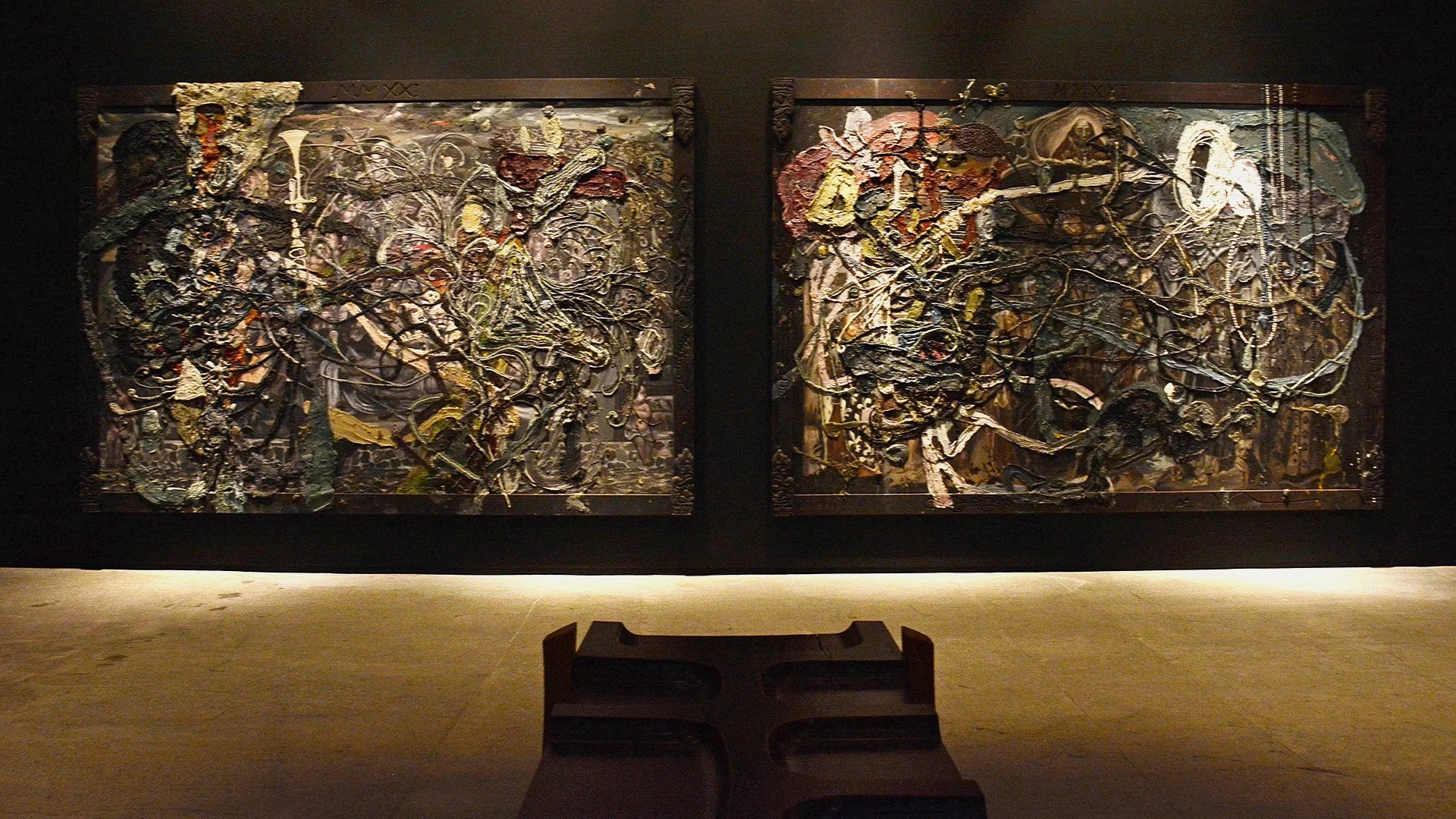
Walking into Hail Holy Eyes at the Metropolitan Museum of Manila is like stepping into the eye of a long-gathering storm. Jigger Cruz, now firmly in his mid-career stride, finally receives the expansive stage his unruly, tactile practice has always deserved.
The exhibition assembles more than a hundred works from 2007 to the present, transforming the Groundspace Galleries into a single, breathing organism of texture, color, rupture, and renewal.
A Storm of Surfaces
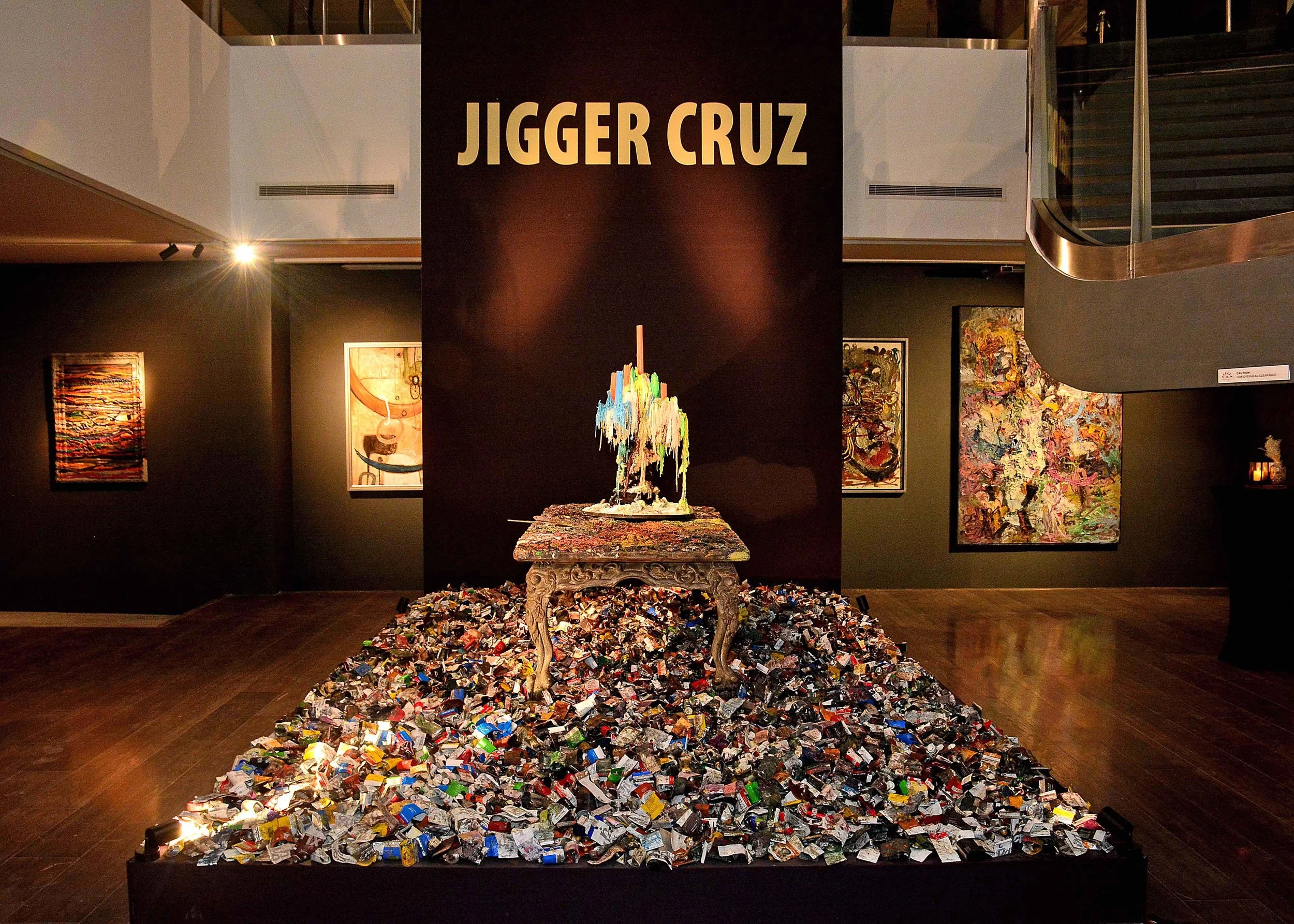
Cruz is often described through excess: the frosting-like impasto, the slashed silhouettes, the way his canvases seem to drip, curl, or combust. But seeing the works chronologically reveals an artist who has been, all along, refining a language of disruption. What once looked like pure bravado becomes, in hindsight, a sustained investigation into what paint can physically do.
Curator Norman Crisologo embraces this ethos, refusing to dilute it. His curatorial statement reads: “An avalanche of unanswered questions… sticks and stones on bare and wanting flesh.”
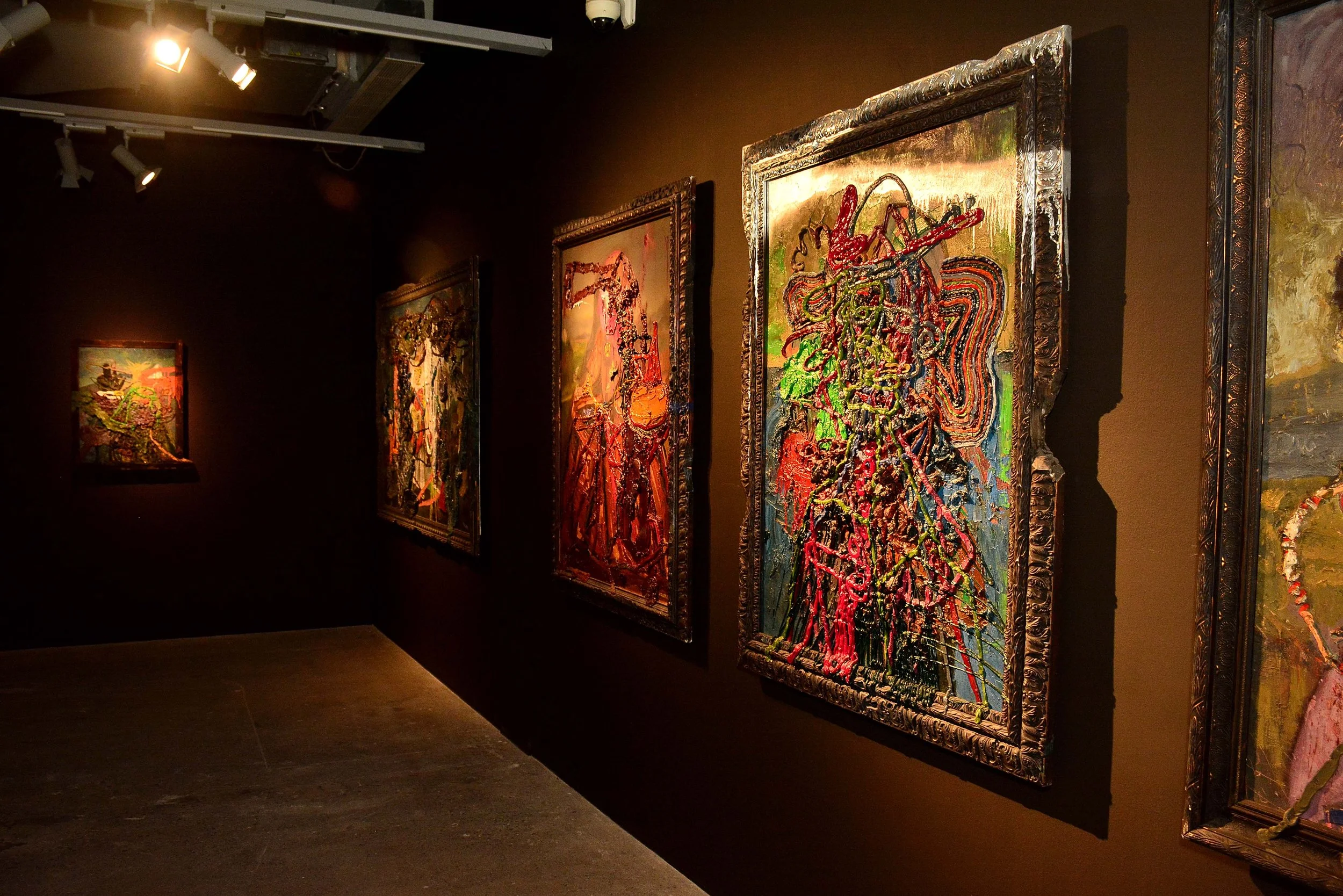
Rather than impose structure, Crisologo opts for immersion. Cruz’s paintings are allowed to swarm a viewer’s periphery until they function collectively—like a choir singing in dissonance, yet strangely unified.
Faith, Noise, and the Act of Seeing
The show’s title hints at Cruz’s long entanglement with faith and ritual. “Hail Holy Eyes” summons Catholic echoes without offering straightforward piety. Instead, Cruz frames seeing as confrontation. Beneath many works lie ghostly references to Western religious iconography over which the artist pours, smears, or burns new realities.
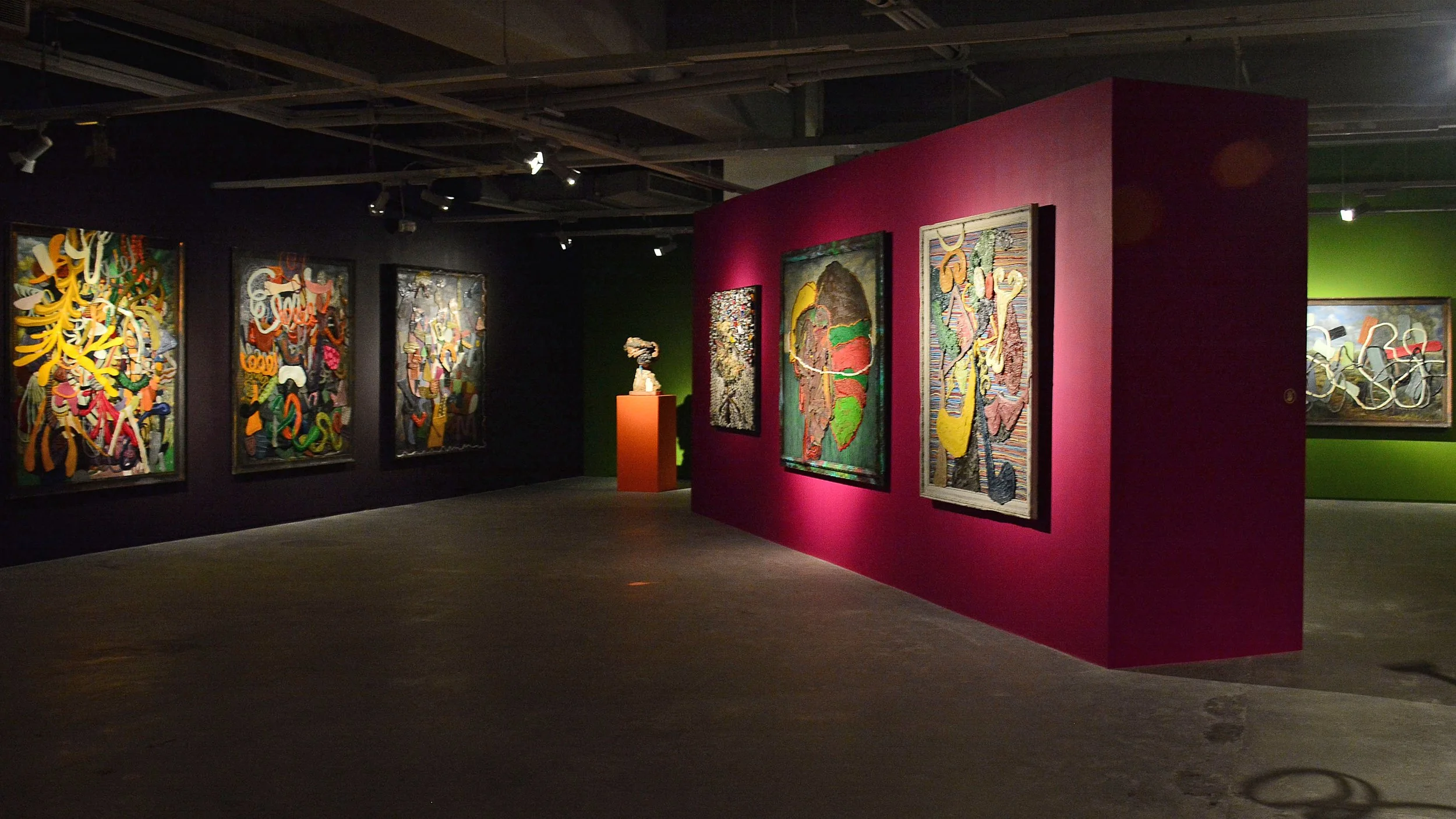
This is also the moment where Cruz’s color-blindness becomes a quiet revelation. His sense of color comes not from chromatic rules but from temperature, weight, and material instinct. In his recent pieces, impasto becomes architectural, almost sculptural, casting shadows that extend the painting into the room.
It’s as if the works themselves are trying to step out of their frames.
A Devotion to Excess
What rises from Hail Holy Eyes is chaos yet committed, where Cruz walks the line between beauty and disorder. But here, these forces coexist with surprising tenderness. When encountered en masse, the works reveal their own kind of liturgy—repetitive, searching, reverent.
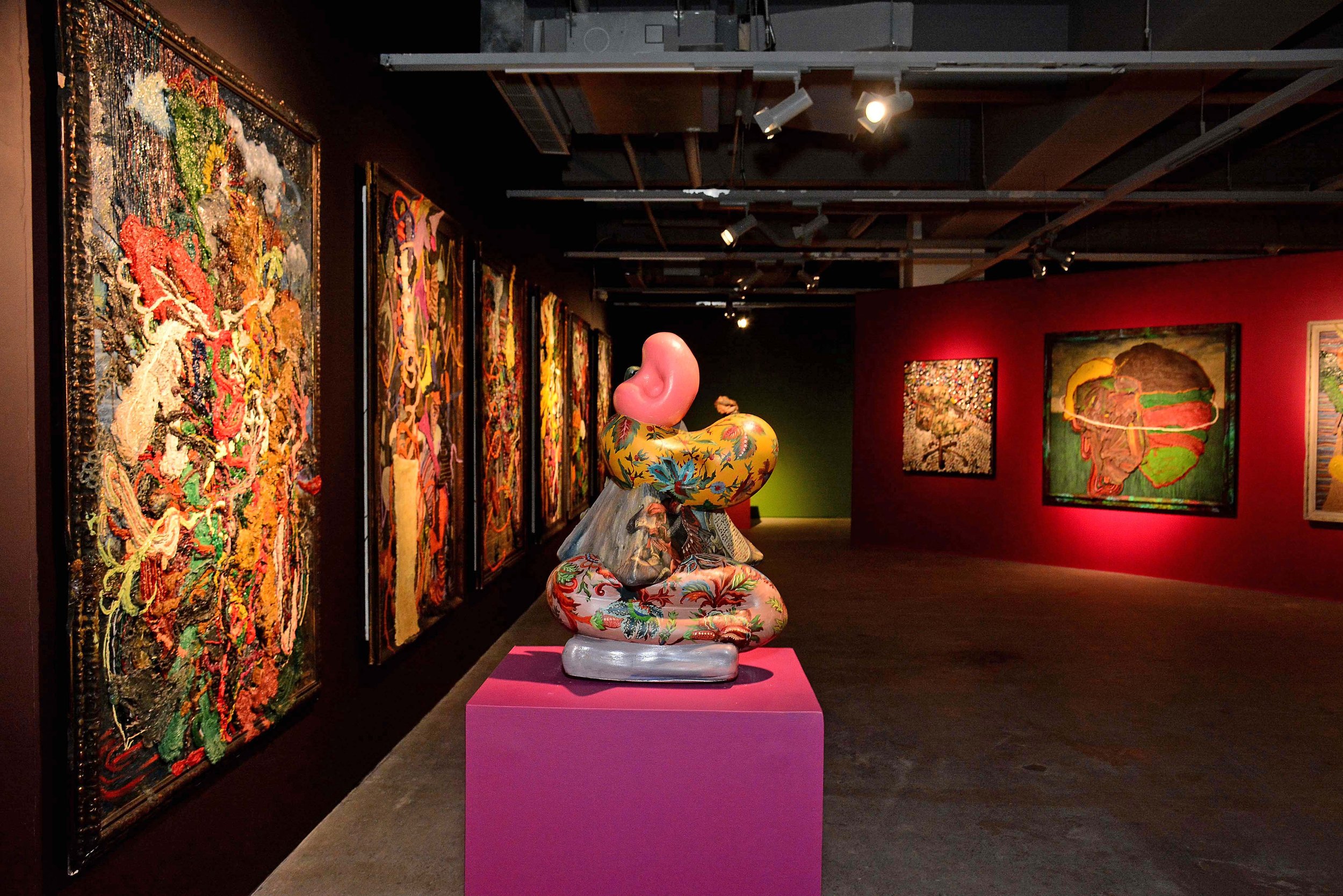
By the time a viewer reaches the final gallery, the excess begins to read like devotion. To look closely at a Jigger Cruz painting is to participate in its making: to witness destruction as both action and offering. Hail Holy Eyes becomes a plea for clarity—an invitation to surrender to the sublime in rupture.
Hail Holy Eyes is on view at Metropolitan Museum of Manila’s North & South Galleries at BGC, Taguig. Opens Nov. 19 2025 until Mar. 1 2026.