
Lulu Tan-Gan brings piña to the modern wardrobe.
Words Art+ Magazine Team
Photos courtesy of TAN-GAN
November 23, 2026
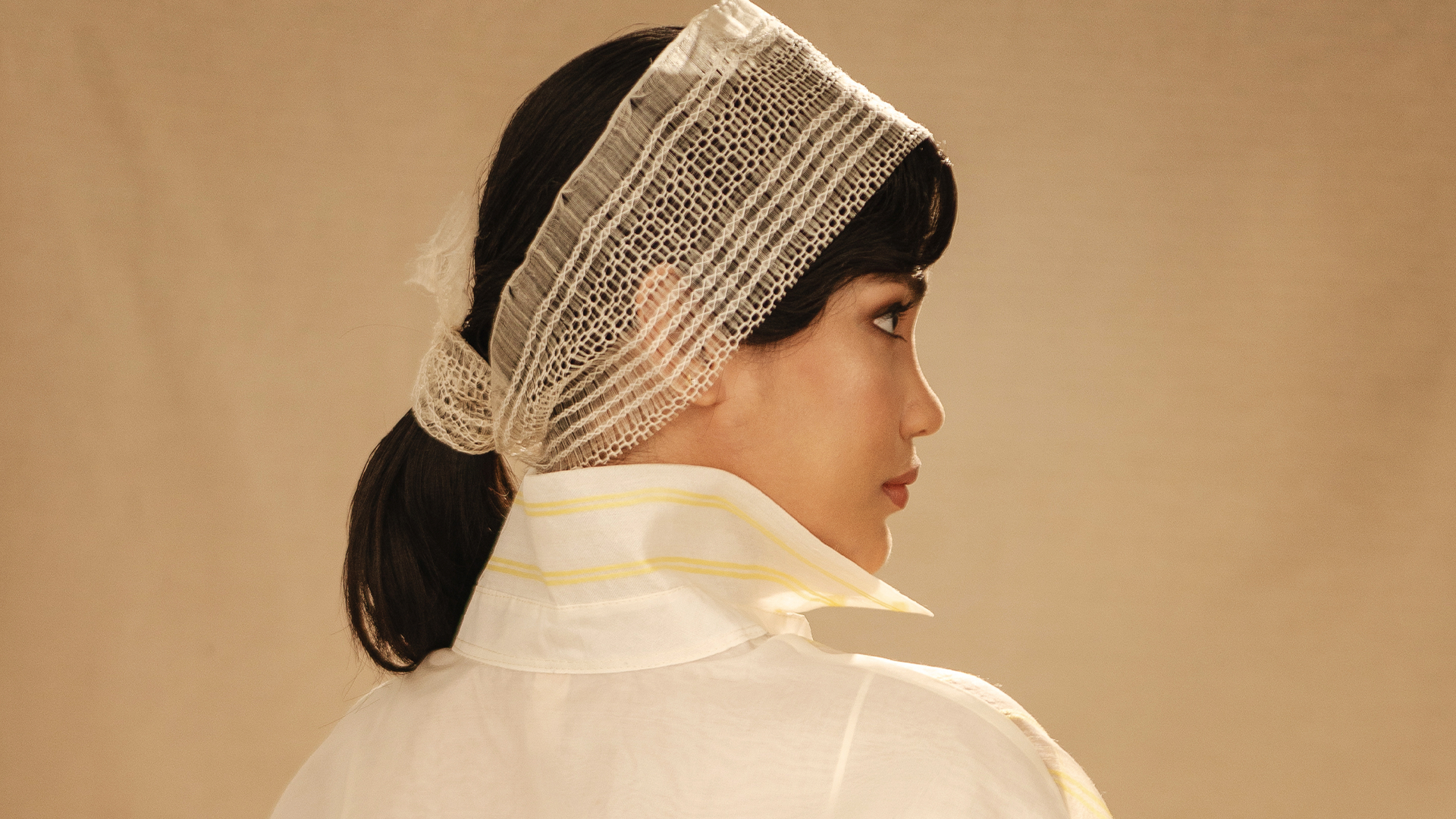
For decades, Lulu Tan-Gan has explored the possibilities of Filipino textiles, finding new ways to bring traditional materials into contemporary fashion. While she first made her mark as the Queen of Knits, much of her work over the past 20 years has centered on piña, the delicate handwoven fabric made from pineapple fibers.
Through years of experimentation, Tan-Gan has helped introduce piña to a wider fashion audience, moving it beyond its usual association with formalwear and showing how it can be worn in more relaxed, modern ways.
This November, she takes that exploration further with Tailored Traditions, a new collection that celebrates the classic shirt through the beauty and versatility of piña. The collection will be presented at her pop-up space at Power Plant Mall.
A New Take on the Classic Shirt
For Tan-Gan, the collection is a reflection of what has always guided her work: finding a balance between preserving tradition and allowing it to evolve.
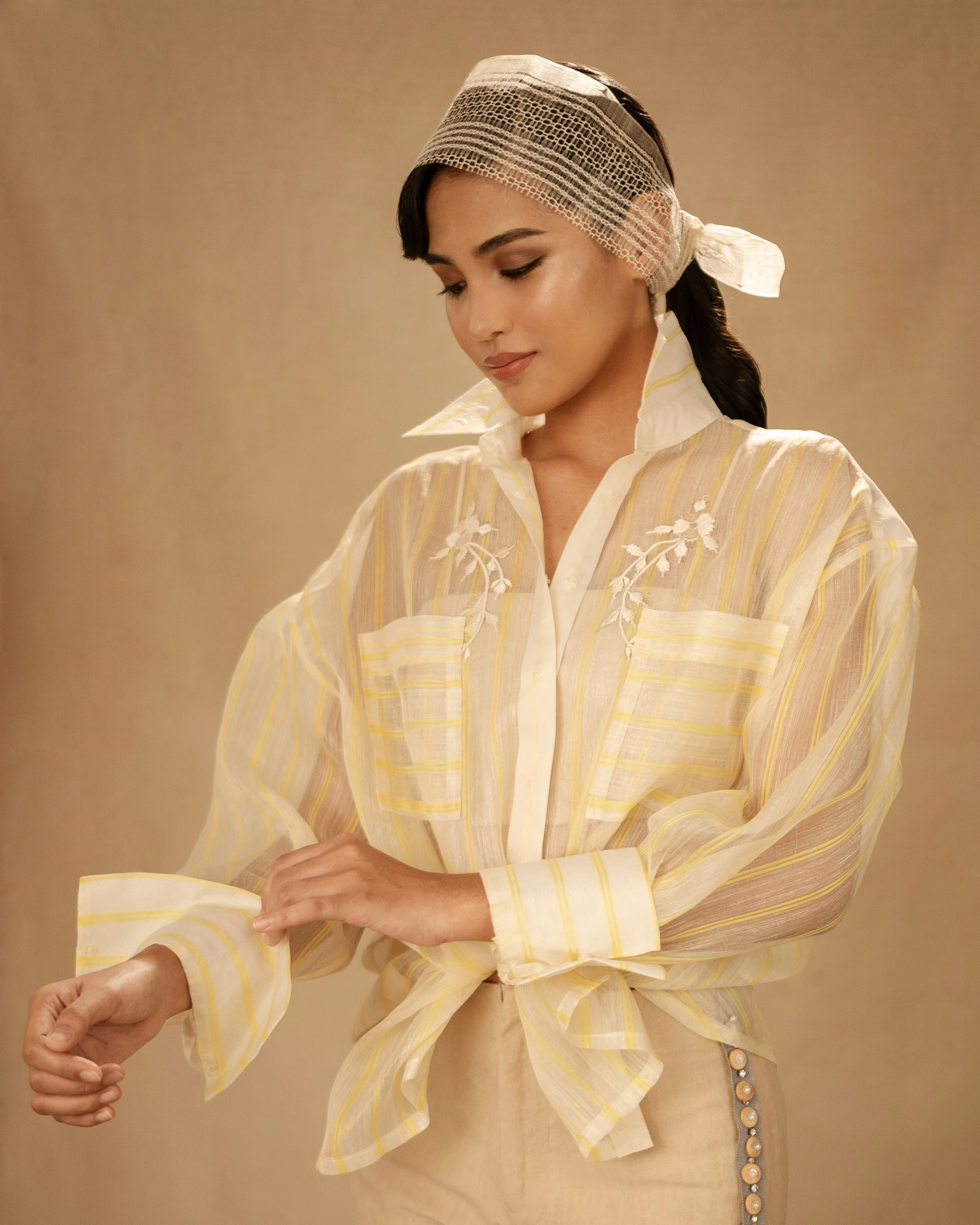
Ma. LOU Shirt | Piña-striped embroidered shirting featuring TAN-GAN’s signature embroideries and distinctive materials. The sides are handwoven by the Aklan artisans.
“Ultimately, my work is about bridging tradition and innovation, honoring our heritage while giving it a fresh expression for today,” she shares.
The collection brings together two wardrobe staples: piña fabric and tailored shirts. It features barongs, oversized shirts, and vests made from fine piña and blended textiles, all carrying the designer’s signature approach to craftsmanship and design.
After two decades of working with the material, Tan-Gan sees this collection as something of a return to her beginnings.
“With the rising interest in Piña, I feel that I have come full circle,” she says. “Over the past 20 years, I have explored and tested this raw, ethereal fiber through various forms of fabric manipulation. With Tailored Traditions, I return to the essence of my journey: modeling heritage for contemporary use.”
The pieces are designed with everyday wear in mind, combining the lightness of piña with practical, travel-friendly silhouettes. There is a mix of vintage references and sporty details, creating a look that feels polished without being overly formal.
A Commitment to Craft
For Tan-Gan, design has always started with an understanding of the material. Rather than working around whatever fabric is readily available, she takes the time to study its qualities, limitations, and possibilities before deciding what it can become.
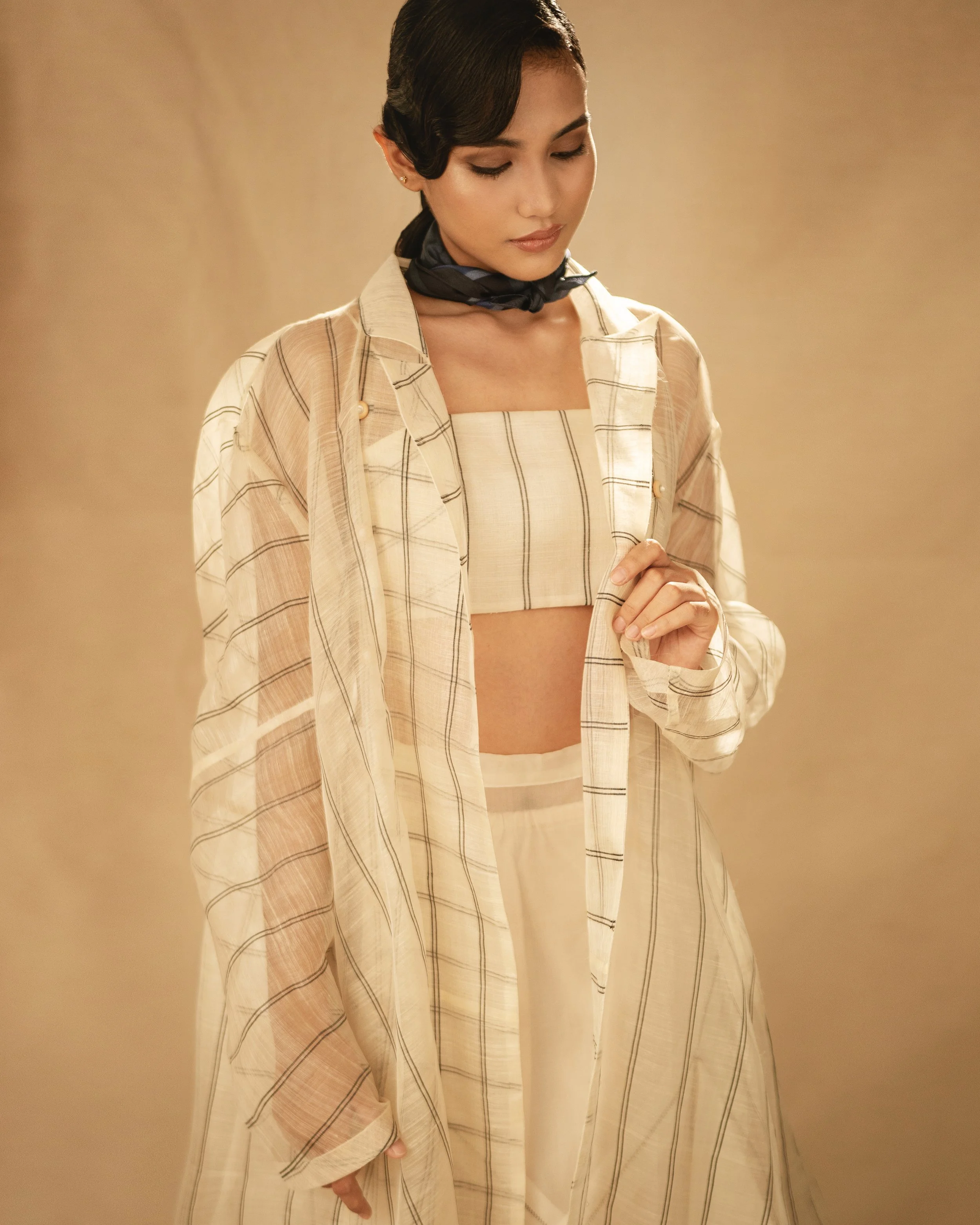
Ma. KAORU Coat | A TAN-GAN signature. Pinstriped piña coat worn over bandeau and gored skirt scarf in cotton-piña.
“As an artisan, you have to understand the material and the technical side of constructing before you can innovate and make it relevant to use,” she says.
Her creative process has always been closely tied to traditional techniques, local craftsmanship, and nature. “Crafting fashion has always been central to my work. Yarn is my medium. Knitting and weaving are my languages. My process begins with inspiration from our indigenous traditions, craft, and nature.”
Her interest in textile innovation began as early as the late 1970s and early 1980s, when she started creating hand-loomed knitwear that went beyond conventional sweaters and cardigans. By 1983, her handcrafted pieces had already made their way to the runways of Paris Fashion Week.
At the time, she was drawn to knitwear’s practicality, particularly fabrics that were easy to wash, wear, and maintain. She wanted to create clothing that suited the needs of working women while still looking fashionable.
“I wanted to transform knitwear into fashionable pieces for career women like myself who needed practical and stylish options,” she recalls.
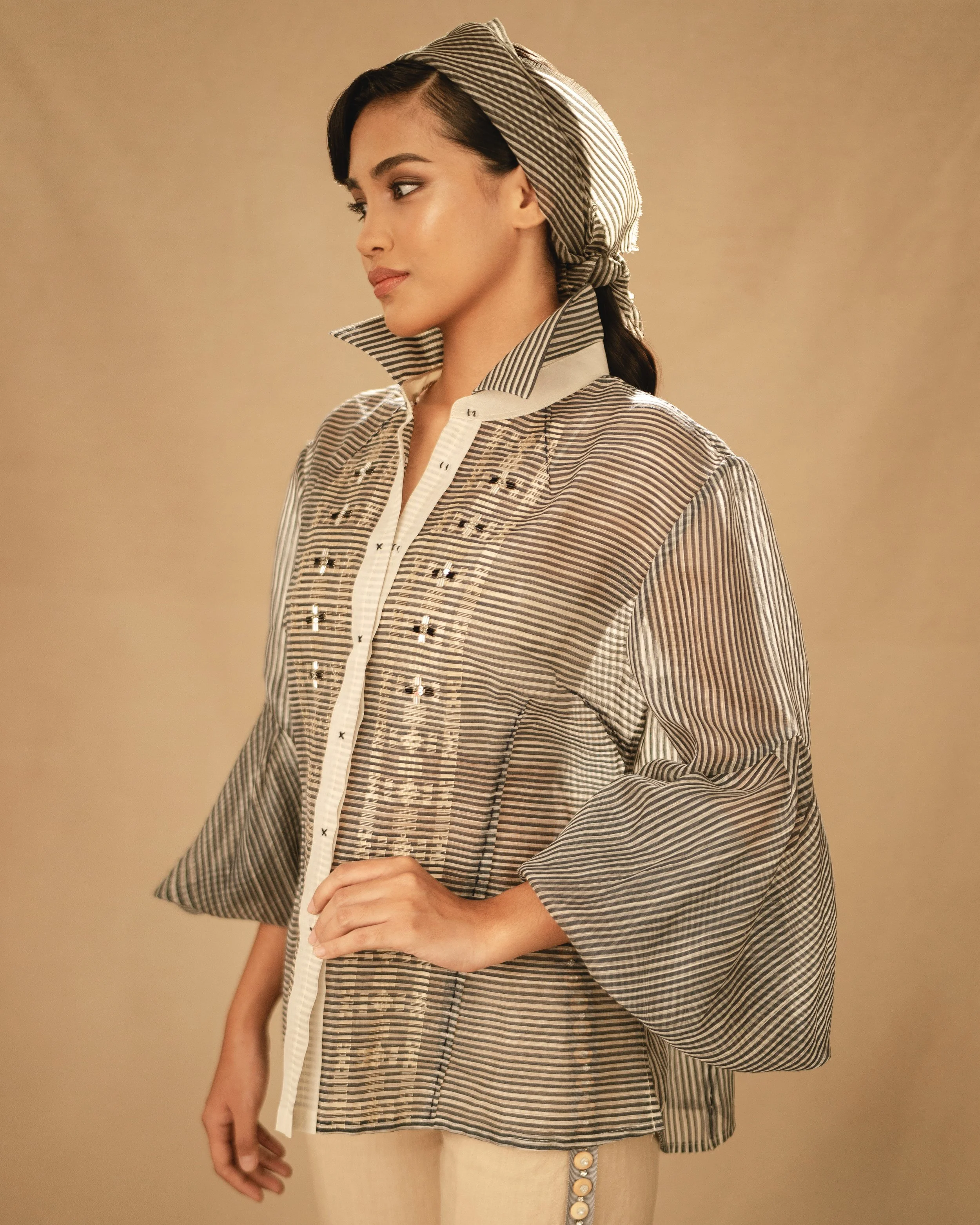
Ma. TINET Shirt | Piña-cotton striped shirting featuring TAN-GAN’s signature Lampara sleeves, and cross-beadwork. Silk accents and distinctive cuffs complement the jacquard handwoven by Aklan artisans.
Before sustainability and small-batch production became common conversations in fashion, Tan-Gan was already creating garments directly from hand looms, shaping each piece with minimal fabric waste. This approach allowed her to rethink how clothes could be made, placing craftsmanship and resourcefulness at the center of the design process.
After years of working with knitwear, Tan-Gan began applying her knowledge and design philosophy to piña. This eventually led to the development of PiñaWear, a ready-to-wear concept that gave the traditional textile a new place in modern dressing.
Rethinking How Piña Is Worn
When Tan-Gan first began exploring piña, it was still largely seen as a fabric reserved for formal occasions. Its structured quality and delicate nature made it less accessible for everyday use, while the need for dry cleaning added to the cost of maintaining it.
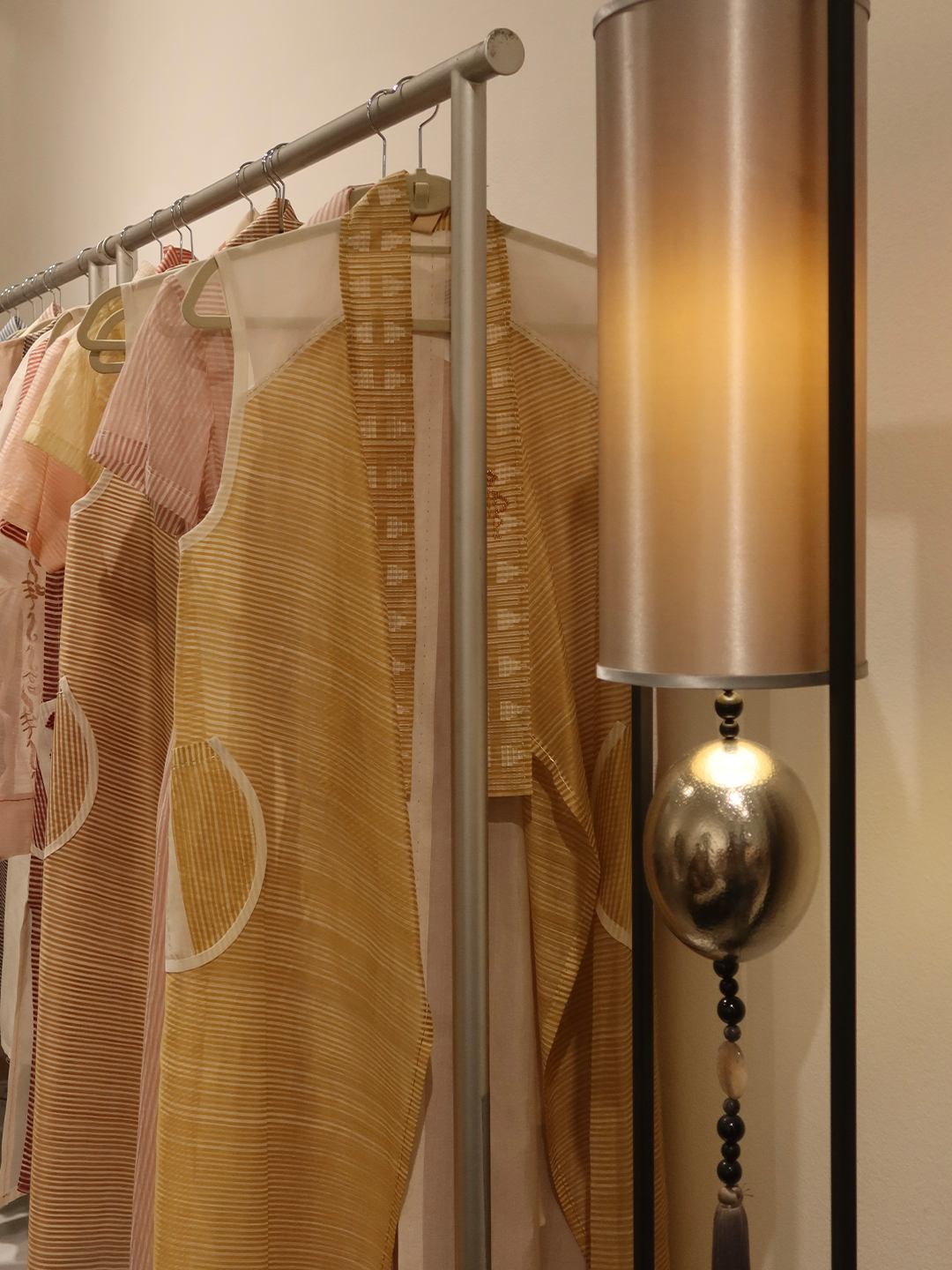
Tailored Traditions by TAN-GAN on the 2/F of Power Plant Mall
She saw an opportunity to change that perception. Rather than limiting piña to traditional garments, she began exploring how it could work in more versatile silhouettes, from shirt jackets and boleros to capes, coats, and caftans. Her goal was to create pieces that retained the fabric's character but felt easier to wear and care for.
“I started to develop Piña into washable, fluid textiles. I designed and engineered it for easier packing and travel,” she explains.
Part of this process involved studying the fabric’s warp and weft and finding new ways to cut and handle it. Through careful pattern-making, she discovered how small adjustments could change the way piña moved and draped on the body.
“I mostly engage with piña through the cutting process. I love the crisp sound while cutting,” she shares. “As I lay out the pattern, my design often evolves. I may lengthen, widen, or reshape it. I’m also mindful of ensuring that no inch of the weave is wasted throughout the design and cutting process.”
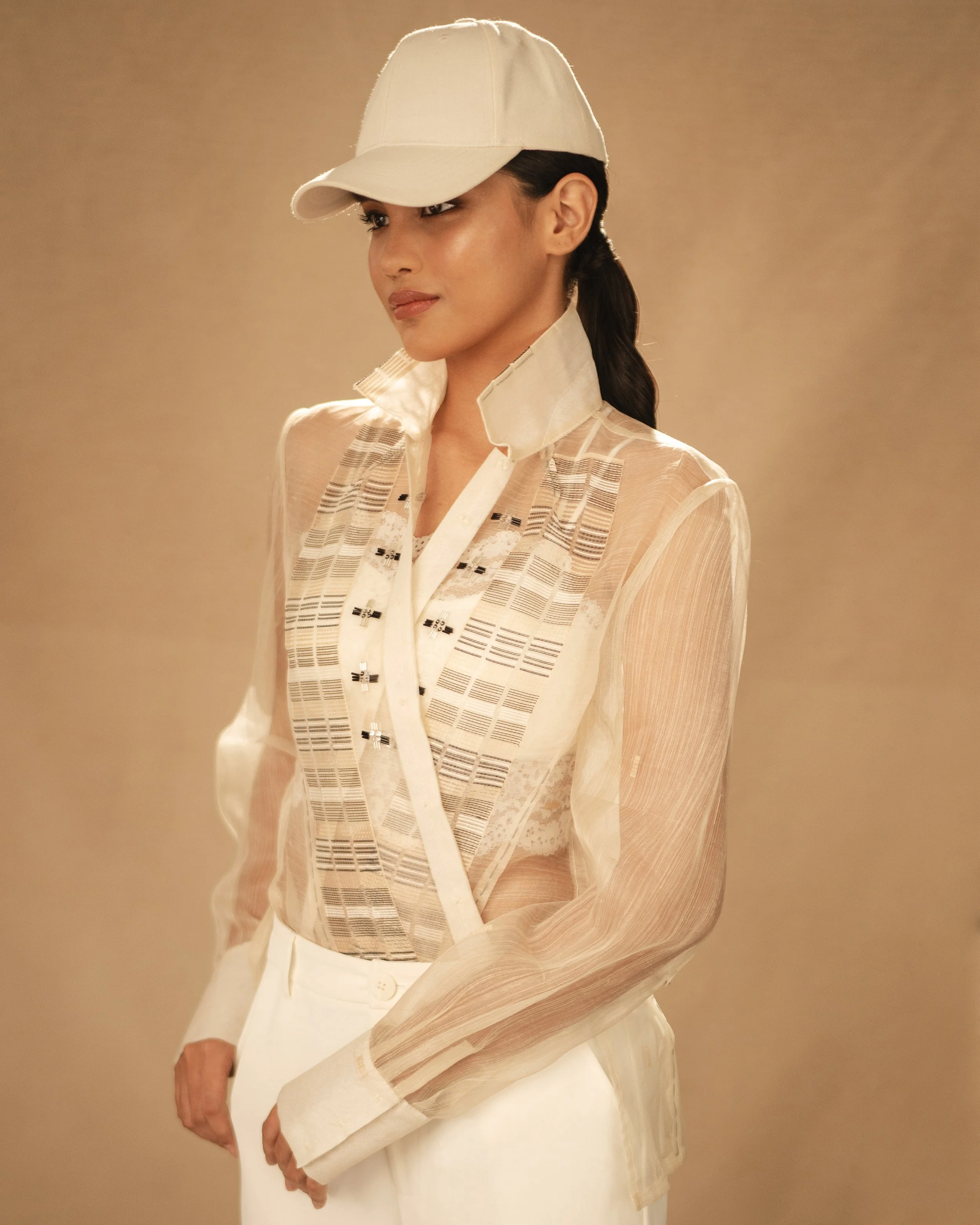
Ma. MIMIA Shirt | Piña striped shirting featuring TAN-GAN’s signature fit and distinctive cuffs. The front panel is jacquard with hand embroidery and bordered with cross-beadwork.
Her involvement goes beyond construction. She also experiments with dyeing, washing, printing, and incorporating local motifs, often combining piña with other fabrics, beading, and different surface treatments.
“I use Piña and mix blended fabrics, dye, prints, and beading to create different textures and patterns. This allows the textile itself to guide the design. Once the fabric comes to life, I explore how it can be transformed through draping, pleating and other new techniques,” she says.
One of her signature approaches is to leave the garments unlined, allowing the natural lightness and delicate texture of the fabric to remain visible. Instead of treating piña as a standalone formal textile, she encourages layering it over comfortable innerwear, such as shirts, chemises, and lace pieces.
Going Back to the Source
As a Filipino designer working in fashion, Tan-Gan thought of what made her work distinctly Filipino.
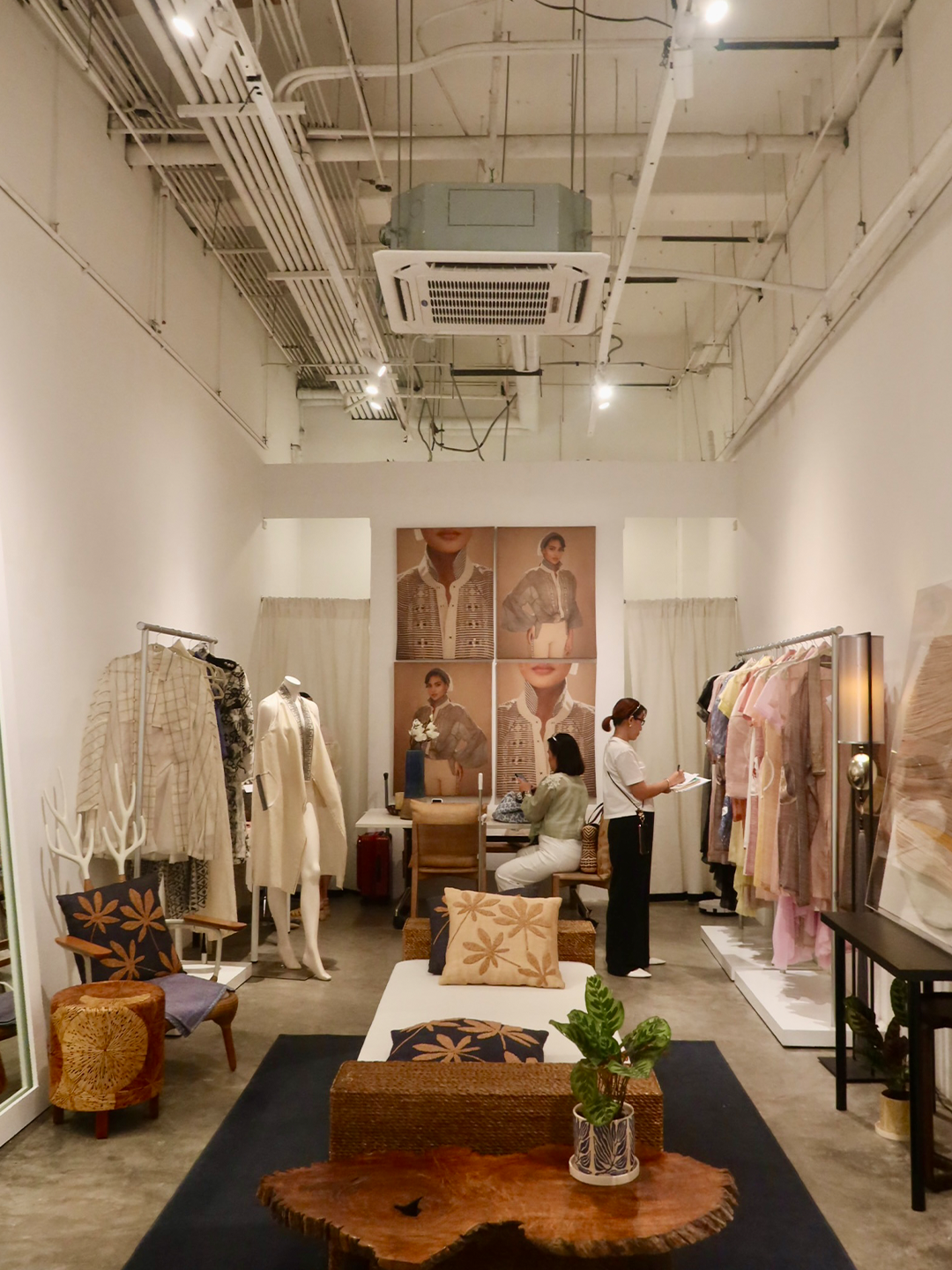
Tailored Traditions by TAN-GAN on the 2/F of Power Plant Mall
“What makes me a Filipino designer?” she recalls asking herself. “I was always attracted to Piña and loved the ethereal beauty of the fabric. I would wear my dad’s barong and adored the pieces made by Barge Ramos using the handwoven fabric.”
She also recognized that keeping piña alive meant finding ways to make people appreciate and wear it beyond special occasions. Preserving a textile, after all, is not just about maintaining the techniques behind it. It also means giving it a place in the lives of future generations.
“It’s about transforming craft, textile heritage, and traditional techniques into global contemporary fashion. It means transforming our traditional textile into a symbol of elegance, innovation, and timeless sophistication—crafted for the modern fashion connoisseur who values both heritage and cutting-edge design.”
With Tailored Traditions, Tan-Gan continues to show that heritage and modernity need not exist separately. Sometimes, all it takes is a familiar piece of clothing, reimagined through a different material and a fresh perspective, to give tradition a new life.
Tailored Traditions by TAN-GAN launches this November at the designer's pop-up space on the 2/F of Power Plant Mall. For updates and more information, follow @tan_gan on Instagram.