
Revisiting Shared Frames: The 24th Spanish Film Festival in Manila
How the festival’s ‘En corto’ program reimagines the ties between language, desire, and the surreal in Filipino cinema.
Words Pio Angelo Ocampo
Photo courtesy of Instituto Cervantes de Manila
October 23, 2025
What is the lifespan of a cultural encounter? For over two decades, Película>Pelíkula, the Spanish Film Festival organized by Instituto Cervantes, asks this question quietly and persistently through cinema. In its 24th edition, the festival returned to Makati this October, lighting up Ayala Triangle Gardens and Power Plant Mall with over twenty films from Spain, Latin America, and the Philippines. The festival, which began as a celebration of Spanish-language cinema, now creates a space of exchange where old colonial traces meet the self-assured hybridity of contemporary Filipino filmmaking.
This year’s En corto program distilled the dialogue through three short films by Filipino directors Jon Galvez, Aedrian Araojo, and Arvin Belarmino. The trio — Lip Sync Assassion, Animal Lovers, and Radikals — moved between drag spectacle, erotic myth, and surreal sature, each exploring performance, language and power in distinct ways.
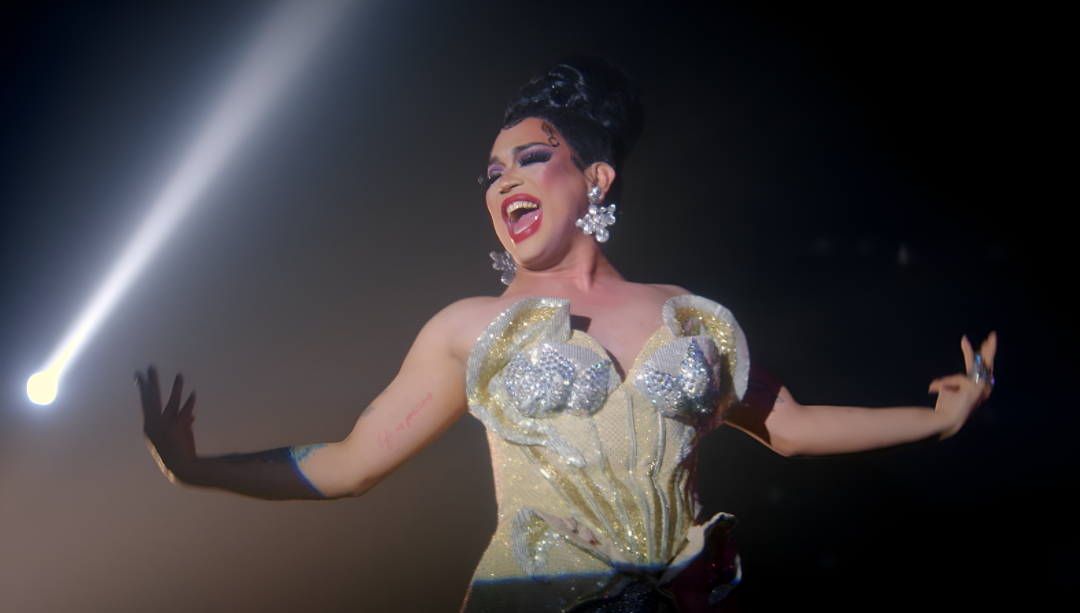
Still from Lip Sync Assassin (2024), directed by Jon Galvez. Photo courtesy of Instituto Cervantes de Manila.
In Lip Sync Assassin, Jon Galvez casts Drag Race Philippines winner Precious Paula Nicole as Sampaguita, a drag performer who moonlights as a contract killer. The short thrives in camp’s contradictions: flamboyant yet intimate, comic yet tragic. Galvez uses drag’s theatrical language to expose the precarity behind queer labor, blurring the line between survival and spectacle. It channels an Almodóvar-esque sensibility — bold, ironic, and emotionally excessive — turning melodrama into a language of defiance.
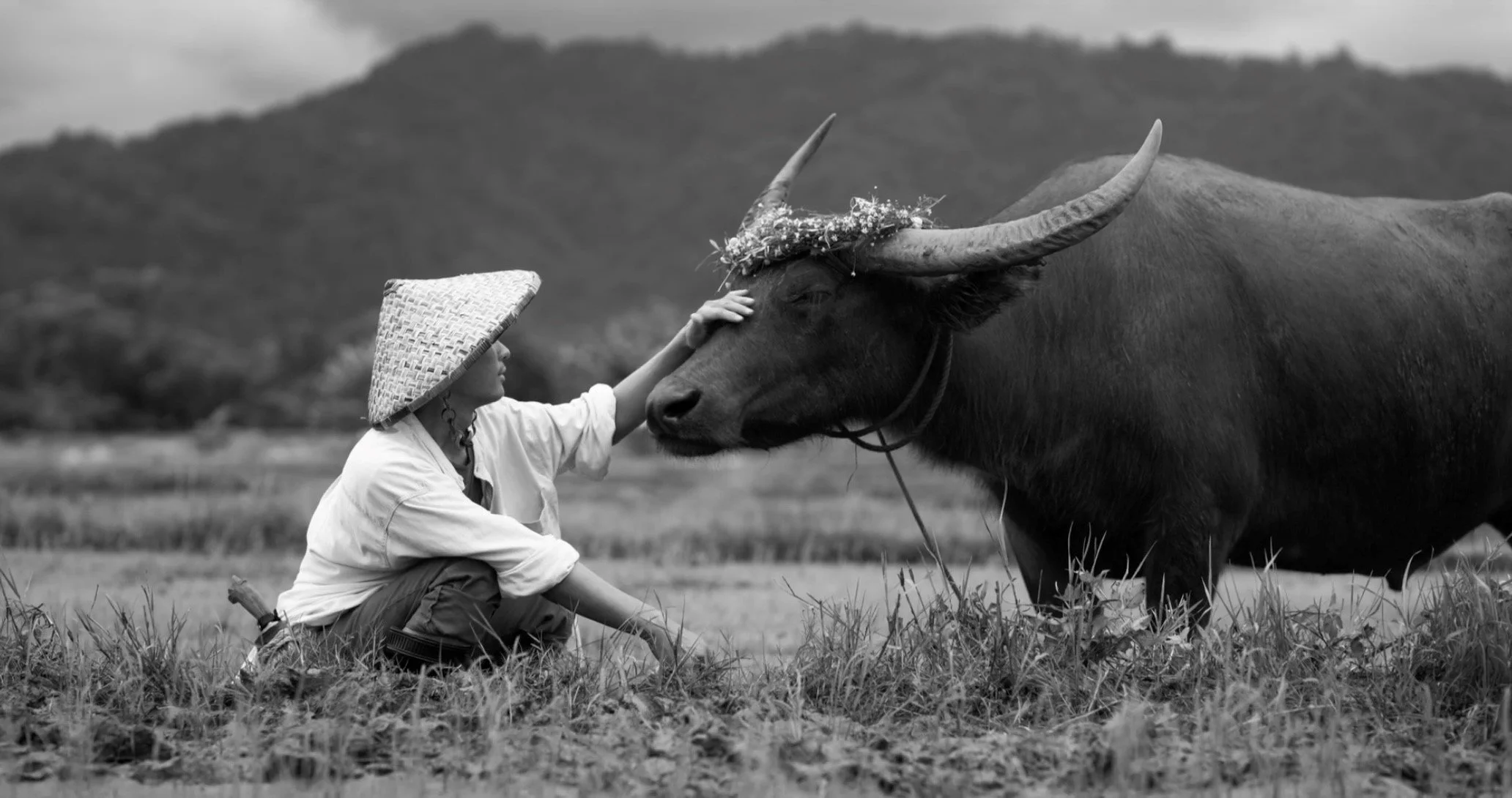
Still from Animal Lovers (2023), directed by Aedrian Araojo. Photo courtesy of Instituto Cervantes de Manila.
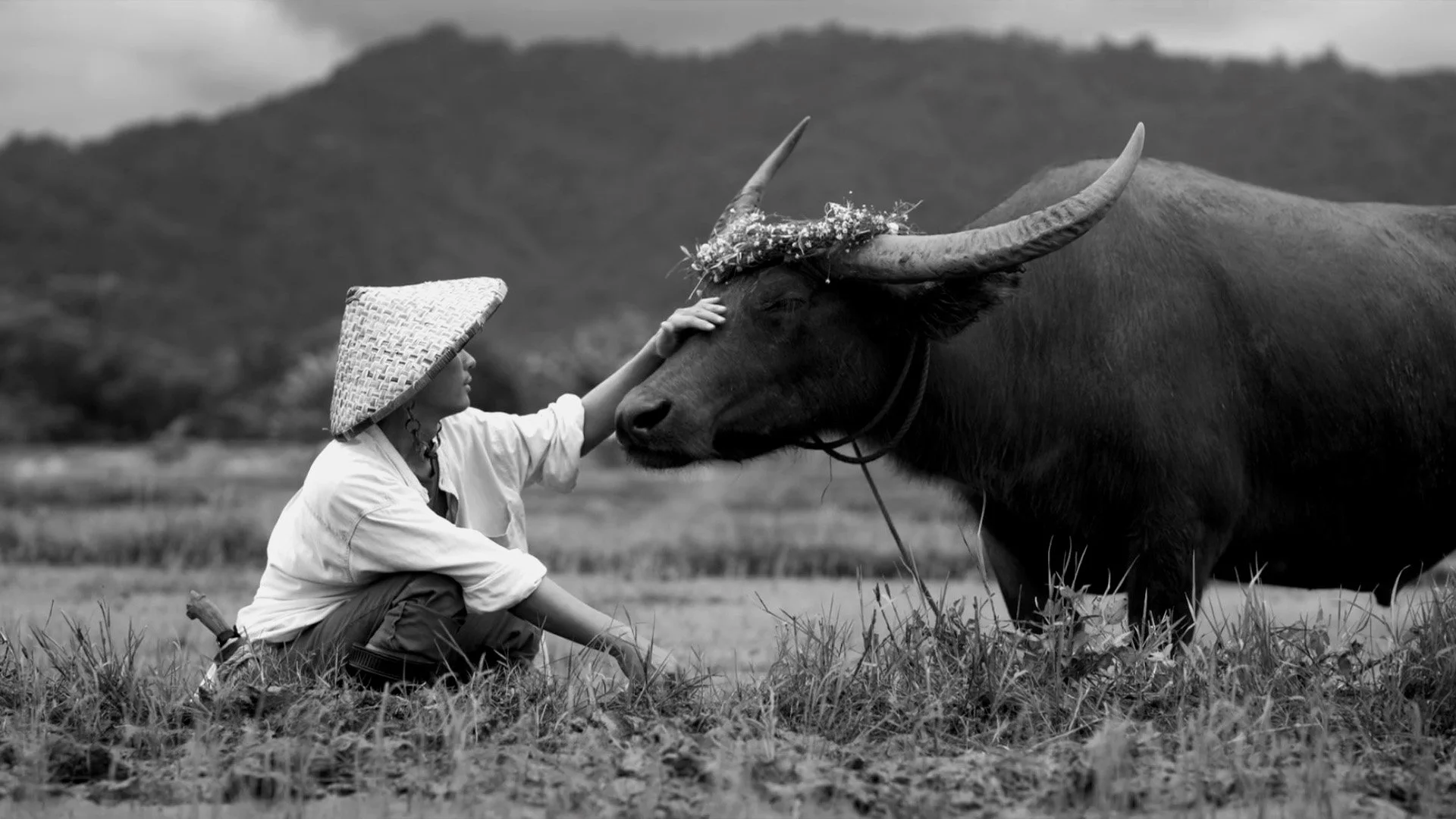
Aedrian Araojo’s Animal Lovers turns from a quiet spectacle to the stark intensity of the rural grotesque. The story follows a pregnant woman who suspects her husband of an affair with his carabao and schemes to banish her beastly rival. Absurd and sensual, the film unearths the colonial residue embedded in Filipino desire, where myth, religion, and repression mingle under the weight of history. Its use of black and white heightens the surreal and allegorical charge, while its Chavacano dialogue, steeped in hybrid traces, echoes the strange persistence of Spain’s cultural afterlife, blurring human and animal boundaries into a feverish allegory of power and longing.
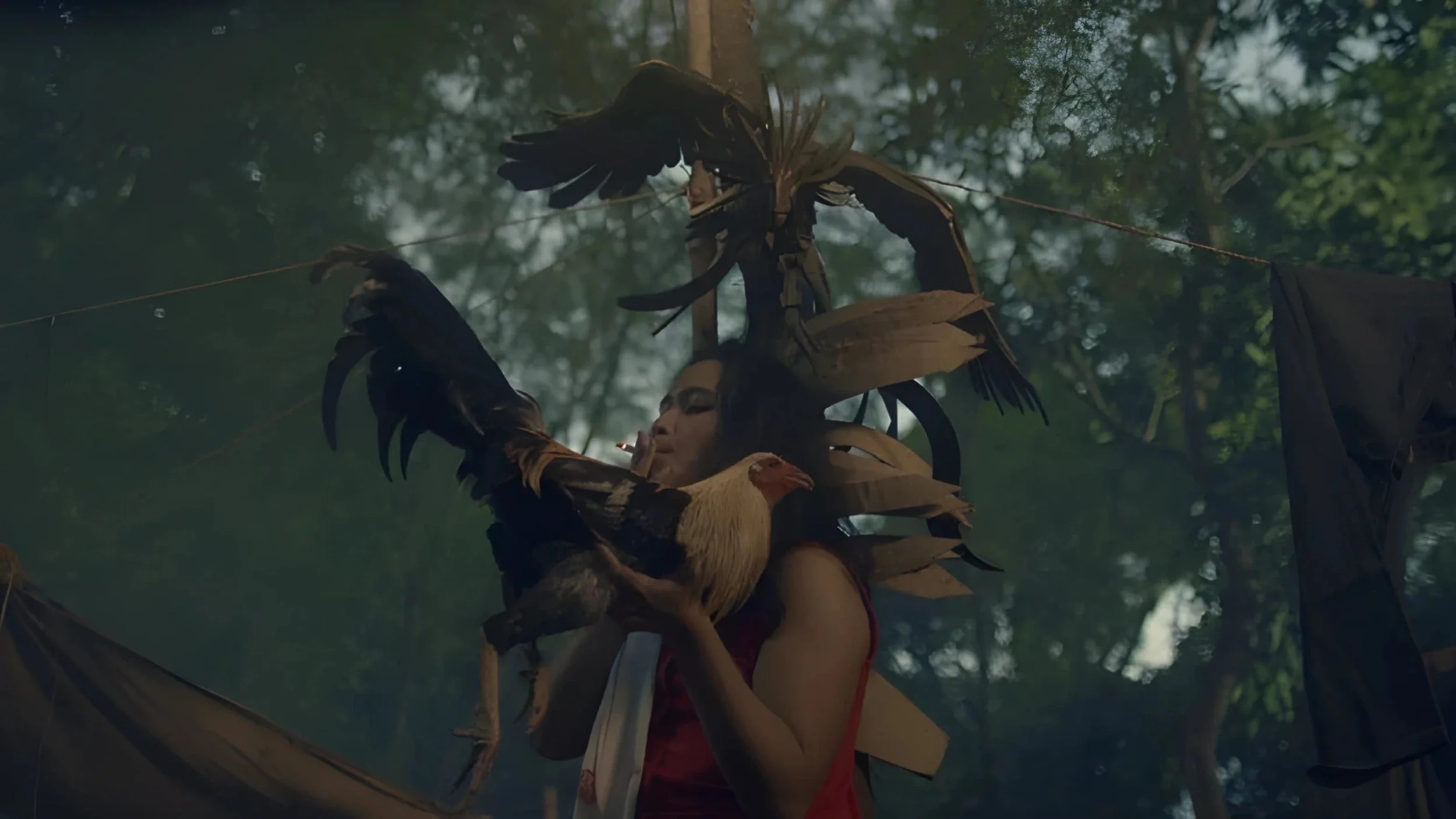
Still from Radikals (2024), directed by Arvin Belarmino. Photo courtesy of Instituto Cervantes de Manila.
Arvin Belarmino’s Radikals completes the trilogy with an offbeat parable of violence. A rookie in a chicken-dance troupe becomes the scapegoat after a failed performance, spiraling into a surreal cycle of punishment. Its choreography of chaos reflects how systems, whether colonial or local, discipline difference through ritual humiliation. Belarmino’s visual absurdity offers a sharp counterpoint, turning critique into farce.
As Película>Pelíkula approaches its 25th year, the question persists: what does a cultural encounter become when it outlives its origin? This year’s edition suggests the answer lies not in grand narratives of empire or exchange but in the small, strange, and sincere gestures that emerge en corto — in short.
Writer’s bio note:
Pio Angelo Ocampo is an arts manager, writer, and researcher. He graduated from the Institut d’Études Supérieures des Arts (IESA) in Paris and works across projects that bridge contemporary art, film, and cultural exchange.