
Reset Culture and Queer Erasure
“Reset culture” is a growing trend where gay men or lesbians publicly ‘reset’ their sexuality by presenting themselves as straight and pursuing opposite-sex relationships.
Words Gerie Marie Consolacion
January 20, 2026
“Kahit ako’y titibo-tibo…”
With recent TikTok trends bringing Sarah Geronimo’s Tala back into our FYPs, romanticized for its yearning for love we can’t have, to Moira Dela Torre’s Titibo-Tibo, these trends challenge the hopeless romantics. Unfortunately, they also challenge the queer community.
The so-called “reset trend,” accompanied by Dela Torre’s Titibo-Tibo, shows queer individuals publicly “resetting” their sexuality by choosing to love someone of the opposite sex. And just like that, queerness is treated like a cellphone—something with a reset or undo button.
Some find the trend fun. Some feel inspired. Some choose to conform to society’s norms. But what this trend ultimately translates to is dangerous: that being queer is just a phase, that something is wrong with you, that you can still be “fixed.”
And with this trend, something we have fought for—for so long is being erased: We are queer. We are human. And we do not need fixing.
So why are we circling back?
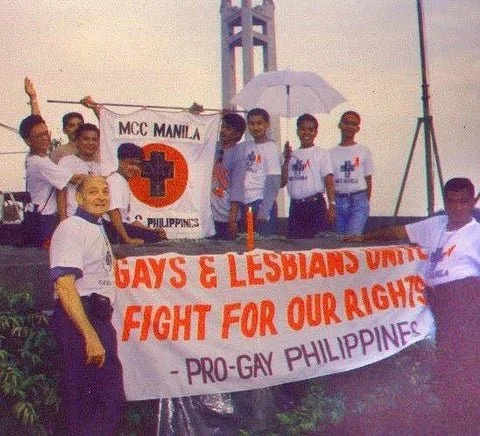
Photo from Pinay Collection
For decades, the queer community has worked to carve space for itself in this country. Enduring public ridicule, moral policing, and Bible verses hurled at their identities, queer people persisted anyway.
From openly shaming same-sex couples to slowly, reluctantly allowing their stories to exist, society has dictated when and how queer love may be seen. Even now, many queer relationships are built in fragments—lingering touches, stolen glances, hurried hugs in corners.
Not because they wanted secrecy, but because secrecy was required. Because loving openly came with consequences.
There was a time when queer individuals were killed simply for expressing who they were. And now, when queers can finally walk city streets with slightly less judgment—we are asked to move backward.
Because the “reset trend” is nothing new. It is simply a modernized version of “kaya ka pang ituwid.” So why do we keep returning to a place we fought so hard to leave?
“It’s just a trend. Why are you so pressed?”
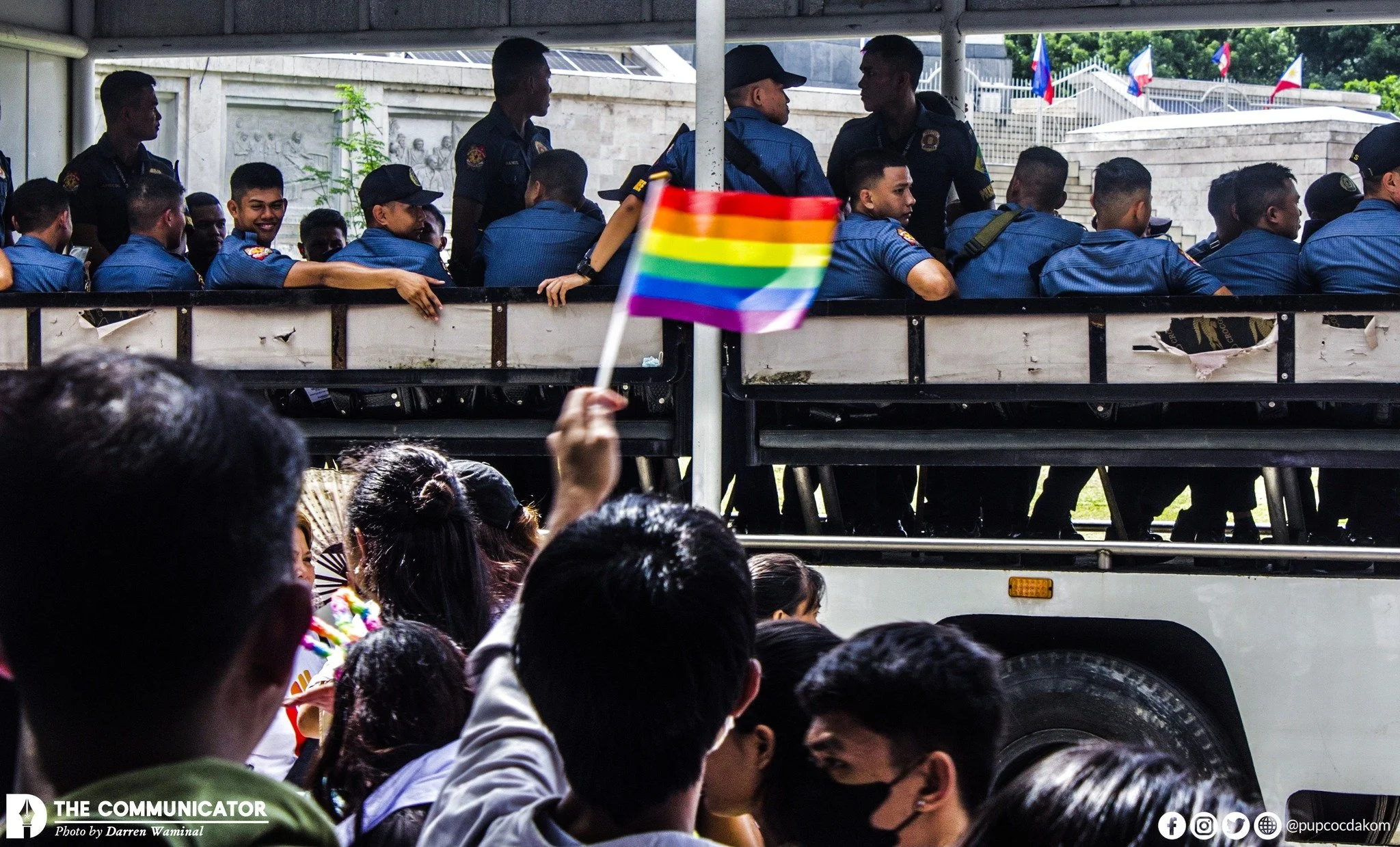
Photo from The Communicator
The common defense is harmlessness. That this is just a trend, that choosing to return to heterosexual relationships is a personal decision. Choice, of course, exists. But what often goes unexamined is how trends shape narratives. And in this narrative, queer erasure quietly takes place.
Queerness becomes temporary. Correctable. Something that can be undone once the “right” person comes along—as if it were an illness that finally found its cure. But it is not.
Being homosexual is no less natural than being heterosexual. The only difference lies in who we love. Yet heterosexual love is normalized, even celebrated, while queer love is met with scrutiny, ridicule, and violence.
After decades of fighting for recognition and rights, trends like this risk undoing the progress that was never easy to win. So if for some it’s just another trend to hop on, for others, it’s a threat.
Are we really… free?
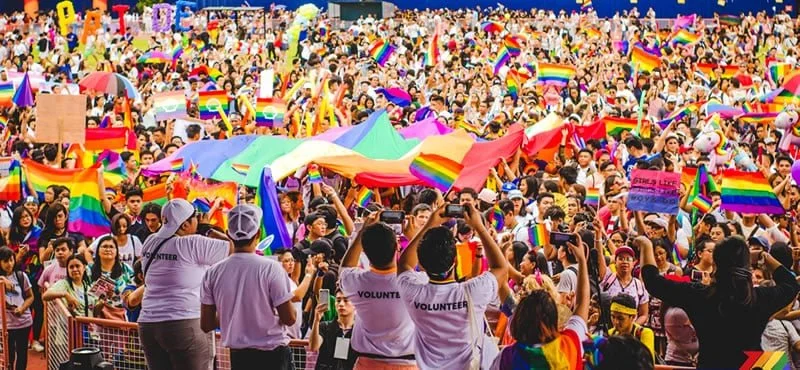
Photo from Gay Travel 4u
Will LGBTQ+ people ever be treated as humans rather than punchlines? As lives rather than content? There may be no exact data on the total number of queer individuals in the country, but the crowds at Quezon City’s annual Pride March say enough.
Queerness here is tolerated—but not fully accepted.
Society allows queer people to dress how they want, cross-dress, buy things without gendered limits, or pursue certain hobbies. But the moment they ask for rights—correct pronouns, recognition as women rather than transwomen, the freedom to love openly—that tolerance thins.
The familiar line, “pinayagan na nga kitang magladlad, makikipagrelasyon ka pa talaga?” pushes many queer individuals to find safety elsewhere. To build families outside their homes. Because the places meant to protect them often feel like the most dangerous.
Queers are tolerated when they entertain, when they are profitable, when they fit the stereotype of being funny and harmless. People love jokes. They love laughing. But laughter has limits.
Can’t we live like the movies?
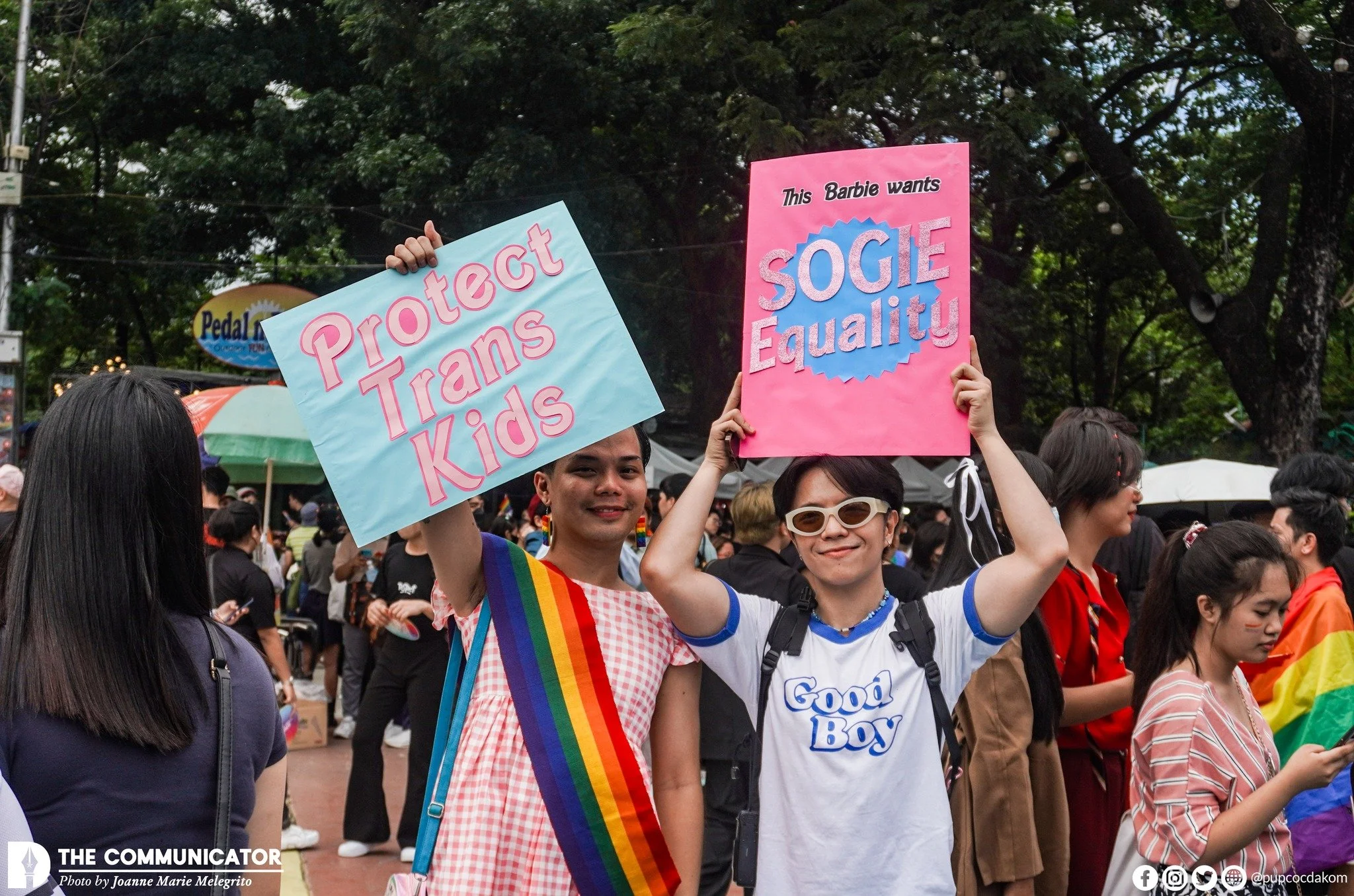
Photo from The Communicator
The growing popularity of boys’ love and girls’ love series in the country feels like progress. Queer stories are finally told with care, where queer people are leads rather than comic sidekicks.
Much of this influence comes from Thailand—a country that celebrates its queer community. Where same-sex couples walk red carpets together, speak openly in interviews, and love without being asked to apologize.
Perhaps that is why many queer Filipinos find comfort there—why they say they can finally breathe.
Thai BL and GL couples like OhmNanon, BrightWin, ZeeNuNew, LingOrm, EngLot, MilkLove, and others dominate screens locally and internationally, supported by their own countrymen. That is what happens when queerness is accepted, not merely tolerated.
So when will queer couples in this country be allowed the same freedom—without being chased by norms, without fearing harassment, without being asked to “reset” who they are?
There’s no going back
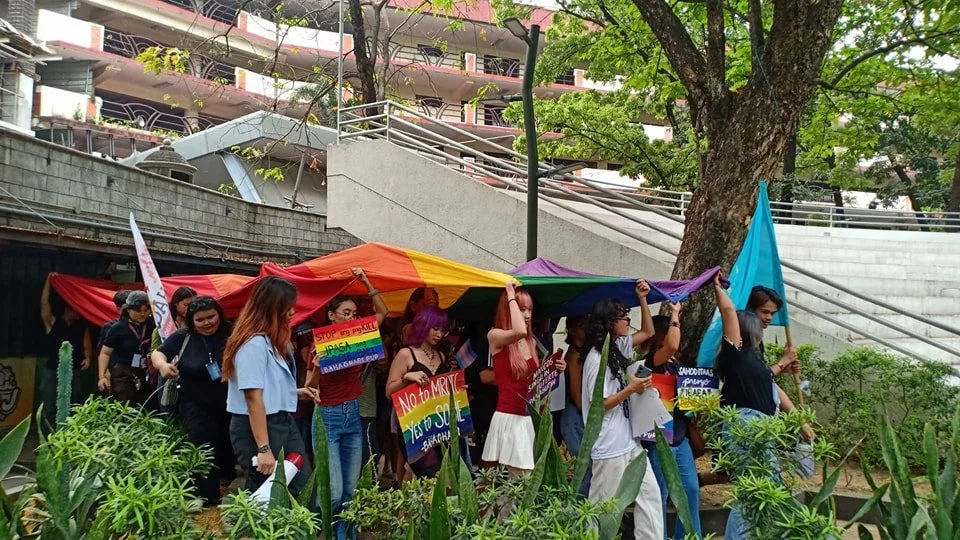
Photo from The Communicator
We did not crawl out of silence just to be told to return. We did not survive shame, violence, and hiding to be framed as something temporary. Queerness is not a detour—it is a life. And if freedom can be undone by a song, a trend, or a tap on a screen, then perhaps we were never free at all.
Reset culture teaches the world that queerness is reversible—that acceptance is conditional, that visibility is temporary, that love can be undone when it becomes inconvenient. It trains us to believe that progress is optional and rights are trends. And when a society learns how to reset people, it becomes dangerously comfortable with erasing them.