
Remembering Resil Mojares
The National Artist for Literature leaves behind a lifetime of writing, scholarship, and cultural work that taught Filipinos to look more closely at the histories that made them.
Words Randolf Maala-Resueño
Art by Kirk Bertrand
September 26, 2026
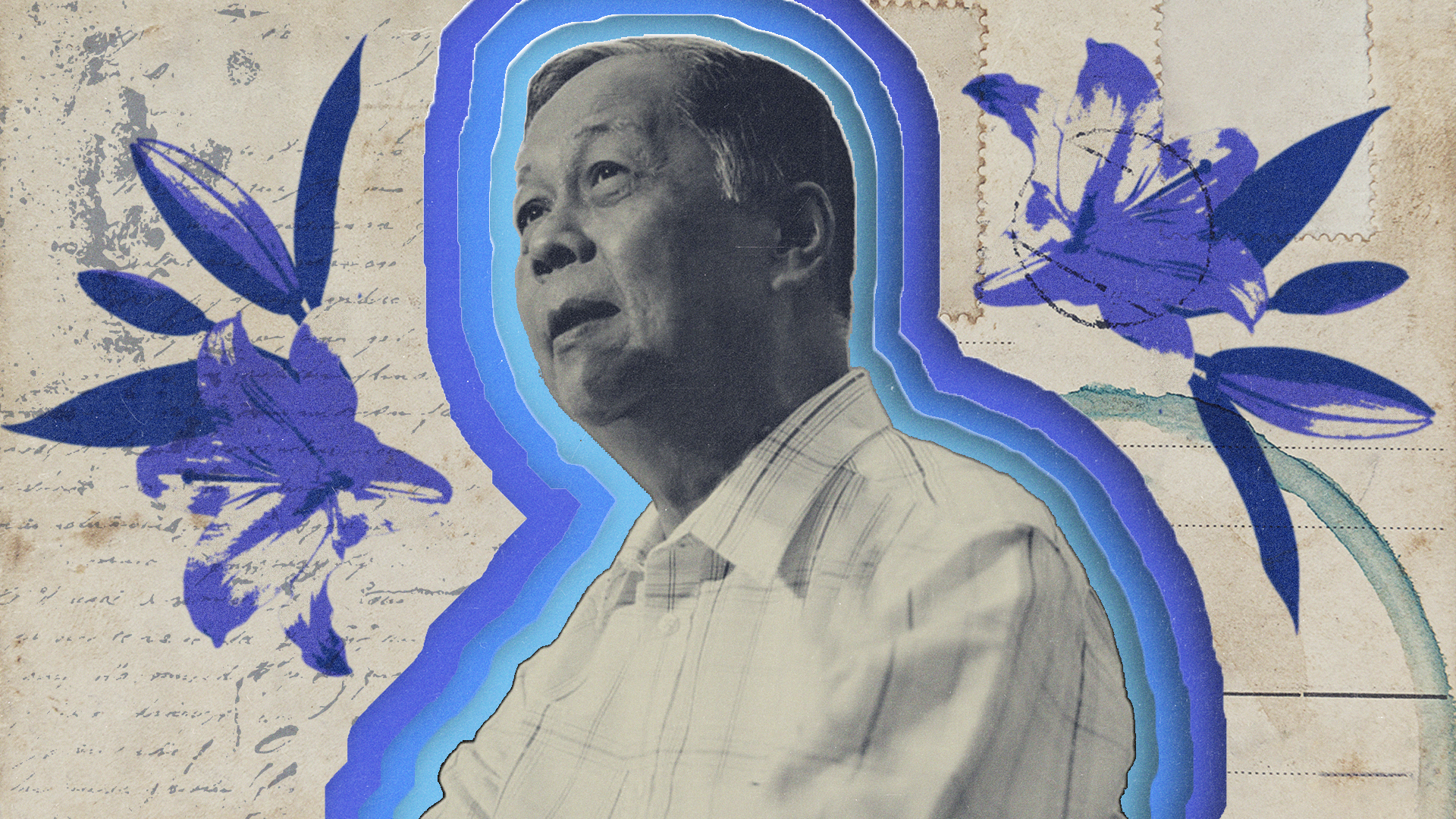
Art by Kirk Bertrand
Renowned litterateur Resil B. Mojares leaves ways of seeing.
Across decades of scholarship, journalism, teaching, criticism, and cultural research, the National Artist for Literature devoted himself to the difficult and necessary work of asking how a people comes to understand itself.
He wrote about Cebu, the Visayas, Philippine literature, politics, memory, museums, intellectuals, and the forces that shaped the country’s past. In doing so, he made the local impossible to dismiss as merely local.
Mojares died on September 5, 2026, one day after his 83rd birthday. His passing brought mourning across Cebu and the wider Philippine cultural community, culminating in a Day of National Mourning on September 12.
He wrote so we could see ourselves
Born in Polanco, Zamboanga del Norte, Mojares eventually made Cebu the center of a remarkable intellectual life. At the University of San Carlos, where he studied and later taught, he founded the Cebuano Studies Center in 1975 and directed it for more than two decades. The institution became an important repository and research center for Cebuano and Visayan history, literature, and culture.
His scholarship was expansive without losing its intimacy. “House of Memory”, “Waiting for Mariang Makiling”, “Brains of the Nation", "The War Against the Americans", and his many other books and essays examined the Philippines beyond a fixed story, rather continually being remembered, contested, interpreted, and rewritten.
This quiet radicalism of Mojares’ work—understanding that history does not belong only to monuments and official archives—lives in provincial newspapers, forgotten writers, family stories, local theaters, political lives, museums, and the languages through which people tell their own stories.
A scholar who began with questions
Before he became one of the Philippines’ most respected historians and literary scholars, Mojares was a journalist. During the years surrounding Martial Law, he wrote about protests and social unrest in Cebu and contributed to The Freeman. His journalism and subsequent detention in 1972 became part of the experiences that shaped his turn toward sustained historical and cultural research.
That trajectory matters. Mojares never treated scholarship as an escape from the world. He brought the urgency of the world into scholarship.
His work repeatedly returned to a deceptively simple question: “Who gets remembered, and who gets left out?”
By looking closely at regional histories and overlooked figures, he expanded the shape of Philippine cultural memory itself.
Cebu was never just a place
For Mojares, Cebu was just a starting point and subject.
His writing helped establish Cebuano and Visayan experiences as essential parts of the national conversation, rather than peripheral footnotes to a Manila-centered history. UP Cebu, in its remembrance of him, described his lifelong practice as one of looking closely at the people, histories, literature, and cultures that make up the country.
In 2018, he was named National Artist for Literature, a recognition that placed a lifetime of regional and national scholarship within the highest cultural honors of the country. He had already received six Philippine National Book Awards and numerous other distinctions for his work.
But perhaps the most fitting monument to Mojares is not a medal, a title, or even a single book. It is the archive.
It is the student who finds a forgotten Cebuano writer because Mojares thought that writer deserved to be studied. It is the researcher who enters an archive with a better question. It is the reader who begins to understand that Philippine history is not one grand narrative, but thousands of lives pressing against one another.
The work continues
At his core, Mojares was a writer who believed in the value of looking closely. In a 2019 interview, he offered a deceptively simple philosophy: “The best way of learning about a subject is to write about it.” UP Cebu recalled those words in its tribute to him.
Mojares spent his life writing toward a deeper understanding of the Philippines. He wrote until history became intimate, until literature became evidence, until memory became something that could be held, questioned, and passed on.
He has now become part of the history he spent a lifetime examining. And somewhere between the books he left behind and the readers who will continue to open them, Resil Mojares remains in conversation with a country he spent his life trying to understand.
He may have laid down his pen. The remembering does not end.