Baring on Canvas
From canvas to film, Ian Inoy’s art reveals the quiet chaos of being human.
Words Marz Aglipay
Photo courtesy of Ian Inoy
September 19, 2025
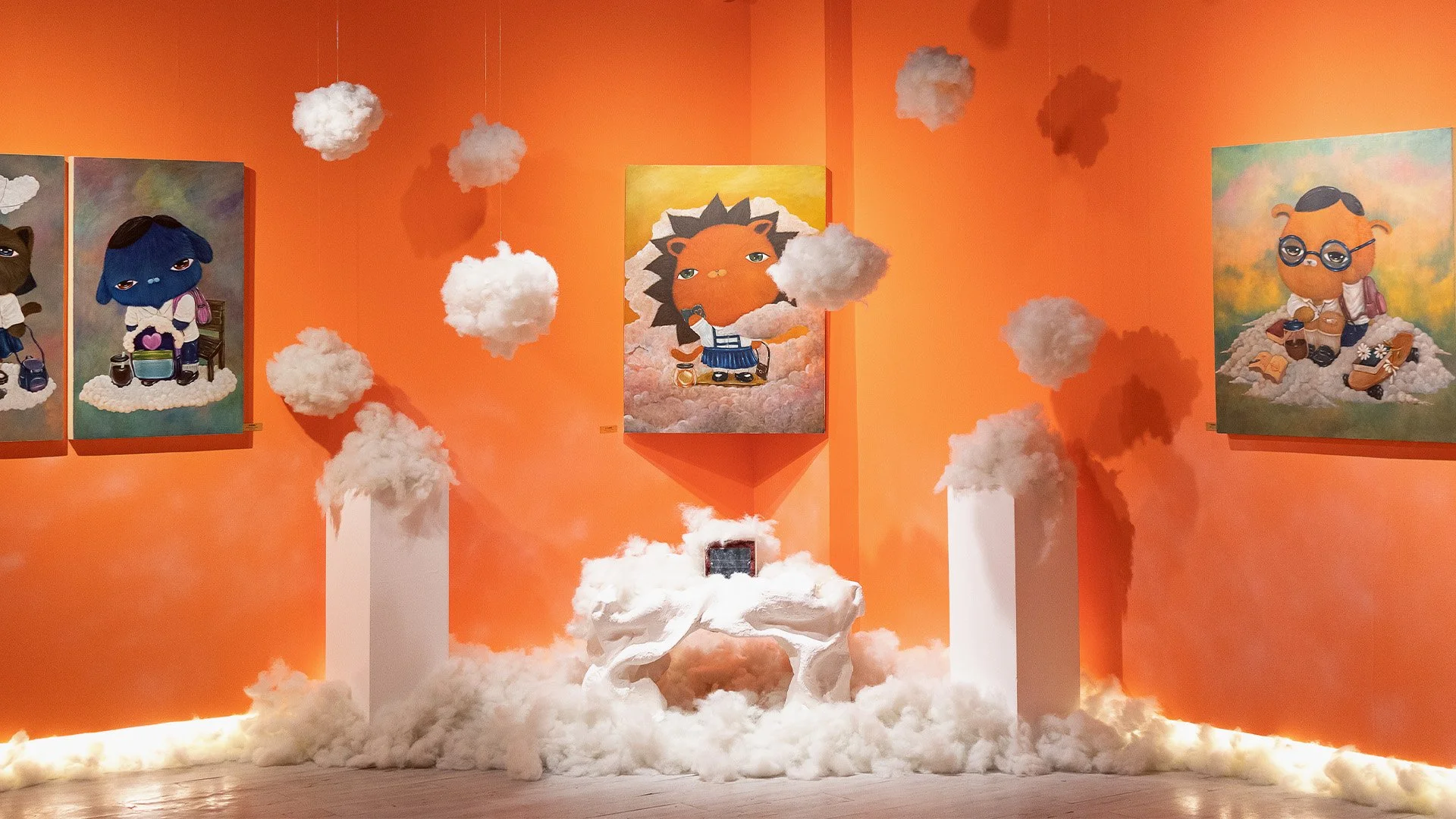
Installation shot of Inoy’s second solo show “Caught between Dreams and Wishes” (2024)
From a generation of artists who turn inward—drawing from personal narrative to shape their work is Ian Inoy. His journey into art began in college when he pursued his Bachelor of Fine Arts with a major in Advertising Arts at FEU Manila. "During this time, I participated in my first official gallery exhibition—a group show in Makati alongside several other artists." Inoy said marking the beginning of his career as an artist.
With three solo exhibitions to date, Inoy has developed a recurring figure central to his work: a bear named Fu Bear—Fu meaning “luck” or “good fortune” in Chinese. “The image of a bear has always struck me as deeply ironic. In real life, coming face-to-face with a bear evokes fear and a sense of danger. Yet, from a young age, we’re comforted by teddy bears,” he shares. This tension between fear and comfort mirrors the duality of lived experience—how challenges often walk hand in hand with personal growth.
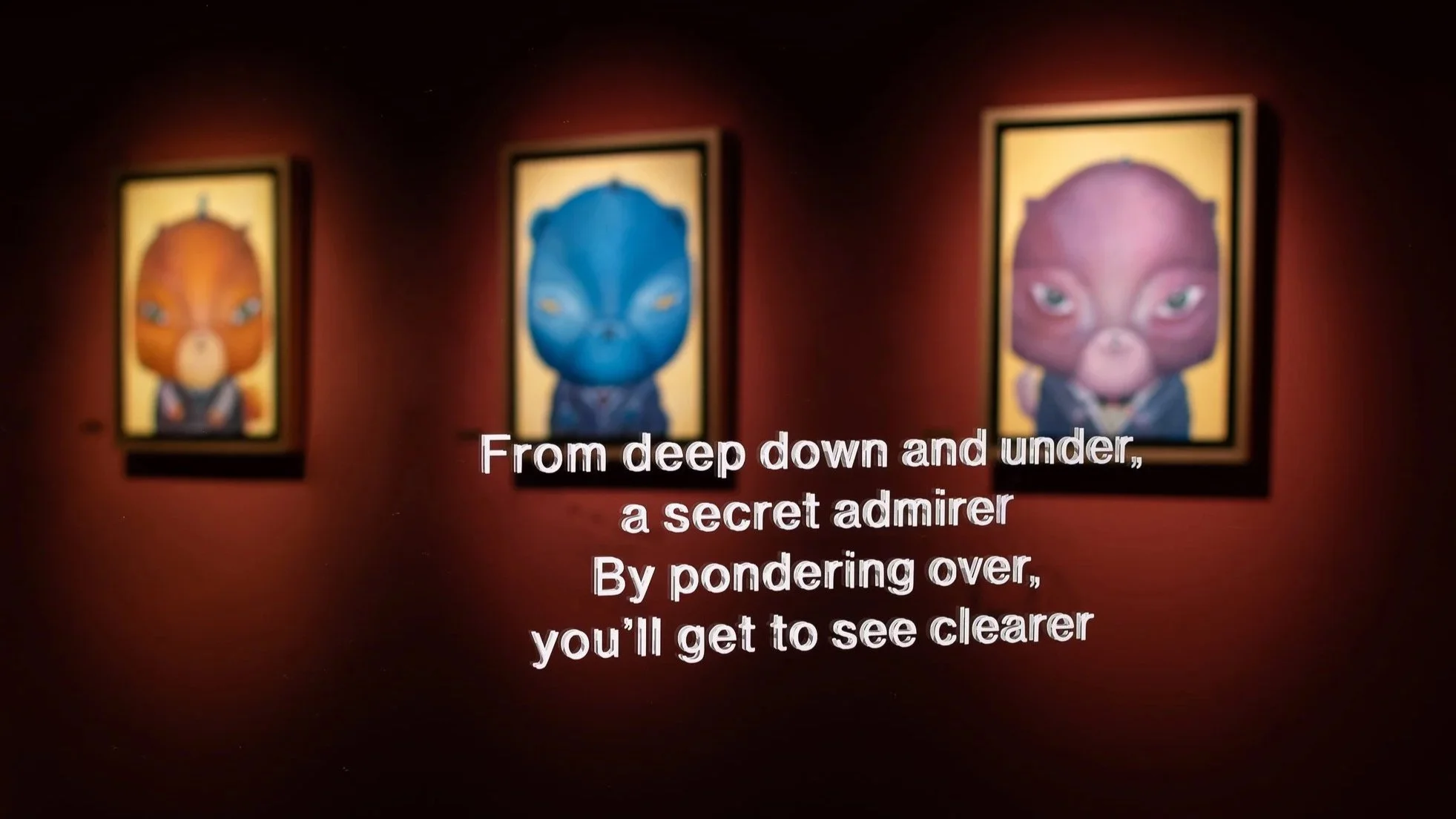
Reflection of works hung in Inoy’s first solo show, No Room for Sadness
What may have been subtle in Ian Inoy’s first two exhibitions becomes more pronounced in his third solo show, Side A: Journey of Love and Love Nots. Structured like the first side of a concept album, the show embraces a pop-cultural sensibility that resonates with a generation raised on visual storytelling and reinvention. In a cultural moment where artists like Taylor Swift and Lady Gaga distinguish each era of their work with distinct themes and aesthetics, Inoy has done something similar—crafting each of his exhibitions in a different hue, one for every color of the rainbow.
Each show represents a chapter in the ongoing narrative of Fu Bear. “Fu Bear, the recurring figure in my work, has evolved alongside this idea,” Inoy explains. “His changing fur colors represent different emotional states, and he sometimes appears within inanimate objects, symbolizing a deep respect for all forms of life.”
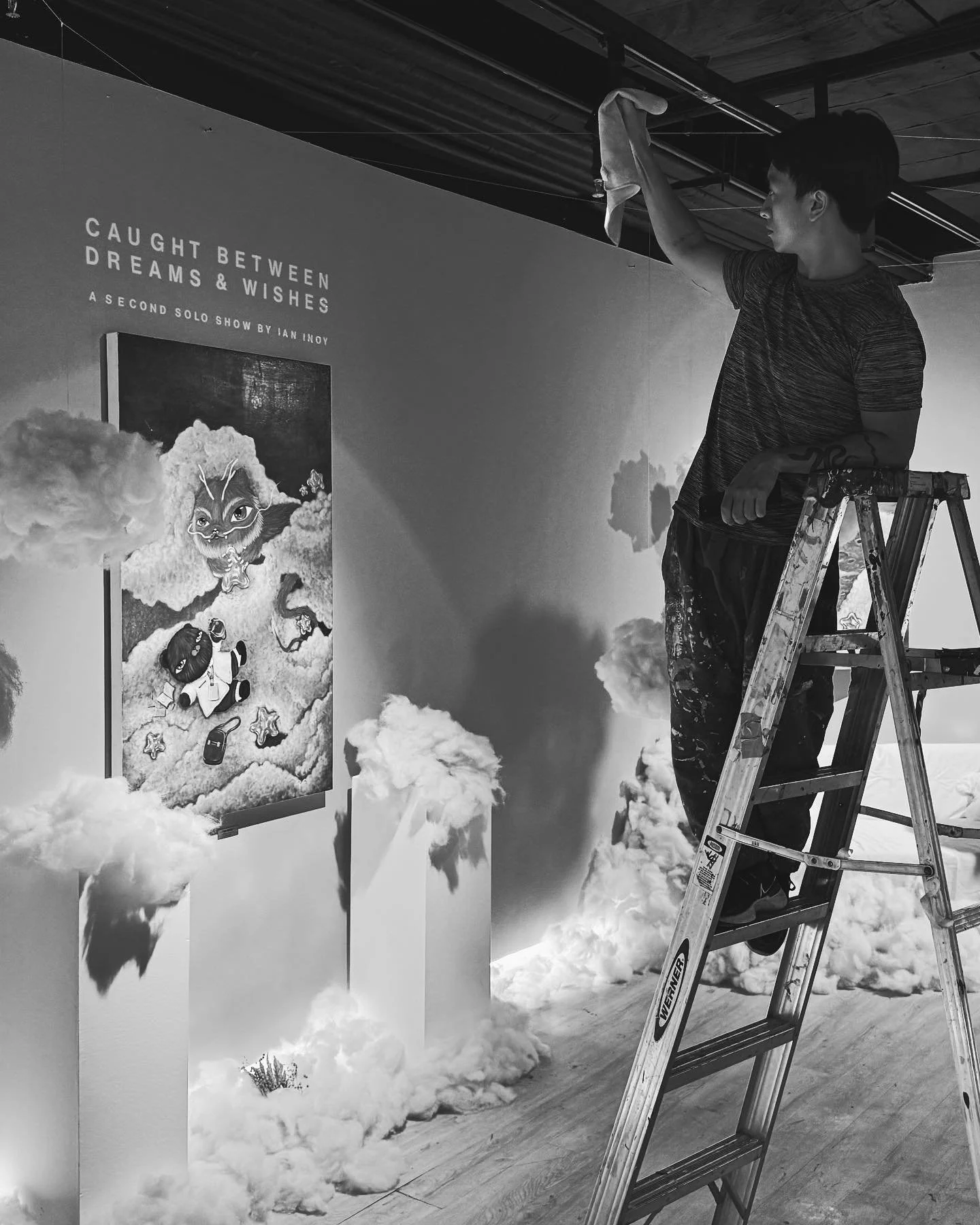
Inoy adding finishing touches to his installation.
His painting style adapts to the emotion or narrative at hand. “Fu Bear originally represented a personal reflection of myself and my struggles,” he says. “I used to see him as a symbol of the pressure I felt to always appear ‘professional’ or ‘serious’ in everything I did. But over time, as I continued creating art, my perspective shifted. I began to see Fu Bear as a way to express the broader human experience—the essence of what it means to be human.”
Beyond the paintings themselves, Inoy is deeply involved in the staging of each exhibition. The installation is never incidental—it’s a considered part of the work. He plays a hands-on role in how the pieces are hung and how they are asked to engage.
Public participation is a key element. “I always ensure that my shows include a participatory element—something I’ve explored and refined during my Master’s studies,” he says.
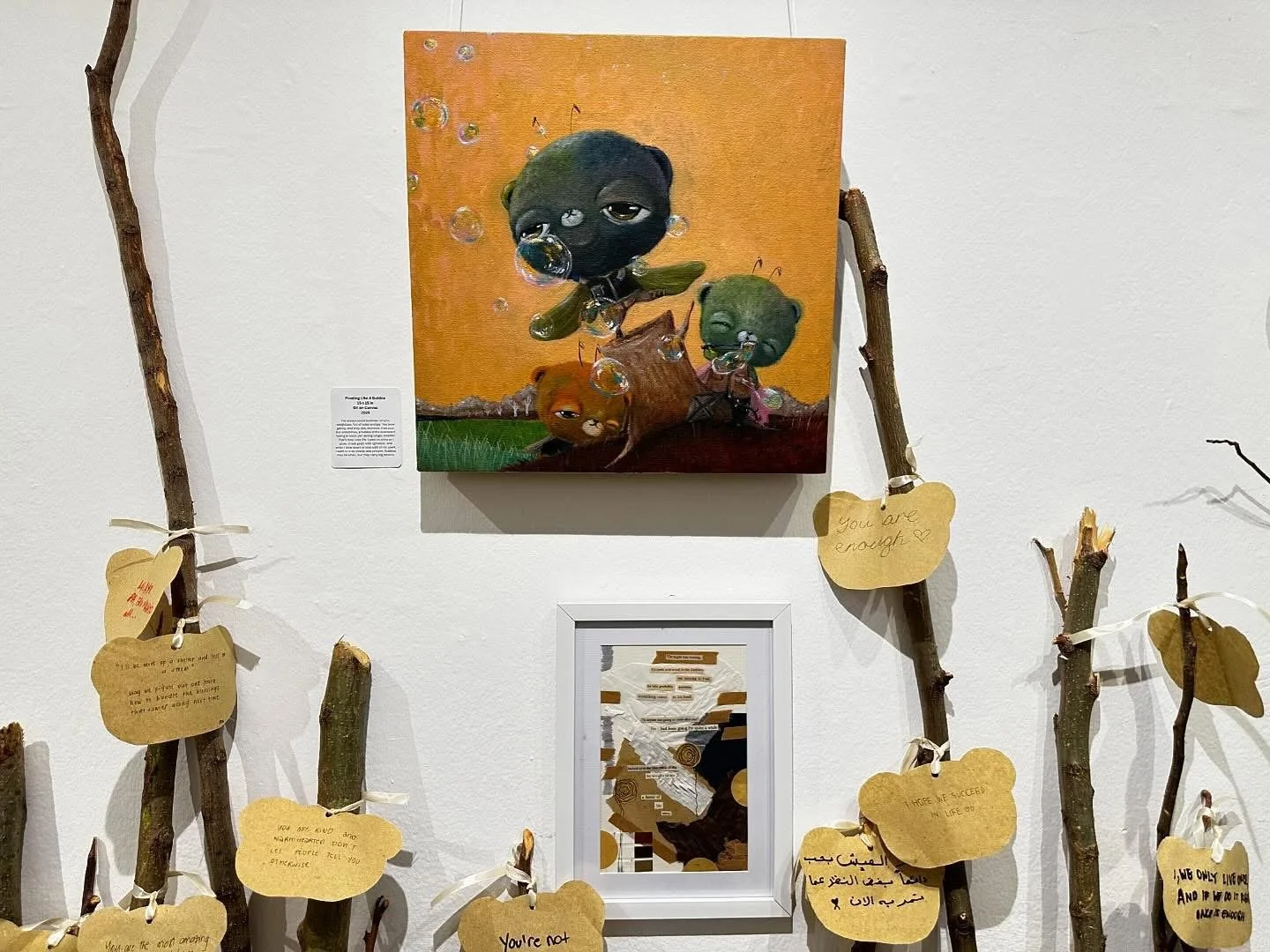
Installation shot from Side A: Journey of Love and Love Nots
As seen in his third show are installations of bear-shaped slips of paper where he asked each visitor to respond to three prompts:
Something they want to forgive themselves for.
Something they want to tell themselves—something they feel they don’t deserve to hear, but actually do.
Something they wish they could say to someone else but find hard to express.
Through this subtle act of baring, guests are also part of this quiet act of making the invisible visible. The exhibit becomes a shared expression of thoughts and feelings we often find difficult to articulate.
Baring in Film
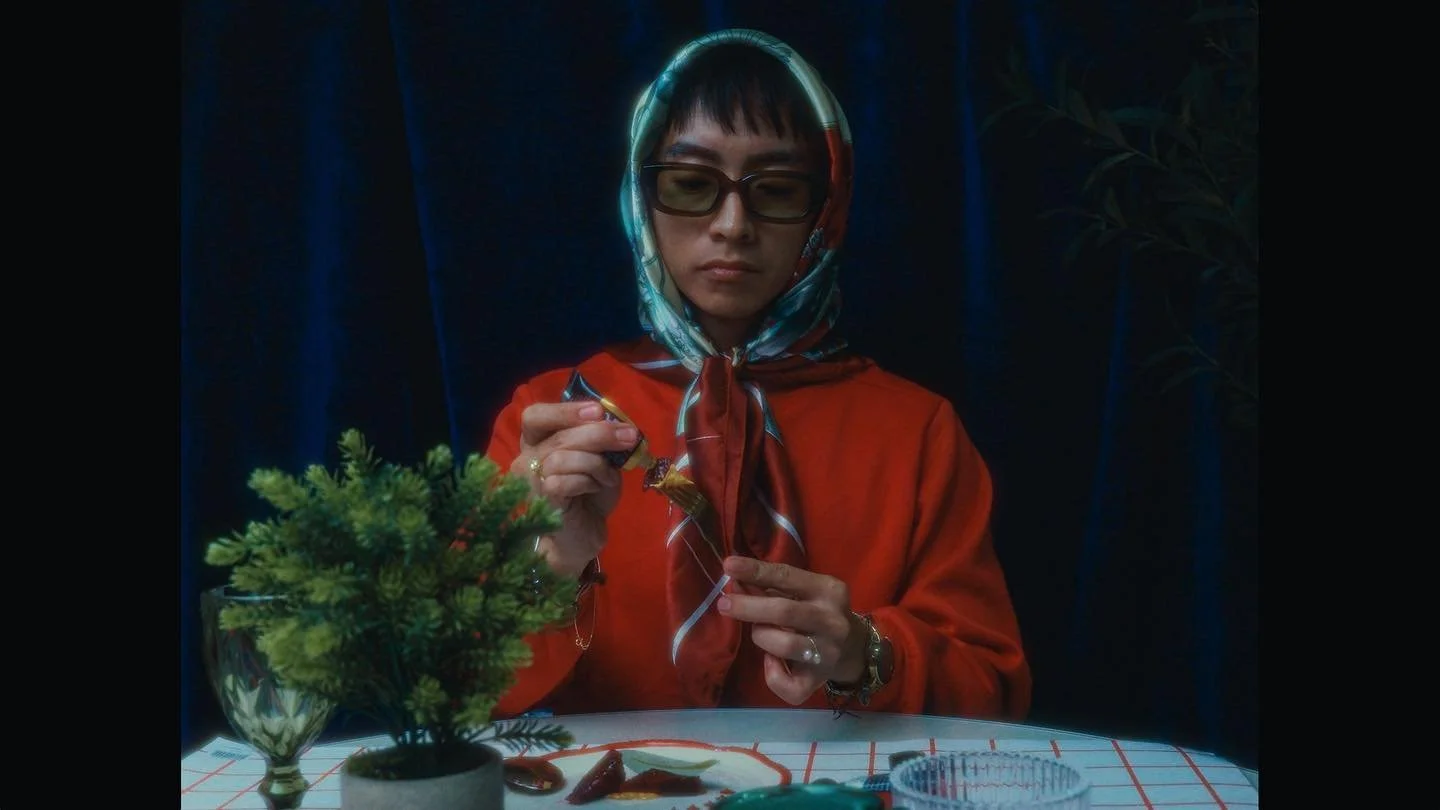
Image still from “Pick Up Sticks” (2025)
Ian Inoy has also taken to producing vlogs on his YouTube channel. While much of the content is a personal chronicle—day-to-day reflections and glimpses into his creative life—he recently released Pick Up Sticks, a short documentary that traces his relationship with art-making and the internal landscapes that fuel it
“My goal was to reveal what it feels like inside an artist’s mind,” he says. “There’s often a misconception that artists are strange, eccentric, or even ‘out of this world.’ While that perception holds some truth, it only scratches the surface. What people rarely see is the internal chaos and complexity that shapes an artist’s thoughts and creativity—a swirling world far more turbulent and nuanced than the one around us.”
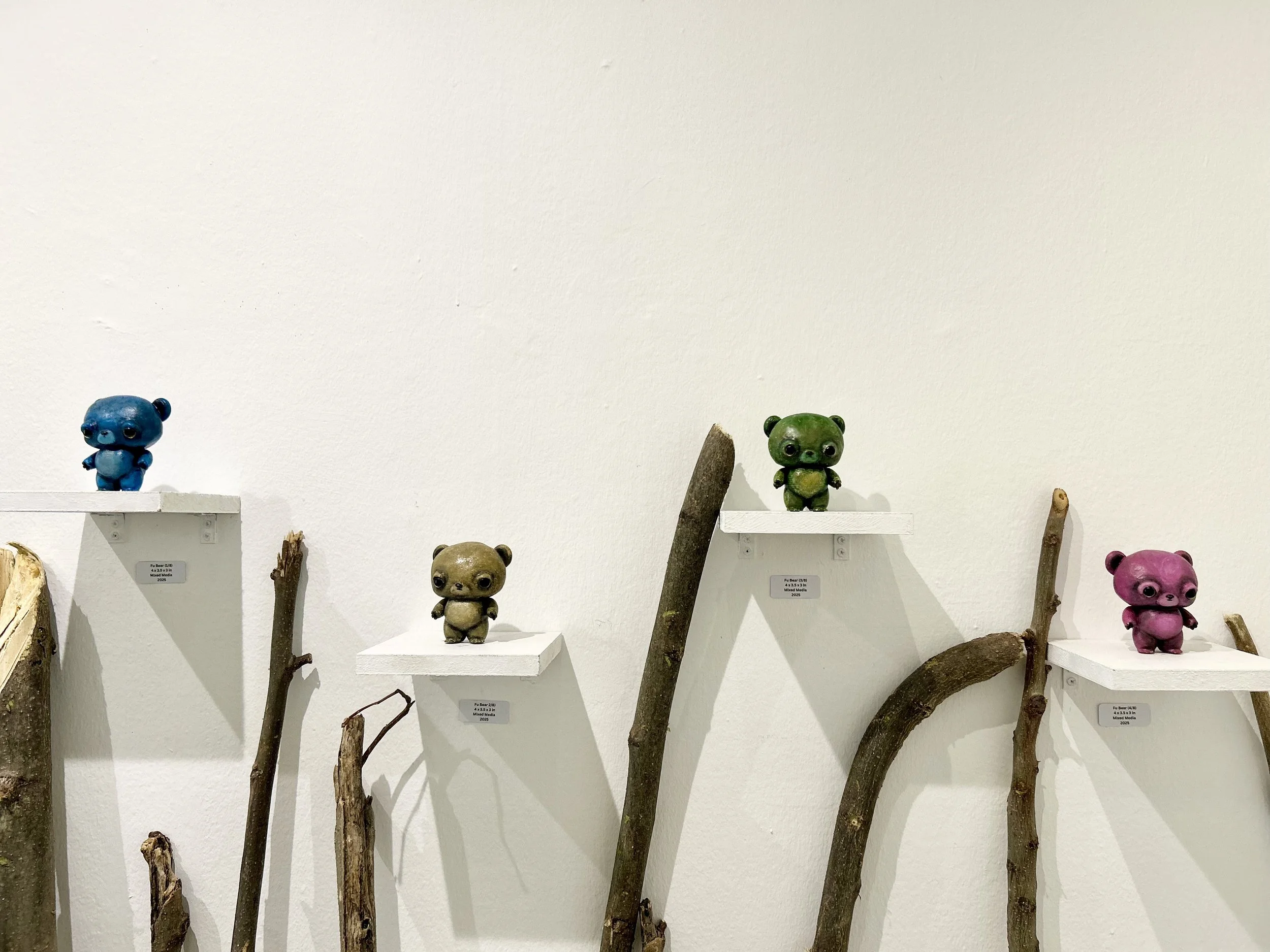
Ian Inoy, Fu Bear (1 to 4), 2025 Mixed Media (Filament 3D Body, Resin Eyes, Toy Paint & Varnish), 4h x 3.50w x 3d in
The film departs from the usual work-in-progress documentation in favor of an intimate form of storytelling. “I wanted to express that internal landscape in a way that goes beyond traditional gallery work,” Inoy explains. “It was important for me that the project be collaborative—a collective voice rather than a singular one.” The result is a layered piece shaped not only by his own perspective but also by those who worked on his film. “This collaboration helped not only to verify my own thoughts but also to highlight the common threads that connect artists across different mediums and backgrounds.”
Inoy’s quiet commitment to visual self-documentation feels almost understated. While many artists focus solely on the production of objects, he folds the act of articulation into the practice itself.
“I strongly believe that art and artistic expression should be able to communicate across generations—including the generation we live in today,” he says. “I think this is part of the reason I became so drawn to this digital landscape myself.”
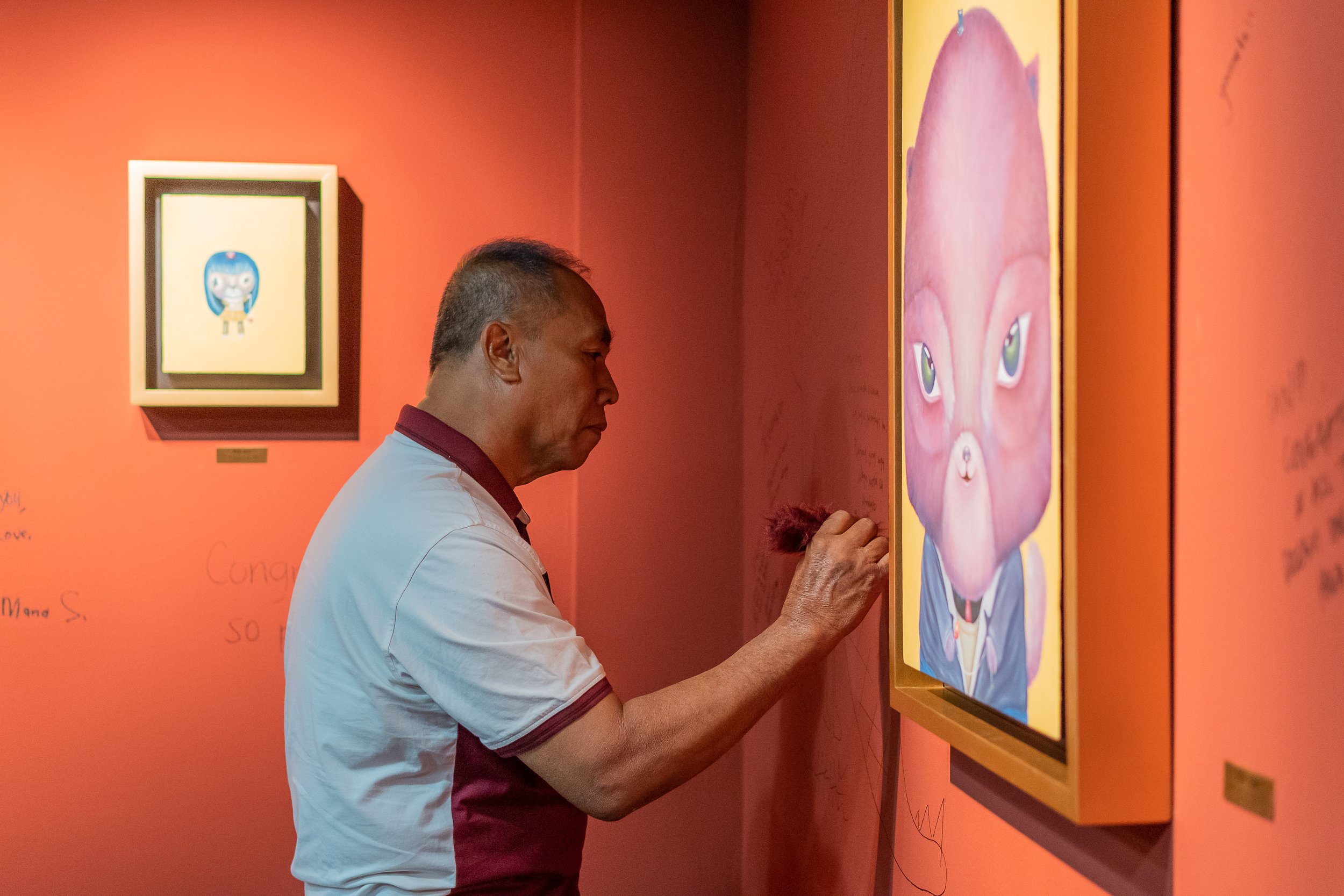
Public participation is a key element in Inoy’s exhibitions. He often invites guest to leave notes in the gallery as part of his installations.
Though Inoy admits he hasn’t met many artists in person, he’s found a sense of kinship through the internet. Watching how others share their creative journeys—warts and all—has encouraged him to be similarly open. “I’ve never been comfortable with the idea of holding back or being secretive about my process,” he says. “On the contrary, I’m passionate about education—both learning from others and sharing what I’ve learned.
For Inoy, mystery and exclusivity don’t hold much appeal. “I believe art can be a powerful tool for connection and support,” he says. “Many artists—especially those just starting out or quietly struggling—are often searching for guidance, encouragement, or even just reassurance that they are not alone. This is why I am committed to documenting and sharing my work and creative process openly.”