Kuala Lumpur welcomes a new contemporary art destination.
Words Jewel Chuaunsu
Photos courtesy of Muara Arts
November 24, 2026
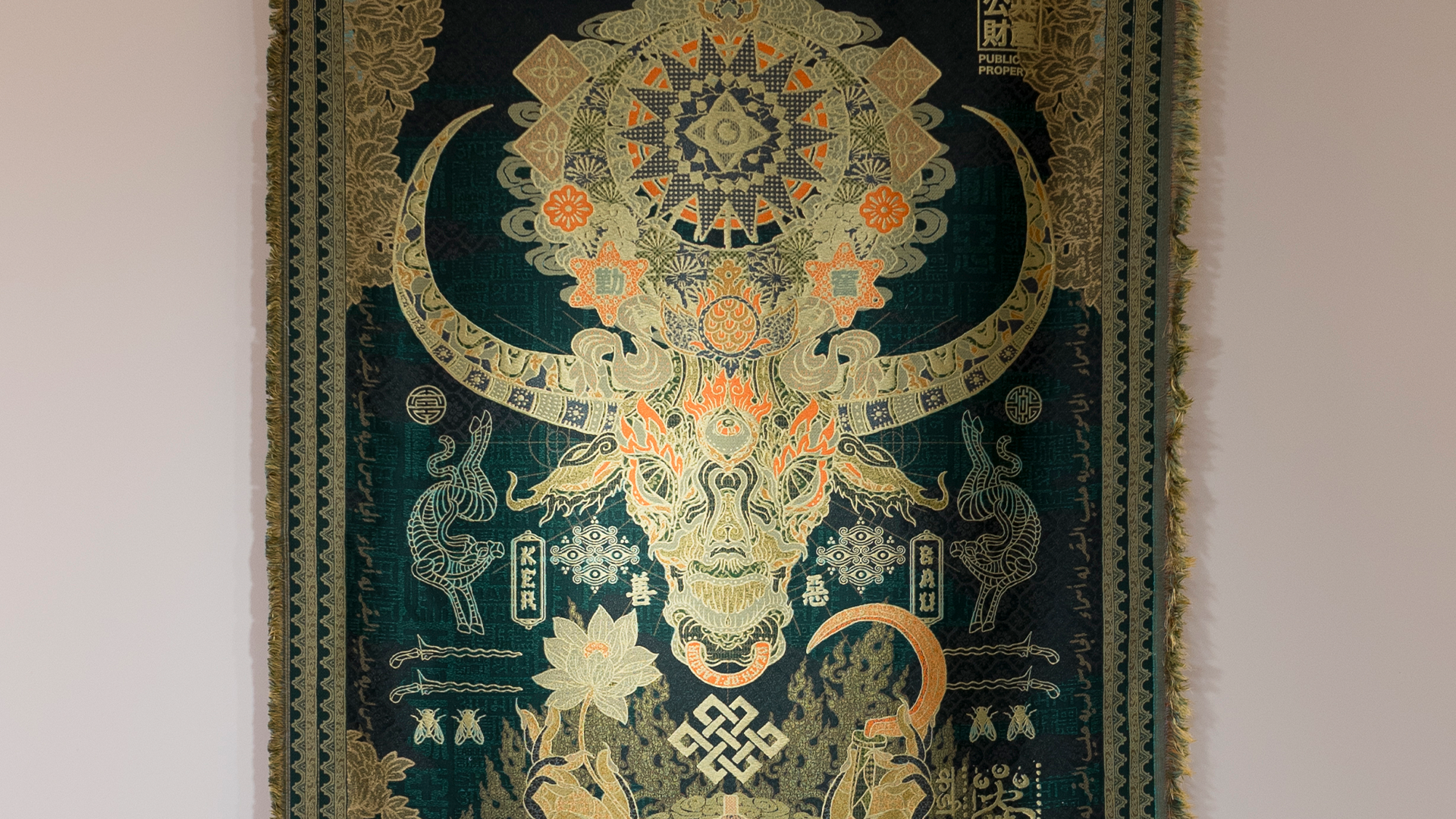
Marcos Kueh’s Telah Dapat Gading Bertuah, Terbuang Tanduk Kerbau Mati, Industrial weaving, 8 colours, recycled polyester, 2024
Medan Pasar, or Old Market Square, is considered the birthplace of Kuala Lumpur. The square is closely tied to the city’s origins in the mid-19th century, when it emerged as a tin-mining settlement near the confluence of the Klang and Gombak rivers. Growing out of an early marketplace, Medan Pasar quickly developed into a bustling trading center. Originally comprising a cluster of timber shacks, the area was frequently ravaged by fires, prompting the British colonial administration to mandate the use of permanent brick-and-tile structures. By the late 19th and early 20th centuries, it had evolved into a commercial and financial hub, lined with ornate Neo-classical shophouses.
For years, Medan Pasar remained a neglected urban pocket. Today, however, it is undergoing an ambitious urban conservation and cultural revitalization project led by the Creador Foundation and its founders, Brahmal Vasudevan and Shanthi Kandiah. Beginning with the acquisition of the Sin Seng Nam coffee shop in 2023, the initiative has since expanded into a wider restoration project encompassing 55 shophouses, with the aim of preserving the area’s historic architecture while attracting Malaysians and international visitors back to the district.
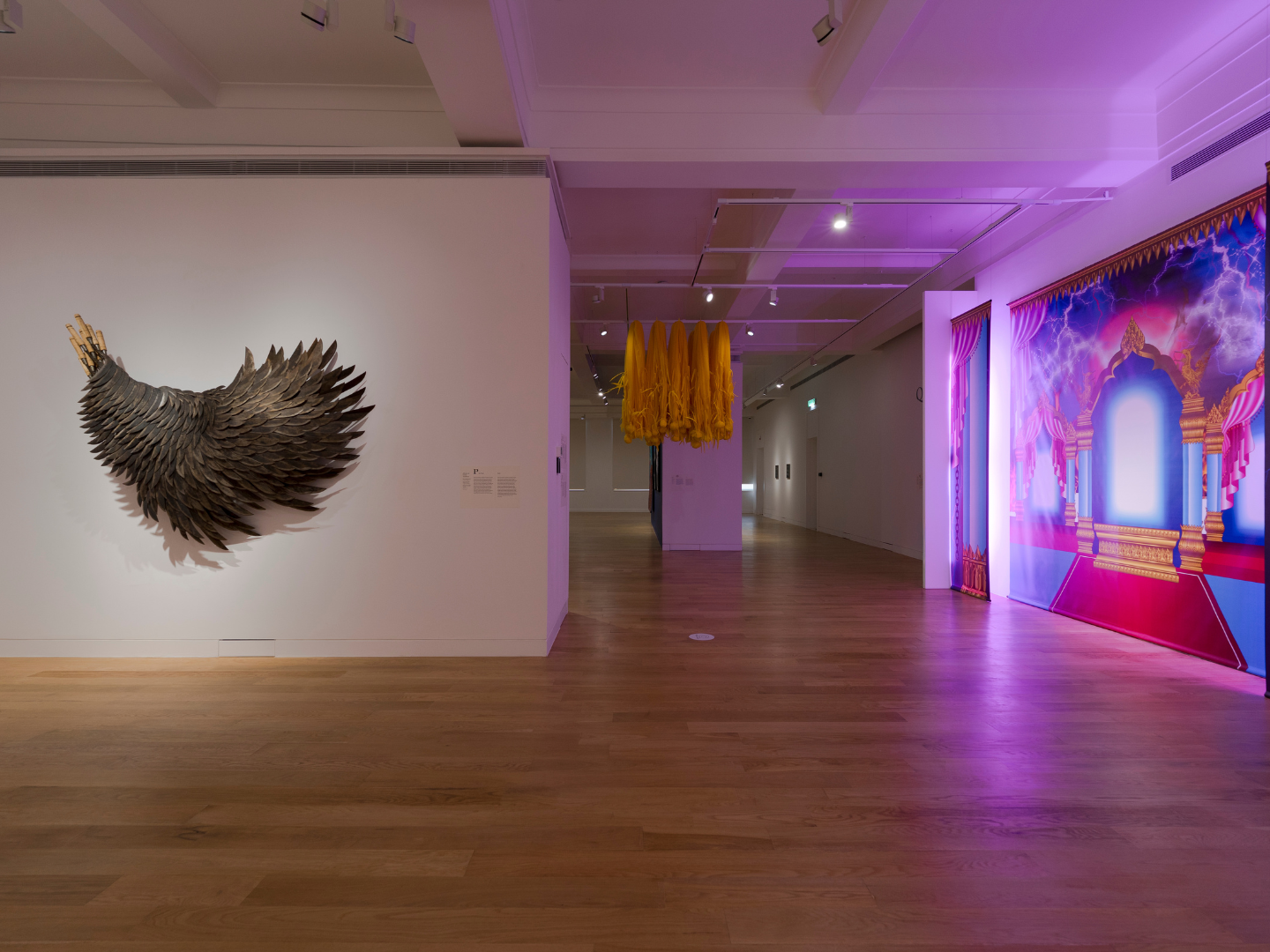
Installation view of ‘A–Z of Southeast Asian Art: A Critical Dictionary’ at Muara Arts Gallery, Kuala Lumpur (1 November 2026–4 April 2027). Photo courtesy of Muara Arts Gallery; photo: Lin Ho.
The project will introduce a gallery, theater, outdoor events, cafes, restaurants, shops, and other cultural amenities. At the heart of this emerging arts and culture hub is Muara Arts, a not-for-profit gallery dedicated to modern and contemporary art from Southeast Asia. Housed in six Art Deco shophouses dating to the 1930s, the Gallery has been created through an adaptive reuse project that preserves the buildings’ historic character while introducing museum-standard facilities. The architectural design is by Dr. Tan Loke Mun, with conservation expertise provided by Studio Lapis.
In Malay, muara translates to “estuary,” referring to the point where a river meets the sea. The name also reflects the Gallery’s ambition to serve as a confluence for Southeast Asian art, ideas, and dialogue. Guiding this vision are Consultant Artistic Director Lydia Yee, formerly Chief Curator of London’s Whitechapel Gallery, and Chief Executive Officer Chris Lee, who joins from National Gallery Singapore.
Decoding Southeast Asia
Muara Arts opened on 1 November 2026 with its inaugural exhibition, A-Z of Southeast Asian Art: A Critical Dictionary. The exhibition takes inspiration from The Critical Dictionary of Southeast Asia (CDOSEA), a long-term multimedia and algorithmic art project by Singaporean artist Ho Tzu Nyen. One of Ho’s starting points was the question: “What constitutes the unity of Southeast Asia, a region never unified by language, religion or political power?” CDOSEA is structured around the 26 letters of the alphabet, with each assigned a particular concept.
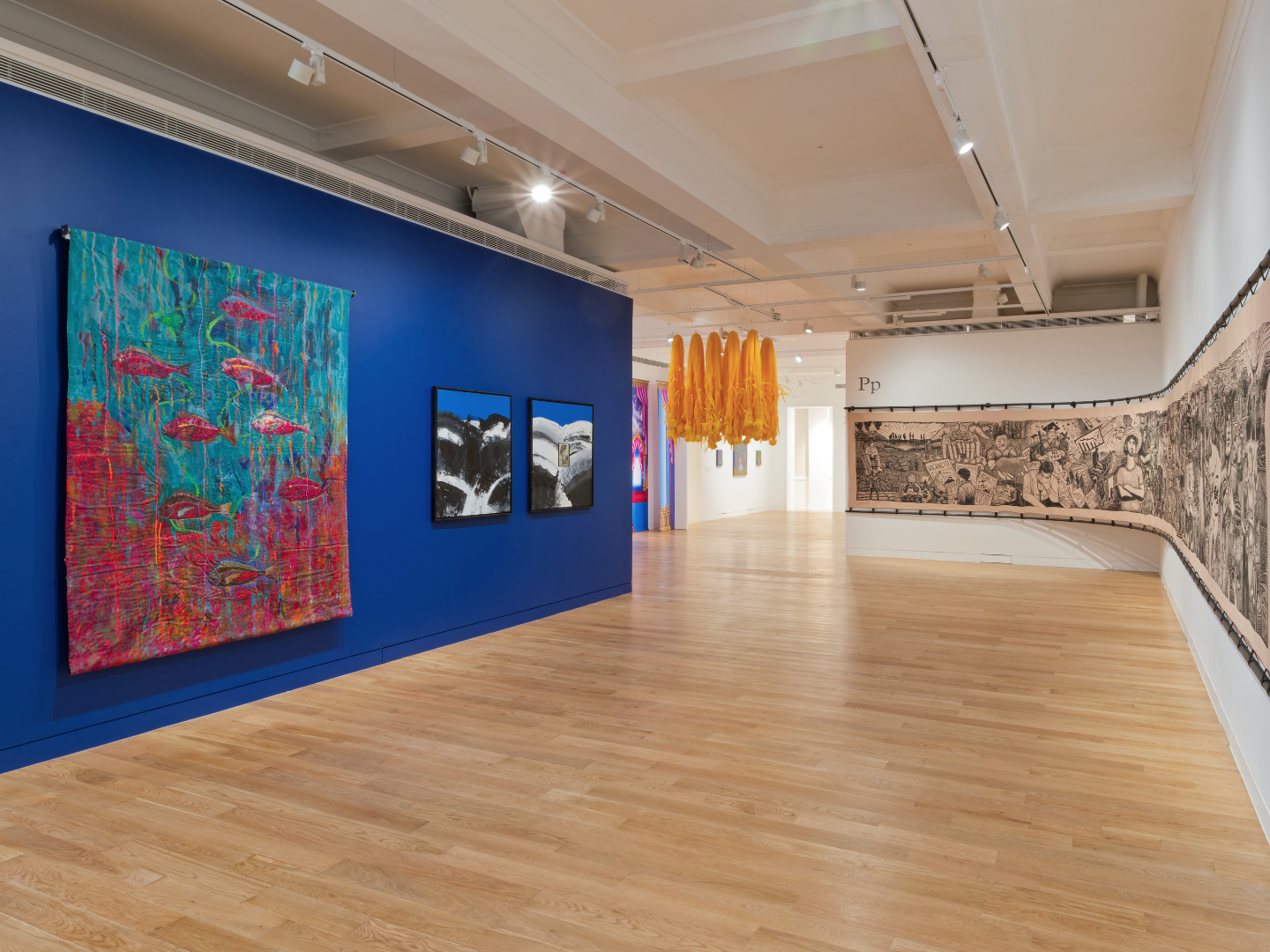
Installation view of ‘A–Z of Southeast Asian Art: A Critical Dictionary’ at Muara Arts Gallery, Kuala Lumpur (1 November 2026–4 April 2027). Photo courtesy of Muara Arts Gallery; photo: Lin Ho.
Curated by Lydia Yee and Zhen Feng Ang, A-Z of Southeast Asian Art brings together more than 40 artists, presenting their interpretations of key terms relating to the region’s culture, ecology, geography, history, and politics.
“A-Z of Southeast Asian Art operates on multiple levels: as an open and inclusive introduction to Southeast Asian contemporary art; as a diverse and complex collection of artworks exploring key concepts, motifs, and questions about the region; and as a curatorial experiment using an algorithmic set of parameters to generate an exhibition. Ho Tzu Nyen’s The Critical Dictionary of Southeast Asia has been phenomenally important in helping us think about art from the region and develop a new model for exhibition-making,” said Yee.
Installation view of ‘A–Z of Southeast Asian Art: A Critical Dictionary’ at Muara Arts Gallery, Kuala Lumpur (1 November 2026–4 April 2027). Photo courtesy of Muara Arts Gallery; photo: Kenta Chai.
Ho Tzu Nyen added, “I’m very happy that curators and artists are finding their own uses for The Critical Dictionary of Southeast Asia. For me, this is how a work or a project remains alive: through new uses, new contexts, and new transformations—through being adapted and reactivated in ways that make sense for the world we are living in.”
The exhibition features artists from Brunei, Cambodia, Indonesia, Laos, Malaysia, Myanmar, the Philippines, Singapore, Thailand, Timor-Leste, and Vietnam.
A for Animism
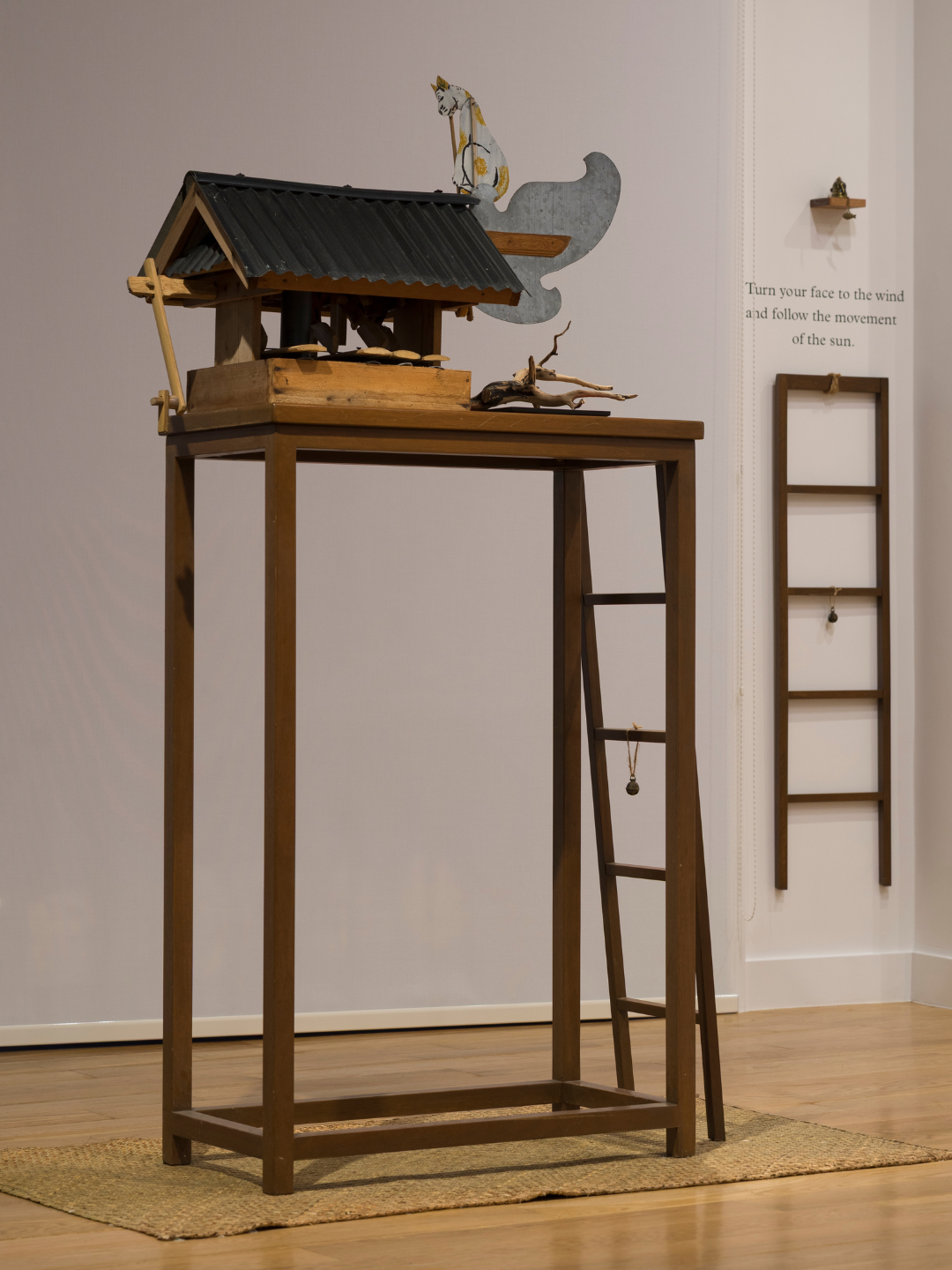
Moving Earth, Crossing Water, Eating Soil by Singaporean artist Zarina Muhammad is a mixed-media, site-specific installation exploring Southeast Asian mythologies, animism, and ecological histories. The work features animal cutouts derived from divination diagrams, a “compass” pointing toward an estuary, and sensory elements that engage sight, sound, touch, and smell.
Installation view of ‘A–Z of Southeast Asian Art: A Critical Dictionary’ at Muara Arts Gallery, Kuala Lumpur (1 November 2026–4 April 2027). Photo courtesy of Muara Arts Gallery; photo: Lin Ho.
A for Archipelago
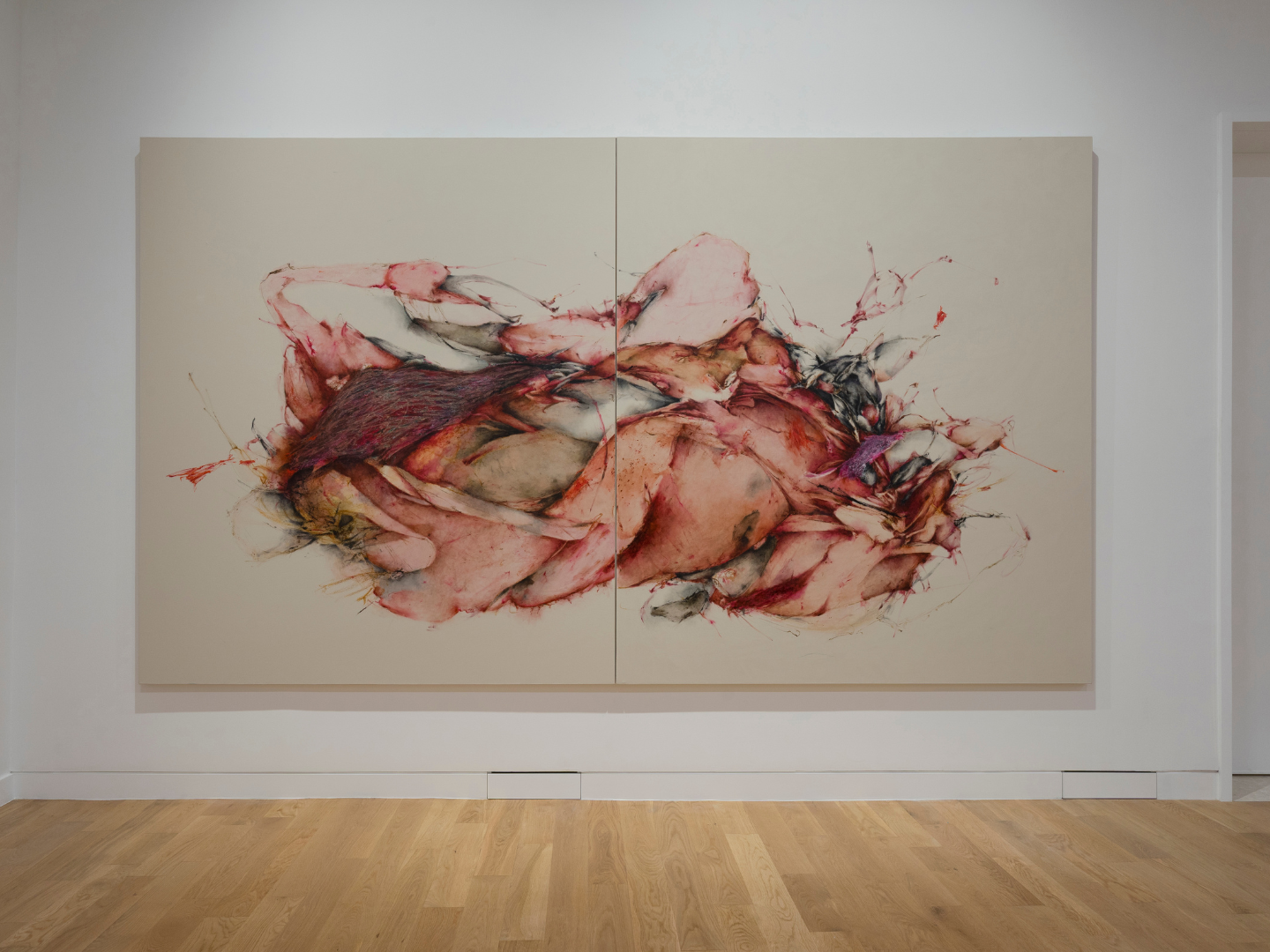
Filipino-Dutch artist Martha Atienza’s Our Islands video installation reimagines a traditional Ati-Atihan festival procession, performed by compressor divers on the seafloor off Bantayan Island in Cebu. The performers wear costumes representing a range of figures, from the Santo Niño and Christ to Manny Pacquiao, an Overseas Filipino Worker, a Typhoon Yolanda survivor, and individuals associated with the Philippine drug war. The work draws attention to the environmental, economic, and social crises confronting coastal communities.
B for Buffalo
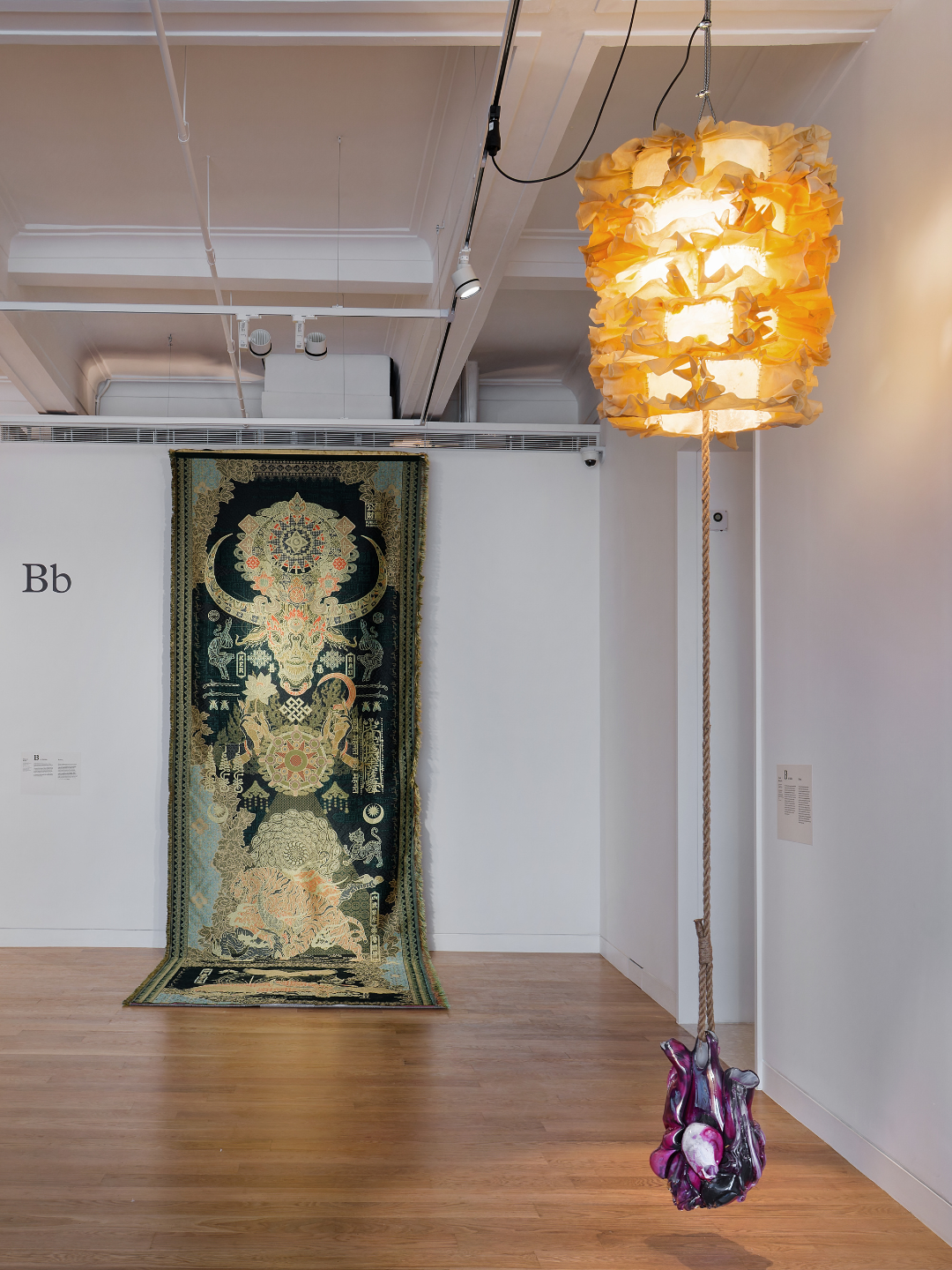
Lady Viscera and the Porous Wall, Nadiah Bamadhaj's suspended sculptural installation pairs an illuminated buffalo-hide shade, of the kind used to make wayang kulit puppets, with a hand-blown glass form resembling a human heart. The work references a ritual duel between buffalo and tiger, evoking the tension between strength and order on one hand and untamed nature on the other, while also symbolizing the struggle between East and West.
Installation view of ‘A–Z of Southeast Asian Art: A Critical Dictionary’ at Muara Arts Gallery, Kuala Lumpur (1 November 2026–4 April 2027). Photo courtesy of Muara Arts Gallery; photo: Kenta Chai.
In his textile work, Telah Dapat Gading Bertuah, Terbuang Tanduk Kerbau Mati, Marcus Kueh places the hardworking buffalo above the predatory tiger and opportunistic crane, challenging a class hierarchy that often looks down on manual laborers.
C for Corruption
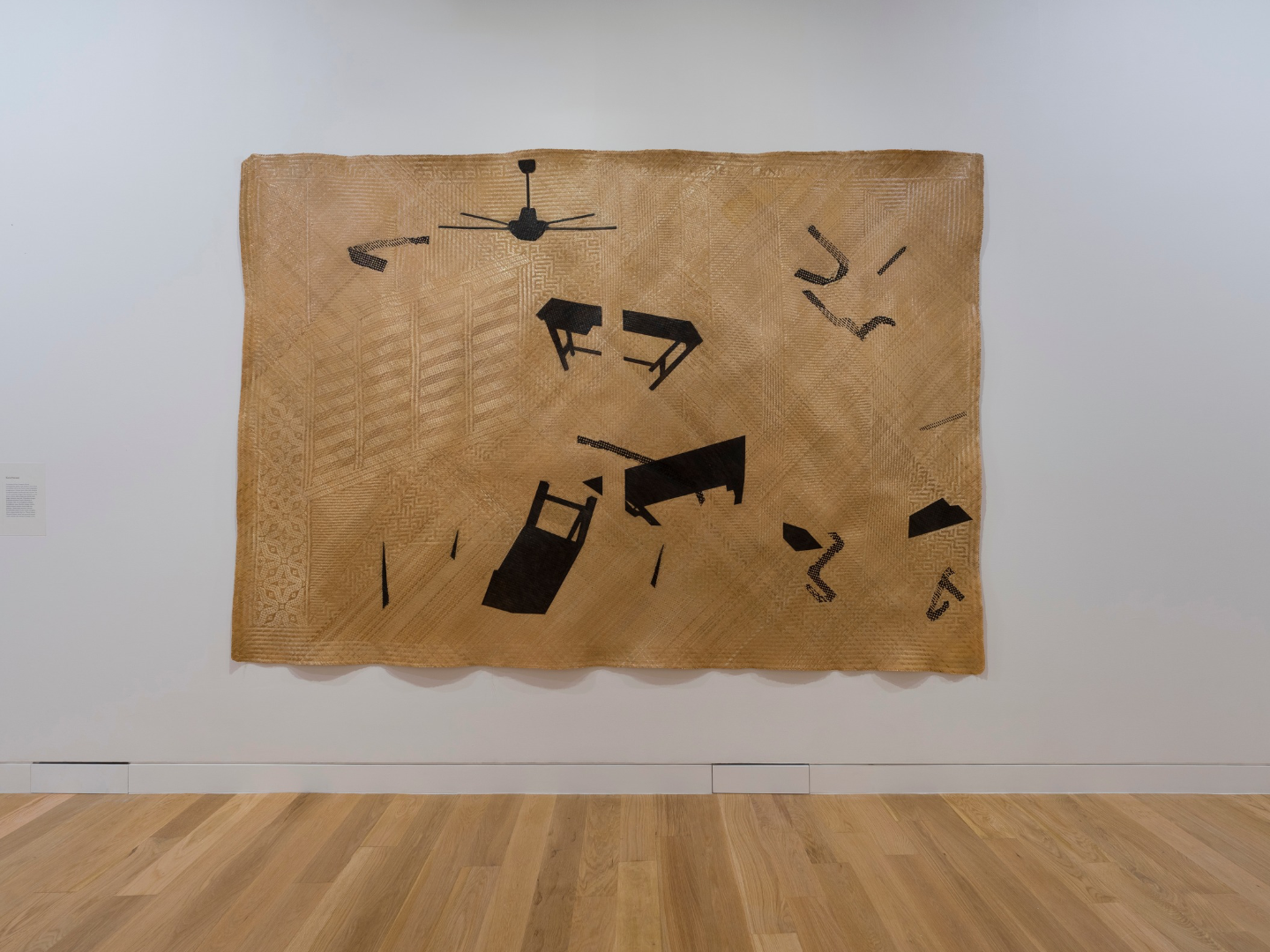
Pio Abad and Frances Wadsworth Jones’ The Construction of Eight Single-Storey Classrooms for Public Elementary Schools forms part of The Collection of Jane Ryan & William Saunders, their ongoing art and research project examining objects amassed by former Philippine dictators Ferdinand and Imelda Marcos during their rule. The work takes the form of an incomplete replica of a coronet from the vast collection of jewels the Marcoses attempted to smuggle into Hawaii following their exile in 1986. The coronet’s estimated value is presented in relation to the public services that could have been provided with the equivalent sum, highlighting the human cost of corruption.
Installation view of ‘A–Z of Southeast Asian Art: A Critical Dictionary’ at Muara Arts Gallery, Kuala Lumpur (1 November 2026–4 April 2027). Photo courtesy of Muara Arts Gallery; photo: Kenta Chai.
Moving through the alphabet from A to Z, the exhibition continues with works by Pacita Abad, Isabel & Alfredo Aquilizan, Izat Arif, Christine Ay Tjoe, Sharon Chin and Mayyu Ali, Tiffany Chung, Nicole Coson, Fyerool Darma, Cian Dayrit, Nirmala Dutt, Simryn Gill, Pao Houa Her, Ho Tzu Nyen, Yasmin Jaidin, Banny Jayanata, Samnang Khvay, Zai Kuning, Maria Madeira, Maryanto, Tuấn Andrew Nguyễn, Mary Pakinee, Pangrok Sulap, Paul Pfeiffer, Thảo Nguyên Phan, Navin Rawanchaikul, Norberto Roldan, Anne Samat, Citra Sasmita, Moe Satt, Agus Suwage, Tan Zi Hao, Jennifer Tee, Tanat Teeradakorn, Kanitha Tith, Arlette Quỳnh-Anh Trần, Carlos Villa, Savanhdary Vongpoothorn, Wong Hoy Cheong, Sawangwongse Yawnghwe, and Yee I-Lann.
Reflecting on the Gallery’s role in the wider revitalization of Medan Pasar, Muara Arts founders Shanthi Kandiah and Brahmal Vasudevan, said: “The opening of Muara Arts marks an important milestone in our vision to breathe new life into Medan Pasar, transforming this historic precinct into a place where art, culture, heritage and community come together.”
A–Z of Southeast Asian Art: A Critical Dictionary runs from 1 November 2026 to 4 April 2027. Muara Arts is located at 18, Medan Pasar, City Centre, 50050 Kuala Lumpur, Malaysia. The Gallery is open Wednesday to Monday, from 10 am to 6 pm. For more information, visit www.muaraarts.org or follow @muaraarts on Instagram.