Motherboard, Motherland, and Norman Dreo’s Tapestry of PH Art History
A motherboard in hand, artist Norman Dreo retells Philippine history through the lens of art.
Words Marc Nathaniel Servo
Photos courtesy of Derek Pedrialva
July 09, 2026
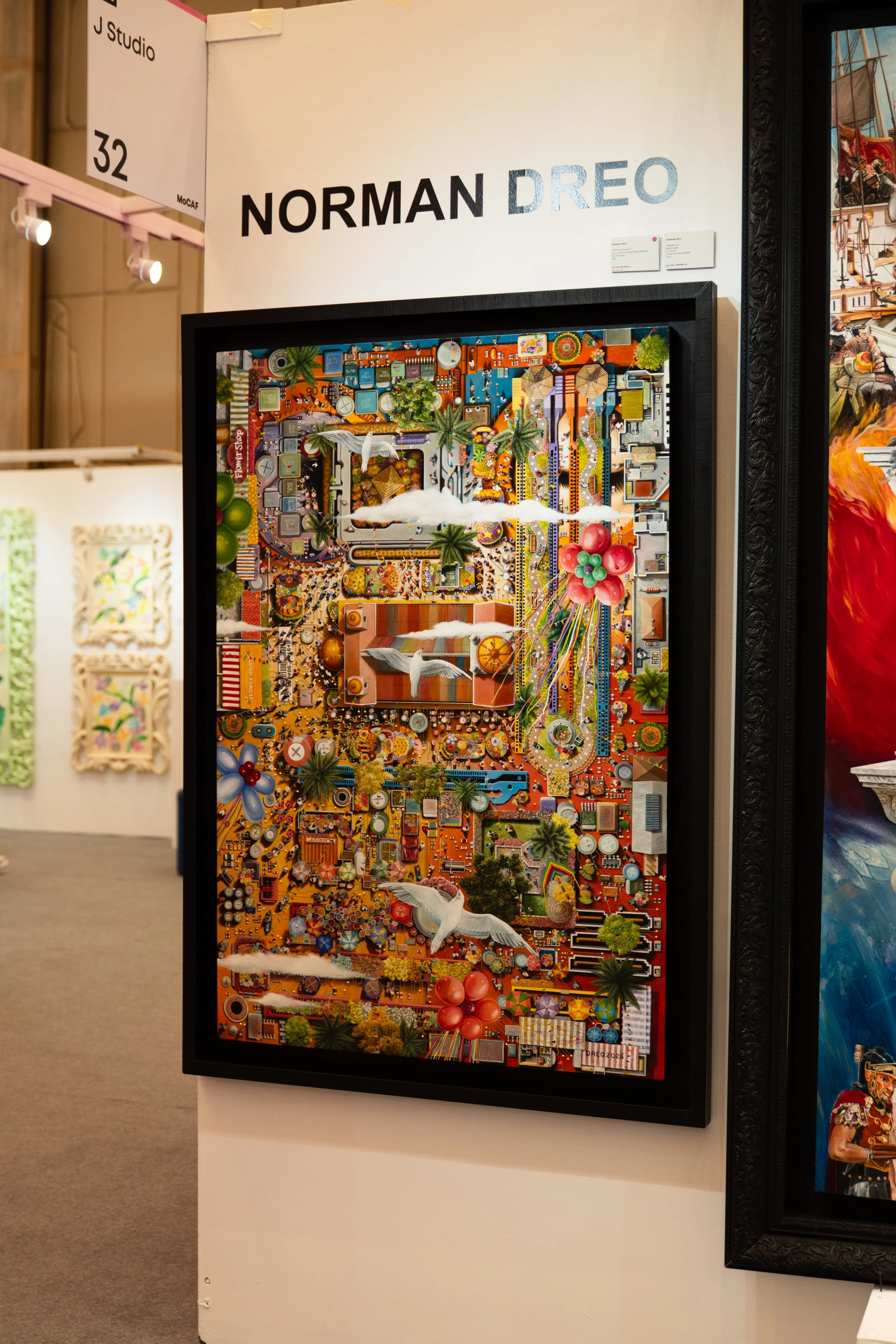
J Studio’s artist Norman Dreo looks back to his first major winning piece “Lipunang Teknolohiya,” in the ASEAN Art Awards in the 2000s, as he traces Philippine heritage in the form of a motherboard.
With the country teetering on the brink of technological revolution, struggling to navigate art, culture, and artificial intelligence, Norman saw the need to re-utilize technology in showing human narratives.
He still could remember the first time he discovered his iconic technological piece.
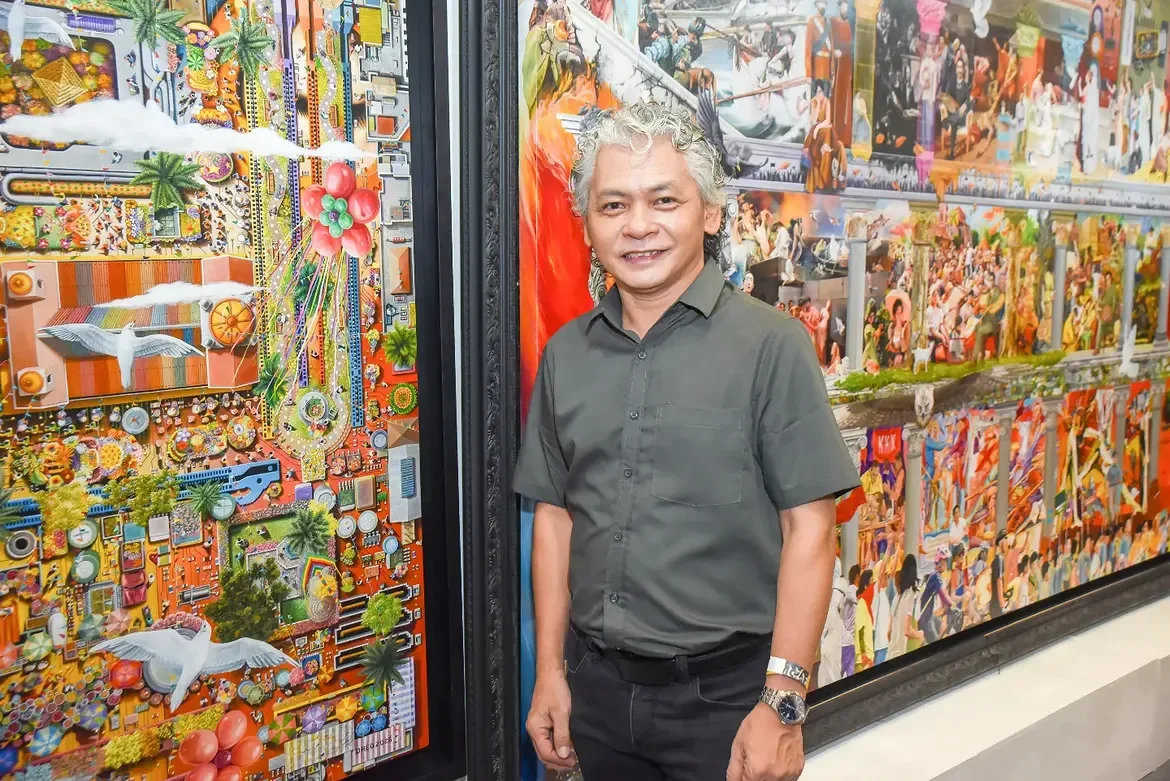
Artist Norman Dreo | Photo from J Studio’s Instagram (@artjstudio)
While searching for a standout artstyle for the ASEAN art awards, Norman found beauty in circuit boards, “Nakakita ko ng motherboard nakatambak sa house. Then from there, sabi ko maganda itong setup nito para siyang floor plan. At saka isa pa, this time we're living under technology. Parang ‘yong technology rin ang nagbibigay sa atin ng movement to live, to function.”
A circuit board in hand, he built communities and stories. In his MoCAF exhibition last year titled “Envision,” Norman captured the harmony between humanity and machinery as Filipinos usher in the digital age.
This year, he tread the same path, balancing his fascination with technology together with Philippine art history in “SAGRADO DOS,” a follow up from his 2024 exhibit, “SAGRADO.”
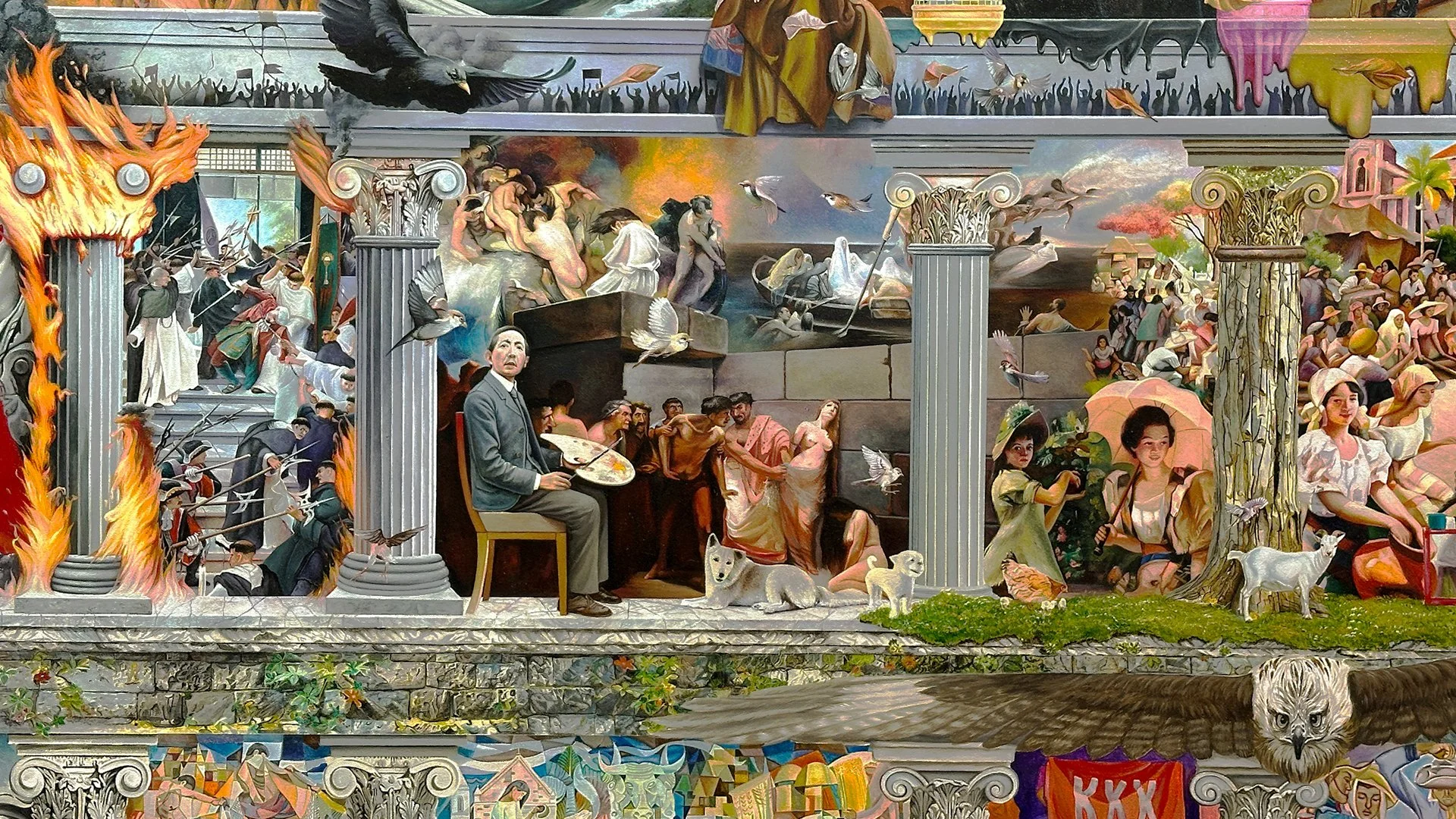
Detail of SAGRADO DOS | Photo by Derek Pedrialva
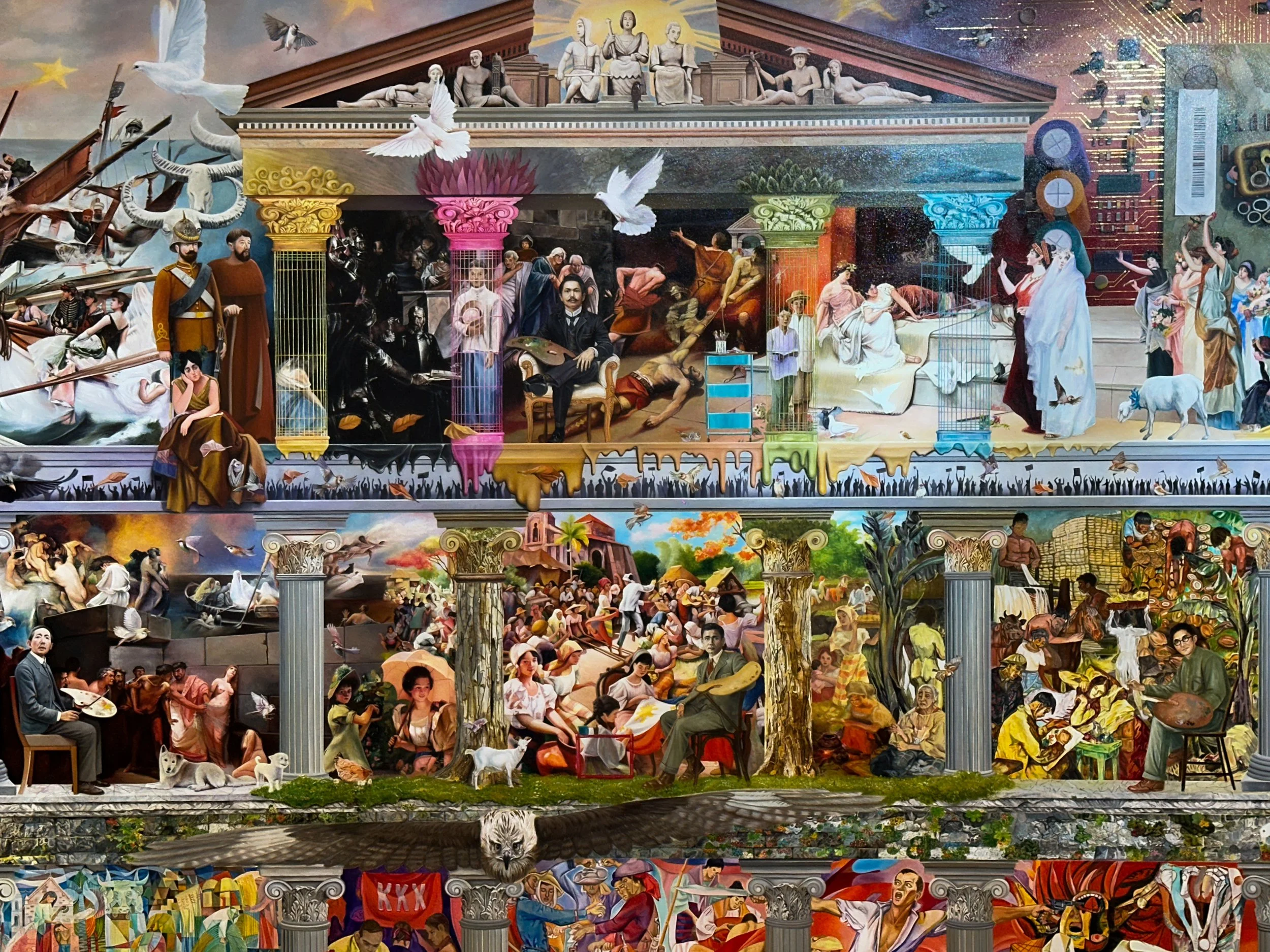
A gigantic painting standing 6x10 ft, SAGRADO DOS is a headturner in MoCAF, with many people taking their time to digest the details painted all over the large canvas.
An ode to the role of visual artists in our history of colonization, revolution, and modernization, Norman depicted a retablo or a church altar not to worship, but to venerate, and serve as a reminder, of the importance of art in our nation’s history.
The artwork, eight months of work in progress, is composed of titular moments in history—from the Spanish colonization down to the pandemic, featuring titular Filipino artists like Juan Luna and Ang Kiukok—all encompassed in one painting. The painting represents how art is present across these times as a song of revolution and harbinger of change.
“This is a retablo, an altar, ‘di ba? Now I’m putting these artists to the altar. The altar of the artist, kasi sila naman ngayon ang bida,” he explained. “Ang tinitingala, hindi naman pinagdarasalan, pero sa kanila nanggaling ang history natin, kasi without them, how can we visualize our history?”
by Norman Dreo
Norman told Art+ Magazine that the painting is a moving piece. While still unfinished, with some details still left out of the painting, he said that the painting can be viewed from left to right: the past can be seen from the left, and on the right are the circuitry that defines modernization.
Several symbolisms are present in the artwork: In the middle portion of the painting, paint can be seen dripping to the horizontal lane of rallying people, which is a symbol of how art drips into revolution; the first two cages on the upper portion contains Elias (El Filibusterismo), and Crispin & Basilio (Noli Me Tangere), symbolic of national hero, Dr. Jose Rizal’s, titular novels. The third and last cage is open—which tells of freedom.
With this masterpiece, he aims to inspire the younger generation to engage with Philippine history, claiming that visual arts could help evoke interest in these subjects, combined with historical books.
Beyond history, he also wants to engage the youth with arts, stating that he wants young viewers to delve in the beauty of painting, and how art is a constant work in progress. He reminisced on his earlier days, explaining that his art style evolved over time—becoming the Norman Dreo of the art scene known for very detailed artworks and his signature technological elements.