
Lasting Blooms: Hope in the Art of Juvenal Sansó
Ricky Francisco shares the legacy of Juvenal Sansó—one of pain, perseverance, growth, and beauty.
Words Mara Fabella
Photo courtesy of Fundación Sansó
September 06, 2025
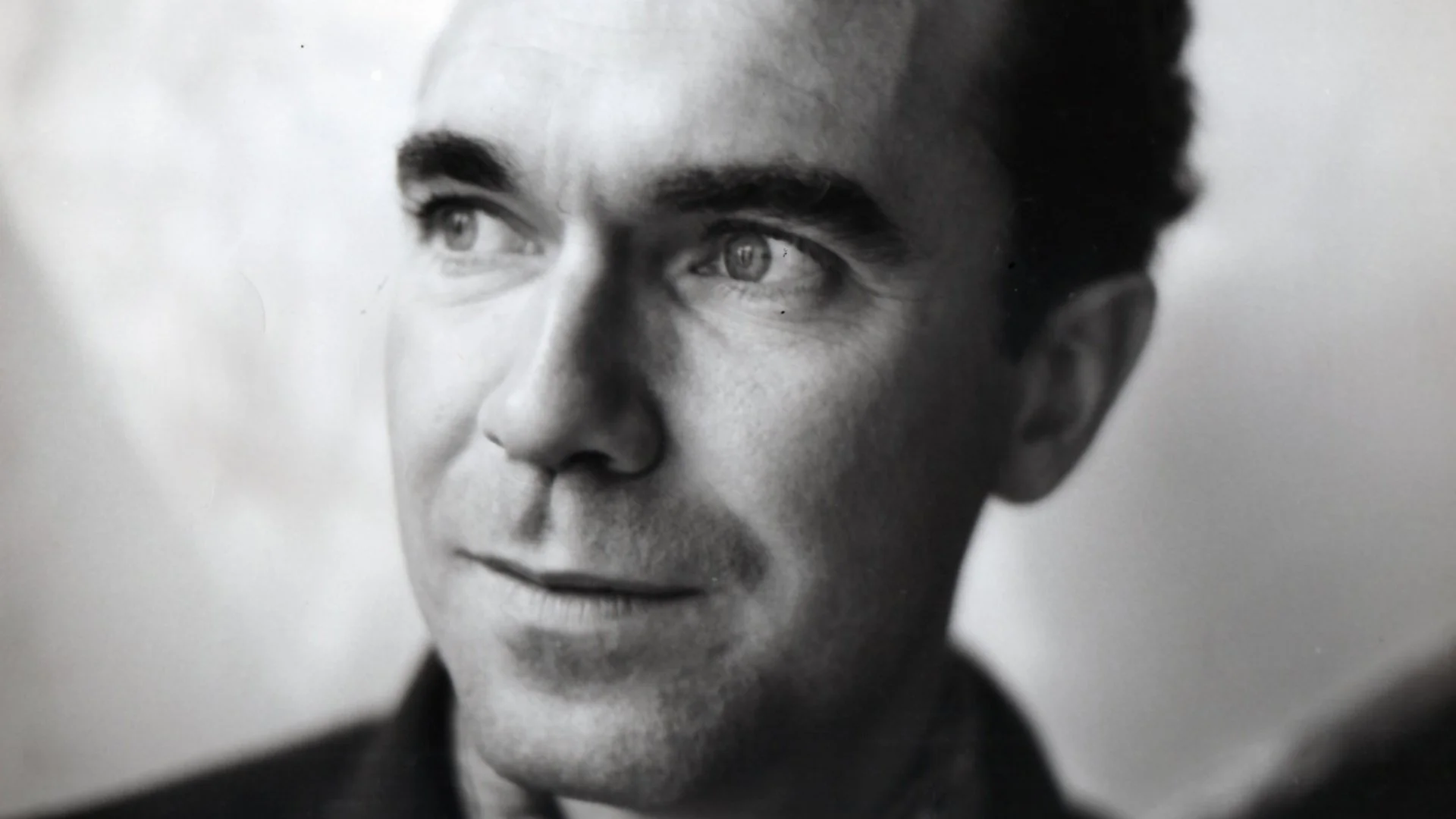
Many artists have used their work as a window into the complexity of life. Their art becomes both a reflection and transformation, projecting both the world around them while illuminating it in ways only artists can singularly do. Some artists choose absurdity; others, rage. While some go the unyielding route of beauty. Amid such trauma, it takes an artist of great empathy and resolve to plant seeds of growth on barren soil.
The early ‘40s were a time of great pain for many artists in the Philippines. Just as they were flourishing in their studies, World War II left the country in ruins and forever impacted their lives moving forward. For Juvenal Sansó, this was a time of horror and brutality that would leave him permanently scarred. Yet in his art, through periods of darkness, what emerged were blooms of bright color and landscapes of serene, enigmatic beauty.

So Gleams the Forae, c. 1970s, acrylic on paper, Joaquin Teotico Collection
“Perhaps no other Philippine artist has extracted as much from the humble flower,” says Ricky Francisco, Museum Director of Fundacion Sansó. Francisco has been working as a curator for over a decade. He was entranced by Sansó’s art after winning a piece of his own in 2008, one that “somehow made him feel privileged.” Fittingly so, as Sansó remains one of the country’s most celebrated artists. From surreal etchings to colorful flora, his works continue to resonate, even among modern audiences. Francisco reflects, “I was struck by how contemporary the works of Sansó were, despite being made in the 1950’s and 60’s, and how his themes of anomie and alienation, as well as solitude and trauma, caught on in the country only after thirty or forty years.” Whether around his dreamlike scenery or his own harrowing history, the story of Sansó is a compelling one.

Sanso-Pedret family in Manila, 1930s, from the book Sanso by Alfredo Roces
Sansó was born in 1929 in Catalonia, Spain. His family moved to Manila when he was young, where his father set up El Arte Español, a wrought iron business. He was raised Filipino and grew up speaking Tagalog. The artist fell in love with the country’s landscapes and all its natural riches, from cultural artifacts to the dilapidated landmarks of war. “He loved the country so much that he saw a wabi-sabi beauty from the expressions of Filipino creativity expressed in our resilience.” The war took a great toll on Sansó. His family business was ruined, and the artist himself suffered lasting injuries. Yet even after such ordeals, Sansó would still remember fondly his beloved childhood in Manila.

Sanso, Nenita Villaneuva, Larry Alcala Padre Faura UP Campus, FS Archives
Sansó’s studies at the University of the Philippines marked a period of creative exploration and contemplation. Here, he was under the likes of Fernando Amorsolo himself, who would often praise his dedication to his craft. Though flattered, Sansó knew that “he idolized Amorsolo, but he could not paint like him.” His trauma from the war greatly affected him, and his artistic sensibilities veered more towards the less glamorous candor of European Expressionism. Francisco cites the impact of Max Ernst’s frottages, in particular, during this period. One can see the influence in Sansó’s Black series, works done mostly in black where even the most elegant of flowers are depicted with an undertone of the macabre—a shared sentiment from a particularly grotesque time in history.

After the Fall, 1959, ink colors, Marlon & Marissa Sanchez Collection
Experimentation was at the core of every phase of Sansó’s life as an artist. Sansó himself has said, “One must experiment: try things out constantly and incorporate these elements into the general flow of one’s personality, technique, culture.” In his art, this manifested in works across different series and mediums. One would not expect it, but the artist was insecure about his drawing skills, regularly practicing to make up for what he felt was a lack of training. Francisco curated a show with Sansó’s travel sketches along with works by Fernando Zóbel for Other: Zóbel and Sansó” (2016) at the Ateneo Art Gallery. These works reveal a more intimate side to Sansó’s artistry in the way he shaped his draftsmanship and observed his environments.
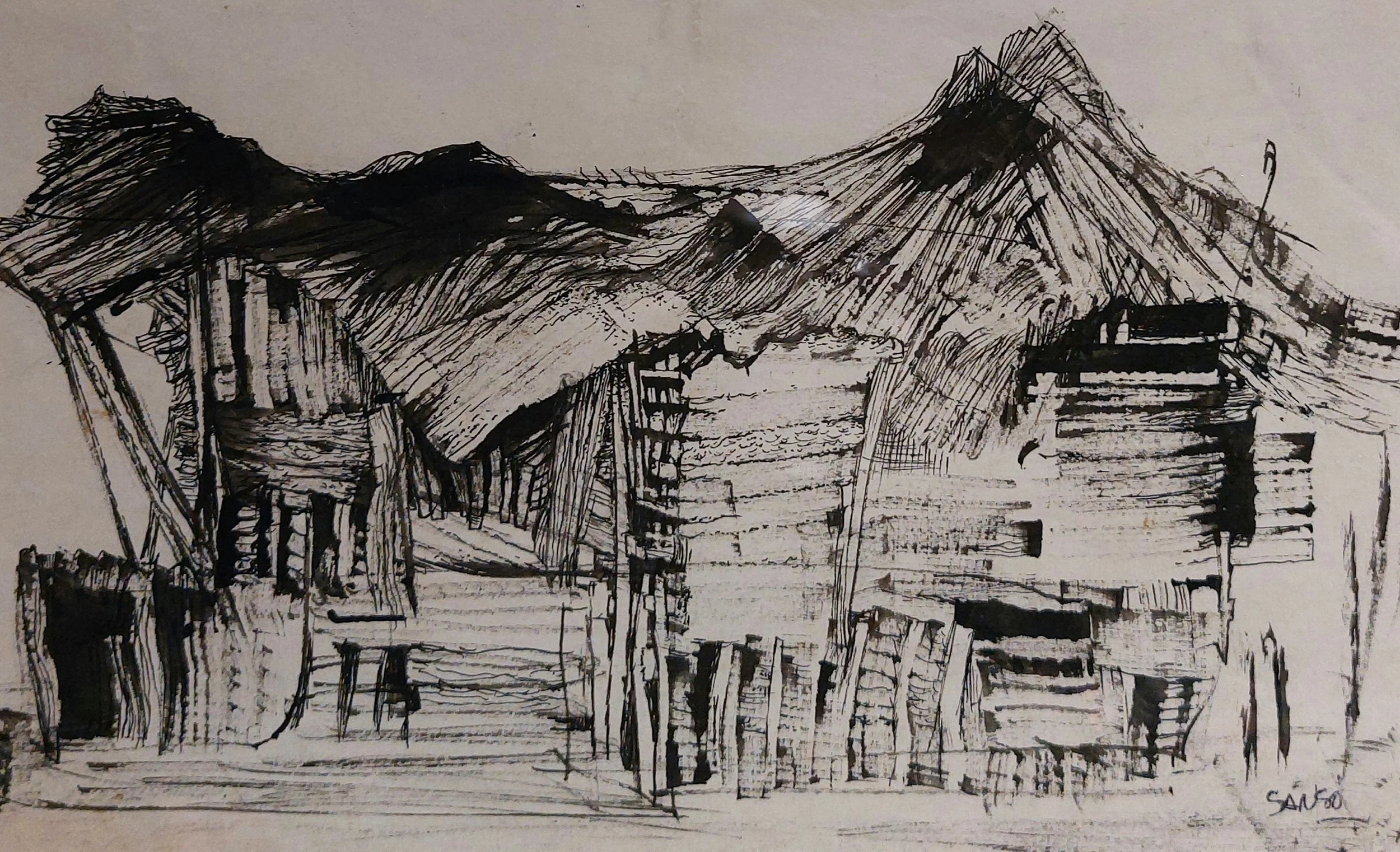
Proto-Barong II, 1957, ink on paper, Joaquin Teotico Collection
Surrealism took a firm grasp on Sansó’s early prints. Francisco cites works like “La Fête au Guillaume” (1956–57) and “Eve” (1957), etchings that present social imagery as sinister vignettes. His Barong-Barong series illustrates the traditional shack as a seemingly distorted otherworldly dwelling. “Lueurs” (1961) is an etching that earned him Print of the Year in 1964 by the Cleveland Museum of Art, an award previously given to the likes of Salvador Dali and Henri Matisse. Sansó’s surreal works are a far cry from the iconic flowers he is known for. This period was a crucial one for the artist, as one can understand why he made the kind of art he did. “Expressionism and Surrealism became fitting languages for someone who had seen firsthand how reality could collapse into a nightmare, and how beauty and brutality could coexist in the same scene.”
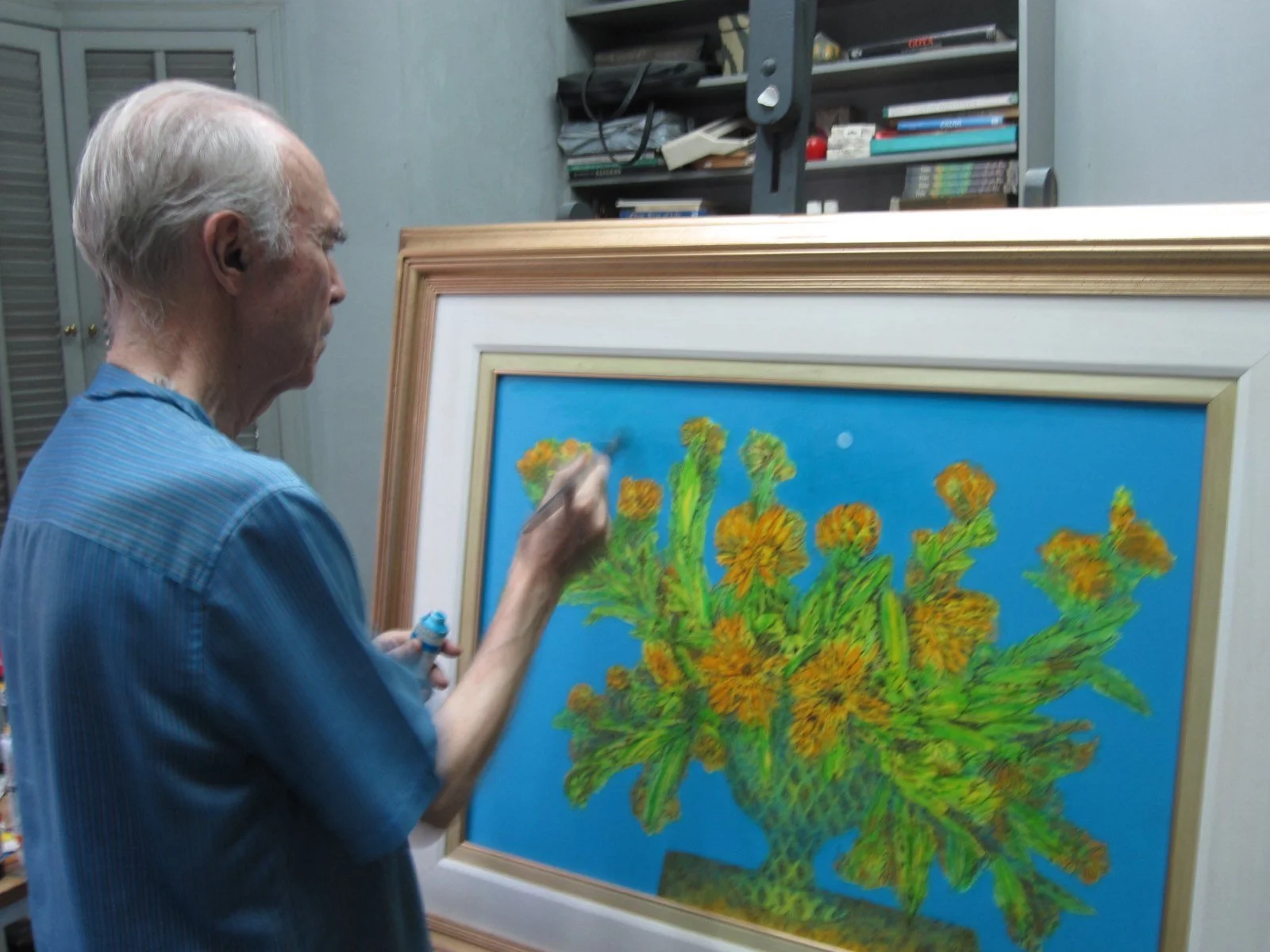
Sanso retouching his own painting, GJ Archives
The question might be asked what genre Sansó’s works fall under. Is he strictly a figurative artist? Is he a painter of landscapes and plant life, or is he a surrealist? Sansó’s art has been described as poetic surrealism. Francisco says it was the poetry expressed in each work that mattered the most to him, more than its outward manifestation. He may paint a flower, but it was this underlying poetry that made it a “Sansó flower.” This poetry enveloped all his subjects, from the early surrealist figures, to his later works of the 2000s, where his experiments with color were in full swing. His Moderno series depicted landscapes with an exaggerated sense of color and detail, not unlike the manner he would use on his flowers. Even his later full abstract pieces, which he developed from slides and textile patterns in the ‘70s and ‘80s, had such a familiar sense of rhythm and form, one might see landscapes within them. Abstraction, figuration—labels did not matter to Sansó. He saw the poetry in each practice and mastered them all the same.

Oases of Good Fortune (Baklad Series), Acrylic on Paper, Joaquin Teotico Collection
One might try to situate Sansó’s famous landscapes within the context of his life. Where were these mysterious rocky shores and what is it about them that seems to evoke the unnatural? Francisco talks about an “uncanny presence” in Sansó’s works. “Light is never static; skies are clouded or in twilight; rocks and shrubs take on a kind of watchful consciousness. These are not neutral observations—they’re imbued with mystery, solitude, and an almost spiritual melancholy.” In his Baklad series from the ‘60s, his baklad structures appear more like imprisonment bars, imparting an apocalyptic feel to a deceptively peaceful scene. Stepping into one of Sansó’s works, one takes a journey through distantly familiar, yet alien terrain. The voyage is a lonely one, because Sansó’s landscapes are more psychological than geographical. “Landscapes, for Sansó, became a way to process and transfigure trauma, to reclaim beauty from desolation, and to speak about the enduring, watchful presence of the world in the face of human impermanence.”

Entre Cielo y Auras 2007 to 2009, acrylic on canvas, Wilson Te Collection
Given the expressionistic character Sansó’s art took, it seems curious he became known for painting the flower, perhaps one of the most mundane of subjects. Sansó started depicting flowers in the ‘50s, when his teacher at the time, artist Edouard Goerg, had him continuously creating flowers—despite Sansó himself never really liking them. Flowers evolved in Sansó’s work over the course of around 60 years. The artist created floating flower bouquets, flowers with skulls, stylized flowers, and more. This reflects, in Francisco’s words, an “interior existential journey from despair to fulfillment.”
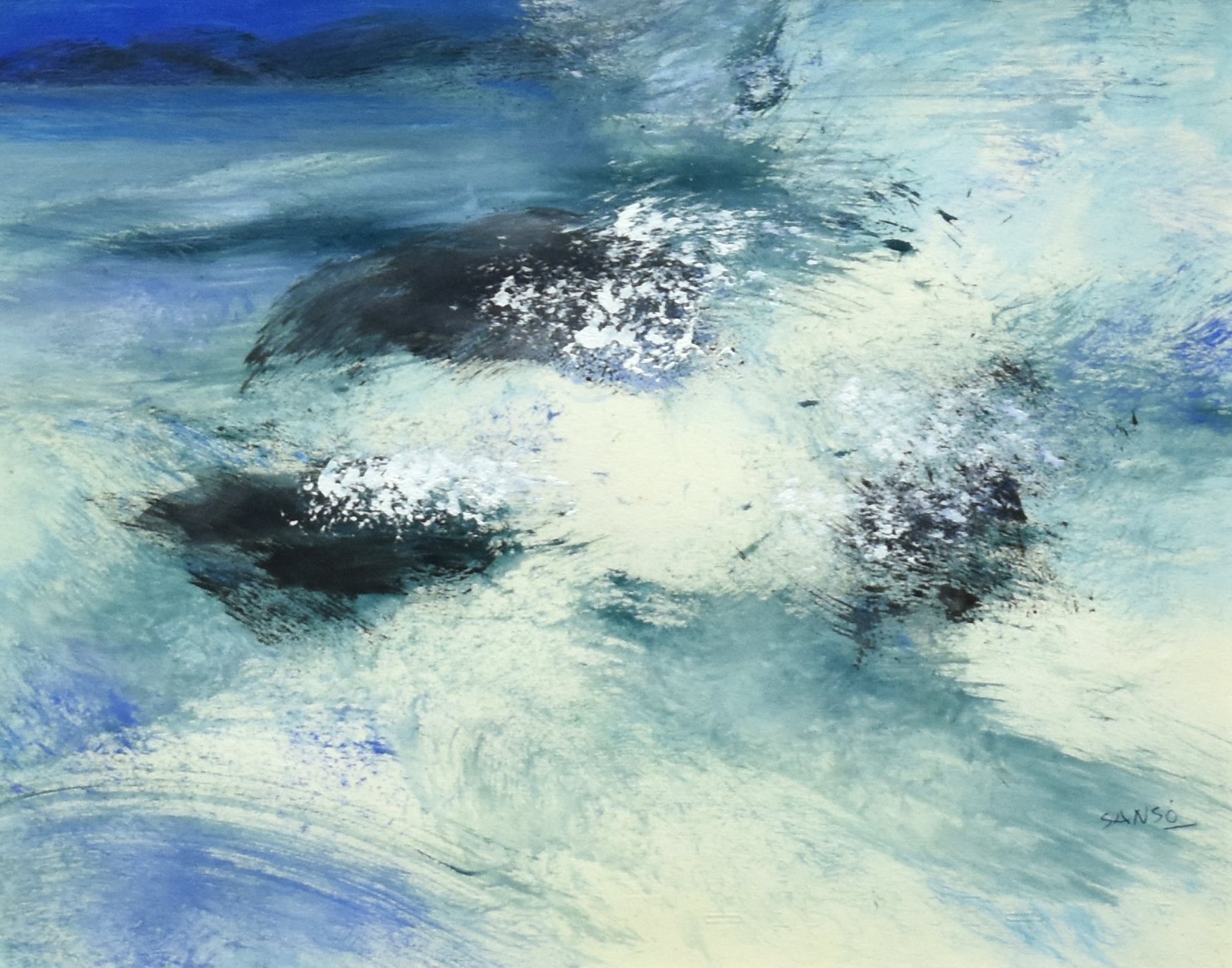
As the Waves Come Forth, undated, acrylic on paper, Joaquin Teotico Collection
Sansó had seen firsthand the darkest depths of the human experience. Yet through his art, he spoke through his trauma to create beauty—though veiled through elements of the unnatural, beauty all the same. In Sansó’s flora, we observe, “the rich spectrum of meaning humanity has associated with flowers that covers fragility, ephemerality, mortality, anguish, and despair on one hand, to their opposites: tenacity, vitality, hope, affection, love, acceptance, and fulfillment on the other.” For Francisco, what makes Sansó’s works continue to mesmerize viewers decades after their time are their “capacity to embrace and transcend the human condition.” This is what keeps Sansó’s art so poignant even among the works of many contemporary artists today. His poetry allows “beauty to emerge from brutality.”
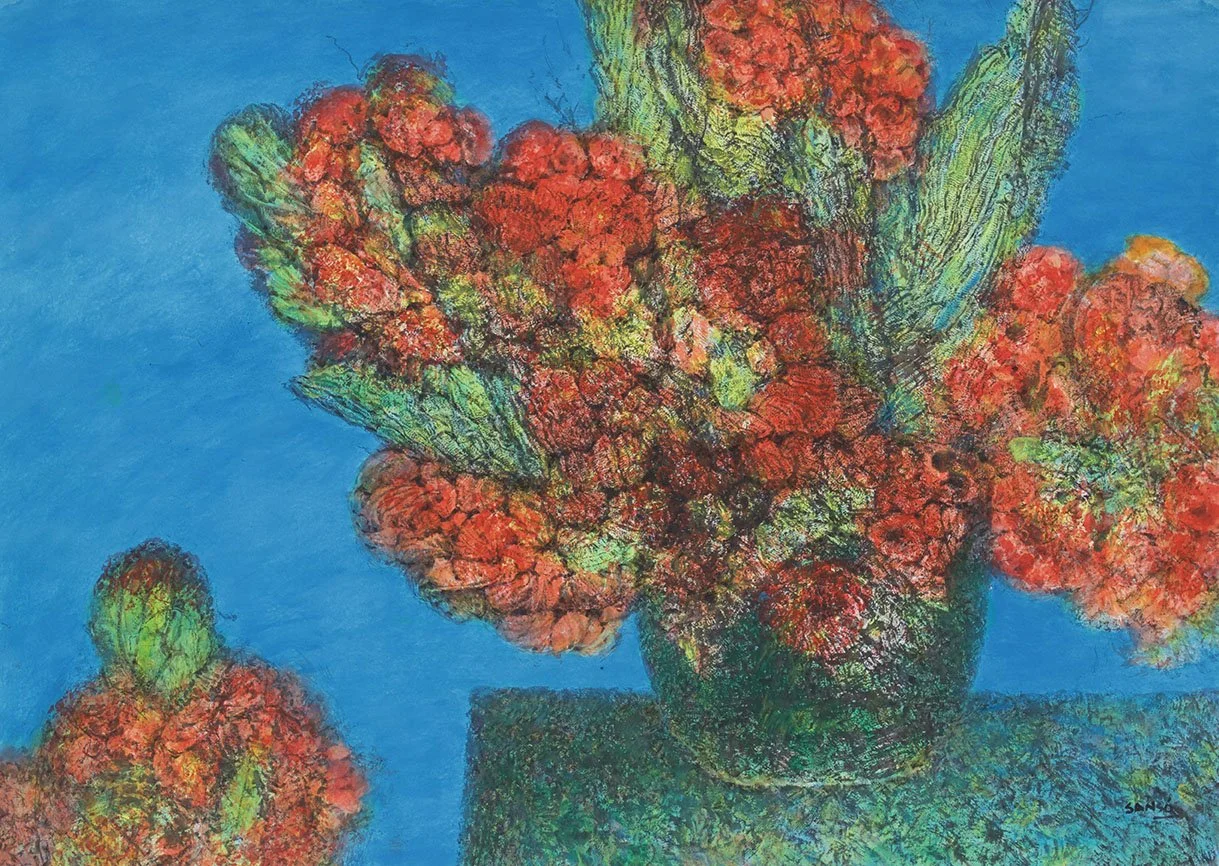
Patrician Presence, c 1980s, acrylic on paper, Joaquin Teotico Collection
In 2014, Fundacion Sansó was established. The artist had always wanted to open a museum and a means to support the young artists of the country he owed so much of his life to. Since its inception, Fundacion Sansó has set up several exhibits of the artist’s work as well as unique programs aimed to educate and assist artists, curators, and other museums alike. The museum helped support Museo Pambata during the COVID-19 pandemic and has also created grant programs for young art scholars. Francisco shares an upcoming book project as well, Sansó: Prized and Personal, which will share as many as 600 of the artist’s works along with interviews with historians like Cid Reyes and Leo Benesa. Sanso: Prized and Personal will be released later this year. Also in the works is a major retrospective on Sansó slated for 2027 at the Metropolitan Museum of Manila and a future exhibition at the National Museum of the Philippines, tentatively titled Sansó: Pusong Pilipino.

Sanso in his studio in Spain, photo from Jack Teotico
Sansó’s legacy of art and humanitarianism continues to inspire. One looks at a piece by Sansó and they see color, nature, and tranquility. Yet the true impact of his art lies in the way he allows pain and life to cultivate something wonderful together. Francisco puts it simply and poetically, “Flowers, as fragile as they are, still bloom. And there is a beauty in their impermanence.”