
Kimono Refashioned
Cachet Collection’s design and production ethos show how slow, small fashion takes care of people, planet, and of course, style.
Words Pao F. Vergara
Photos courtesy of Cachet Collection
January 07, 2025
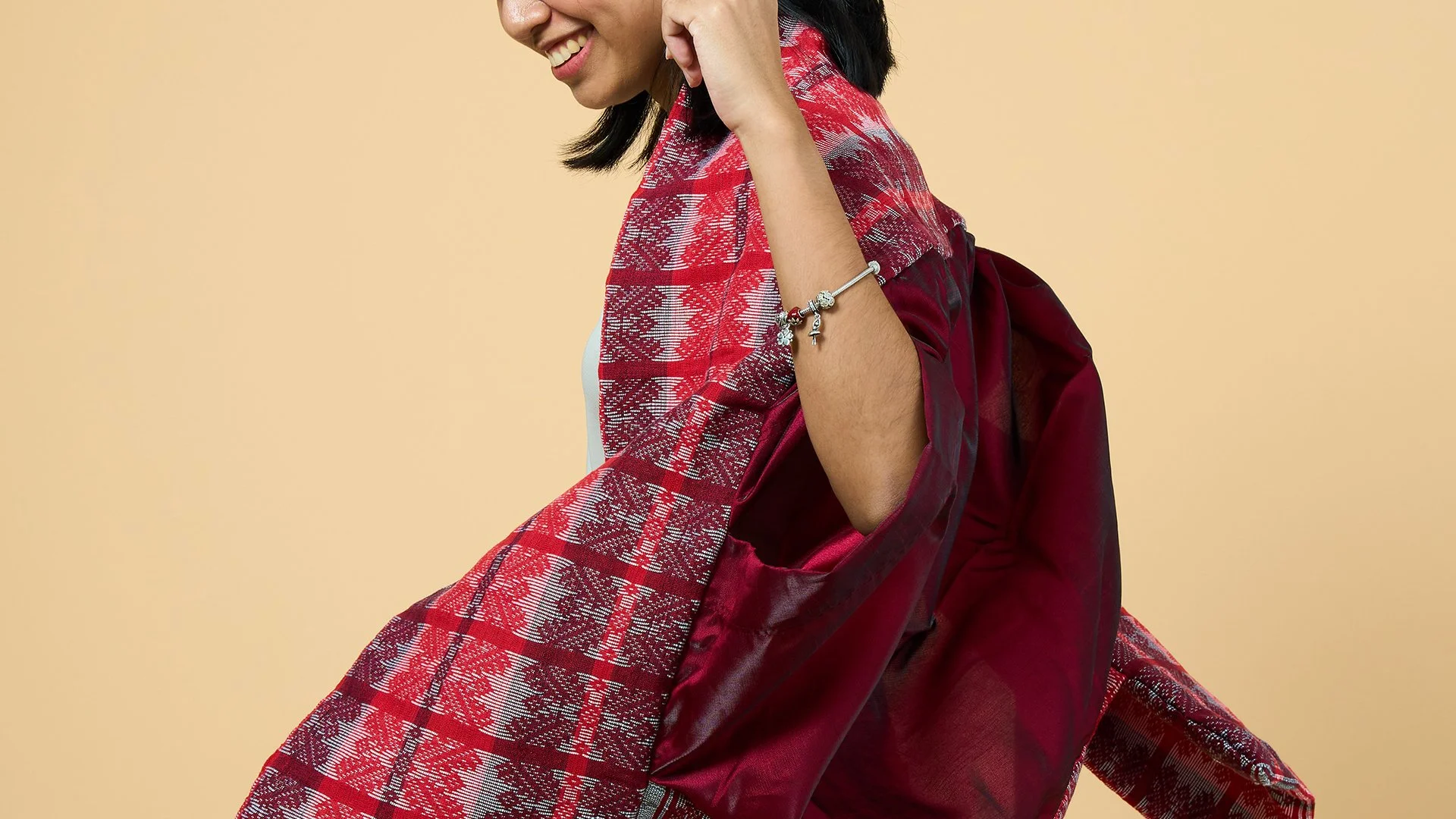
Since the last decade, Japanese fashion has revived the kimono with a modern twist, meant to be worn every day, as a jacket or coat at work or school, the street and the club.
Hip, urbane, and modern, the garment could stand as the garment counterpart to the music of the late composer and arranger Jun Sabe, who popularized the revival of traditional Japanese music and instrumentation by merging these with hip-hop and adult contemporary music, which in 2025 is in vogue in the West and in indie spaces in the Philippines as well.

The same phenomenon of taking heritage clothing out of the grade school history week costume parade and into everyday wear has also happened in the last half-decade or so in the Philippines, with the Maria Clara terno, particularly the puff-sleeved top, getting the same treatment as kimonos, most notably as formalwear.
Kimonos have also found a niche audience in the Philippines, likely buoyed by the popularity of Japanese culture and thus sold by independent, boutique houses and retail brands alike. It’s in this niche that Cachet Collection, a boutique atelier becoming known for multi-way kimonos with a touch of Filipiniana, was born.
Working with less, making more
It all started in the pandemic, in the atelier of couture designer Merlene Marcelo-Veto. Business was slow due to the lockdowns and recession, and many of her skilled seamstresses found their livelihoods under threat.
Merlene’s close family friends, Pinky and Cheska Picache, were welcomed to help. Aside from selling the current designs of the atelier, the mother-and-daughter duo discovered a lot of retaso or discarded fabric of varying materials and lengths, from linen to lace.
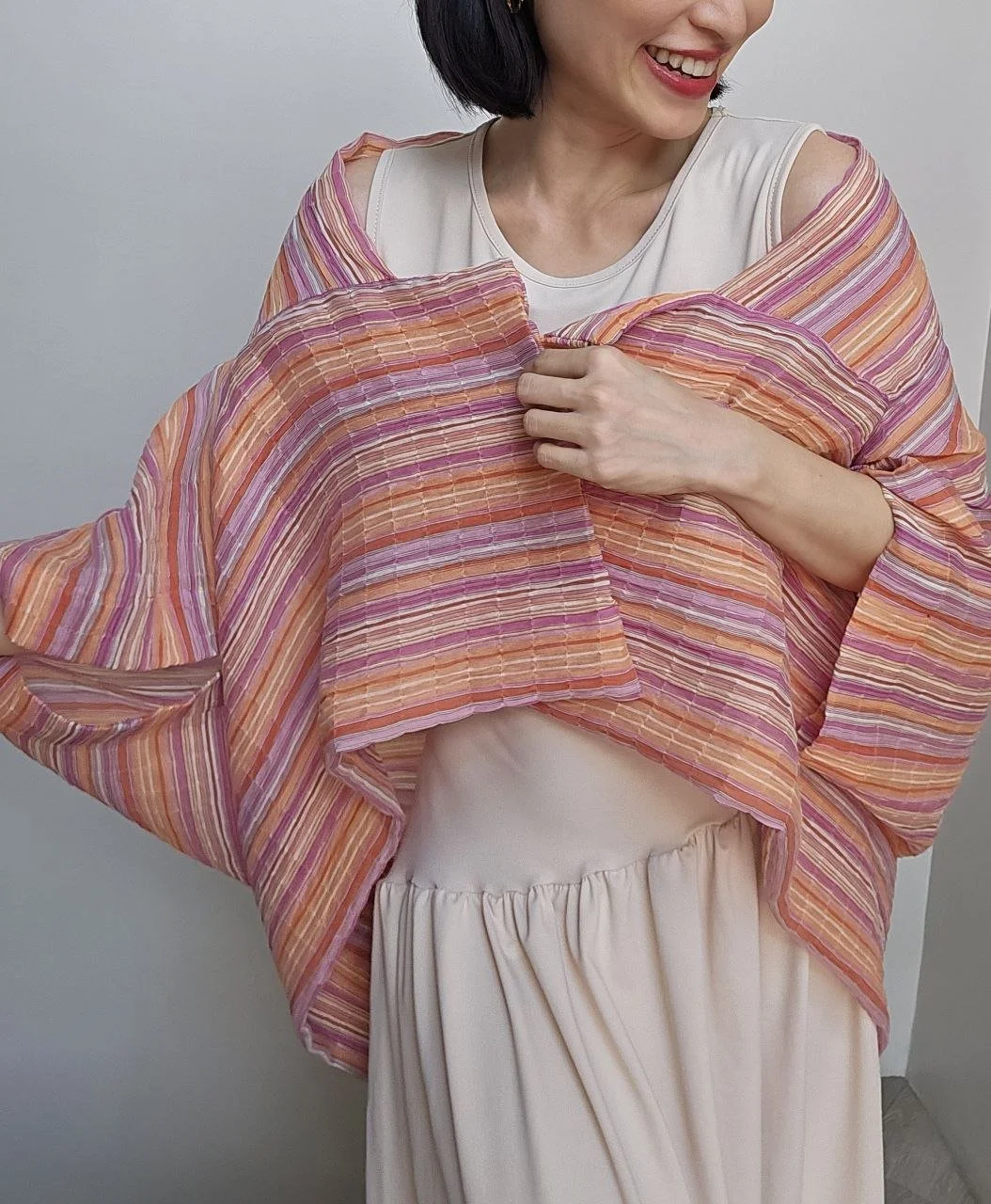
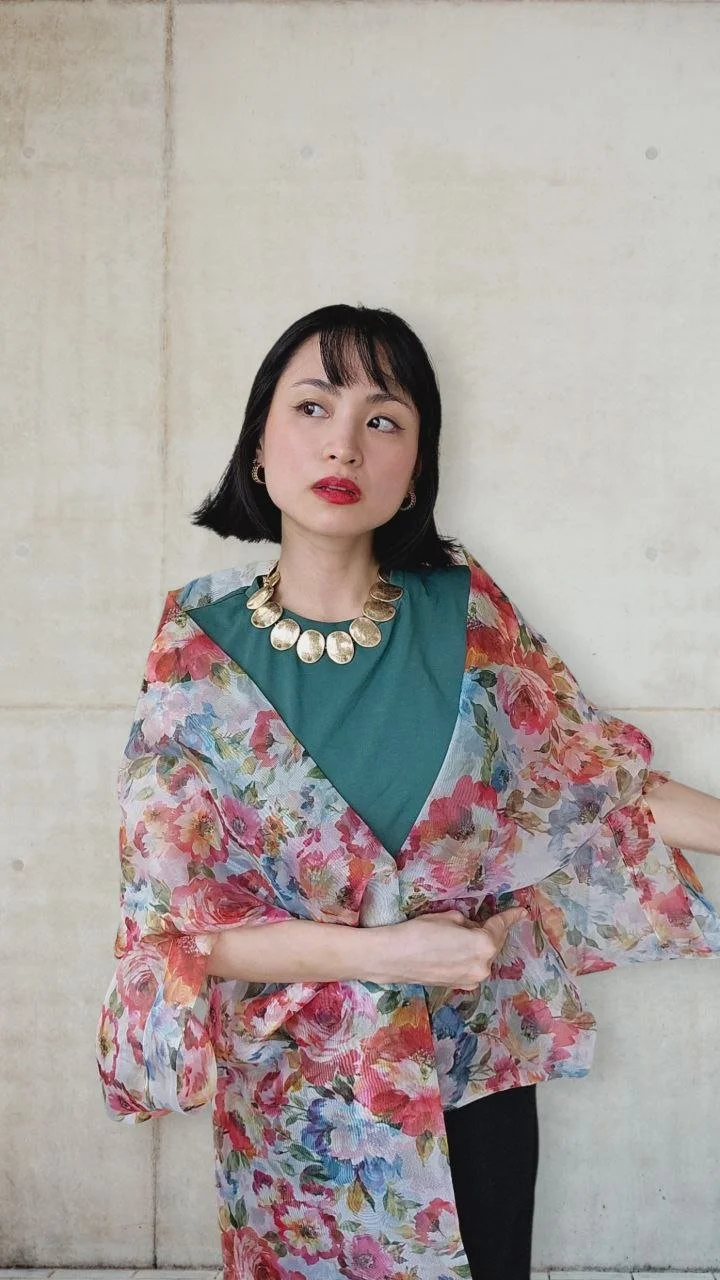
Cognizant of the environmental concerns related to fashion, and also buoyed by creative intuition, the Picaches decided to turn these last cut fabrics into skirts, dresses, blouses, and kimonos. What emerged were one-of-a-kind pieces, bespoke not just by design, but by nature.
After that period of experimentation, the team noticed that the kimonos sold best, and with this core product, the Picaches, with the blessings of Merlene Marcelo Couture, formally launched Cachet Collection in 2023.

They’ve since been featured in Lifestyle Inquirer and Preview, participating in the 2023 Kultura Fair in the Podium, Ortigas, all while currently being housed in Frankie General Store’s Power Plant Mall, Rockwell, Makati branch.
Since then, the Picaches have made it a point to visit both markets and ateliers in the Philippines, Southeast and East Asia, and even Europe, trawling (often while on vacation) for last-cut fabric on the verge of being discarded. They’ve also sourced from social enterprises involved in reducing fabric waste and textile upcycling.
“Something we’d be willing to wear”
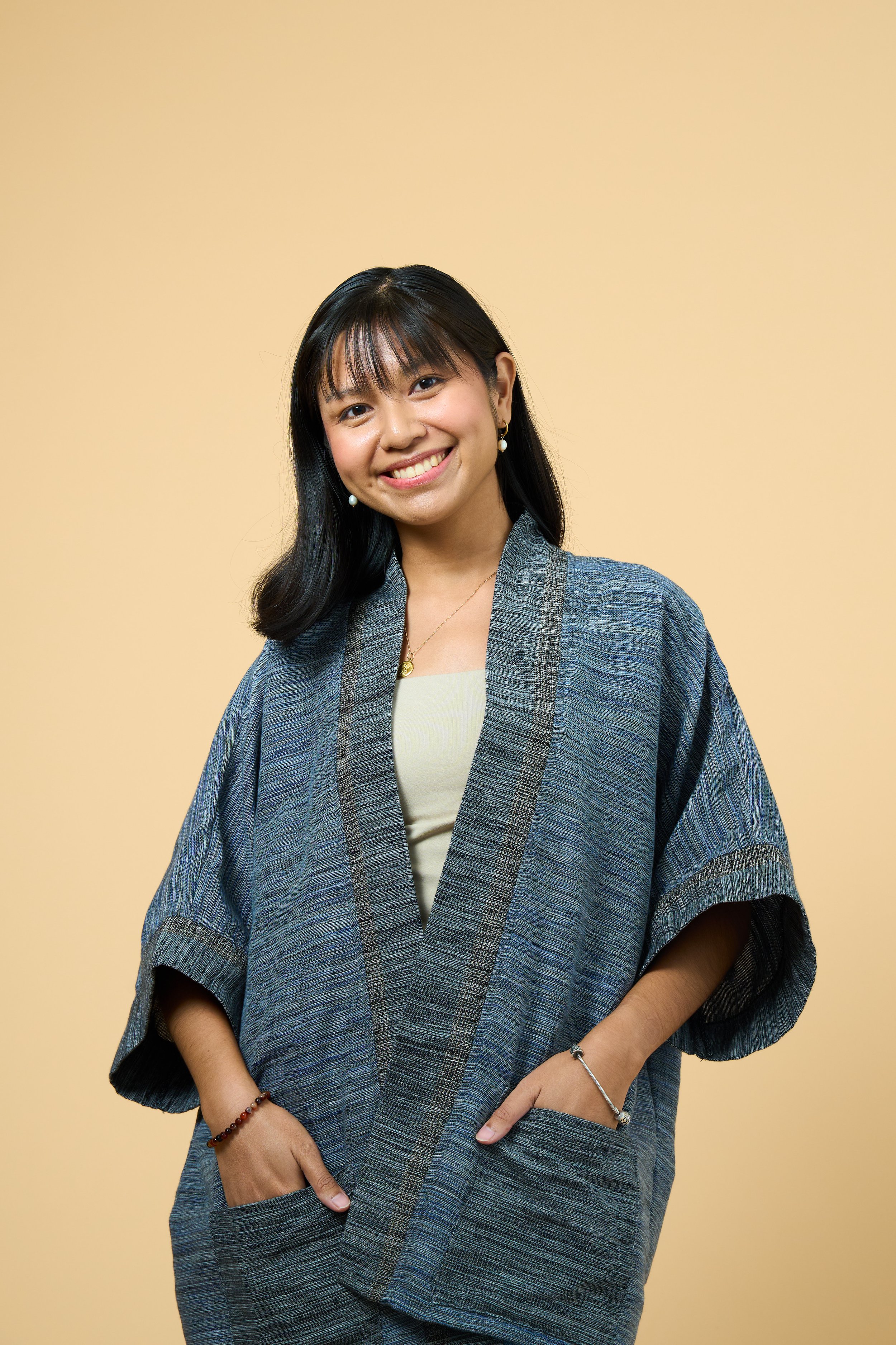
Presently, Cachet Collection kimonos sport three base designs: the signature multi-way, the youthful cropped, and the unisex straight-cut. While the straight-cut design is often marketed to men, Pinky shares that a lot of women also purchase it for its versatility. In 2024, the Collection also launched Obi-style belts to pair with their kimonos.
The seamstresses allow the fabric and material to dictate how a piece will ultimately turn out, and the creative process is a healthy push-and-pull of ideas and experiences. Ultimately, the mother-and-daughter duo defer to the seamstresses, who’ve worked together for decades.
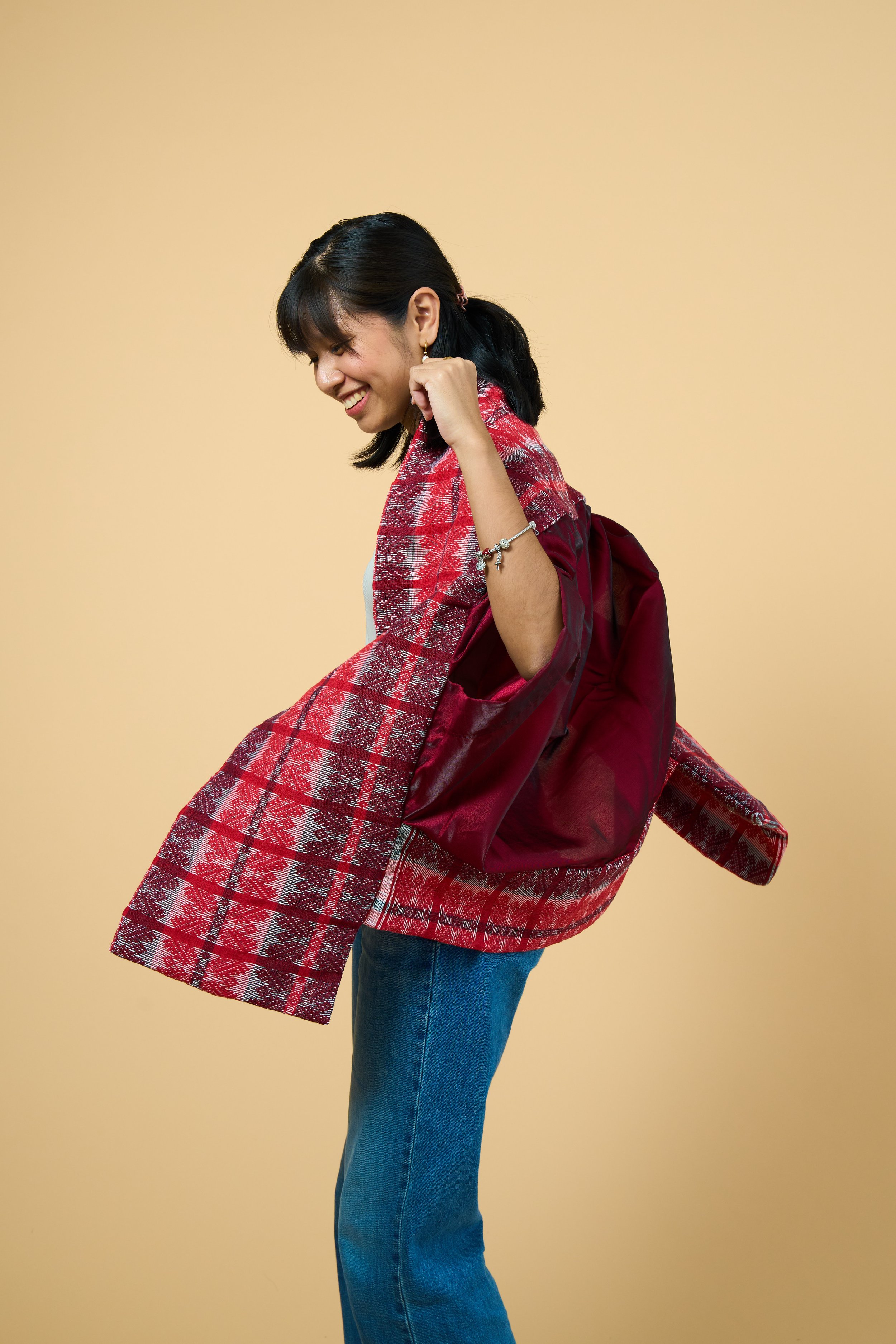
In our conversation, the team delved into designs, some even patchworks of different materials, which seemed impossible to pull off at first, but whose final form turned out not just seamless, but stylish.
“Cheska and I share,” Pinky reveals, “we share a lot of our clothes. And it looks fine! And that’s sustainable.”
“Depending on what you use it for, and what you wear inside of it, it can go from work to a cocktail party to a wedding to a weekend at the beach. Dress it down, dress it up, fold it, unfurl it, it’s six-way” beams Pinky, proud of their work.
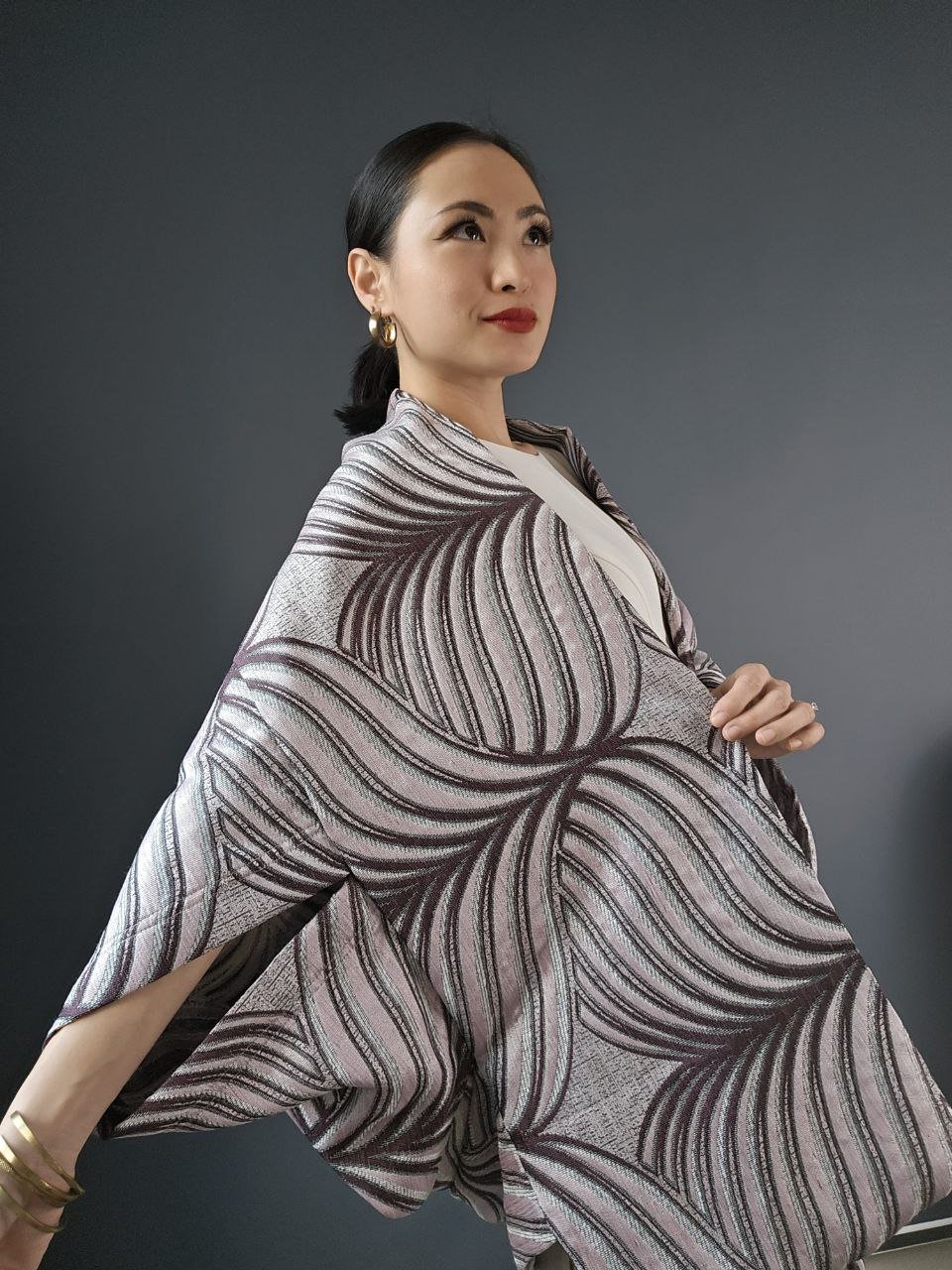
Pinky, outspoken as she is, also puts it bluntly: “I don’t want this to be a ‘pity purchase’ confined to my friend group. We discussed this when we sat down to tackle scaling the business, that we will make pieces we ourselves would be willing to wear—even if no one bought the pieces.”
Today, the first statement holds true as mother and daughter continue to keep one or two kimonos for personal use (of particular note is the first kimono Merlene produced, which has appeared in Cachet Collection’s advertisements, but which actually isn’t for sale, no matter how many times customers inquire about it), but “no one buying the pieces” isn’t the most accurate description, seeing how far Cachet Collection has gone since launching.
Like adopting puppies
Fashion, specifically fast fashion, is presently one of the world’s top polluters. Aside from the resources consumed to make new items, clothes are often discarded at the next trend cycle, and even buyers who prefer to maximize their purchases find that such items wear down in a couple of years.
Studies have revealed how people today are buying more clothes than in previous decades, and this correlates with issues relating to water supply and pollution, micro plastics, and yes, climate change.
Cachet Collection hopes to change this, by offering clothes that can be worn many times, in many ways, with many outfits, all while they’re made with expert tailoring that’s built to last and can even be shared, all as they’re made from upcycled fabric that would otherwise end up in a landfill.
We discuss how, even in fast fashion, a lot of clothes are still expensive, definitely a pocket-carver for many low-middle-income earners in the Philippines. Pinky finds this not just frustrating, but unfair, “because if you spend a lot of money on something, then you better wear it many times.”
Harkening to an old ethos of traditional tailoring of individualized pieces built to last and even passed down, each Cachet Collection kimono holds soul. Cheska notes how, since each kimono is one-size-fits-most, they can thus stick to small batches, with no need for a different size for the same design.
Cheska and Pinky both can’t help but liken their kimonos to puppies. “I have a hard time parting with each kimono, it’s like your dog giving birth to a litter. You love each and every puppy” Pinky shares, given the hours she spends on each one, working late nights for quality control before being packaged, snipping a loose thread here, sending a whole kimono back for retouching there. “But it doesn’t feel like work! I actually look forward to it,” she shares, as she balances a post-retirement day job in a cooperative.
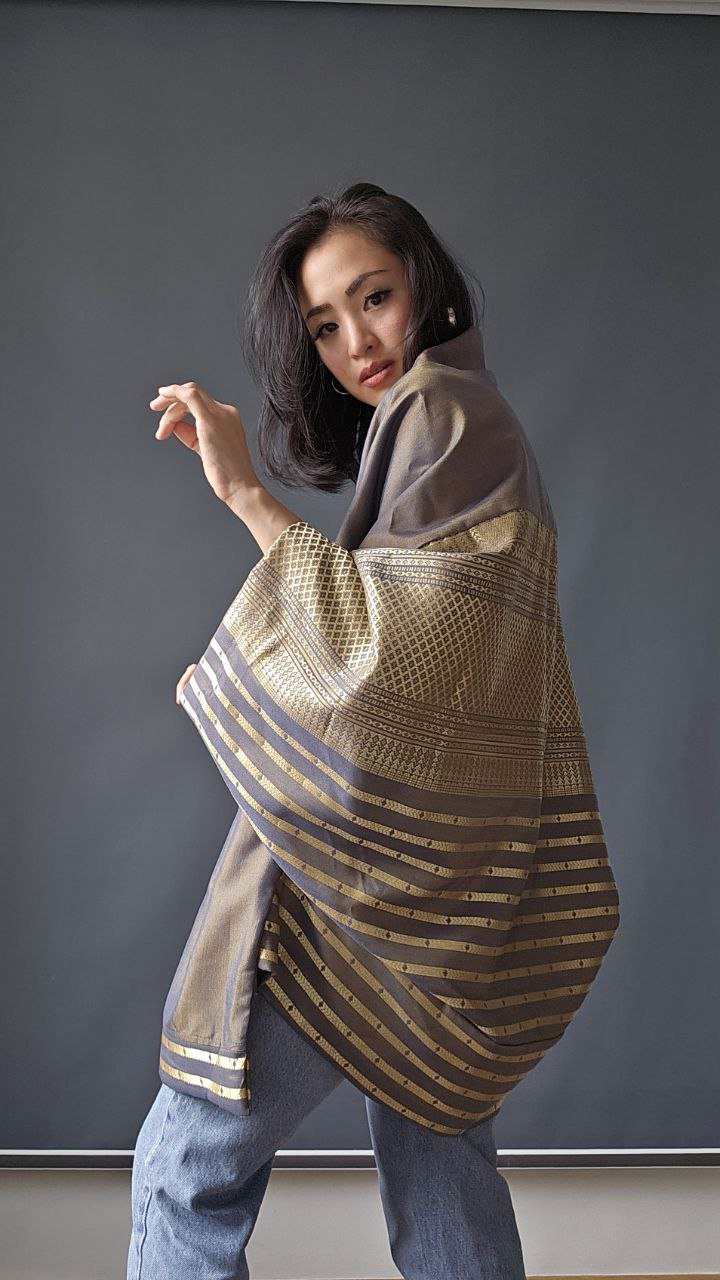
For Cheska, it starts with each retaso: “You have a puppy with one missing leg. Each fabric is like that. I wonder who ripped that piece of fabric before it turned into a kimono?” She shares an anecdote about discovering a wedding dress that was discontinued (gasp), or a last-cut fabric offered to them for free in Thailand. “Each kimono has a story,” the co-founder grins, “starting with the fabric it used to be.”
Cheska explains that return customers aren’t a main goal (but still welcome), a 180-degree turn not just from current fashion practice, but modern business as well. “It’s consistent with our vision of sustainable fashion, as you’d want a garment that you can wear for years. Sure, we appreciate that we have suki, but it’s not a key performance indicator for us.”
Cheska also shares that Cachet Collection, like Merlene’s, pays all artisans professional wages, nodding at their technical skills—“an actual living wage,” where employees can give their children more opportunities, while having some left for not just emergencies, but also vacations.

This may sound like a radical development but it actually ties in with Adam Smith’s vision of how the ideal market economy works in his seminal On the Wealth of Nations, where the market serves people, rather than the other way around.
“When we sat down to discuss our target market,” Pinky confides, “we realized we fit the very profile! Eco-conscious but still fashion-savvy people.”
A personal dream with a larger impact
Cachet Collection thus is one charge in a growing movement of businesses revolutionizing entrepreneurial praxis, starting with their supply chain, all the way to their labor conditions, and also in shaping customer behavior.
“When Cheska was young, we used to go on girls’ day outs,” the elder Picache muses, “eating out, trying clothes, Cheska would tell me all her jokes and dreams. And this is one of them, running a business together.”

“The truth is, now, I don’t see her as just my daughter, but as her own person, as a woman with her own career,” Pinky shares, smiling with her eyes, “sometimes, I consult her for professional advice, especially since she has knowledge I don’t have, such as in terms of marketing, systems thinking, and of course, new business mindsets.”
Cheska is currently based in Germany, working in a startup, having finished her Master’s in Management—within the system but not of it; a near-decade of being in the workforce not dampening, but only strengthening her resolve towards a better way of doing things. Eventually, she will return to the Philippines to apply the lessons learned and focus on Cachet Collection.

It seems the energy from the Picaches’ younger days has found new expression in this current chapter of life, via the joy of mother-and-daughter bonding, this time in public markets or amidst the whirring of couture tailors, not just for a living, but for life itself.
Visit Cachet Collection’s website at https://cachetcollection.shop/ and stay updated via official channels: @cachetcollection on Instagram and Facebook.