
It Is Time to Come Home
A reflection on Imelda Cajipe Endaya’s Filipina DH installation and the enduring realities of migrant women’s labor.
Words Amanda Juico Dela Cruz
Photos courtesy of Silverlens
May 08, 2026
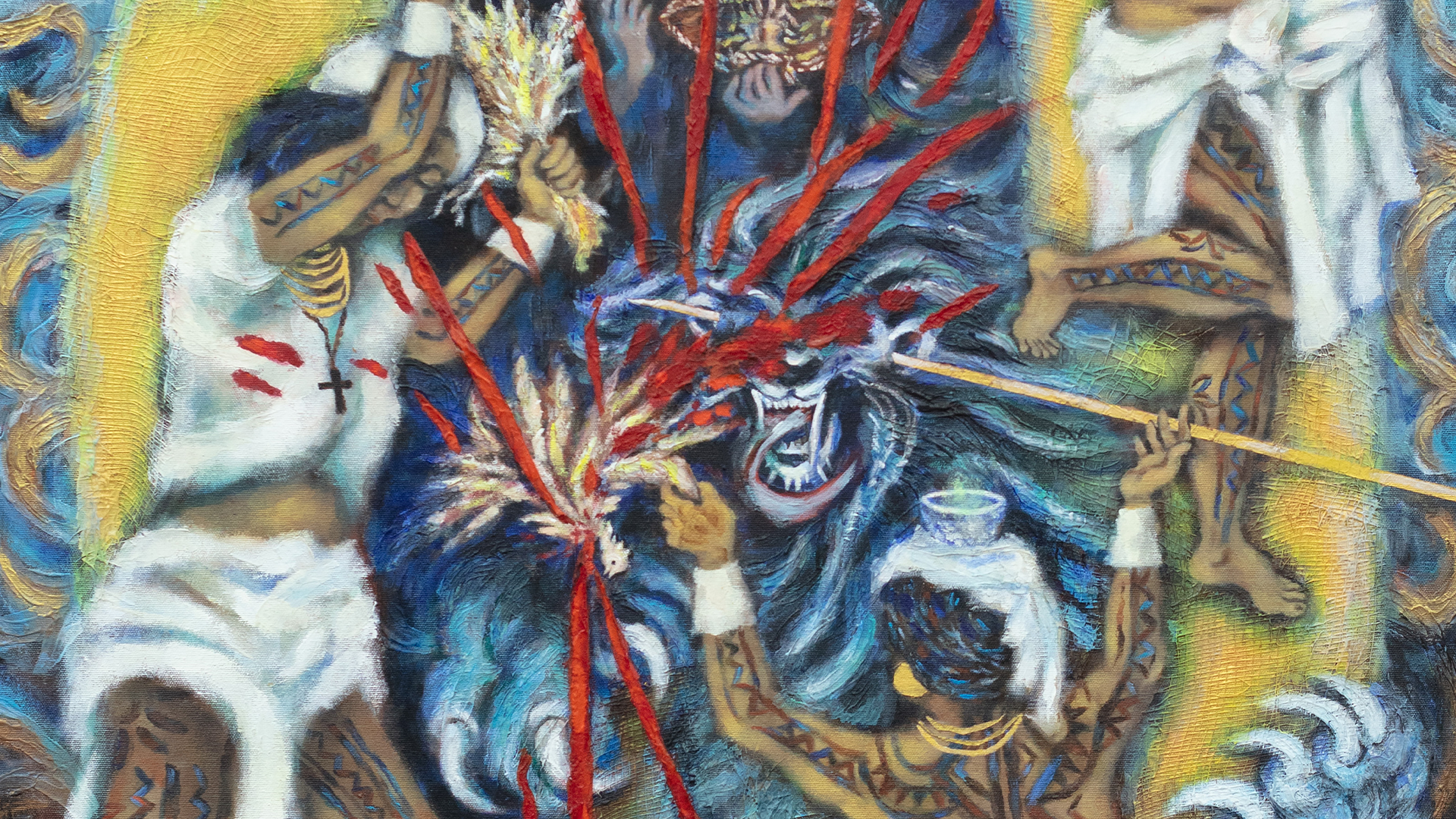
He catches his breath at the shimmer of wings when the birds shake droplets loose from their feathers. A light breeze passes through the Nipa fronds on the riverbank; fetches faint sounds of a church bell calling the faithful to prayer.It is time to come home.—"It Is Time to Come Home” by Marjorie EvascoA feminist. A social critic. A chronicler of women’s labor. A mixed-media artist. A collective practitioner. A founding member of KASIBULAN. So much has already been said about Imelda Cajipe Endaya’s artistic practice. And rightfully so. But more can still be said about her works in the same way that her works still have a lot of things to say.
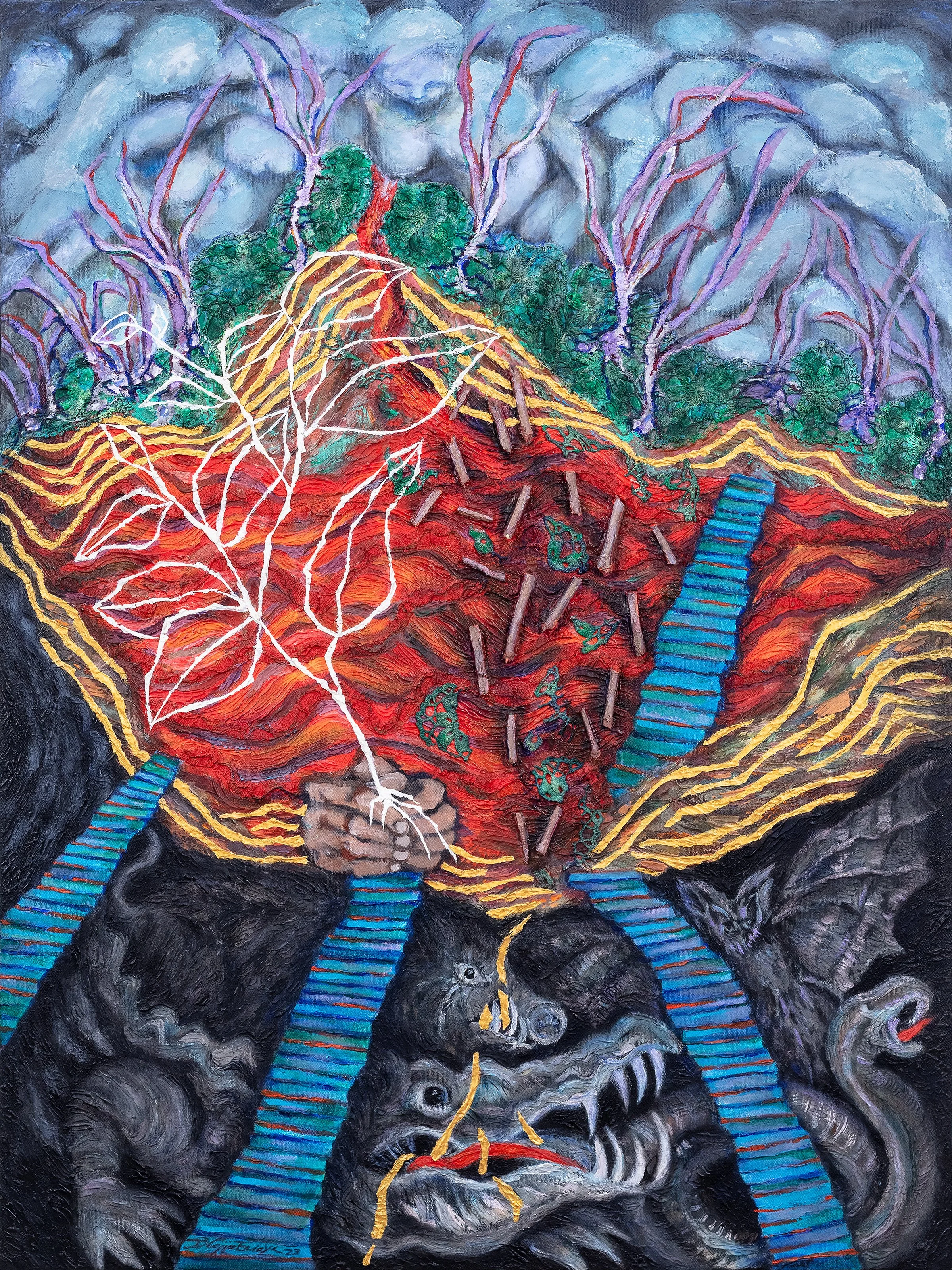
IMELDA CAJIPE ENDAYA, Delubyo, 2023, acrylic, impasto twigs on canvas
Case in point: the Filipina DH installation. It transforms Silverlens’ gallery space into a domestic landscape where everyday tools of care and labor—aprons, brooms, vacuum cleaners, dishware, and laundry implements—become sculptural markers of migrant women’s work. When Judy Chicago exhibited The Dinner Party in 1979, she proved that traditional forms like painting and sculpture can only do so much in embodying women’s lived experience through art, consequently, her use of textile and chinaware—materials practically seen in households and often culturally valued only as craftwork. In Endaya’s installation, the objects operate similarly, but with a sharper socio-political take: that domestic objects are not merely reclaimed as sites of feminine creativity as they are recast as evidence of labor migration and structural inequality experienced by Filipina domestic helpers.
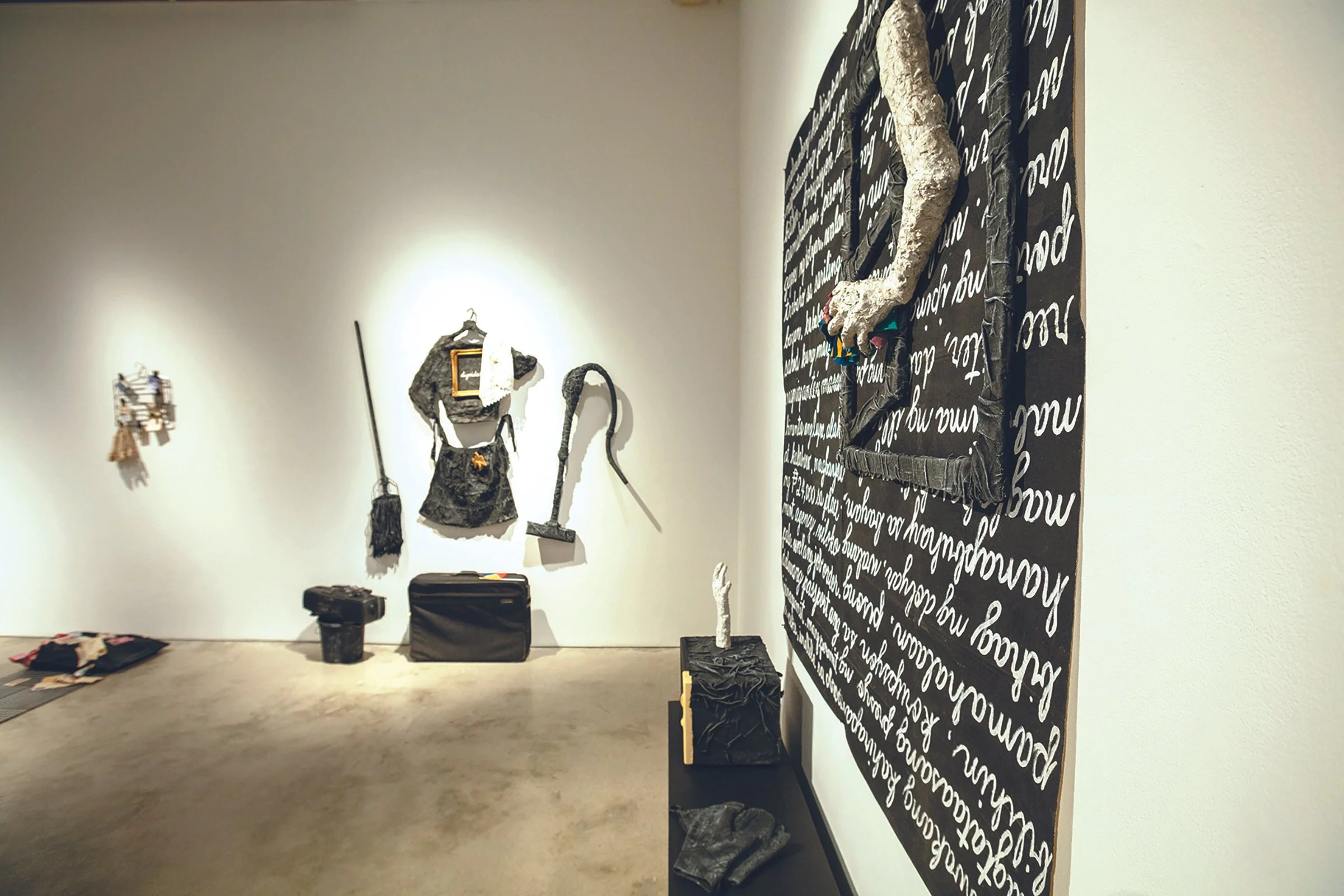
Installation view of FILIPINA DH
The elements in Chicago’s and Endaya’s installations lose their functionality. Chicago’s plates were sculptural relief works, not flat dining surfaces. Meanwhile, Endaya’s were plaster-bonded, turning a functional object into an artifact, into a piece of evidence of labor. Sealed. Restrained. Fossilized. The objects become fixed in time, sitting between protection and confinement.
Nicole Soriano mentions in her exhibition text for Kahapon Muli Bukas, in which Filipina DH is part of, Flor Contemplacion and Sarah Balabagan. These names had come up repeatedly during the mid-90s, which was a turning point as high-profile legal cases exposed the vulnerabilities of Filipino migrant laborers—Contemplacion for her execution in Singapore following a contested murder conviction and Balabagan for her conviction in the United Arab Emirates after killing her employer while resisting an alleged assault.
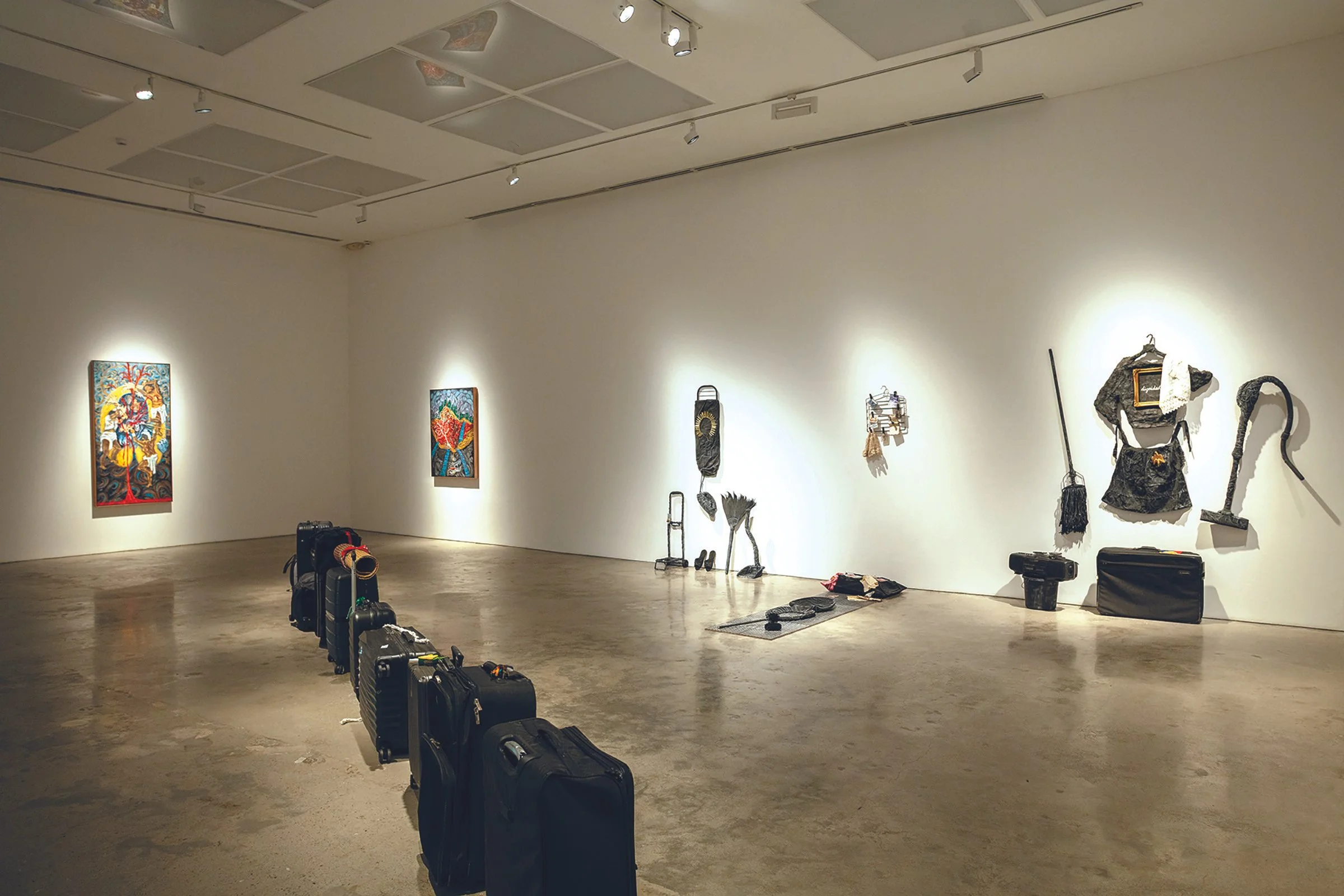
Installation view of FILIPINA DH
I was born in 1995, the same year the installation was created. Growing up, I’ve heard many other names—Joanna Demafelis was found hidden in her employer’s apartment freezer in 2019, Jeanelyn Villavende’s autopsy report in 2019 says she died from “acute failure of heart and respiration as a result of shock and multiple injuries in the vascular nervous system”, Jullebee Ranara was found dead in the desert in 2023 and her body burned in an apparent attempt to conceal the crime, all of which happened in Kuwait. And of course, how can I forget Mary Jane Veloso for her near-execution in Indonesia after being trafficked into a drug case way back in 2010. Among the names I mentioned, only Veloso was able to come home—alive—to the Philippines after nearly fifteen years on death row. She is now serving a life sentence in a Philippine prison with ongoing legal efforts underway to secure her release or clemency. Seen against their stories, the Filipina DH installation reads less as a static arrangement of domestic objects than as a sculptural archive where fossilized tools of care labor bear witness to the enduring precarity shaping migrant women’s lives.

IMELDA CAJIPE ENDAYA, Bay-i sa Ikalimang Dantaon (triptych), 2021-2022,acrylic and fiber textures on canvas
The installation travelled across the globe since the late 90s, and so its homecoming in Kahapon Muli Bukas refracts the cycles of departure and return that structure migrant labor itself. The work, like the women it remembers, carries the marks of distance and absence.
In its current iteration, members of KASIBULAN contribute their own used luggage, arranged in a diagonal line that cuts through the gallery space. Some of these luggage belong to women who were migrant workers themselves. Surrounding them are reproductions of personal belongings—letters, devotional items, household tools—staged in ways that foreground their mundanity and intimacy. This act collapses labor, faith, and longing into a single domestic tableau. The installation thus expands from individual testimony into collective memory. The personal is political.
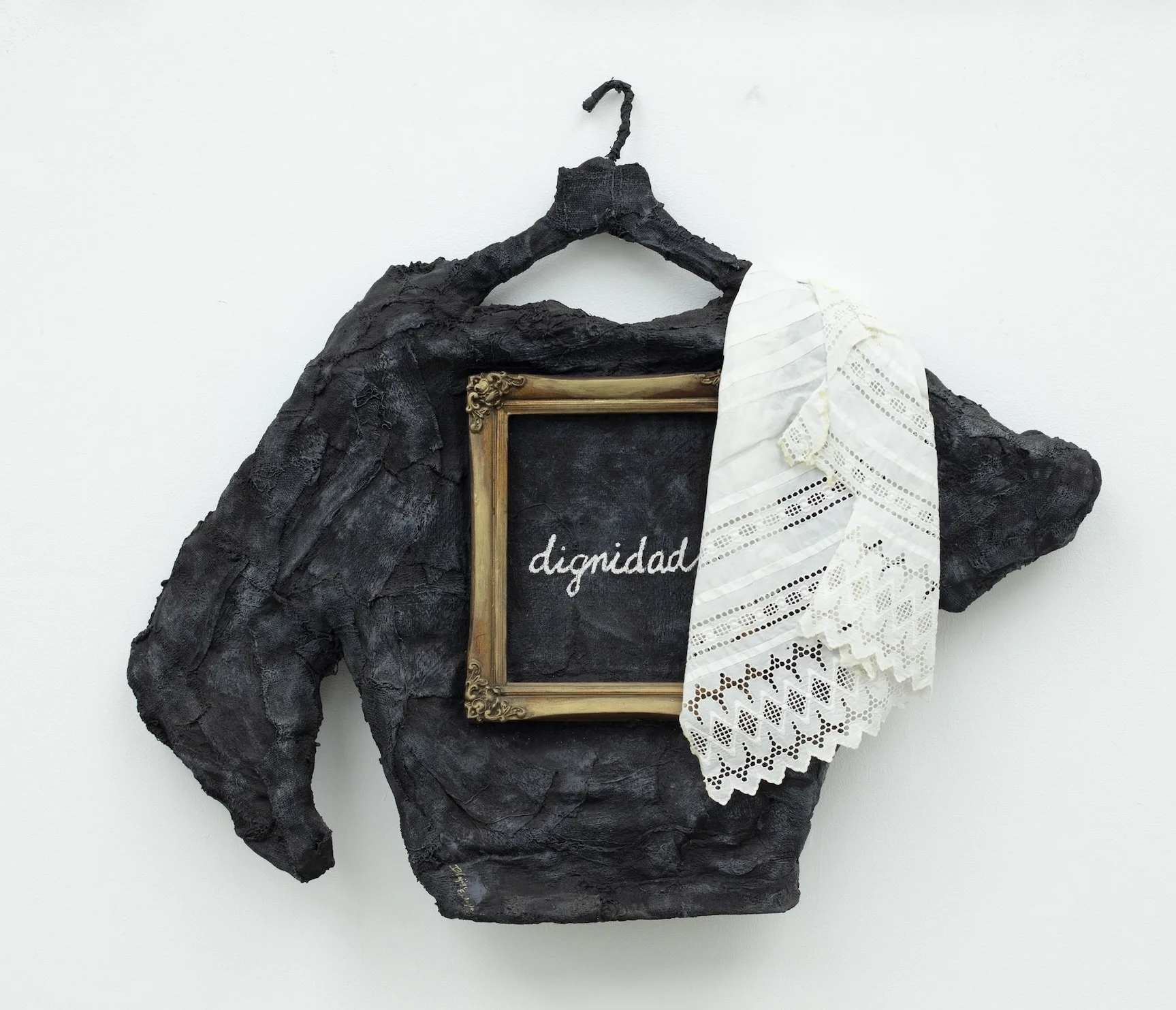
IMELDA CAJIPE, Blouse of Dignity, 1995, Found Objects on Plaster Bonded Textile
Elsewhere in the installation, a wall of white aprons serves as a projection surface for images of migrant domestic workers caught in moments where they are found outside their sites of labor, briefly enjoying a respite in foreign landscapes. But their faces are obscured, denying full identification. While the gesture protects their privacy, it also underscores a deeper condition of invisibility. Against the physical presence of the plastered objects and personal items, the installation stages migration as a tension between visibility and erasure where labor circulates globally while the individuals who perform it remain only partially present in spaces where their bodies would have been a source of maternal care.
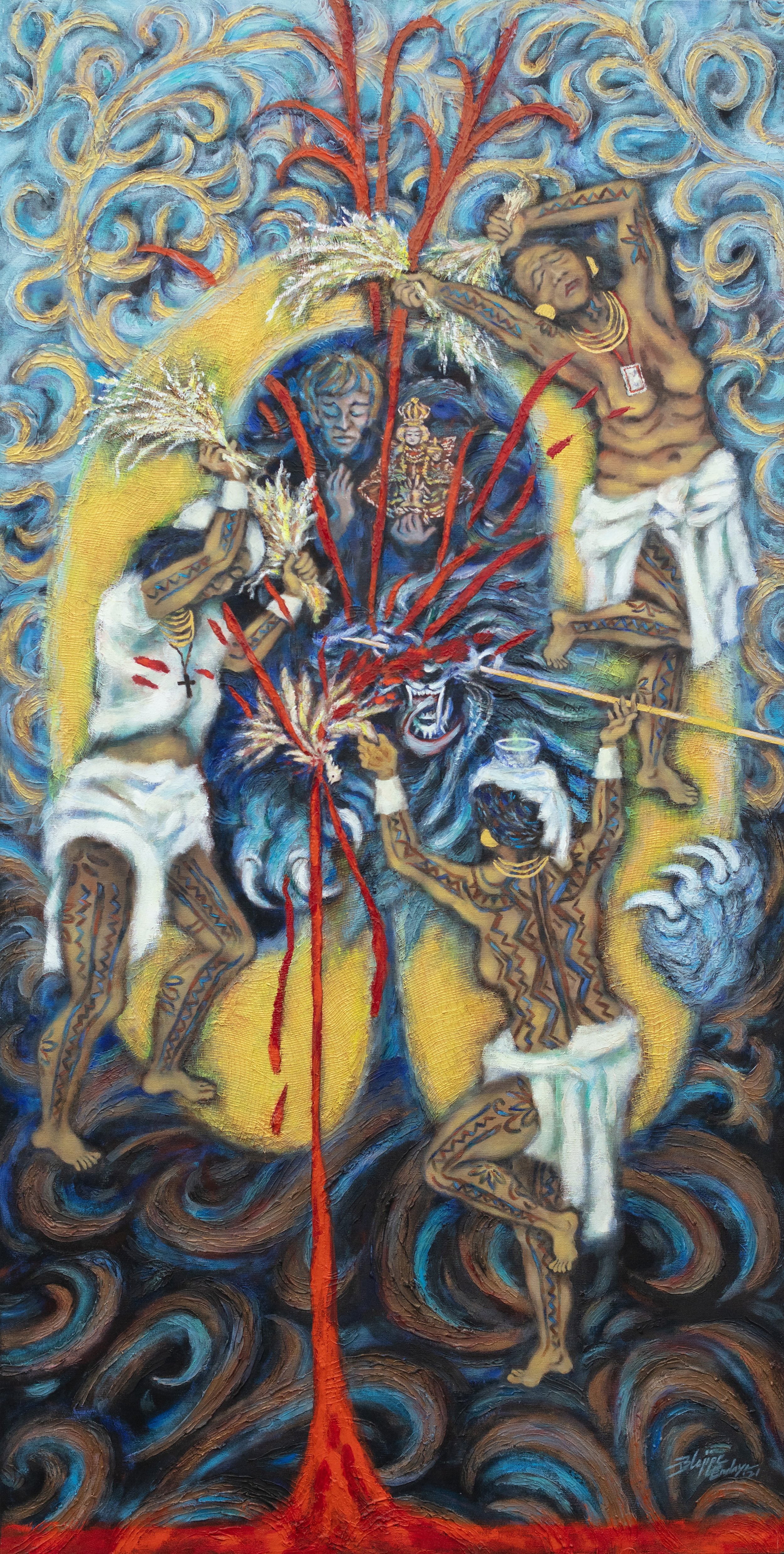
IMELDA CAJIPE, Padugo 1521, 2021, Acrylic Sinamany and Impasto on Canvas
While the exhibition also shows Endaya’s recent works, I can’t help but anchor my engagement with Kahapon Muli Bukas with Filipina DH. Yesterday. Again. Tomorrow. The stories of Filipina migrant workers repeat generations. The names change—first were Flor Contemplacion and Sarah Balabagan, and then Joanna Demafelis, Jeanelyn Villavende, Jullebee Ranara, and Mary Jane Veloso—but the structural conditions persist. Yesterday’s crisis becomes tomorrow’s headline. The installation’s homecoming refracts how the unresolved histories resurface, asking to be reconsidered rather than archived. It refuses closure. The plastered objects, anonymous figures, and labor migration narratives do not belong to a finished past. They remain active conditions shaping the present. If yesterday keeps becoming tomorrow, what has actually changed?