Her Art: The Women of the ArtFairPh/Projects 2026
In ArtFairPH/Projects, women artists across generations turned print, wood, tarot, clay, and diaspora archives into a shared feminist classroom.
Words Randolf Maala-Resueño
Photos courtesy of Martina Reyes
February 10, 2026
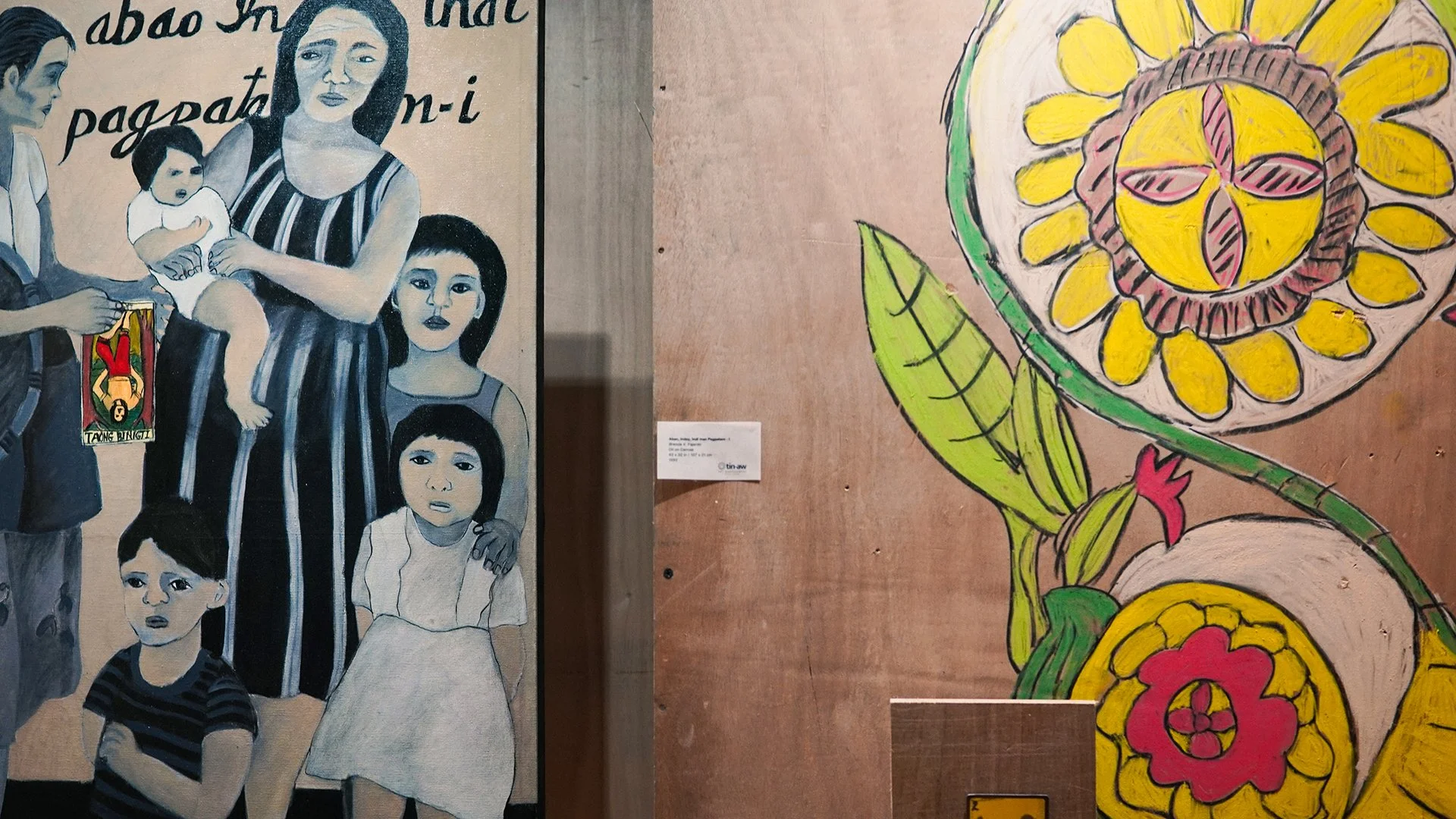
When Art Fair Philippines closed its doors, the clang of dismantled walls and rolling crates replaced the hum of visitors. Yet what stayed with many transcends what was sold, but what seeped quietly into memory: a feminist landscape built by women who treat materials as history, labor as politics, and viewing as a form of learning.
The women in the PROJECTS section subtly—yet magnifiably impactful—reconfigured how audiences understood Philippine art across time. Their works lingered because they worked on multiple registers at once: visual, tactile, historical, emotional.
Together, they sketched a throughline from mid-century feminist modernism to contemporary diasporic inquiry, reminding viewers that the past does not end—it folds into the present.
Imelda Cajipe Endaya: Devotion as method
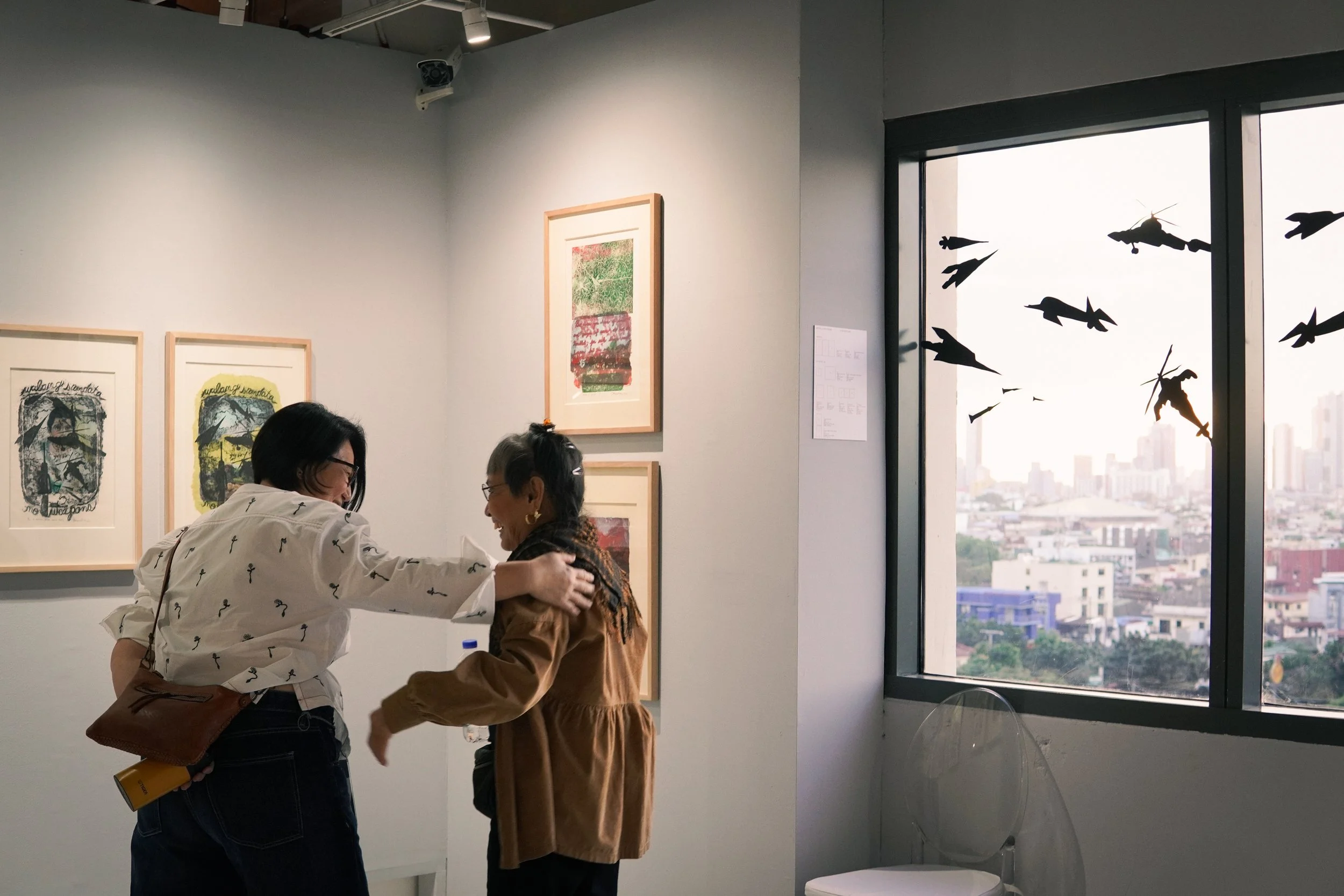
What remained most vivid from Endaya’s presentation was not any single print, but the sense of a lifetime pressed into paper.
Lovingly known as “Meps,” her works, layered with color, texture, and domestic references, stayed with viewers as evidence of patience and devotion. In retrospect, her practice felt like a quiet rebuke to the speed of the fair itself.
The tactile quality of her prints—etched lines, collaged surfaces, dye-resist patterns—carried echoes of crochet, lace, and household labor. Even after the walls were stripped bare, her work continued to suggest that women’s histories are stored in materials that are often dismissed as decorative.
Her feminism becomes innately declamatory and embedded in the process. Printmaking’s reproducibility—its “democratized” nature—becomes an ethic: art meant to circulate, to be shared, to survive outside elite walls.
Ambie Abaño: Wood, time, and the body
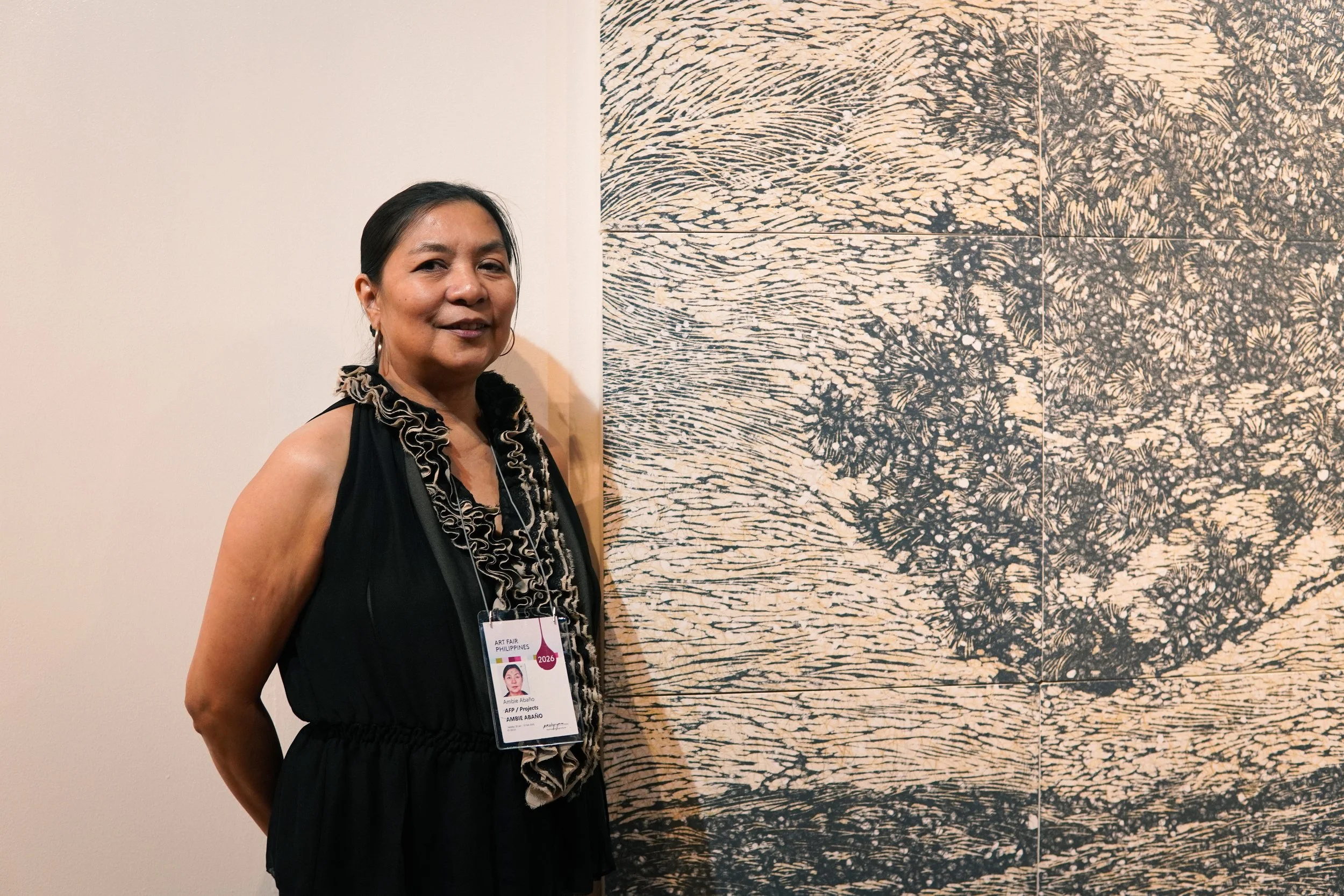
If Endaya works through accumulation, Ambie Abaño works through duration.
In her woodcuts, time is carved. Butterflies usher viewers into a narrative of life stages—youth, pregnancy, aging—before confronting them with a woodcut matrix of a dead body that remains heavy, mute, irrevocable. Here, material becomes a metaphor: the printed image moves, but the wood endures.
Abaño’s reverence for craftsmanship links her to older traditions while pushing them philosophically. Death is not a spectacle but a condition, already present in matter. Audiences learn not through didactics but through the slow encounter with surface, grain, and resistance—the ethics of looking becoming inseparable from the ethics of living.
Long after the fair, that heavy block of carved wood harkened back as a philosophical anchor—an object that demanded contemplation.
Brenda V. Fajardo: Tarot as history
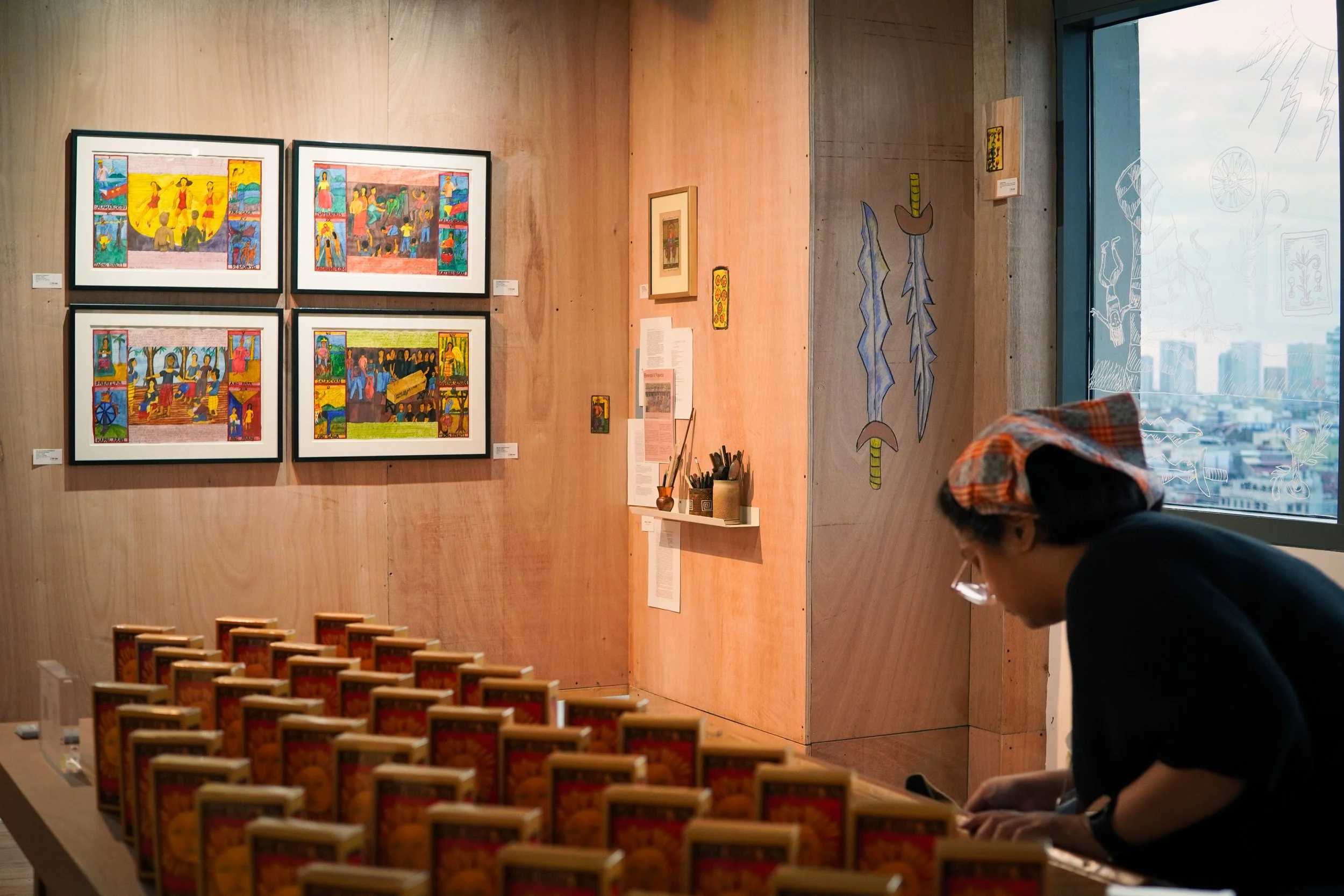
Brenda Fajardo reframed divination as critique.
Her flat, folkloric figures—wielding tools, scales, and weapons—remained in memory as a vocabulary for reading Philippine history.
In retrospect, her deck bridged generations: a mid-century feminist voice that still spoke urgently to contemporary realities. This is legacy feminism in its sharpest form: image-making as historical intervention.
In the Projects section, her work long proved that feminism in the Philippines has long been analytical, pedagogical, and fiercely imaginative.
Tessy Pettyjohn: Clay, fire, and partnership
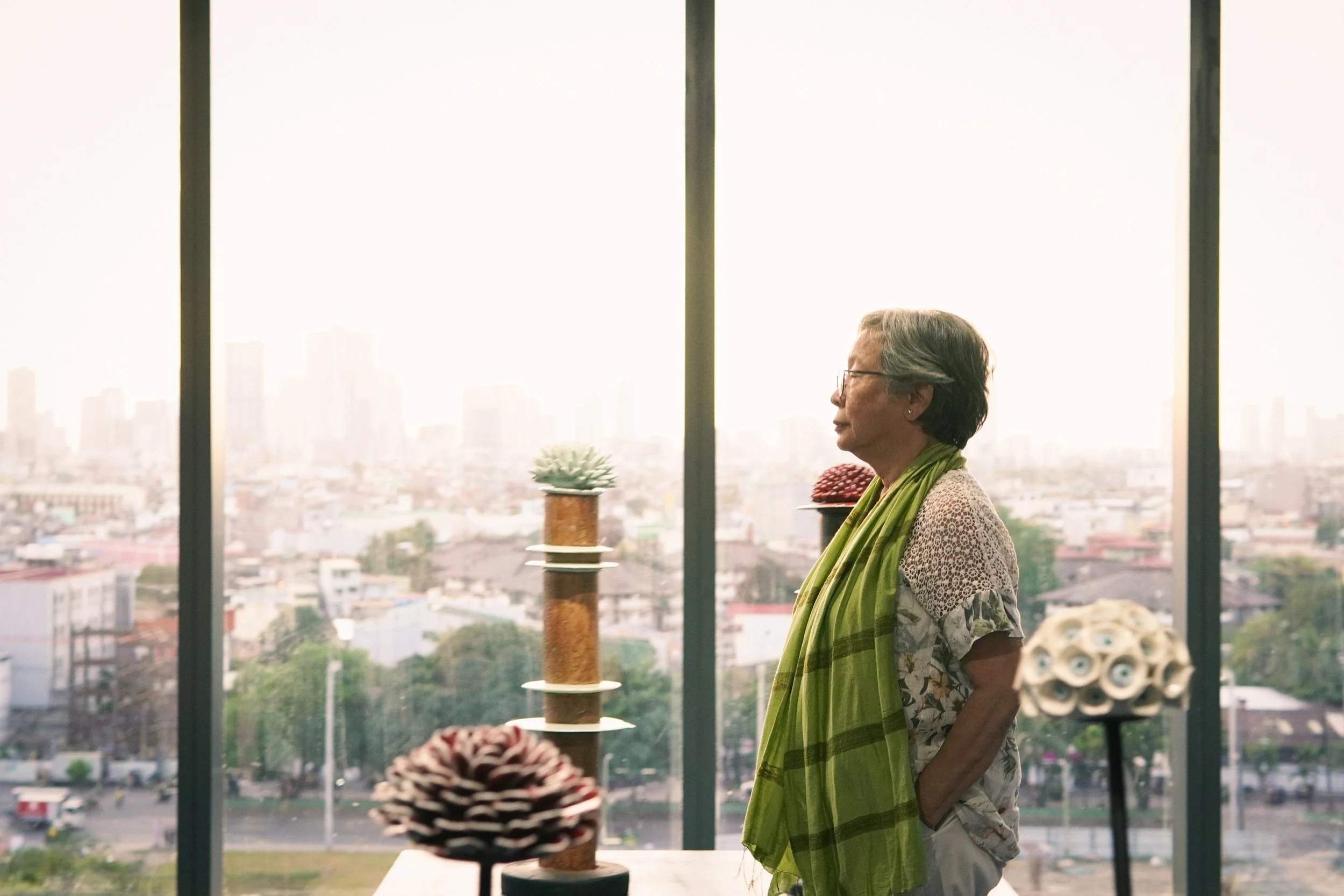
Tessy Pettyjohn’s ceramic columns rose like a forest of contrast—porcelain luminosity meeting rough wood-fired surfaces. Material became relational: her colorful, flower-like forms speak against her husband Jon’s ash-marked textures, yet together they create a shared ecosystem.
For Tessy, ceramics are not mere objects, but a way of life. Indigenous clays, volcanic ash, and unpredictable fire collapse geography into form. Each kiln opening is like opening a Christmas present, a reminder that creation is both control and surrender.
In her Projects pieces, her practice embodied intergenerational continuity: the pioneer potter whose experiments now shape an entire field of Philippine clay artists.
Sa Tahanan Co.: Diaspora as classroom
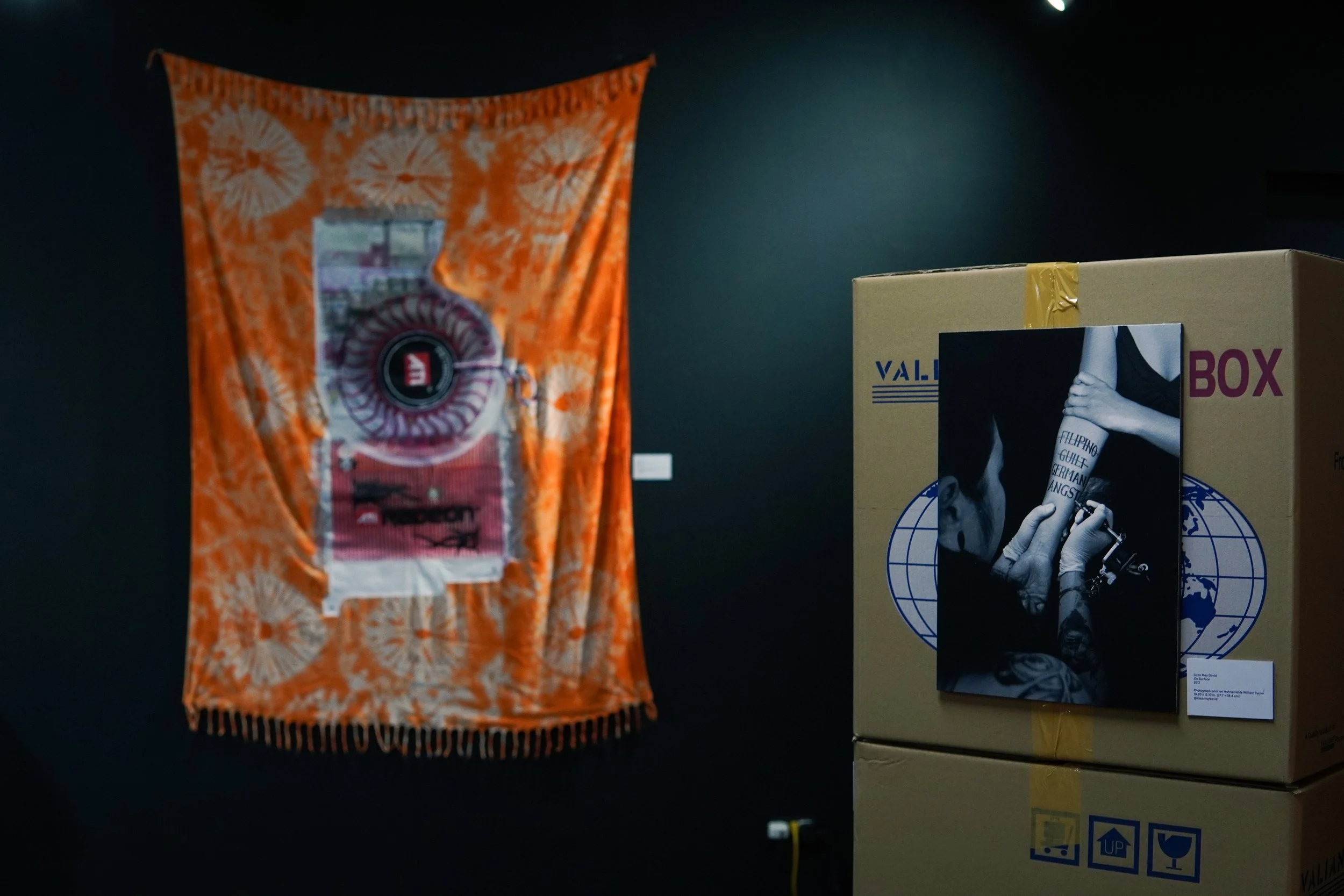
If the first four artists rooted us in the archipelago, Sa Tahanan Co. extended the lesson outward. Curated by Anne Bernice delos Reyes, Narito, Naroon stages Filipino identity as something dispersed yet insistently present.
Lizza May David worked through gaps and silences in archives, letting abstraction become a language of disturbance—paint as both veil and revelation. Her practice asks how memory behaves when home is fragmented.
Katie Revilla treated materials as historical beings in themselves—objects carrying colonial residue, migration stories, and postcolonial tension. Her antidisciplinary approach turned matter into testimony.
Ariana Villegas (F4RM) introduced a pedagogical feminism: technology as access, design as equity, and creativity as community infrastructure. Her work remindsled viewers that the politics of art also live in who gets to learn, code, and imagine.
Together, these women modeled a diasporic feminism that is neither nostalgic nor detached, but critically situated, able to question the Philippines from afar while remaining emotionally tethered to it.
Feminism Beyond the “Women’s Section”
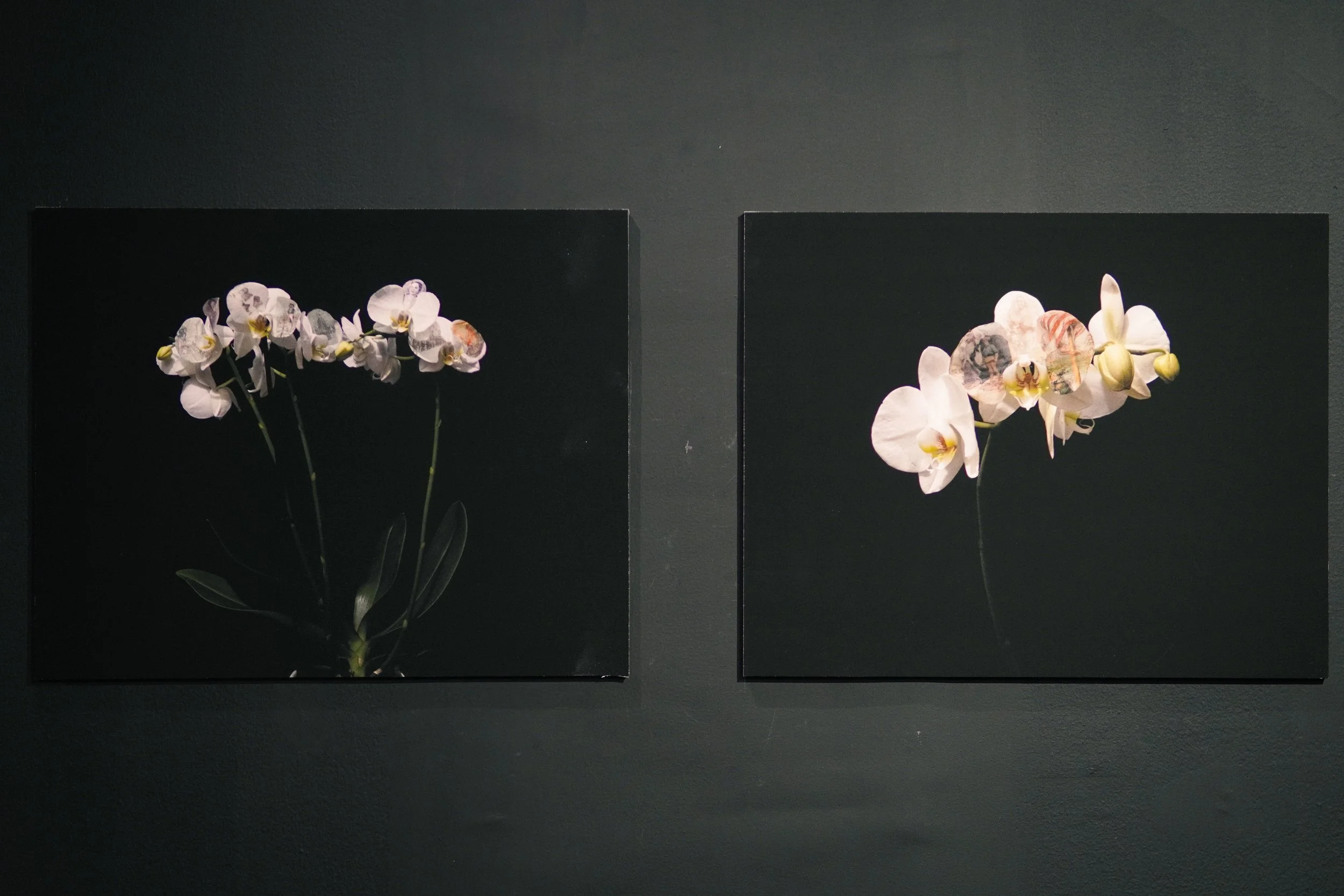
What makes ArtFairPH/Projects powerful is that these women are not isolated in a “women’s section.”
Instead, their practices weave through the entire fair—across other exhibits and floors–quietly structuring how audiences move, pause, and think. Feminism here is spatial as much as thematic: a rhythm of looking that privileges care, reflection, and context over speed.
Materials became teachers. Paper carried history. Wood held mortality. Tarot mapped power. Clay remembered the land. Diasporic objects recorded displacement.
What remained after the booths came down was a deeper understanding that Philippine feminist art is not new, not marginal, and not merely thematic—it is foundational.
The women of ArtFairPH/Projects redefined the very place they founded, leaving behind a quiet but enduring curriculum on art, history, and belonging.