From Pre-Loved to Re-Loved
At CANVAS Gallery and Garden, 17 artists rummage through the overlooked and unwanted, turning would-be trash into art—and asking what, exactly, we keep throwing away.
Words Bernadette Soriano
Photos courtesy of Ocs Alvarez
August 28, 2026
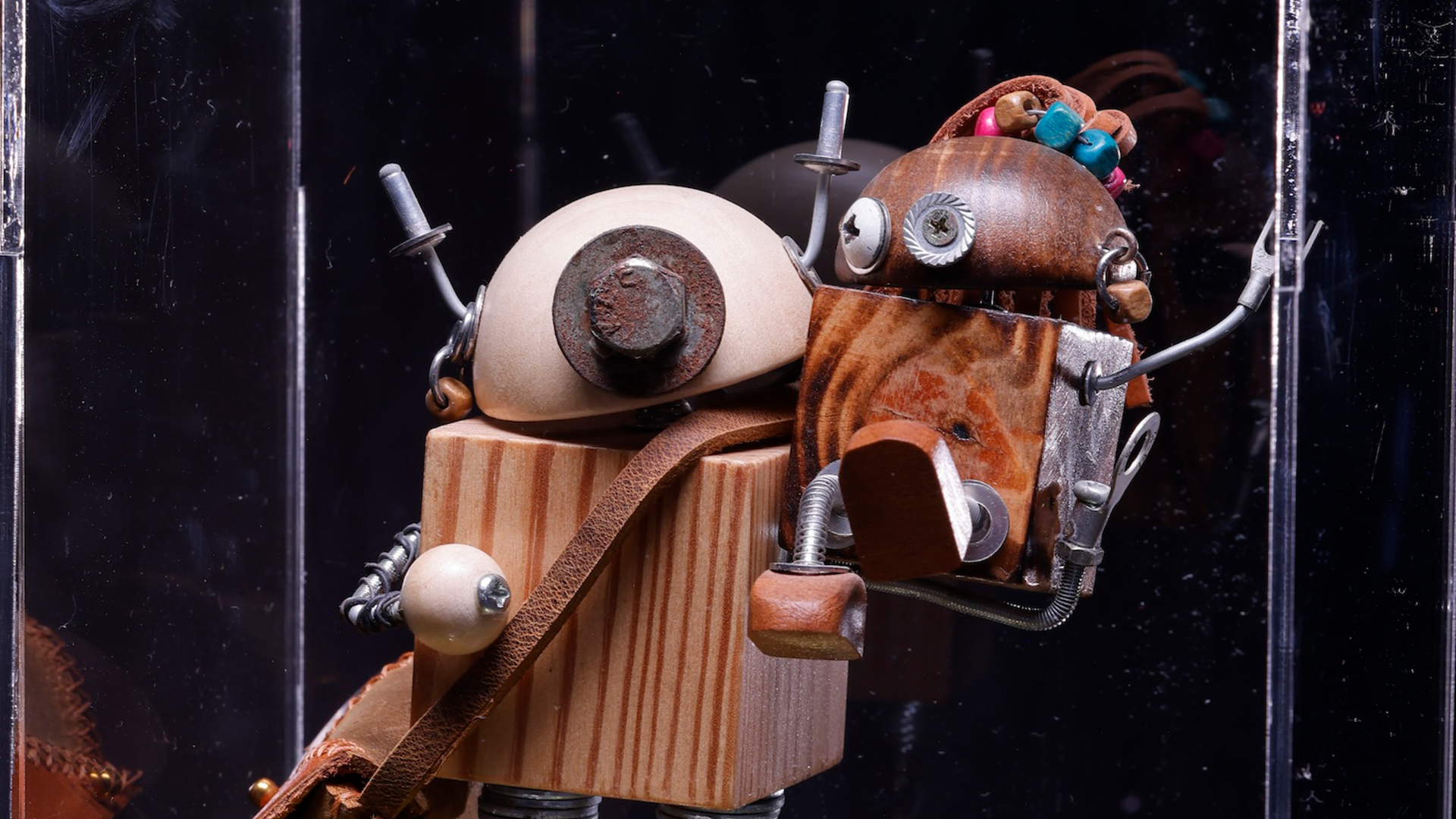
Giant and Mimi by Madel Yu | Photos courtesy of Ocs Alvarez
There is a particular kind of magic in the things we stop noticing.
A worn-out object, once it has outlived its usefulness, tends to acquire a new status: clutter, rubbish, something to be cleared away before it takes up any more space.
We are, after all, living in a culture rather fond of the new. Buy, use, replace, repeat—the cycle is so ordinary that its excess can become almost invisible.
ABUBOT: Artworks From Found Objects asks us to look again.
Opened last August 15 at CANVAS Gallery and Garden, the exhibition brings together 17 artists whose works begin, quite literally, with what has been left behind.
Selected from more than 100 submissions from around the world, the artists work across assemblage, sculpture, embroidery, linocut, and other forms, giving discarded everyday materials another shot at being seen.
It is an old artistic trick—making something from nothing—but ABUBOT gives the premise a contemporary sting.
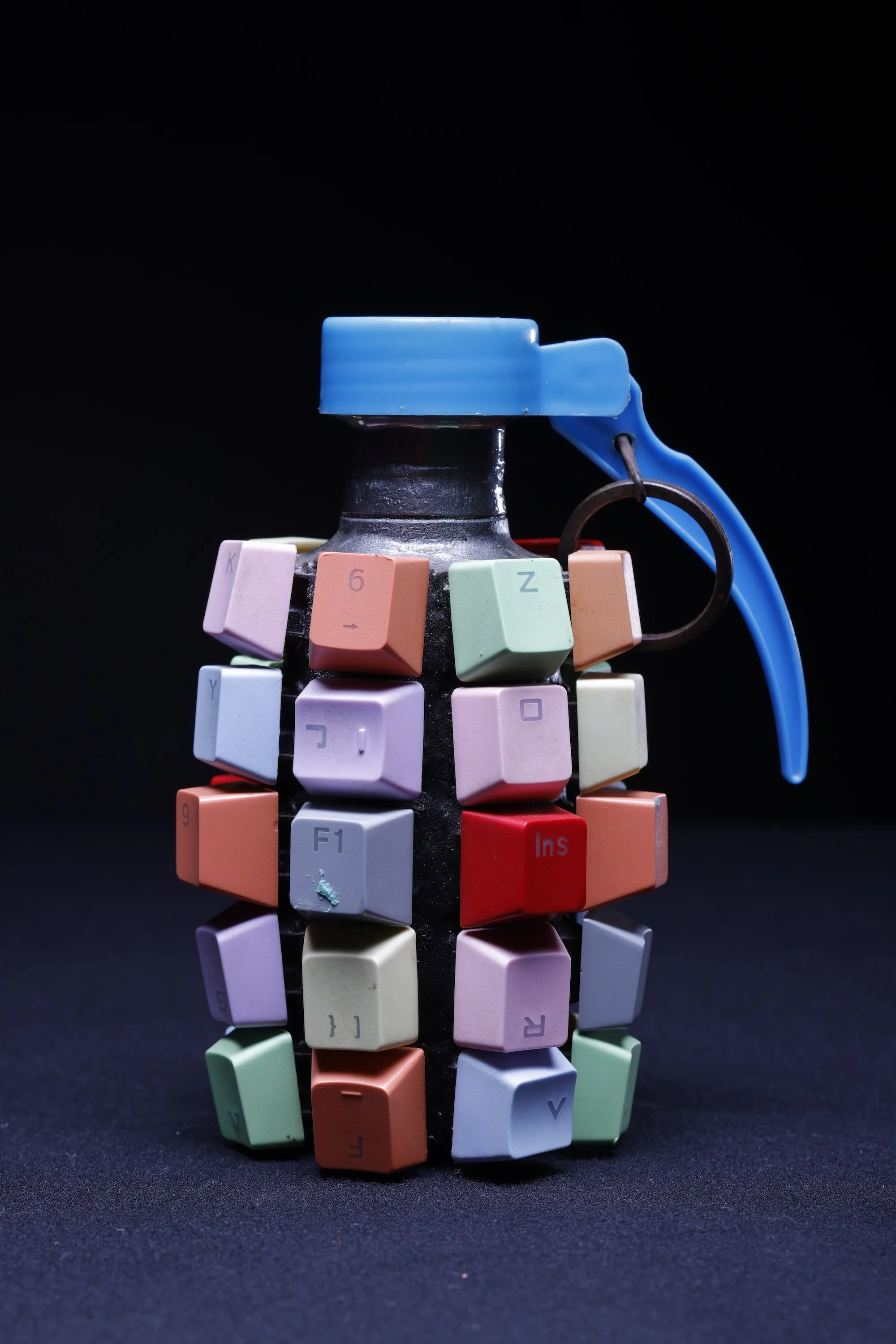
Kanya-kanyang hagis by Oscar Floirendo | Photos courtesy of Ocs Alvarez
In a world where consumption is increasingly less about need than appetite, the refuse left in its wake becomes an unlikely archive: evidence of what we buy, what we value, what we exhaust, and what we would rather not think about once it is out of sight.
Here, however, the discarded refuse to stay discarded.
The exhibition is presented by Marahuyo Art Projects in partnership with The Center for Art, New Ventures, and Sustainable Development (CANVAS), as part of the If Trees Could Talk International Art Biennale.
In the biennale’s continuing reckoning with creativity, sustainability, and ecological unease, ABUBOT gives reuse a little more bite: the discarded is not merely salvaged, but reconstituted—made to acquire a second life, and perhaps a second opinion, on the culture that threw it away.
From Richlie Amican and David Mark Abanes to Joshua Carlos Barrera, Nubbin Beldia, Sebastian Cacho, Kendall Colindon, Lorebert “Maralita” Comisión, Grace Corpuz, Oscar Floirendo, Bayani Galera, Juan Javier Garchitorena, Martin Honasan, Lino Berro Jamisola, Gabriella Lindsay, Glenn Martinez, Chop Querijero, and Madel Yu, the exhibition gathers different practices around one deceptively unruly question: what becomes of what we have written off when it is given another vocabulary?
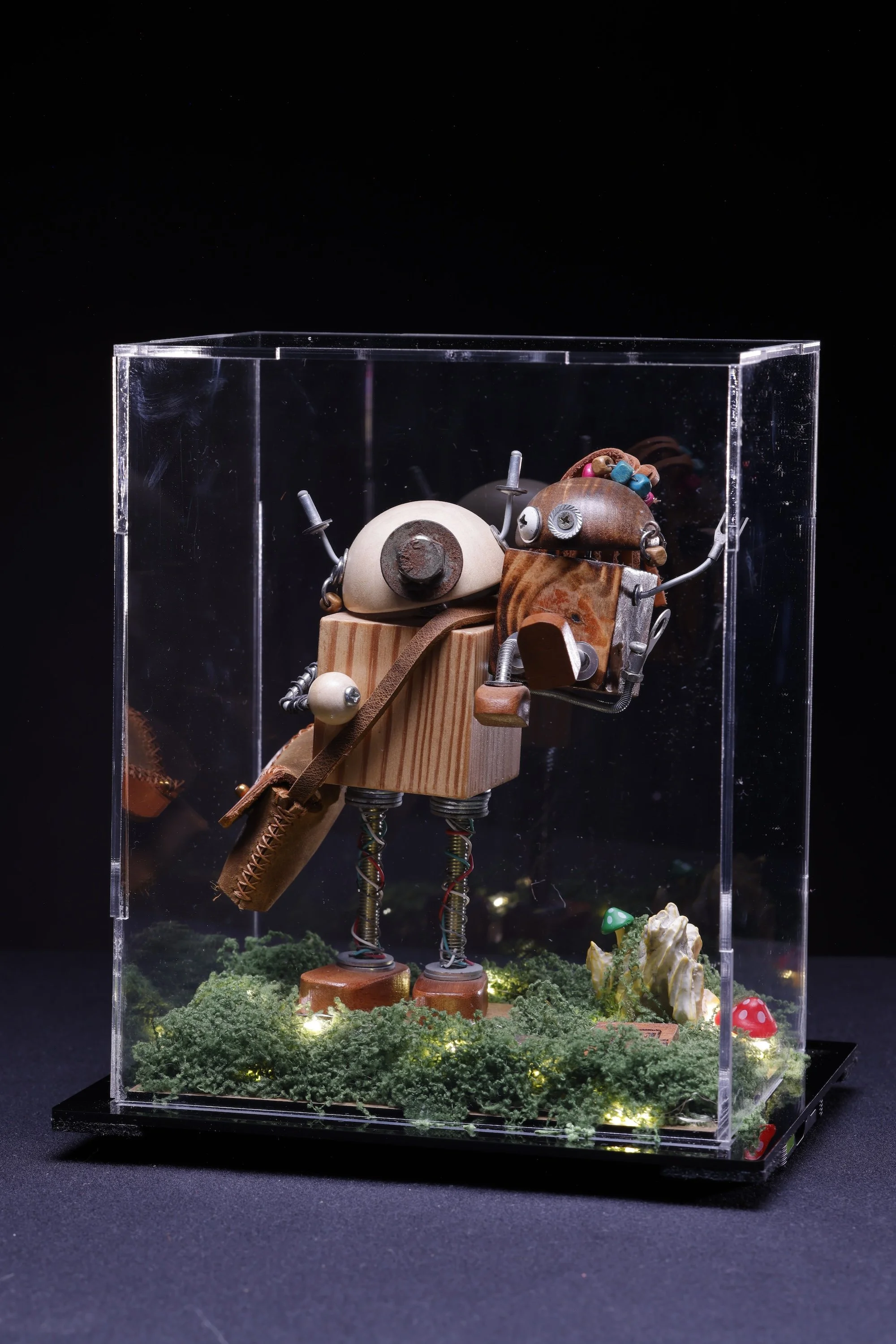
Giant and Mimi by Madel Yu | Photos courtesy of Ocs Alvarez
The answer, at least within ABUBOT, is not simply “recycling”, for that would make the exhibition sound far tidier than it is.
Instead, the works unsettle the tidy moral arithmetic of waste. These objects are not so much plucked from the bin and polished into something palatable as reassembled, repurposed, made uncanny—until the things we once looked past begin to look back.
The ordinary, in turn, becomes a site of inquiry into a society beholden to consumption, and to the human, ecological, and future costs it so readily passes elsewhere.
The reversal has a sly way of turning the tables: what we thought we were done with may not be done with us.
ABUBOT takes up that ecological thread left taut with If Trees Could Talk, the environmental reckoning convened by CANVAS and the Tumba-Tumba Children’s Museum of Philippine Art in 2024.
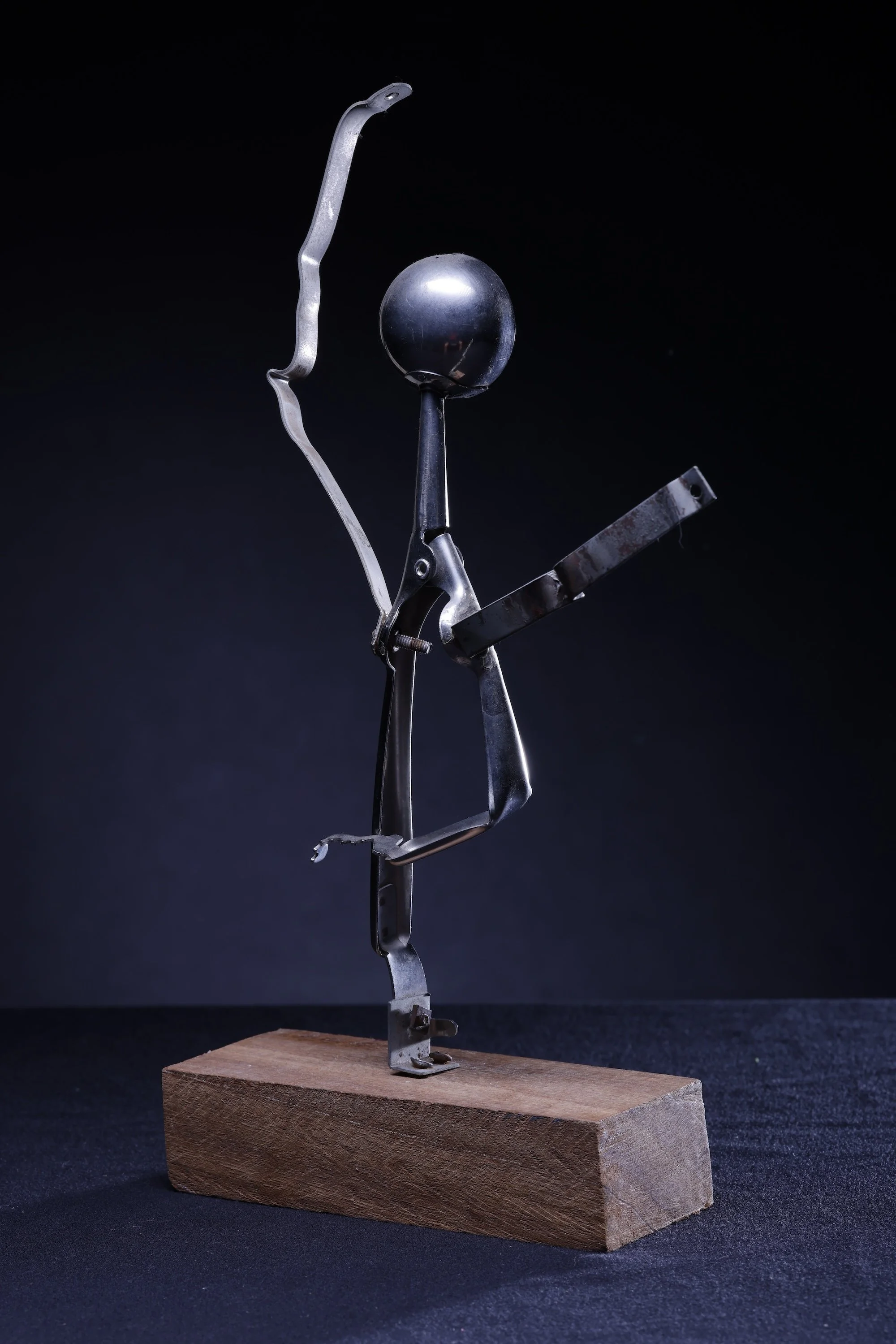
The Dancer by Nubbin Beldia | Photos courtesy of Ocs Alvarez
This year, the biennale’s reach spans over 60 countries, with To the trees, with love drawing more than 700 submissions and satellite projects taking root across Southeast Asia, Europe, and East Africa.
Against that wider backdrop, ABUBOT finds in refuse an occasion to reckon with what the eye, through sheer habit, has learned to pass over.
Because perhaps the first economy is one of attention: seeing the object before disposal, the material before waste, the possibility before we call its course run.
At CANVAS, the leftovers get the last word, and a second life to boot.
ABUBOT: Artworks From Found Objects is located at CANVAS Gallery and Garden, 1 Upsilon Drive Extension corner Zuzuarregui Street, Barangay Matandang Balara, Quezon City. The exhibition runs until September 15, 2026.