
For Josephine Turalba, Water is a Language of Power
In Filipina transdisciplinary artist Josephine Turalba’s world, water never stays still—it remembers, resists, and redraws every boundary.
Words Bernadette Soriano
Photo Courtesy of Josephine Turalba
April 15, 2026
In much of contemporary art discourse, water is quickly cast as a metaphor for fluidity, openness, or abstraction—an interpretive shorthand that has become almost habitual, yet Filipina transdisciplinary Josephine Turalba’s practice pushes against that ease of reading; water operates less as a symbol than as an environment that recalibrates how form, stability, and authority are perceived.
What is at stake is not symbolism, but condition. Water, in Turalba’s work, becomes an operative environment: it alters how structure is perceived, how authority is read, and how scale is understood.
In doing so, it unsettles certainty and reframes boundaries as contingent formations that hold only under specific pressures.
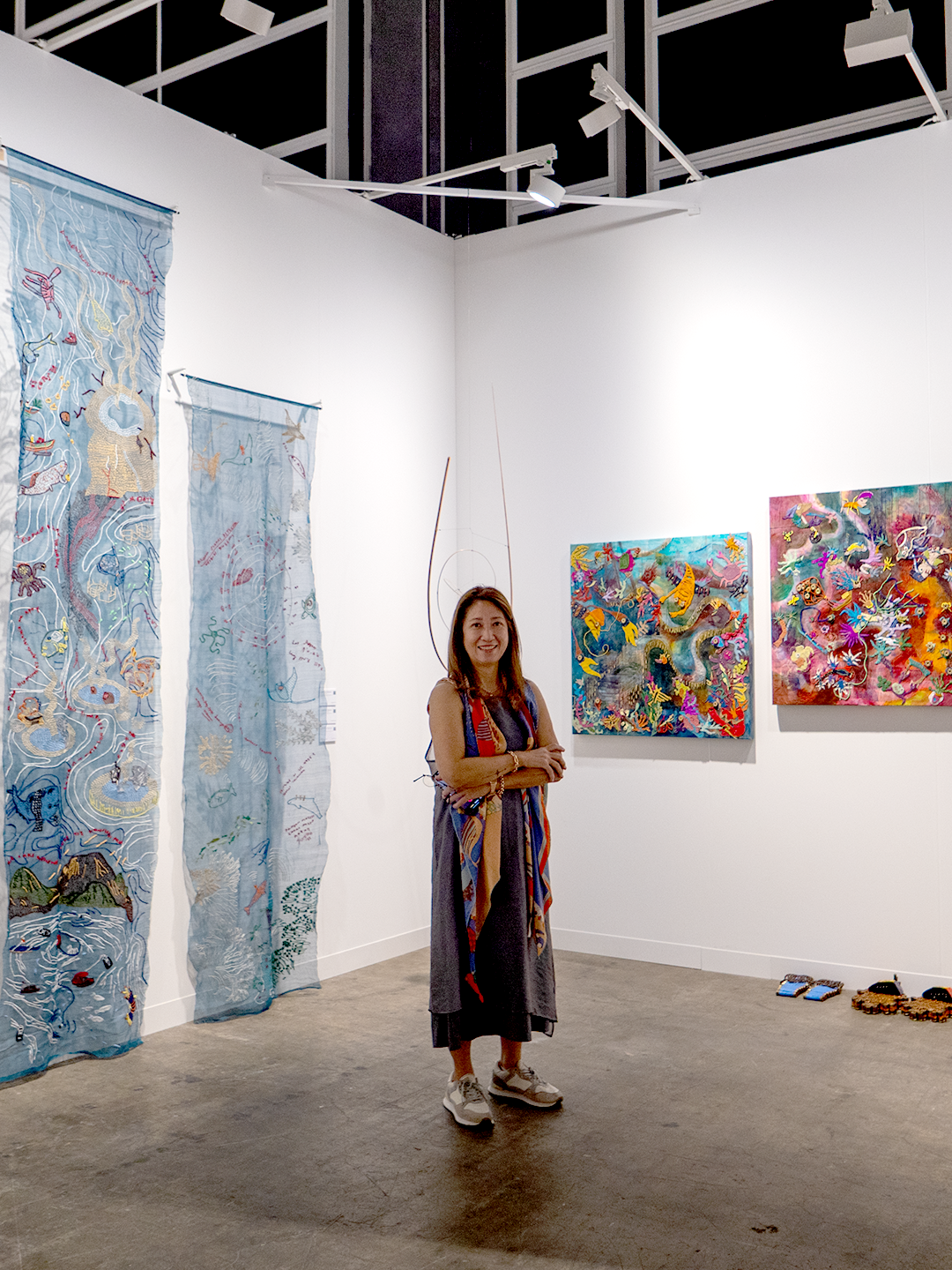
Josephine Turalba
Her early training in scuba diving, beginning at the age of 12, often enters accounts as biographical framing, though it is more precisely read as a form of literacy shaped by immersion.
Submersion, in this register, is not subject matter but method: a way of apprehending space in which visibility remains partial, distance resists stabilization, and what appears fixed is continually recalibrated under the quiet insistence of movement, pressure, and depth.
“The imbalance of power and the abuse of authority intrigue and provoke me,” she ponders, situating her attention in the West Philippine Sea, where territorial claims operate less as lines on a map, and more akin to repeated assertions within a shifting medium.
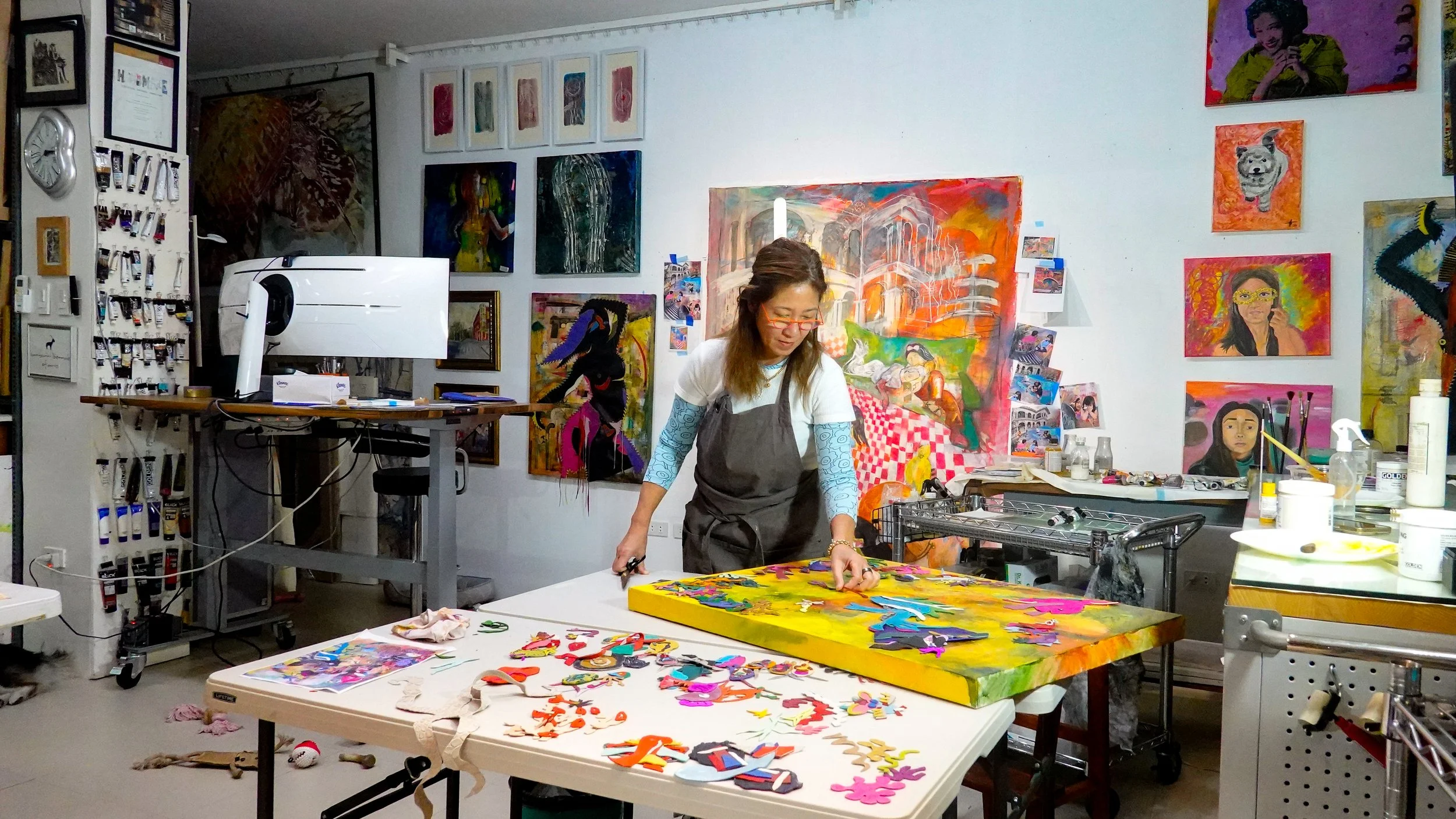
Behind the Scenes
A hydrofeminist reading sharpens this frame, recalibrating hierarchy into circulation and permanence into variability. It is in this hydrological display that authority no longer finds anchorage in place, precisely because it behaves instead as a current subject to eddies, and lateral drift against the ever-ebbing flow of turbulence.
The Submerged Life of Institutional Memory
At Art Basel Hong Kong held March 27 to 29, 2026, Turalba presents Waterworks, PolySea, Fins and Verdicts, and Strait Lines—works that extend a consistent inquiry into how systems of power behave when displaced into unstable environments.
Waterworks by Josephine Turalba
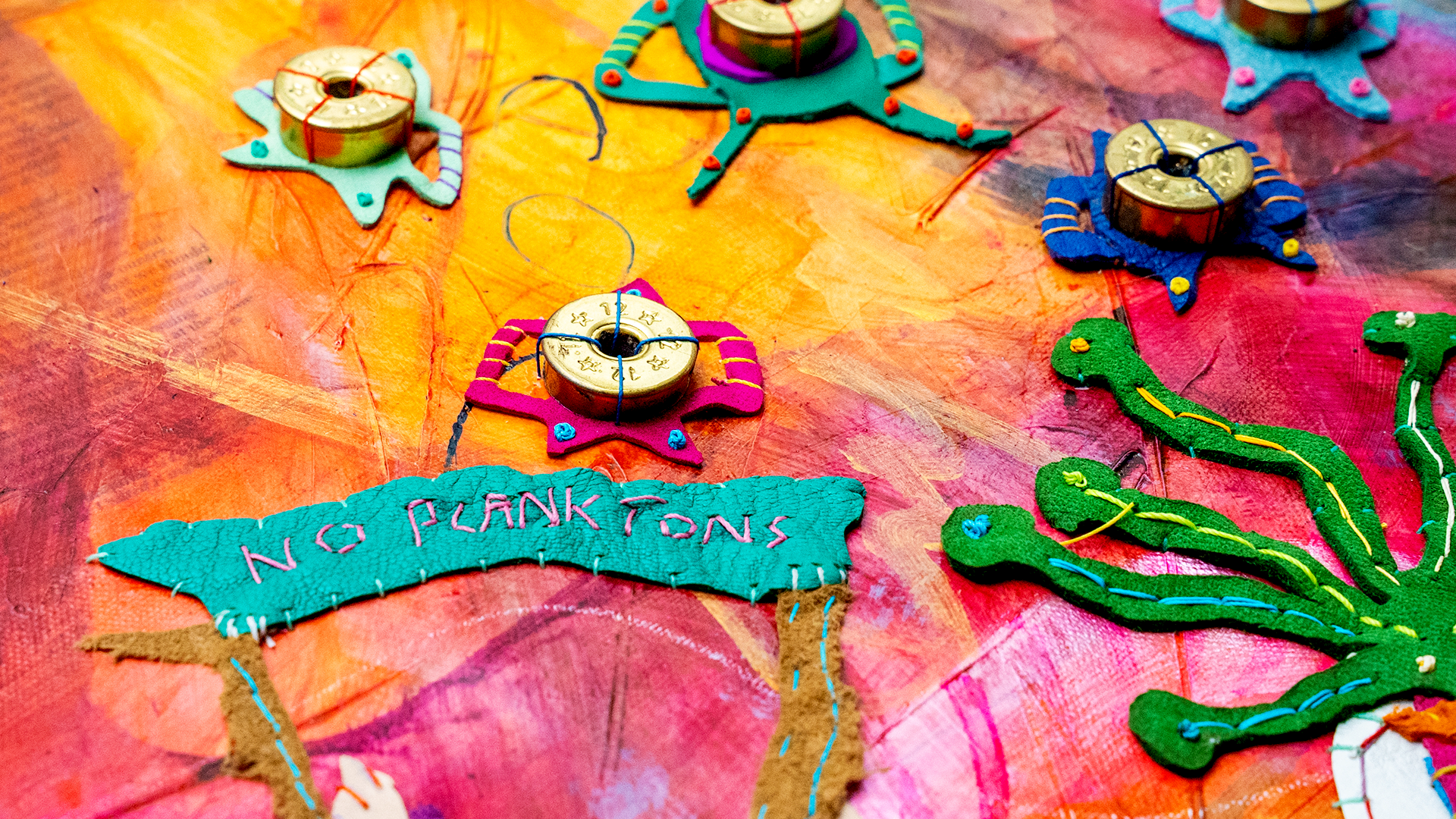
The materials she works with are never neutral. Leather, wax thread, grommets, brass fragments, and emptied bullet casings arrive already conditioned, carrying with them prior states of use and force.
They do not reset within the gallery as they hold what might be understood as institutional residue—traces of circulation, pressure, and prior deployment—so that meaning accumulates rather than begins anew.
This approach has been visible across her earlier exhibits. At the Venice Biennale (2015), Scandals recast spent bullet casings as wearable forms, dissolving the divide between instrument and ornament while keeping their tension intact.
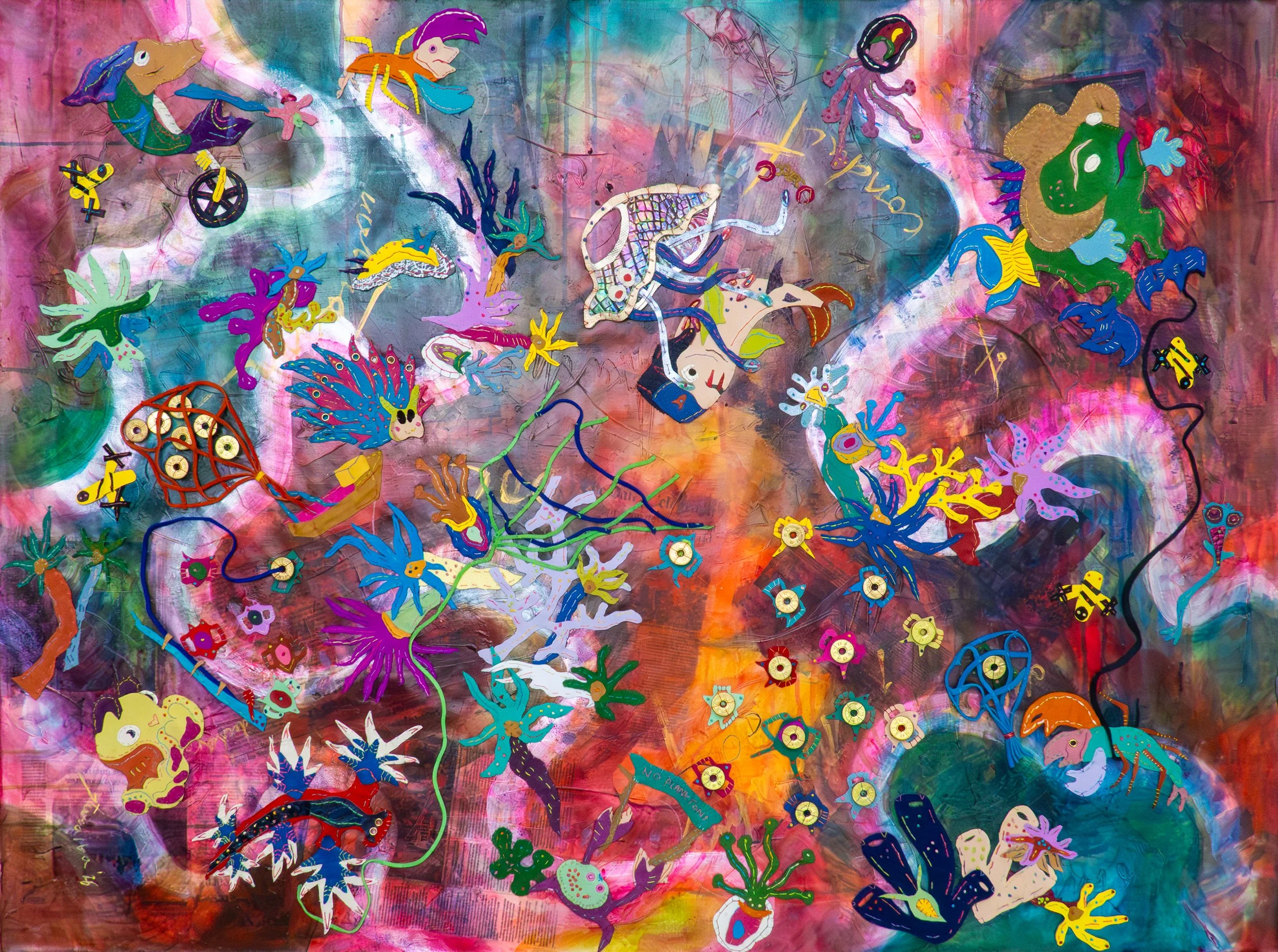
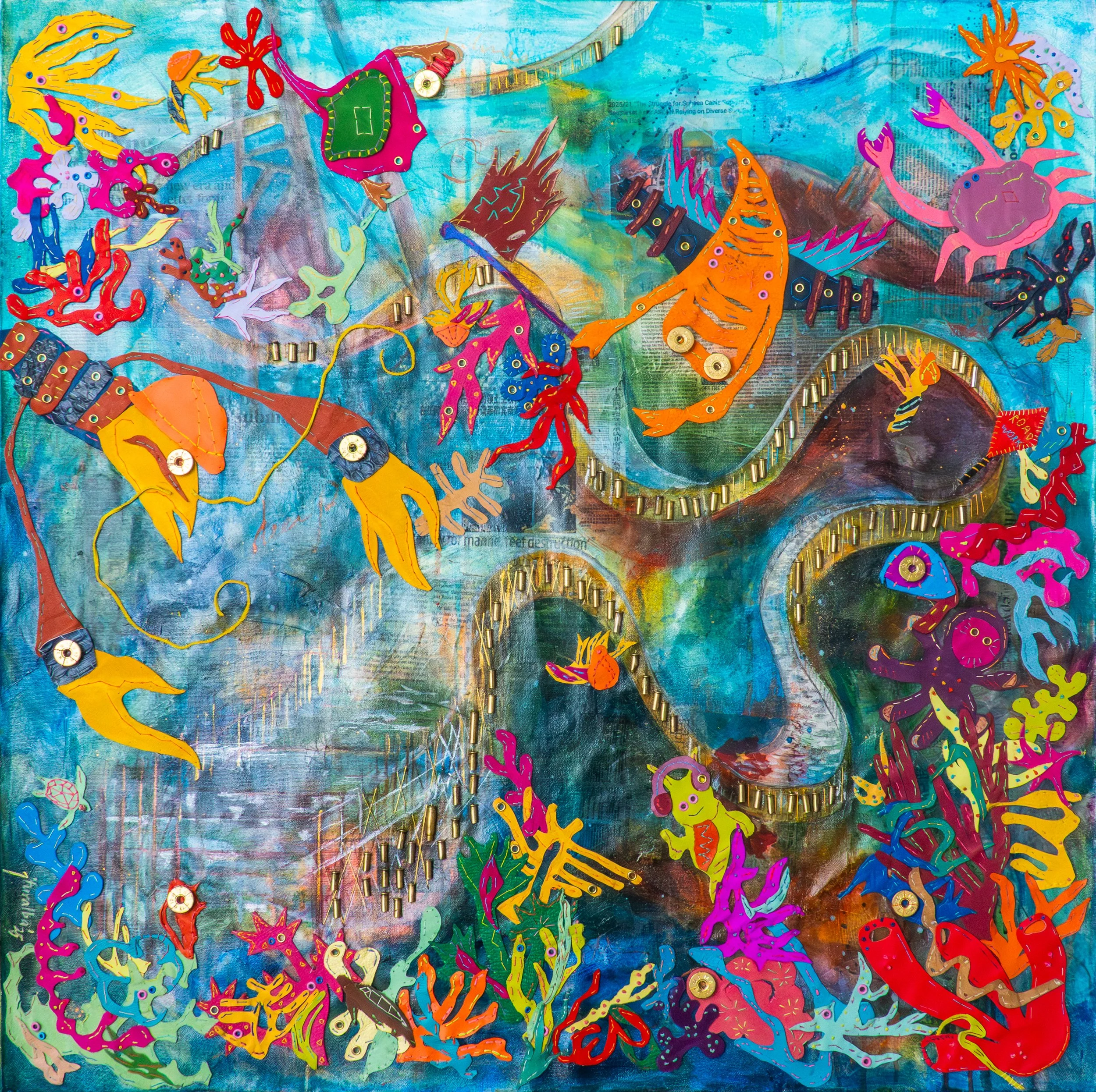
PolySea by Josephine Turalba
At the Nakanojo Biennale (2025), Drifting Threads and Topographies extended the same work into textile across ten piña silk panels made with weavers from Lumban and Aklan and embroiderers from Taal, treating geography and labor less as origin points than as shifting systems of movement, exchange, and return.
Across Venice, Cairo, London, Tashkent, and Çanakkale, the thread is structural rather than stylistic: an ongoing attention to how force persists beyond displacement, remaining scrutable as trace and residue across shifting sites.
Finding Beauty in Instability
In Waterworks, composition initially presents itself as order, only to resolve, upon closer reading, into a constructed system of boundaries. Leather, brass fragments, wax thread, and industrial fixtures hold the form together, though only provisionally.
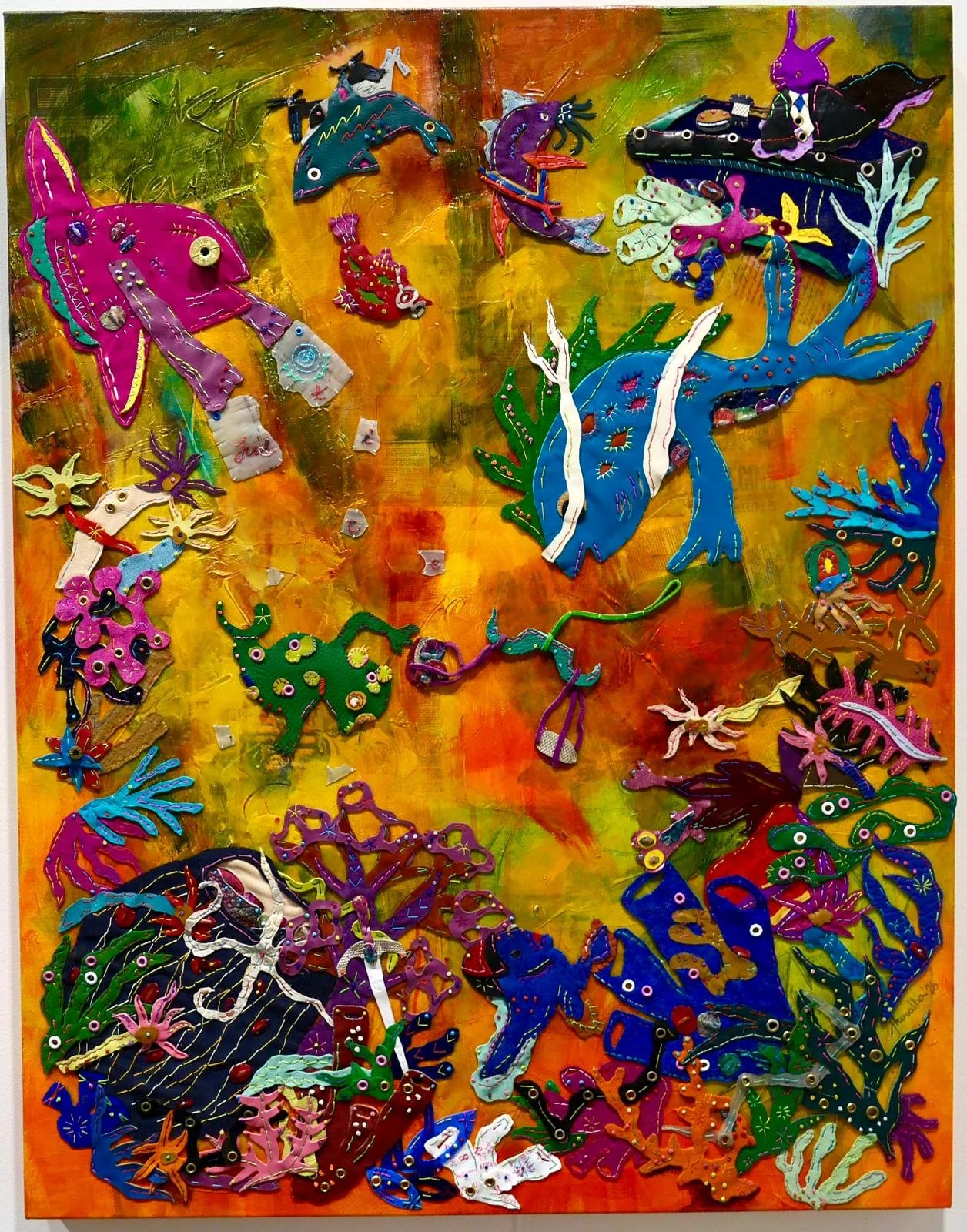
Fins and Verdicts by Josephine Turalba
With sustained attention, the work begins to shift—less as a stable object than as a site of slow erosion—whereby current seems already to be working through its edges, quietly undoing what appears fixed.
PolySea, meanwhile, turns toward ecology. Brain coral becomes a point of dispersion to scatter attention across movement. Authority here is no longer a focal point as it emerges in relation that briefly coheres as stability, then dissolves again into circulation.
Fins and Verdicts compresses this logic into a staged interior: a courtroom embedded within coral formations. A nudibranch presides; a sunfish interrupts procedural rhythm; a version of Lady Justice appears without full instruments of adjudication. The scene ferries institutional echoes, though displaced into an environment where their assumptions no longer fully apply.
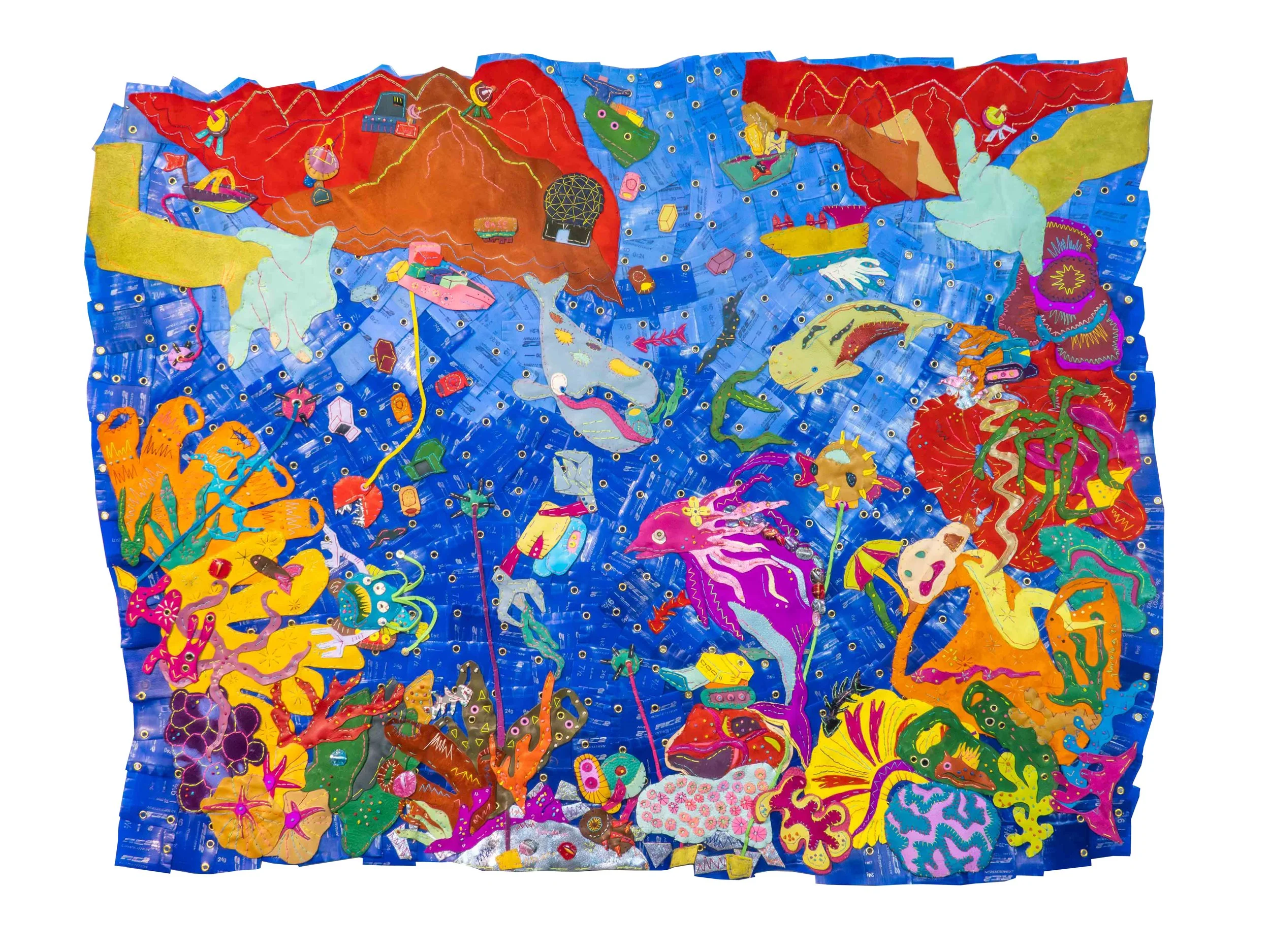
Strait Lines by Josephine Turalba
“These creatures act as simple mirrors to human interventions,” Turalba notes, “creating borders, enforcing land ownership, policing populations, and performing the motions of justice.”
Across the works, pressure persists over resolution. Systems hold only in passing before yielding to shifting currents that reconfigure their form. Power reads as sustained adjustment within instability, never fully settling.
Turalba’s water, ultimately, is not a poetic device. It is an analytic field—one that shows what remains legible when structure is no longer guaranteed.