Five Decades of Making with Jon and Tessy Pettyjohn
Pioneers of contemporary Philippine ceramics, Jon and Tessy Pettyjohn brought five decades of high-fire practice, teaching, and collaboration to Art Fair Philippines 2026.
Words Gerie Marie Consolacion
Photos courtesy of Martina Reyes
February 09, 2026
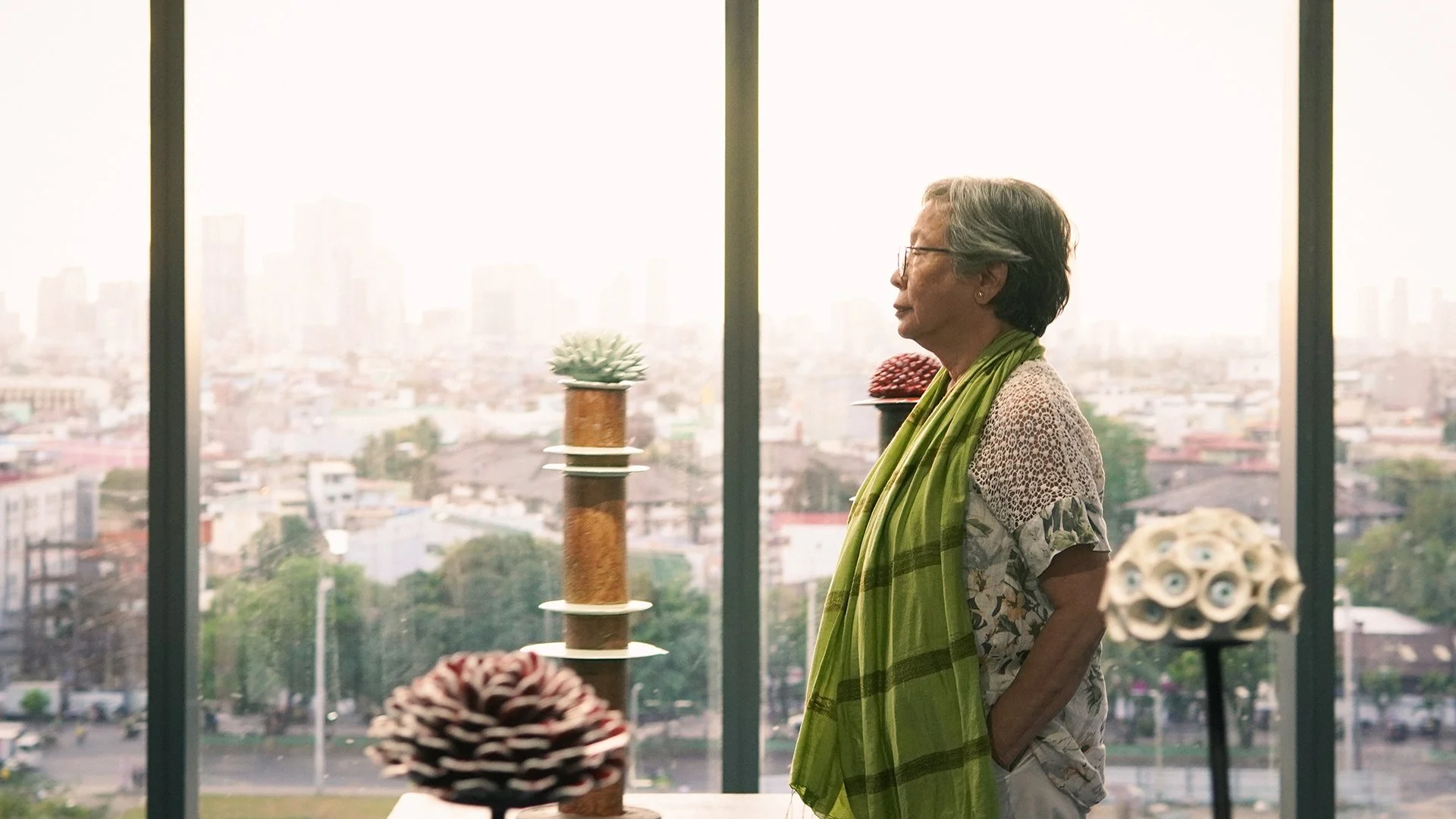
At the heart of the contemporary art scene, amid the bustle of Art Fair Philippines 2026, Jon and Tessy Pettyjohn stand as quiet but enduring figures—artists whose relationship with clay stretches back five decades.
Considered pioneers of contemporary Philippine ceramics, the Pettyjohns have spent a lifetime working passionately in the realm of high-fire Asian-style ceramics, grounding their practice in indigenous materials while remaining open to constant change.
Their presence at the fair feels both timely and improbable. Ceramic art has rarely occupied center stage in the contemporary art world, a fact Jon acknowledges with characteristic candor.
“Ceramic arts is a little bit of outsider art,” he says. “Not really mainstream. So, it's great to be at the center of the action. It's exciting for us.”
The invitation to Art Fair Philippines marks a rare moment of visibility—not just for their work, but for the medium itself: “They invite us, and we kind of go, oh, that’s nice,” Jon adds, smiling. “But it really is a whole different world for us.”
Breaking the Barriers of “Fine Art”
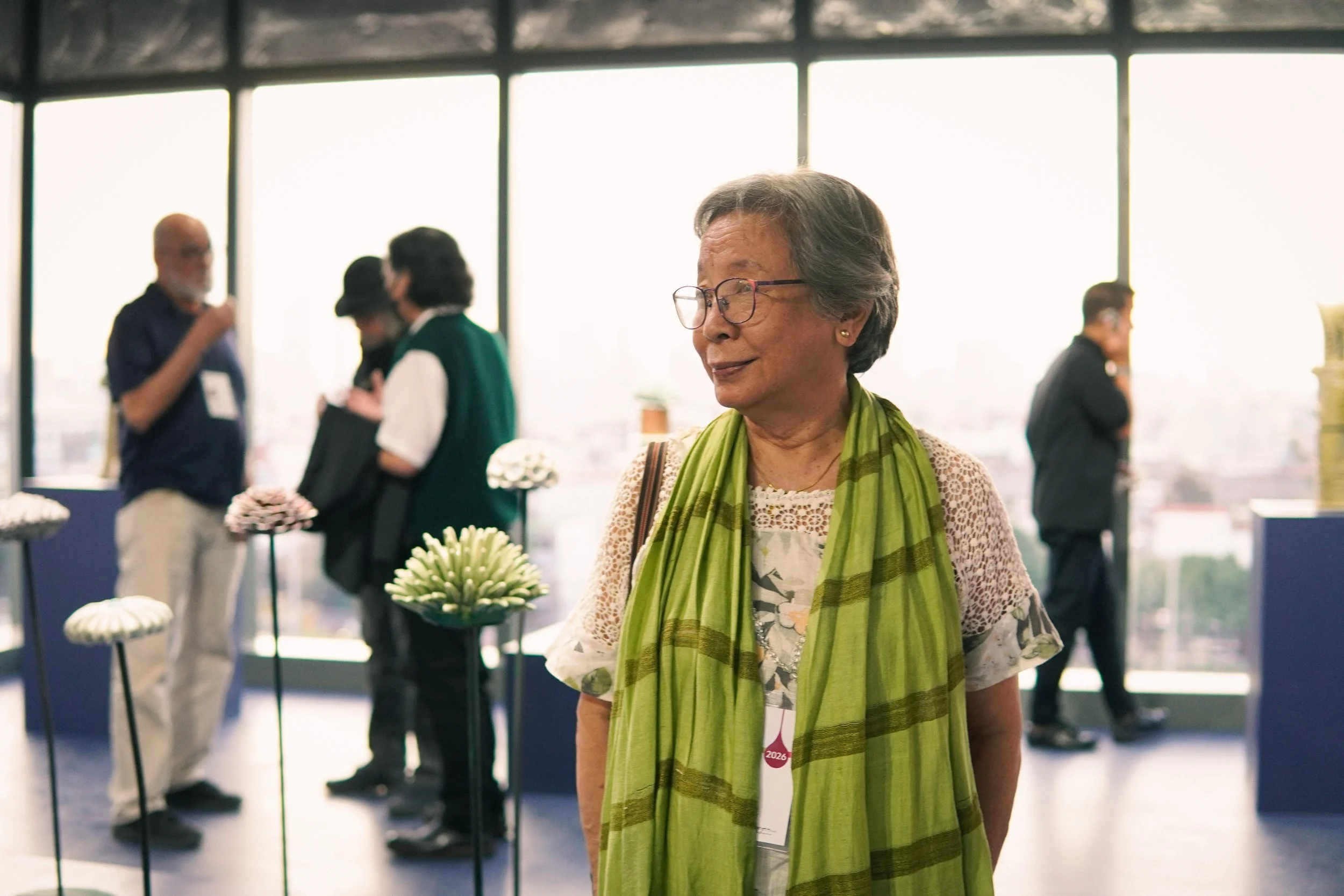
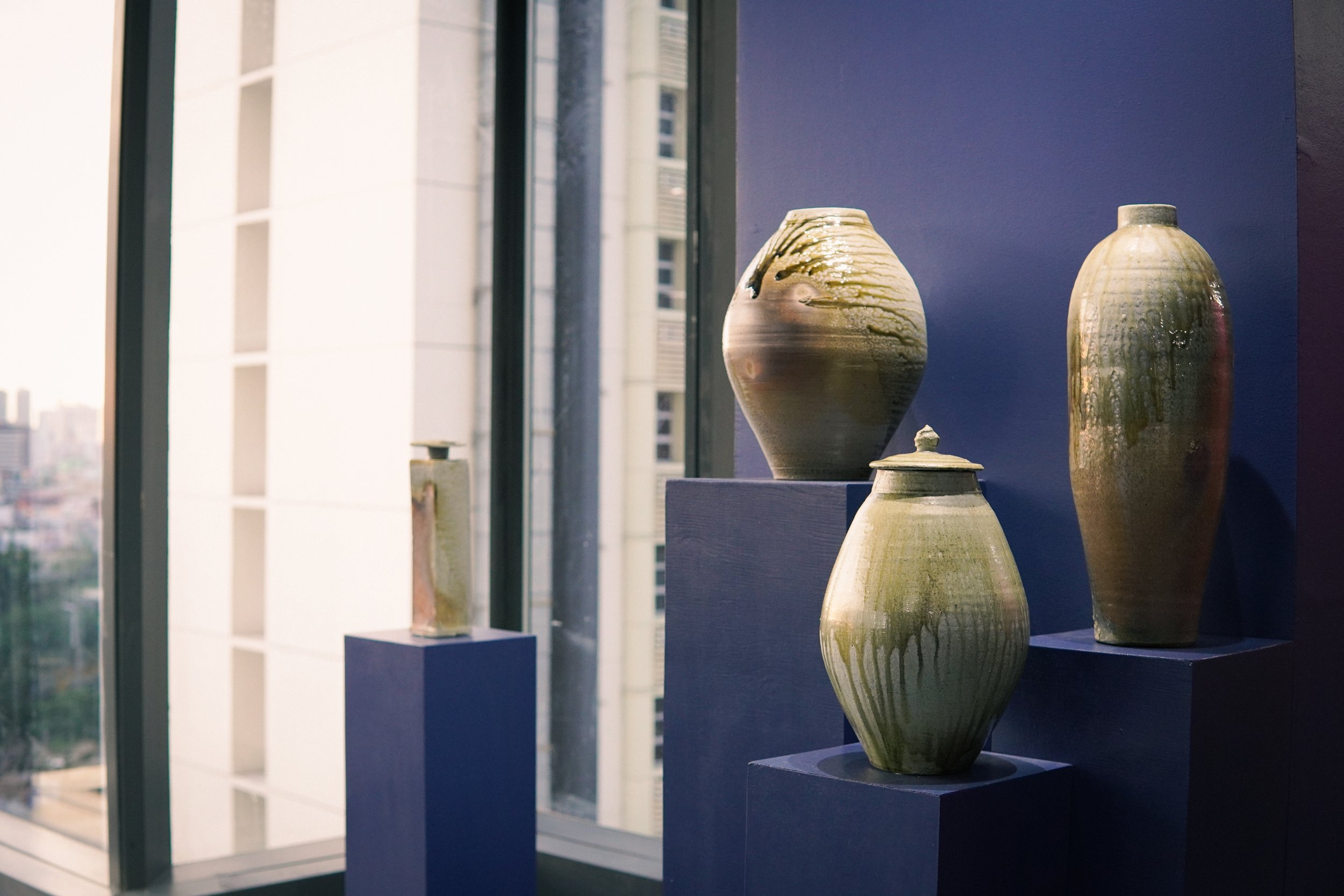
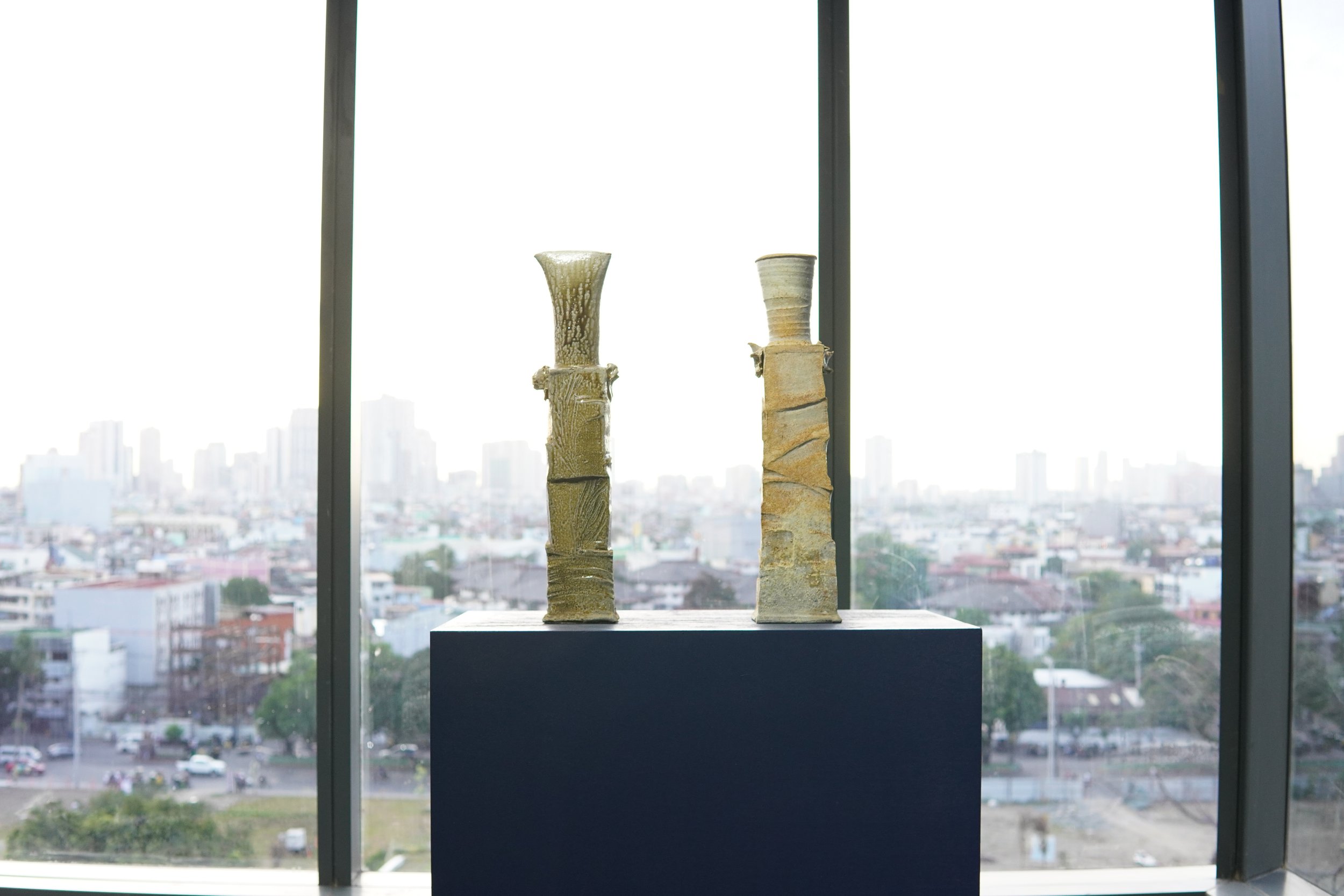
A central thread running through the Pettyjohns’ practice has always been resistance—to rigid categories, to hierarchy, to the idea that usefulness diminishes artistic value. For decades, they have worked with Philippine clays, stones, ashes, and minerals, producing vessels and forms that refuse to choose between sculpture and function.
“It’s always been our goal to break down the walls between fine art and what they call decorative art or functional art,” Jon says. “I mean, I don’t think there’s really much of a division.” That belief continues to shape how they choose to show their work. Shortly after the fair, they will participate in Art in the Park, a venue where smaller, functional pieces are foregrounded.
“It’s very important to us,” Jon explains. “Function is like the root of what we do. So it’s always important to keep developing that as well.” He pauses, then adds plainly: “There’s no line. There’s no line between sculptural and functional.”
A Collaborative “Forest”
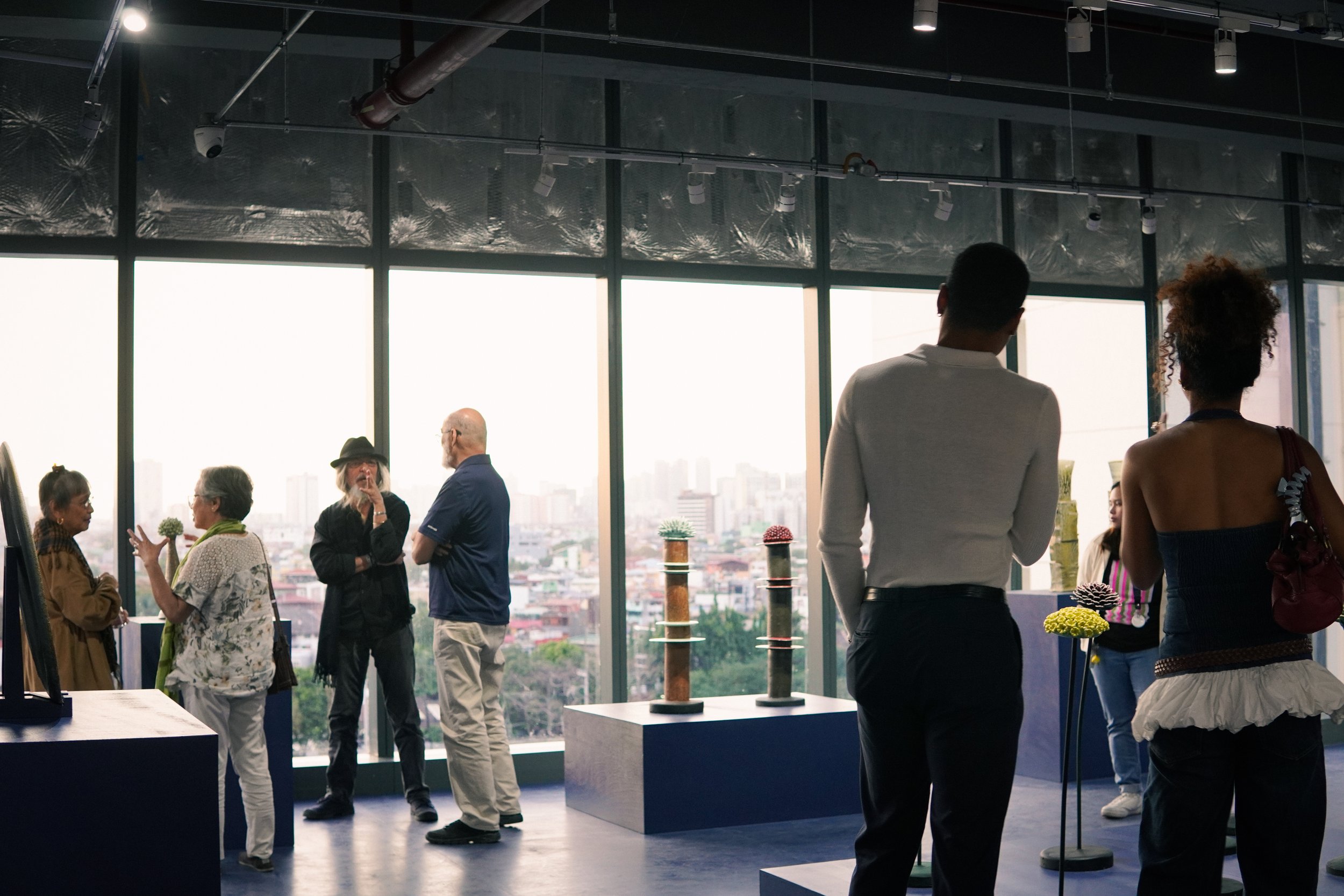
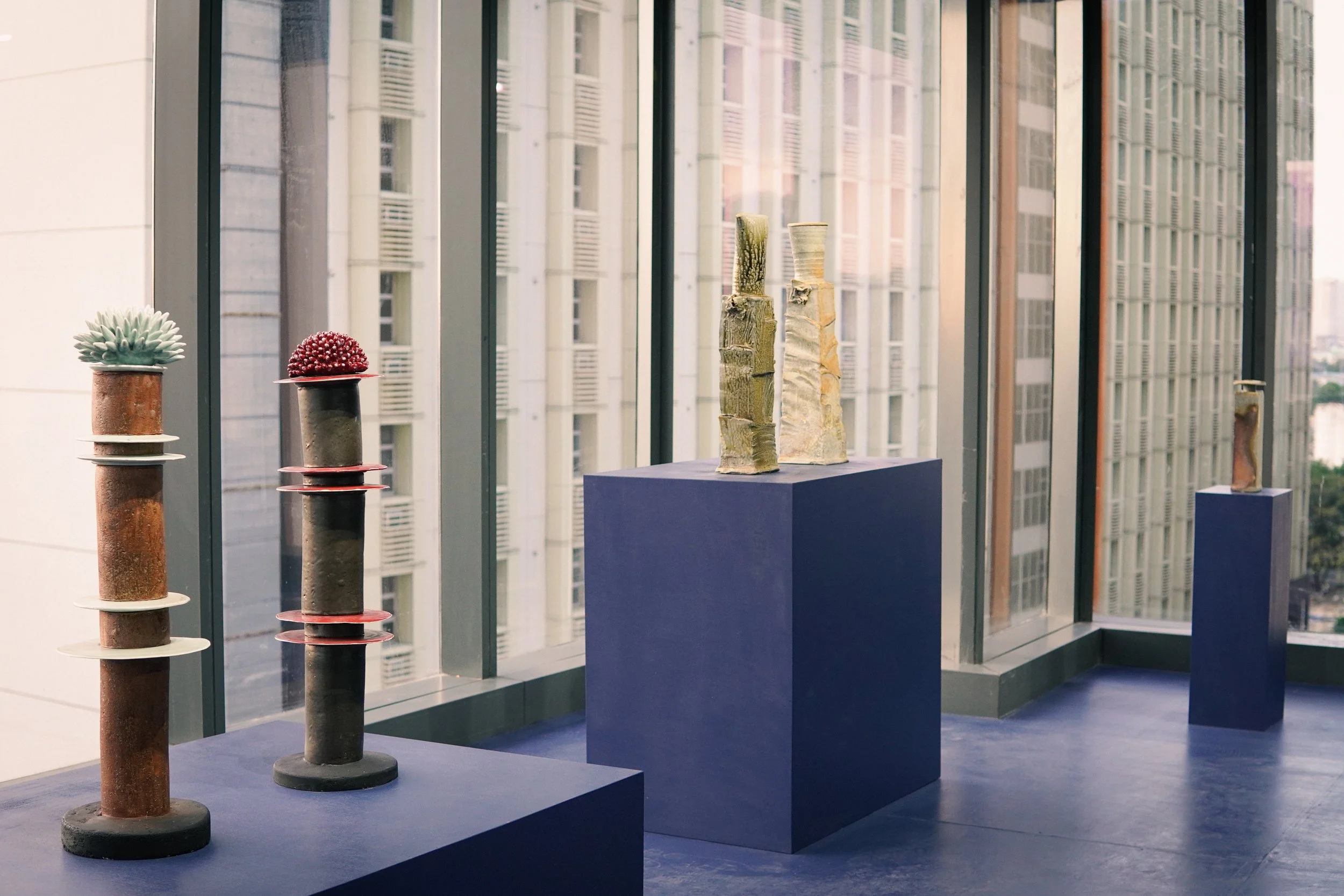
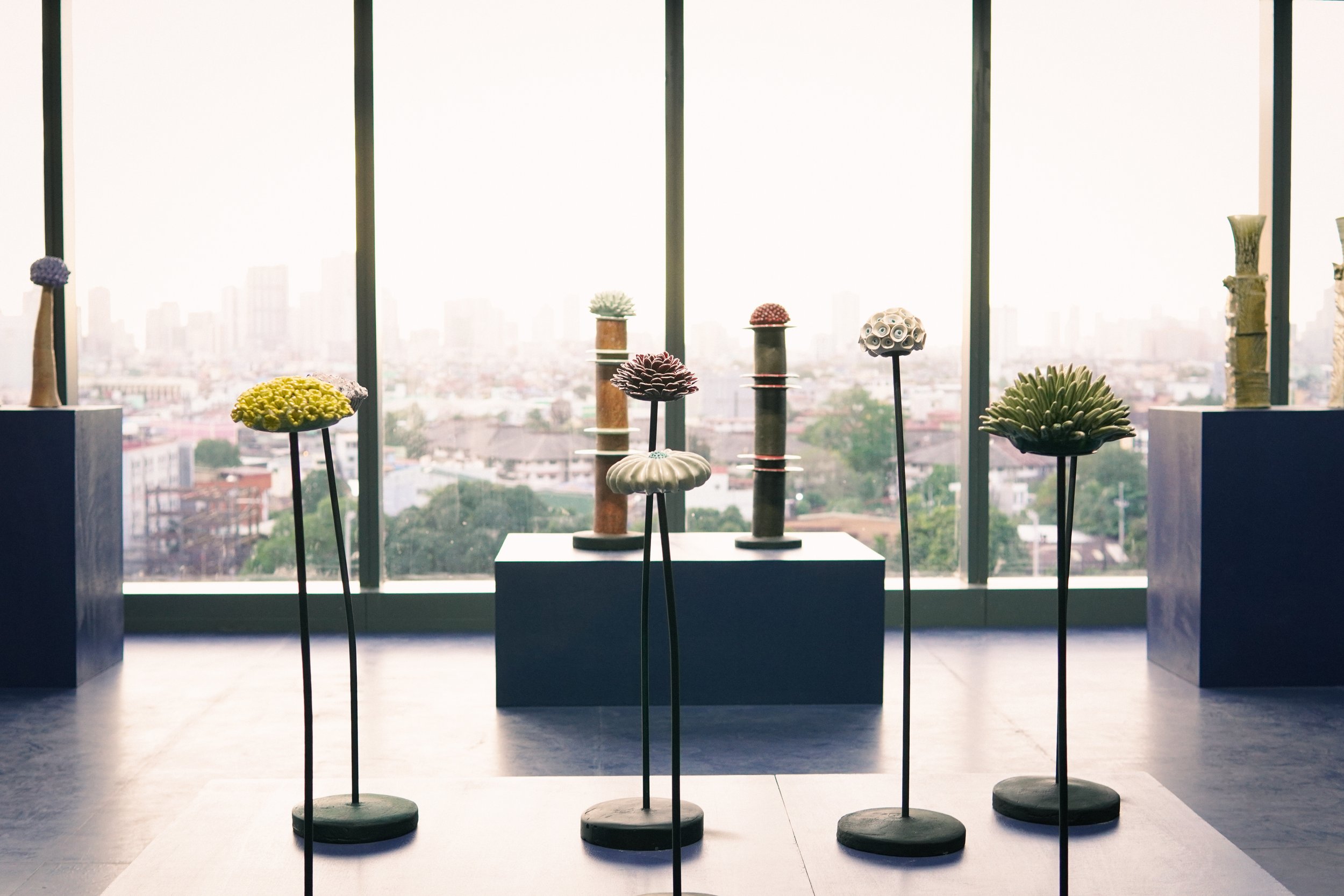
At Art Fair Philippines, the Pettyjohns presented a rare joint installation: a forest of ceramic columns rising at the center of their space. Alternating in form, surface, and color, the works highlighted the contrast between their individual practices while allowing them to speak together.
The installation makes visible what years of working side by side have cultivated—difference without division.
Curator Carla Gamalinda notes that ceramics, for the Pettyjohns, is “not a finite artifact, but a continuous way of life.” Jon echoes this sentiment, returning to a metaphor that has long shaped their thinking.
“It is like food,” he says. “The same way that the best food comes from the intermixing of cultures.”
Ideas, techniques, and materials have always moved freely through their practice: “In ceramic arts, inspiration comes from works from far away or from a different time,” Jon explains. “And when we converge, the practice just gets better and better.”
The Student’s Mindset
Despite being introduced at the fair as senior figures—“important people,” as Jon puts it—the Pettyjohns resist any suggestion that this moment represents a culmination.
“No, there’s no culmination,” Jon says immediately. “I mean, we still feel we’re learning. We’re students.”
The word master makes him uncomfortable: “This idea that we’re masters or something, it’s just nonsense,” he says. “No one masters.” Clay, he insists, always stays ahead of the maker.
“It’s more than one lifetime,” Jon reflects. “I sometimes fantasize—if I could live another lifetime, maybe I would get good.”
A Legacy of Continuity
The Pettyjohns began teaching in the early 1980s, almost by accident. What started as an informal opening of their studio eventually helped shape an entire community.
“We started teaching,” Jon recalls. “We were working together for a while, but we did not have any connection to other people. So one day, somebody wanted to start studying pottery. And then we said, ‘if you can get the group, we can start.’”
Over the years, that group multiplied: “We’ve got so many people all the years,” he says. “And now there’s so many partners. So I think that helped a lot in teaching. And it feels great to see the continuity.”
As the ceramic scene expanded, younger artists began moving in unexpected directions—a shift that was not always easy to witness. “At first it was disturbing,” Jon admits. “Because I sort of had this advocacy for functional work and certain kinds of work.”
But then the perspective changed, “I think now I see that it’s great,” he says. “That’s how it’s supposed to be.”
Today, nearly a decade after retiring from formal teaching, the Pettyjohns see their influence carried forward by a third generation of potters: “I always say the continuity—it’s like a chain,” Jon reflects. “This is an ancient art form, and I love it that we feel almost a direct connection.”
He speaks of encountering ancient pottery, “I mean, I can look at pottery a thousand years old, two thousand years old, and I can feel—I feel the connection.”
That lineage stretches all the way back. “The cavemen, you know, they were painting with clay on the walls of the cave,” he says. “Those are our ancestors.” And with our generation today, it continues to move forward. “Each generation will establish another generation,” Jon adds. “It’s wonderful.”
What Endures
As they consider how their practice might be remembered, Jon’s answer returns not to objects, but to relationships.
“In this exhibit,” he says, “the fact that we’ve worked together for so many years—complementing each other, helping each other—that’s what this is about.”
Their hope for the next generation is equally simple: “That they continue and evolve to whatever they’re doing,” Jon says. “But that they would be aware of their roots—and also where they’re going.”
Like the clay they shape, the Pettyjohns’ legacy remains unfinished—passed hand to hand, ignited and reignited, part of an endless chain still in the making.