Eyes Wide Open for Digital Artists at MoCAF Discoveries
MoCAF Discoveries puts its spotlight on artists who build their work one pixel at a time.
Words & Photos courtesy Alekz Cabantac
July 03, 2026
There was a time when digital art needed a quiet justification for why it belonged in the same room as oil paint and acrylic.
However, that time has already passed.
A program built on the idea of finding artists before the rest of the art world does. MoCAF Discoveries has always worked like a door left open—a way for emerging talents to step into galleries, art festivals, and public conversation without first needing years of formal exhibition history.
This year, that door opens for artists sharing one medium while bringing different ways of using it.
Practice Built in Layers
There is no studio smell, no drying time, no trip to the art supply store. Instead, there’s a tablet, a stylus, a software with an almost endless number of brushes, and a process that happens in layers—sketch, then colour, then shadow, then detail, then a dozen small adjustments that would be impossible to undo on paper but take seconds with a keystroke.
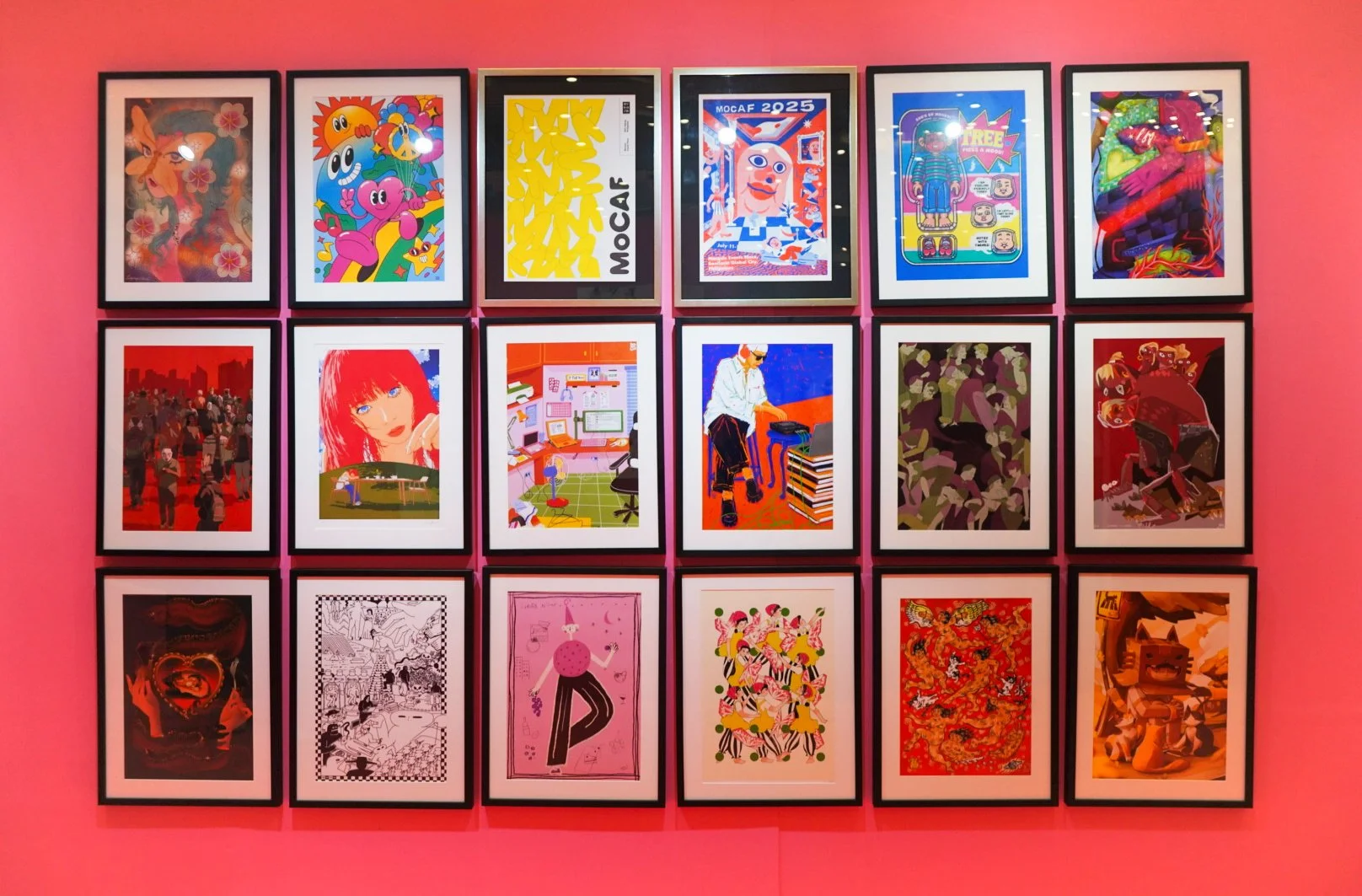
MoCAF 2026 Discoveries Artworks displayed at the Main Ballroom.
Work can be built up and torn down, scaled, recoloured, and revised long after a traditional painter would have had to call a piece finished. That flexibility changes how artists think. It allows for more experimentation, more second-guessing, and often, more time spent on a single piece than viewers might expect from something made “on a screen.”
It also changes how art moves through the world before it reaches a gallery. A finished illustration can be shared the moment it is done, seen by hundreds or thousands of people within hours, commented on, saved, and shared again. That immediacy has built an entirely new kind of audience relationship. One where artists hear from the people looking at their work almost as soon as they make it, rather than waiting for a review or an exhibition.
The relationship between the artist and the audience began online, long before anyone walked into a gallery, and MoCAF Discoveries is simply where that relationship becomes physical.
More Than One Kind
What makes this batch worth paying close attention to is not just the tool they share, but how differently each artist uses it. Spend enough time with their work and a few clear threads start to appear, even though no two artists are pulling from quite the same place.
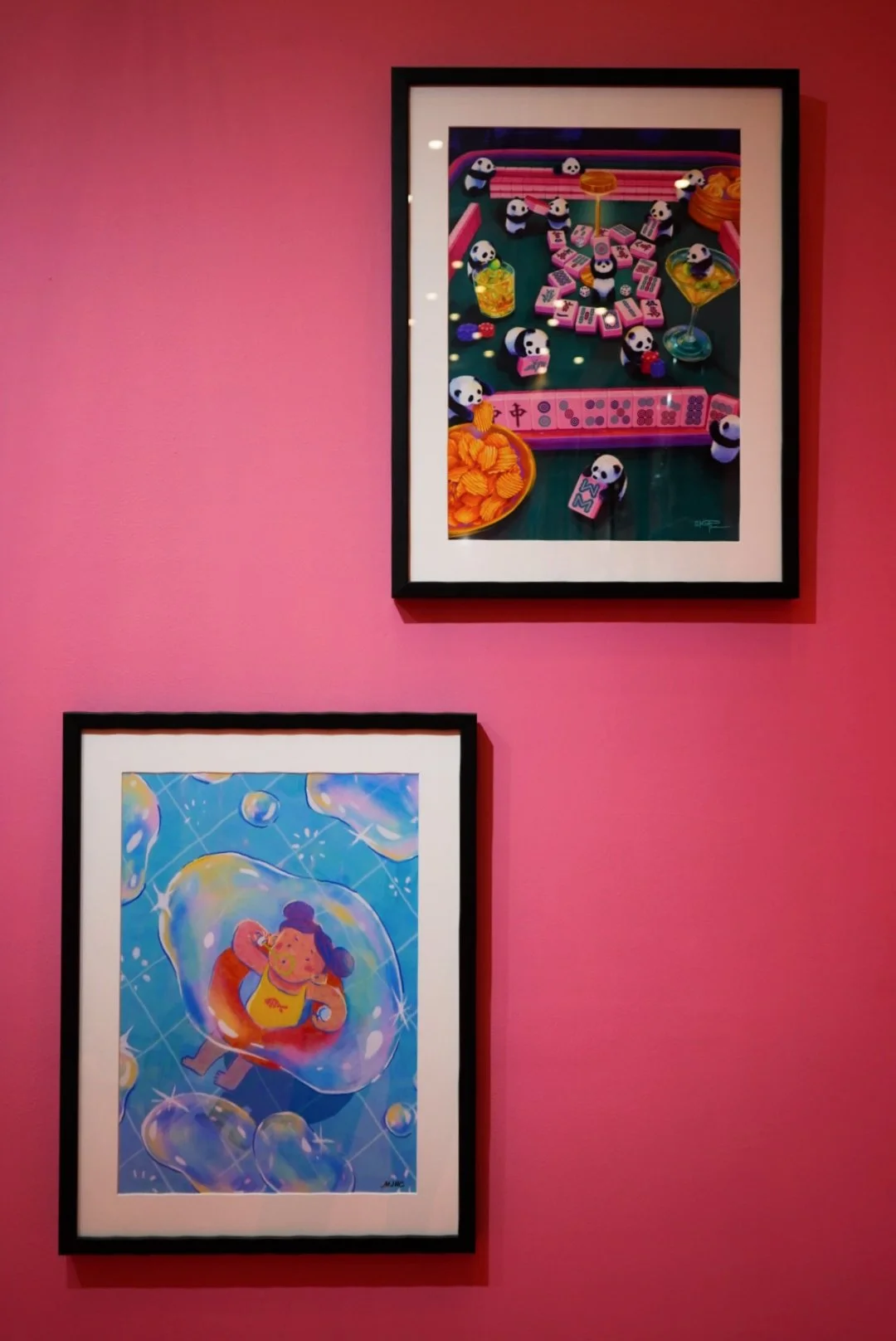
Artworks by Krissie Phee ‘Panda Hustlers’ (top) and Margaux Janelle’s ‘Brief as a Bubble’ (bottom).
A number of them look backward before they create anything new. Childhood shows up again and again—not as a vague feeling of nostalgia, but as specific, almost physical memory. These artists treat memory less like a subject and more like material, something to be shaped and reshaped on the screen until it becomes a new image entirely.
Others look just as closely at Filipino culture and tradition itself, using illustration to document, celebrate, or simply spend more time with things that might otherwise be forgotten. In their hands, illustration becomes a kind of preservation, a way of keeping small, easily lost details from disappearing entirely.
The second thread runs through identity, as an honest and sometimes uncomfortable process of figuring things out in public. These artists use their work to sit with questions about who they are.
Growing up between two cultures and having to build a sense of self from both at once, coming to terms with one’s own perspective and admitting that perspective is biased and human rather than neutral, or working through anger, desire, and selfhood without softening any of it for the viewer.
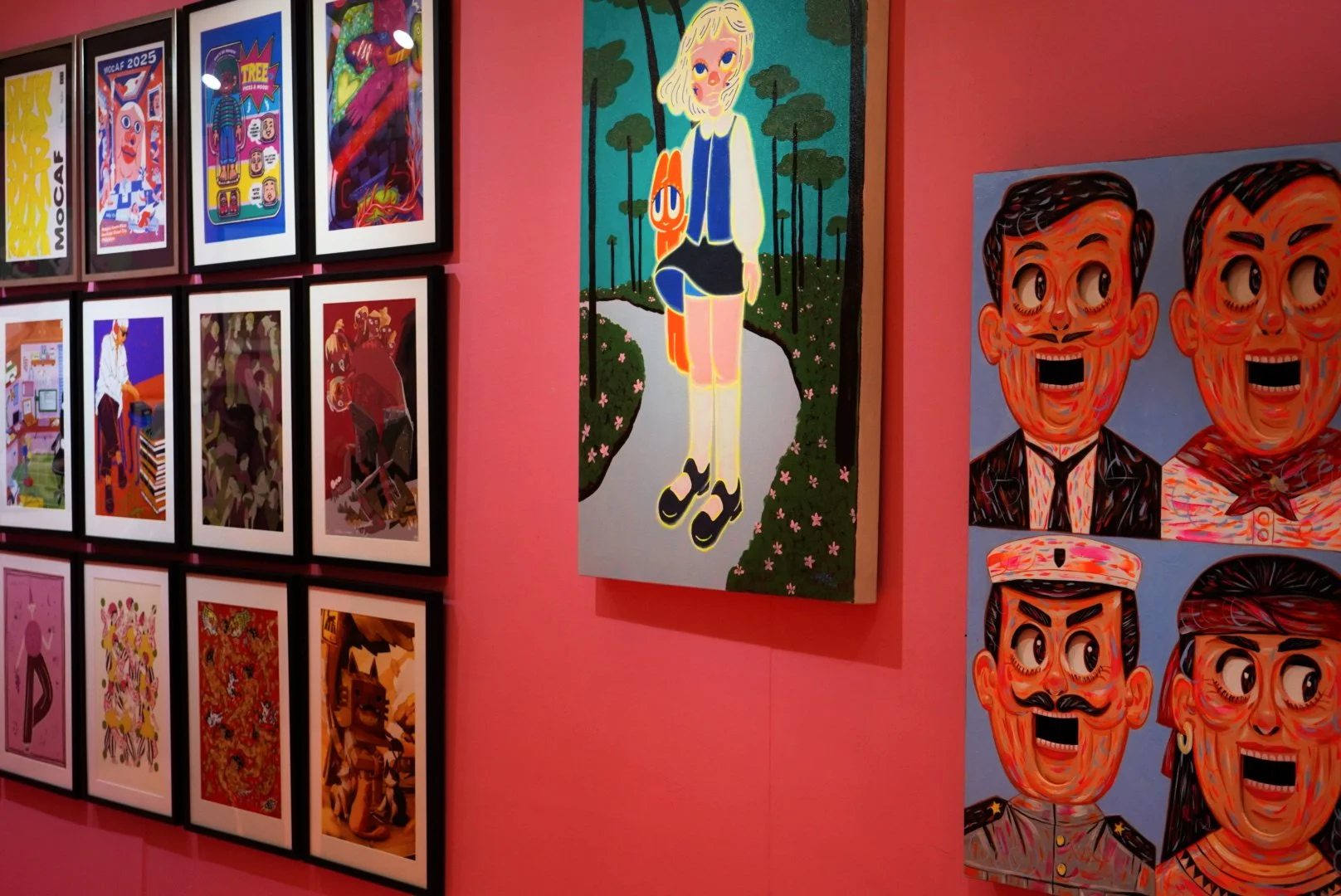
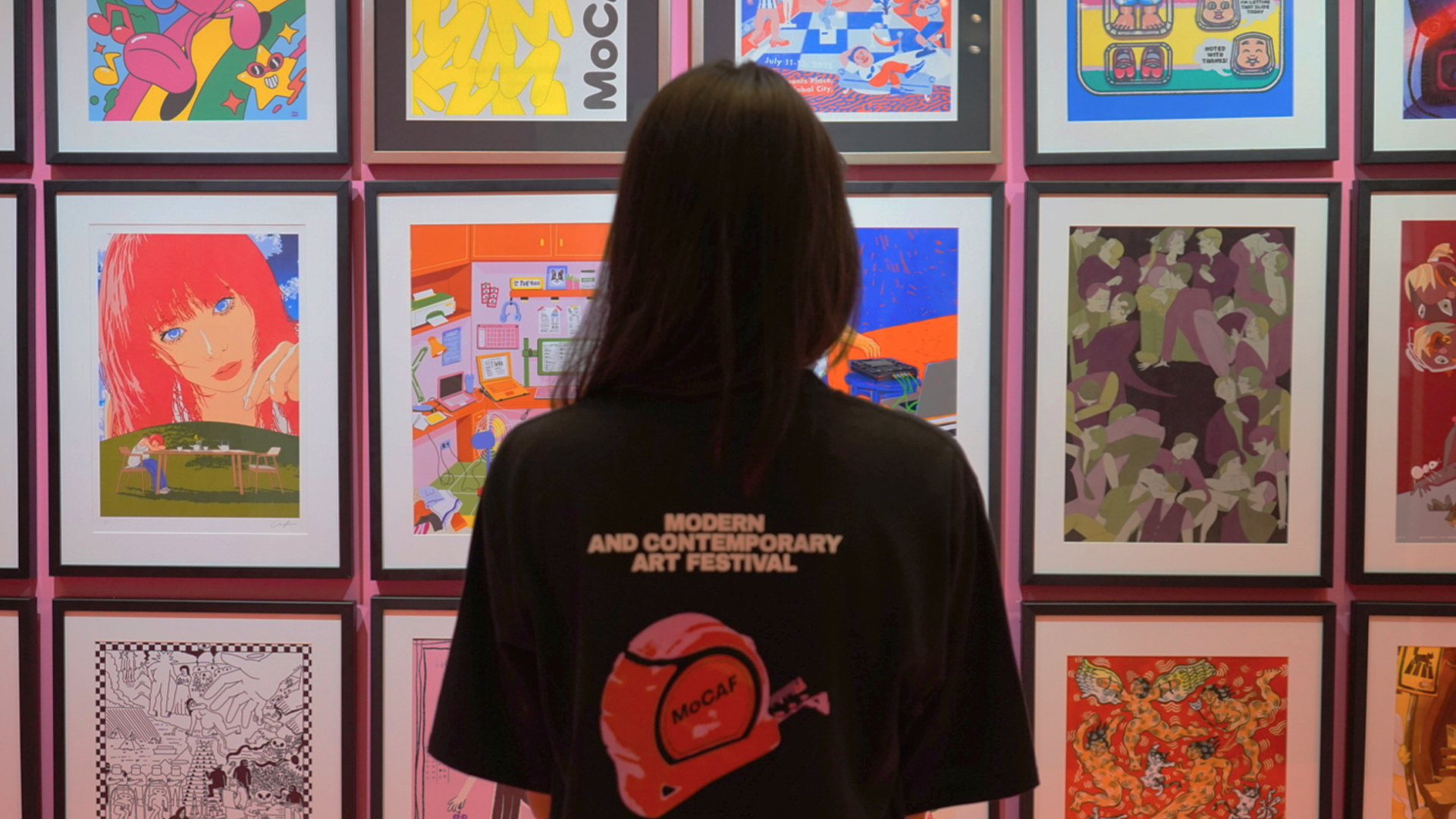
Discoveries artworks at the Main Ballroom.
Their images tend to feel less like finished statements and more like individuals thinking out loud, mid-sentence, inviting whoever is looking to sit with the same questions a little longer than usual.
Some find their energy outdoors, in motion, and in the city itself. Murals, urban scenes, the physical pull of adventure and movement, the specific mood of the street at night. The chaos of growing up surrounded by internet culture and pop ephemera.
Their compositions often carry a certain restlessness, a sense of things always slightly in motion, fitting for an art form that, by nature, is built one layer and one revision at a time, never quite sitting still until the very last export.
And then there are the artists who do the opposite. Who slows everything down and looks closely at what is easy to overlook. The weight an everyday object can carry. A sticker book left over from childhood. A quiet routine repeated so often it stops registering as meaningful, until someone draws attention to it.
A Generation Shaped By Its Time
There is also something generational happening here, beyond just the medium.
Many of these artists came of age online, learning to draw alongside learning to post, comment, and build community in the very spaces where their references and inspirations also live.
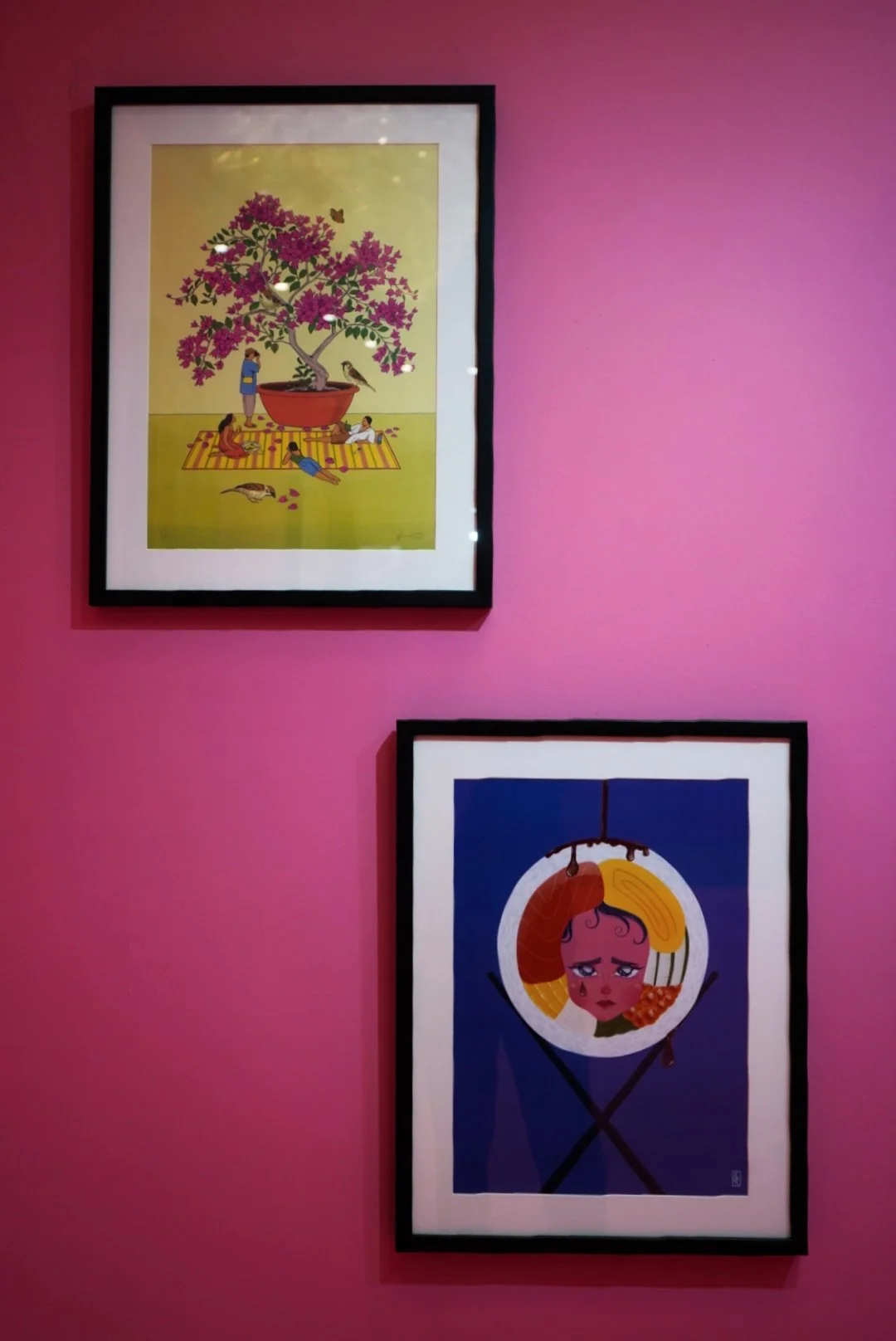
Artworks by Addi Panadero, ‘Hanami’ (top) and Jenny Lane’s ‘Shoyu Tears’ (bottom).
It shows up in the work itself—in its pacing, its humour, its comfort with vivid colour, and its willingness to mix the deeply personal with the unmistakably online, sometimes within the same piece.
It is art made by people who never had to choose between the internet and “real” art practice, because for them, there was never really a separation between the two to begin with. The internet was simply where art happened, the same way a studio or a classroom might have been for an earlier generation.
This sensibility has become closely associated with digital art now showing in galleries everywhere, not just at MoCAF. A style that reflects the visual world many people move through daily, both on and off screen.
From Screen to Gallery
MoCAF Discoveries opened its door for these individuals—a chance to see their work printed, framed, and hung in a room.
A piece that took shape over a few late nights on a tablet, built layer by layer in private, becomes something else entirely once it is standing on a wall, properly lit, with strangers stopping to look at it for longer than they ever would online.
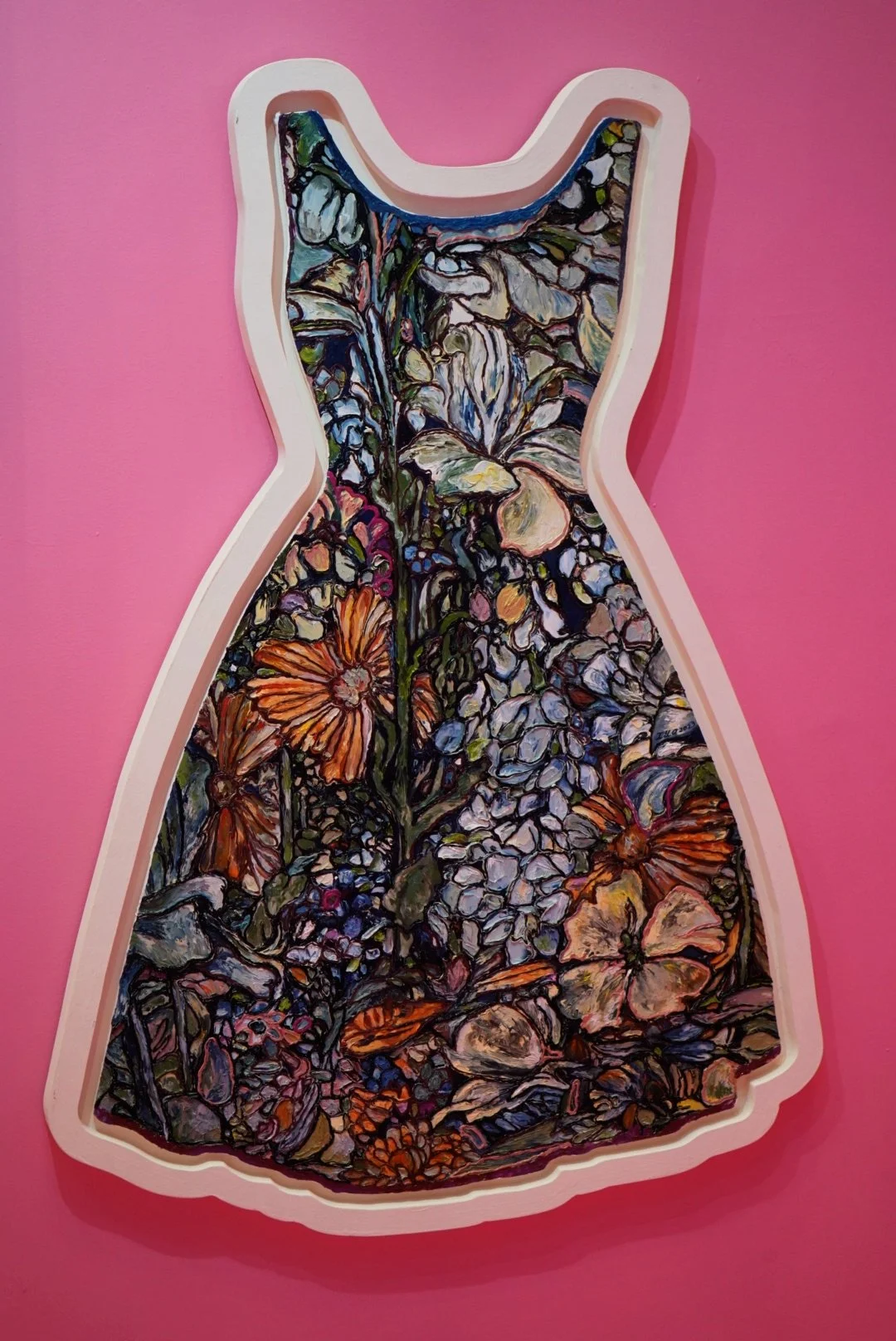
Colors read differently printed than they do backlit on a screen. Details that were easy to miss in a small thumbnail suddenly demand attention at full size.
Visitors should expect exactly that kind of range. Work that moves easily between tenderness and humour, memory and observation, the profoundly personal and the plainly visual, all of it made without a single brushstroke yet carrying just as much intention, care, and craft as if there had been one.
This year’s New Discoveries lineup includes Addi Panadero, ALIEN OPINIONS, Frances De Guzman, august dspatch, Bloomer, Dana Bee, Glend Lumbao, Ja Amores, JC Lo, Jenny Lane, Kartonyo, Krissie Phee, Ladybugs, Margaux Janelle, 3am Art by Lei, Micki, Paulina Almira, rombutan, TreeS. (Tricia Salonga), and Zoos York.
A new generation working in a medium that no longer needs an explanation and the same spirit of discovery that has defined MoCAF from the very start.