
Empty Promises, Flooded Proofs
Through Jilson Tiu’s lens, flooded Filipinos become portraits of resilience, revealing dignity, endurance, and the cost of broken and empty promises.
Words Randolf Maala-Resueño
Photos courtesy of Jilson Tiu
October 01, 2025
Amid torrential rains and floods wilting the Metro’s bustling streets, images of hope stood tall. These testaments of resilience, adaptation, and strengths wade through an underlying issue.
Proof of corruptive manifestations that span systemic lapses, governmental scandals, and the people that are supposed to be served, now knee-deep in the problematic floods caused by those in power. And with just a few clicks, photojournalist Jilson Tiu screams the woes of those affected–a visual undertaking through environmental activism.
Known for his documentary work, Tiu was no stranger to capturing moments of ordinary people. He was honed under UST’s The Varsitarian and later for his photo correspondence job in the Philippine Daily Inquirer, covering typhoons and disaster response.
With a background in advertising and commercial photography, his path for advocating took shape during former President Rodrigo Duterte’s blood war on drugs.
“As a human race, we cannot solve the conflict. We cannot solve politics. We cannot solve everything involving humanity. Isa lang naman ang common denominator natin na ano ‘yong dapat nating ipaglaban habang nabubuhay tayo dito is that the environment,” he asserted.
From themes of transportation, health, volunteerism, and the workforce, substantial aspects of Tiu’s works highlight the climate crisis. Photographing for Greenpeace and National Geographic, to name a few, the 33-year-old freelance photojournalist now tilts his lens to the pressing conflicts of today: the failed government-led flood control projects.
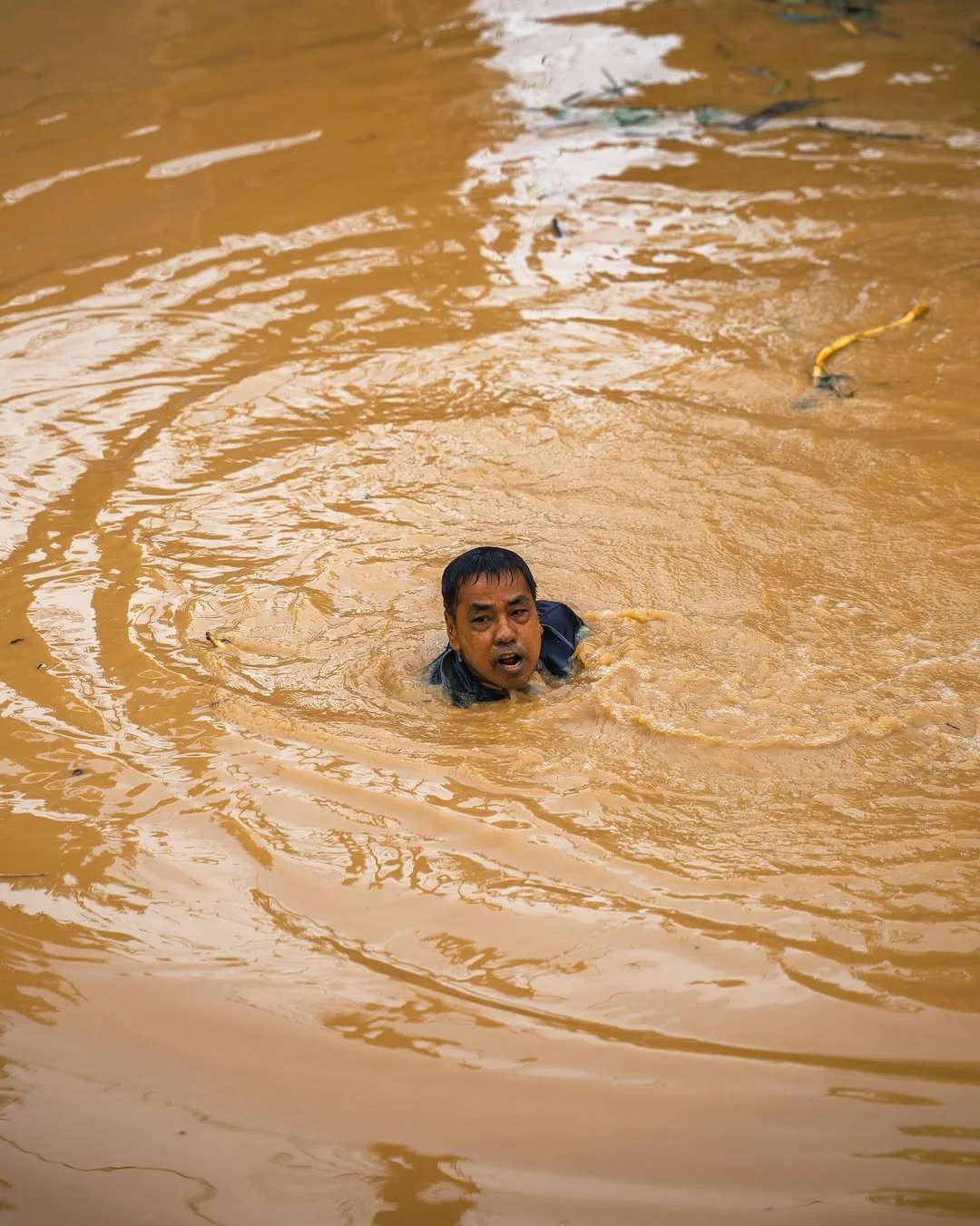
His images, spanning from wide, contextual shots of Manila to intimate portraiture of the affected, explore the flooding struggles and trials that consume the Filipino people.
Growing up in Manila himself, Tiu navigated his formative years wading through a flooded Divisoria.
“Manila has always been flooded throughout history, and ‘di siya nag-i-improve. And everyday you feel it: ‘pag nagbiibike ka, ‘pag nagdi-drive ka, kapag naglalakad ka–walang sidewalk, ‘yung klasada, madaling masira, lubak-lubak. You feel it every day. You feel the corruption every day.”
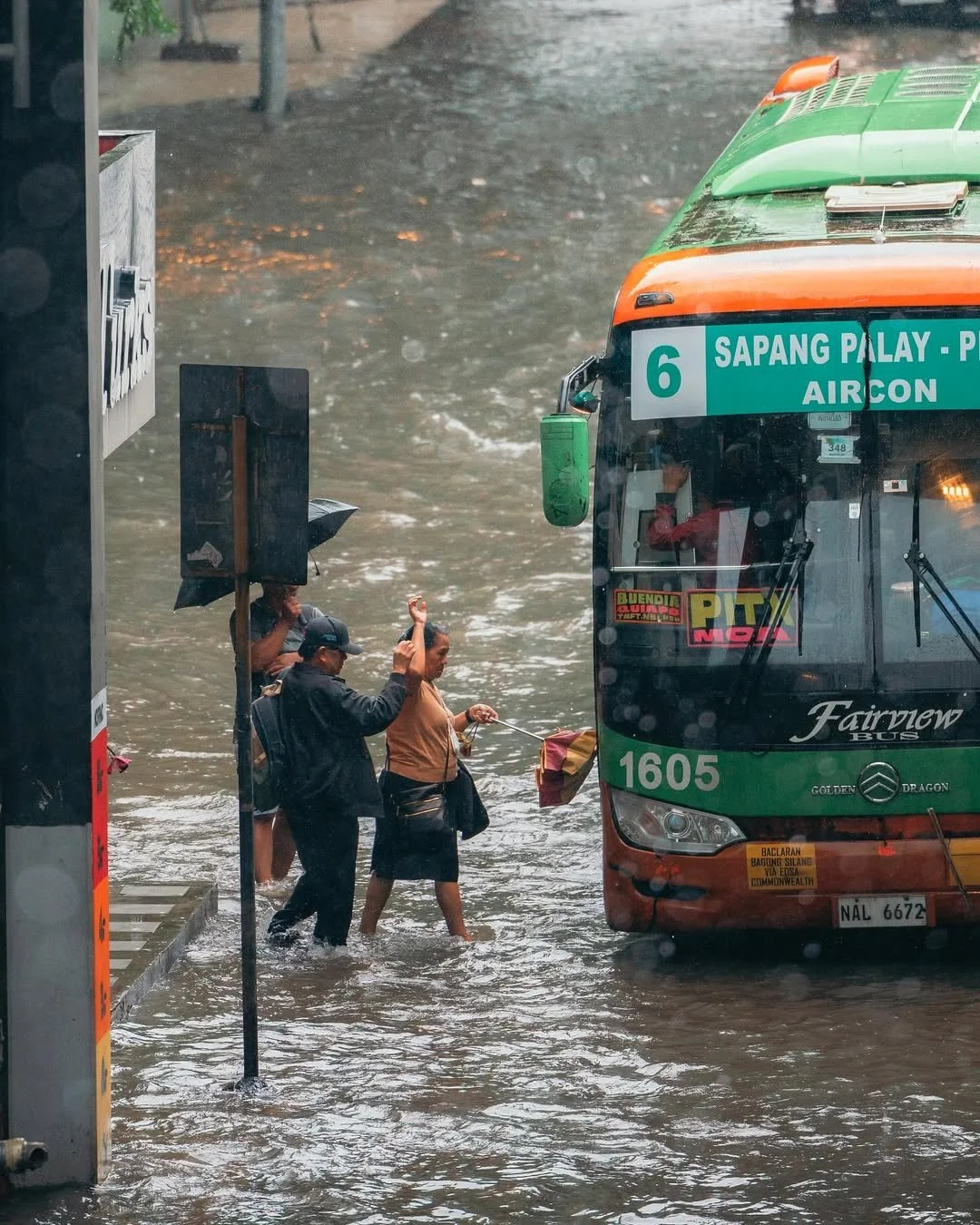
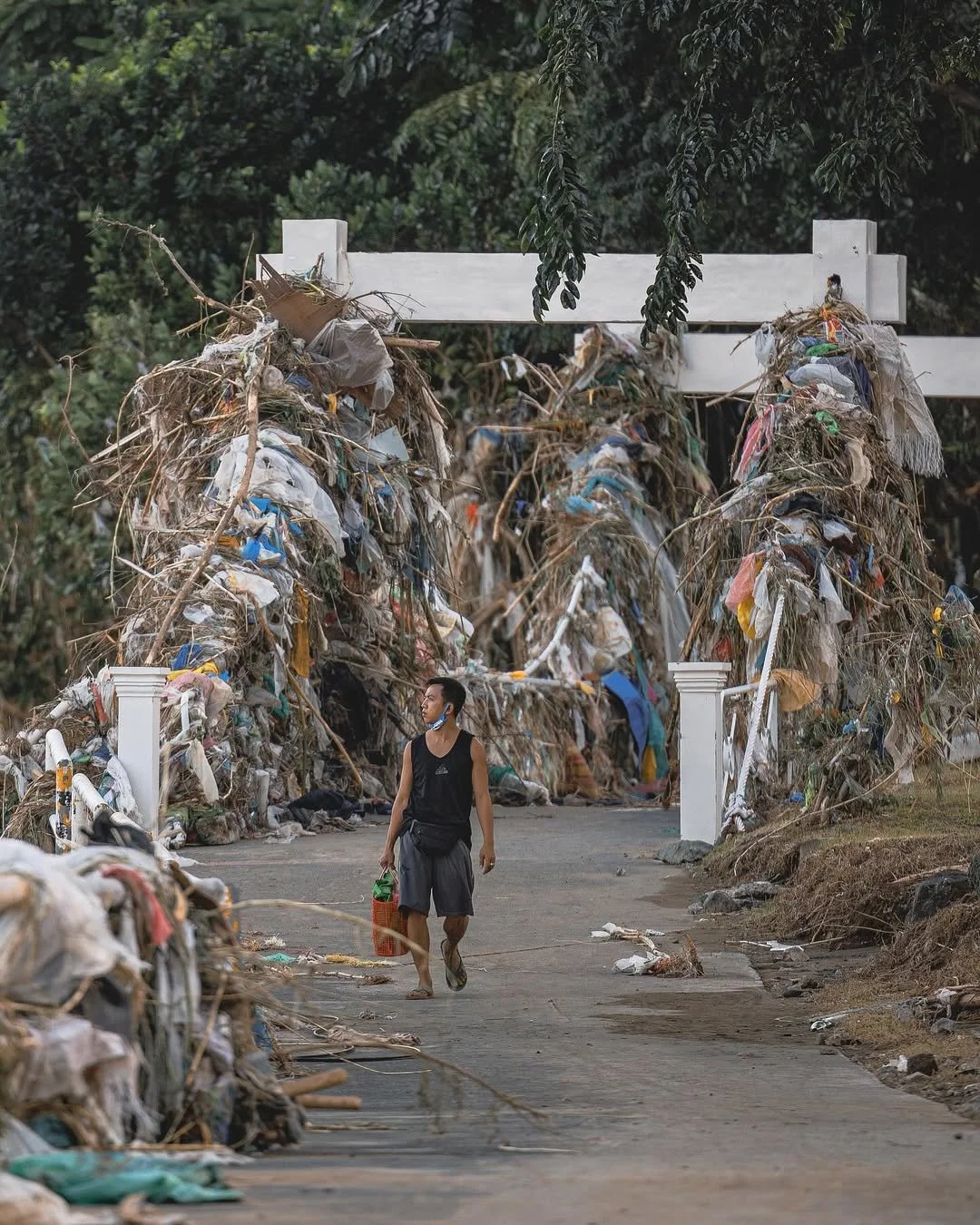
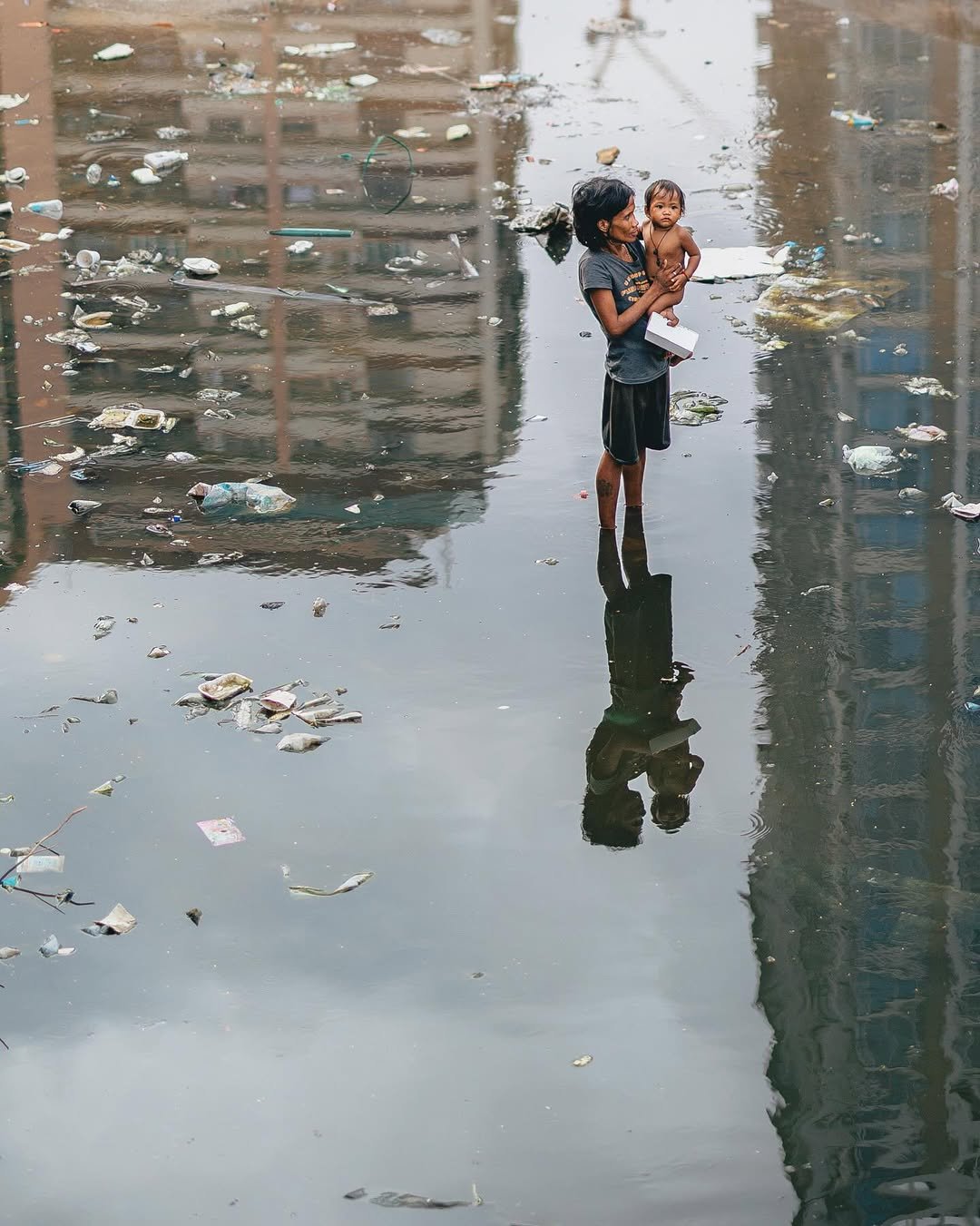
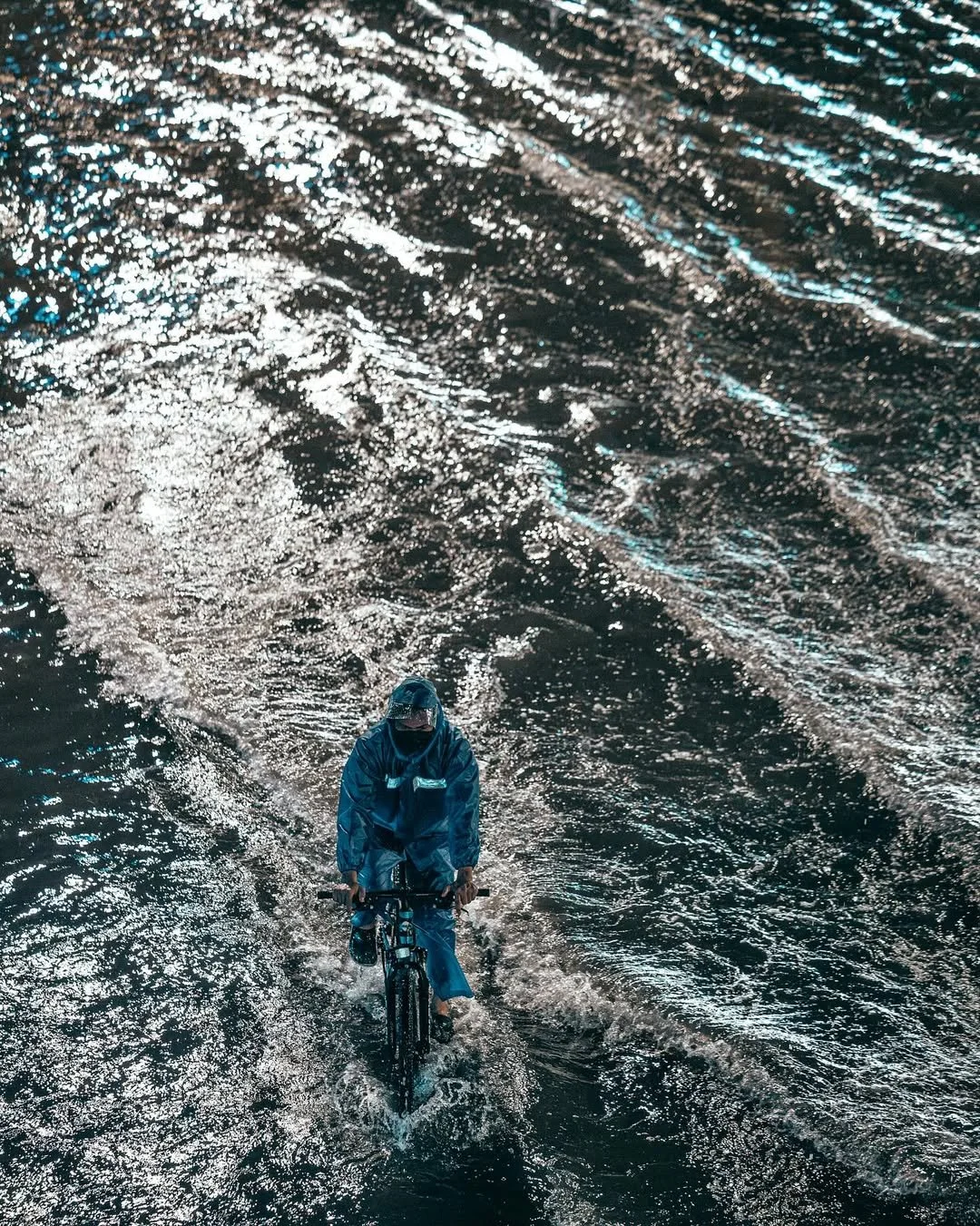
And his extensive visual library proves just that. Flooded streets, commuters submerged in knee-deep contaminated waters, and the common people whose faces define a lifetime of letdowns and strife to fight back.


In turn, this line of photography calls for the human within by letting the photojournalists examine their ethics and avoid reducing their subjects to mere symbols of disaster while also holding those accountable.
“When I go to a coverage, I make sure to cover everything [to give] justice for the people. I try to cover what I can and what should be photographed and deployed immediately so that my photos will not only serve as a proof of the disaster, but they will also serve as a trigger for people to help.”
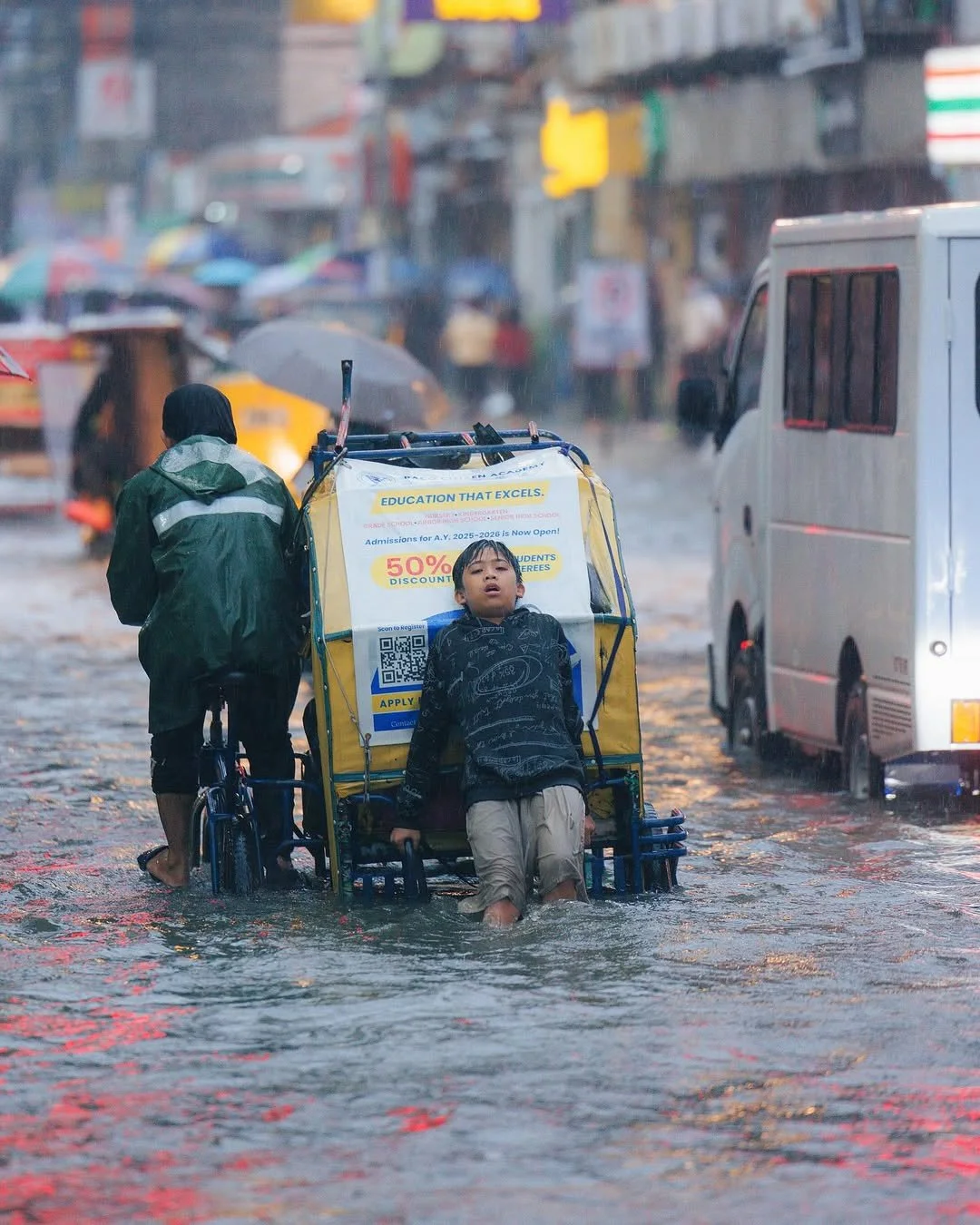
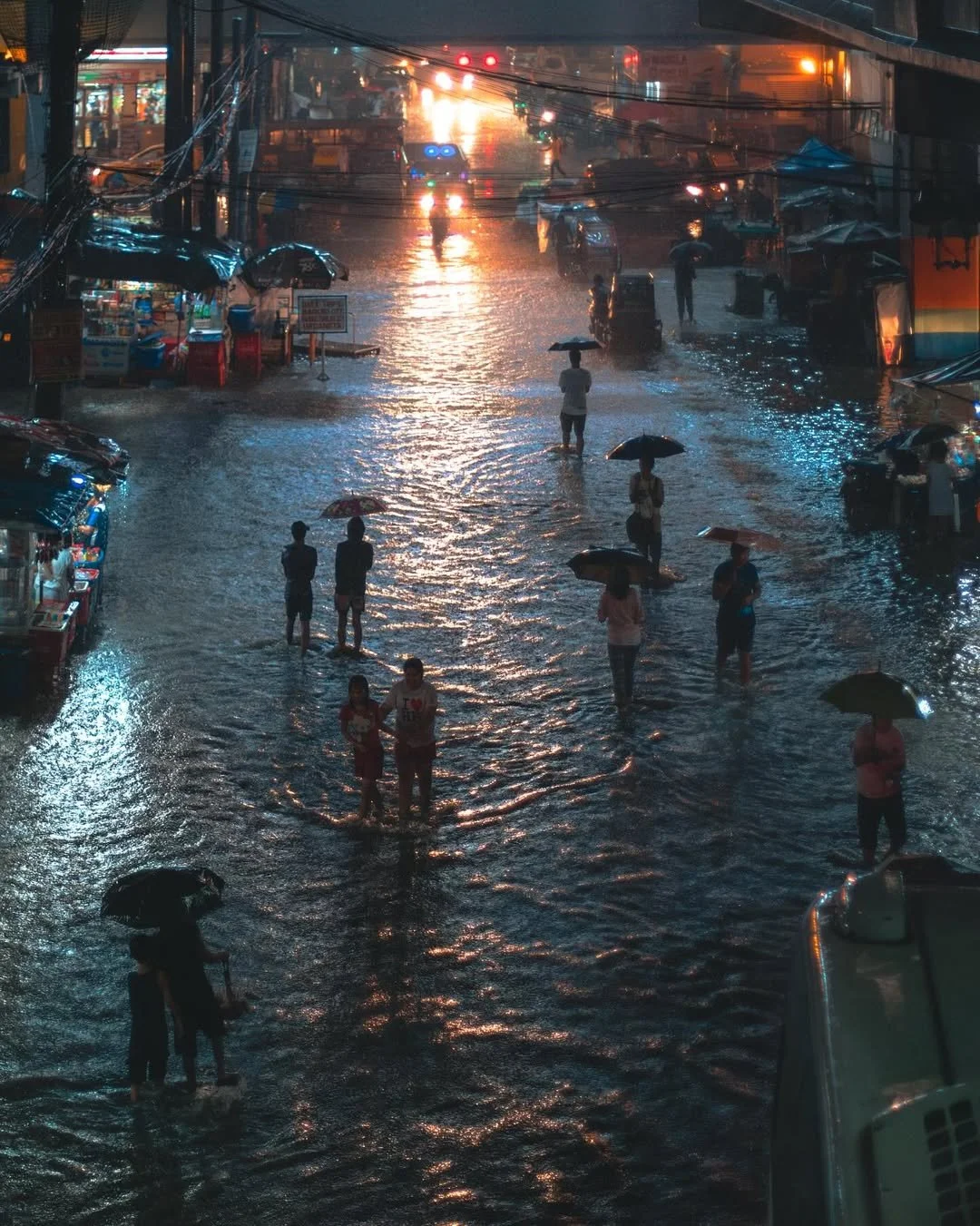
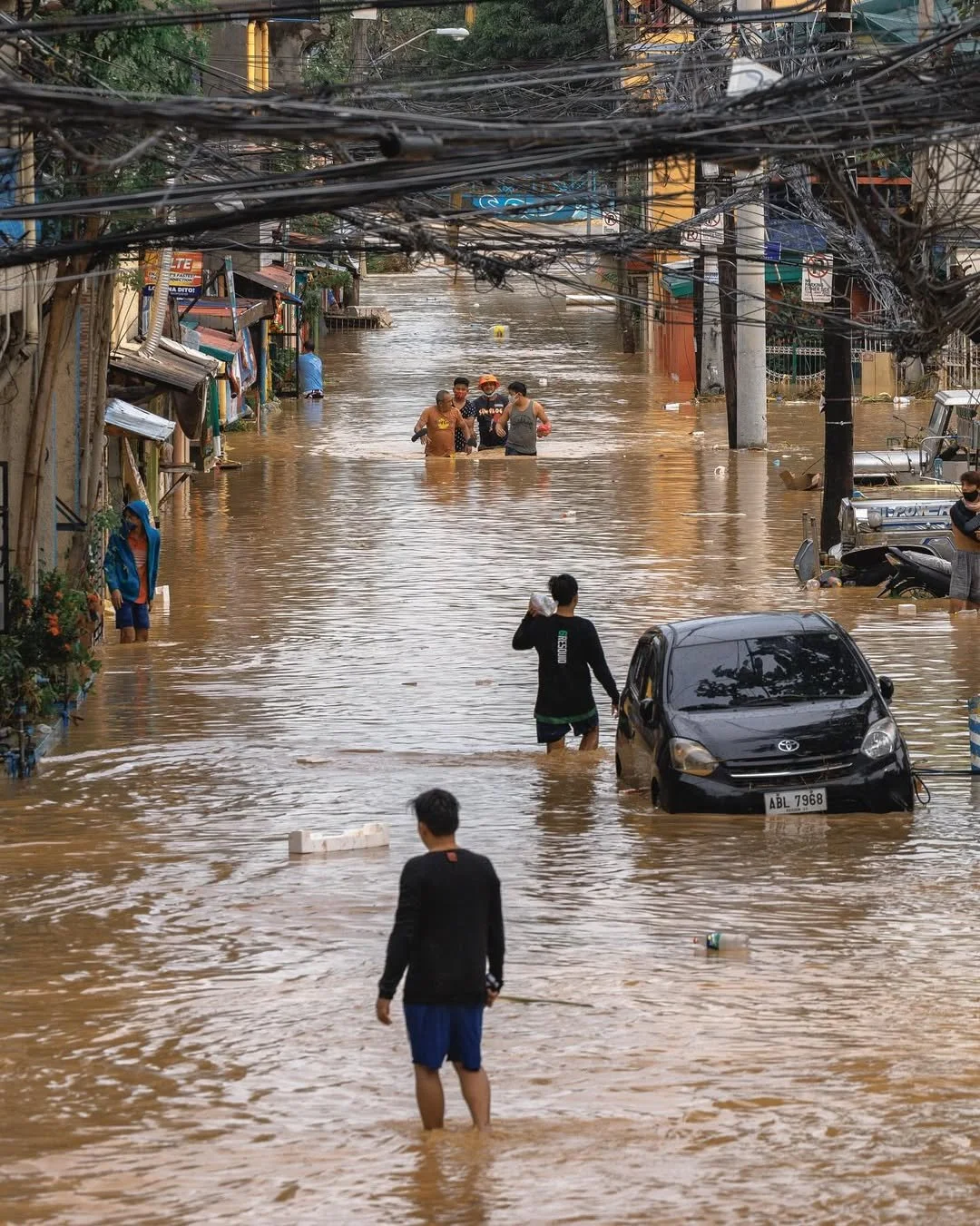
At its core, Tiu also wants his work to speak for itself by letting the audience interpret the work through their own narratives and biases. A lived reality that we, in his words, must face, digest, and accept.
Tiu also called out the pervasive culture of “crayon box politics” in the cities, where incumbent elected officials had scrapped projects, mostly and even completely, billed by the previous administrations. This, in turn, puts the plight for continuing rehabilitation back to square one.
“At the end of the day, ‘ayun lang ang iniisip ko, na dapat may managot. Kasi ang daming nasayang na oras, ang daming nagkasakit, ang daming na-imbyernang mga tao, ang daming naapektuhan na kabahayan, buhay, oras.”
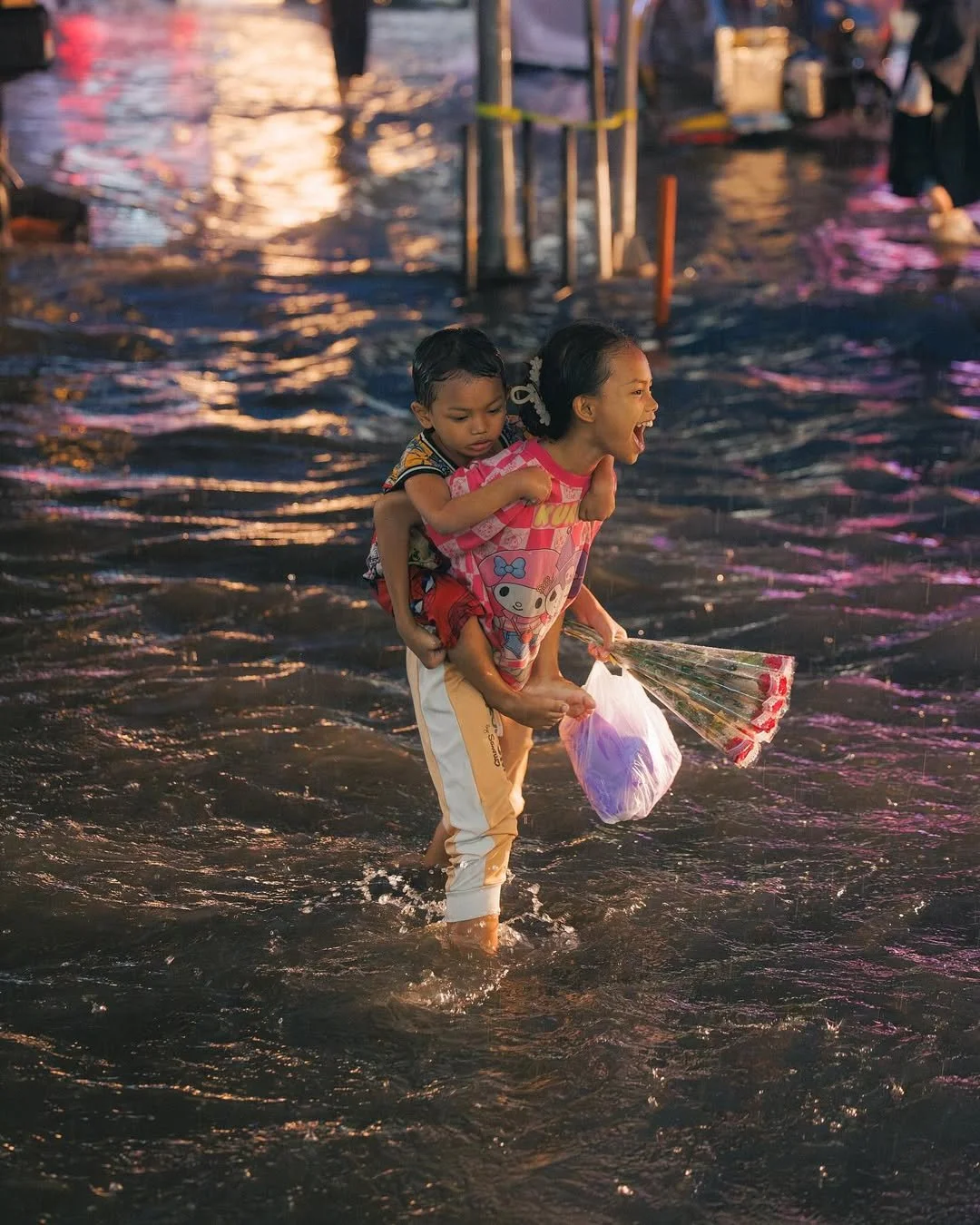
Now, Tiu navigates the waves of incompetence through the hopes of change in better educating the Filipino people on how dire the issue is at hand. Keep brevity in mind and avoid arrogance in coverage, he shared, whilst underpinning public information transparency for the government to provide.
“I'm happy to photograph life. And I'm happy to photograph life in a good light–that’s what keeps me making art in reality,” posing photography as a form of coping mechanism. A keen sensibility for anthropology and cultural heritage is also in the future for Tiu, with a collaborative photo with the Exploding Galaxies book about food and culture to be launched on October 11.
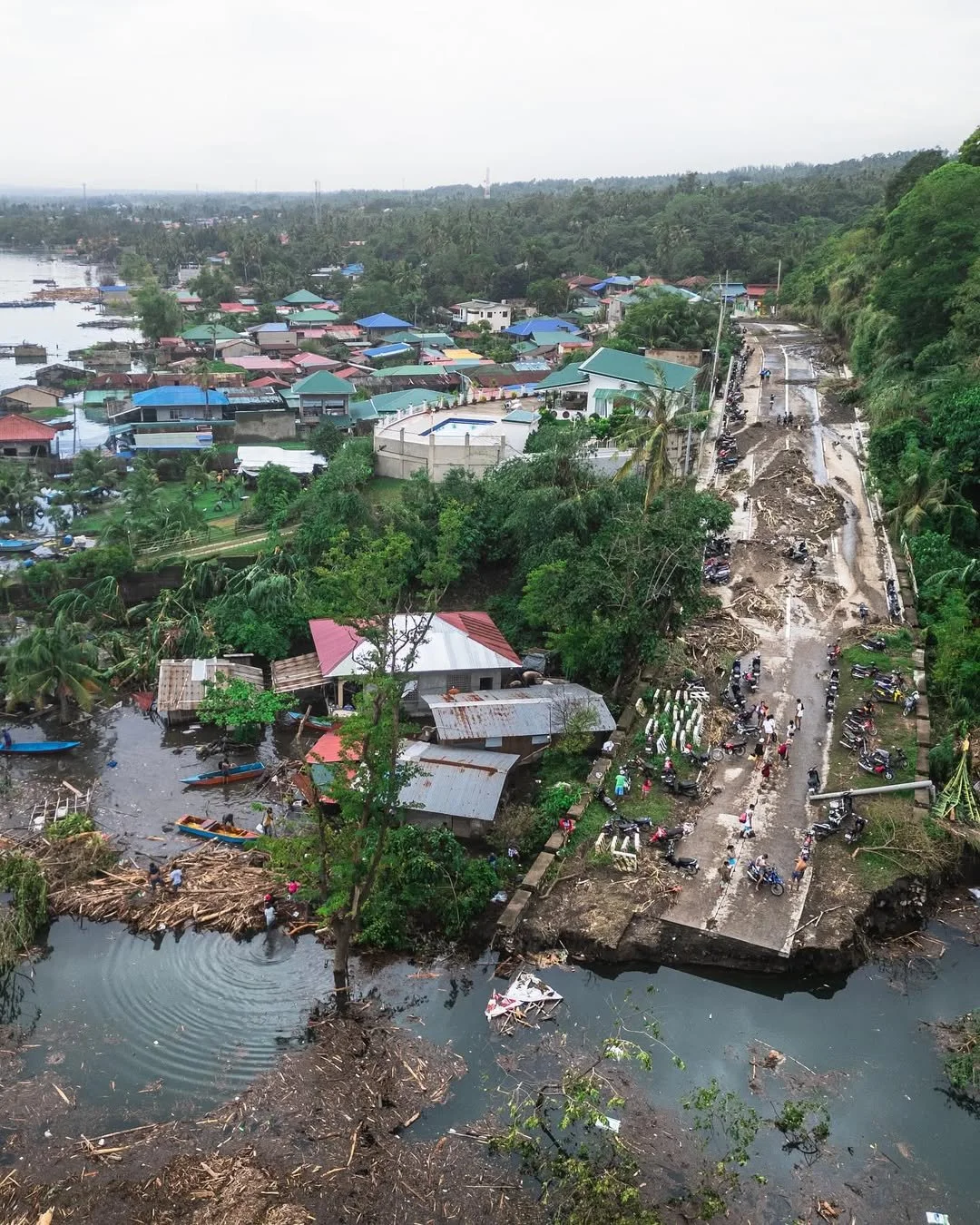
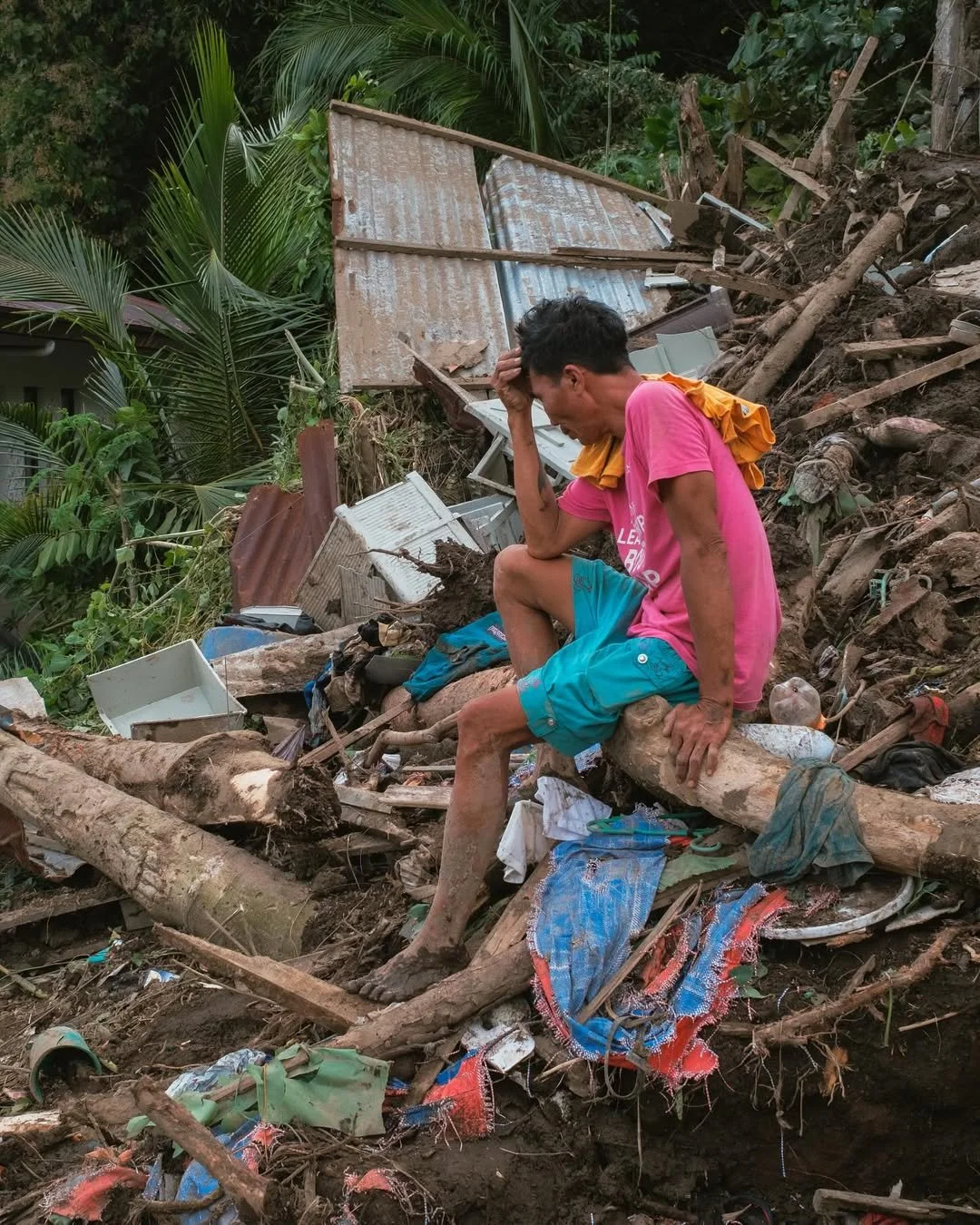
Ultimately, our continued belief in change echoes beyond the corners of our lifetime. Corruption will undeniably continue, Tiu asserted, yet we can constantly push out the bad and advocate for good governance one way or another. And by doing what he does best, Tiu wants his works to be proof of the corruption.
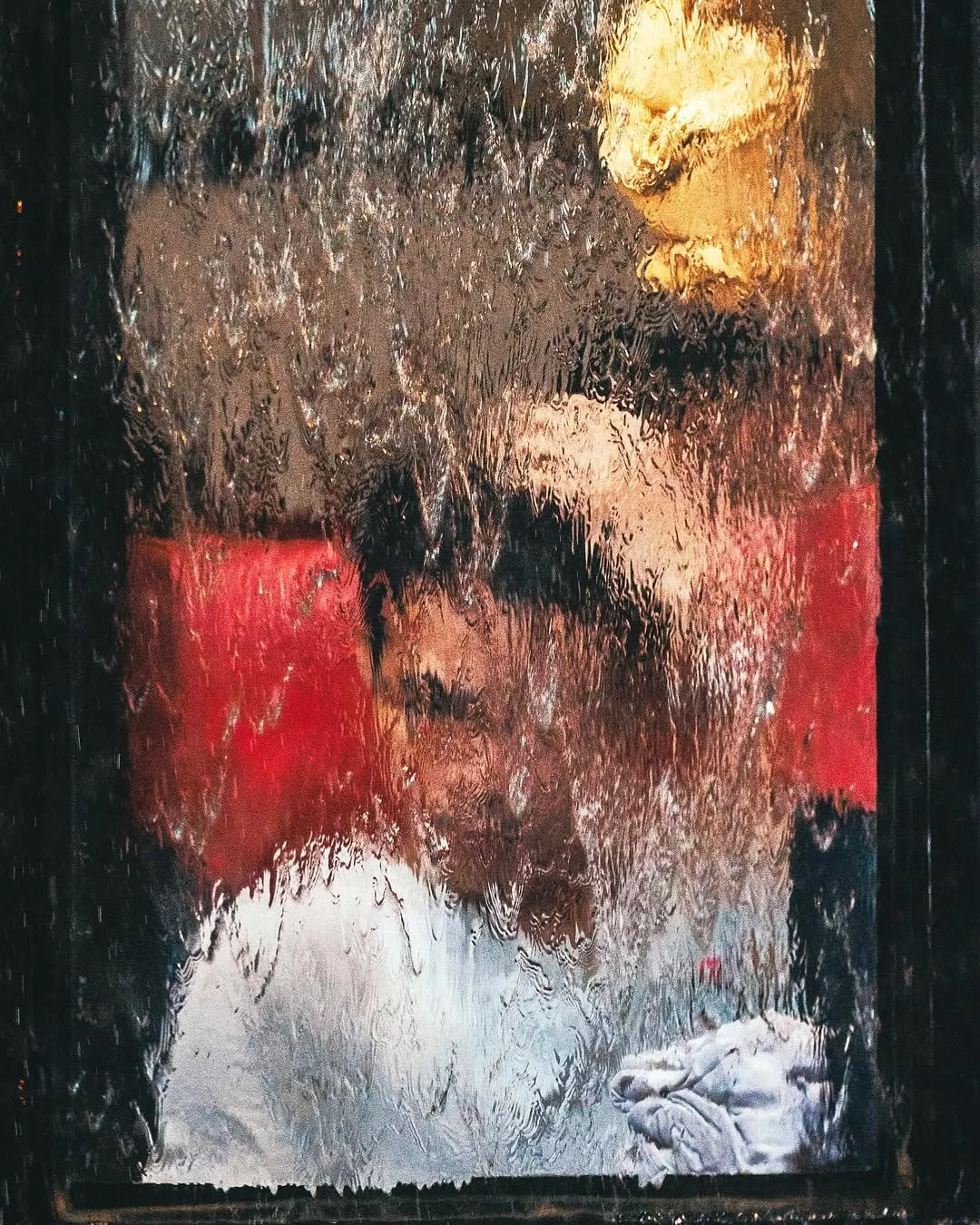
Tiu’s photographs stand as both witness and weapon, where images flood the conscience as much as the streets they portray. His lens provokes–it does not sensationalize despair but illuminates endurance.
Through every submerged road and soaked silhouette, Tiu reminds us that documentation is a demand, wherein every frame lies proof: not only of failed promises, but of people who continue to rise above them.