
Elegy for Old Manila
Quomodo Desolata Es? Isang Dalamhati brings A Portrait of the Artist as Filipino to life
Words Jen Chuaunsu
Photo Courtesy of Areté Ateneo
August 16, 2025
It is a tall order to stage Nick Joaquin’s A Portrait of the Artist as Filipino. Various productions have performed the timeless piece throughout the years as a theater play, a musical, and even a film. Students of literature are likely familiar with ‘Portrait’ as required reading in their English classes. The task of bringing to life such a popular play can be daunting.
Areté Ateneo rises to the challenge with a play adaptation titled ‘Quomodo Desolata Es? Isang Dalamhati.’ The Filipino translation is written by Jerry Respeto and Guelan Varela-Luarca, with the latter also serving as director. Delphine Buencamino and Gab Pangilinan portray the Marasigan sisters as Candida and Paula, respectively.
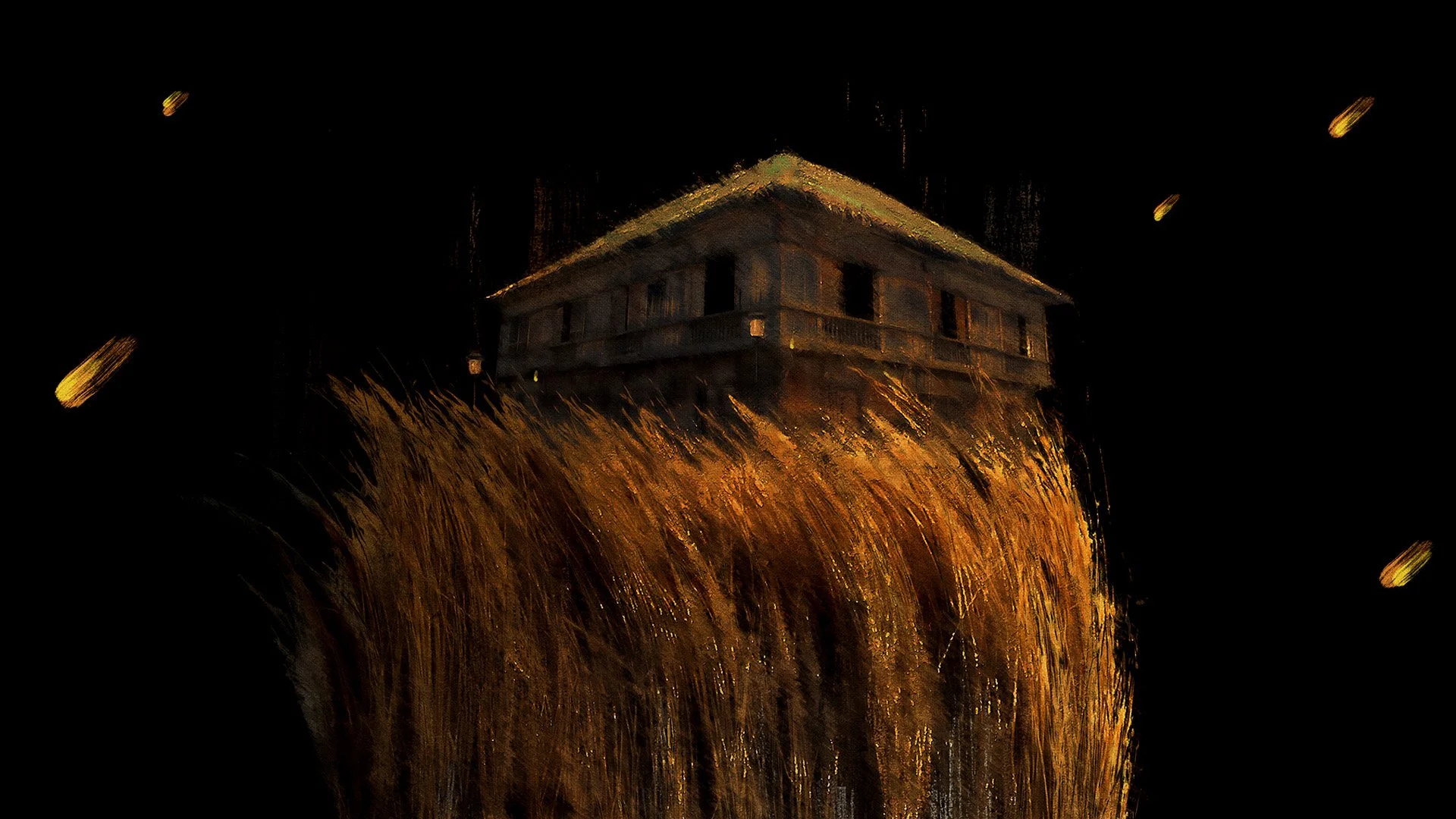
‘Quomodo desolata es?’ is Latin for “How are you desolate?” The phrase is a line from Nick Joaquin’s play. Indeed, desolation can be felt as the ensemble creates a haunting atmosphere with their narration. Seemingly inspired by both Noh plays and the Greek chorus, the ensemble moves and chants as one to recreate the ominous mood of Old Manila in 1941. The city stands on the brink of war. Decay hangs in the air. One house remains unchanged—the house of the renowned artist, Don Lorenzo Marasigan.
Desolation can be felt as Don Lorenzo’s daughters, Candida and Paula, two old maids, live close to poverty. They are forced to rely on their older siblings, Manolo and Pepang. The older siblings see their sisters as burdens, as cumbersome as the old family home they wish to sell. The sisters cling to the family home as the site of their fondest memories. It is a shrine to the days when poets and artists frequented the house and lived out the ideals of beauty, freedom, art, and poetry.
The sisters guardedly receive visitors who are only interested in one thing—the painting of Don Lorenzo titled “A Portrait of the Artist as Filipino.” It is the last great work of Don Lorenzo, which he had gifted to his daughters. Everyone wants them to sell the painting. Their older siblings, Manolo and Pepang; their boarder, Tony Javier; their family friend, Bitoy Camacho; their ninong, a former poet turned politician, Don Perico—all encourage them to sell. Yet the sisters refuse to part with the portrait.
The painting depicts a young man carrying an old man on his back as they walk away from a burning city. Both figures represent the artist, Don Lorenzo. The work captures the beauty of the past amidst the destruction of the present. For the sisters, the painting is a cross they feel they must bear, but it is also their ticket to financial freedom.
The play delves into the painting and its significance to Candida and Paula. On a deeper level, it serves as an elegy—a lament for Old Manila before World War II.
The play questions the role of the artist in society. Is there room for art even as the city burns to the ground? Is there a reason to hold on to the ideals of beauty and art in the face of imminent ruin? Or is it naïve stubbornness and even madness to do so?
What is the identity of the Filipino? Amidst defeat and subsequent colonization, has the Filipino identity become lost?
As in the painting, should the young continue carrying the old on their backs? Is it worth holding on to the ideals of the past, or is life ultimately about moving forward with the changing times?
Throughout the play, the weight of the sisters’ dilemma is palpable. Actors Delphine and Gab are young women, yet they embody the gravitas their roles demand. Even in moments of gaiety, their laughter teeters on the edge of tears, just a step away from madness. Their performances are truly riveting.
Quomodo Desolata Es? Isang Dalamhati shines a light on the text, revealing its rich layers. It makes the words and meanings sing, while provoking questions that remain deeply relevant today. For a play written in 1950, one that has been repeatedly staged, reimagined, deconstructed, and interpreted over the years, this new iteration uniquely captures the enduring power of Nick Joaquin’s work.
Performance dates for Quomodo Desolata Es? Isang Dalamhati is on August 8, 14, and 15 at 7:30 PM, and August 9, 10, 16, and 17 at 2:30 PM and 7:30 PM, at the Hyundai Hall, Areté, Ateneo de Manila University.