
Different Recipes, One Shared Dish
As a cuisine, Sinigang is very much Filipino in the way it reinvents itself to fit the diverse culture of our country.
Words Marc Nathaniel Servo
Photo courtesy of Yummy Ph, The Bacolod Food Hunters, Flavors of Life, Simply Masarap, & Panlasang Pinoy
September 28, 2025
Courtesy of Yummy.ph
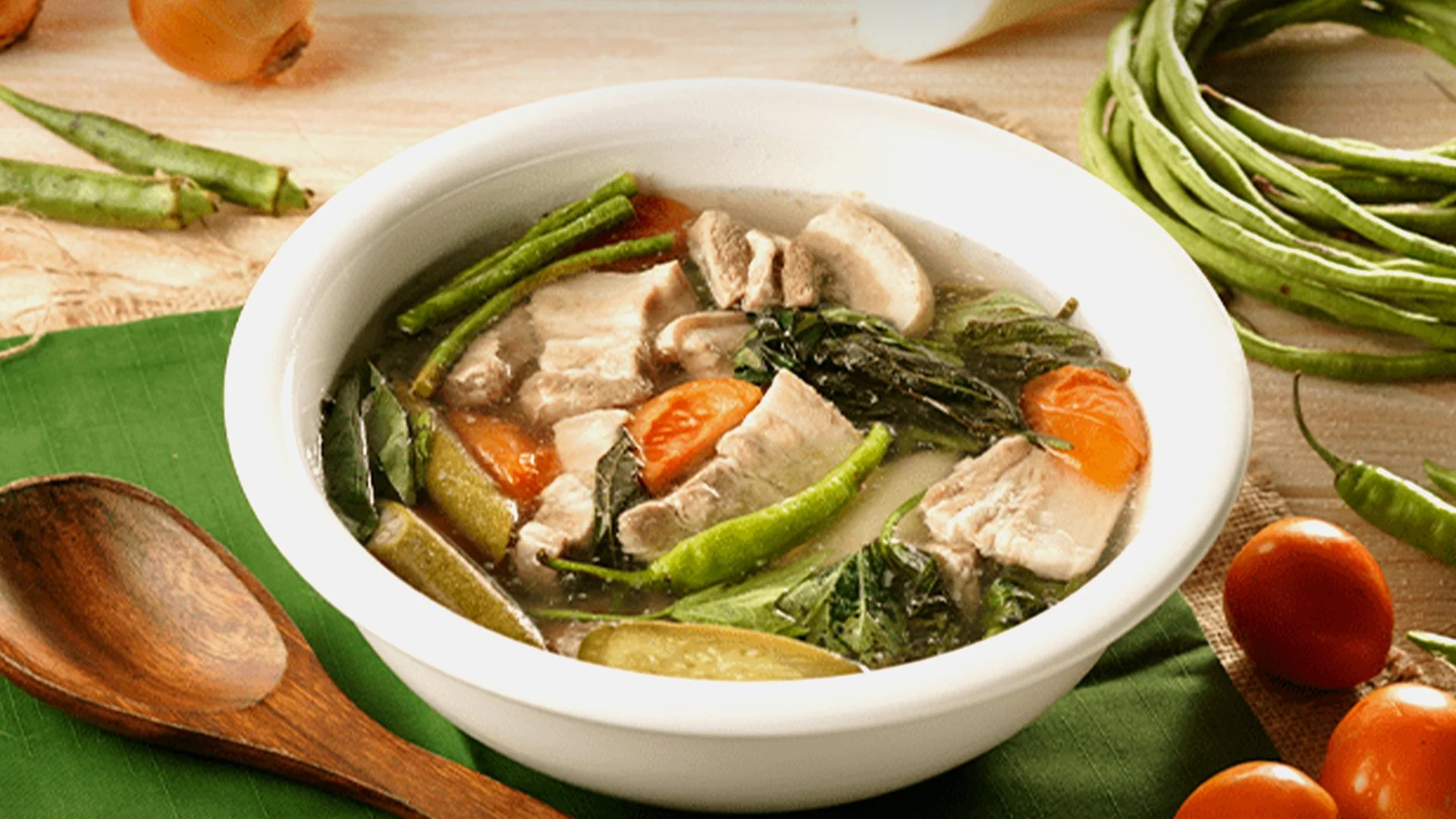
Sinigang should be the most popular Filipino cuisine after Adobo.
It’s so well-known and well-loved within the local community that one might never expect how differently it can taste in every household–a transformation of sourness that reflects the diverse culture of our nation.
Sinigang is, first and foremost, a Tagalog cuisine with a cooking tradition our ancestors developed to cut the gaminess of meat using a souring agent. In this very region, the term “mukhasim” rose to popularity, as Tagalogs took pride in crafting a level of sourness so sharp it could make anyone scrunch up their face.
However, regional differences brought about varying palates and resources. Across the country, sinigang was reimagined with local ingredients: from sampaloc and tamarind, to guava, and even cotton fruit (santol). Each version tells a different story–a flavor born of land, region, and identity.
However, beyond the typical Sinigang versions that remain deeply tied to the original, we will be looking for a few dishes that were able to stand on their own as independent cultural flavors.
Cansi
Courtesy of The Bacolod Food Hunters
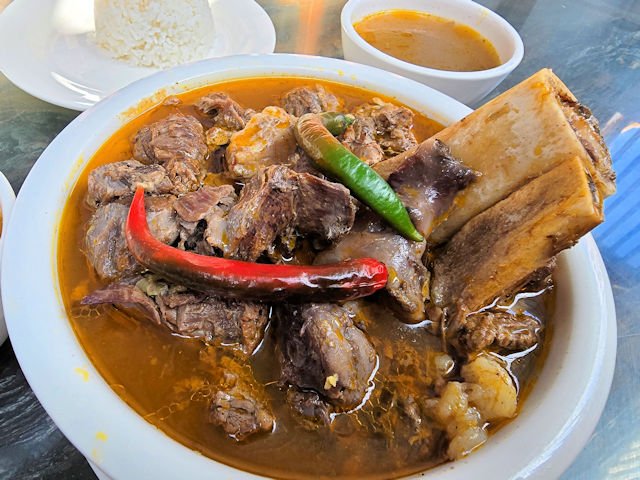
Fresh from the western part of Visayas, Cansi is often considered the lovechild of two popular Filipino dishes: Sinigang and Bulalo. It is an Ilonggo soup with beef shanks, bone marrow, and unripe jackfruit, soured by the Batwan fruit native to Visayas.
It has just the right balance of sour, spicy, and umami–perfect for cold weather. Though a fusion of two beloved dishes, make no mistake: Cansi is in a league of its own. It borrows the sourness of sinigang to cut through the richness of bulalo, elevating the hearty broth to an entirely new level.
Fresh from the western part of Visayas, Cansi is often considered the lovechild of two popular Filipino dishes: Sinigang and Bulalo. It is an Ilonggo soup with beef shanks, bone marrow, and unripe jackfruit, soured by the Batwan fruit native to Visayas.
It has just the right balance of sour, spicy, and umami–perfect for cold weather. Though a fusion of two beloved dishes, make no mistake: Cansi is in a league of its own. It borrows the sourness of sinigang to cut through the richness of bulalo, elevating the hearty broth to an entirely new level.
Bule
Courtesy of Flavors of Life
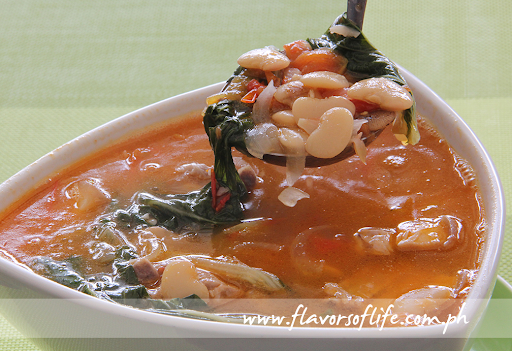
Looking for a vegan approach to Sinigang?
The Aetas’ version of Sinigang uses lima beans (patani) as the heart of the dish, soured by native Alibangbang leaves put towards the end of the cooking process, making for a mildly tangy flavor that one couldn’t ignore.
Linaga sa Batwan
Courtesy of Simply Masarap
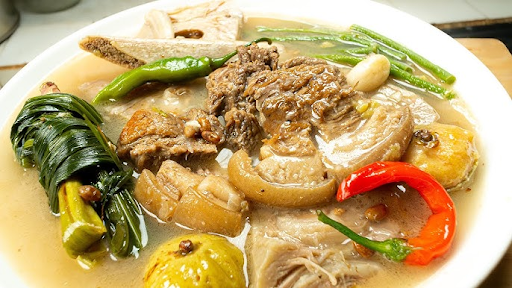
Often wondering why Visaya’s Sinigang is not sour? Well, as it turns out, Visayas do not have an actual Sinigang dish, but they do have Linaga (Nilaga), which can be turned sour with the native Batwan fruit.
Endemic in Western Visayas, batwan is mainly used in Ilonggo sour soups in relation to the common Visayan notion that sourness equates to spoiled food. With such a culture, Linaga is rarely sour, unless you put Batwan into it. So, if you ask for Sinigang in Visayas, it’s likely to be Linaga — just make sure it has the right amount of Batwan in it, as they do not prefer sour dishes.
Linaga is very much like Nilaga: it uses the meat to bring the broth to a higher dimension of flavors, and with Batwan as a souring agent, it becomes a Sinigang to die for. Indeed, a duality that fits the palate of Luzon and Visayas cultures.
Paklay
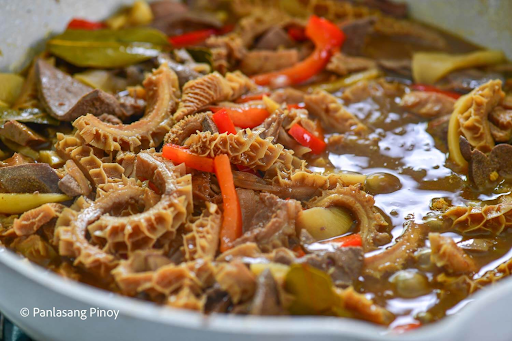
Courtesy of Panlasang Pinoy
Paklay is another regional variant of Sinigang, which uses more common regional fruits like calamansi and pineapple as a souring agent alongside a mix of pork innards, ox tripe, and bamboo shoots to create a not-too-sour dish perfect for pulutan.
Kadios, Baboy, Langka (KBL)
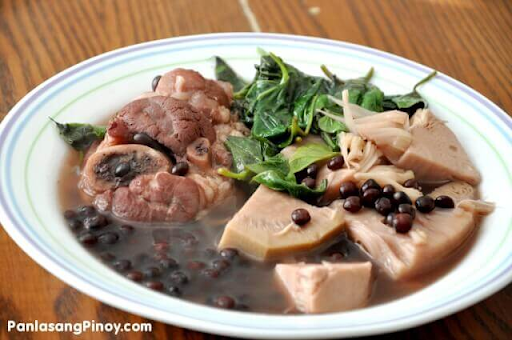
Courtesy of Panlasang Pinoy
Kadios, Baboy, and Langka (KBL) is another batwan-soured dish made of pork, legumes, potato leaves, and unripe jackfruit from Iloilo. It is very much like Sinigang, except with legumes, jackfruit, and batwan, which made the broth’s depth more complex and delicious.
Papaitan
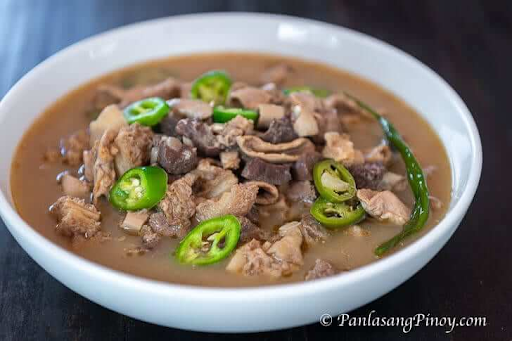
Courtesy of Panlasang Pinoy
An Ilocano delicacy, Papaitan is the reimagined version of Sinigang. It is thick and slightly bitter, as derived from the root word “Pait.” It is made up of goat innards, goat meat, and bile, which makes up for a uniquely bitter flavor that is vastly different from Sinigang.
Papaitan uses calamansi as a souring agent, alongside lemongrass, to cut away the bitterness. Be warned: it is very much an acquired taste–some like it, some don’t. Still, once your palate understands the depth brought by such bitter flavors, the mix of sour and bitter clashing in a meaty plate, you will begin to appreciate this dish.
Sinanglaw
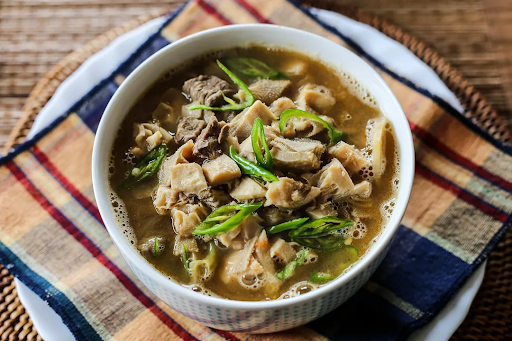
Courtesy of Ang Sarap
Another local flavor of the Ilocos region, Sinanglaw is nearly similar to Papaitan, but made up of beef and sour using kamias fruit. If Papaitan is bitter with a hint of sourness, this dish is sour with a hint of bitterness, which also makes it a bit closer to Sinigang. So if you feel unready for Papaitan, perhaps Sinanglaw is for you!
Shared Filipino identity
As an archipelago, the Philippines consists of diverse cultures, one that may not be united by the same palate but tied by the same love for the gourmet.
Sinigang, popularly seen as the signature sour soup of the Philippines, is tasted differently around the country. From the Ilocanos’ bitter preferences to Visaya’s notion against sour foods, Sinigang is reinvented again and again, capturing the diversity of Filipinos within a singular, hearty, sour soup.
So if you want to explore the Filipino culture, better start with Sinigang with all its variety, and understand not just the richness of its broth, but our culture and heritage across different islands.