Death’s Restorer
A dignified death is something everyone wishes to earn–and they are the hands who make that happen.
Words Marc Nathaniel Servo
Photo courtesy of Katrina Mercado
November 02, 2025
What do you want to look like at your funeral?
It is a question we often tend to avoid either out of fear of inviting misfortune or in an effort to escape unnecessary worry. After all, the concept of human mortality is like a guillotine hanging above our necks—ominous and ever unpredictable.
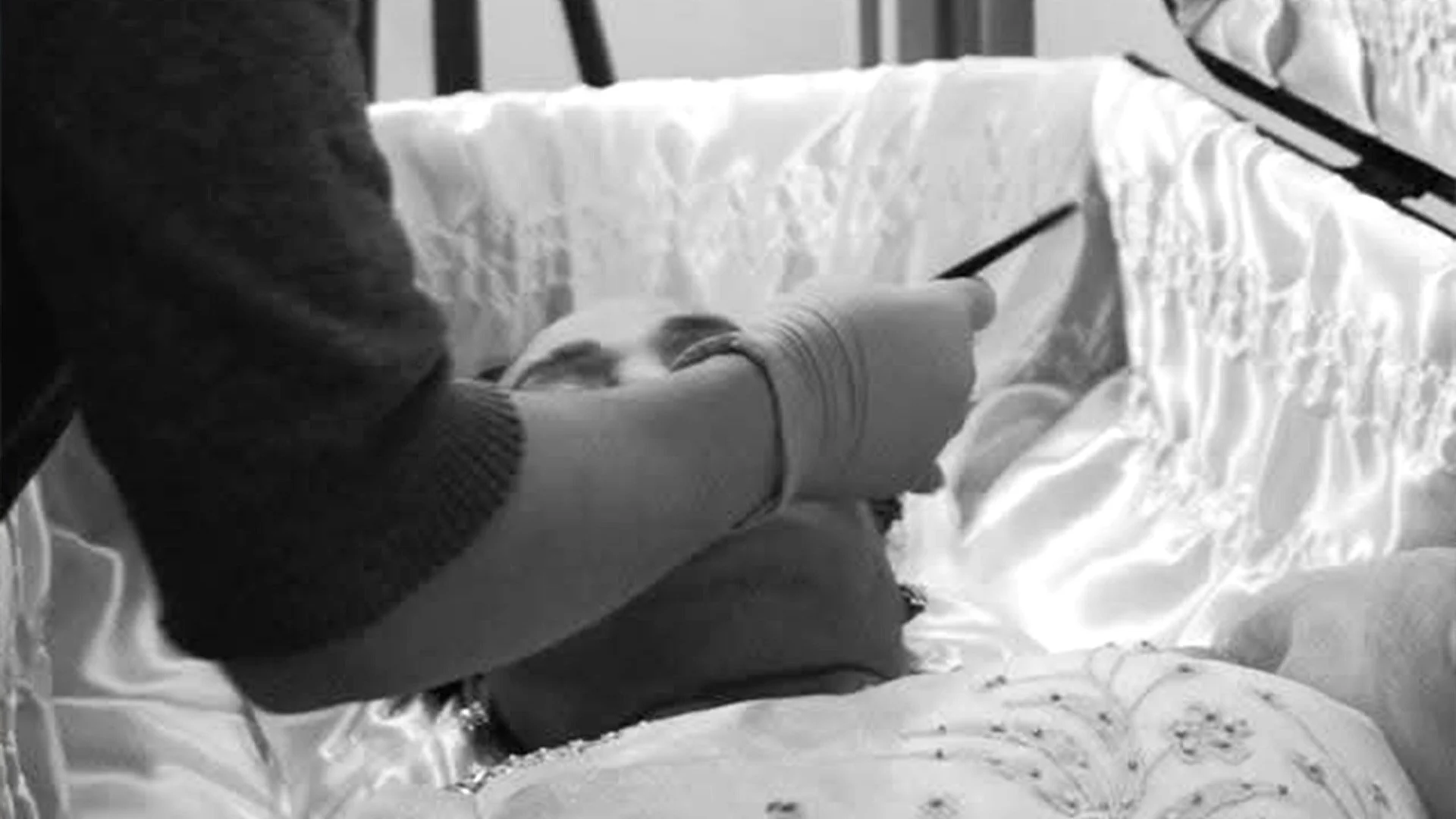
Still, some professionals face death daily, like wayfarers in the Nile, guiding carcasses to their caskets and preparing them for a dignified trip to the afterlife. It is morticians, like Katrina Mercado, who restore the deceased to their best selves so that they may afford a noble farewell to their loved ones.
“Mortuary cosmetics is different from regular cosmetics kasi it doesn’t just beautify, it actually focuses on restoring, meaning kung ano ‘yong hitsura mo when you were alive ‘yon ang goal, not unlike us alive na “‘ay magpapaganda lang ako,” she explained.
For Katrina, mortuary cosmeticism is never macabre, but an art that connects people in what could be the most vulnerable moment of their lives—funerals. A good makeup could bring relief to the grieving, sparking memories of what once was when their beloved was still alive.
Road less taken
As a child whose interests aligned with crime investigations and murder, Katrina always knew she was bound to be an embalmer. Finding intrigue with crime shows like CSI and NCIS, she once wanted to solve her own mystery case. However, embalming is not a popular college pathway in the Philippines, so her interests were almost dashed.
According to her, becoming an embalmer isn’t easy, especially with the funeral industry being fairly small, made up of families that have had generations of funeral owners before. Luckily, the internet could bring up even the most obscure, and her sister found an embalming school she never knew even existed.
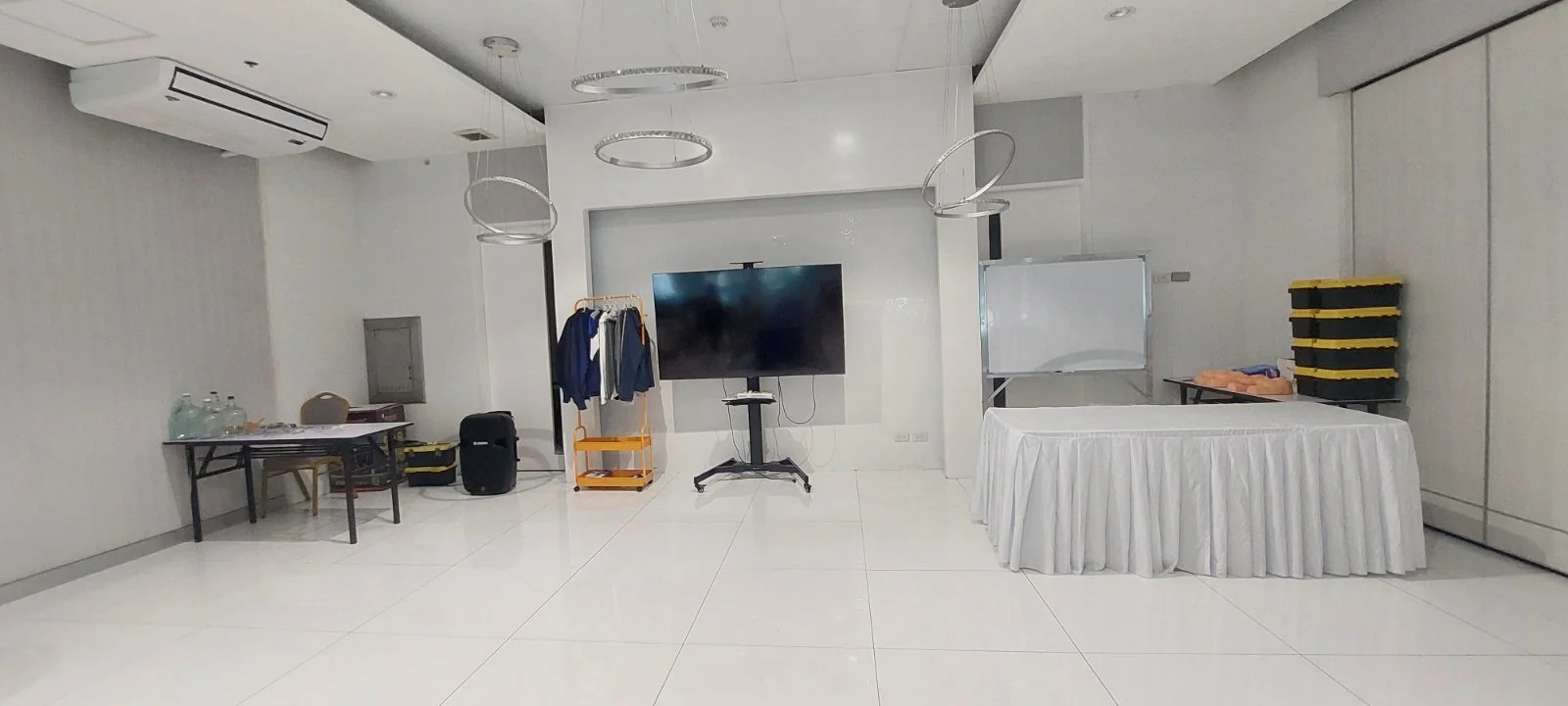
“In my case, wala akong ties sa funeral industry. If you want to do the actual job of becoming an embalmer, hindi kasi basta-bastang mag-aapply, you need to go through a DOH-accredited training school, do the actual certification, then you have to pass the licensure exams,” she explained.
However, in the funeral industry, younger people, especially women, were rare—so much so that it went as a surprise for her clients who thought embalming was only done by older men. She believes that it comes from the rarity of funeral discussions, often only seen in horror films, that the prerogative of embalming is dirty and not for the faint of heart. However, with the rising popularity of the profession, the perception of the field is improving.
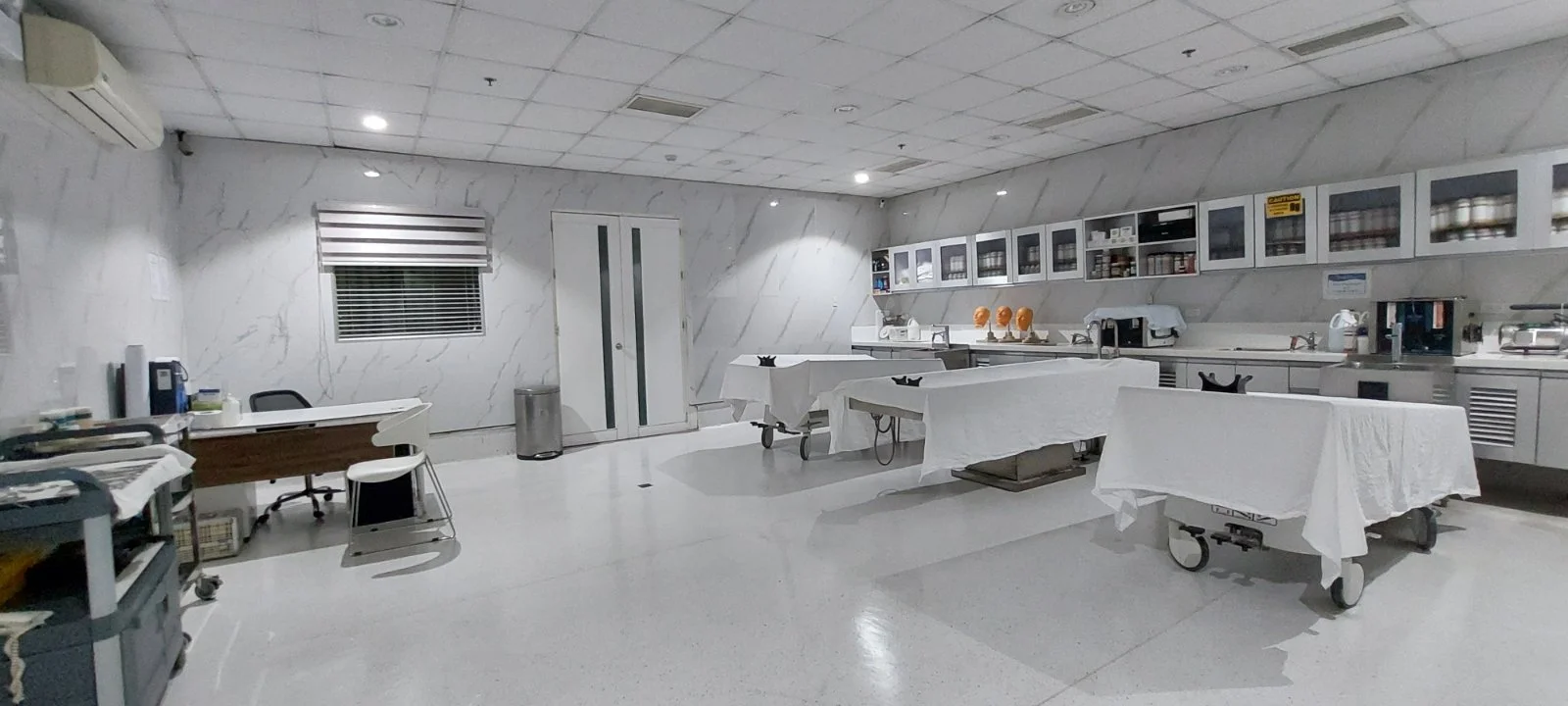
“Before, kaunti lang ang mga embalmers in the Philippines—I think under a thousand for the whole country. Pero ngayon, nasa 5.8 thousand na yata tapos twice a year na nagpapa-exam ang DOH for the licensure to the point na pati mga Filipino embalmers ay in-demand na rin abroad,” she added, even jokingly remarking that they even now have alumni reunions.
Now, Katrina works as a licensed embalmer and an admin/instructor in the Pacific Center for Advanced Studies (PCAS).
Art of Funeral Makeup
More than, of course, restoring the dead, mortuary cosmeticism is different from normal makeup in its manner of form, ingredients, and application.
It usually comes in glass jars or palettes, just like paint, wherein the embalmer must mix colors first to get a certain shade. Each makeup is composed of different chemicals, including preservatives (usually found in embalming fluids) and moisturizers, to delay decomposition and apply better on the deceased’s face.
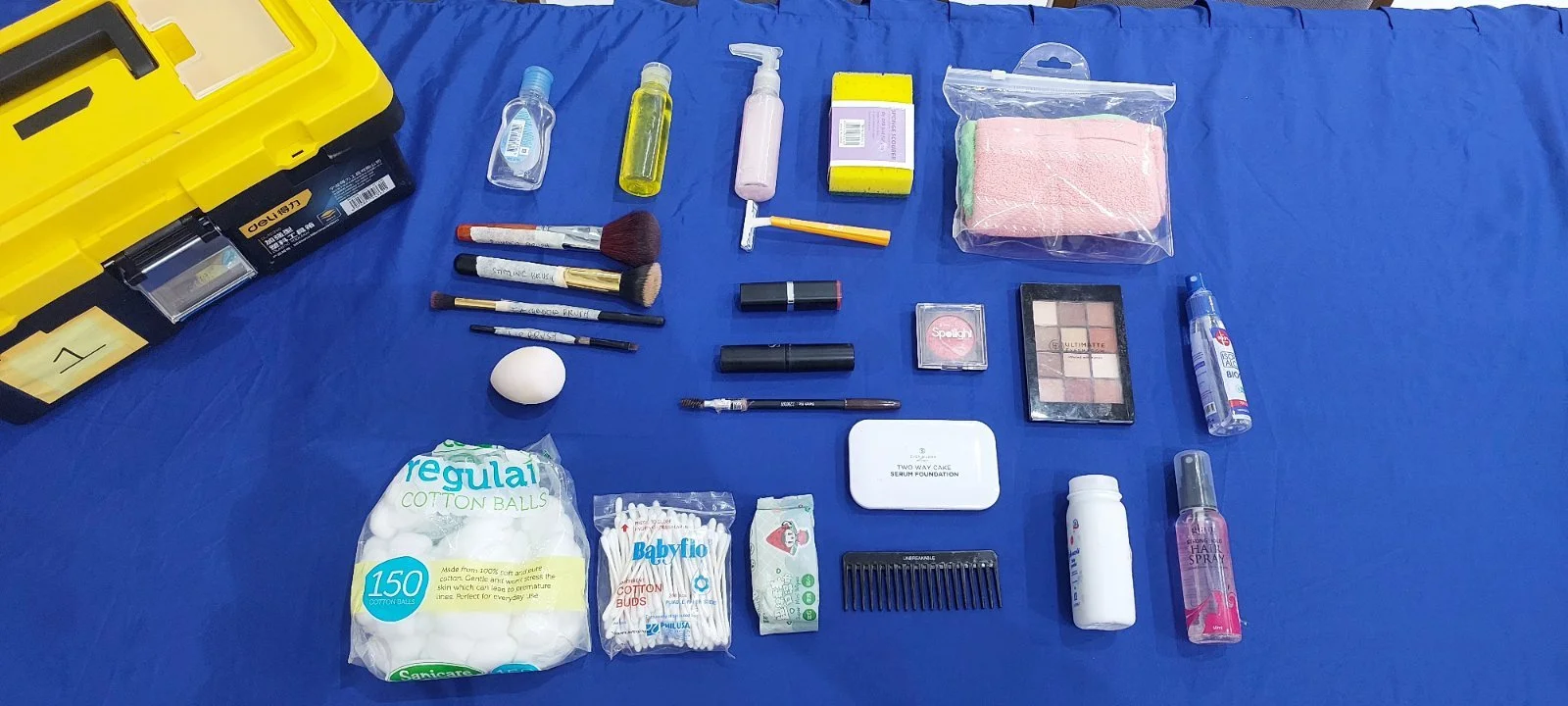
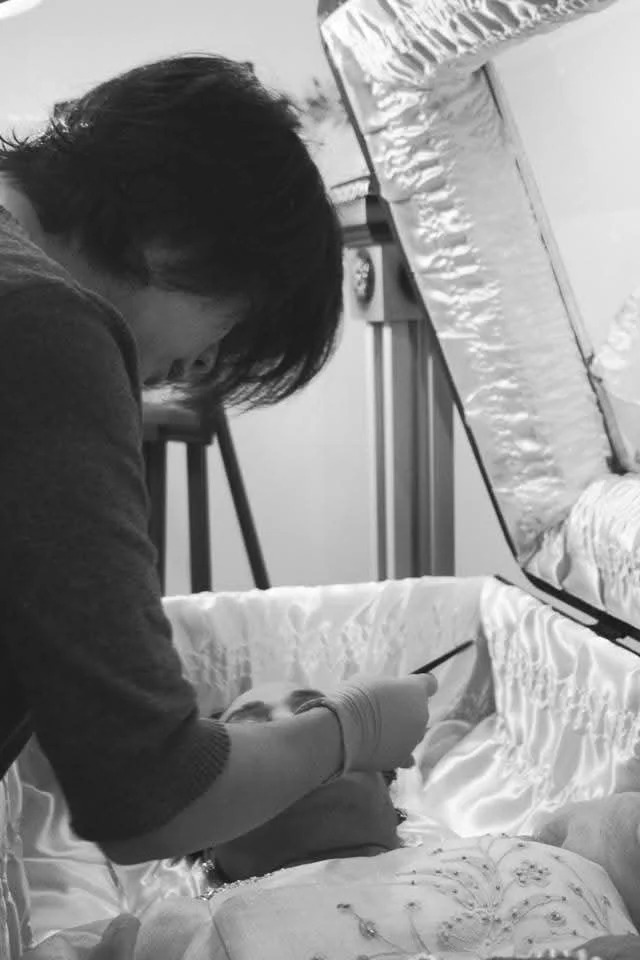
Similar to how makeup works with the alive, mortuary cosmeticism treats the face as the makeup pan—except that they must first turn it into a blank canvas before restoring the details. Even the parts with hair, like the eyebrows, and bruised areas need a thick foundation to cover the discolorations.
“For the dead, ang makeup technique namin ay hindi parang paintbrush na movement, more of pecking movement, pinipindot mo siya kasi you want to get into the pores ng mukha dahil ‘yong reflection ng light kapag ‘di mo nalagyan ng makeup, mukha siyang butas-butas,” Katrina expounds. “Para kang nagd-drawing kasi may start ka na blank canvas na foundation tapos id-draw mo lahat ulit: the kilay, the lashes, and the lipstick.”
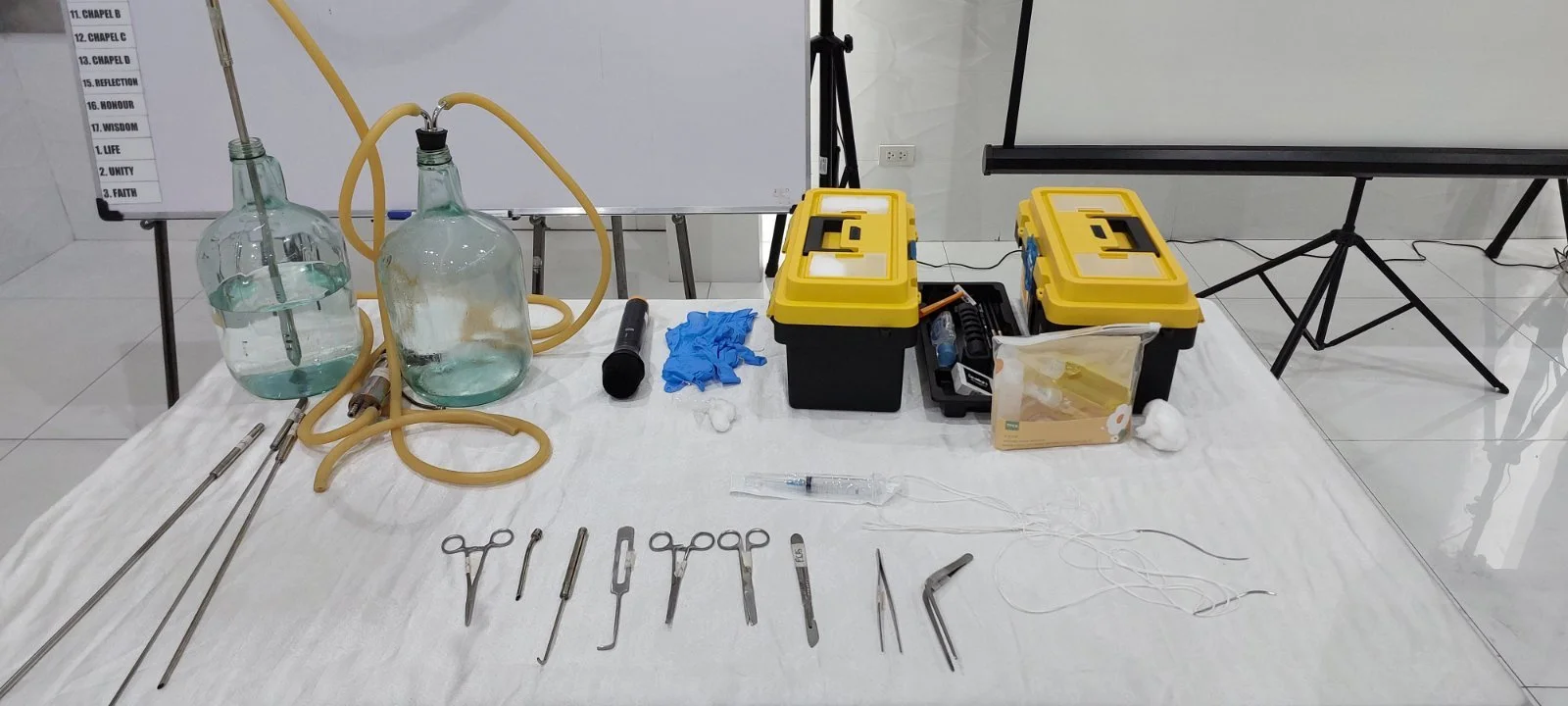
According to Katrina, embalmers try to follow beauty trends as much as possible unless the look is too difficult to recreate on the deceased. Popular styles include airbrushed finishes and the “no-makeup” makeup look, which she believes stems from the perception that funeral makeup often appears overly caked.
She adds that this may be due to the limited availability of proper makeup tools for the deceased, something she hopes will improve as the profession gains more recognition. The work of restoring the dead may appear simple, but it becomes especially challenging in complex cases, such as when the body is injured or has experienced significant weight loss.
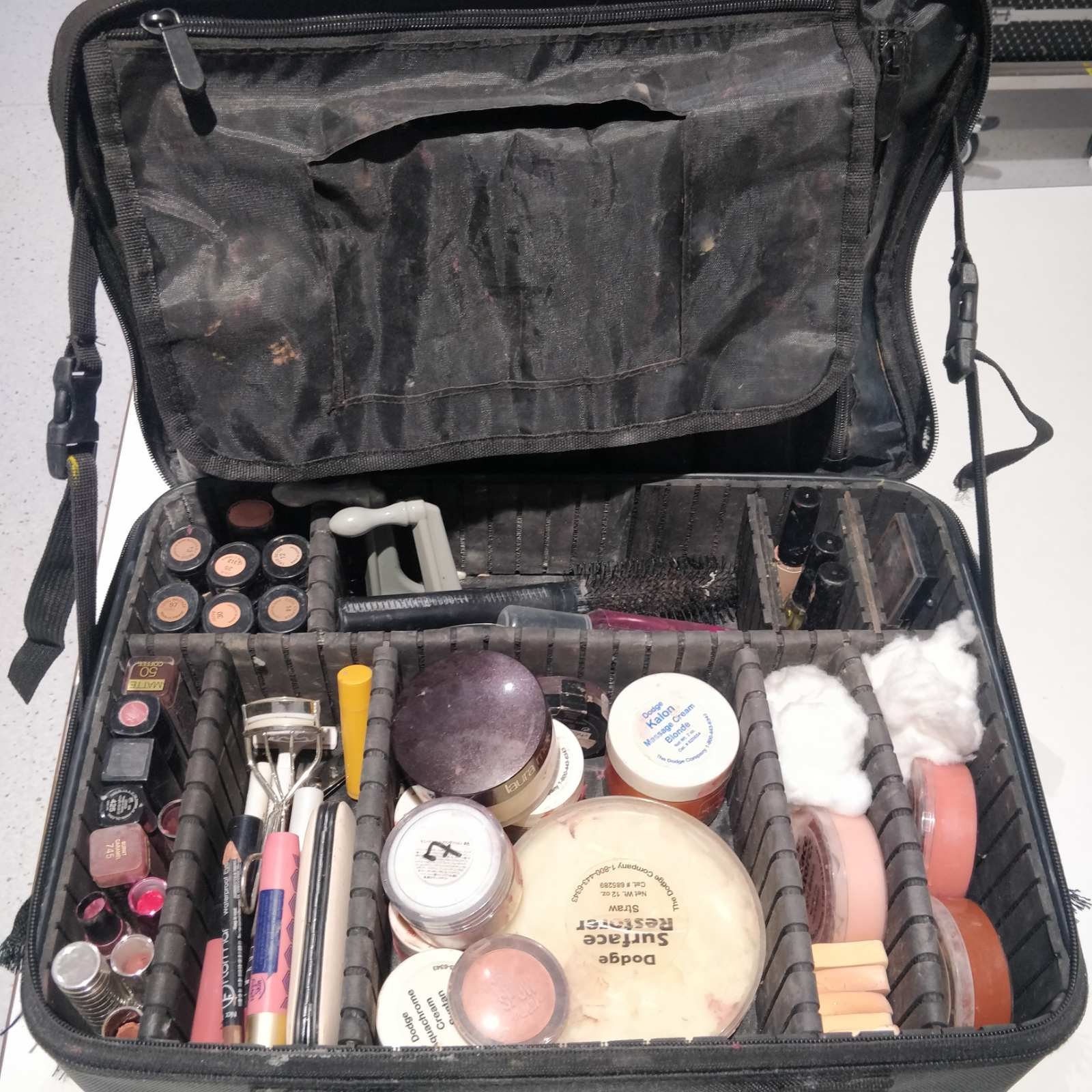
Katrina explains that in cases of severe weight loss, they sometimes use fillers as part of specialized mortuary cosmetics, applying gel injections to restore volume. When the face is injured, they use soft wax to mold and reconstruct the features, which makes the process of brushing and applying makeup more difficult due to possible facial dislocation.
Still, even with these techniques to restore a person, she emphasized that their job is not to beautify, but restoration. They cannot do noselifts, removal of warts, or reduce a person’s weight—anything that drastically changes the appearance of the deceased, for respect.
A Stranger in a Funeral
Becoming an embalmer is no easy feat. The work demands more than physical labor—it requires mental resilience, a deep understanding of the human body, and patience in supporting the grieving.
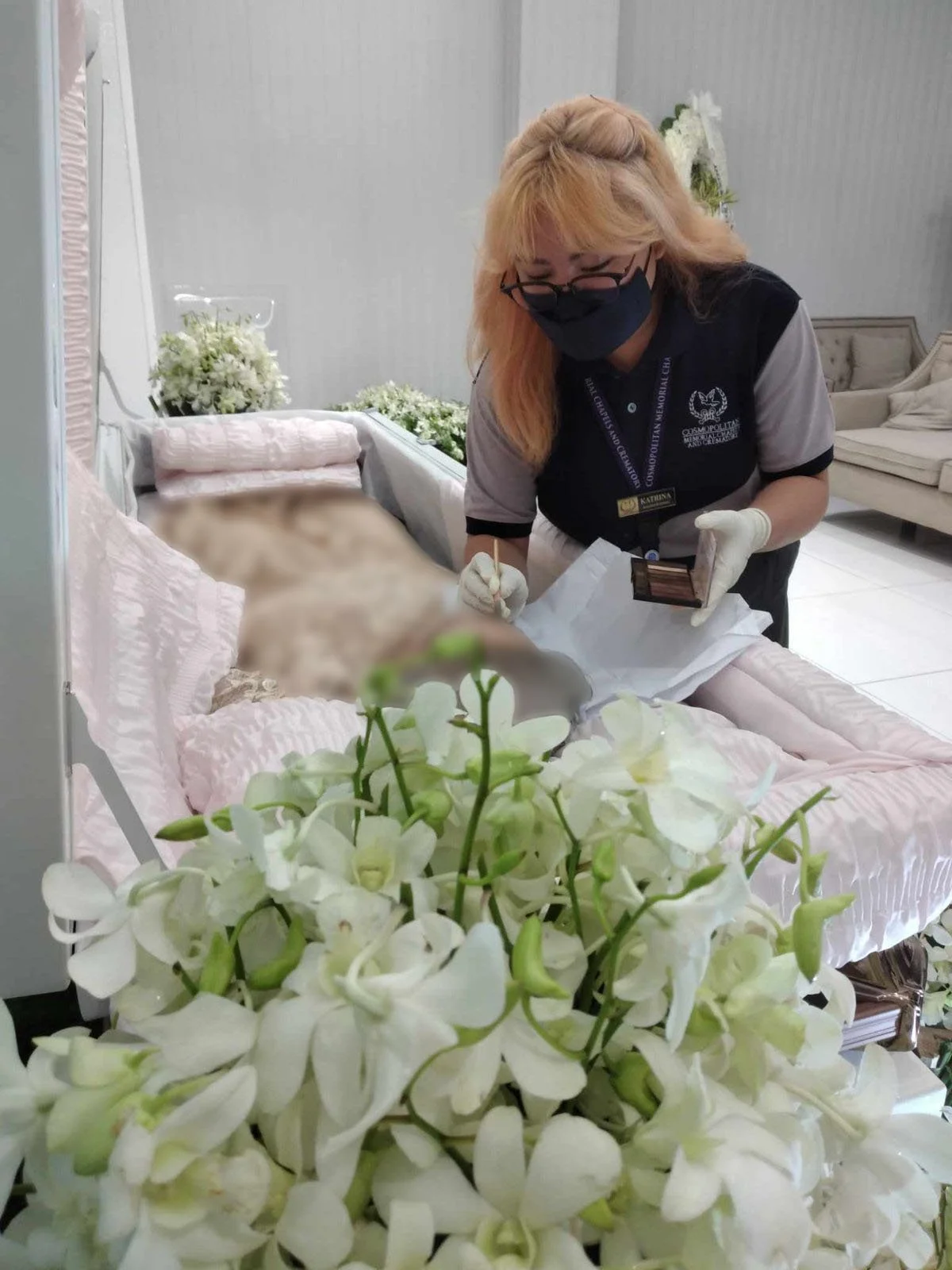
When Katrina first started in 2014, she shared how deeply invested she felt with each death she handled. It isn’t about being “creepy,” rather, embalmers often share in the sadness of those who have lost a loved one.
But nowadays, she is more at ease with the process, “I even talk to them when I apply the makeup na para bang buhay na client, “wait lang, lagyan muna kitang lipstick, patuyuin muna natin nails mo” you treat them as much as you would treat a living person,” she said.
As an embalmer, the importance of her craft lies in making the dead look dignified, a mirror of memories of what once was alive, to help in the grieving of those left behind. The mental toll is never easy, but something you grow used to because it’s a burden you must carry.
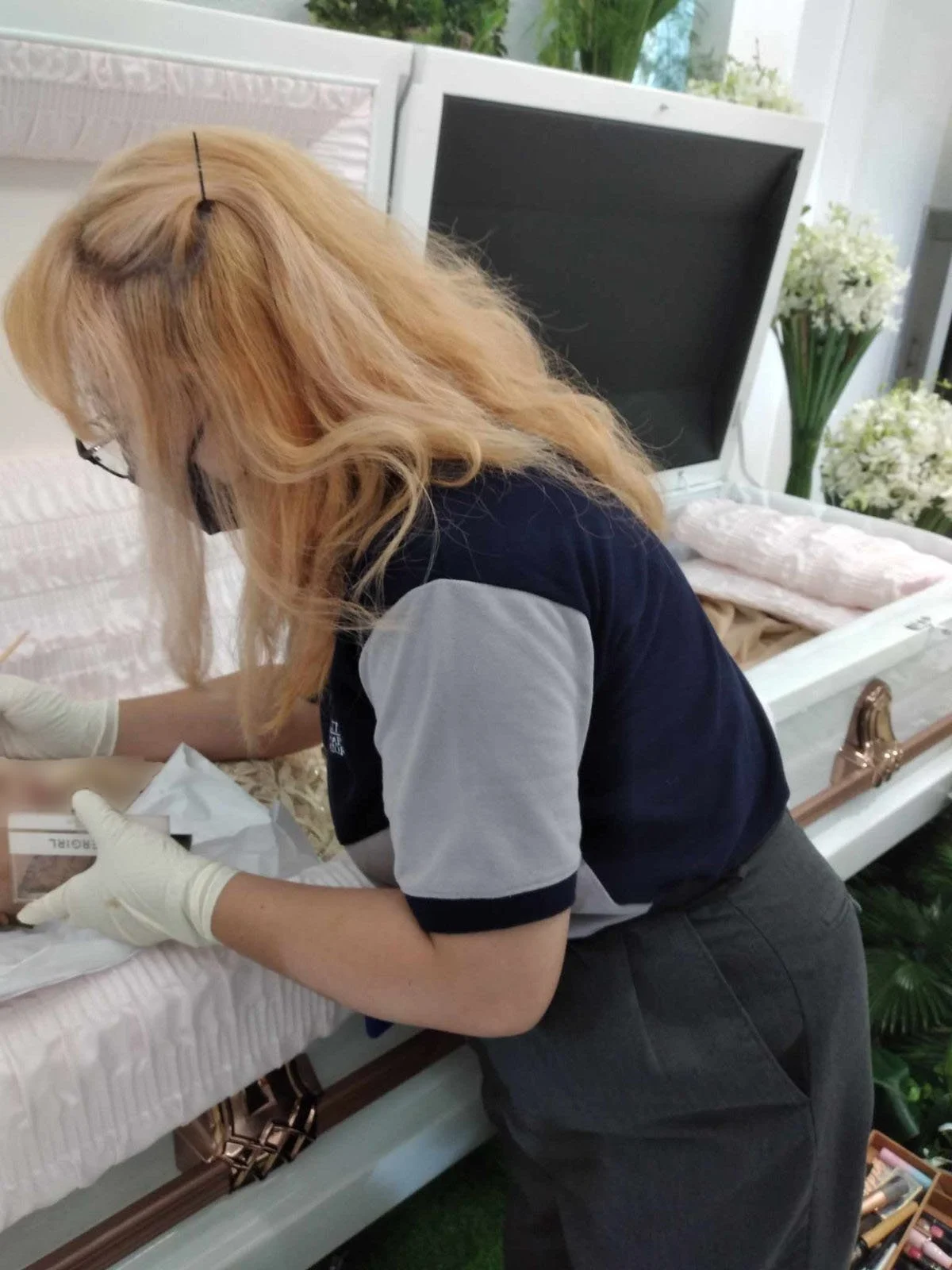
“You’re a stranger na mayroong access sa mga vulnerable moments nila as a family,” she began with a deep sigh. “As someone who restores the dead, in a way, you’re helping them come into terms na wala na ‘yong loved ones nila and depending sa result ng gawa mo, it can actually help with the grieving process, mas accepting, mas nakakatawa sila na sasabihin, “Kumukha niya ‘yong hitsura niya noong 75th… or ito ‘yong mukha niya noong kasal mo ‘di ‘ba?”
Still, even as someone who attends to the dead, human mortality remains a mystery, but they’re prepared. For Katrina, becoming an embalmer taught her to be more understanding of other people, but most especially, that she must know what she wants before the end.
“You don’t want to be in that situation when it’s your turn na mawalan. Kaya ‘yong mga morticians ngayon, we take risks, we’re more open to do ‘yong mga gusto naming gawin because we know how life is so short and that death is so unexpected,” she ended.
Heaven’s Palette Campaign
Despite the growing popularity of the occupation, becoming a mortician is costly—you pay for the course, the exam, and the materials. That’s why PCAS, through a collaboration with an advertising agency, began Heaven’s Palette Campaign, a donation drive for aspiring embalmers who lack makeup kits for training.
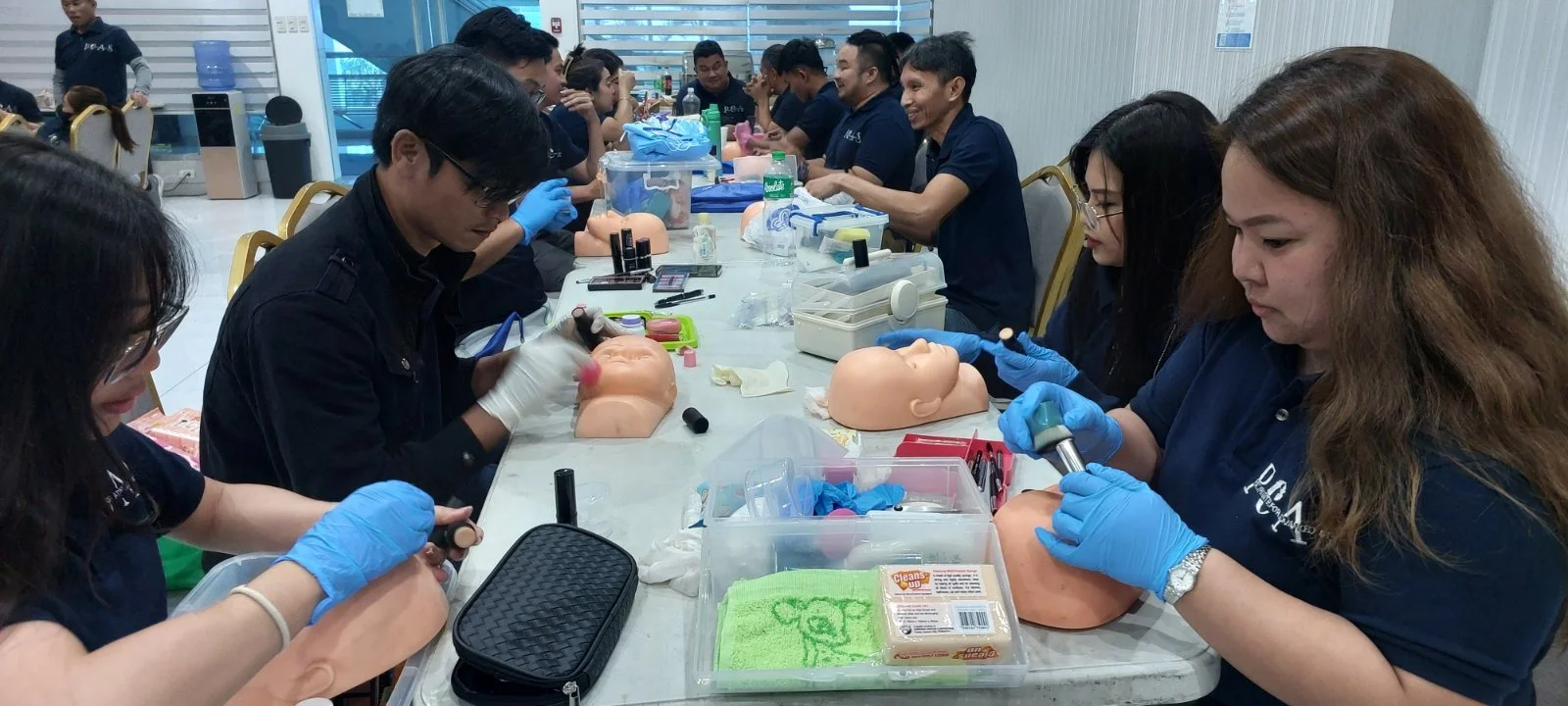
“A lot of Filipinos love makeup, but they don’t know where to put it after nilang gamitin, kasi even if you have a palette, two or three shades lang ang gagamitin mo doon. Through this campaign, we hope to collect pre-loved makeup and makeup brushes, and we will repurpose them for our students. That way, you are helping the next generation of embalmers to be good with cosmetics through your old makeup,” Katrina explained.
If you are interested in helping, you may visit heavenpalette.com for more details.