
Craft, Composition, Continuity
This four-generation Meycauayan family of designers and craftspeople alike, incorporates different disciplines into their bespoke designs.
Words Pao F. Vergara
Photos courtesy of Della de Leos and Ramos-Rodriguez Family Archive
January 12, 2025
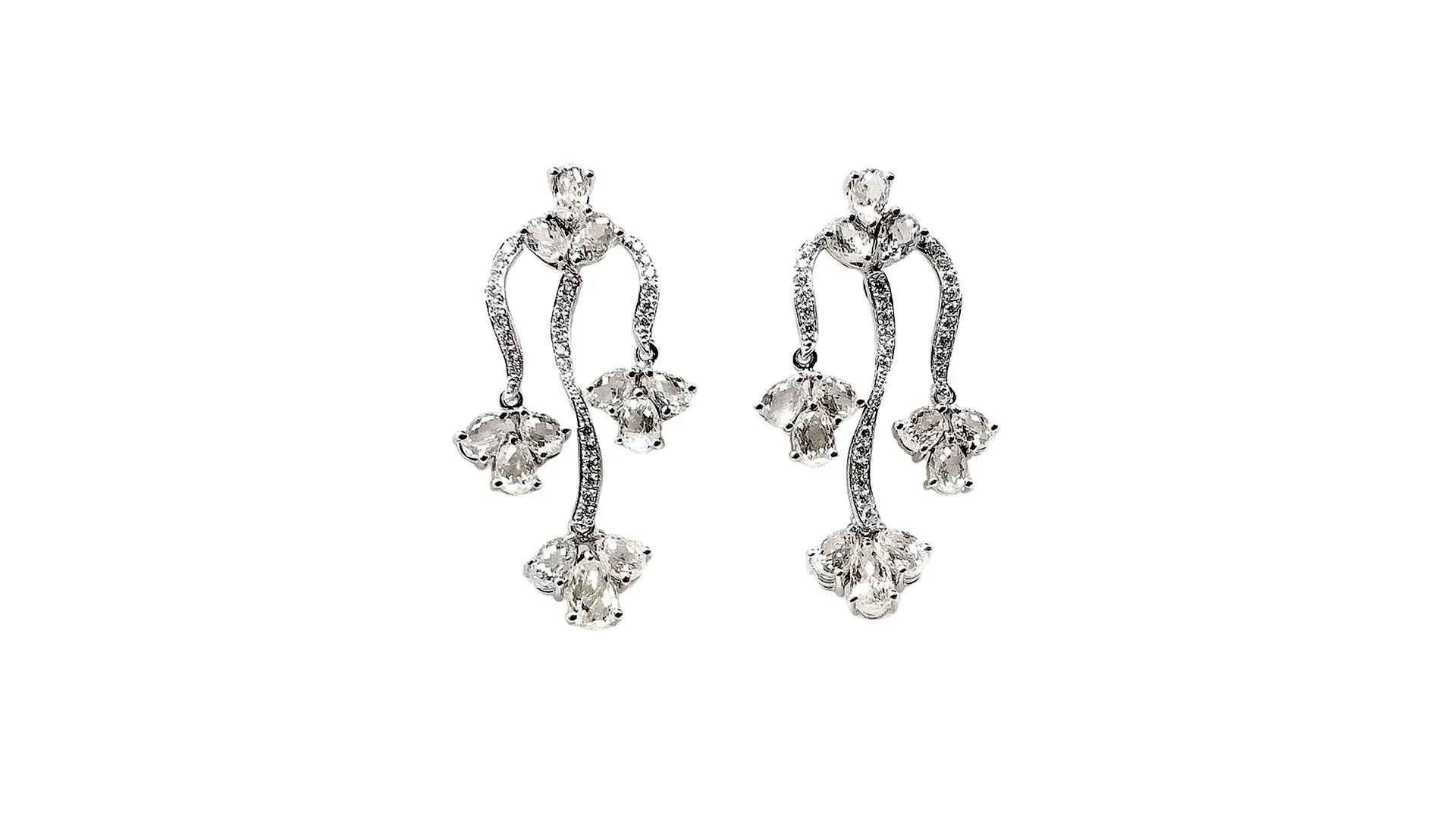
It’s raining in Manila and I need to keep my eyes open, lest I miss my stop in this cramped but oddly comfortable commute in a minibus bound home. There’s something about being shielded from the rain and the chaos of Metro Manila’s streets that creates a sense of being held, akin to childhood naps, half-awake, with laughter wafting from the living room.
My musings are cut by a call: “Pao! I made it!” the awe in bespoke jeweler Patrizia Ramos Rodriguez’s voice is palpable, jolting me out of my half-sleep. For the longest time, the fourth-generation jeweler has been meaning to meet one of her idols, Joseph Arthur Rosenthal, whose workshop sits in the storied Place Vendôme, known for its horologists and jewelers, just as Naples and Savile Row are known for their suit-makers.
She’s in Paris, off the beaten path, in suburbs that don’t attract the usual Instagram influencer crowd. She narrates about fresh seafood from market stalls, about downtown streetwear, working-class families bathing in public pools, French-African street musicians, about a Paris that turns popular images of the City of Lights on their head.
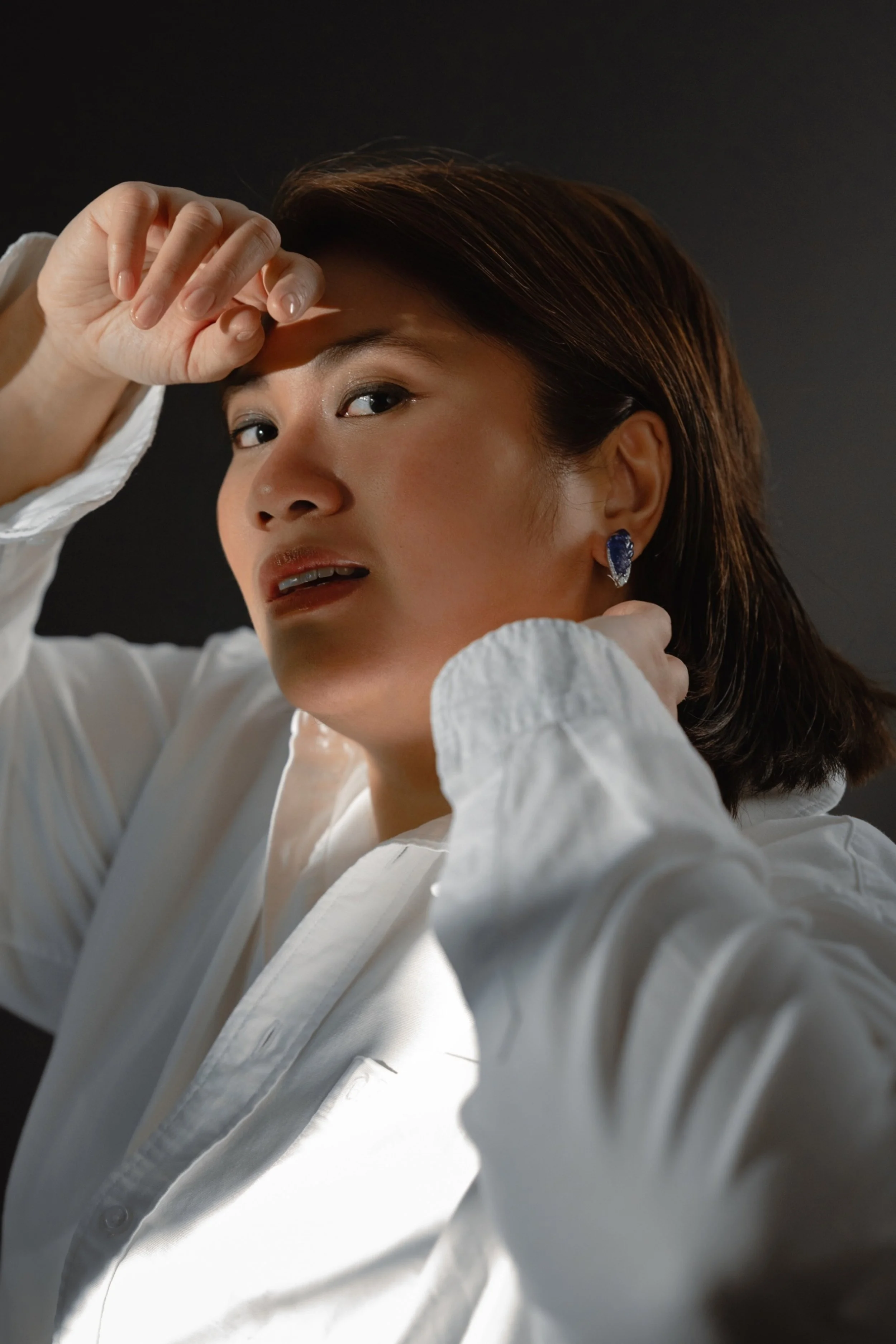
Patrizia Rodriguez is the Director of Imelda’s Jewelry and Founder of KREA Jewelry
“I was hoping to meet him,” she sighs, happily at her Mecca, “but he’s on vacation, out of town. He needs his rest, his creative break, just like me. And I respect him for that. Something tells me our paths will eventually cross.” She shares how simply being in his workshop—seeing evidence of a life and practice lived, with tools still around, books still open, and pieces in various states of finish was enough for her—a fellow artist also on a creative break.
Another round of conviviality, and we hang up. I’m here, at my stop, the rain now a drizzle.
Where bamboo thrives
Jewelry pieces can fall into a spectrum, ranging from an everyday accessory, all the way to wearable artwork marking a special occasion—from a wedding, to a degree finished, and ultimately, a heritage and heirloom piece passed from parent to child, to grandchild and beyond—worn not just for sentimental reasons, but also for timeless style.
For the women of the Floro-Ramos-Rodriguez clan hailing from Meycauayan, Bulacan, the art of jewelry-making, together with their kababayan, their town mates, is the heirloom passed down, alongside jewelry pieces loved and storied.
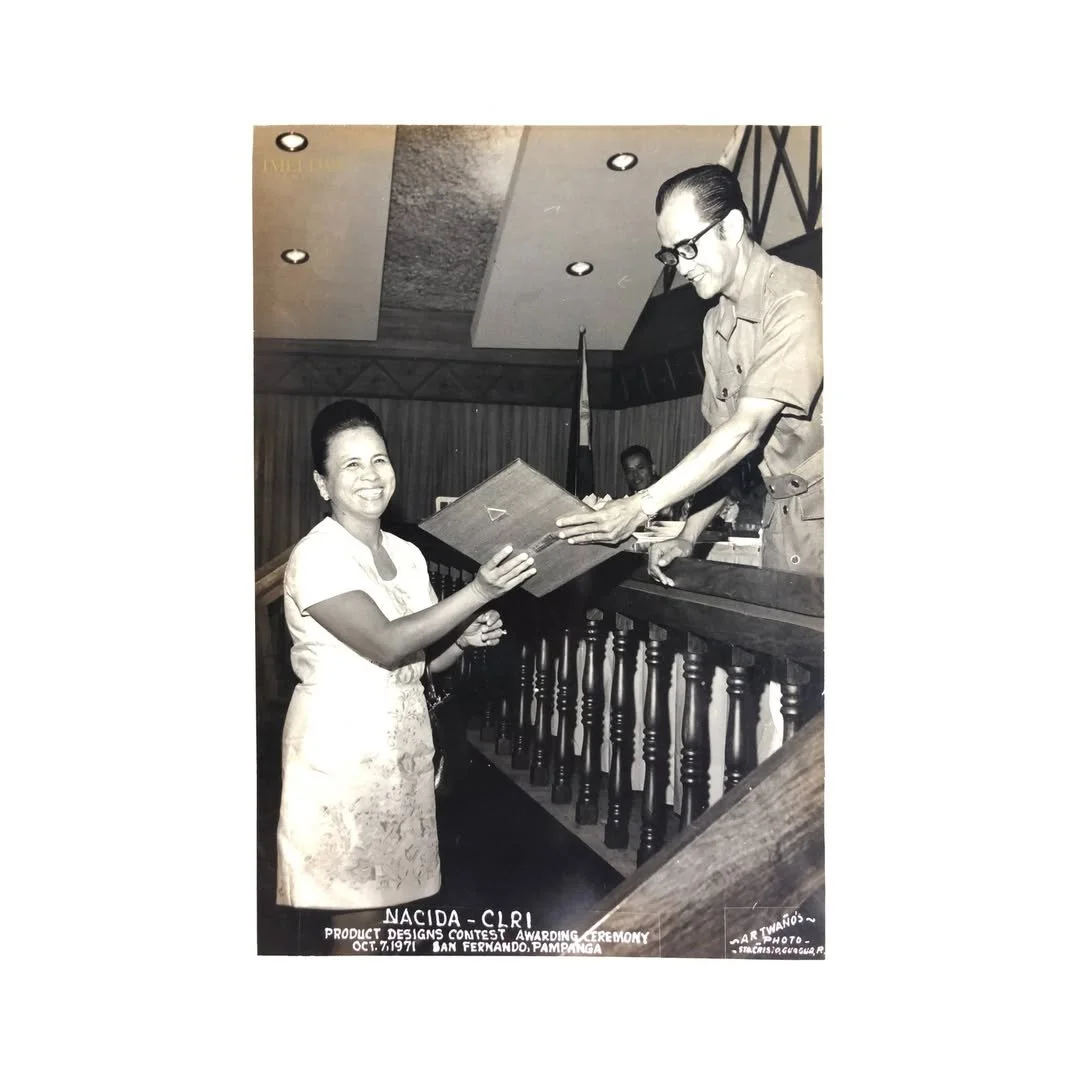
Beatriz F. Ramos receiving a regional award from the National Cottage Industries Development Authority for Imelda’s Jewelry.
In essence, jewelers like Patrizia, her mother Imelda, and her grandmother Beatriz conceptualize the designs while artisans like goldsmiths and stone setters bring said designs to life.
Imelda was the daughter of a jeweler and goldsmith. In the 1980s, while working in Metro Manila’s financial districts, she began selling her family jewelry on the side as her brothers back home managed the operation, their parents gradually stepping back.
Using modern business methods, Imelda eventually professionalized what was then a cottage industry. She left her day job, establishing Imelda’s Fine Jewelry, becoming a full-time jeweler and helping send Patrizia to school with each “rehomed” piece.
Meycauayan and the surrounding municipalities (some of which were historically part of Meycauayan, which means “bamboo thrives” in Tagalog) have a long-established tradition of artisanal craftsmanship in the Philippines, encompassing tannery and metalworks, and even gunsmithing for Filipino revolutionaries.
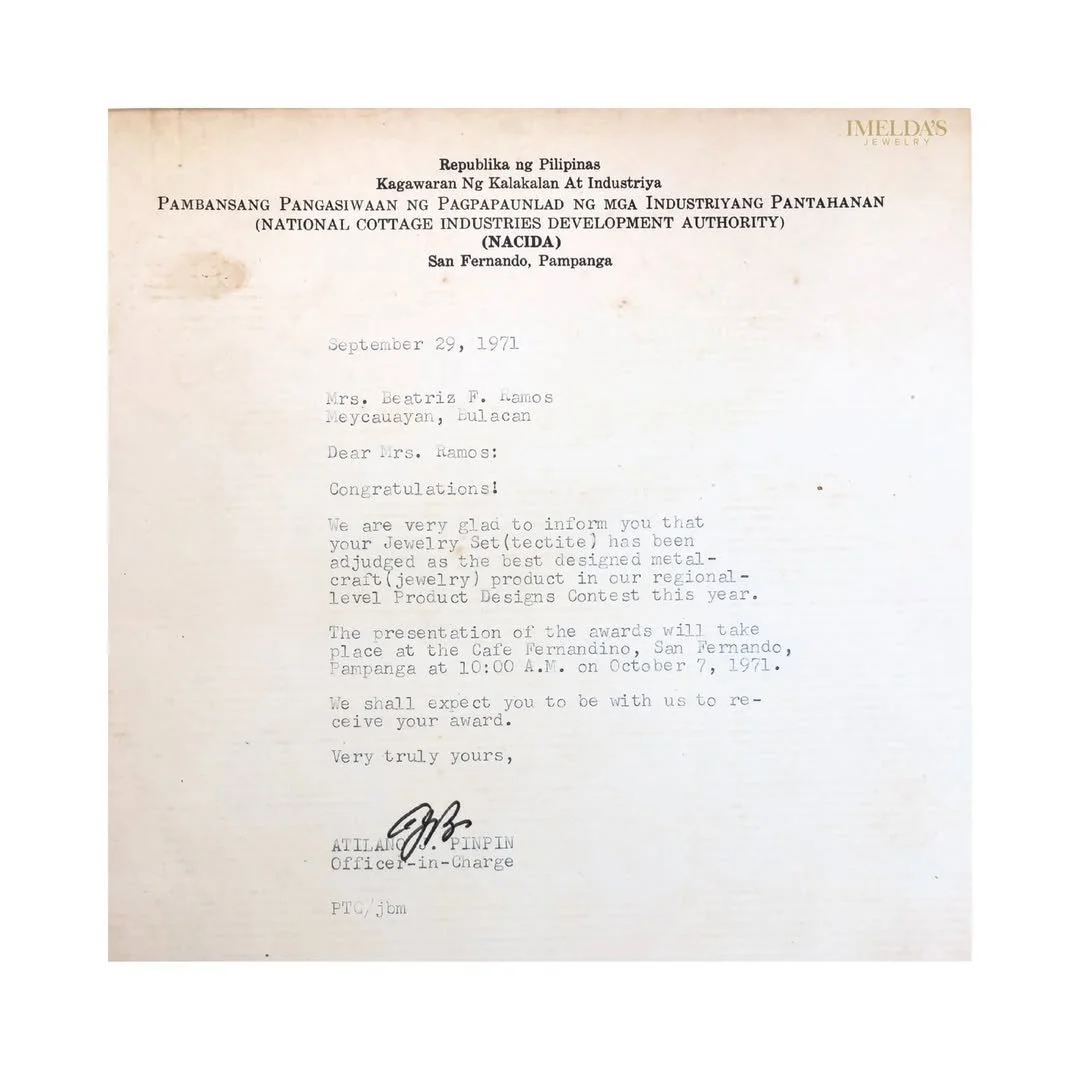
Regional award from the National Cottage Industries Development Authority for Imelda’s Jewelry.
One old goldsmith, who worked around the country and eventually moved back to Bulacan, told me how, in his travels, he always saw kababayan working in jewelry shops, whether in Bicol or Mindanao. Such is the impact of the Bulacan tradition in the national scene.
From blueprint to polish
Finishing a single bespoke piece takes up to two weeks, the work of many hands, the collaboration of many visions, including the client’s. The best jewelry aren’t simply accessories, but extensions, and sometimes recastings, of the self.
Having guided her family’s brands across the wedding fair circuit, Patrizia Ramos Rodriguez is presently preparing to ease into the roles once held by her mother, Imelda Floro Ramos, all while establishing something she can claim as her own.
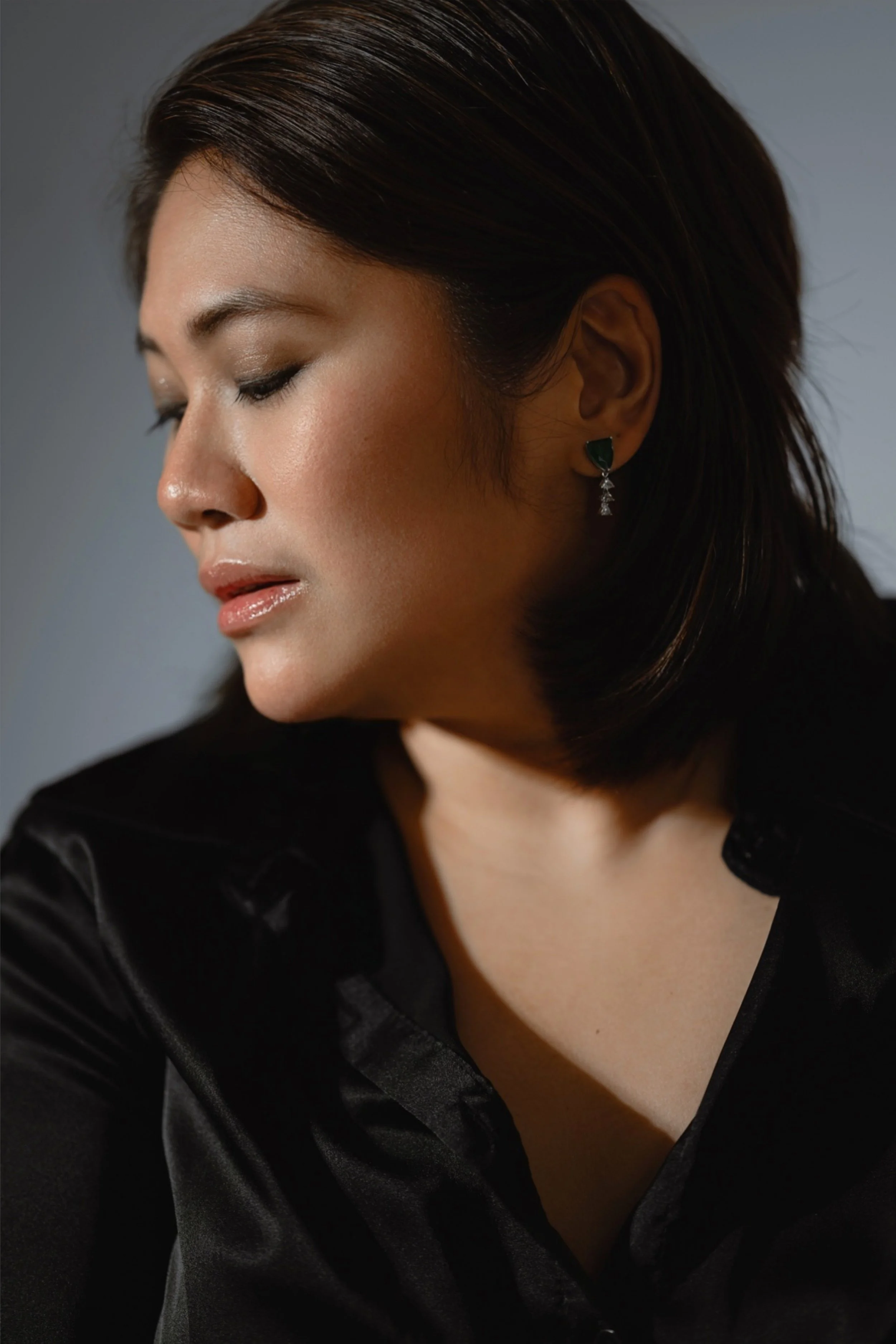
Patrizia Rodriguez
To do so, she continued her education in Hong Kong, Europe, and the United States, notably in the Gemological Institute of America and the New York Jewelry Design Institute—in the process, learning the technical alongside aesthetic fields surrounding jewelry, taught by mentors and teachers from around the world.
Much like a handmade, traditional jewelry production line, Beatriz figuratively lays the sketch and selects the raw materials, Imelda cuts the gold and sets the stones, as Patrizia molds and polishes the finished pieces.
Where her mom scaled her grandmother’s business, Patrizia is now adding dimensions of interdisciplinarity to it, drawing from her continued education via elements like painting, architecture, botanical illustration, and even history.
Patrizia is presently Managing Director of Imelda’s while also establishing her own brands, all bespoke: Krēa (her lab grown diamond jewelry brand) and her atelier Patrizia Rodriguez Fine Jewelry, noted by a design philosophy diverging from Imelda’s, and Curio, a storytelling platform focused on heirlooms reinterpreted as heritage.
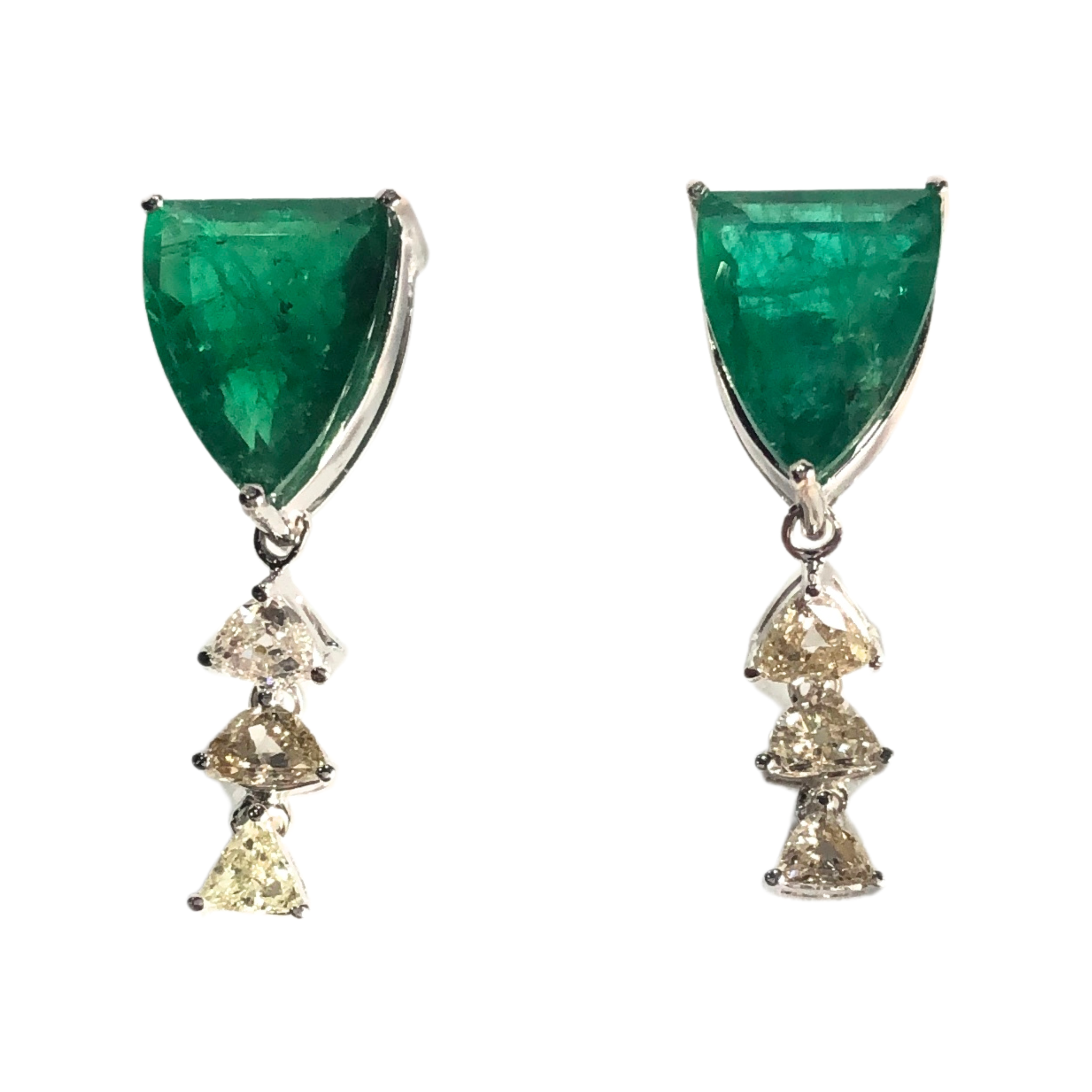
Stone Of Thought EarringS by Patrizia Rodriguez for Imelda’s Jewelry
The artisans working with Patrizia are either the childhood friends of Imelda or the descendants of said friends, ensuring a kind of community continuity—a living tradition.
Over breakfast in Quezon City, Patrizia is still high from the trip, and our conversation swings back to it: a Paris of pacing, not performance, marked by trips to the flea markets at Puces de Saint-Ouen, witnessing the Secrets of the Creation jewelry exhibition in Petit Palais, and unfurling 19th-century city maps from bouquinistes around Place Saint-Michel.
From CDG’s brutalist curves to the worn steps of St-Étienne-du-Mont, she moved less as tourist, more as flaneur, stopping for a long, deep breath before returning to the flurry of a career in the midst of transition. Just like Beatriz and Imelda did in their respective periods of creative growth, Patrizia is now recasting her artistic identity.
“That’s how it should be,” Imelda tells Art+ Magazine, Patrizia smiling next to her while mixing coffee, “every generation should evolve the craft.”
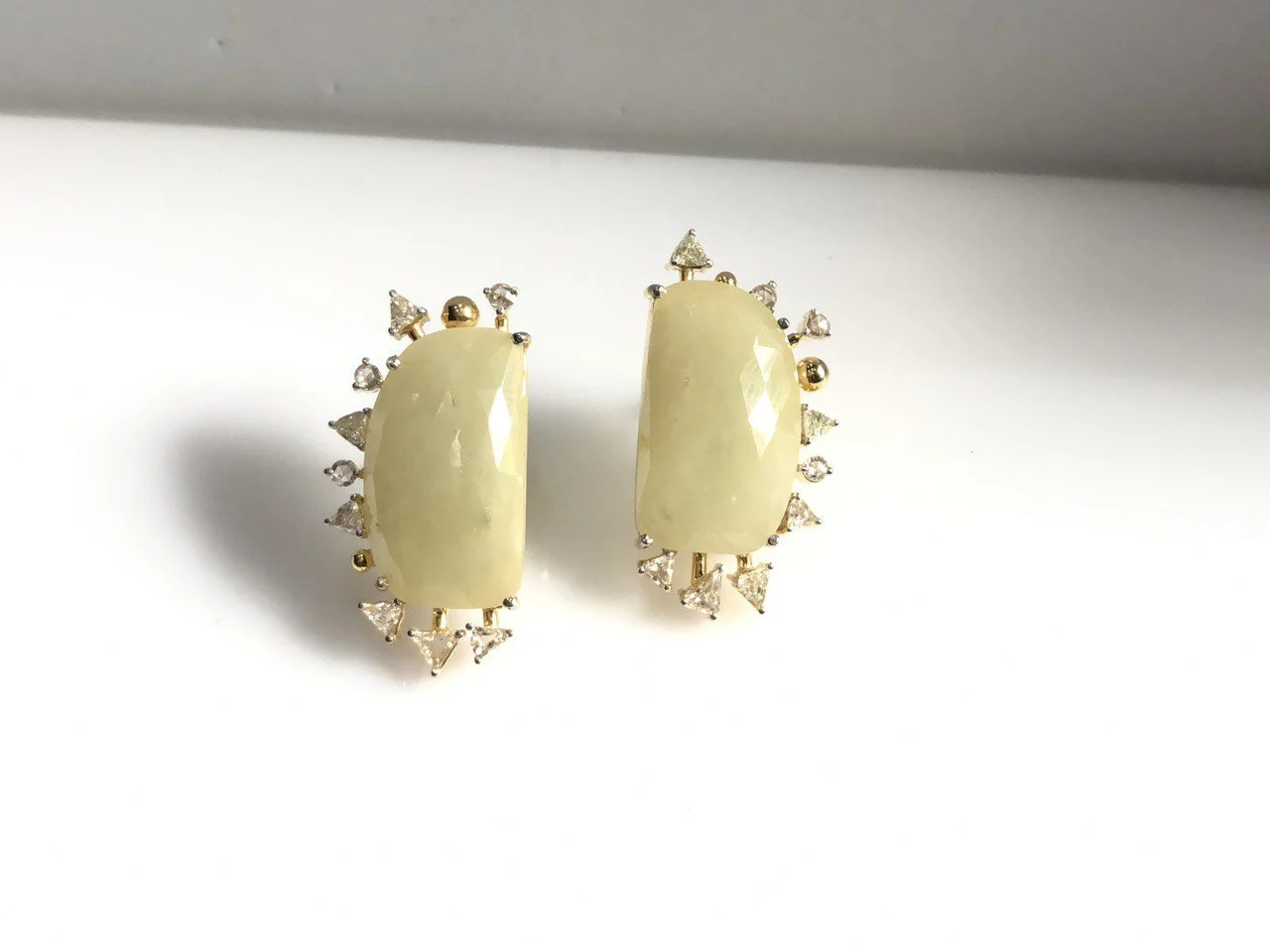
Byzantine Codex Earrings by Patrizia Rodriguez
Imelda illustrates how she systemized and expanded what her mother started, “I built models, refined settings, and created casting libraries. That’s how we scaled.” She describes her daughter’s work as a “different language,” all while embracing the innovations the younger Ramos-Rodriguez brings to their craft.
Interdisciplinarity deepens craft
As a jewelry designer, Patrizia Rodriguez draws inspiration from different fields, as well as art and architectural movements.
“I have my own process in designing, it’s not always linear. I don’t go straight and begin a sketch,” Patrizia tells Art+. “I begin with a sensation—a frisson—and a visual focus. Moreover, if the sensation is not visual, it becomes emotional,” she shares
She also paints gouache paintings first, as this is a step she learned from her Italian jeweler-mentors towards “exploring movement and color.”
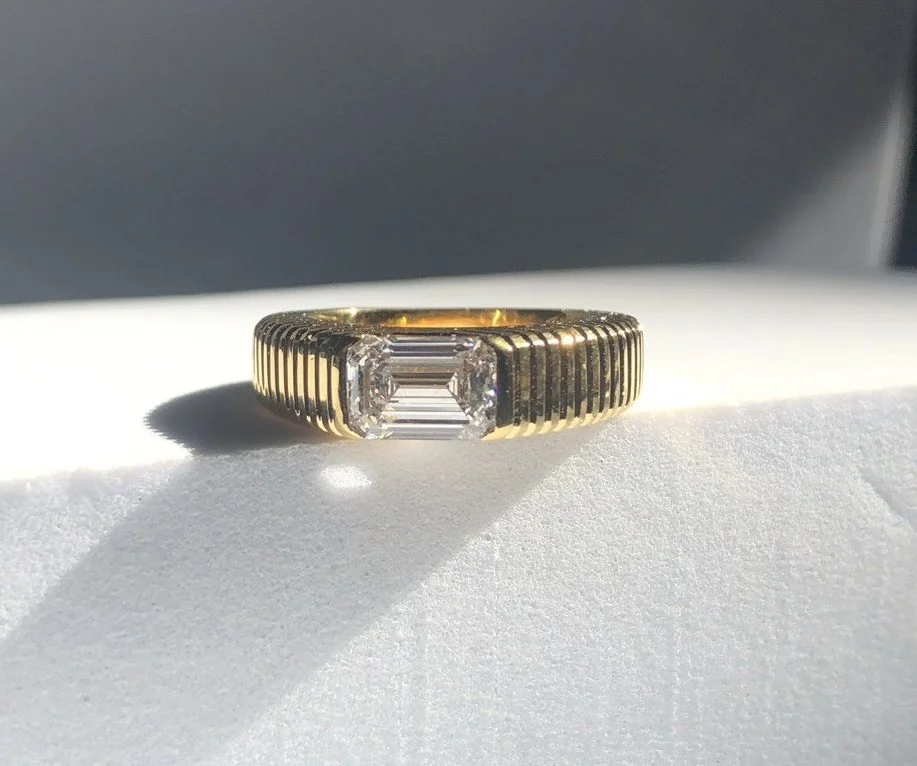
Egyptian Art Deco Ring by Patrizia Rodriguez for KREA Jewelry
Then there’s the highly technical, mechanical aspect of design: how tiny hinges and locks fit and interact, how microscopic weights push back, which she learned in further studies. Jewelry, after all, is highly tactile, and vision-pushing bespoke designs have to be balanced with sturdiness, durability, and wearer comfort.
It’s been said that real art-making often happens outside the studio, and this is also the case in Patrizia’s design approach. After exploring a commission via gouache, “I let that idea rest, and then for the piece’s structure, I do my desk research. I check industrial design pegs, if a piece is going to be conceptual or architectural. I go to botanical archives if it’s nature-based.”
Her metanoia came not at the workbench or in a classroom, but in between projects. After years of exhibitions, she found herself sifting through her family’s casting libraries and jewelry archives, creating mood boards for future collections. It was here she confronted the question: What’s next? The work was sound, the craft impeccable—but more was possible. She realized she needed to see jewelry not just as product, but as meaning: a vessel for story, for memory, for the passage of self across time.
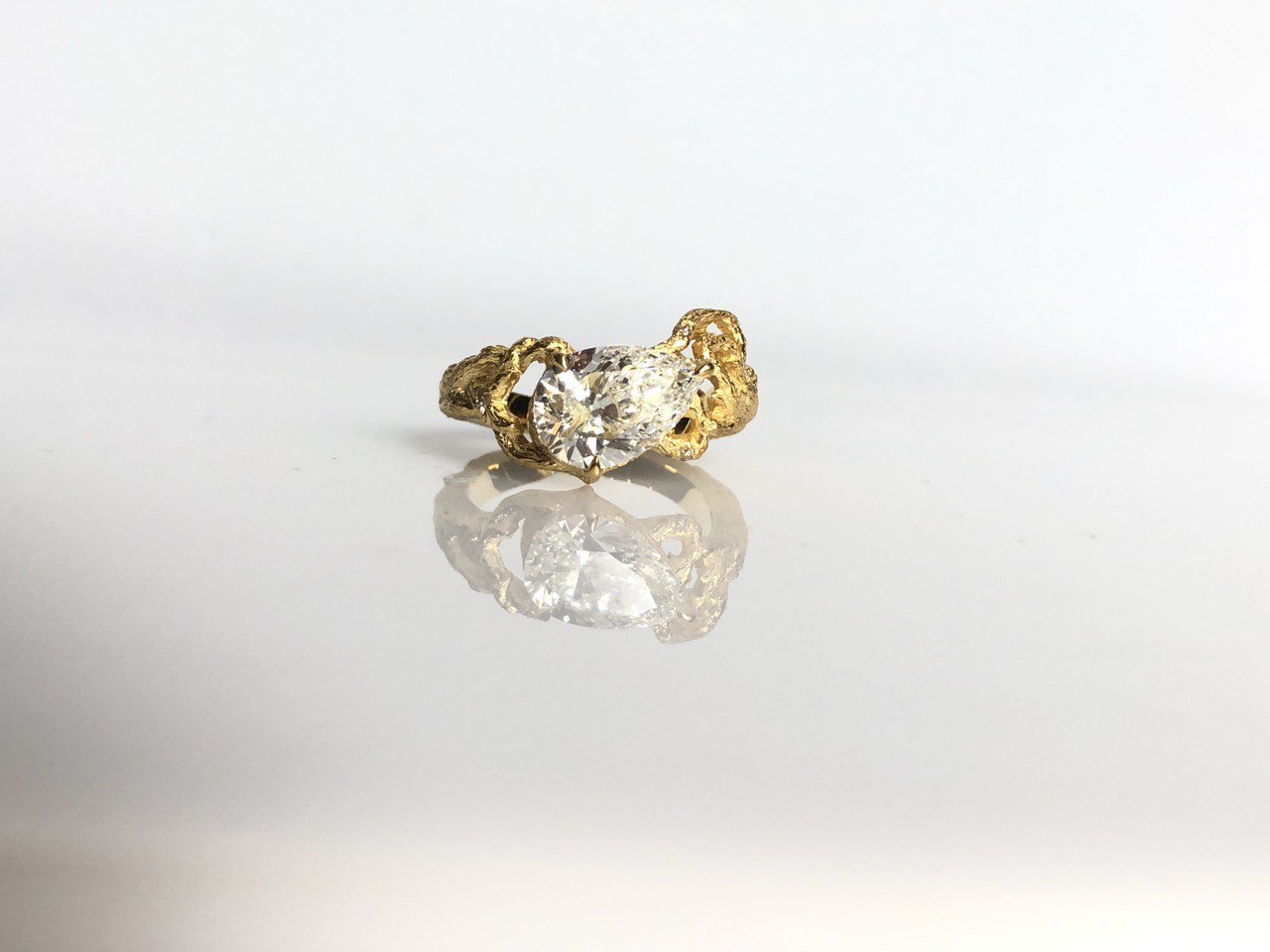
Engagement Rich by Patrizia Rodriguez for KREA Jewelry
She began relying on her other senses as “textures influence how I create. I love patina, bark, drawing from a live model of, for example, a tulip.” There’s also various epochs from history, especially eras of revival from post-colonial, turn-of-the-century movements for “the spirit of reinvention.”
As self-professed audiophile who used to sing, Patrizia harkens back to music, stating how a jewelry piece’s heart “is not just the design or style, but really the composition, the most important aspect.” That is, the coming-together of all elements artistic and technical.
She expounds that it’s like “music, the rhythm, tempo, and harmony, even the vocalist, who runs or pauses, applies vocal control.”
We’re now having dessert, homemade pancakes with freshly-cut seasonal fruit. Imelda can’t help but chime in, and with grace, Patrizia returns the floor to her mother: “Restraint, I believe, is just as powerful as risk, in design.”
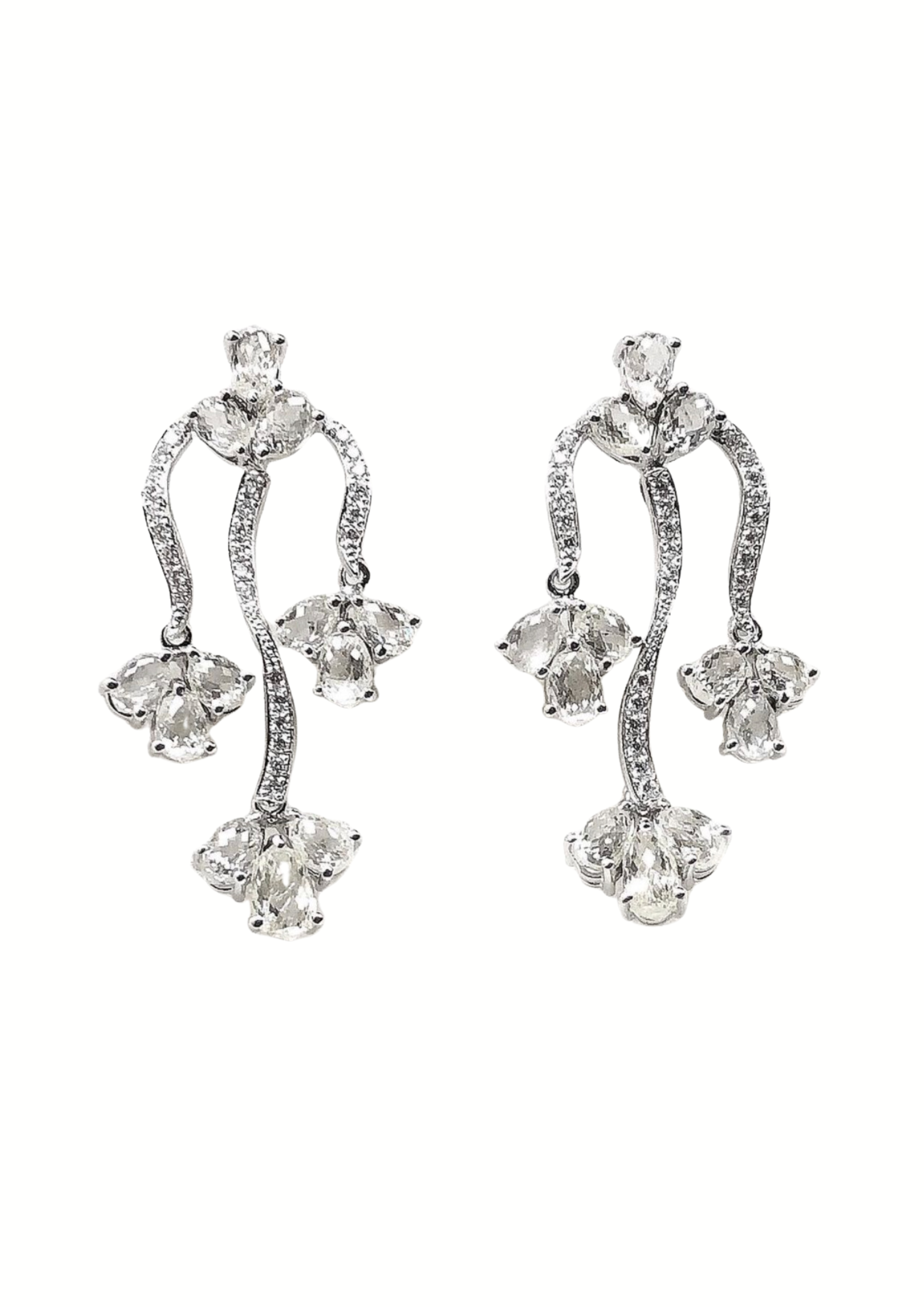
Nouveau Petal Symphony Earrings by Patrizia Rodriguez for Imelda’s Jewelry
Mother passes the mic back to daughter, and Patrizia continues: “Music mirrors jewelry-making. It’s all composition. I begin from lines then move on to balance, weight, tension. All elements have to tie together in a way that they’re elegant and inevitable. After that, I know when the piece, the concept is ready to be executed.”
Aware that different clients have different needs, the mother-daughter tandem acknowledges different ways that they meet their clients through their craft.
Imelda notes how she “learned that jewelry was not just ornament. It was how people marked transitions in life.” She listens to what clients say “and more importantly, what they don’t. My goal is always to find a solution that is elegant and enduring. I come from a line of women who looked before they produced. My mother, Beatriz Floro, was never formally trained, but she had an eye. She spent her life observing taste and refinement. I think that shaped me deeply.”
Citing Art Nouveau, Art Deco, Neoclassical, Rococo as motifs she returns to, Patrizia ultimately returns to what the occasion calls for: “What are we really making here? Is it a memory? A milestone? A symbol of the self? Once the core is clear, that’s when I begin composing. And the stones: What’s the best cut? How will it reflect color or interact with ambient light?”

Piña/ Baro Earrings and Necklace Set by Patrizia Rodriguez for Imelda’s Jewelry
“Take leaves for example,” she shares, referring to a recent commission that really stretched her team’s imagination and skill: “There’s a “template” way to depict it. But there’s a bigger sense of craftsmanship if you actually capture and communicate how a leaf is pulled by gravity, the wind, tugged in turn by the stem. Everything goes into the atmosphere the piece exudes. I’d like to think each piece carries its own world.”
Sitting across each other in this humid Metropolitan Manila morning, the jeweler can’t help but return to her Paris mornings, the fruit stalls of Clignancourt, the Paris metro bustle, the chatter of hustlers along Boulevard de Magenta: “I loved the feeling of being an outsider looking in,” she reflects, “it’s been a long time since I’ve been challenged to reframe my approach to meaning-making.”
Something tells me she’s not just talking about a famous city’s unseen face, but a practice that’s transforming her as much as she’s innovating it.
View the Ramos-Rodriguez pieces on Instagram: @patrizia.jewelry, @ imeldasjewelryph, and @kreajewelry.