
Colors of Emotion: Decoding Liza’s Mind Your F**king Business!
In Can I Come In?, Liza Soberano finally tells her story—raw, honest, and real.
Words Gerie Marie Consolacion
Art by Martina Reyes
August 29, 2025

Philippine showbiz has always loved love teams. Actors are paired up, projects are built around their chemistry, and fans buy into the idea that the romance on screen might also be real off-screen. That’s how Liza Soberano and Enrique Gil, ‘LizQuen,’ became one of the biggest love teams in the country, starting with She’s the One in 2013 and later the hit series Forevermore in 2014.

Screen grabbed from Can I Come In? Episode Mind Your F**king Business!
This month, Soberano opened up in Sarah Bahbah’s unscripted interview series Can I Come In?. In it, she revealed that she and Gil had quietly broken up three years ago. That single detail dominated headlines and social media, turning into the main takeaway of the episode.
Decoding Chapter 1: Untitled

The 56-minute interview began with a simple question from Sarah Bahbah: “How are you feeling right now?”
“Scared,” Soberano replied, submerged in water. Then came the haunting line that sets the tone for every untold story in the six-part series: “Can I Come In?”
This was a very different Liza from the polished actress audiences knew. Sitting in a bathtub, drinking and smoking, she appeared unguarded—raw and vulnerable. From there, she began sharing painful truths hidden behind her celebrity image. Contrary to the assumption that she grew up in privilege, she revealed a childhood marked by neglect, abuse, and trauma at the hands of parents, foster parents, and relatives.
The interview resonated deeply with viewers, thanks not only to her honesty but also to the visual language of the production. Dark tones and flashes of red heightened the unease, symbolizing pain and scars—both physical and emotional. As independent filmmaker Joshua de Vera explains, “The darkness reflects the hidden, painful aspects of her past, while red embodies the wounds she carries.”
In that bathtub, Soberano let go of the image and revealed the person beneath—real, fragile, and human.
Decoding Chapter 2: A Special Announcement
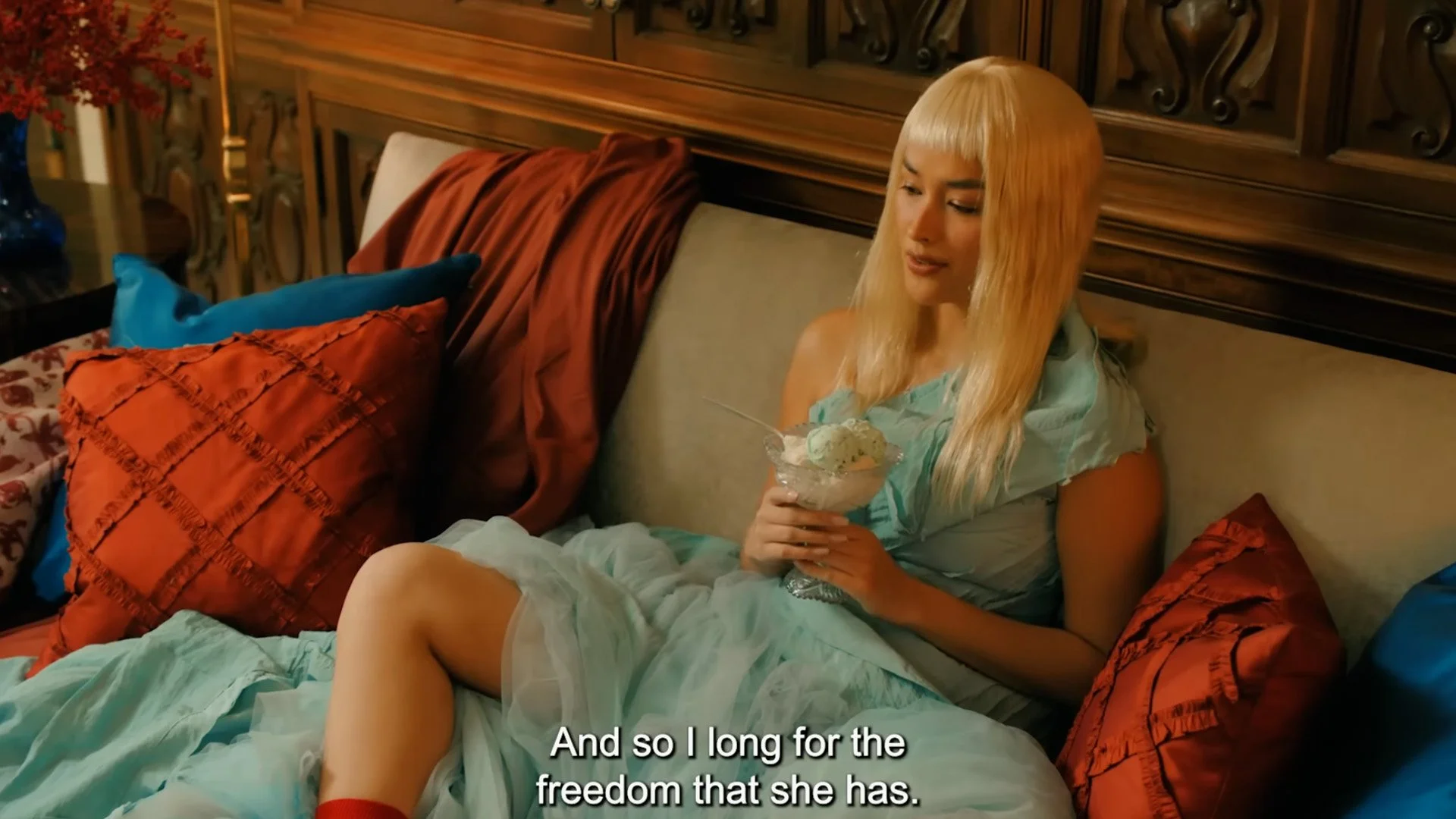
From the chapter title alone, viewers were expecting Soberano’s “special announcement.”
While Chapter 1 dwelt on her origins and the violence she endured, Chapter 2 shifted the tone. Here, the camera caught her more at ease—sitting on a couch, eating gelato. Her look changed too: from the black-haired, red-clad figure of the first chapter, to a blonde in turquoise, signaling a transition.
At one point, she referenced Angelina Jolie in Girl, Interrupted, saying Jolie had what she never did: being unapologetically unfiltered. It was a remark of the core of this chapter—Liza’s struggle with image and expectation.
She recalled how entering Philippine showbiz meant being boxed into roles fans and management demanded of her. As half of one of the most beloved love teams, LizQuen, she was expected to always live the narrative onscreen: in love, wholesome, and the “good girl.” In her words, she found herself living inside someone else’s story.
The shift in visuals matched the theme. “The brighter and more natural lighting creates a sense of clarity,” explained de Vera. “It suggests that Liza is no longer in the dark about her past. The use of lighter, pastel colors represents truth and authenticity—her true self finally coming through.”
This was also where she revealed that she and Enrique Gil had been in a real relationship, but quietly broke up years ago. The Philippine media seized on this detail, framing it as the “special announcement.”
But the breakup was never the point.

The real revelations were louder: first, that she was done playing the “good girl” role and was reclaiming her own voice; and second, her blunt message, screamed thrice for emphasis—“Mind your own f**king business!”
Because a woman’s love life should never overshadow her truth.
Decoding Chapter 3: Mind Your F**king Business!

From the gloom of Chapter 1 to the brightness of Chapter 2, the final chapter opens up into a wider, more relaxed setting. The camera focuses solely on Liza, a deliberate choice that mirrors how she endured her trauma alone. With no other figures in the frame, every prop and color amplifies her story. As de Vera puts it, “We are sort of trapped to only listen to her, not being distracted by another talking head. All the props and colors are intentional, and they amplify what she’s carrying.”
This time, the setting signals freedom. She is no longer confined to a bathtub or pinned to a couch. Instead, she walks toward a long table laid out with a cake, a knife, plates, and a candle. What looks at first like a celebration turns into something else. Each slice of cake is dedicated to the people who hurt and burdened her. The last piece is reserved for herself—not out of self-blame, but as a symbol of release, growth, and healing.
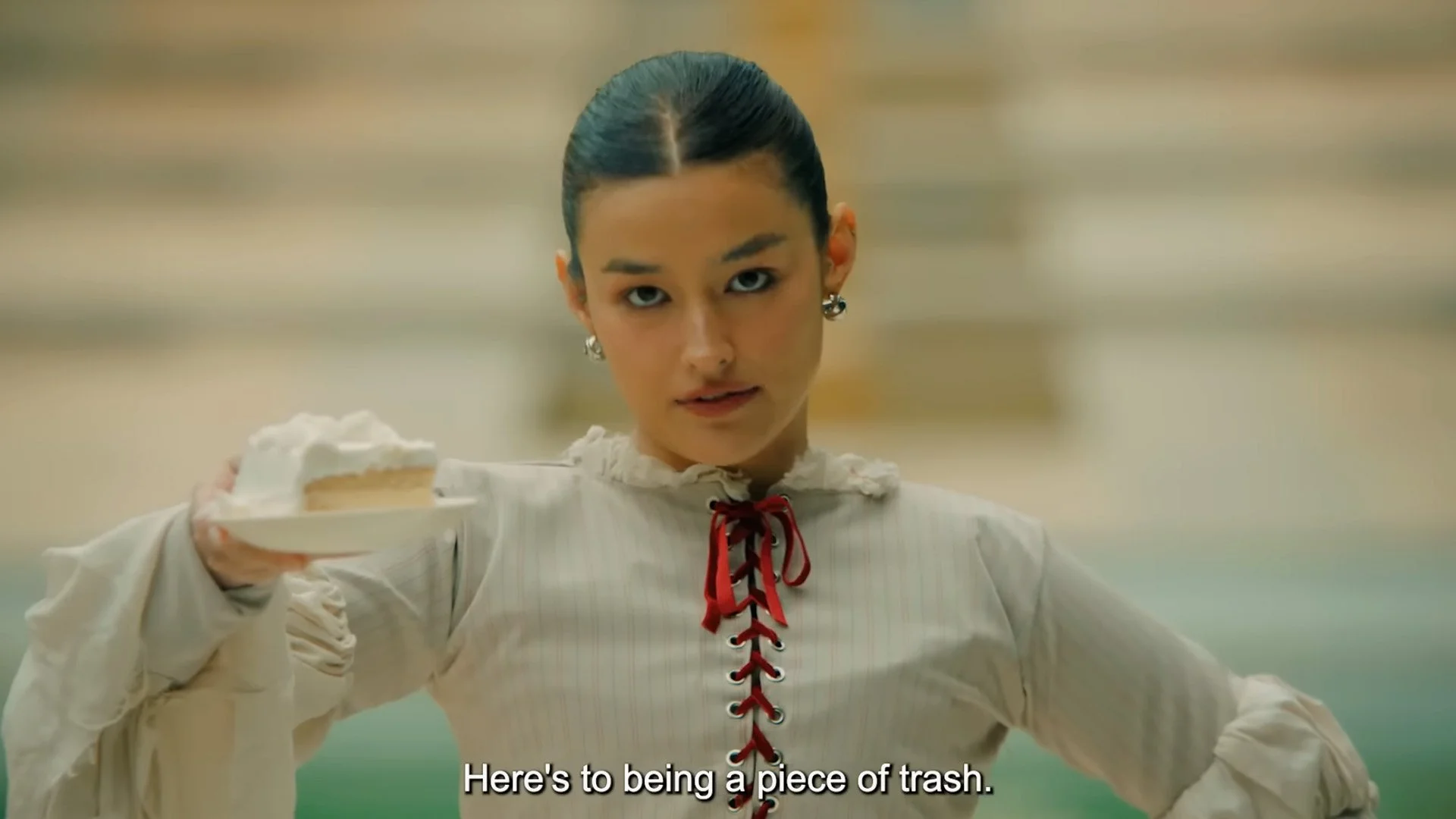
The staging reinforces this transformation. “The wide angle suggests her liberation,” de Vera notes. “The cake is sweet, but the irony is that what she’s celebrating is reclaiming her story. And the knife becomes a striking image of cutting ties with the past and the parts of herself she wants to move on from.”
And yet, when this chapter aired, much of the Philippine media chose to ignore these symbols of freedom and the deeper truths she revealed. Instead, they seized on one detail: her breakup with Gil. Once again, the narrative was reduced to what the public loves most—romance and heartbreak—while her testimony on trauma, survival, and reclaiming herself was pushed to the sidelines.
But Soberano herself was clear about the real message. She left viewers with words that cut sharper than any headline: “Don’t let people hurt you. Do not tolerate bullshit. Don’t stay because you’re afraid of rocking the boat.”
Decoded: Liza’s Story
But the bigger story was never about the breakup. In the same interview, Soberano opened up about her struggles with mental health and the difficult, even traumatic, experiences she faced in the industry. These were honest confessions that could have sparked important conversations about how the system treats its young stars. Yet the media chose the easy angle—the end of a love team—over the harder but more meaningful truths.
This says a lot about what we value in showbiz news. We focus on romance and heartbreak because it’s easy to sell, but in the process, we silence stories that matter more: stories about healing, resilience, and how the industry could change for the better.

Social media only magnified this imbalance. Clips of her breakup revelations went viral, while the parts where she spoke about trauma and recovery were largely ignored or reduced to background noise. Algorithms reward drama over depth, turning personal pain into quick content, while drowning out the conversations that could actually help audiences reflect.
And yet, these are the very conversations we need. In a country where discussions on mental health are still stigmatized, stories like Soberano’s should be given space—not overshadowed by gossip.
By centering her vulnerability and honesty, we could spotlight the realities many young people quietly live through: anxiety, pressure, and the weight of expectations. More than a headline about who she loved, her story is a call to listen more closely to what our artists are truly saying.
Because if the media keeps choosing love lives over lived pain, then we’re all complicit in silencing women.