Charting the Future of Philippine Visual Arts
Bringing together a diverse group of industry experts, the Cultural Center of the Philippines' recent Philippine Arts Roundtable explored essential strategies to actively shape the future of the local visual arts ecosystem.
Words Rebelyn Beyong
Photos courtesy of Cultural Center of the Philippines
May 09, 2026
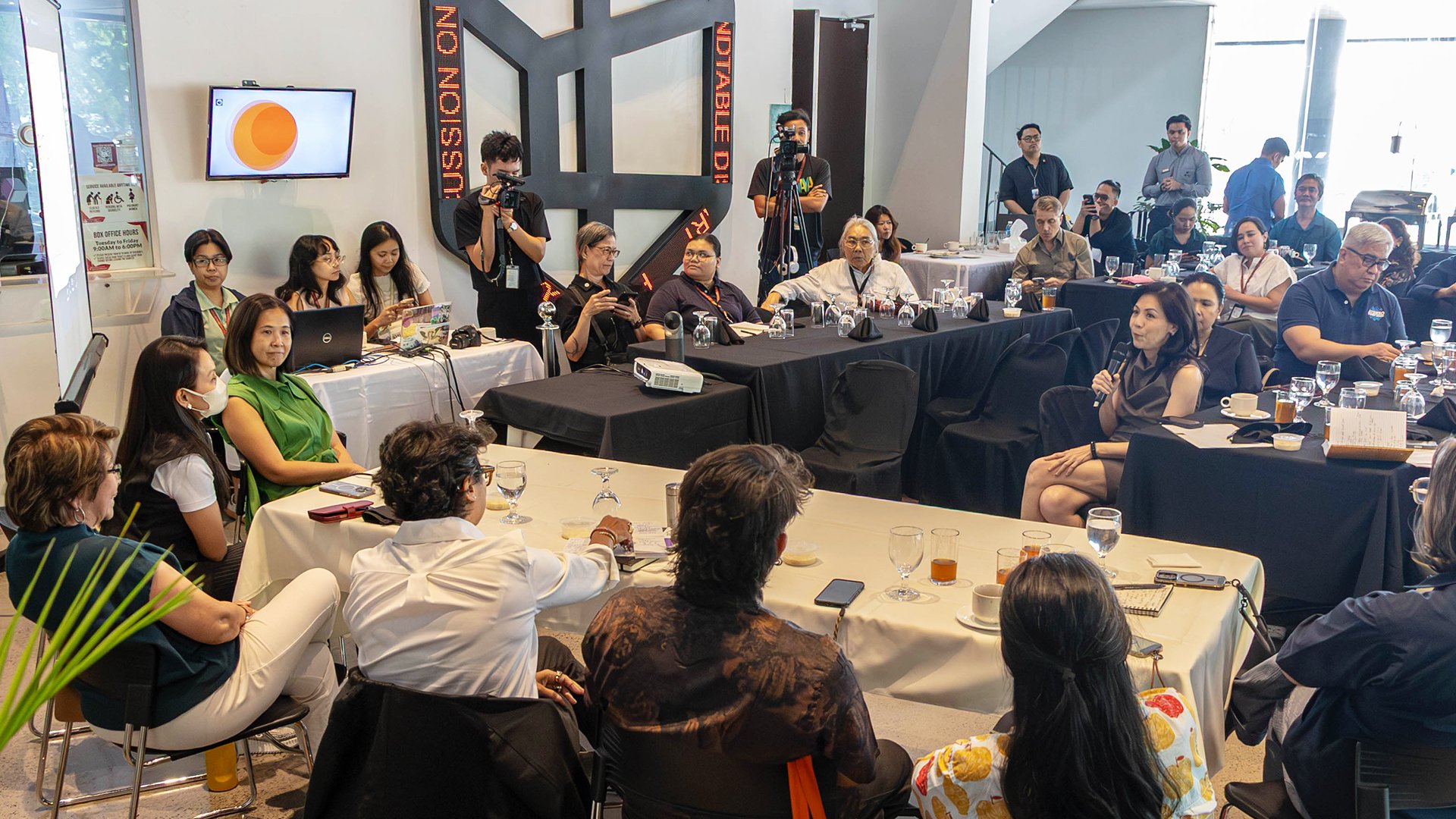
What truly constitutes the most essential building block for the future of the Cultural Center of the Philippines (CCP) in the realm of visual arts?
This pivotal question recently set the tone for the Philippine Arts Roundtable, organized by the country’s premier cultural institution to critically examine the current landscape and explore bold future directions for the Philippine contemporary art.
The dynamic discussion brought together a formidable group of experts: contemporary visual artists and cultural practitioners Alfredo and Isabel Aquilizan; Silverlens Galleries founder Isa Lorenzo; Museum of Modern Art (MoMA) in New York’s C-MAP Fellow for Southeast and East Asia Carlos Quijon Jr.; National Gallery Singapore (NGS) curator Clarissa Chikiamco; Art Fair Philippines co-founder Dindin Araneta; Metropolitan Museum of Manila President Tina Colayco; art collector Sheila Ramos; and arts management educator Ana Maria Ortega.
The imperative of arts education
For the Aquilizans, a robust educational foundation is absolutely crucial. The duo emphasized the pressing need to develop and expand arts curricula, particularly at the high school level.
“We have the Philippine High School for the Arts as the educational arm of the CCP, and I believe this model should be replicated across the country, perhaps through the development of accessible educational modules and similar programs,” shared Alfredo.
Drawing from their experience conducting workshops in remote communities in Australia, Alfredo questioned how the CCP might similarly extend its reach and share valuable resources with underserved communities locally. They also stressed the need for sustainable support systems, including government-funded travel grants and vital mentorship programs for emerging artists.
Safeguarding our visual legacy
Chikiamco underscored the vital role of existing CCP initiatives, such as the Thirteen Artists Award and the 21AM exhibition space, in recognizing emerging practices and preserving the CCP’s visual arts collection. However, she stressed the urgent need for enhanced accessibility and active conservation, citing the works of Roberto Chabet as prime examples of legacy that must remain visible to the public.
“I think sometimes that this legacy is in danger of being lost because this history is not really visible. I’m aware of it, and many curators who have conducted research have seen the archives of those early exhibitions at the CCP. But it can be difficult to access,” she warned.
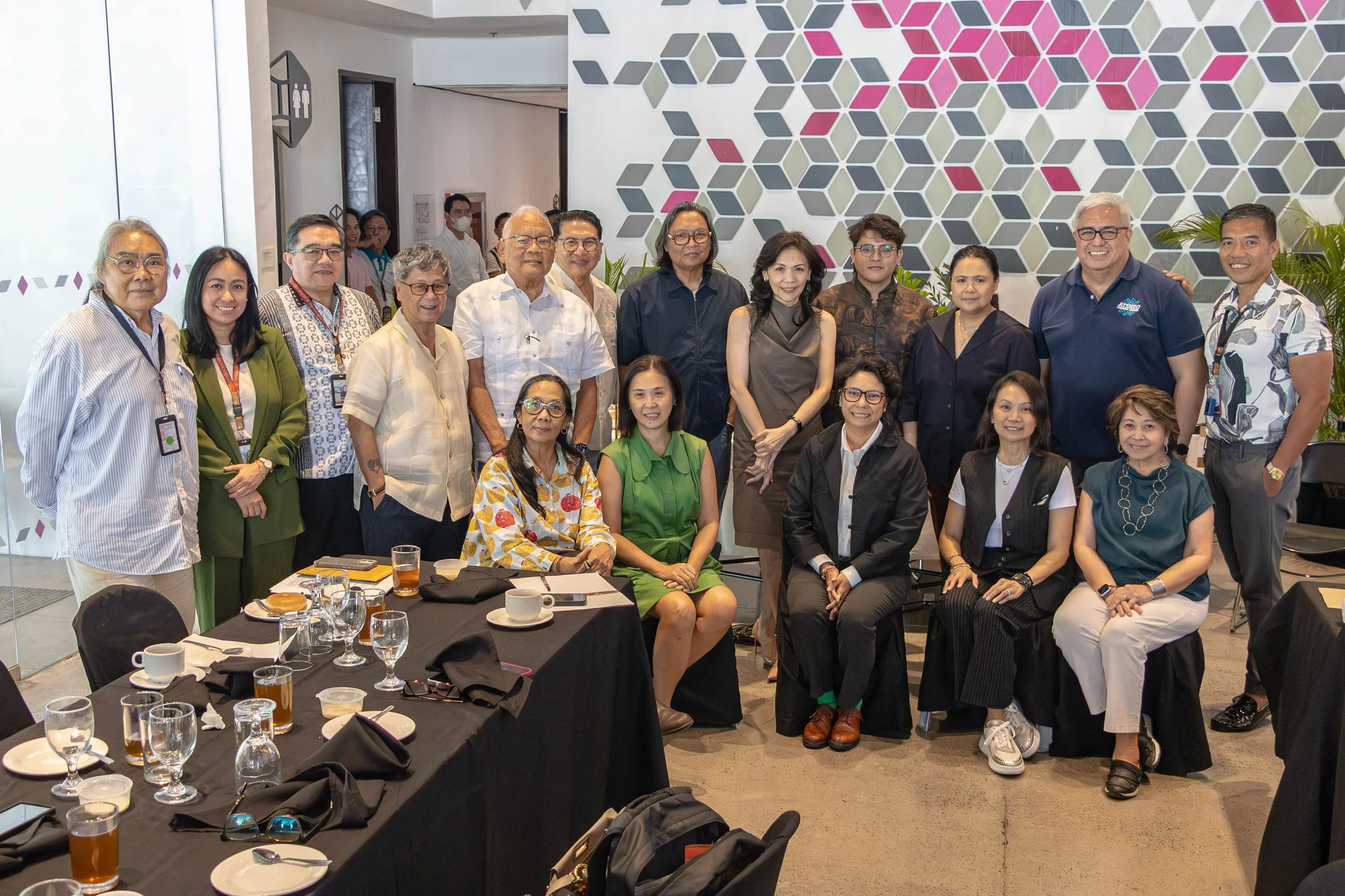
(Standing L-R) Alexander Cortez, CCP Technical Advisor for Artistic Matters; Atty. Krischelle Matas, Department Manager III, CCP Human Resource Management; Dennis Marasigan, CCP Artistic Director; Felix Monino Duque, CCP Board of Trustee; Jaime Laya, CCP Chairman; Junie Del Mundo, CCP Board of Trustee; Alfredo Aquilizan; Kaye Tinga, CCP President; Carlos Quijon Jr; Ma. Carissa Coscolluela, CCP Board of Trustee; Jonathan M. Velasco CCP Board of Trustee; Jose Victor Gaite, CCP Vice President for Administration
(Seated L-R) Isabel Aquilizan; Dindin Araneta; Isa Lorenzo; Sheila Ramos; Tina Colayco
“It is very important for CCP... to collect contemporary arts. A lot of this is in danger of disappearing if it’s not collected, because you need to work with the artist in developing guidelines... for its display”.
For Lorenzo, it challenges the institution to become more outward-looking, viewing the CCP as the potential gold standard for exhibition-making across the region. “Your collection is amazing. But how do you get people to see it? And how do you broadcast this information to the world? The CCP cannot afford to remain insular,” she asserted.
Lorenzo advocated for a stronger social media presence across platforms like TikTok and Instagram, as well as touring exhibitions, increased annual publications, and robust support for regional artists in global exhibitions.
Supporting local curatorial talent
Quijon Jr. highlighted a critical gap: the lack of institutional support for local curators. Many talented individuals begin their careers in the Philippines but eventually seek opportunities abroad.
“That is what is at stake for me in this conversation. We have the talent, but how do we support that talent so they can stay here? So that we are the ones who makikinabang from the effort of these curators," he explained.
He emphasized that a well-functioning local ecology is necessary before effectively participating in global art conversations.
The roundtable discussion was attended by the CCP Board of Trustees led by Chairman Jaime C. Laya, co-chairs Ma. Carissa O. Coscolluela and Maria Margarita Moran-Floirendo, with Trustees Junie S. Del Mundo, Felix Monino S. Duque, Atty. Gizela Gonzalez, and Jonathan M. Velasco.
Also present in the event are President Kaye C. Tinga, Vice President for Administration and Finance Jose Victor M. Gaite and Vice President and Artistic Director Dennis Marasigan, who served as moderator, sparked crucial dialogues that will undoubtedly shape the future of the local art ecosystem.
Through education, preservation, global promotion, and curatorial support, the building blocks are firmly in place. The true masterpiece, however, lies in how these foundational ideas will be boldly executed in the years ahead.