A Decade of Remaining in the Question
Jeff "Wipo" Baligad had a lengthy career full of creativity, a true testament to his artistic work—and Lampas-Tao culminated his decade-long career
Words Ric Gindap
Photos courtesy of Wipo and Blanc Gallery
August 14, 2026
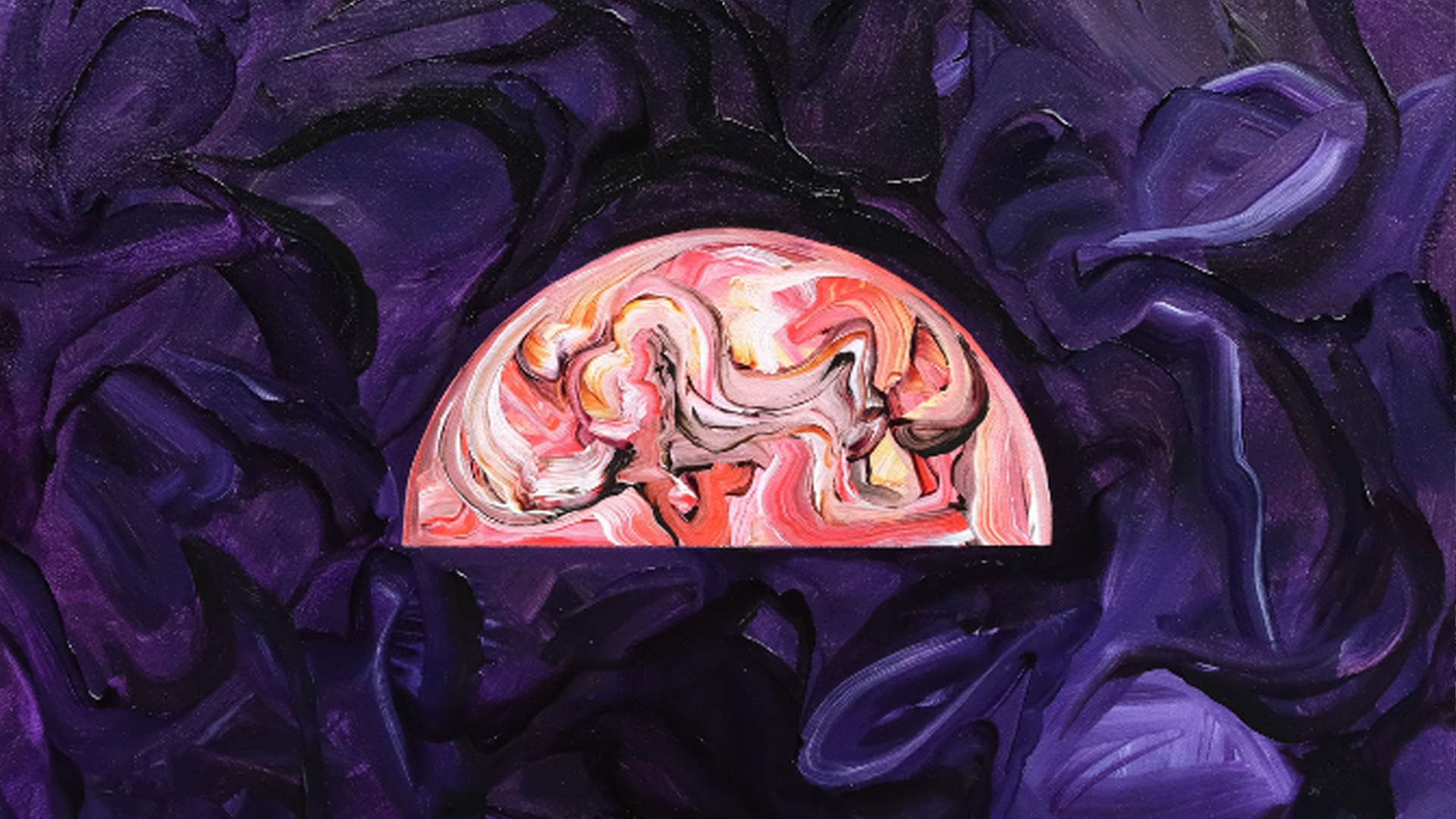
Inside Eye at Blanc Gallery | Photo from Wipo.
Before Wipo made a mark, a leaking roof had already begun.
Throughout art history, revelations were staged through burning bushes, annunciations, and majestic skies. Wipo, on the other hand, receives a particular creative epiphany through a failed gutter.
Begin, for instance, with Tanda ng Ulan (Traces of Rain). Sixteen sheets bear rainwater stains as they entered his home through a damaged roof during the pandemic. Beneath the grid of sixteen sheets lie sections of rusted metal, the unruly apparatus that facilitated the production of the rust-soaked images.
As water spread, the rust bled when gravity pulled, and time imprinted varying stain deposits. The result is an installation establishing the conditions of Wipo on the art of paying attention.
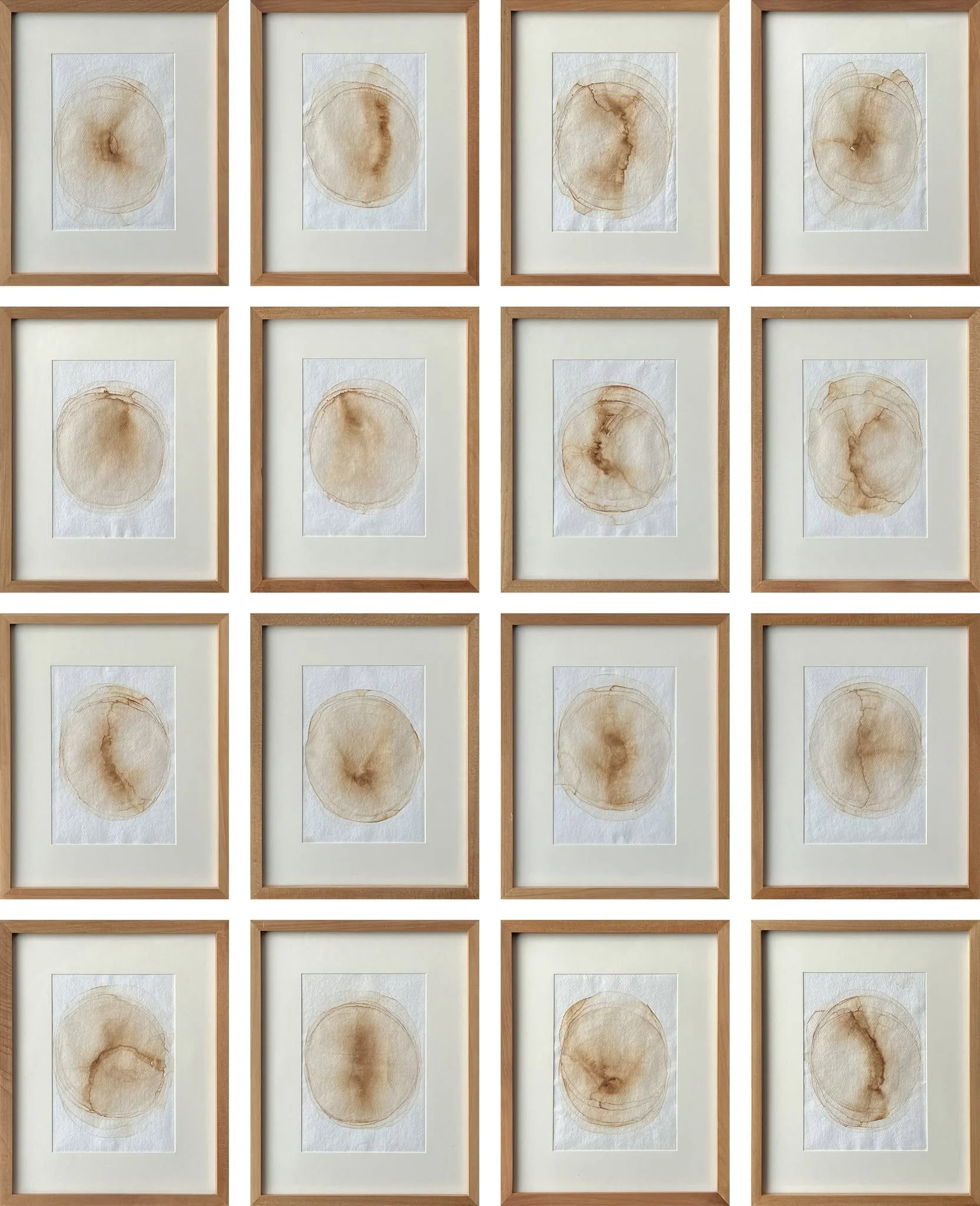
Tanda ng Ulan | Photo from Blanc Gallery
This curious act preambles the larger world of Lampas-Tao (Beyond Human), Wipo’s recent landmark Blanc Gallery exhibition, a culmination of a decade in art.
In conversation with filmmaker and art academician Richard Legaspi, Wipo described Lampas-Tao as physical and metaphysical: passing beyond human scale and exceeding what one person can measure or control.
The exhibition notes carry the phrase toward a broad cosmic spectrum of space and belief. The works give that immensity a local address: a leaking roof in Valenzuela and a tire factory, a Catholic father’s gift of a book on Zen, and a body remembering shock.
Tanda ng Ulan may be one of the exhibition’s clearest evocations of Wipo’s process, and it is the work that we’ll keep returning to as it allows weather and chance to meet without forcing a fixed conclusion.
Universe I Am at Blanc Gallery | Photo from Wipo.
Induced by a failing roof, it ends somewhere much larger. It became an inquisitive process of exploring the limits of control.
While Cézanne found a lifetime of looking in a bowl of ordinary apples, Wipo found attraction in water coming through the roof. What connects them is the undivided attention and the patience to look at ordinary things, recovering a perception of amazement at what overfamiliarity has rendered almost invisible.
The method recalls John Cage’s use of chance. Similarly, Wipo giving gravitational freedom to water and rust echoes Yves Klein’s Cosmogonies, made by exposing prepared surfaces to rain and wind.
The most resonant kinship is found in David Medalla’s auto-creative works, which allows material processes to generate forms that keep on changing.
In Tanda ng Ulan, rain and rust become collaborators, the leaking roof and malfunctioning gutter turned into an unlikely studio, with the household damage leaving behind images worth examining.
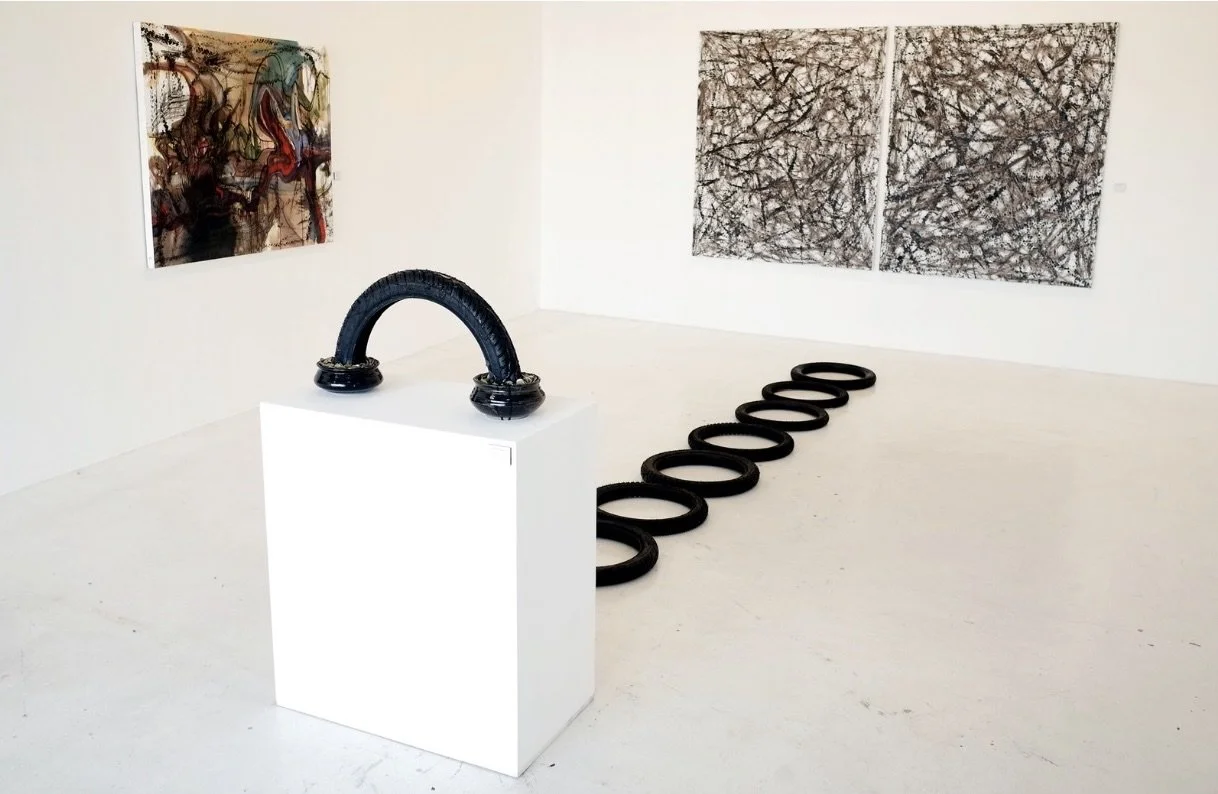
Bahagharing Itim (Black Rainbow) at Blanc Gallery | Photo from Wipo.
The work gathers several directions Wipo has negotiated since 2016. His early portraits rendered the mind through sinewy or expressively contorted lines. Bahagharing Itim (Black Rainbow) brought him into the tire factory where his father worked.
This opened his artistic biography toward labor, materials, and repetitions along the lives of the workers. Later works attended to bodily data, home, and serial time, moreover, collision and car-crash memory had also entered his increasingly physical paintings. Lampas-Tao is where these investigations begin speaking to one another.
Their most charged encounter occurs in Sa Gitna ng Pananampalataya (In the Midst of Faith). A small Buddha sits before paintings arranged as a cross.
The pairing announces its subject with disarming directness, while its complexity resides in the space between the objects and in the materials from which they are made.
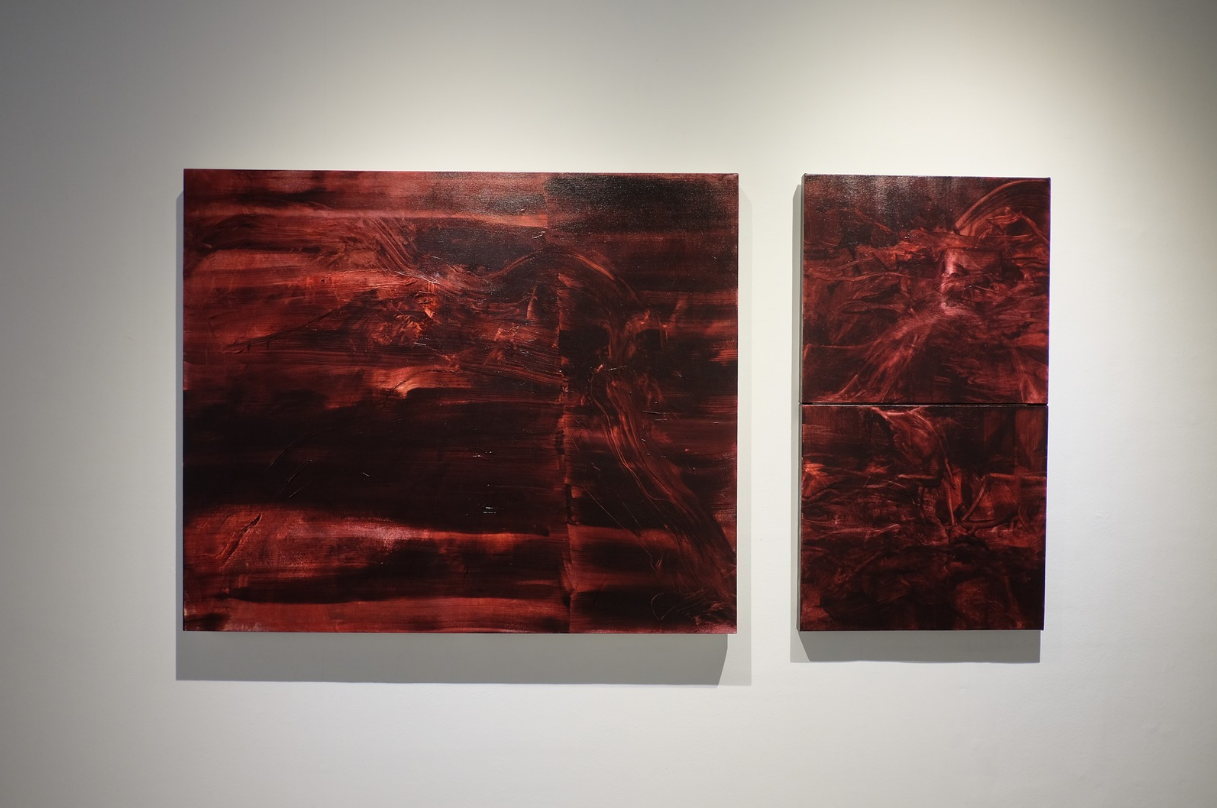
Flames Under Eyelids 1, 2, and 3 at Underground Gallery | Photo from Wipo.
The viewer stands inside Wipo’s Catholic upbringing, and the alternative contemplative path opened when his Catholic father gave him a book on Zen. Amid inherited symbols, the private work of deciding what belief can mean started to form as a newer language to further the question.
His father’s factory binds carbon black and finds objects with Wipo’s more inquisitive spiritual openness.
Antoni Tàpies comes briefly to mind, especially in the meeting of industrial substances, the devotional cross, and contemplative silence that precedes the act of searching. The installation resembles a polar collision between St. Augustine’s restless heart and Sartre’s self-making consciousness, with Zen keeping the table open and declining to settle the argument.
Wipo occupies their interval with his doubt continuing the search. His belief is being subjected to even more questions.
The sun is another subject that has accompanied that search for years. Visible from his works Sungaze and Sulok ng Araw (Corner of the Sun) to Flames Under Eyelids and On the Threshold of Light.
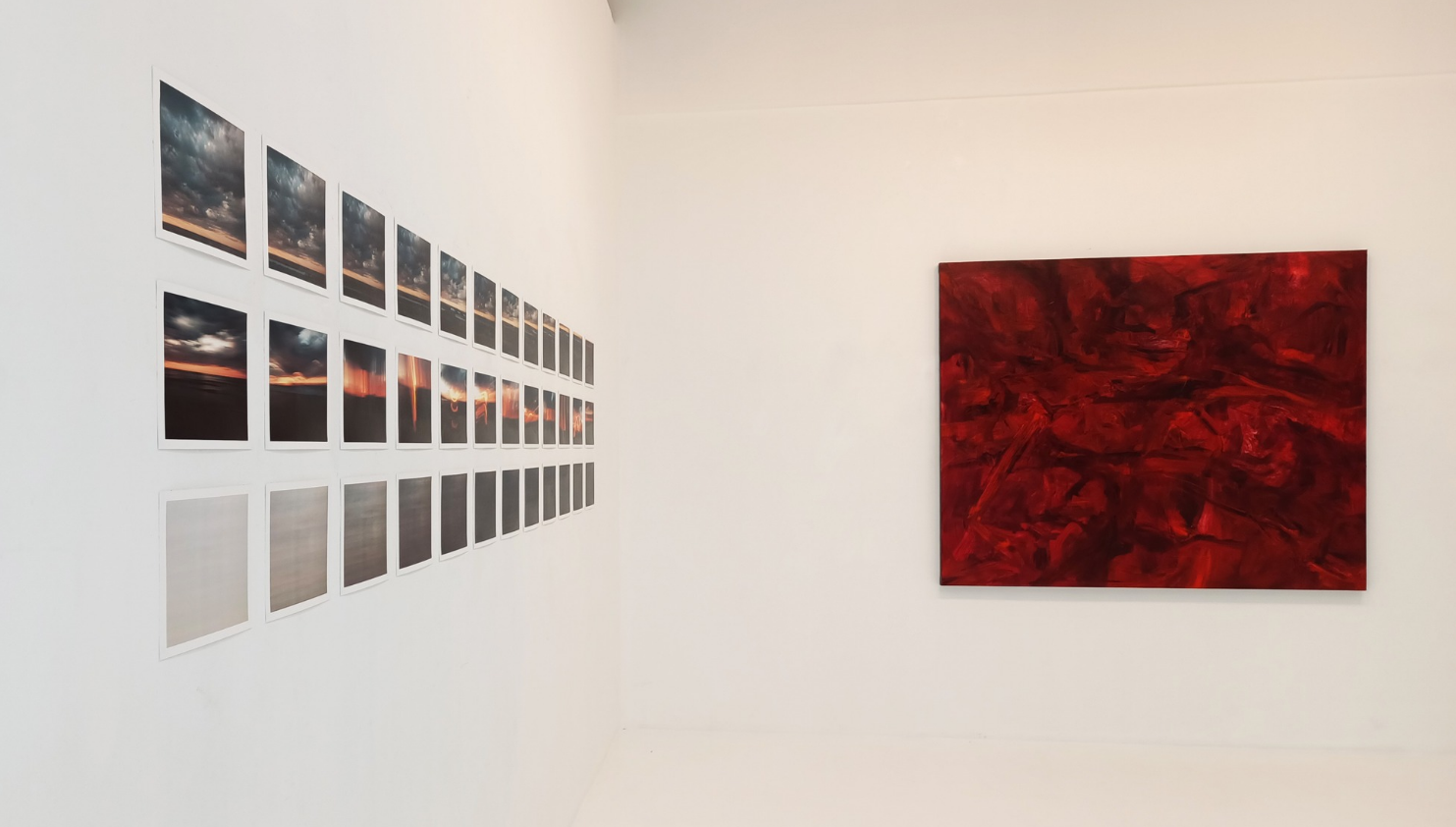
Sulok ng Araw (Corner of the Sun) at Blanc Gallery | Photo from Wipo.
In Hindi Lumulubog ang Araw (The Sun Does Not Set), featuring eleven small works form a graphic passage of disappearance and continuation. Crude oil pulls the celestial body toward fossil matter and industrial history. Like On Kawara’s serial records of daily existence, repetition becomes an affirmation of duration.
In Camus's work (inspired by Greek myth), gravity had a memorable opponent: Sisyphus. He made the argument spectacular because the mortal king knows exactly where the stone is headed and persists in the redundancy of it.
Wipo’s works echo the work that keeps going across eleven panels where the sun slips toward the edge of sight while the sequence continues.
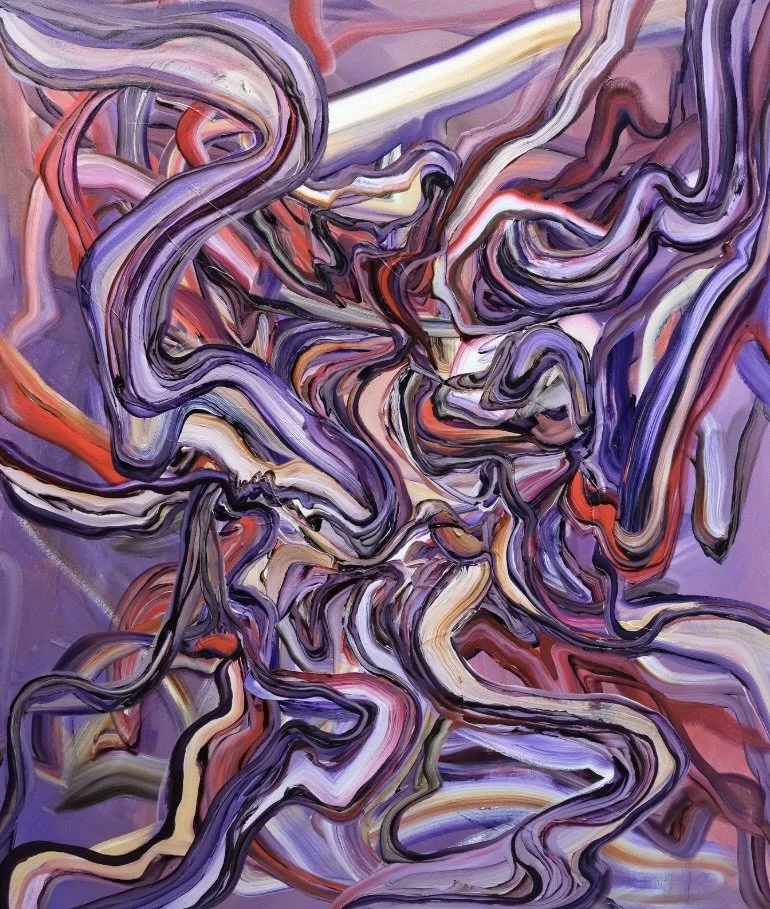
Then comes Taimpihan (A Place of Contemplative Stillness), the exhibition’s largest work. Large gestural paintings tend to arrive with the confidence of weather systems and roughly the same reluctance to explain themselves. Wipo gives this one a precise personal history.
Its marks have been gathering for a decade through nervous portraits, tire impressions, running rhythms, reopened canvases, physical collisions, and increasingly liberated gestures.
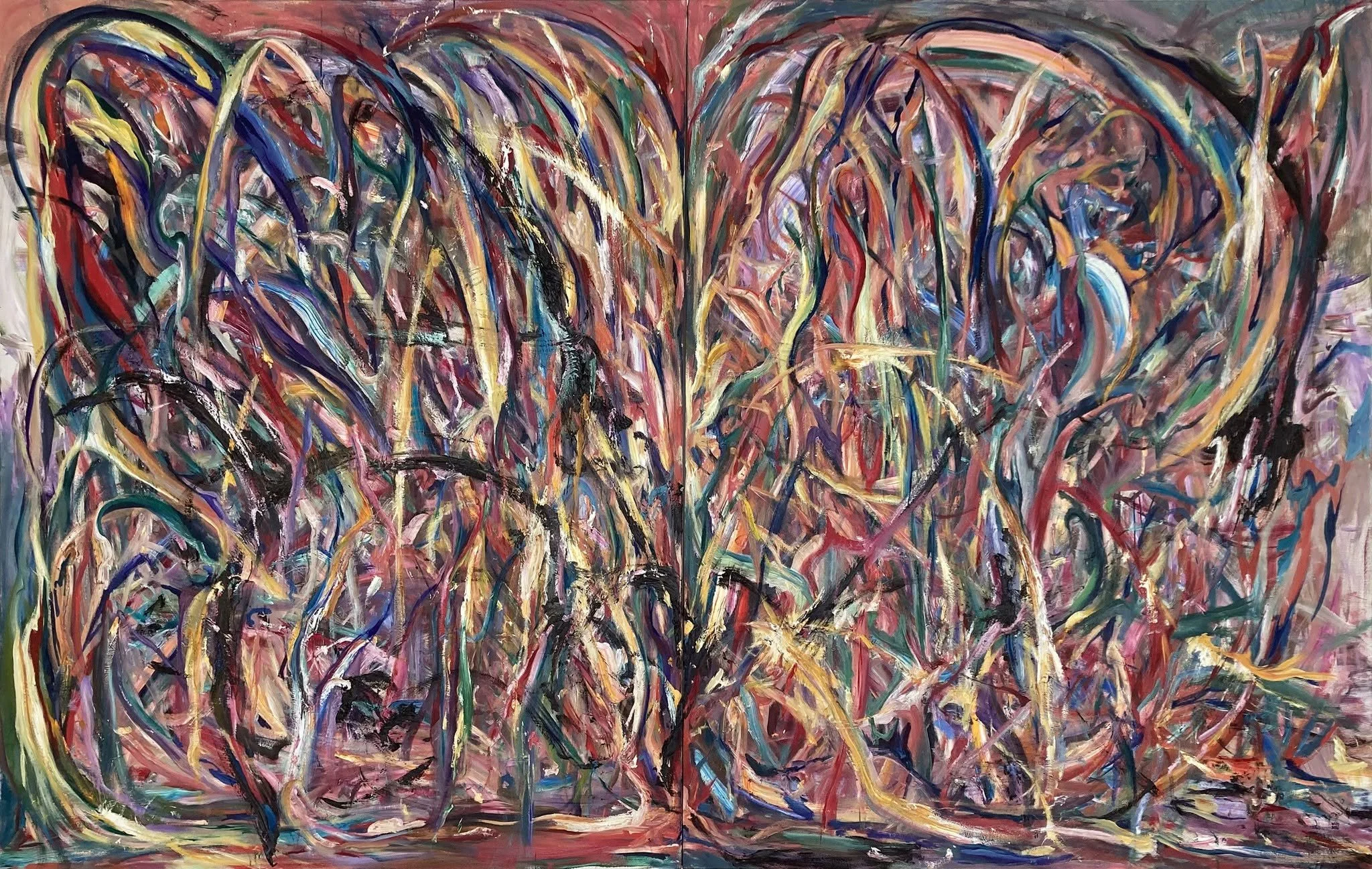
Taimpihan (A Place of Contemplative Stillness) | Photo from Blanc Gallery
Wipo calls Taimpihan a “Zen-like balance blending with a flash of clarity”. The irony is somehow exact because his final sense of equilibrium is found in saturated composures that all seem to arrive through sustained movement.
Expressive, forcefully overlapping strokes record the labor required to reach an internal stillness. The painting’s graphic abundance therefore carries a controlled discipline, even when every line appears determined to test the available square footage.
Across the works in theexhibition, authorship becomes a form of negotiation, cajoling and bargaining with what can easily exceed an individual’s control. Rain stains the page while rust reveals its chemistry. Even inherited faith resists a conclusive explanation.
The exhibition is most persuasive when materials are allowed to retain their stubborn particularities.
Lampas-Tao becomes a form of humility before forces that exceed authorship. The world keeps exceeding the artist’s initial intentions. Fortunately, Wipo has learned when to let it finish the sentence. After ten years, his most enduring achievement is a practice capable of remaining inside the question.