A Dash, A Colon: The In-Between
Discover how the sculptural anatomy of painting reveals unseen structures in a profound meditation on linguistic rhythm and physical space.
Words Gerie Marie Consolacion
Photos courtesy of Galerie Stephanie and Mian Centeno
January 27, 2026
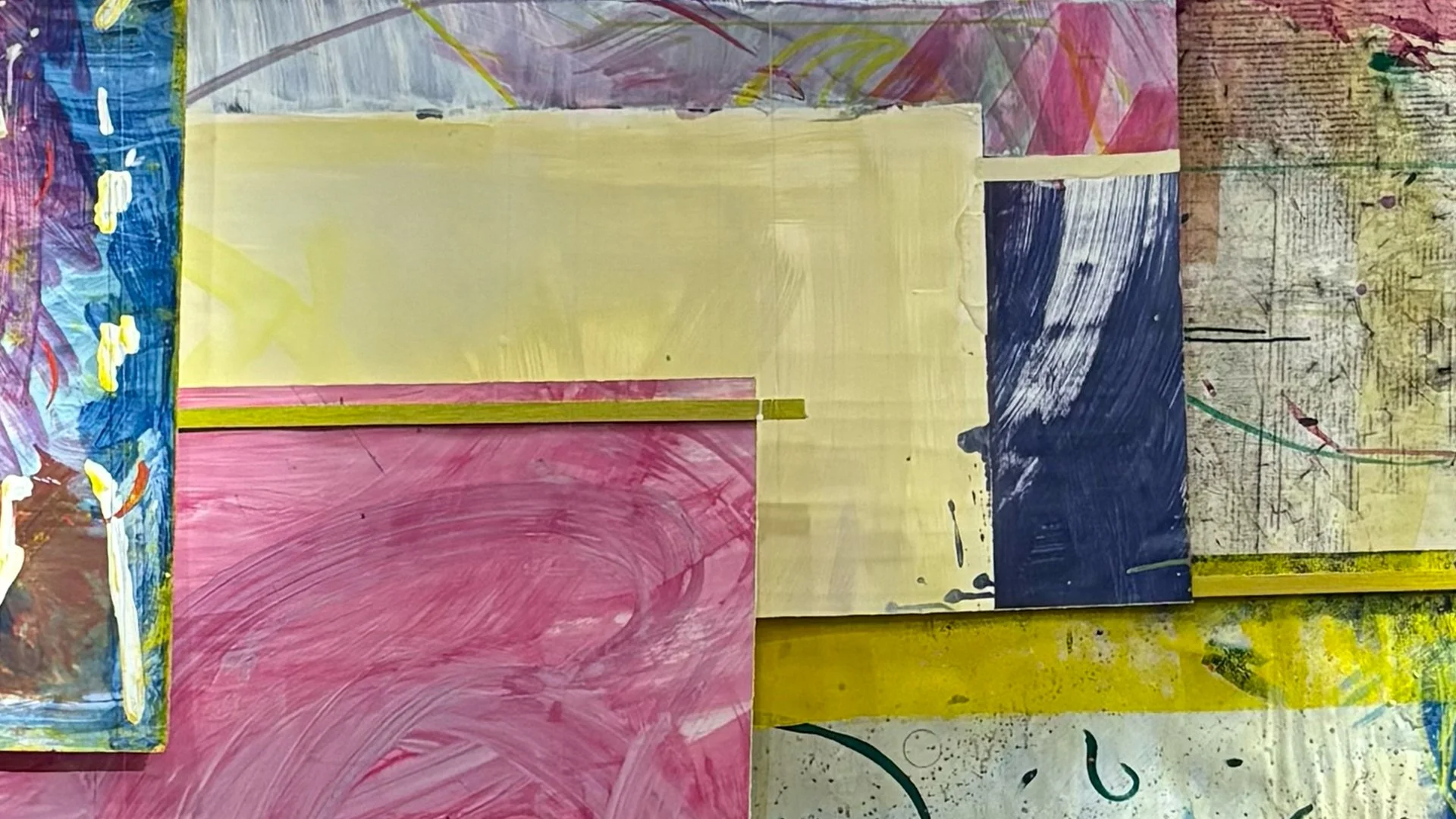
From January 26 to March 28, 2026, the historic halls of Casa Azul at the Instituto Cervantes in Intramuros will host a visual conversation titled A dash, a colon. Curated by Arianna Mercado, the exhibition brings together works by Filipina artist Brisa Amir and Spanish artist Cristina Gamón. The show reflects on what Mercado calls the "painterly-sculptural process," drawing attention to structures and conditions that exist beyond the familiar flat surface of painting.
Yesterday night, the Casa Azul welcomed the artists, the curator, media, friends, and families of the artists marking a new milestone. A moment to be called a dash and a colon, where they can pause, breath, and appreciate the beauty of beginnings.
With this, Art+ Magazine had the privilege to breathe and take part in the moments of a dash a colon.
Punctuation—Rhythms and Pause
The exhibition takes its title from the functions of the dash (—) and the colon (:), punctuation marks that allow a sentence to pause, expand, or shift direction. Mercado shares her interest in these marks as tools for movement and emphasis.
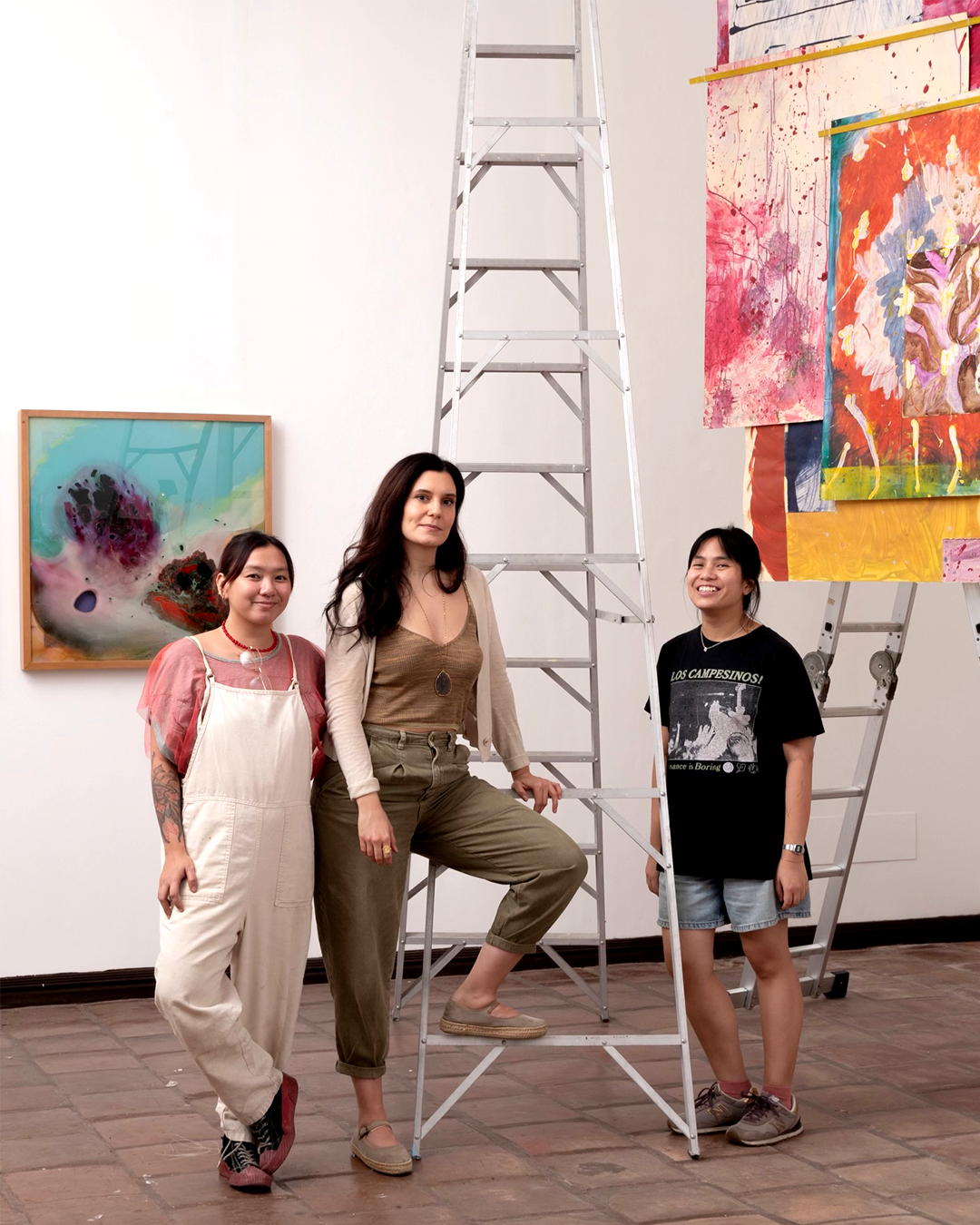
Photos courtesy of Galerie Stephanie
"I was drawn to Dash and Colon as punctuations because when I write, I like using dashes, it adds a certain rhythm," she says, adding that explanation itself has a kind of "musicality" or "dance."
In the same way that punctuation opens up space beyond a main clause, the works in the exhibition point to environments and forces that sit outside the boundaries of the painting.
Expanded Painting: Surface and Structure
At the core of the exhibition is the idea of "expanded painting," where painting is approached as something spatial and sculptural rather than purely image-based.
Mercado notes that for both artists, painting becomes a "sculptural kind of painting" that draws attention to how the work is built. By exposing elements like stretcher bars and other structural supports, the exhibition invites viewers to look at the physical framework behind the surface, connecting the immediacy of paint to the systems that hold it together.
Urban Traces—Botanical Rhythms
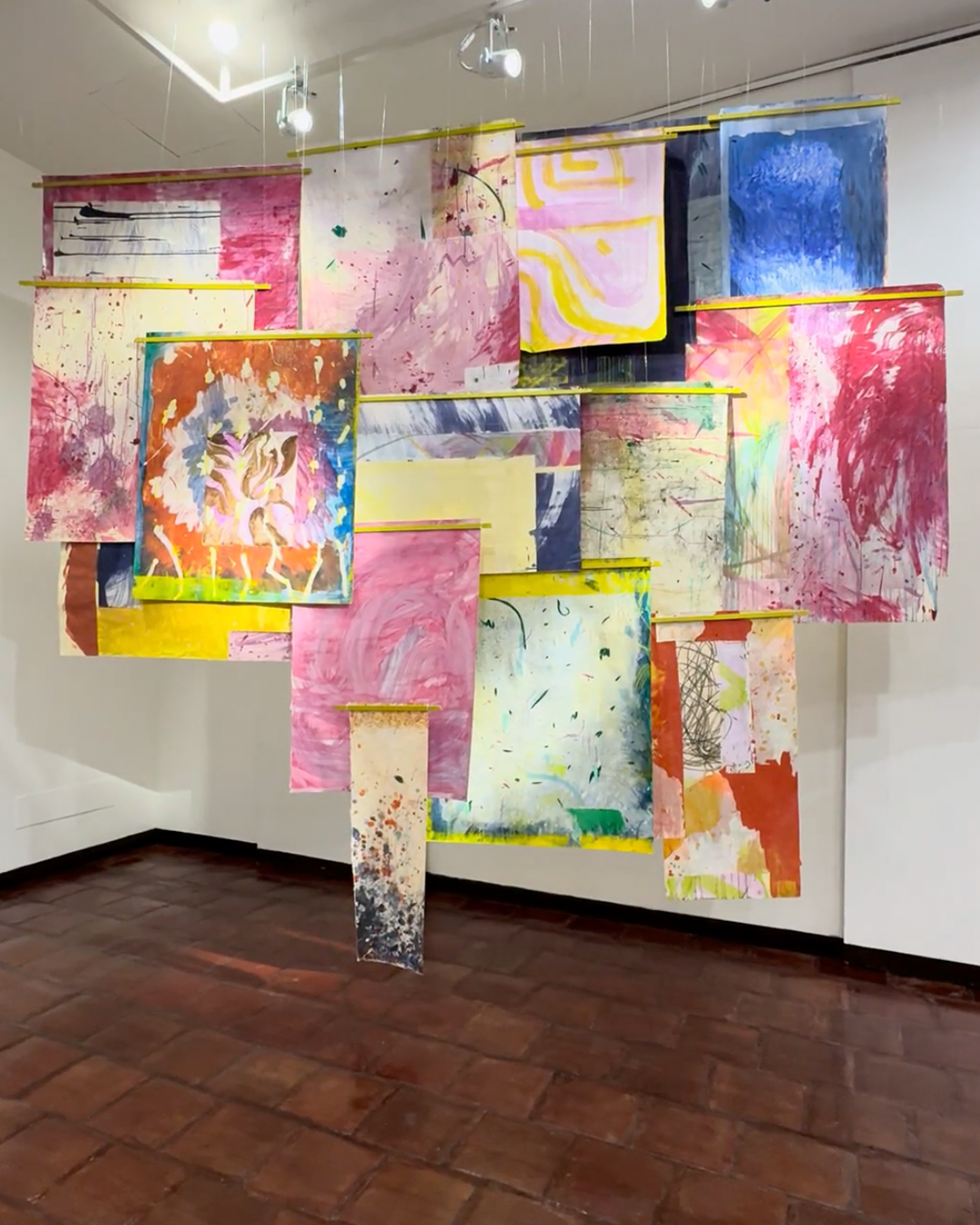
Brisa Amir draws inspiration from the overlooked details of her surroundings, including cracks in walls and stains left by rain.
Her practice centers on noticing and collecting, piecing together fragments of the urban landscape into what Mercado describes as "visual botanical rhythms."
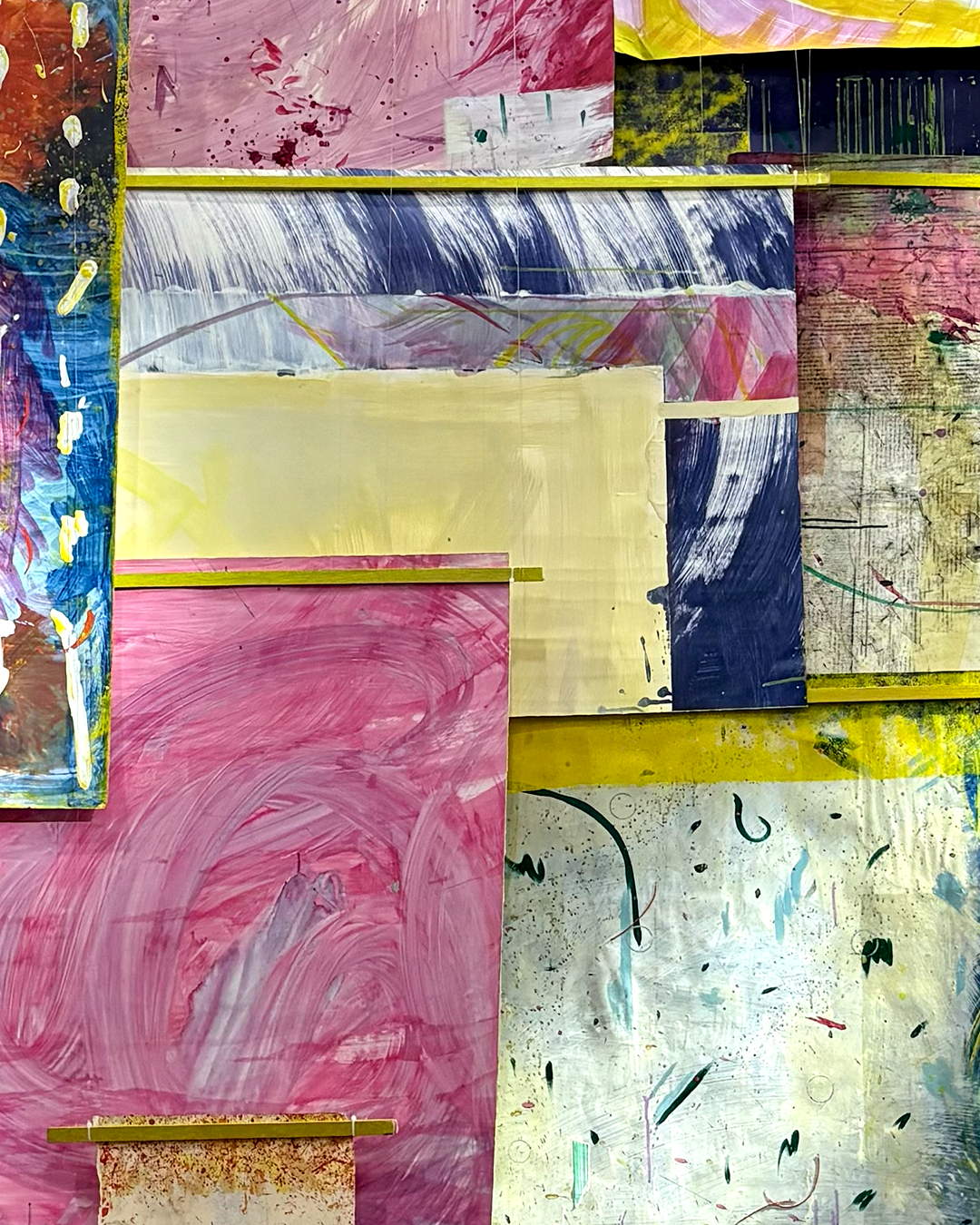
Photos courtesy of Mian Centeno
Amir describes her work as a direct response to where she lives: “ I always consider my point of view and the point of view of my neighborhood. And when you live in a congested neighborhood, there's always the sound and texture of the area. I try to collect all those experiences and try to translate it with my paintings.”
Proscenium—Opacity and Clarity
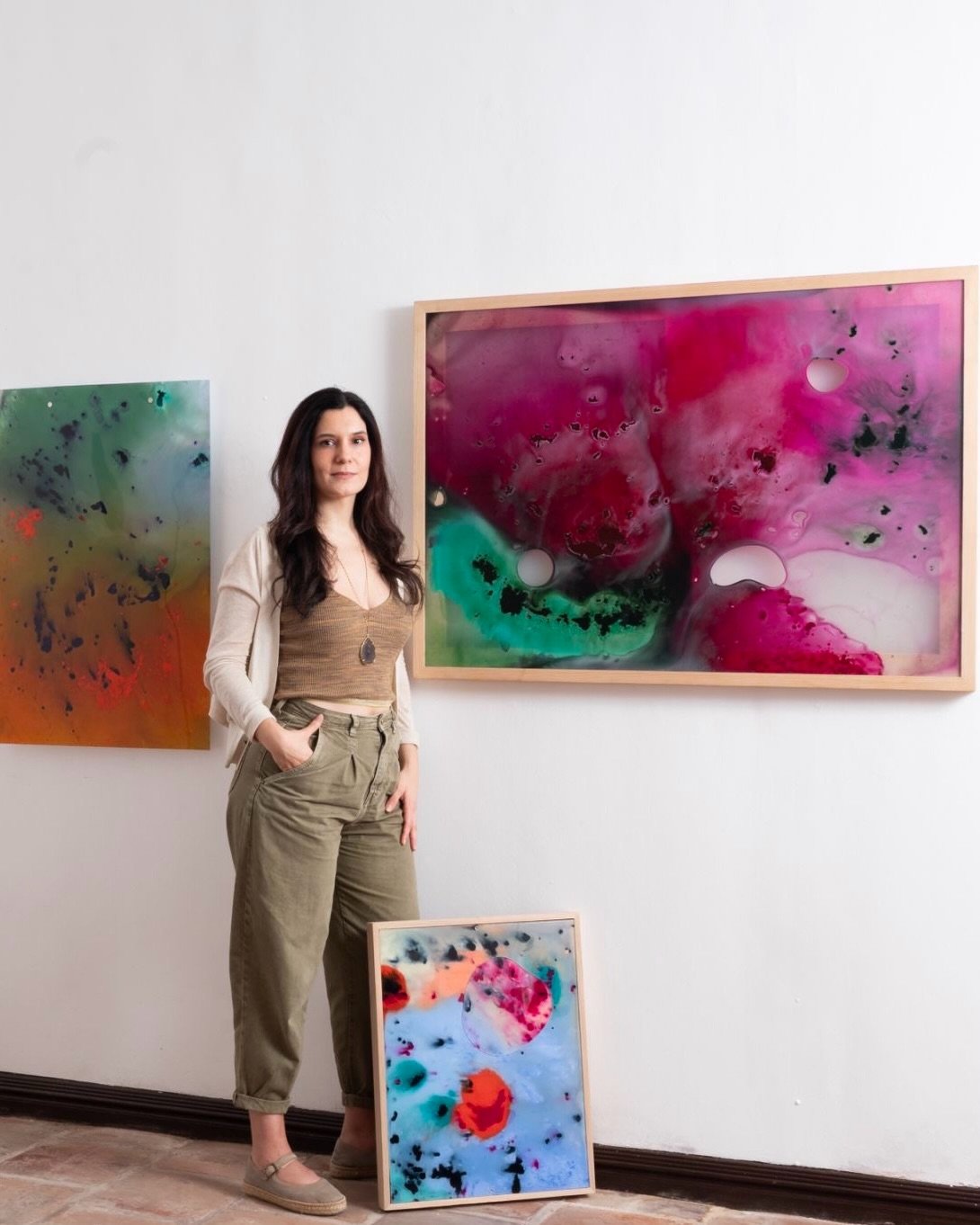
In contrast, Cristina Gamón works with layers of pigment on transparent acrylic sheets, exploring the tension between opacity and clarity. She treats each surface as a "proscenium,” a stage that frames what the viewer can see, or as a window into a partially hidden world. Her works encourage slow looking, using punctures that expose stretcher bars typically concealed behind the painting.
Gamón describes the final moment of unveiling her work as almost uncanny: “I can't see my work until it's completely finished. Because it is when I unwrap the protector from the sheet and then I see how it's done. So, there's always this something mysterious in the end.”
Sound—Silence and Noise
Many have noted a musical quality in the exhibition, an idea that resonates with both artists despite their different working environments.
Gamón, who has collaborated with opera composers, says she often reaches a silent moment once she is fully focused, though she uses music as a mantra to ease into her studio routine.
Photos courtesy of Galerie Stephanie
Amir, meanwhile, works with the sounds around her rather than against them. "If the environment is too noisy, like there is a bulldozer outside, or traffic jams, I will not resist and just be listening to the noise," she explains, adding that her music choices—from techno to metal—shift with her physical and emotional rhythms.
Duality—Day and Night
Both artists describe their practices through forms of duality. Amir thinks of her process in terms of night and day rather than seasons.
“Thinking about my artistic process, when I'm painting, my mood is always luna, like at night. It feels like gestation. And then when I try to think about how to present it, my mood is daylight. It’s very much masculine.” Gamón also identifies with a dual state, aligning herself with the shift from dry summer to dry winter.
Chance—Plan and Error
The works reveal a balance between careful planning and openness to accidents.
Amir welcomes unexpected marks, seeing them as collaborators rather than errors. “Mistakes, I always like to have a chance to paint it over. And I always collaborate with the marks that I created.”
Photos courtesy of Mian Centeno
Gamón, due to her materials, must plan colors and cutouts in advance, but still allows the work to assert itself. “You control it to the point but there's always what the painting demands of you too that is what drives you through the working and where the magic happens.”
Encounter—Shared Ground
Though Amir and Gamón work in different ways, their pairing at Casa Azul reflects the long-standing ties between Spanish and Filipino art histories.
Gamón initiated the project after reflecting on the legacy of Fernando Zóbel, whose work bridged avant-garde movements in both contexts. After encountering Amir’s work during a 2018 visit to the Philippines, the two artists connected online and began a dialogue that Mercado describes as a synergy of flow and expansion.
The resulting exhibition reads like a carefully punctuated sentence—marked by emphasis, pause, and room to breathe.
A dash a colon
Between the pauses created by the subheads, which incorporate the two punctuation marks, the reader is given room to breathe. To pause. To rest.
And maybe, as you step through the gates of Casa Azul and encounter Amir and Gamón’s works, you begin to feel it: how those small pauses on the page have already prepared you for the way the exhibition asks you to look, wait, and linger.