Why After-Noon Delights Isn't Your Typical MoCAF Stop
Beneath the candy colors, comic-book charm, and familiar faces lies a collaboration that proves political art doesn't always have to wear a scowl.
Words Bernadette Soriano
Photos courtesy of Derek Pedrialva
July 04, 2026
Political art has always been part of the conversation.
Mention the phrase and most people picture stern portraits, weighty manifestos, or gallery walls that seem to dare viewers to keep up.
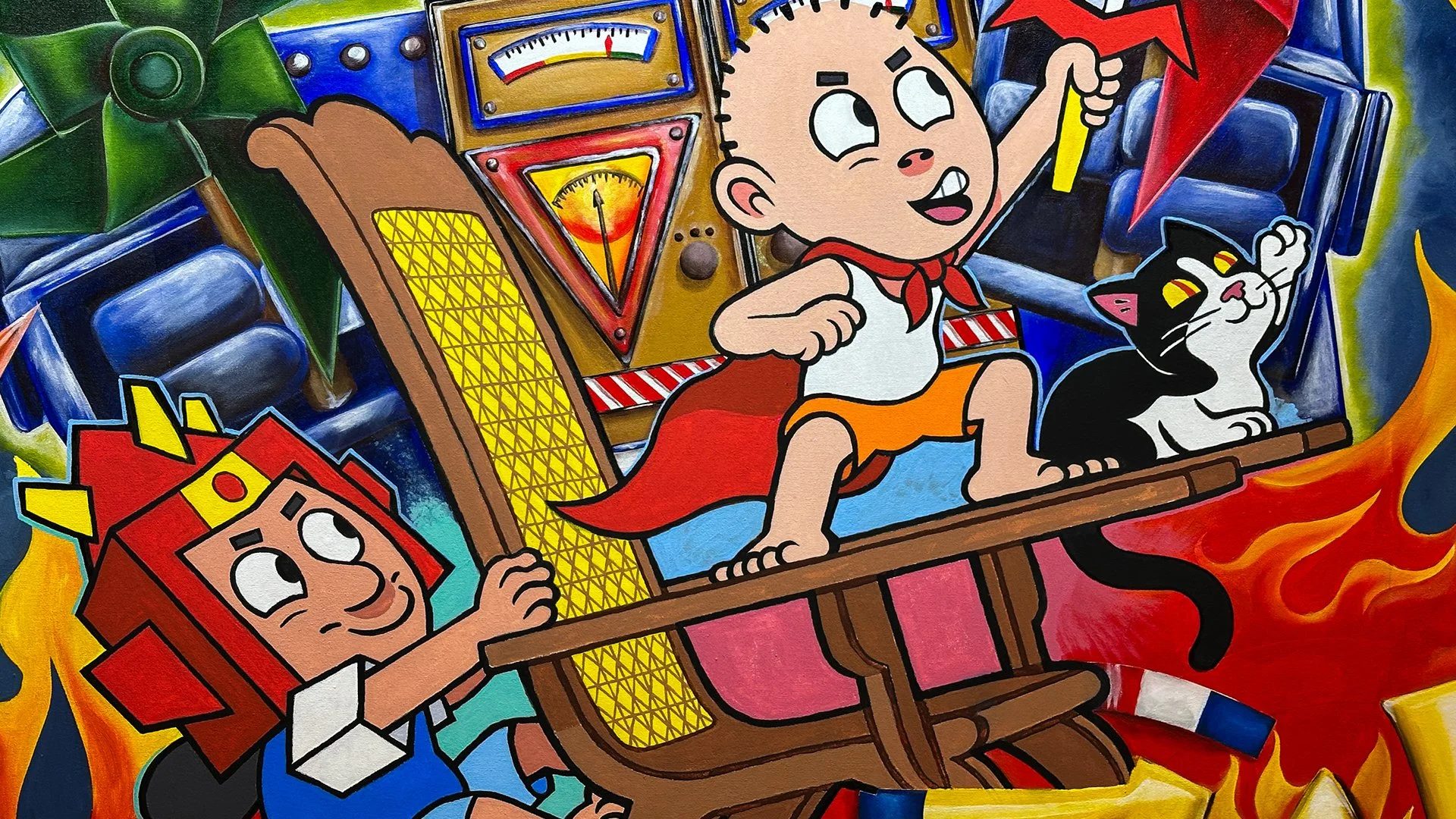
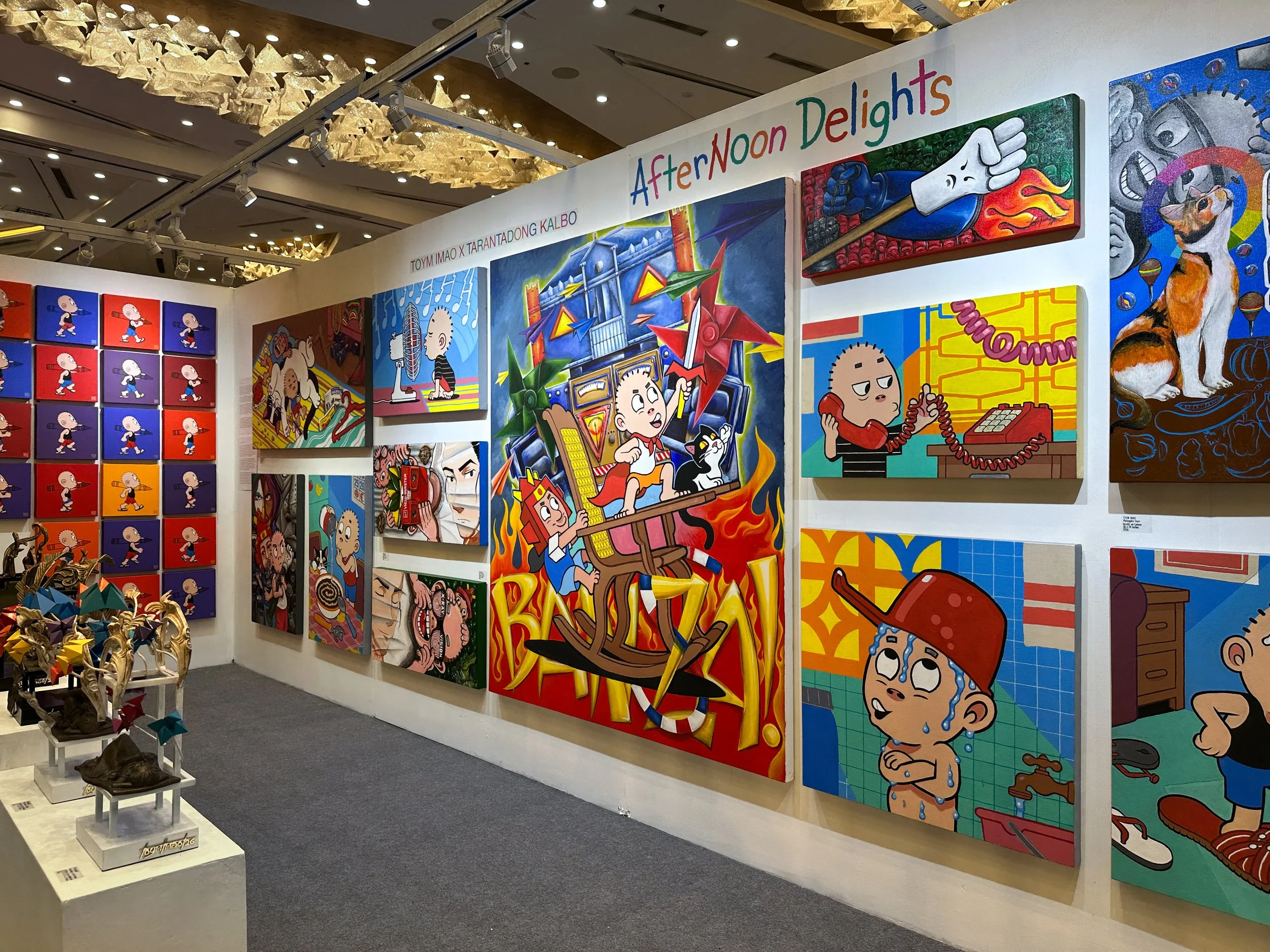
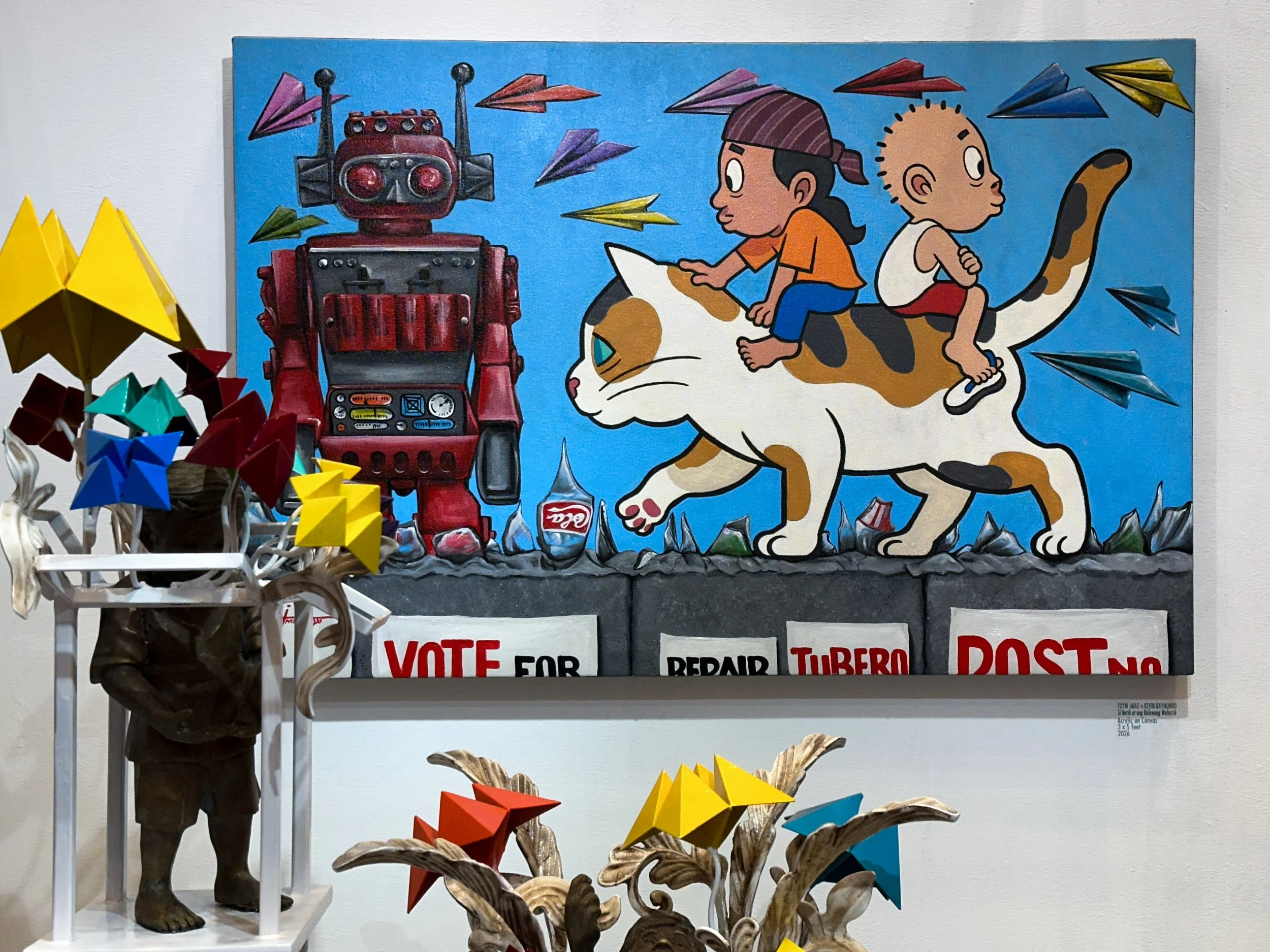
After-Noon Delights, the collaboration between comic strip cartoonist Tarantadong Kalbo and multimedia visual artist Toym Imao at MoCAF 2026, takes that expectation, gives it a knowing grin, and quietly turns it on its head.
The works are bright. Playful, even. Nostalgia peeks through the compositions, while humor does much of the heavy lifting. Yet somewhere between the laughter and the lingering second glance, the punchline gives way to the point—a balancing act both artists have described as intentionally disruptive, or, in their own words, “maginoong medyo bastos.”
For Tarantadong Kalbo, that's hardly accidental.
In an exclusive interview with the Art+ Magazine, TK shared, “Of course, the context of why you make people laugh is more important,” before quickly qualifying himself.
“But humor is still essential.” If anything, he sees comedy less as the destination than the doorway—the thing that “makes people more comfortable to absorb whatever the work is saying.”
It's what he calls ‘soft power,’ a phrase that neatly describes both the exhibition and much of his practice. The politics may be unmistakable, but they're wrapped in colors, characters, and visual wit that feel every bit as approachable as they are provocative.
The point isn't to sugarcoat difficult conversations so much as to make them easier to begin.
Which is to say, don't mistake lighthearted for lightweight.
Asked when a joke becomes political, Tarantadong Kalbo doesn't hesitate.
“Actually, if you think about it, all jokes are inherently political,” he says. Some, he adds, simply make that politics more overt—or, in his case, more satirical—than others.
That philosophy has followed him throughout his career, perhaps nowhere more unexpectedly than with Tumindig. What began as a single illustration wasn't conceived as a rallying cry.
“When I made that piece, I wasn't expecting everyone to join in because it wasn't a call to action, actually,” he recalls.
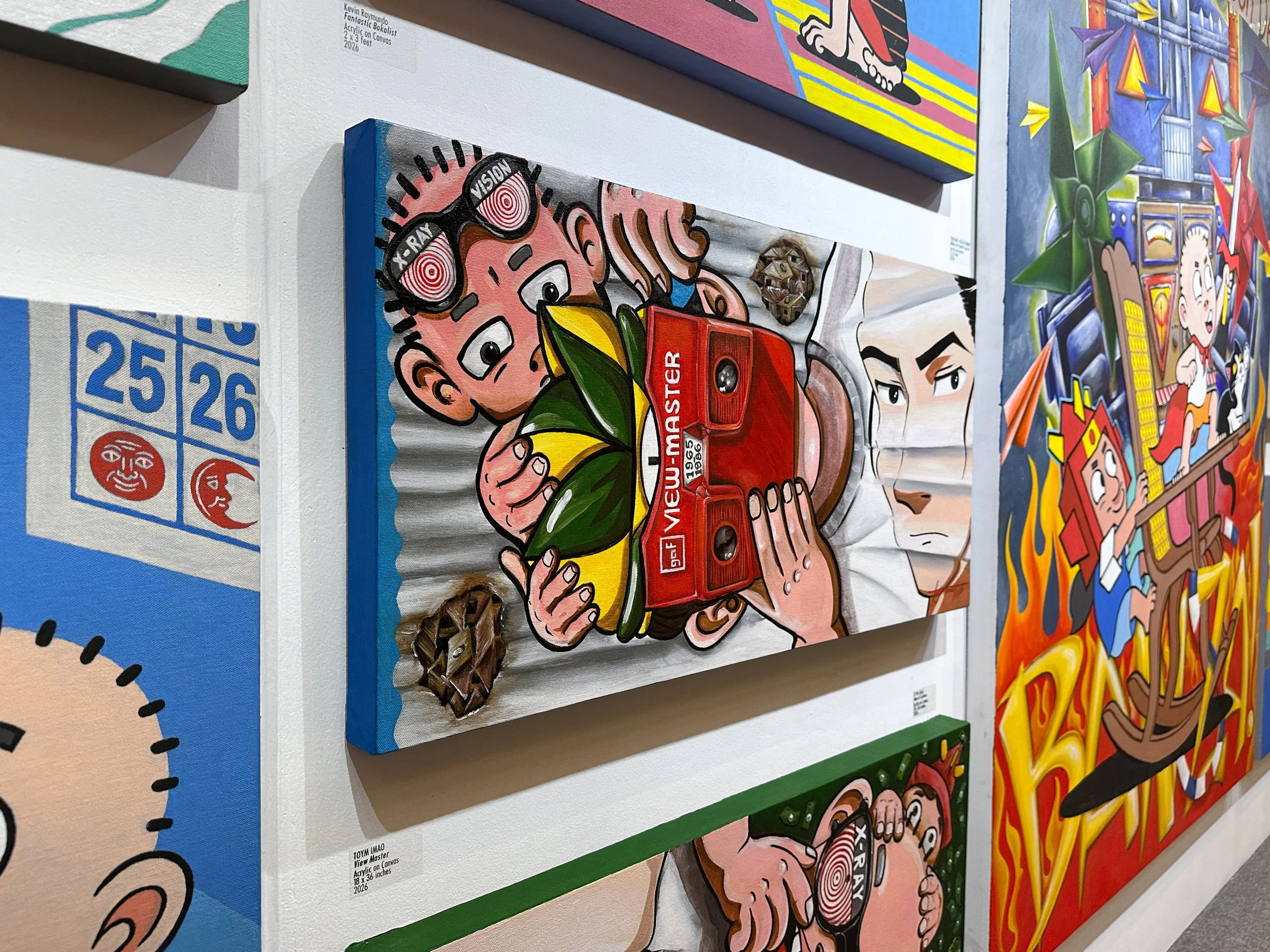
Yet audiences embraced it as precisely that, reminding him that once an artwork enters the world, it begins a life of its own—one shaped every bit as much by its viewers by its creator.
Still, humor isn't a one-size-fits-all solution.
Satire, he admits, has become a far more crowded space than when he first started. Political memes now populate nearly every corner of the internet, making it all too easy for commentary to become oversaturated—or, as he puts it, “a joke for joke's sake.”
That, in turn, makes discernment all the more important. “It's also important to distinguish the weight of the issue we're discussing,” he says. Not every subject benefits from a humorous angle; some simply demand to be met with unflinching seriousness instead.
MoCAF, interestingly enough, offers that balancing act a different stage altogether.
“This is my first time exhibiting at MoCAF,” he shared, admitting he wasn't entirely sure what to expect.
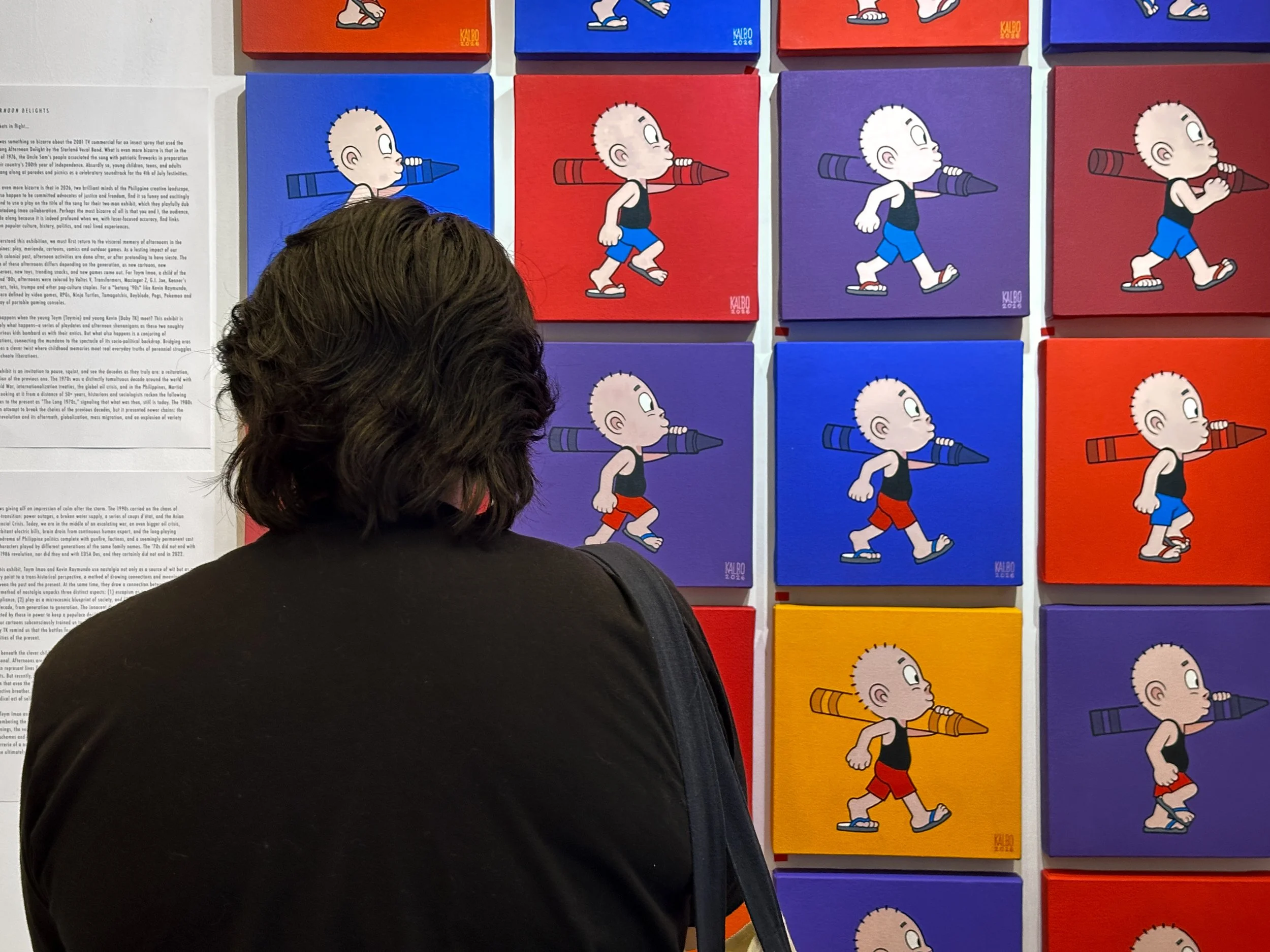
But the exhibition also plays to one of his work's greatest strengths. “That's also my advantage... because it has a soft power. Even if we say that it's political, when you look at it, it's bright, it's colorful—very easy on the eyes.”
Seeing the works in a physical space, rather than on a phone screen, changes the conversation, too.
“It's different when you scroll online and you see it in actual,” he says. Tangibility, he believes, affects both artist and audience alike.
Scroll past an image and it's gone in seconds; stand before it in a gallery, however, and it quietly insists on your attention.
As for the funniest response his work has ever received? Surprisingly, it has very little to do with politics.
“The top of mind is always when they ask me if I'm really bald,” he laughs.
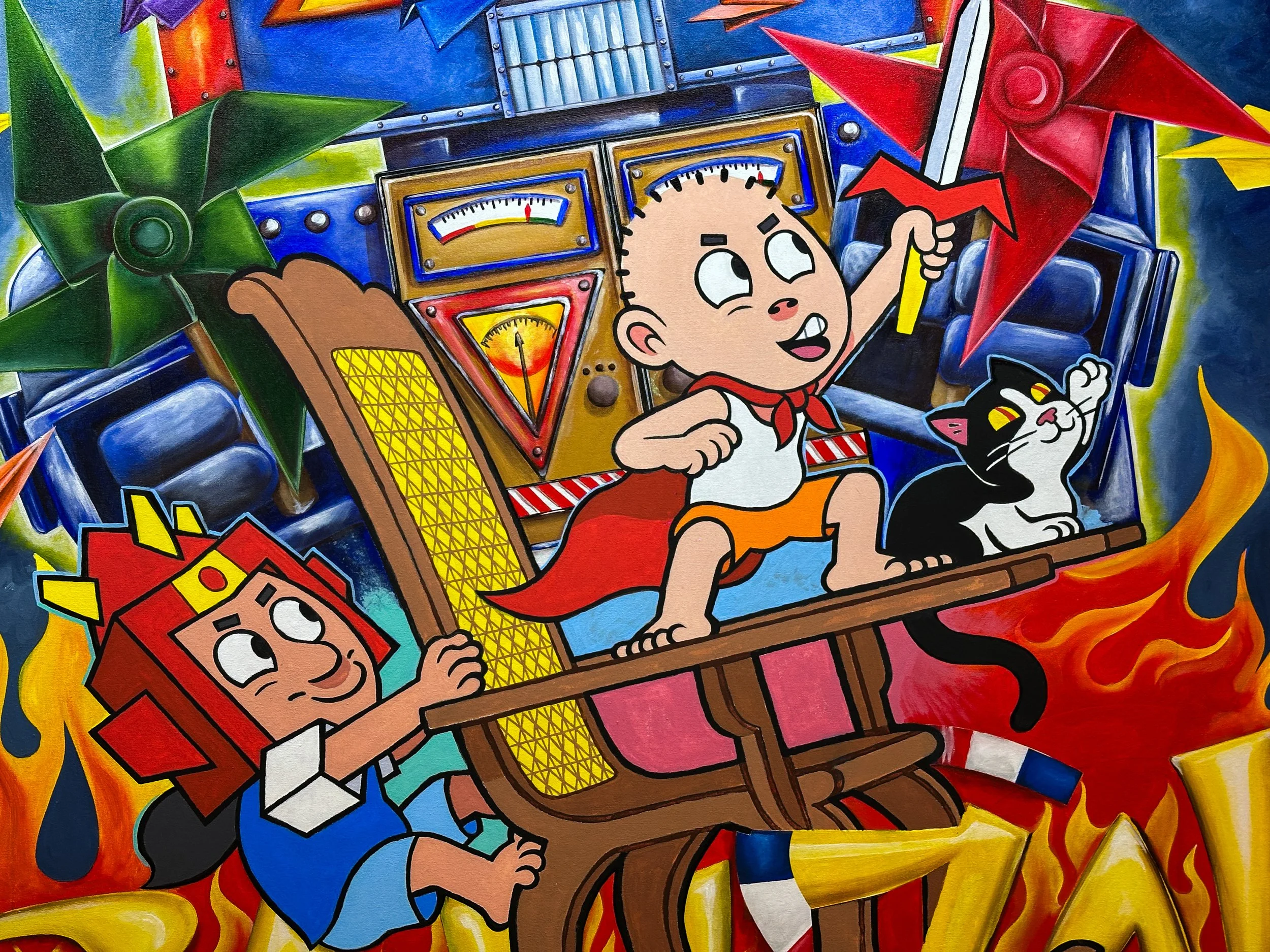
It's a fitting anecdote. After all, making people laugh has never been the difficult part. “Making people uncomfortable is more difficult,” he admits, particularly when the reactions become deeply personal or emotionally charged. Humor may open the door, but difficult conversations still require someone willing to step through it.
And yet that's precisely why After-Noon Delights feels so at home at MoCAF. Visitors may arrive expecting beautiful artworks, but they might just leave reminded that beauty and political commentary have never been mutually exclusive.
As Tarantadong Kalbo puts it, “Art is political, whether the art itself is participating in it or not.”
His invitation to viewers who think political art is too serious is refreshingly uncomplicated.
“You should check out my exhibit,” he says with a smile. “Just because something is political, it doesn't mean that we're not having fun.”
Or, put another way, don't let the light funsies fool you. They may well be the very thing persuading you to linger long enough for the harder questions to sneak in.