The Radical Art of Looking Up
What started from the ever-so-Filipino “Psst!” sparked Dansoy Coquilla’s art movement—turning perspective into an upward view for change and hope.
Words Randolf Maala-Resueño
Photo courtesy of Dansoy Coquilla
August 26, 2025
“Psst, hoy!”
When atop the bustling footbridge of the urban metro, we peek below the edge. A picture of countless napes and hairy crowns, with a tunnel-vision to each terminus. We picture this tableau as a rich representation of the concrete jungle–populous, a “mind your own business” attitude, and the innate sense of repetitive cycle.
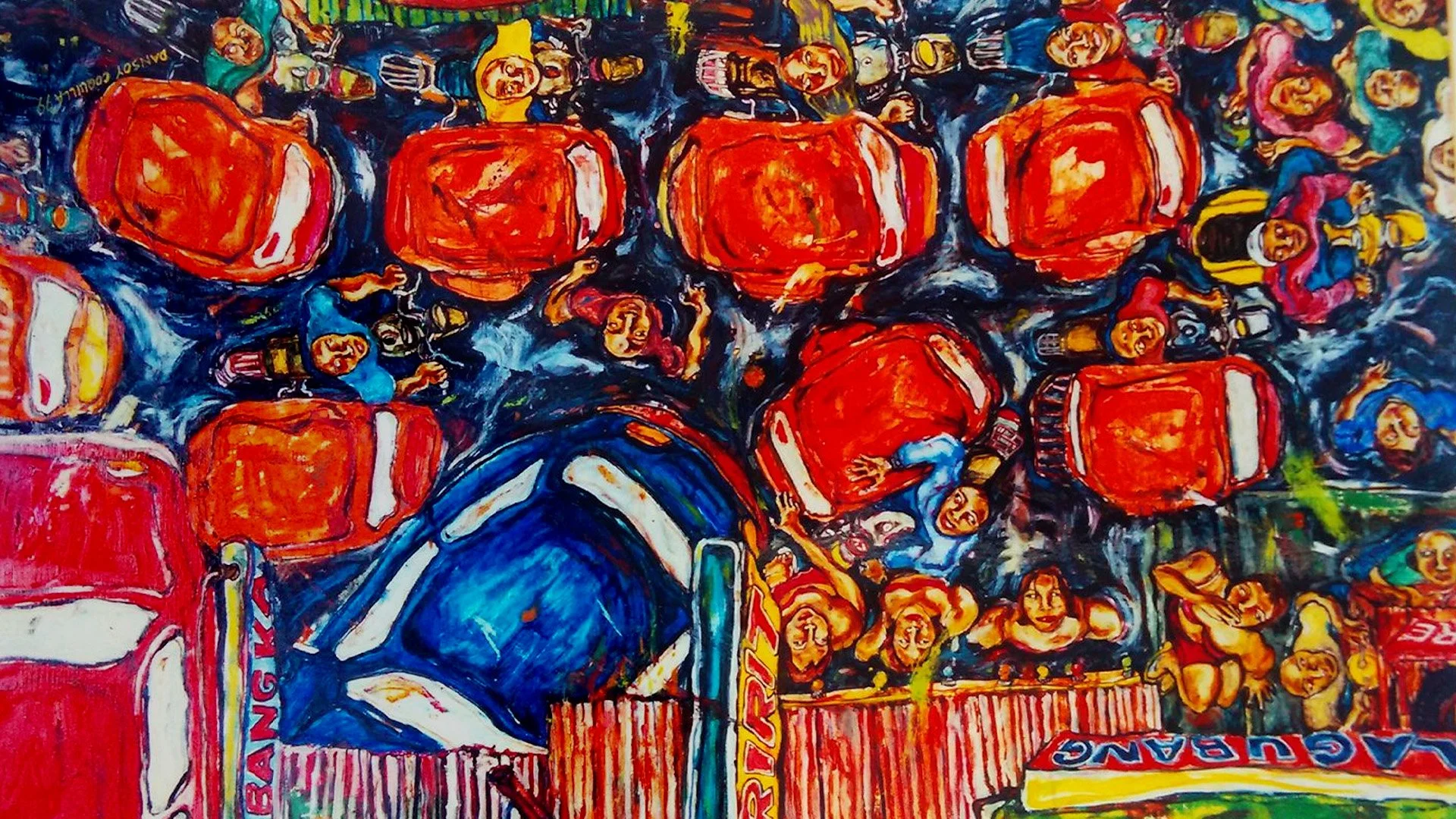
Coronet (1999)
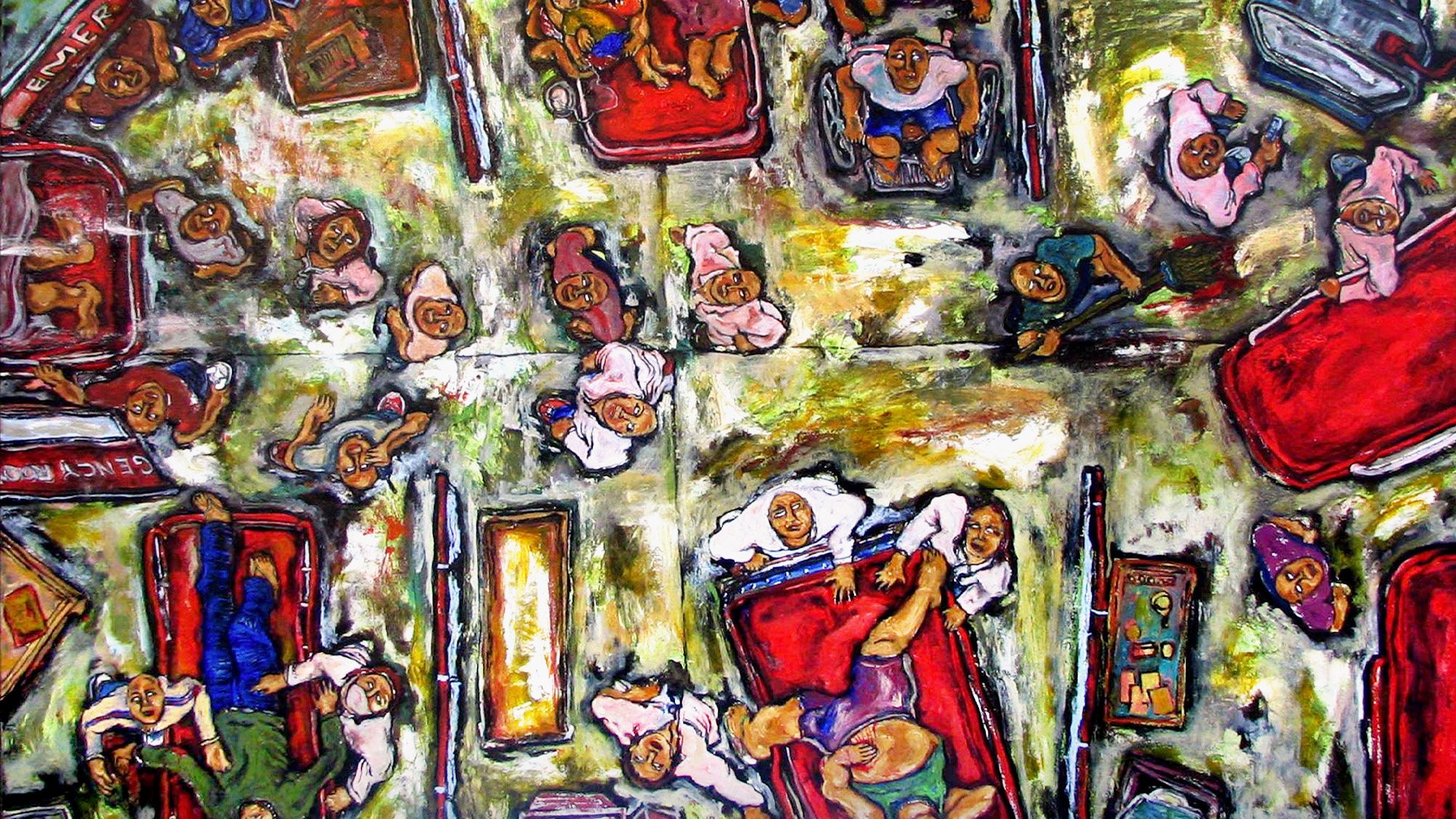
Amid these, visual artist Daniel “Dansoy” Coquilla defies our perspective. The art of his trademarked “tingala” gaze, with characters looking up–mouth agape, eyes bulge, staring with intent–dares a question: who is staring back at them? Do we belong in the scene? What truths come to light through this radical self-examination
In this conversation, the CCP Thirteen Artists Awardee invites us to look up with him, to the gritty yet familiar reflection of the Filipino identity.
Roots in perspective
Originally from Panabo City, Davao Del Norte, Dansoy grew up around palengkeros and its sights. The smell of the wet market, the grilling street food, the vibrant stalls. With a pencil and shoeboxes as canvas, he sketched out such familiar scenes with a dream of becoming a comic illustrator.
And having been accepted in UP Diliman’s College of Fine Arts was no easy task. When his first “tingala” piece received professorial recognition, he knew it would stick.
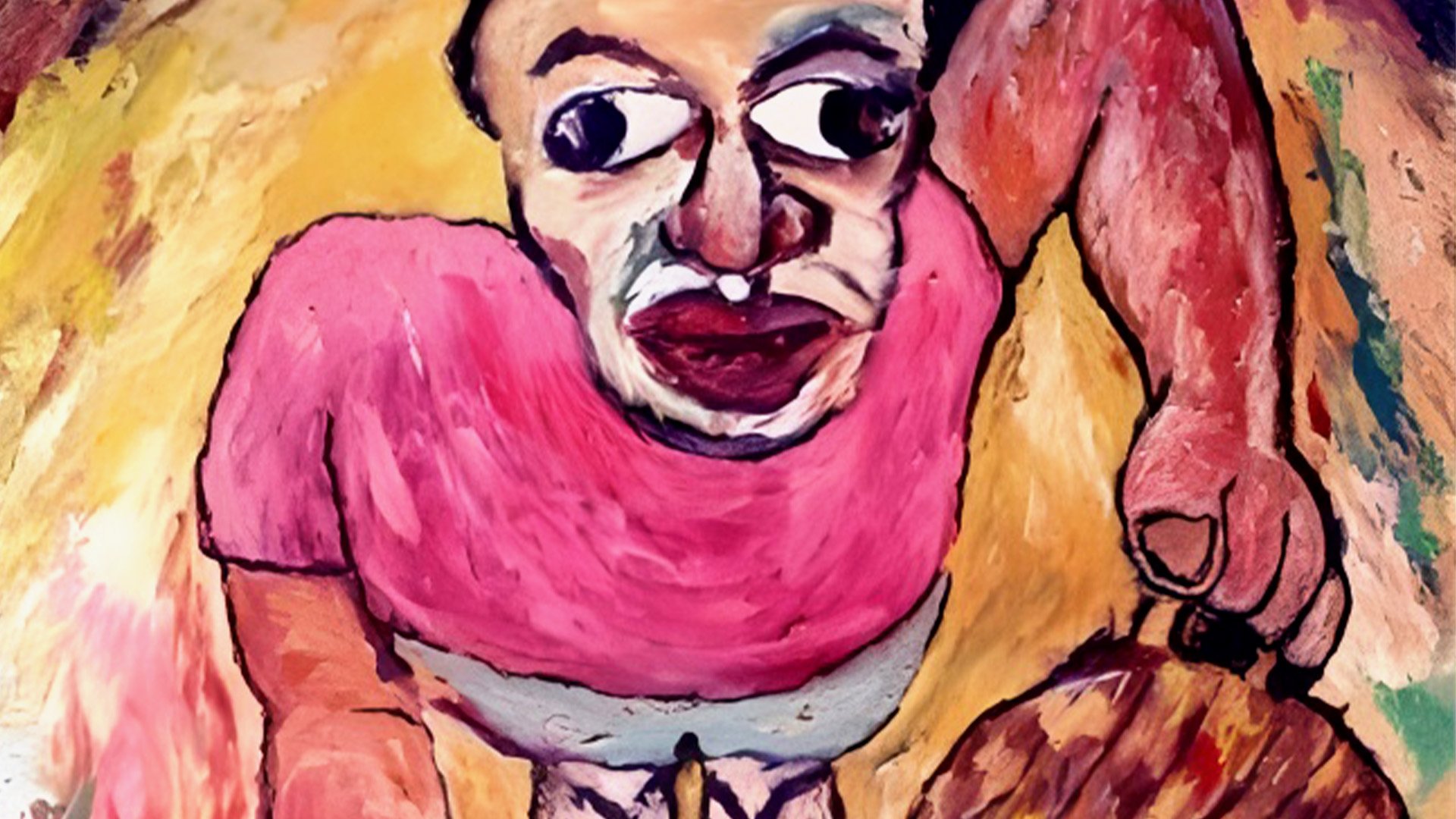
Mamang Isaw (1992)
“It all started with eating isaw barbecue at the iconic Mang Larry’s Isawan in UP. Today, that famous street food has become something of a gastro-influence. Back then, it was just my meal because as an Iskolar ng Bayan, campus life was a struggle, especially when you lived far from your family and had no relatives in NCR.
The subject was simple: an isaw vendor captured from a top-view perspective—like a cooking show style so the food is clearly seen. I tilted him upward to give the figure emotion, then gave him a face with a playful Filipino touch—‘psst hoy!’—so he came to life. And just like that, everything clicked into place.”
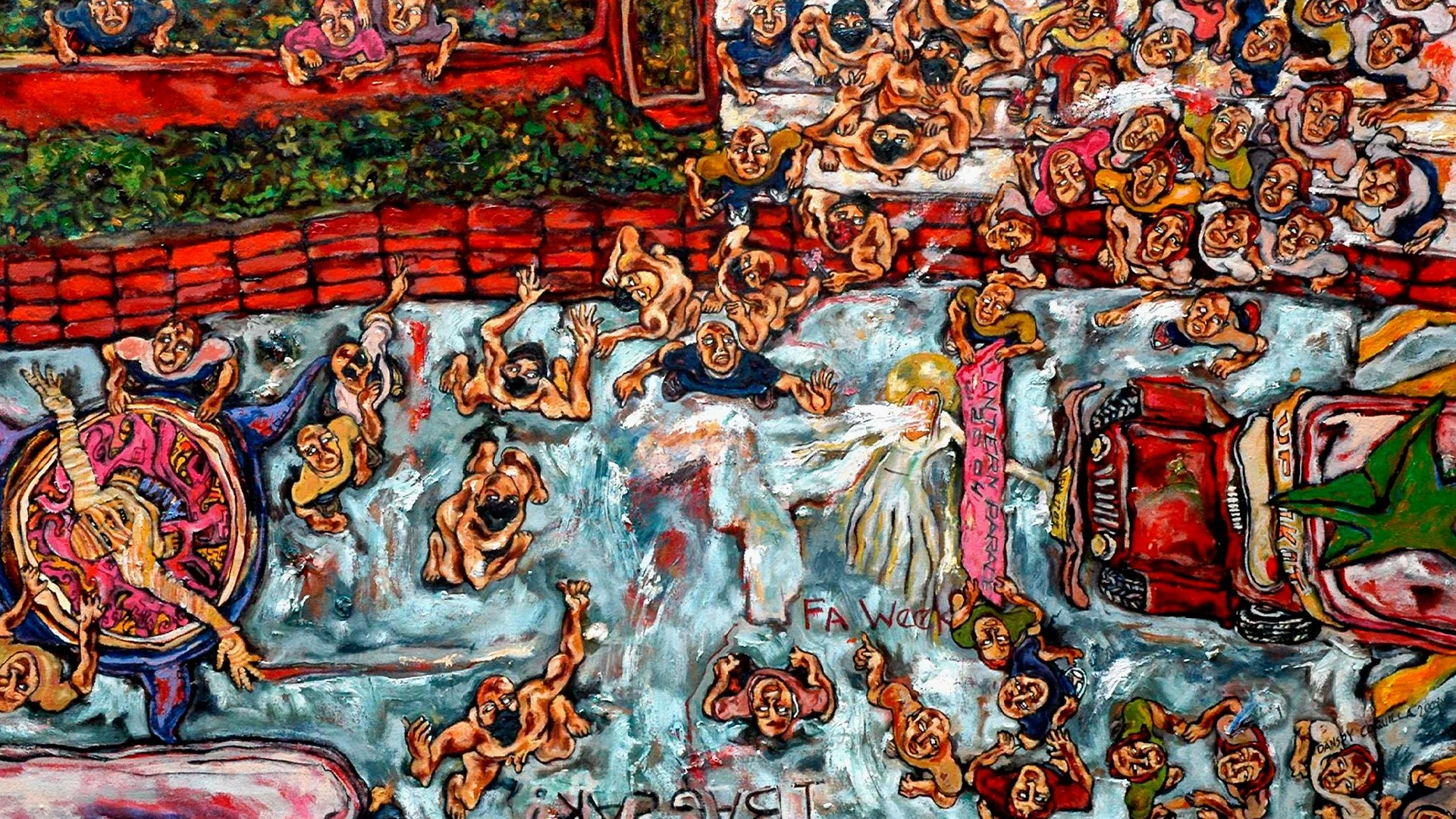
Oblation Run (2001)
A bending evolution
Dansoy lends his style to the unorthodox excitement he feels in prying away from the fixed; where space becomes fluid, creating a dialogue between the viewer and the subject. When the view is upward, there’s a sense of aspiration, wonder, or even struggle; when it’s downward, there’s grounding—an encounter with everyday realities.
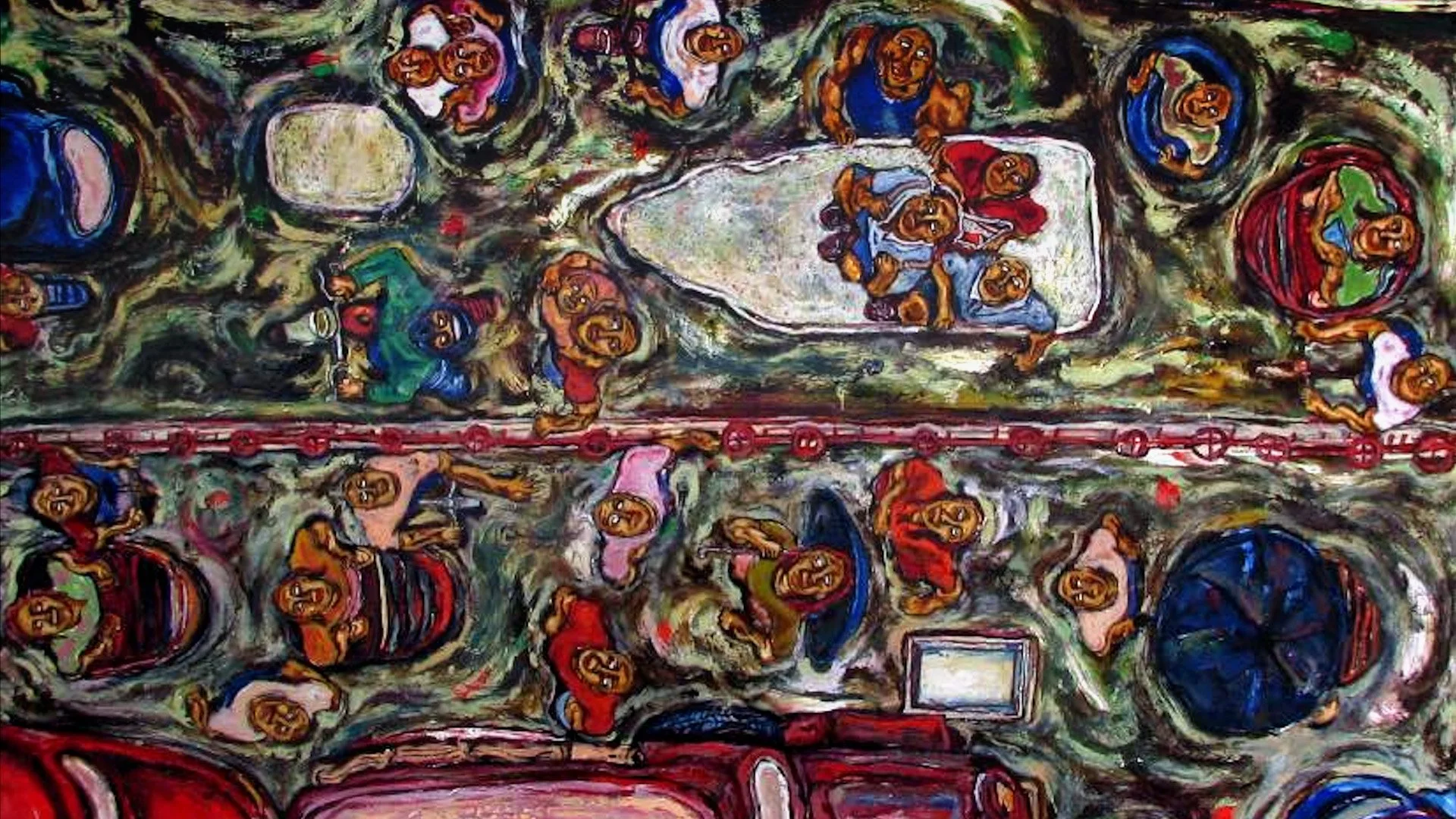
Manila Water (2007)
“This time, I’ve entered an era where my creative process has grown tremendously—I’ve taken my exploration in my works to an even higher level. Sometimes, there are no rules; you bastardize them. And in return, a new piece of art emerges, something out of the box.”
His diptychs Vert Pano Dyip and Topload hope to view the enduring everyday life–the jeepney trips, the commuters, the street life–into something exciting once you shift perspective.
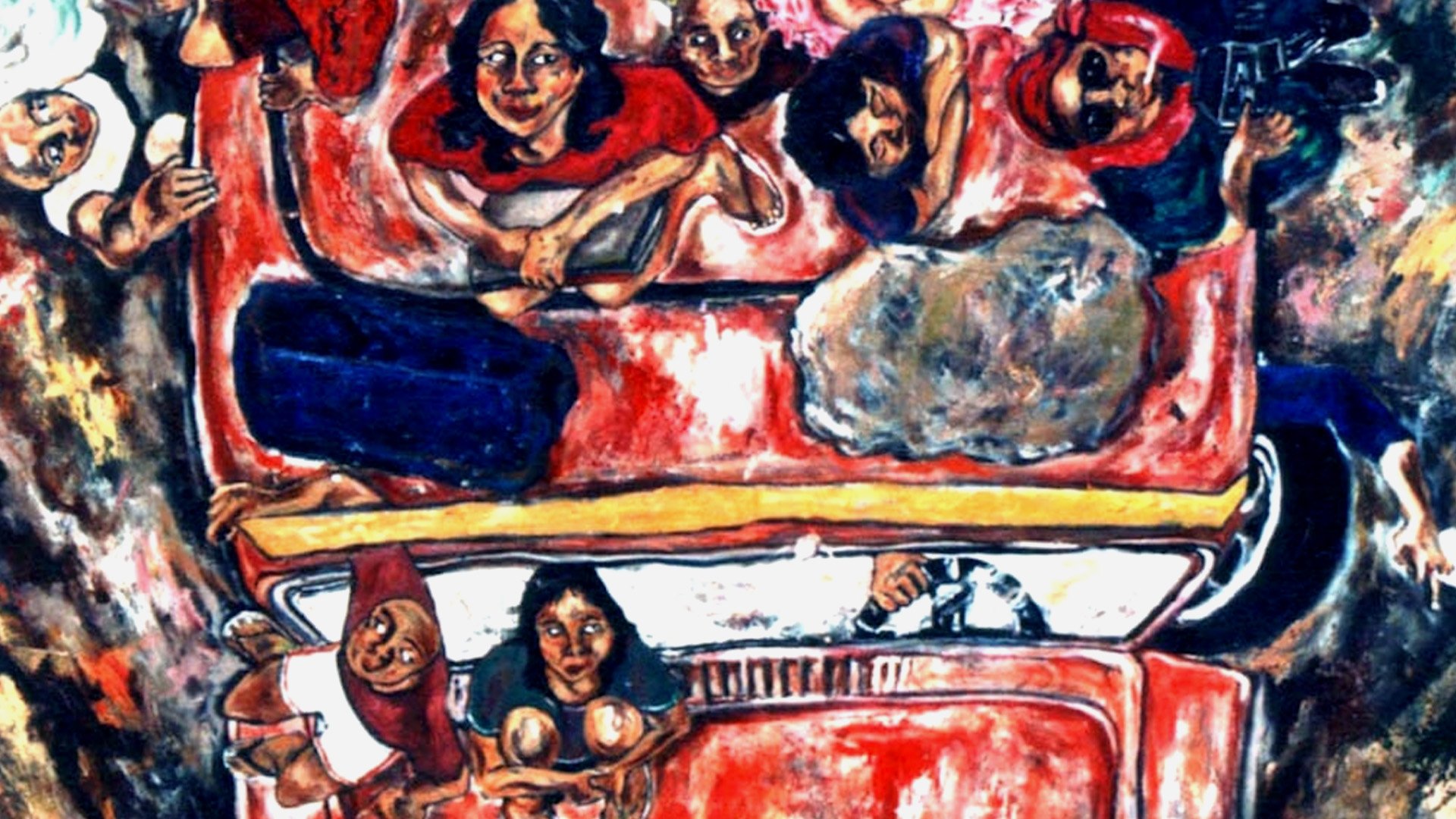

In 2012, he took the upward gaze a few notches through performance art. Drawing on Board is an installation at UP Vargas Museum, where a salvaged jeepney roof, suspended high, functions simultaneously as his drawing surface and an installation artwork. A metaphor to his enduring “tingala” signature, he quite literally painted looking up his roof canvas–paints dripping, head dizzy–with a craned neck akin to his characters.
“It became interactive art as well, with a mirror on the ceiling so viewers could take selfies while looking up. This creates a dialogue between the object, the body, and the memory.
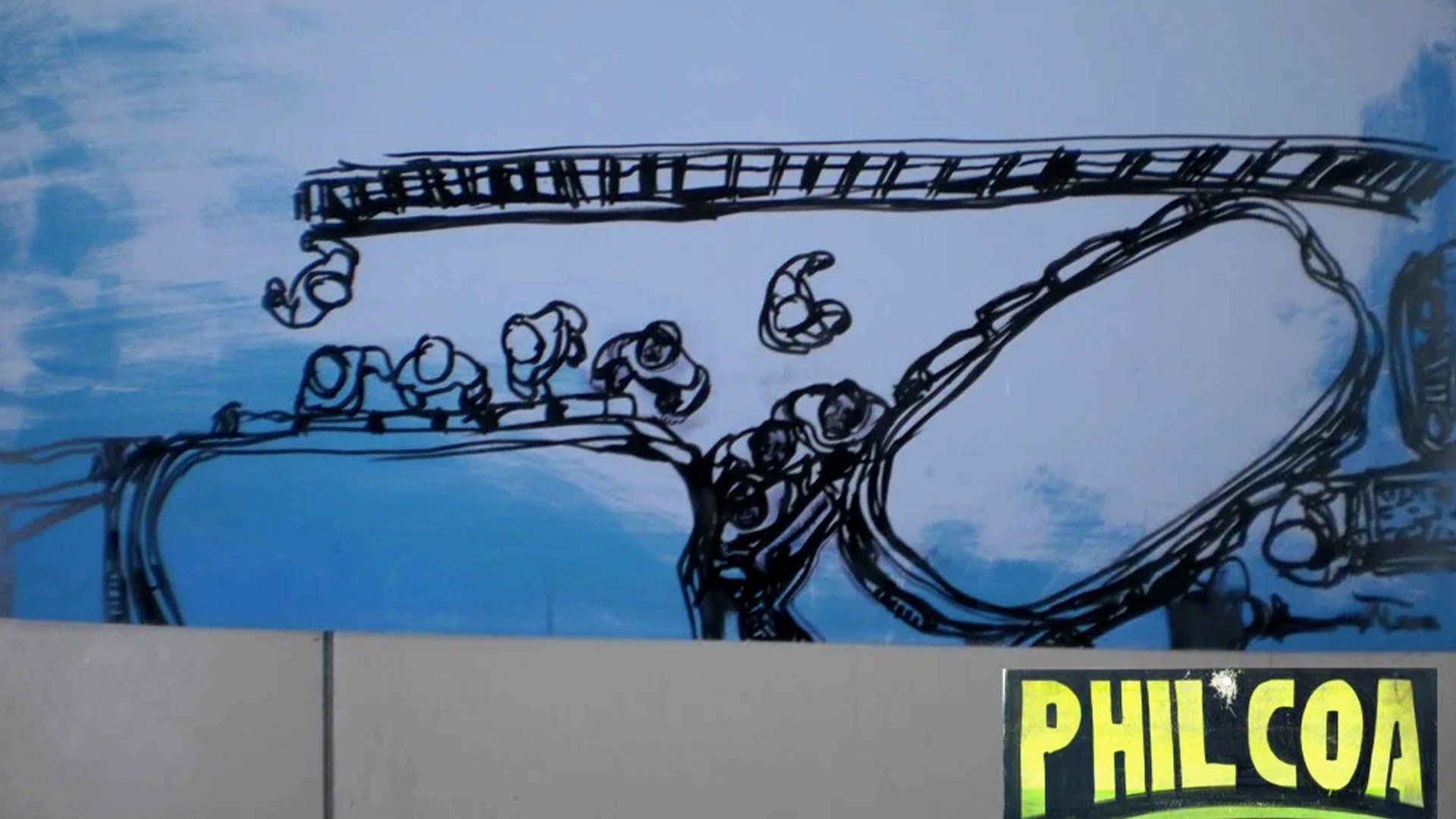
Drawing On Board (2012)
The jeepney, especially now that it’s under threat, is something I want to preserve—not just as a vehicle but as a collective space, a moving memory bank of mass transportation. By suspending it overhead or painting it from above, I show that it’s not just a ride, but a symbol of resilience, shared stories, and Filipino identity.”
This sense of change gears Dansoy and his ‘tingala’ movement to newer heights, posturing the viewer into the eyes of his characters—when bending perspective comes bending perception.
‘Tingala’ this!
Dansoy, now a full-time technician at UP Film Institute, continues to embrace the art world. A coalescence of both his passions, it taught him that art and livelihood can co-exist, teaching art workshops and group sketching with other faculty members.
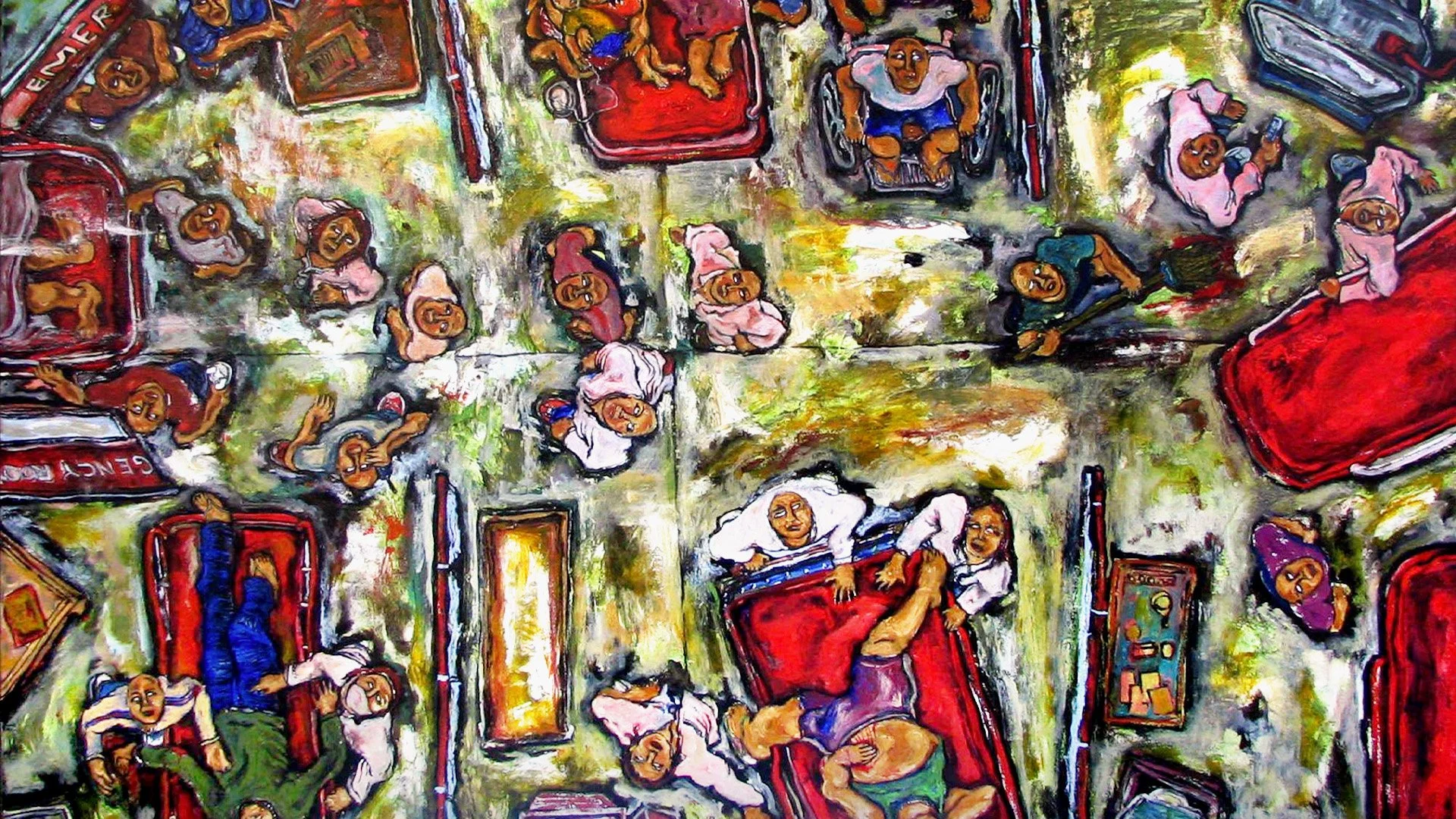
e.r (2006)
Backed by his multiple accolades, Dansoy now sees himself as a torchbearer–passing down the flames of his style and identifiably Filipino panoramas to the viewers. A visual diary, per se, where his canvas not only evokes nostalgia but a gleaming reminder that identity is always evolving.
“It’s like a reminder that even if the works are chaotic, diverse, and sometimes satirical, they remain deeply human and uniquely Filipino. My role is not to present one fixed image of Filipino identity but to keep the dialogue alive—always with stories, always with change, and always looking upward (with positivity).”
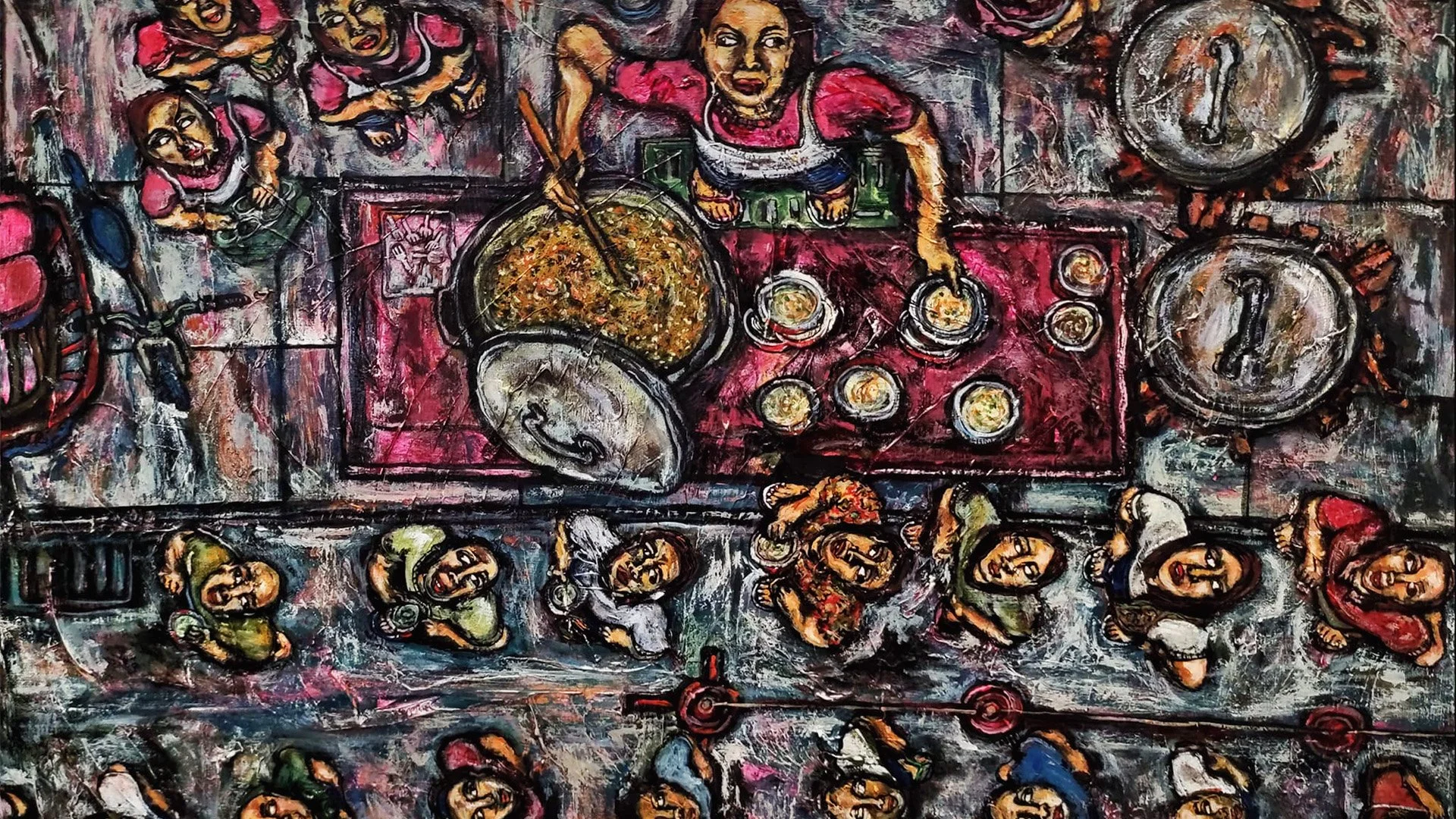
Aling Lugaw (2022)
During the latter part of our talk I quoted one of my favorite quotes of his: “I created fireworks para sila tumingala.” Right then and there I asked him to turn that gaze on himself—what do you hope people see when they look up at Dansoy Coquilla, the artist?
Dansoy Coquila: If others have fireworks to look up to, I guess I’m the firecracker—the one who sparks life. Not the grandest display, but the one that suddenly ignites and brings a spark. I want people, when they look at my works or even at me as an artist to see that the energy, joy, and storytelling of everyday Filipino life are still there. Whatever they take away—nostalgia, laughter, or even critique—that’s fine. What matters is that they feel the art is alive and moving, and that there’s an artist who keeps exploring and setting off new sparks.
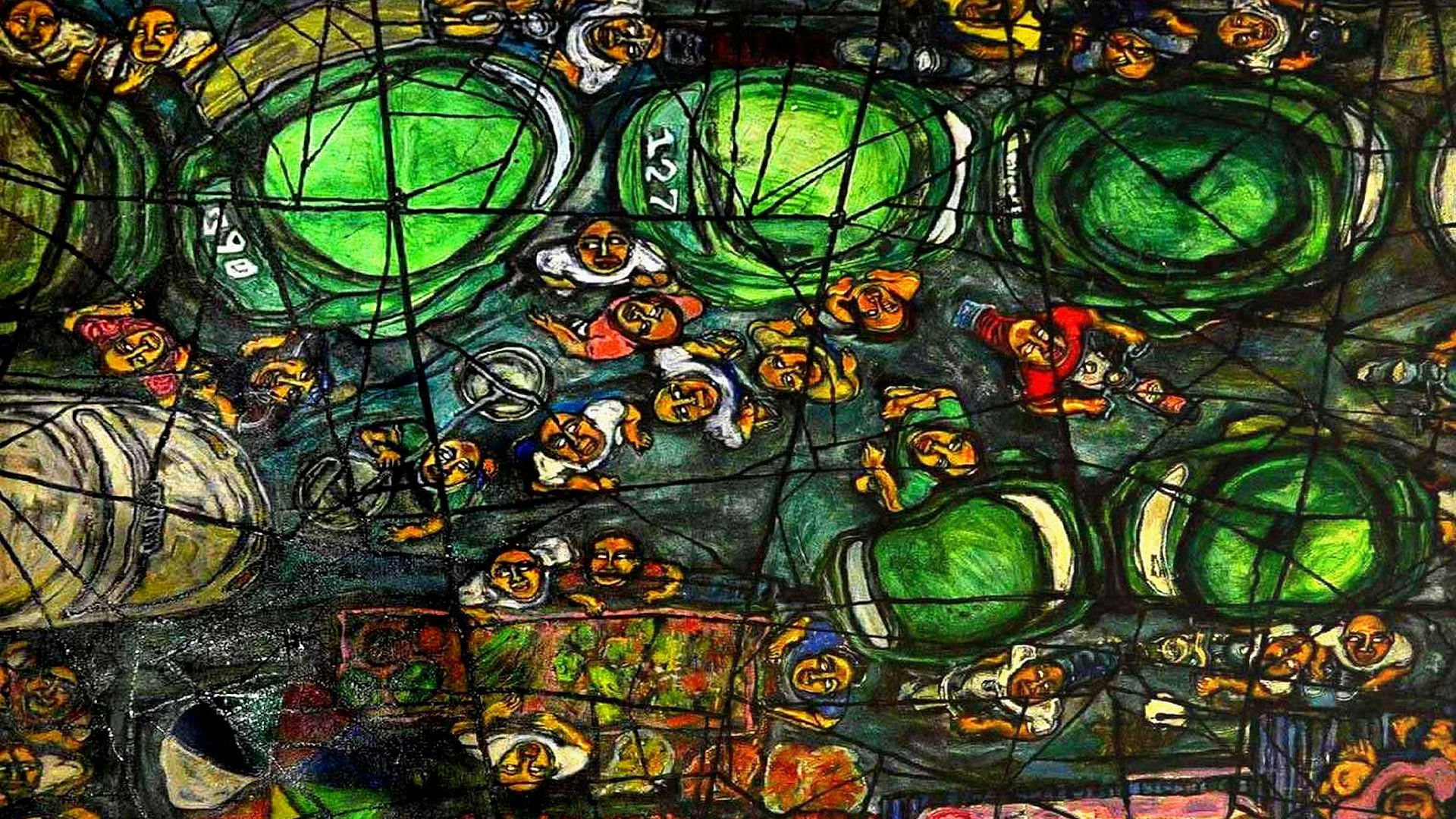
Black Spaghetti (2016)
As our talk winds down, it becomes clear that Dansoy’s upward eye is not simply a stylistic quirk, but a yearning worldview. To look up, in his art, is to remain curious, spark humor in hardship, and elevate the way art takes up space. From the woes of the clamoring jeepneys to the gentle people that gazes, his paintings remind us that the Filipino heart often beats loudest in its most crowded, chaotic corners.
And as Coquilla looks ahead—to radical viewstands, shifting urban cultures, and voicing untold memorabilities—one thing remains undeniable: he paints not just what we see every day, but what we might overlook. And in doing so, he teaches us to look up, too.
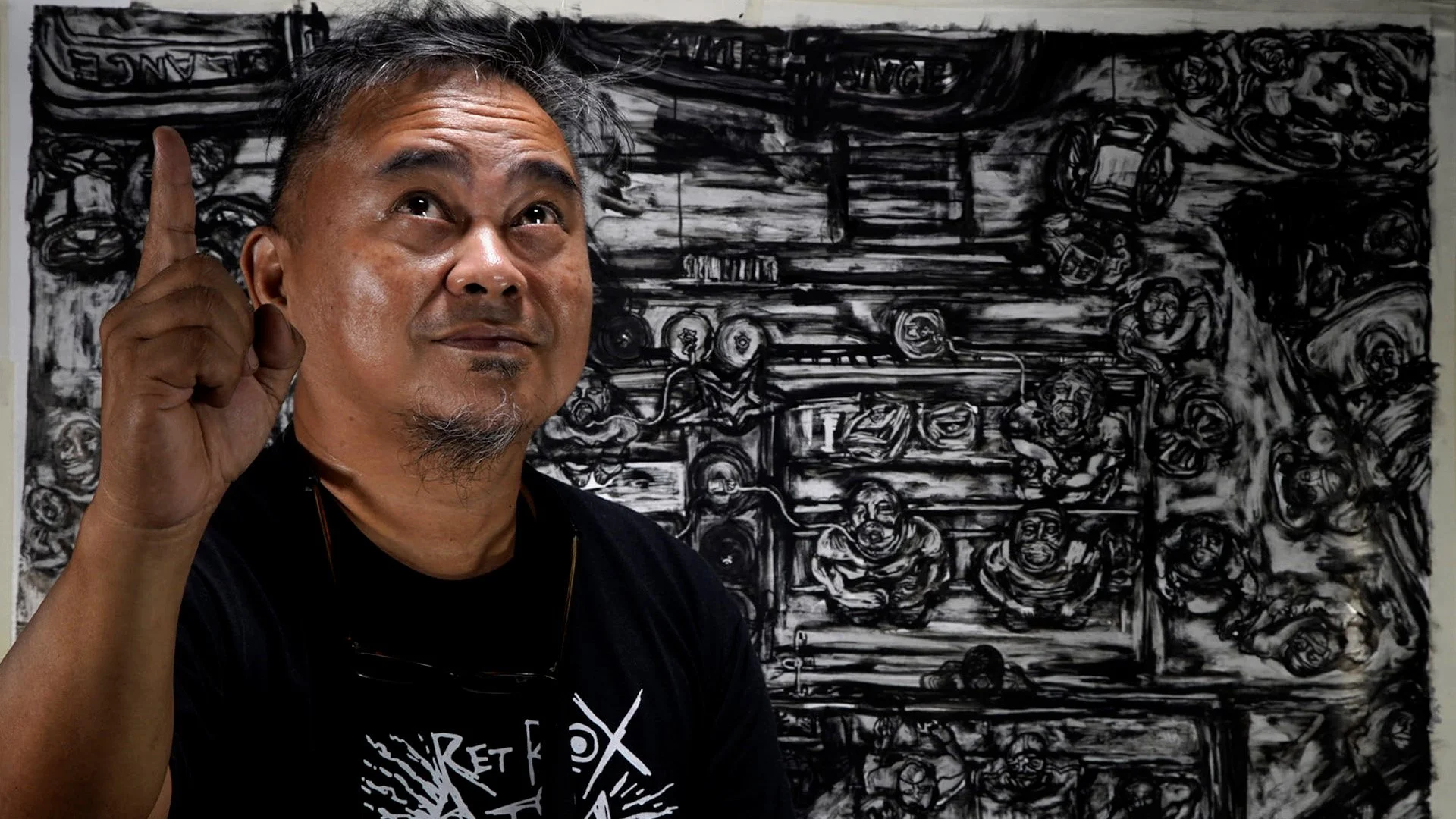
Dansoy Coquilla
Note: The interview was conducted in both English and Filipino. All Filipino quotes were translated into English with minimal edits to preserve their original meaning. A meticulous review ensured the accuracy, consistency, and transparency of both transcription and translation, maintaining the integrity of the artist’s voice.