
The Measured Ascent of ‘Sa Pwesto ni Pistong’
A fourth nod for Vincent Joseph Entuna turns ‘Sa Pwesto ni Pistong’ from a standout into a statement.
Words Bernadette Soriano
Photos Courtesy of Bacolod Film Festival
April 21, 2026
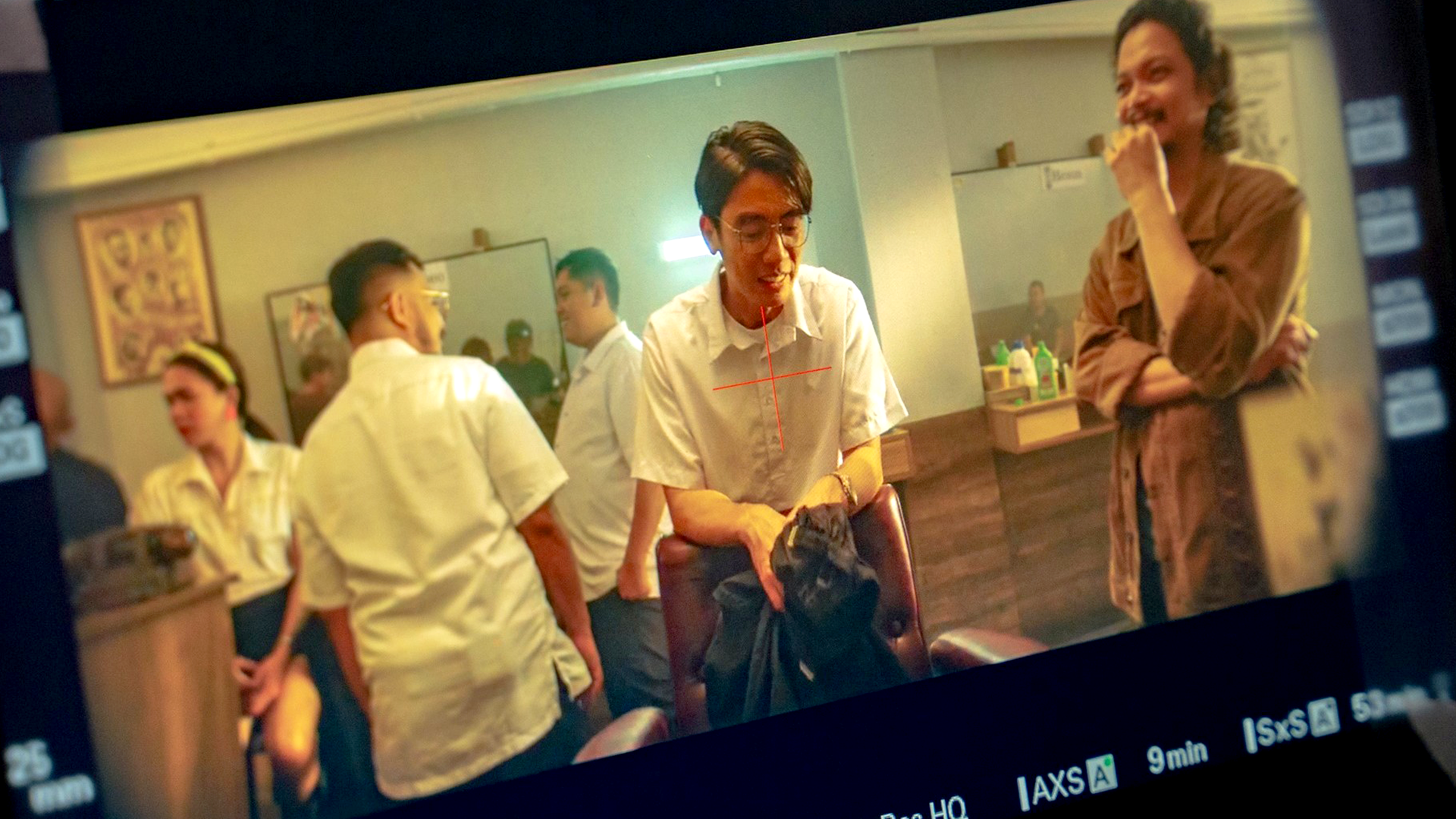
Bacolod filmmaker Vincent Joseph Entuna adds yet another Best Director citation to his growing ledger, this time for ‘Sa Pwesto ni Pistong’ (The Barber’s Chair) at the Margaha Film Festival—a result that reads most like a continuation of form.
If there is a trajectory, it is one that resists compression.
Since its early accolades at the Bacolod Film Festival in 2024, the film has navigated the circuit with a steady, almost deliberate rhythm. It does not rely on novelty, yet it avoids redundancy for its trajectory marked instead by a gradual deepening with each screening invites a different mode of reading.
Formally, ‘Sa Pwesto ni Pistong’ keeps its cards close to its chest, operating with a restraint that is anything but tentative. It doesn’t go all out for spectacle; instead, it lets meaning seep in through slow accumulation—gesture upon gesture, exchange layered over exchange—until what first reads as unassuming begins, almost without fanfare, to speak volumes.
Sitting at the center is a humble barber navigating a turbulent historical period while serving a varied clientele, including a powerful haciendero and an idealistic nephew whose differing worldviews shape the tensions within his small but charged space.

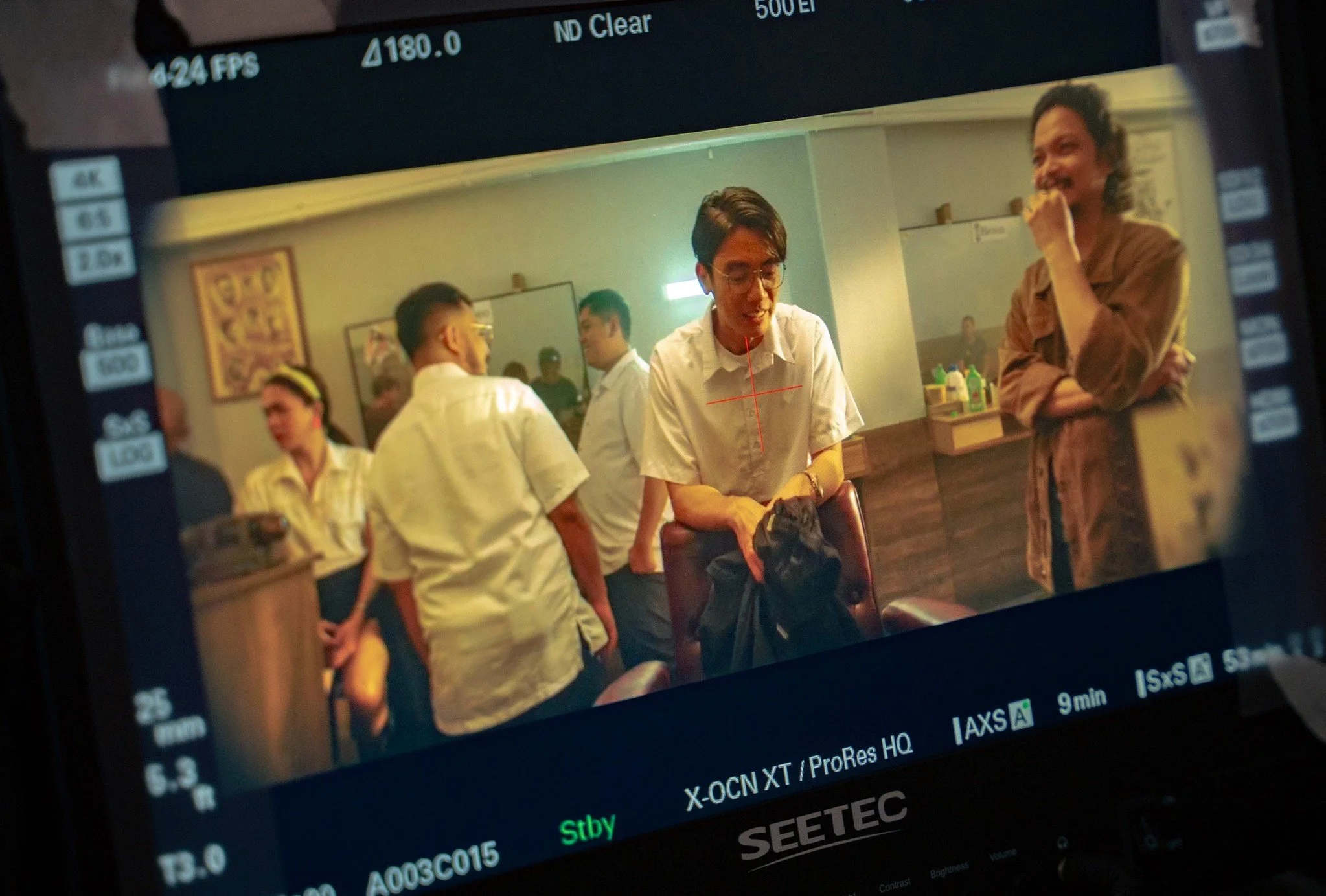
Sa Pwesto ni Pistong actors Nonilon Torpez and Martini Manalo
Between them, the film refuses to draw a hard line as it treads a more delicate path, staging without a clear-cut opposition in fits and starts of power, of memory, and of what is held on to.
The film’s central tension emerges from a carefully held duality of being intimate yet wide-angled, grounded yet porous. It neither inflates its moments nor collapses into austerity; it threads particularity without becoming parochial, and opens outward without sanding its edges
Sa Pwesto ni Pistong assistant director Gian Paulo Suarez and director Vincent Joseph Entuna with actor Martini Manalo
Entuna’s remarks after the win gesture toward a mode of retrieval in which stories function as insistence and return, shaped by memory and continuity. His acknowledgment of the Sagaynon community carries gratitude, situating these narratives, long kept at the margins, within a wider cultural conversation.
In a statement, Entuna expressed his appreciation, saying: “Salamat guid, Sine Margaha kag mga Sagaynon, sa pagbugay sa amon sang oportunidad nga maistorya namon si Pistong kag ang mga tawo nga ginapilit kalimtan.” (“Thank you very much, Sine Margaha and the people of Sagay, for giving us the opportunity to tell the story of Pistong and those who are being pushed into obscurity.”)
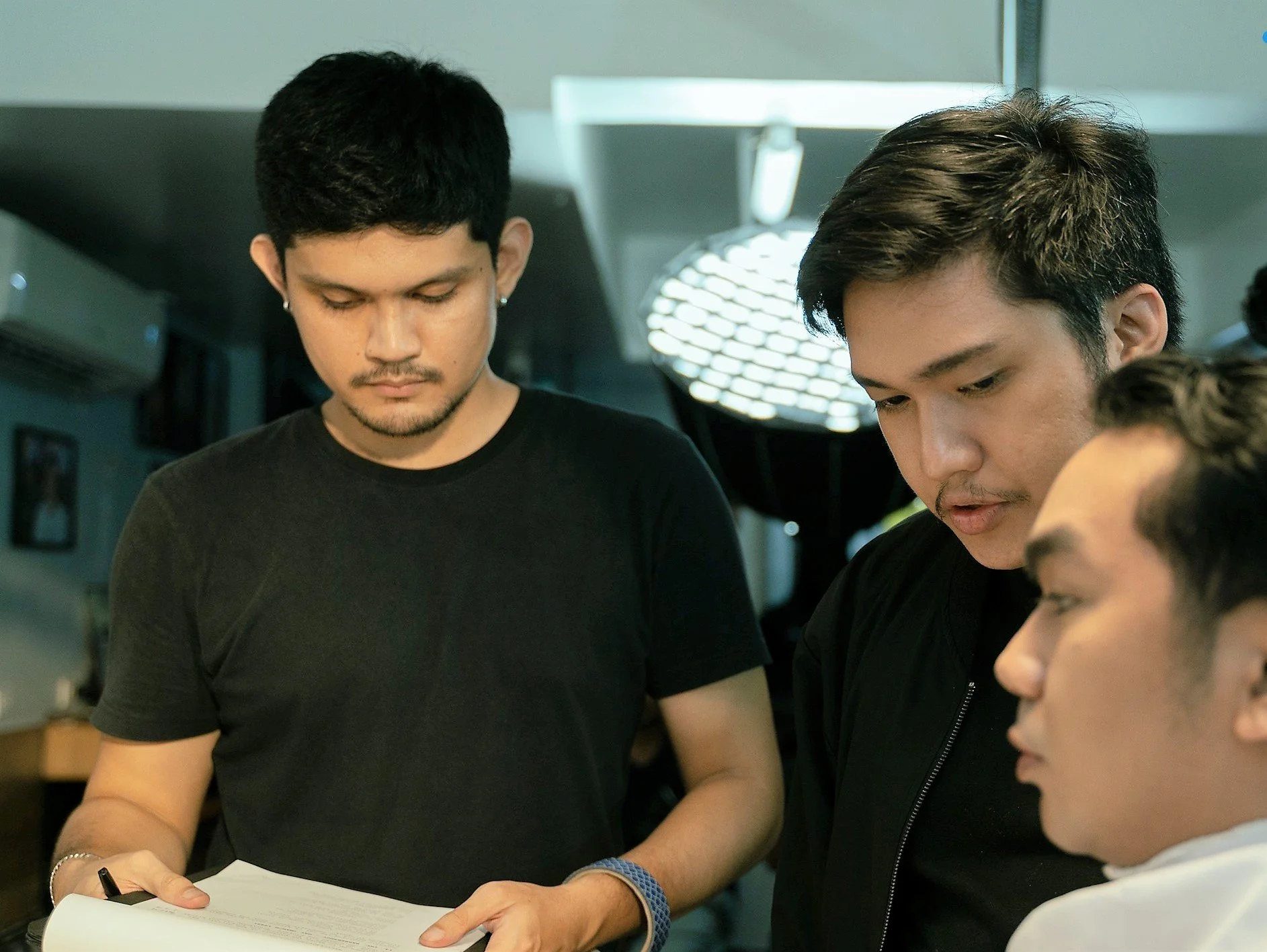
Sa Pwesto ni Pistong actors behind the camera
At the same time, authorship here is neither singular nor diffused, but negotiated. Entuna’s nod to collaborators—director of photography and producer Joshua Fabricante, and assistant director Gian Paulo Suarez—signals a practice that recognizes the director’s hand in self-effacing humility; after all, the film bears a signature composed in humane plurality.
Prior to this, the same feature secured Best Director wins at the Active Vista Human Rights Film Festival and the PangaSine Film Festival in 2025, with each context shaping its legibility in distinct ways. It passes through frameworks of rights and representation, regional authorship, and, in the Margaha Film Festival, curatorial attention to heritage and locality.

Sa Pwesto ni Pistong cinematographer Joshua Fabricante on camera with assistant cameraman Steven Paul Evangelio
Within this ecology, Margaha positions itself beyond the role of a showcase. As Festival Director Helen Arguelles-Cutillar articulates, it “stands as one of its cultural pillars, nurturing filmmakers, expanding audiences, and creating a space where local and regional voices are valued and heard.”
Entuna’s parallel life in the academe further thickens this narrative. As a faculty member at Mapúa University School of Multimedia and Digital Arts and Lyceum of the Philippines University Manila, he basks in a space between theory and practice that do not so much converge as inform one another.

Sa Pwesto ni Pistong cinematographer Joshua Fabricante leads the camera department
The classroom, in this sense, becomes an extension of the work: a site where frameworks are tested, contested, and, occasionally, reworked.
Taken together, Entuna’s current run resists containment. It slips out of accumulation and repetition alike, preferring modulation—of tone, of weight, of register. The effect is a cinema that keeps fine-tuning itself in real time, as if clarity were something arriving sideways.