
The Anatomy of Shame, Silence, and Surviving Womanhood in Sunshine
Antoinette Jadaone’s latest film Sunshine reveals what grace often hides—the burden of being a woman in a nation that denies choice.
Words Jaymar Aquino
Photos courtesy of Project 8 Projects
July 29, 2025
In a country where faith echoes louder than truth and silence is mistaken for virtue, women are taught not to speak but to smile. They learn to glide through pain with grace, to tuck their rage behind pleasantries. The world applauds their poise without ever counting the cost—like cheering for a performer, blind to the blood on her feet.
Sunshine, directed by Antoinette Jadaone, follows a rhythmic gymnast on the verge of her final Olympic chance. Just as she stands closest to her goal, life interrupts with something she never hoped for: the possibility of motherhood.
In what may be her best and most soul-baring performance, Maris Racal delivers a portrayal both visceral and restrained, unflinchingly capturing the slow disintegration of a young athlete forced to make a decision no one ever prepared her for.
The body
In the Philippines, abortion is outlawed in all circumstances, even in cases of rape or when a woman’s life hangs in the balance. But the silence surrounding it has never been enough to stop it. In 2012 alone, an estimated 610,000 abortions were induced. That same year, around 100,000 women were hospitalized due to complications from unsafe procedures, and nearly 1,000 of them died—an average of three deaths every single day.
These figures should not be treated as mere statistics. They are lifelines cut short, confessions swallowed by fear, truths buried where no one dares to look.
For women, the fight has always been closest to the skin—inside the very body they are told to be proud of, but never to own. Sunshine once owned her body. She trained it. She knew her strength, shaped it, trusted it. Every move was hers—until it wasn't. And no one prepares you for the moment when the thing that made you feel powerful becomes the very thing used to take that power away.
The spine
In a nation where Catholicism governs not just souls but bodies, women have long been expected to carry burdens disguised as blessings. Here, more often than not, prayers speak louder than the voices of women asking to be heard.
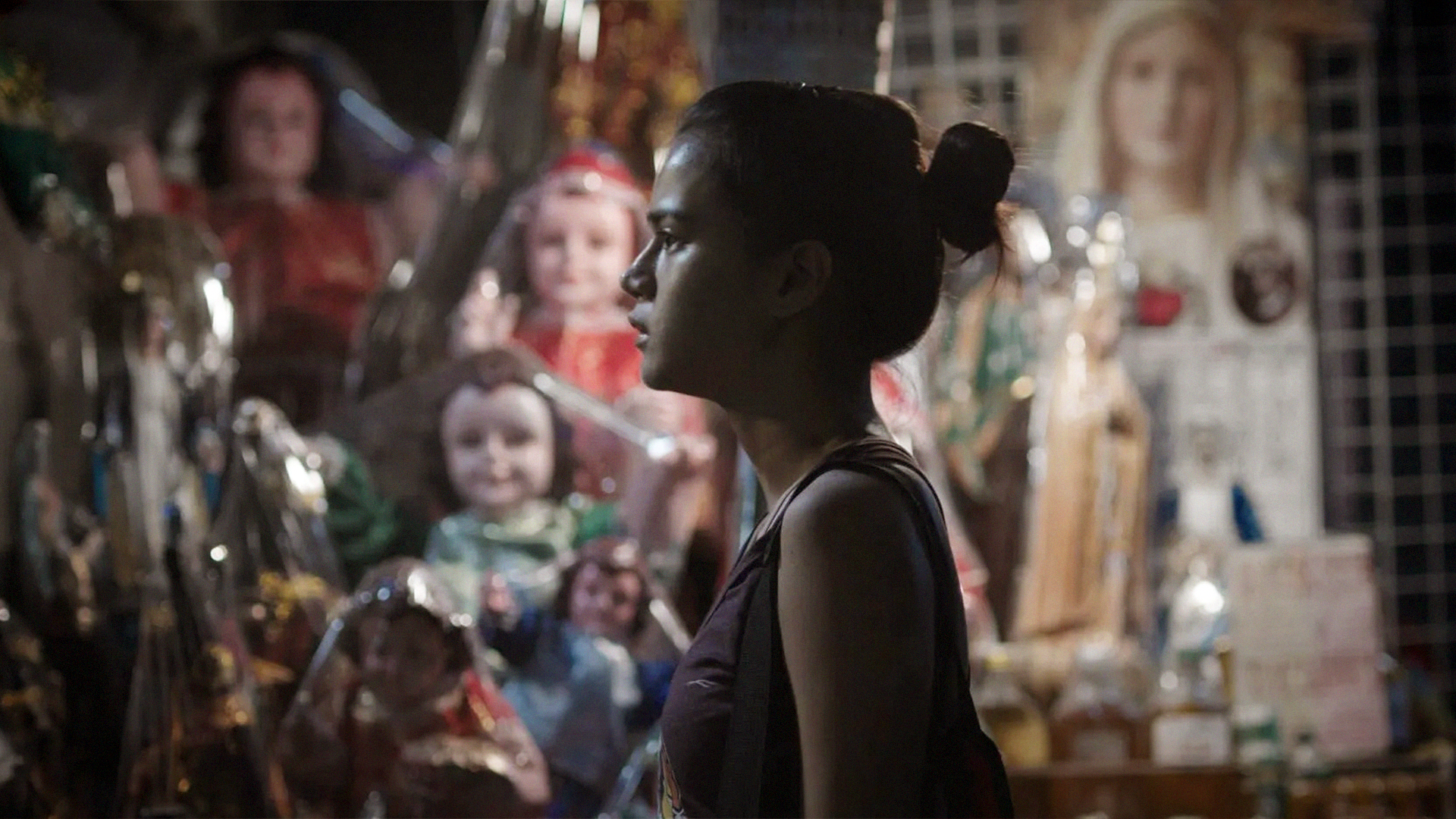
Nowhere is this contradiction more visible than in Quiapo, where most of the film unfolds. Its crowded streets, smoky corners, and sacred spaces become the backdrop to a story that dares to question what we choose to worship and what we choose to hide.
Inside the church, people kneel in devotion, pleading for mercy. Just outside, abortion pills are passed quietly from hand to hand. It is a place where holiness is performed but suffering is traded in whispers.
But Sunshine is not an attack on faith. If anything, it holds space for both reverence and resistance. It does not seek to condemn belief, only to question what happens when it stops being intimate and starts becoming a sentence. When religion is used to control rather than to guide, who gets left behind?
The scar
Sunshine does not carry this weight alone, but it feels like she does, and that is the quiet tragedy so many women live through.
The boy who got her pregnant, portrayed by Elijah Canlas, fades from the picture the moment he’s needed most. He offers no comfort, no apology, not even the decency of shared fear—just the kind of hollow presence that feels heavier than absence. Her best friend Thea, played by Xyriel Manabat, is suddenly told by her parents to keep her distance, as if pregnancy were a stain you could catch by standing too close. Then there’s Bata, brought to life by Annika Co, a child who exists only in Sunshine’s imagination yet lingers like a shadow she can’t outrun.
All this unfolds while Sunshine clings to the only thing she ever truly owned—her dream. A dream built on discipline, sacrifice, and a hunger not just to succeed but to prove herself to her sister, played by Jennica Garcia, and her coach, portrayed by Meryll Soriano.
So it comes as no surprise when Sunshine curses from frame to frame, snaps like a ribbon pulled too tight, and carries her fury like muscle memory. Some say the film leaned into this too much, but when your body is policed, politicized, and punished, what tone could feel more truthful than anger?
The voice
Director Antoinette Jadaone has long given voice to women, but Sunshine does more than just tell a woman’s story. It does not hand us empowerment like a gift with a neat, pink ribbon.
Instead, it provides a spotlight too bright to look away from—illuminating the rules we’ve written, the silence we’ve accepted, and the futures we’ve stolen.
It is a reminder that this country celebrates women for being strong, but we never ask why they need to be. We lift them up when they achieve and abandon them when they bleed.
In the end, Sunshine lands on her feet. The crowd cheers. The lights shine. But behind the smile we saw is a girl who bled in silence, who made the kind of choice no one should have to make just to stay in the game. And though she performs like nothing happened, we know the truth—not every fall happens on the mat.