
‘Seams of Memory’ and What Makes Diasporic Art Visible
In Seams of Memory, Winna Go stitches a Sinophone reverie across canvas, tracing the railroads of identity that bind Filipino and Chinese histories.
Words Randolf Maala-Resueño
Photos courtesy of Art Cube Gallery and Winna Go
April 09, 2026
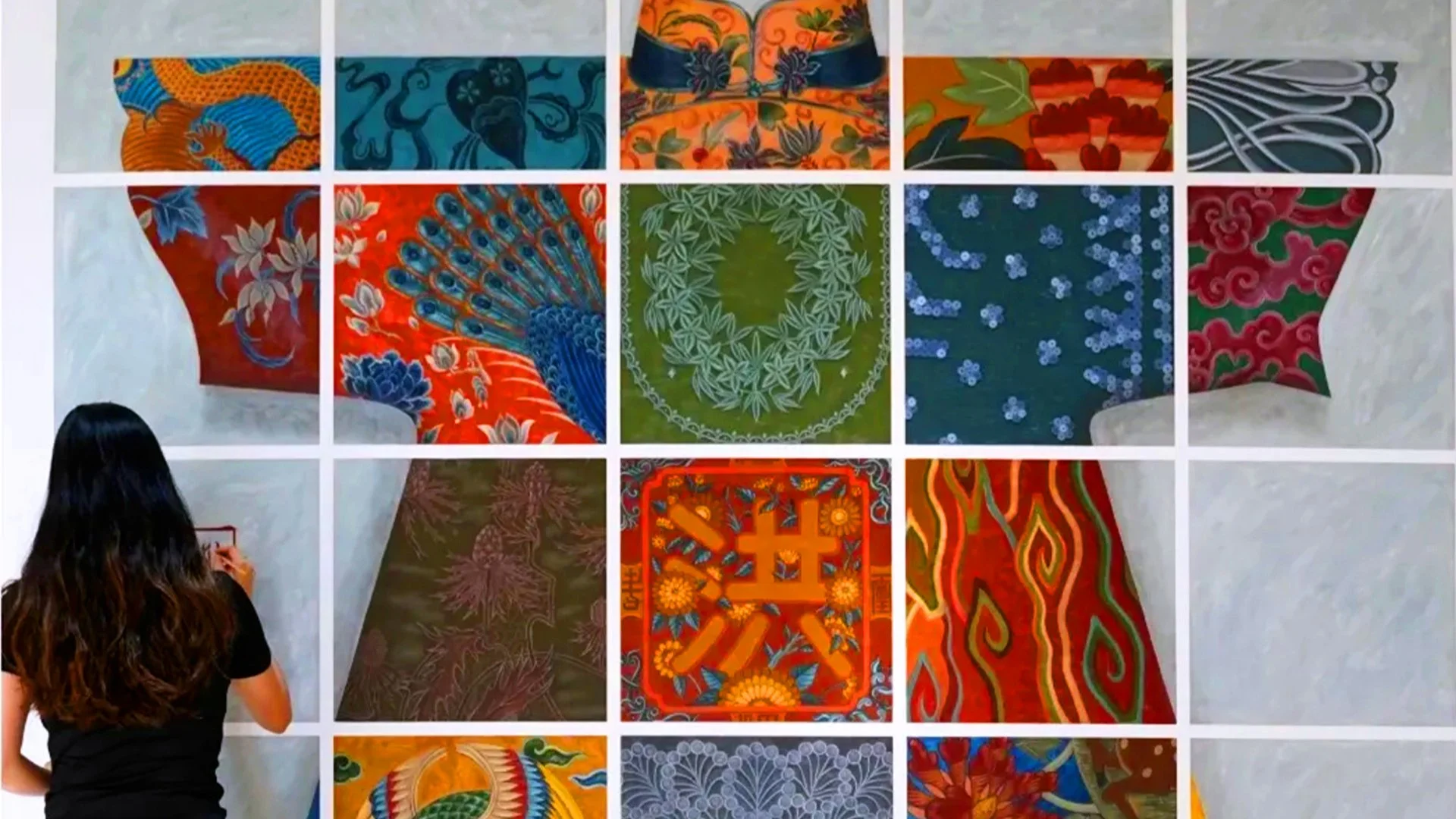
There is a quiet audacity to Winna Go’s "Seams of Memory,” now housed at the Metropolitan Museum of Manila. Less on attention, it gathered slowly, like fabric folded over time, like memory pressed into cloth.
Rendered in meticulous fabric to oil translations, her canvases became inheritances. A red cheongsam transcends its costume-esque vessel, holding histories that exceed borders. It is here where Go’s work lingers, in that charged space between the personal and the geopolitical, between reverie and record.
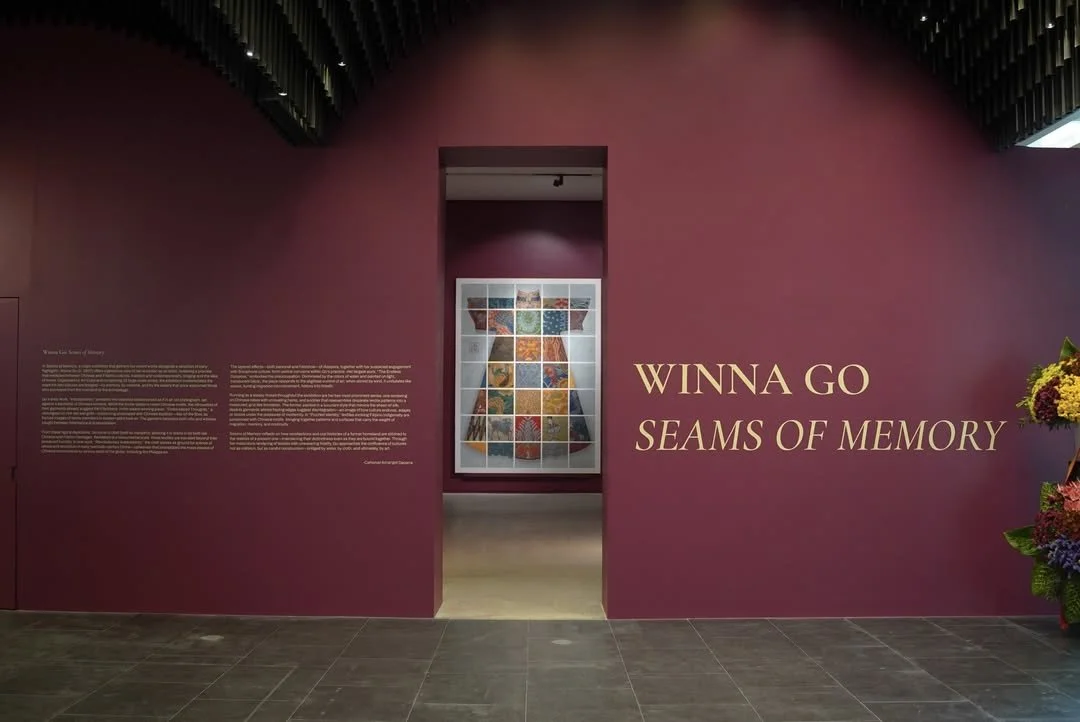
The M Museum President Tina Colayco describes the exhibition as “a mirror of her heritage,” and the metaphor holds. But mirrors, in Go’s hands, are not passive. They refract. They complicate. They insist on multiplicity.
Her practice emerges from a deep engagement with the Sinophone condition, one shaped by language, migration, and the uneasy elasticity of belonging. What unfolds across the gallery walls is a visual mapping of the East Asian diaspora, where garments become archives and ornamentation becomes language. Each thread gestures toward a lineage both remembered and reimagined.
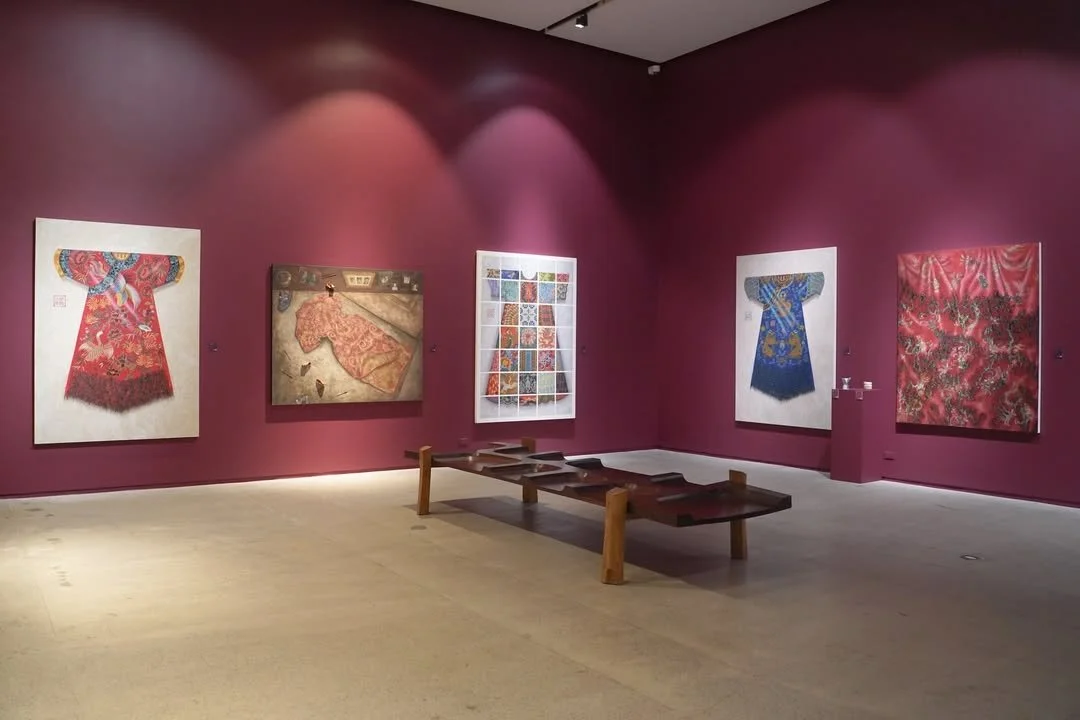
Go herself calls the exhibition a “visual diary,” a phrase that initially feels too modest for the scale of inquiry at play. Yet, perhaps that is the point. Diaries are where contradictions live freely. They are where identity resists simplification.
Her recollection of being asked, during her undergraduate thesis defense, to choose between China and the Philippines reveals the quiet violence of binary thinking. “Hundreds of pages reduced to a single question,” she recalls. That reduction, that imposed singularity, becomes the tension her works now resist.
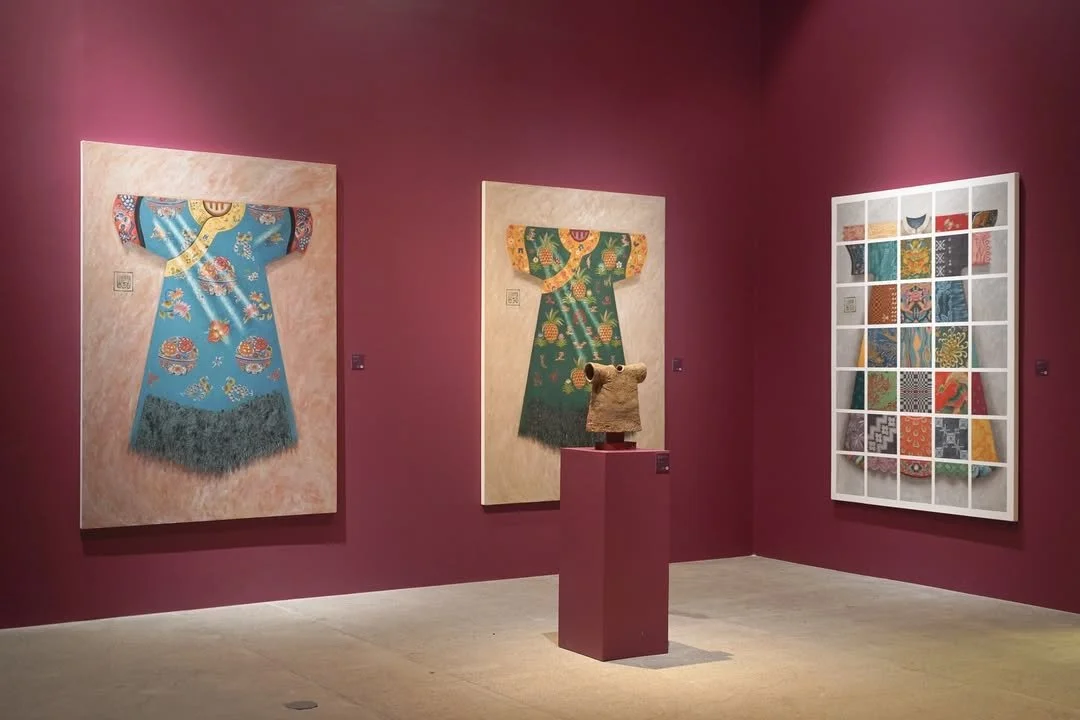
Instead, "Seams of Memory" proposes something else: railroads of identity that do not lead to a single destination but branch outward, intersecting across time and geography. The imagery of clothing, particularly the recurring red cheongsam, becomes both armor and offering. It is at once intimate and performative, shaped by both self-perception and external gaze.
Her years at Taipei National University of the Arts further deepen this inquiry, positioning her within a broader discourse that challenges dominant notions of Chineseness. In Go’s work, identity is not inherited whole. It is negotiated, fragmented, and ultimately, self-authored.
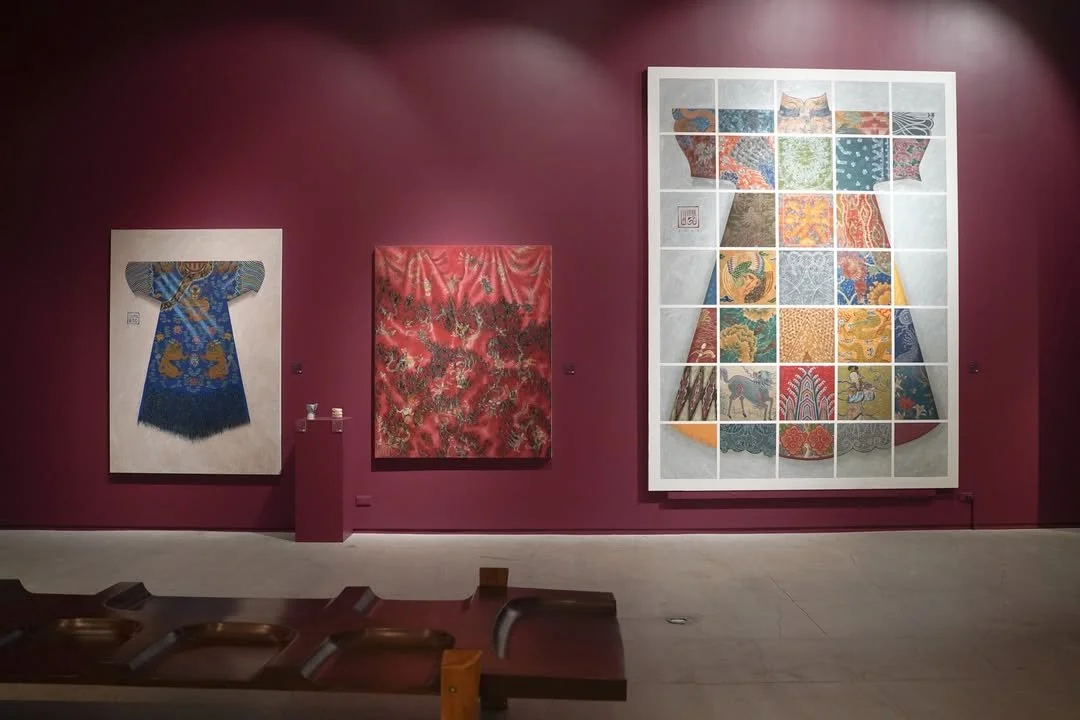
And yet, for all its theoretical grounding, the exhibition never loses its emotional core. There is tenderness in the way fabric folds are painted, in the way patterns repeat like remembered lullabies. A softness that counters the rigidity of borders.
In a cultural moment where identity is often demanded to be legible, fixed, and declared, Go offers something more generous. A reverie. A refusal. A remembering.
In partnership with the Art Cube Gallery, “Seams of Memory” is open until July 12, 2026 at the MET Museum in Bonifacio Global City.