Nicolas Aca Jr. and the Weight of the Nation
From ghost flood control projects to the concrete colonization of mountains, Nicolas Aca Jr. uses art to expose the fractures of a failing system.
Words Gerie Marie Consolacion
Photos courtesy of Nicolas Aca Jr.
November 19, 2025
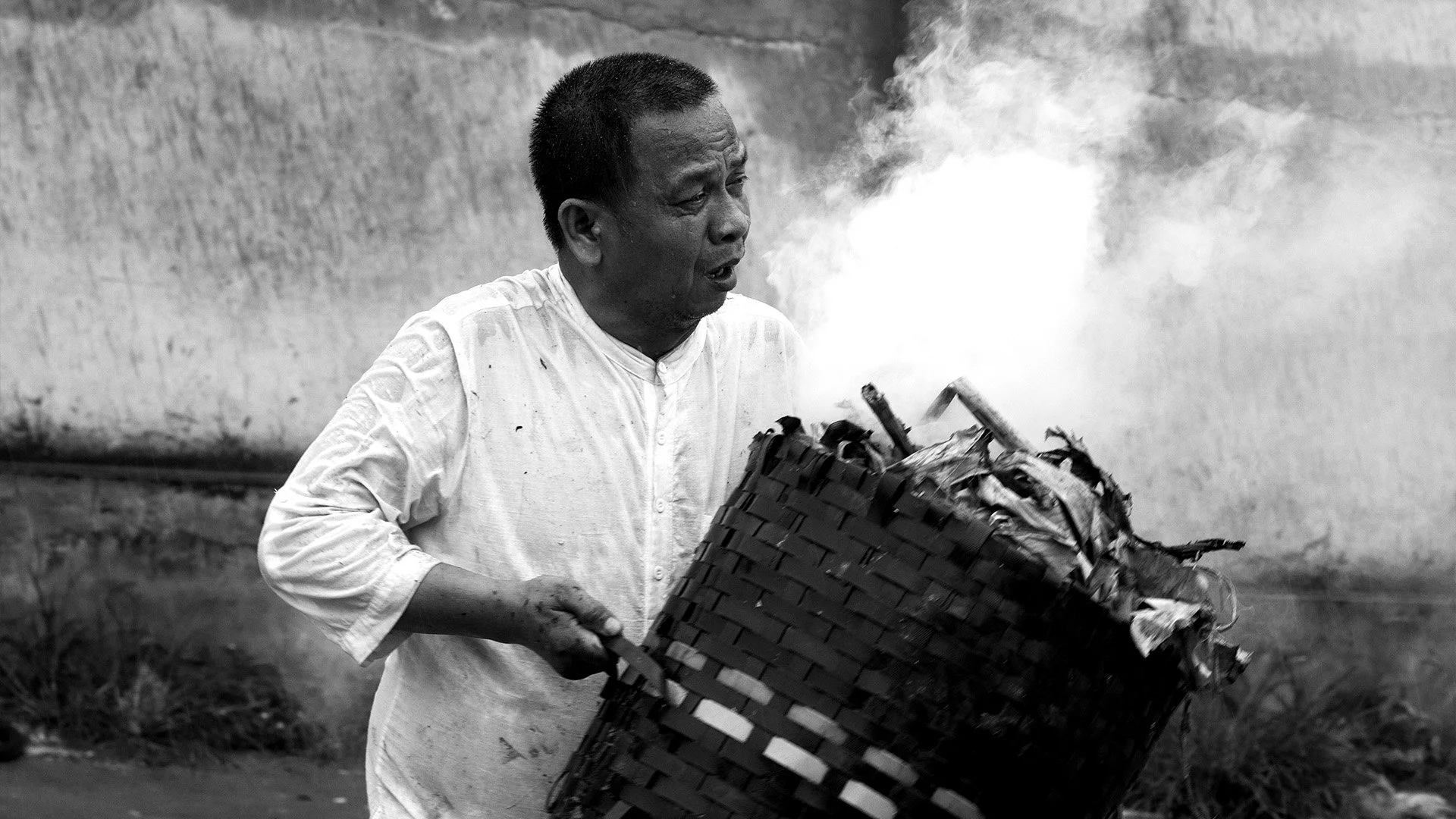
The song from Hamilton could well be about this man.
“If you see him in the street, walking by himself, talking to himself, have pity. He’s doing the unimaginable.”
Because Nicolas Aca Jr. is not the kind of man who strolls through life seeking calm, nor the type who shops for joy in the everyday. His solitude carries weight. His silence hums with intent. He is, as the song says, doing the unimaginable.
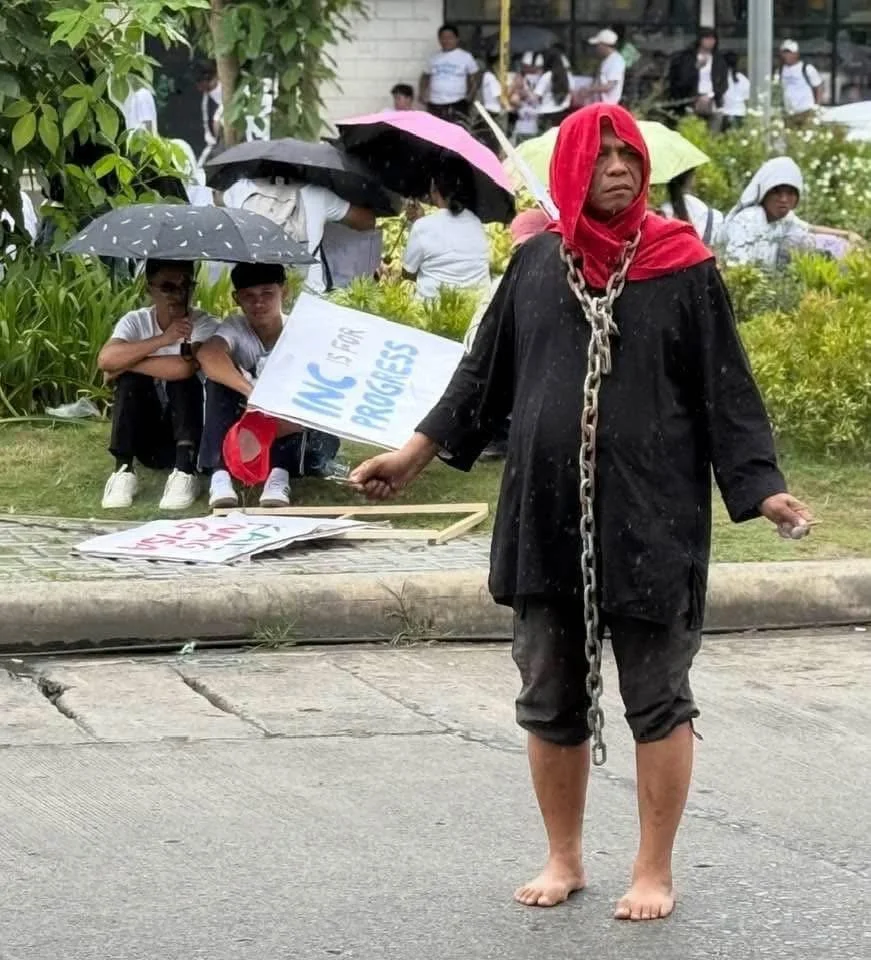
Aca’s Poor Peace performance at Cagayan de Oro early this year.
But what does unimaginable mean in a country like ours?
It is not painting for beauty’s sake, nor performing for applause. It is using art as a weapon, and a wound, to make people demand accountability from those who swore to protect them, yet abandoned them instead. It is the audacity to speak when silence is safer.
And the danger? It’s not the gun, nor the roulette. It’s something far quieter, far crueler: corruption.
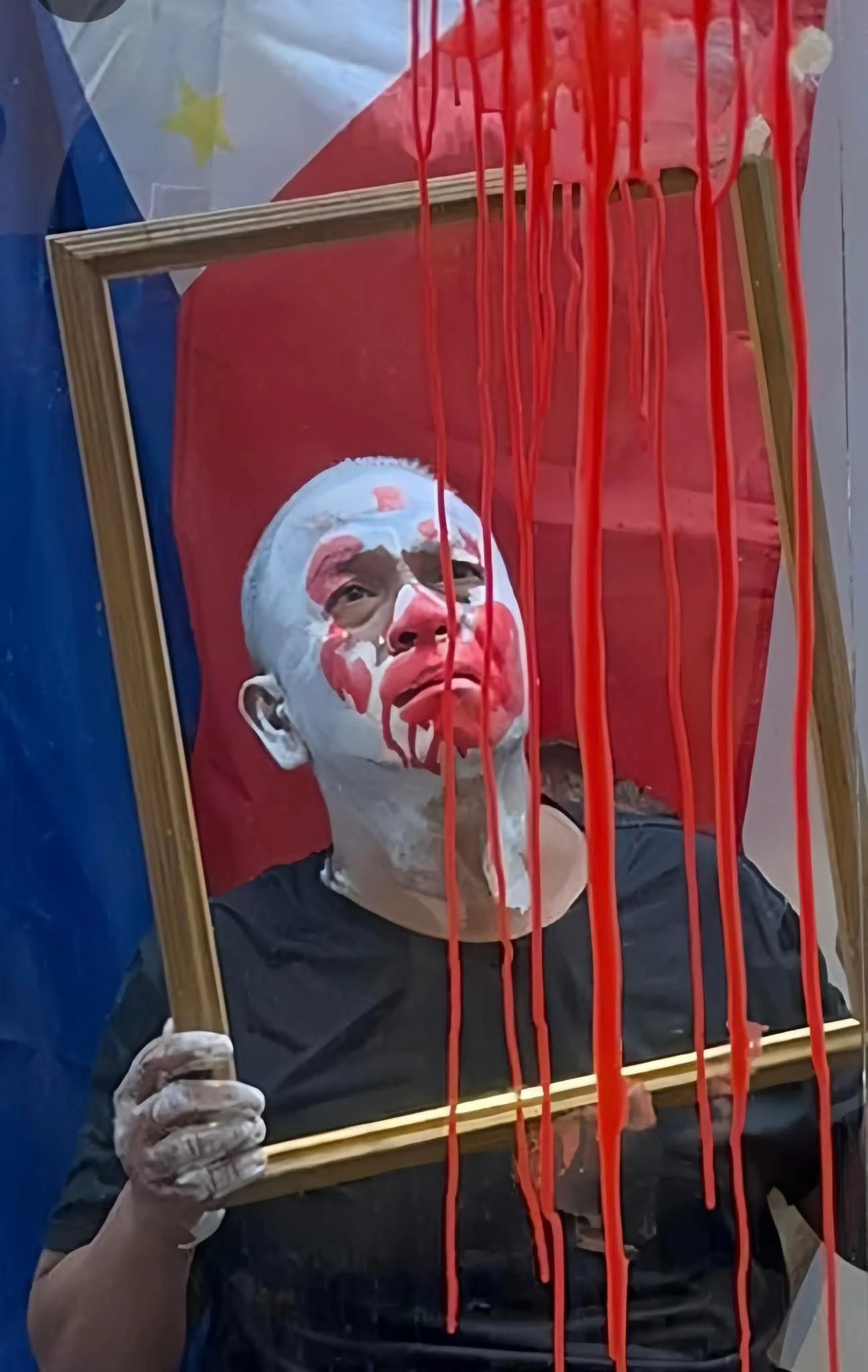
Aca’s Pinastruggle performance at Cagayan de Oro this year.
The kind that steals the very lifelines meant to save lives. Funds for flood control, for safer roads, for homes that will not drown. The kind that turns taxes into tombstones.
Because when the storm comes, and it always does, that’s when truth breaks the surface. Corruption kills.
In an exclusive interview with Art+ Magazine, Aca’s words cut through the noise like a prayer:
“Art is not just decoration. Ito ay moral act. Hindi ako komportable na manahimik habang may nangyayaring mali. Art became my protest, my prayer, my way of saying hindi ako bulag.”
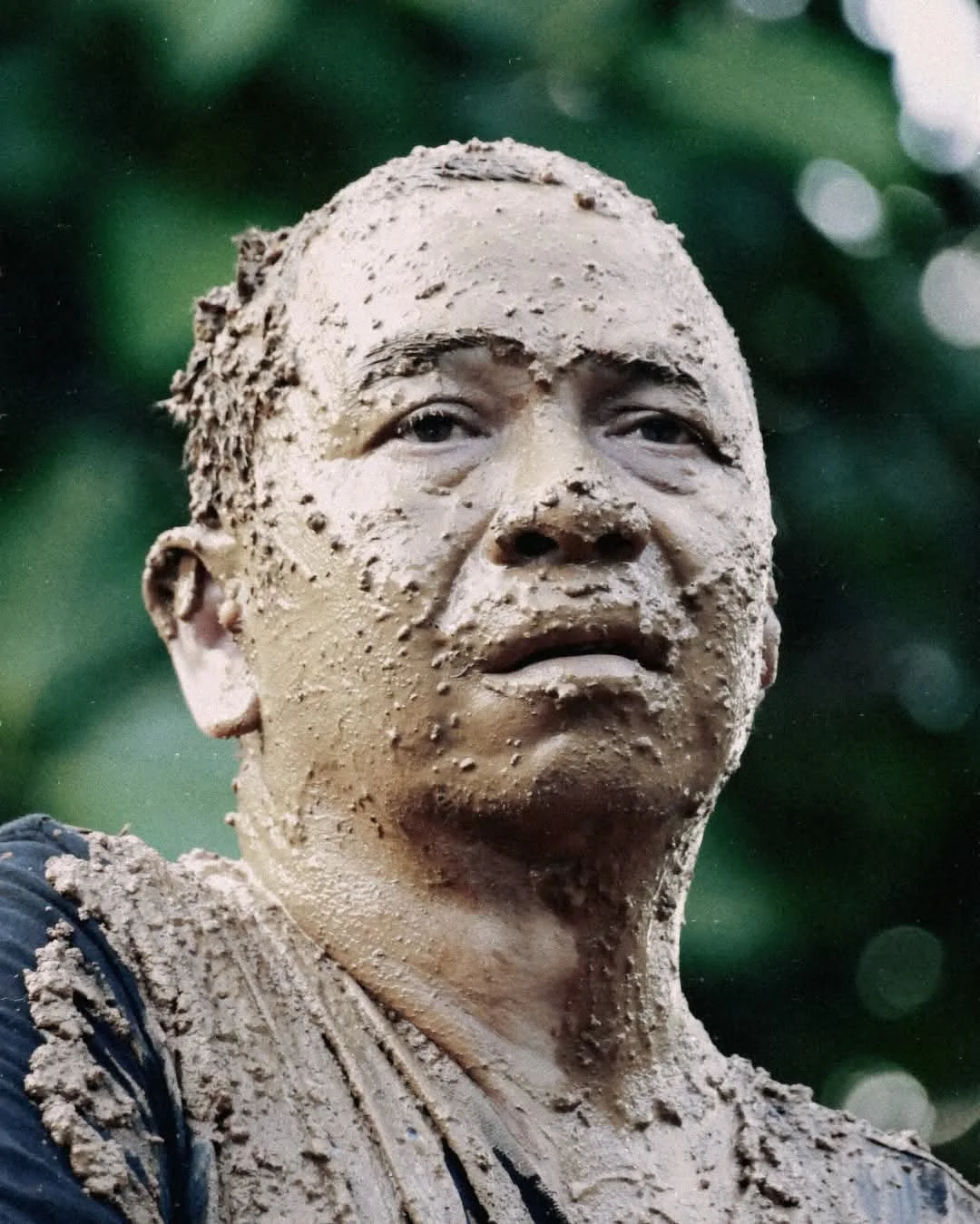
Aca during his performance ‘Nature Embrace’ at Cagayan de Oro early this year.
Because when the waters rise, truth surfaces.
And as the country reels from back-to-back super typhoons, where lives, homes, and histories were swallowed by floods, Aca stands among the wreckage, not merely as a witness, but as conscience.
His art, born of found debris and human memory, exposes what nature only reveals: that the storm is not just in the skies, but in the system itself
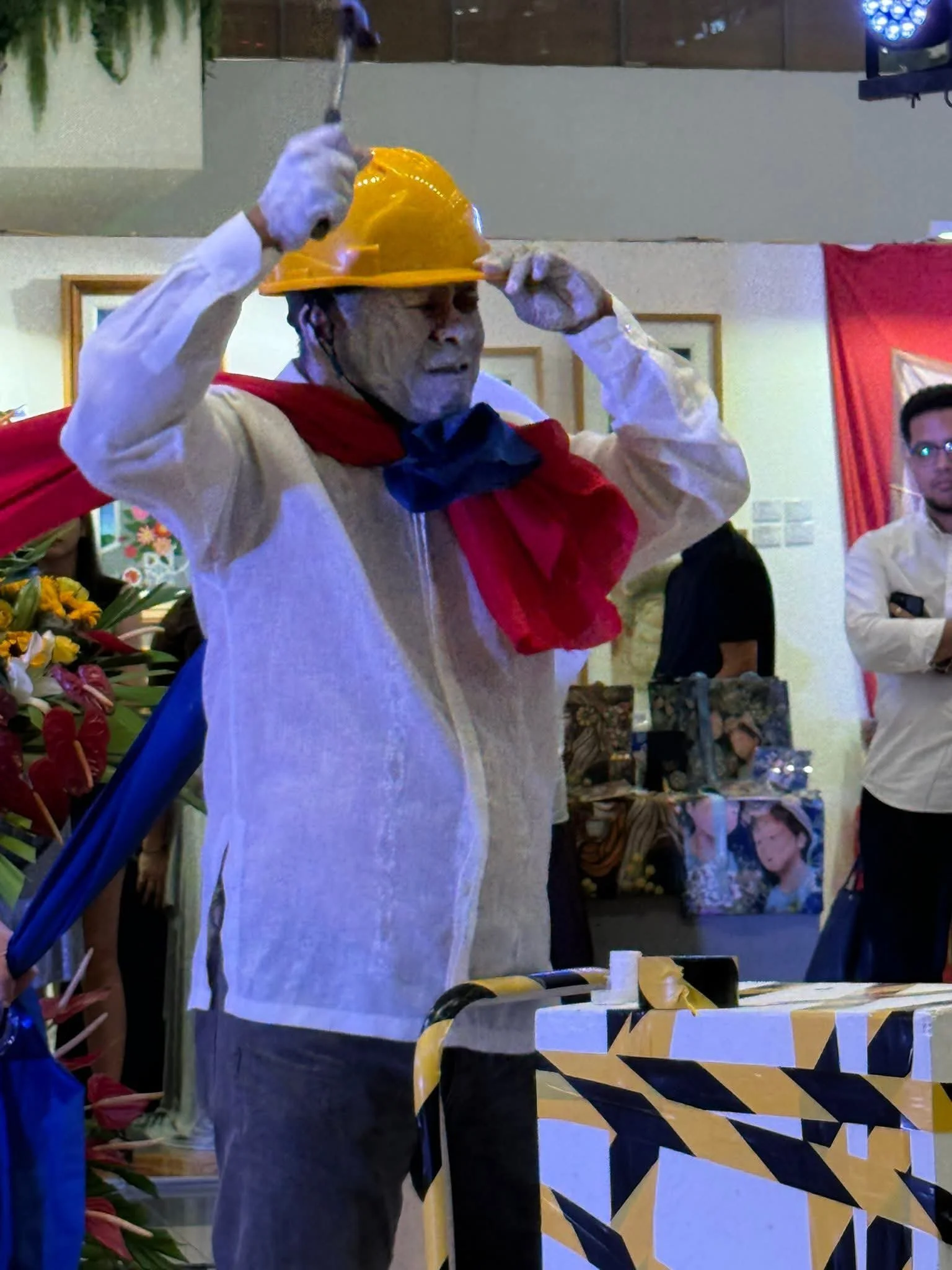
Aca and his Korapsyon Series early this year representing the ghost flood projects.
Floodwaters, he reminds us, are not purely natural. They are political—swelling with the weight of ghost projects, commercialized mountains, and the quiet corruption that seeps deeper than rain.
For Aca, creation has always been confrontation: “Kung may kakayahan akong magsalita sa pamamagitan ng sining, then I must,” he says. “Art is not an escape from reality—it’s a confrontation with it.”
Roots in fragility
Before the performances and protest pieces, there was a boy in Mindanao collecting fallen bird’s nests. Aca arranged them carefully—preserving what nature had abandoned. At the time, he didn’t think of it as art. But even then, the impulse to protect what was fragile was already his act of creation.
“I was simply drawn to the idea of preserving something fragile and giving it a new form or meaning,” he recalls. “Only later did I realize it was an act of expression.”
Mindanao, with its stunning contradictions, beauty and conflict, poverty and resilience, formed the ground where his political and creative sensibilities took root.
“Mindanao is full of contradictions,” he says. “That contrast sharpened my political awareness. Living here reminds me that silence is never neutral.”
Assemblage of a broken system
Aca’s assemblages, sculptural compositions made from discarded materials, mirror the chaos of a country grappling with waste, corruption, and neglect. Each piece begins with collecting the discarded: wood, metal, or objects salvaged from flood sites.
“Basura ng sistema, ginawang sining,” he explains. “These objects carry stories of use, damage, and abandonment. When I rebuild them, I’m not just creating art—I’m building a mirror.”
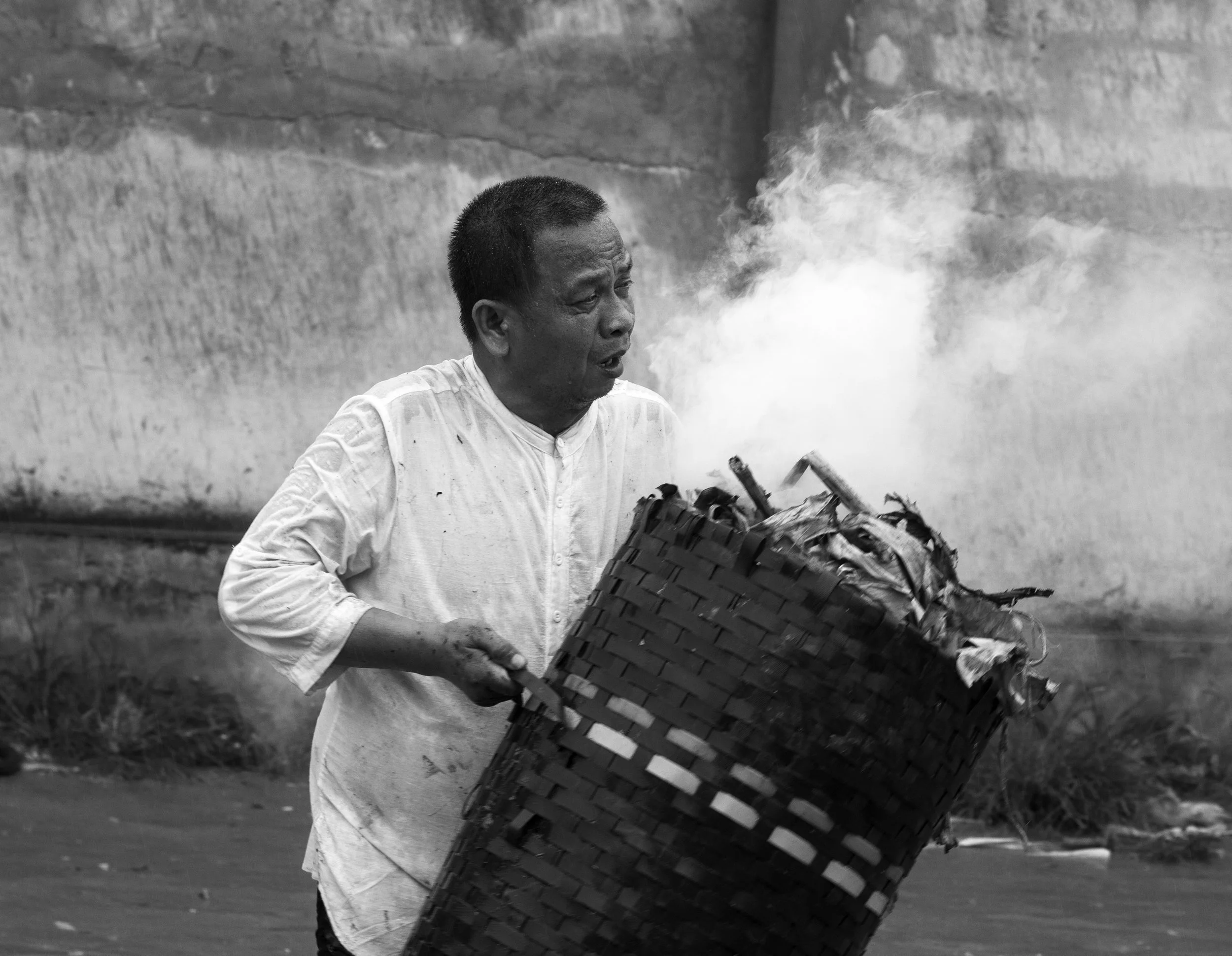
Aca’s performance ‘Warm Embrace’ at Togo, Africa last 2023
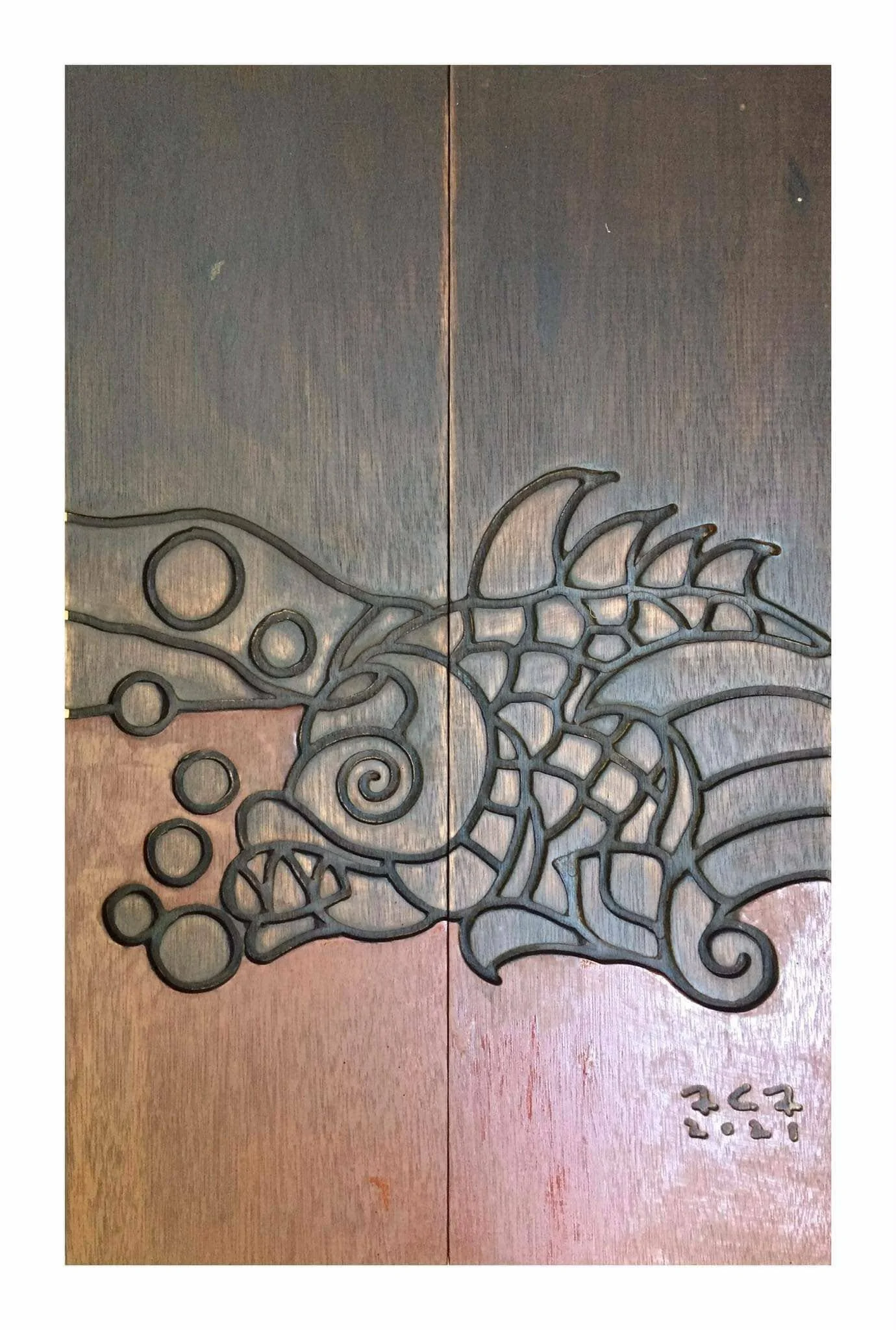
His latest wood reliefs reflect environmental destruction and the commercialization of land. As developers carve mountains into luxury estates like the controversial Monterazzas in Cebu, spearheaded by celebrity engineer Slater Young, Aca asks a haunting question: What are we willing to bury for the illusion of progress?
“We are burying ourselves in cement,” he says. “The same mountains that once shielded us from storms are now flattened for luxury homes. We live on borrowed land, and yet we behave like landlords of disaster.”
Performance as protest
If assemblage is his mirror, performance is his megaphone.
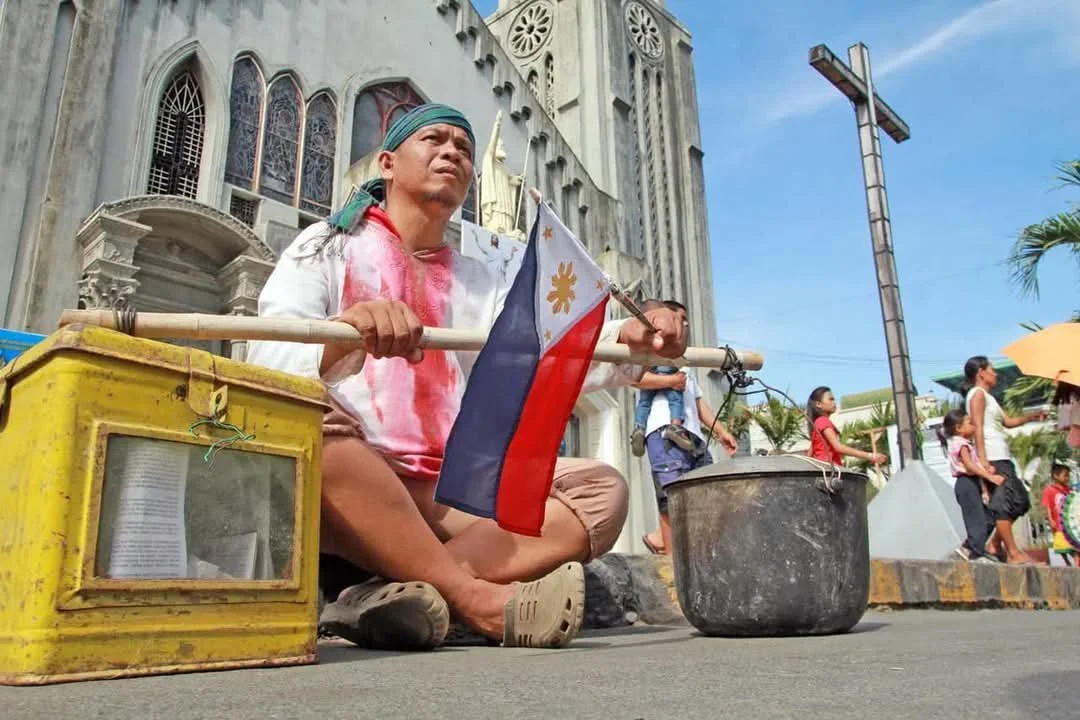
Aca during his performance Boto Goto at Cagayan de Oro last 2016
Since 2014, Aca has performed “BOTO GOTO” every election season: an unflinching commentary on vote-buying, corruption, and moral decay. Using his body as canvas and ritual, he confronts audiences in public spaces—markets, streets, or plazas transforming passive spectators into moral participants.
“‘‘BOTO GOTO’ wasn’t just a performance,” Aca shares. “It became a public conversation. I saw people crying, questioning, reflecting about their role in society. For me, that’s the real impact—when art stirs the conscience.”
His performances are often visceral: soaked in symbolism, grounded in anger and grief. “Performance is a ritual,” he says. “Each gesture carries pain, anger, and hope. Art becomes therapy and resistance at the same time.”
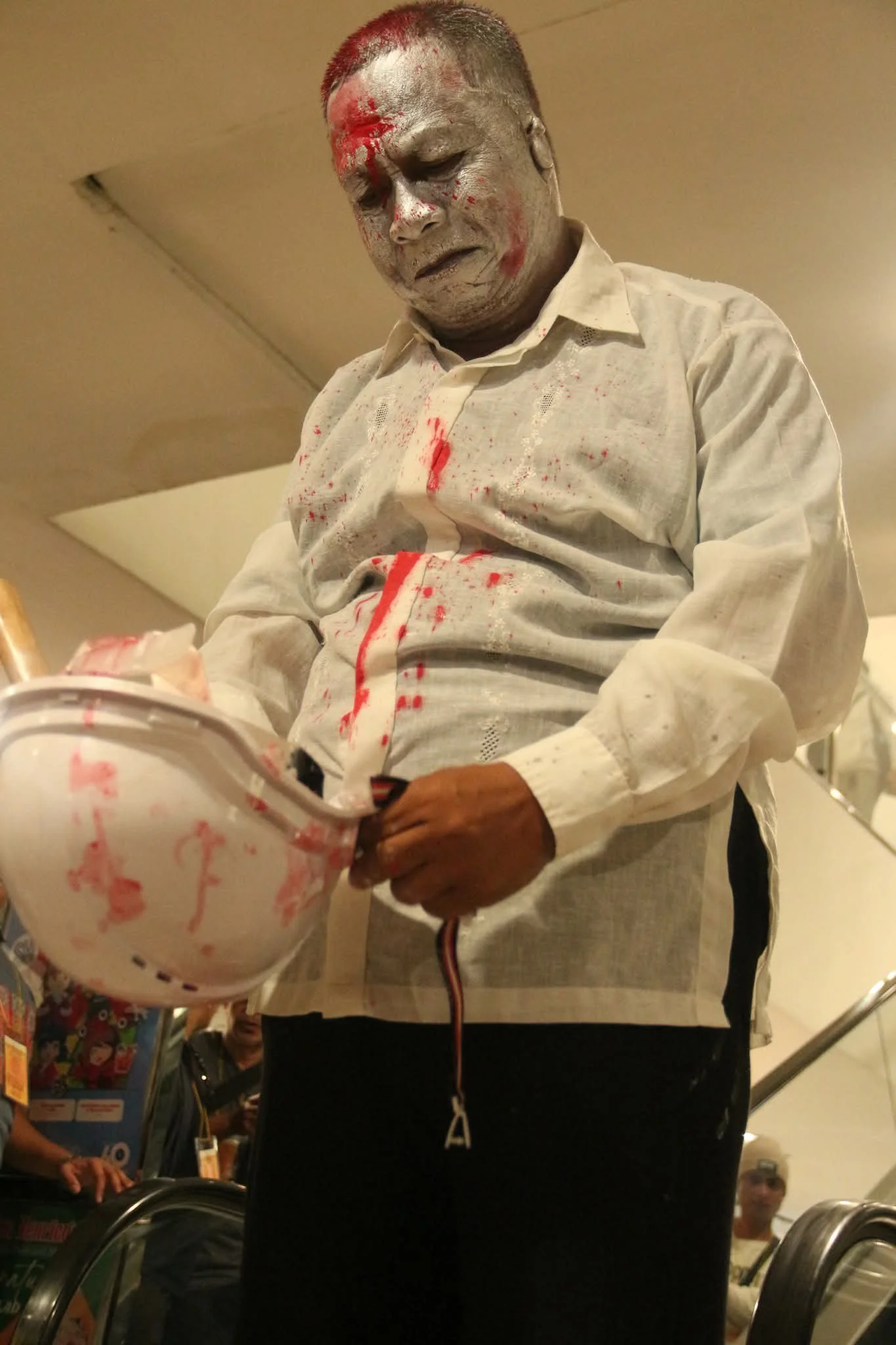
Aca and his Korapsyon Series early this year representing the ghost flood projects.
Art beyond walls
Aca rejects the exclusivity of galleries. “Art belongs to everyone,” he insists. “Kapag nasa kalsada o komunidad ang art, nagiging mas totoo, mas buhay. It becomes a dialogue, not just an exhibition.”
Reactions vary—some viewers are disturbed, others moved. “May natatakot, may naaantig,” he shared. “Pero ang mahalaga, nagising sila kahit sandali. Art should disrupt the routine, force reflection. That’s when it fulfills its purpose.”
“A good protest artwork doesn’t need to shout,” he adds. “Hindi kailangang sumigaw, pero dapat maramdaman. It should make people uncomfortable—but also aware.”
As witness and warrior
In a time of disinformation and performative patriotism, Aca positions himself as both witness and warrior—a keeper of truth in a landscape of denial.
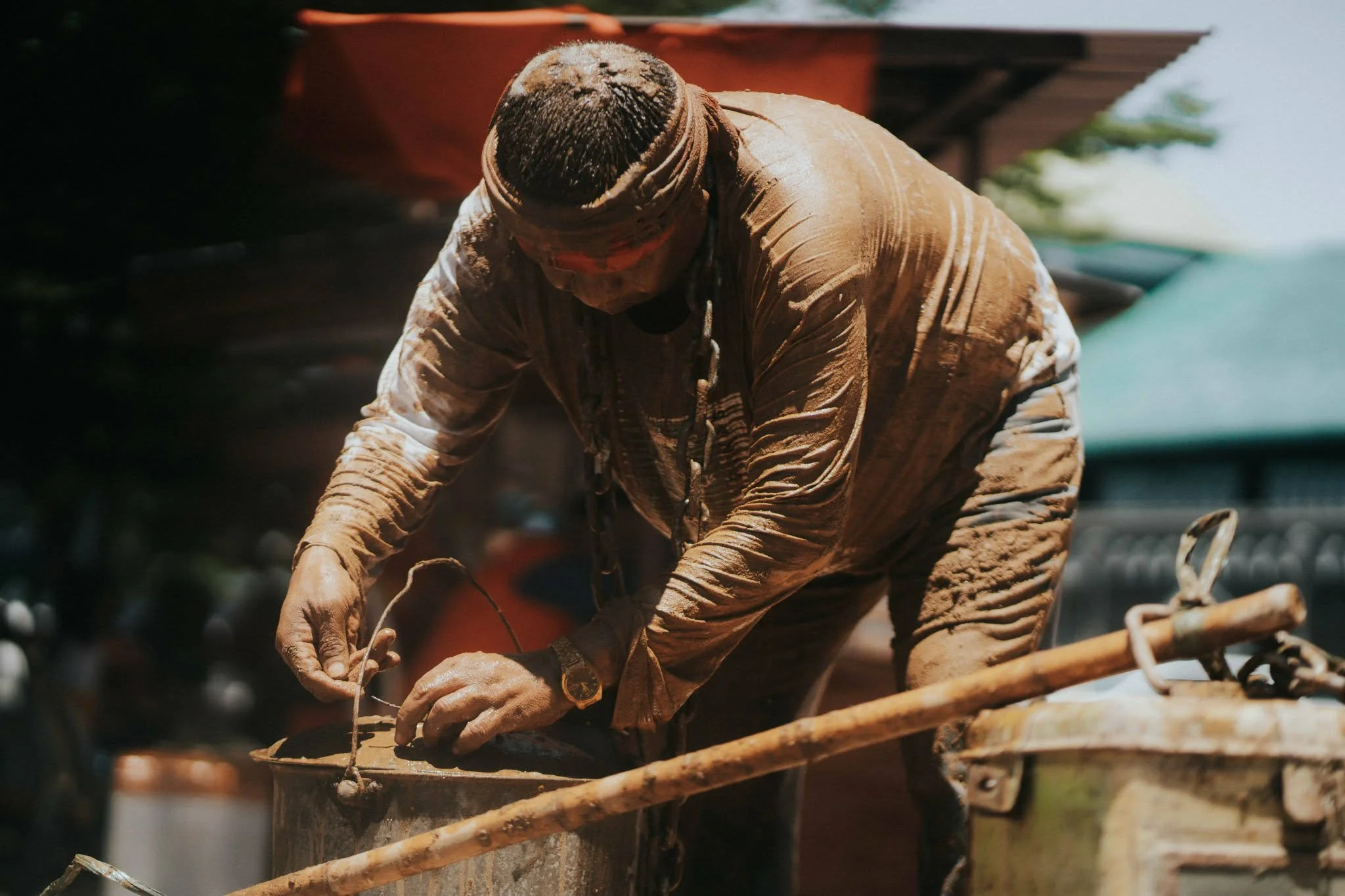
Aca’s Boto Goto at Cagayan de Oro last May 2025
“Ang artist ngayon dapat witness at warrior at the same time,” he says. “Tagapagdala ng katotohanan, tagapag-ingat ng memorya.”
He has faced criticism for his politically charged works but remains unfazed. “Natural lang na may backlash,” he admits. “But I fear my own silence more than other people’s opinions. Mas delikado kung mawalan ako ng boses.”
Every storm, every scandal, every flood that claims lives renews his urgency. “Mas nagiging urgent ang mga gawa ko ngayon,” he reflects. “With all the disinformation and apathy, I feel a responsibility to speak louder—but also to show that truth can heal.”
Between resistance and healing
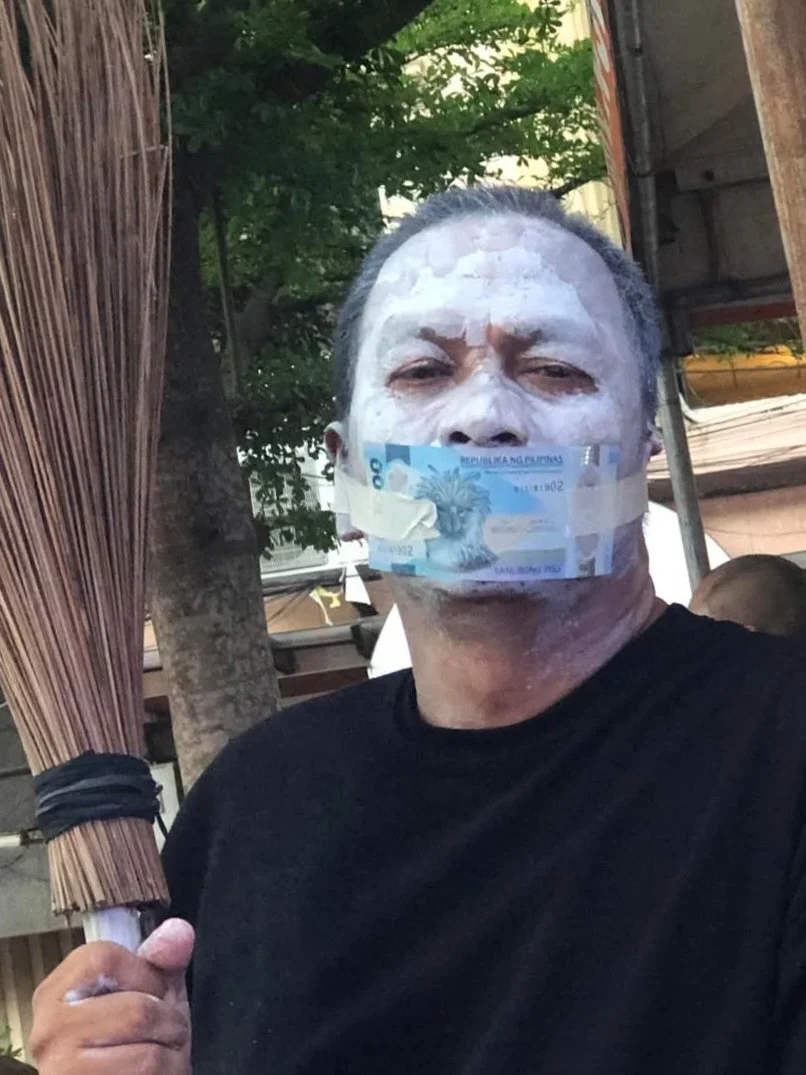
Aca’s Tupad at Cagayan de Oro, 2025
“Resistance without healing becomes bitterness,” Aca says. “Healing without resistance becomes denial. Kaya kailangan sabay.”
His art straddles both: anger and empathy, pain and possibility. Each piece is both confrontation and catharsis—a demand for justice and a gesture of hope. In this, Aca’s practice transcends protest. It becomes a language of survival.
“Walang neutral sa lipunang may inaapi,” he insists. “Choosing to stay silent is already a stance.”
Looking forward
Even as his works reach international platforms, Aca’s heart remains rooted in the Philippines. “Gusto kong ipakita na kahit sa ibang kultura, socially engaged art can resonate,” he says.
“Pero lagi akong babalik sa kung saan ako nagsimula—sa mga isyung bumubuhay sa atin, at sa mga sugat na ayaw nating tingnan.”

Aca’s Redbound at Kunming, China, 2025
He envisions a future where art education fosters empathy and critical thinking, where communities create, question, and resist together. Because for him, art is not a refuge from the storm. It is the storm—unrelenting, cleansing, necessary.
And now, as the storms drift past our shores and the waters slowly draw back, the nation learns, once more, how to rebuild. How to trust. How to believe. How to hope.
With his words, “When the floodwaters recede, we must ask not just how nature failed us, but how we failed each other.”
Because in a nation that keeps rebuilding the same broken systems, Nicolas Aca Jr. reminds us that art is not there to decorate the ruins, but to expose the hands that built them.