
Moonwalking to the Last Time Music Belonged to Everyone
In the age of niche feeds and infinite scroll, Michael reaches for something almost extinct: everyone watching the same star.
Words Bernadette Soriano
Photos courtesy of IMDb
May 13, 2026
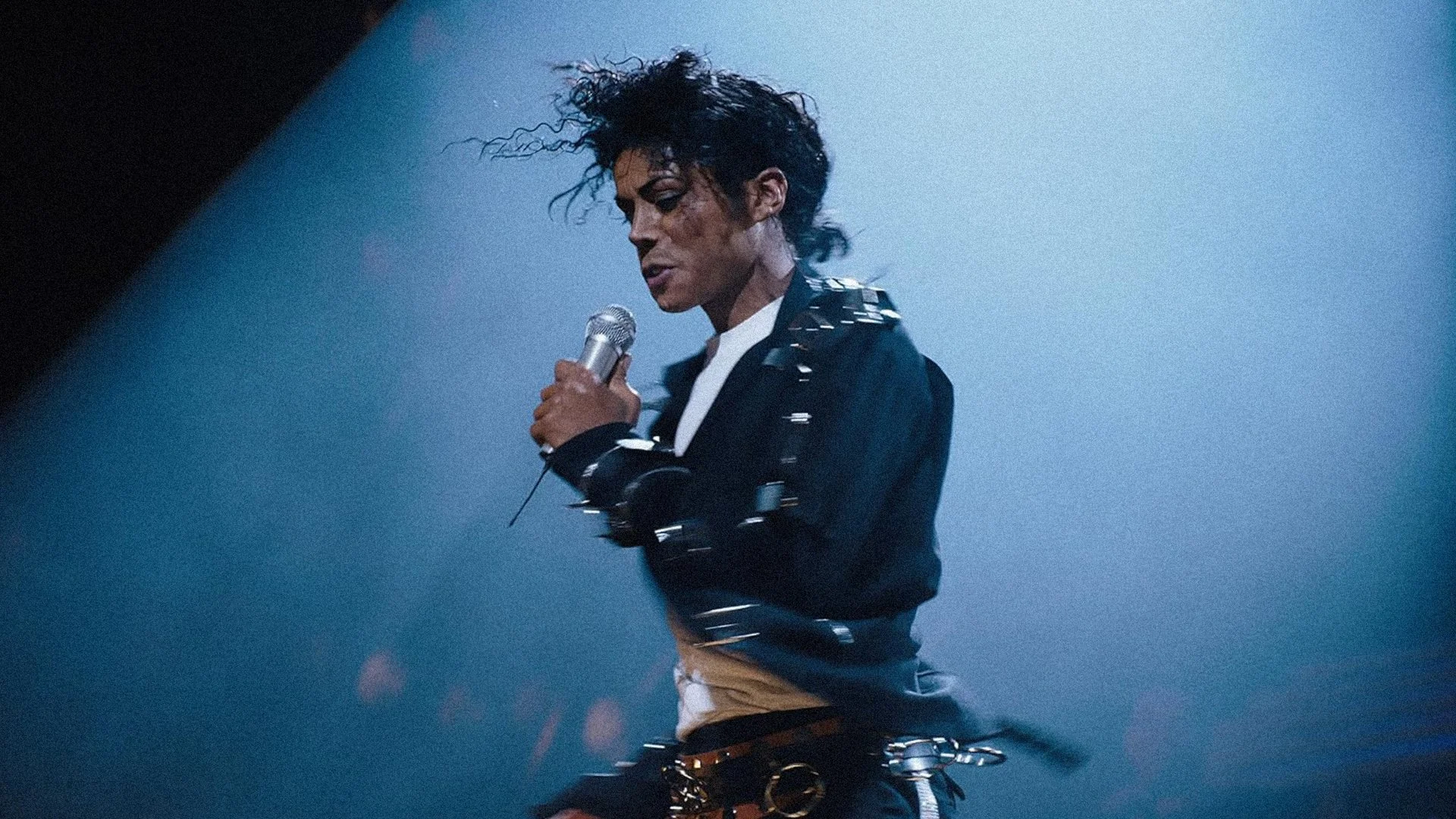
There is a peculiar irony to the way we consume culture now: never has access been so boundless, and yet never has experience felt so personalized.
Once upon a time, taste was not merely acquired; it was inherited, passed down like a well-thumbed book or a vinyl with faint scratches.
Before algorithms learned to anticipate our desires, culture often arrived unannounced, even woven into the texture of everyday life.
My own introduction to Michael Jackson did not come from a curated playlist but from the incidental intimacy of Sunday mornings spent on car radios, weekend chores, and the slow hum of speakers filling the house.
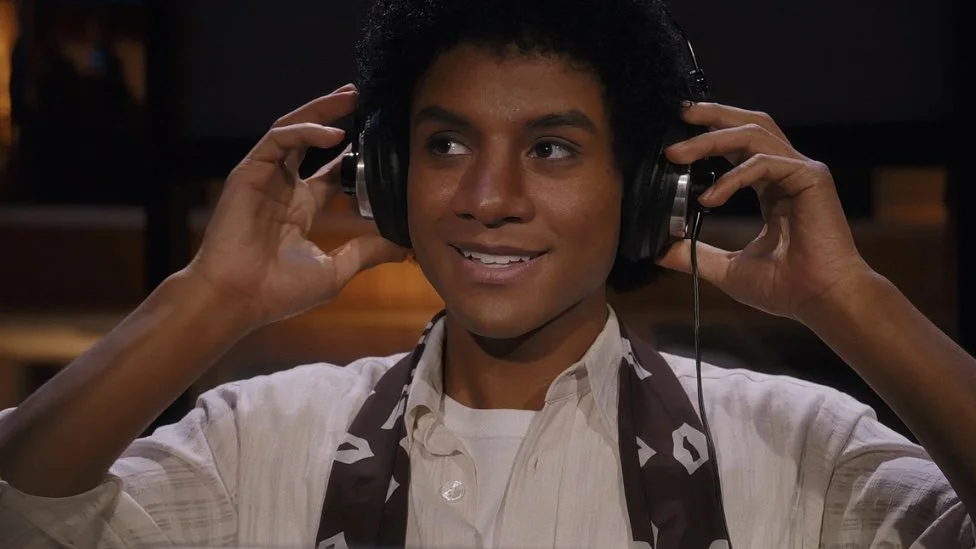
And in a feed-splintered world where most of us are left to our own devices, Michael, directed by Antoine Fuqua, attempts the nostalgic gamble of making Michael Jackson feel generationally universal once more—not merely famous or iconic, but omnipresent in the old monocultural sense, his presence stretching across radio stations, television broadcasts, shopping malls, tabloids, school dances, and collective memory alike.
There may never be another Michael Jackson because there may never again be the cultural conditions capable of producing someone like him.
Editing a Legend Into Existence
Structurally, Michael feels less like a traditional biopic and more like a carefully assembled collage—closer to a greatest-hits reel that sidesteps the usual rules of narrative cinema. It hopscotches through Jackson’s evolution, from the tightly controlled Jackson 5 years to early solo superstardom, before settling on the Bad era and late-’80s performance peak. It deliberately avoids the more contentious later chapters, circling instead the period where his myth was still forming, not yet fraying at the edges.
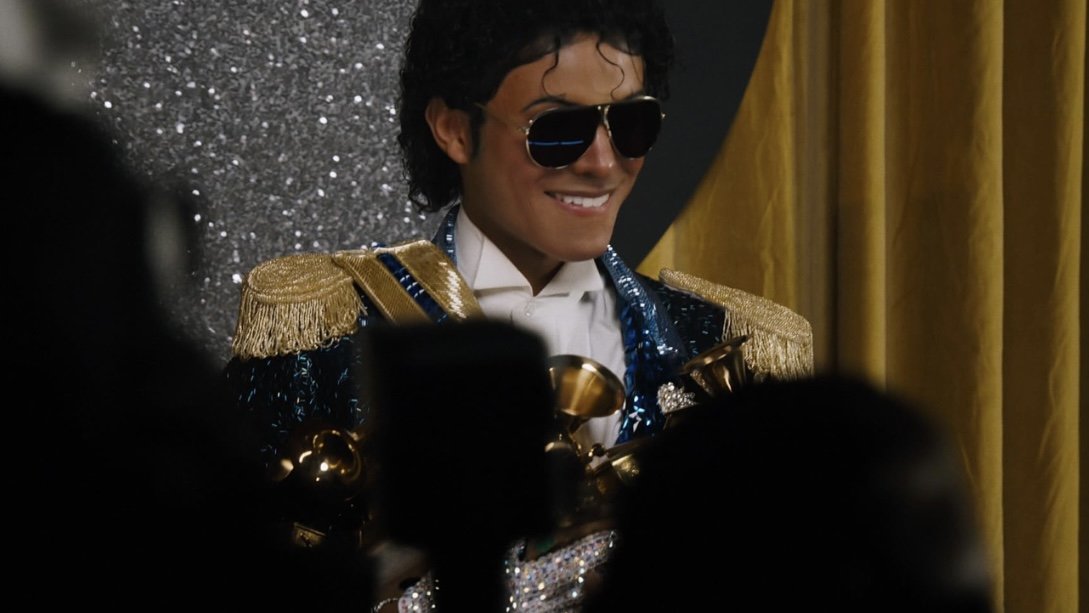
What’s crucial here is that the film does not simply narrate fame as it tries to recreate the conditions under which fame once felt collectively experienced rather than something that was consumed individually.
That curatorial instinct becomes apparent almost from the jump, particularly in the film’s more conspicuous omissions. The narrative veers dangerously close to biofiction in the way it airbrushes out key members of the Jackson family, most glaringly Janet Jackson, who remains arguably the second most culturally consequential Jackson after Michael himself.
Lesser-known siblings like Randy Jackson and Rebbie Jackson are similarly brushed aside, sanding down the family’s intricate internal dynamics into something far neater—and far more narratively convenient—than what emotional truth would allow.
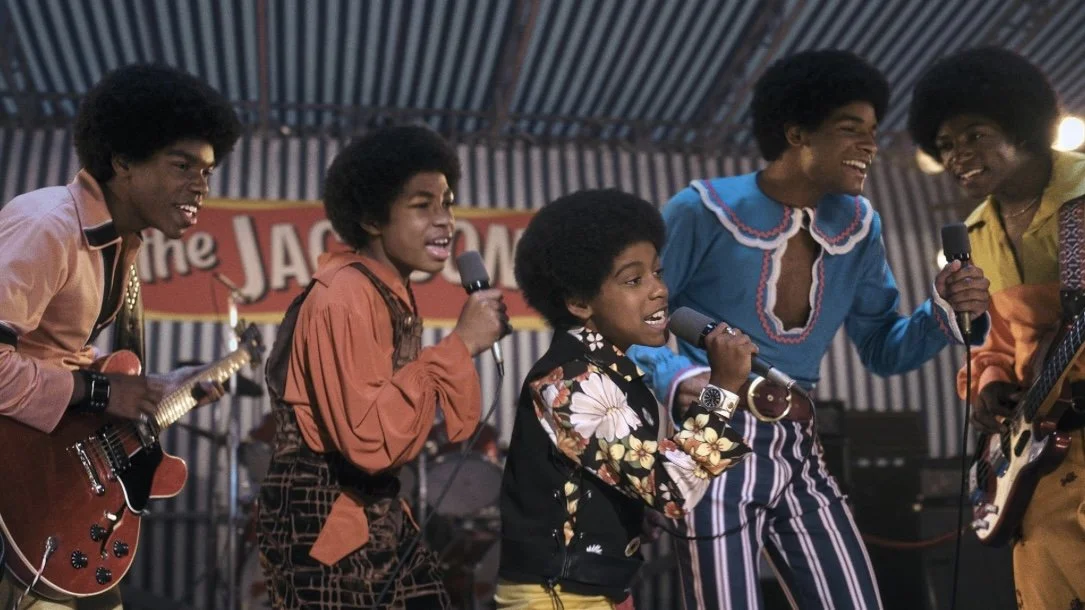
Right from the opening in Gary, Indiana, the film sets a very specific rhythm. Everything feels sort of compressed and controlled—tight interiors, strict framing, and cutting that moves almost like rehearsal drills.
A standout early sequence cross-cuts between a young Michael practicing vocal runs while Joe Jackson (Colman Domingo, all steel and intensity) corrects him with relentless precision. It doesn’t feel like a sentimental childhood portrait; it feels like you’re watching discipline being built in real time.
As the film shifts into the Off the Wall and Thriller periods, it leans heavily into montage. You stop noticing clear boundaries between recording sessions, rehearsals, and performances as they start bleeding into each other. There’s a moment where the recording of “Billie Jean” intercuts into a rehearsal under stark, almost interrogative lighting, and it feels less like watching performance preparation and more like watching someone constantly being tested by their own genius.
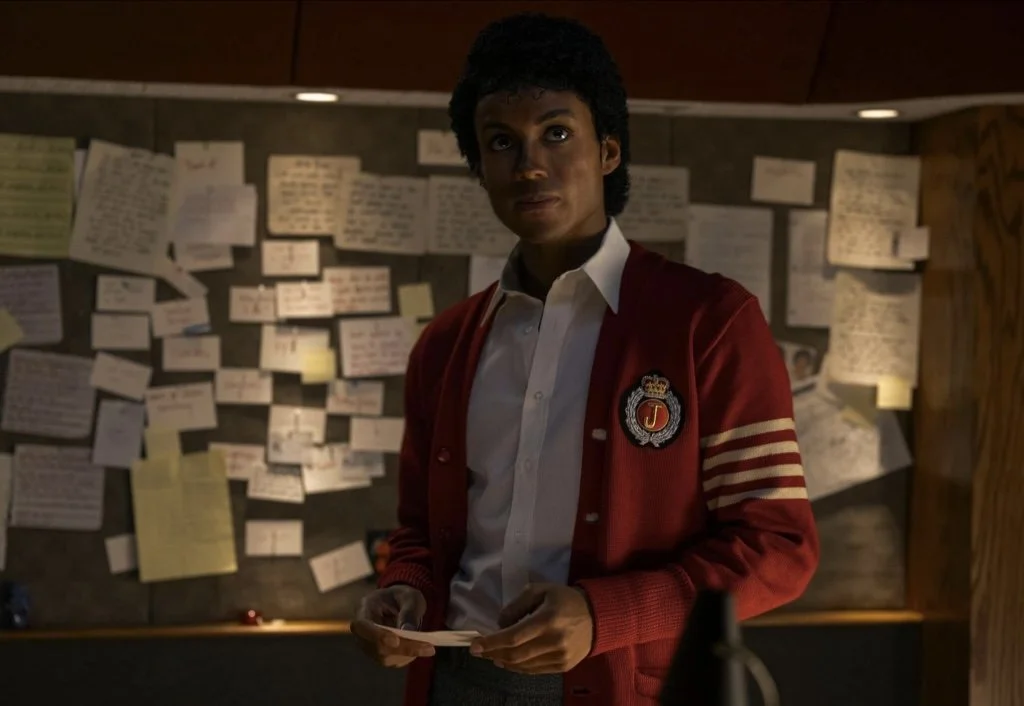
What’s interesting is how Fuqua doesn’t treat this as a straight chronology. A handheld, breathless tracking shot through backstage corridors drops us into the opening chaos without ceremony, mirroring the velocity of Jackson’s own ascent. This urgency is sustained through sound design that functions as a narrative glue: the percussive tapping of rehearsal feet gradually bleeding into full performance rhythms, collapsing the divide between labor and legend.
Visually, the film uses temporal texturing as emotional mapping. The Jackson 5 era is bathed in warm ambers and muted browns, evoking enclosure and familial structure, while the solo years shift into cooler, high-contrast palettes that suggest exposure, scale, and isolation. Across these stylistic choices, the flick consistently frames Jackson’s evolution as a sensory translation of transformation where image, sound, and editing chart the passage from discipline to a brandished display of virtuosity.
The Performance within the Performance
At the heart of Michael is Jaafar Jackson, and what lingers about his performance is how he deftly threads the needle between homage and something far more internalized. It would’ve been all too easy to coast on straight imitation—to lean hard into the instantly recognizable tics, the breathy vocal inflections, the iconic poses that have long since been etched into pop-cultural memory. That trap is sitting right there for the taking, and to his credit, he mostly steers clear of it.
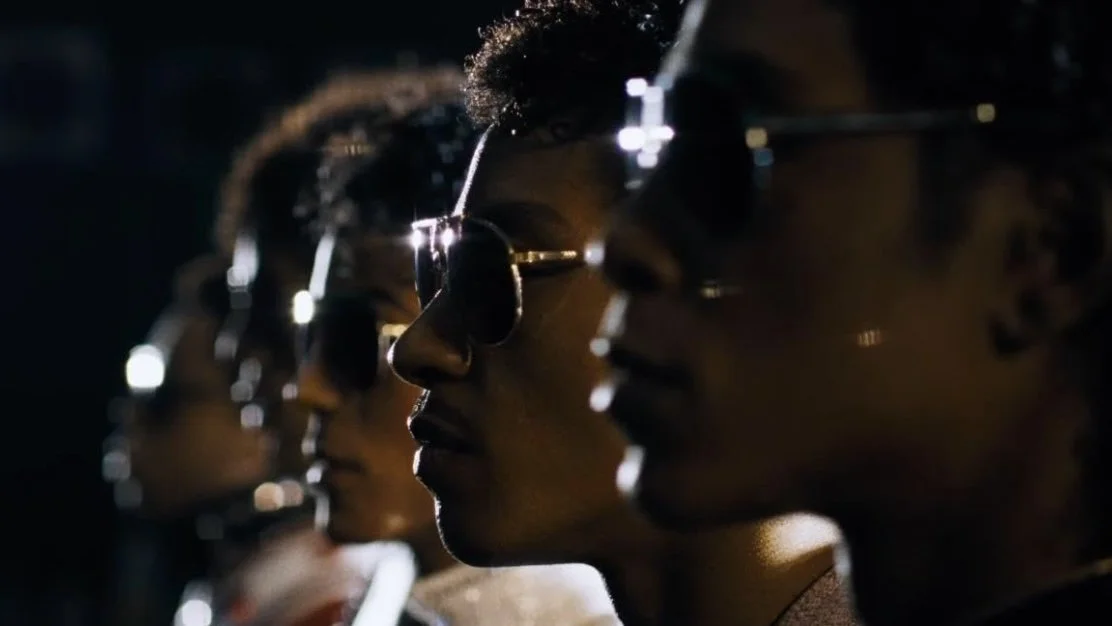
What Jaafar seems to understand is that playing the King of Pop was never going to be about simply hitting the right notes or nailing the choreography beat for beat. He tries to settle into the interiority of the man himself, however elusive that may be.
The result is a portrayal that lands like a personal interpretation for an attempt to feel his way into the emotional weather beneath the iconography. That’s what keeps the performance from tipping into impersonation and allows it to register as something more considered, more lived-in, and unexpectedly personal.
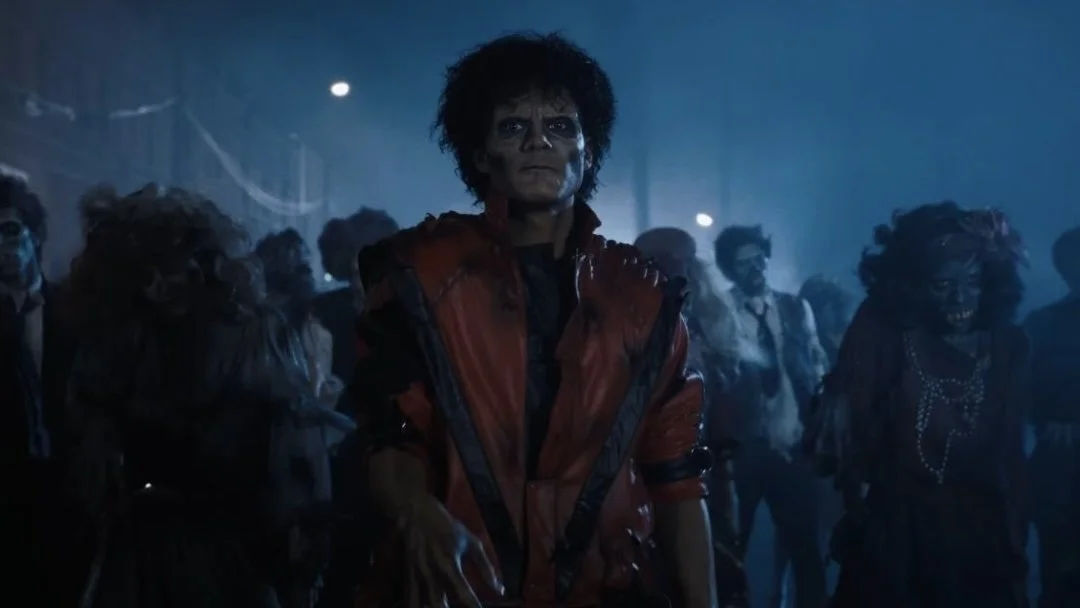
The approach is all the more palpable in a sequence recreating the Thriller recording sessions. The film slows down here with long takes, fewer cuts, and a kind of patience that contrasts with its more energetic montage style elsewhere. The camera just stays with him as he works through vocal ideas, circling phrases, adjusting, trying again. There’s no sense of instant genius at the moment. It feels iterative, almost uncertain, like artistry being built unguarded by trial and error that sheds a mere display of artistry into something more tactile.
Equally compelling is a scene centered on the first televised moonwalk. Instead of presenting it as a foregone triumph, the film builds toward it with a slow accumulation of tension: backstage jitters, fragmented close-ups of costume adjustments, the low hum of anticipation. So when it finally happens, it doesn’t feel like a cinematic “peak” so much as a release of built-up tension. It lands quietly in that sense, even though the moment itself is historic.
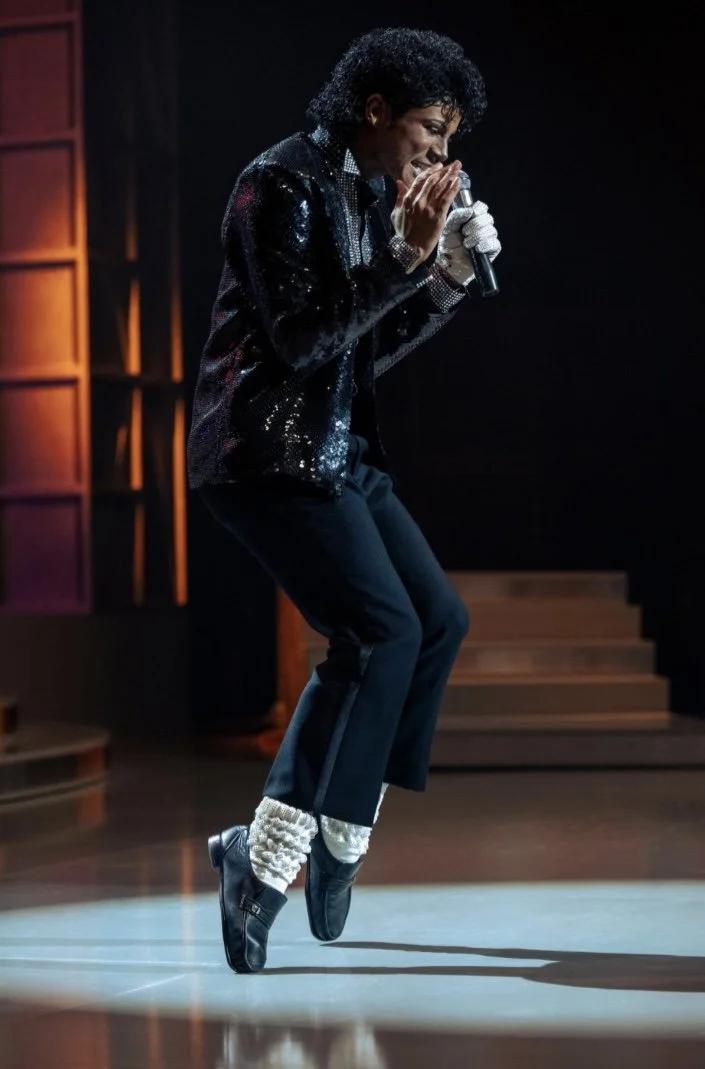
The moonwalk within that performance is staged as something that briefly breaks the normal flow of the film. Even the sound design shifts subtly: crowd noise recedes just enough that the footwork becomes its own kind of rhythm track.
Outside the stage, the celluloid portrait frequently employs shallow focus in backstage scenes, isolating Michael visually even when surrounded by handlers, executives, dancers, and family. It’s a simple but remarkably effective formal choice. He remains perpetually visible without ever becoming fully reachable. That tension—between visibility and knowability—sits underneath nearly every frame.
Framing a Life Within Carefully Drawn Boundaries
Yet for all its stylistic finesse, Michael never quite breaks free from the gravitational pull of its subject’s more contentious history, opting in lieu for a kind of calibrated restraint that carefully stays within the bounds it seems to have set for itself from the outset.
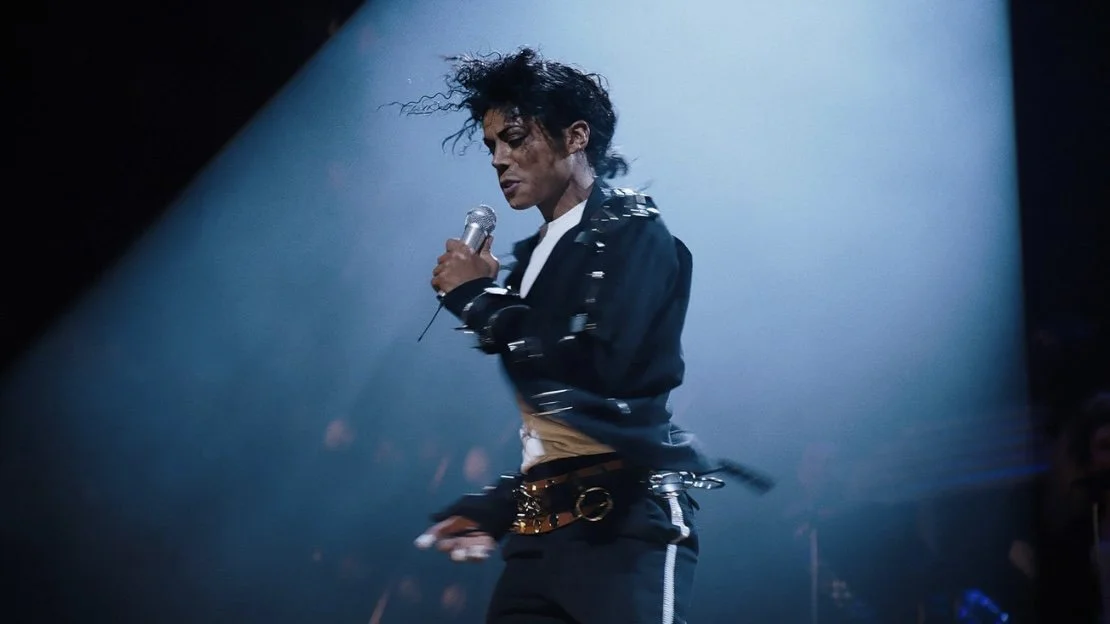
And this restraint feels structural, more so that it is almost deliberately negotiated in a space shaped as much by estate involvement as by the legal, ethical, and commercial tightrope that inevitably comes with dramatizing the late Jackson’s life. Time and again, the film edges toward its darker contours, only to pull back at the moment where confrontation would become unavoidable, as if circling the subject rather than fully stepping into it.
You see this most clearly in a mid-film montage where tabloid headlines are intercut with performance footage. On paper, it looks primed to sharpen into critique, as if it’s about to press down on the contradiction between spectacle and scrutiny. But the editing keeps it moving at such a clipped pace that the emotional weight never really has time to settle in. Just as the images start to hint at something more emotionally charged, the film eases off again, drifting back toward safer grounds. It registers the pressure without ever quite pushing into it, acknowledging the noise but stopping short of truly interrogating what it all means.
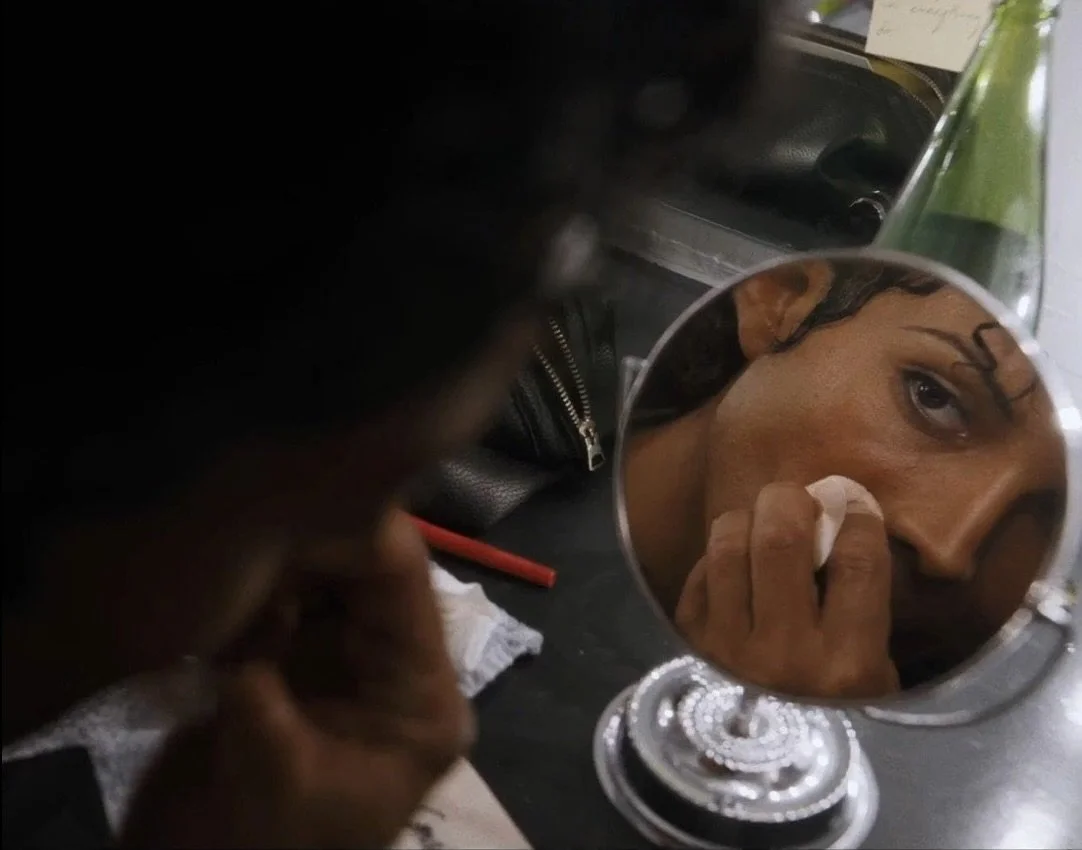
That instinct toward preservation extends to Joe Jackson as well. Although Domingo was stellar, the film noticeably softens the family patriarch’s cruelty that it translates most accounts of terror and humiliation into the more culturally digestible language of stern parenting and old-school drubbing.
Joe’s verbal abuse—particularly his relentless mockery of Michael’s appearance, including insults about his nose that likely fueled the singer’s lifelong insecurities—is only reduced to mere subtleties.
More strikingly, the full-length feature avoids deeply exploring Jackson’s escalating alienation from his own appearance. There are passing references to vitiligo and cosmetic surgery, but almost nothing examining the instability of living as perhaps the most scrutinized human being on Earth.
Michael presents transformation visually without interrogating what that transformation meant emotionally. The man who increasingly became unrecognizable to the public remains similarly elusive to the film itself.
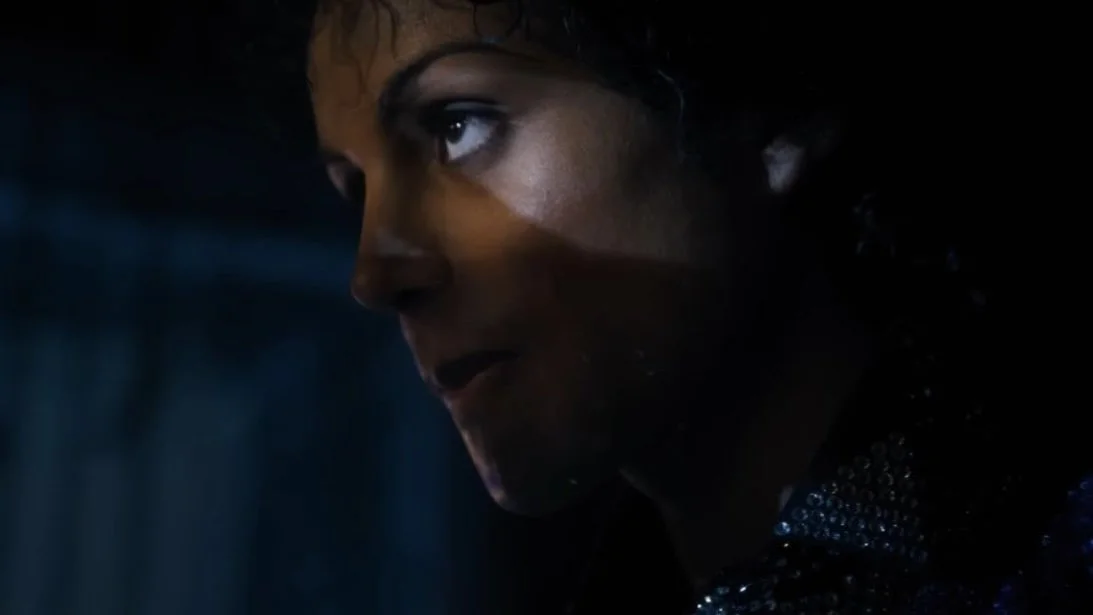
That becomes even more apparent in the narrative’s endpoint. It wraps itself around the Bad era and the late-80s highs, neatly avoiding the most controversial murky later chapters. Even Neverland Ranch is shrunk to a symbolic shorthand toward Peter Pan allusions and lost childhood longing without ever really expanding into something lived-in or complex.
The child abuse allegations, the increasingly surreal tabloid mythology, even Jackson’s suspicious death is kept firmly offscreen. In the end, it’s the omissions that linger most, with Michael’s shadow felt precisely because the film refuses to fully turn toward it.
Depending on the viewer, this can read either as a careful compromise or a major missed opportunity. What remains undeniable, however, is that Michael opts to canonize rather than complicate—to sculpt monuments instead of dissecting a man.
A Temporary Return to Collective Awe
But with all its narrative hedging, Michael still accomplishes something that feels almost radical in today’s fragmented media landscape: it restores, however fleetingly, the possibility of shared experience.
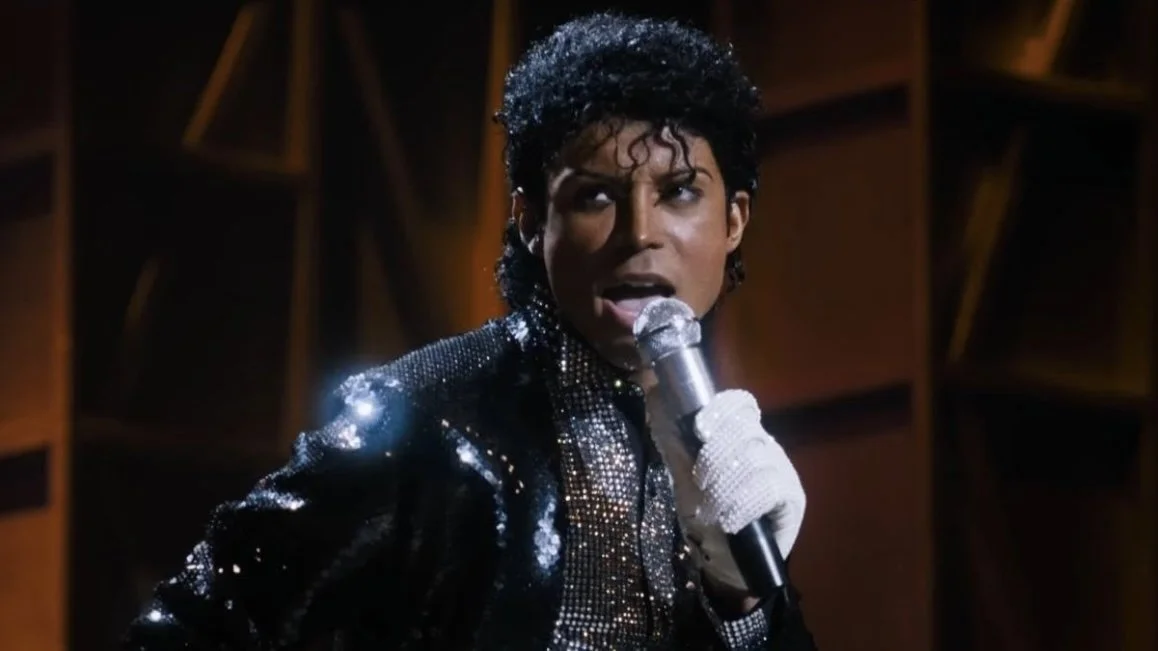
In the darkened theater, as familiar melodies ripple outward and bodies subtly lean forward in unison, there is a temporary collapse of the silos that usually define how we consume culture.
The film may not reinvent the musical biopic, nor does it claim to offer a definitive account of its subject—and perhaps that was never really the point. What it offers instead is something simpler and more elusive: the sensation of encountering culture collectively again.
It understands that audiences are not necessarily searching for the full truth of Michael Jackson, but for the feeling of him—that strange historical moment before culture fully fragmented, when one artist could still seem to belong to everyone at once.
In an era defined by constant curation, filtering, and personalization, Michael nudges us—gently but insistently—back toward a shared rhythm. And in doing so, it doesn’t just recount a legacy; it briefly revives the conditions that once made that legacy possible.