
Mapping the Maze: Seymour Sanchez and the Work of Finding One’s Way In
At the Lyceum of the Philippines University Manila’s seminar, a film educator trades glamour for groundwork, charting the real pathways from classroom to industry.
Words Bernadette Soriano
Photos courtesy of Lyceum of the Philippines University
May 17, 2026
The Philippine film and video industry has long been dressed up in a certain sheen. Spotlit, romanticized, its rough edges edited out.
But for those standing just outside the frame, trying to break in, the journey from lecture hall to set often feels less like a straight cut and more like a labyrinthine splice.
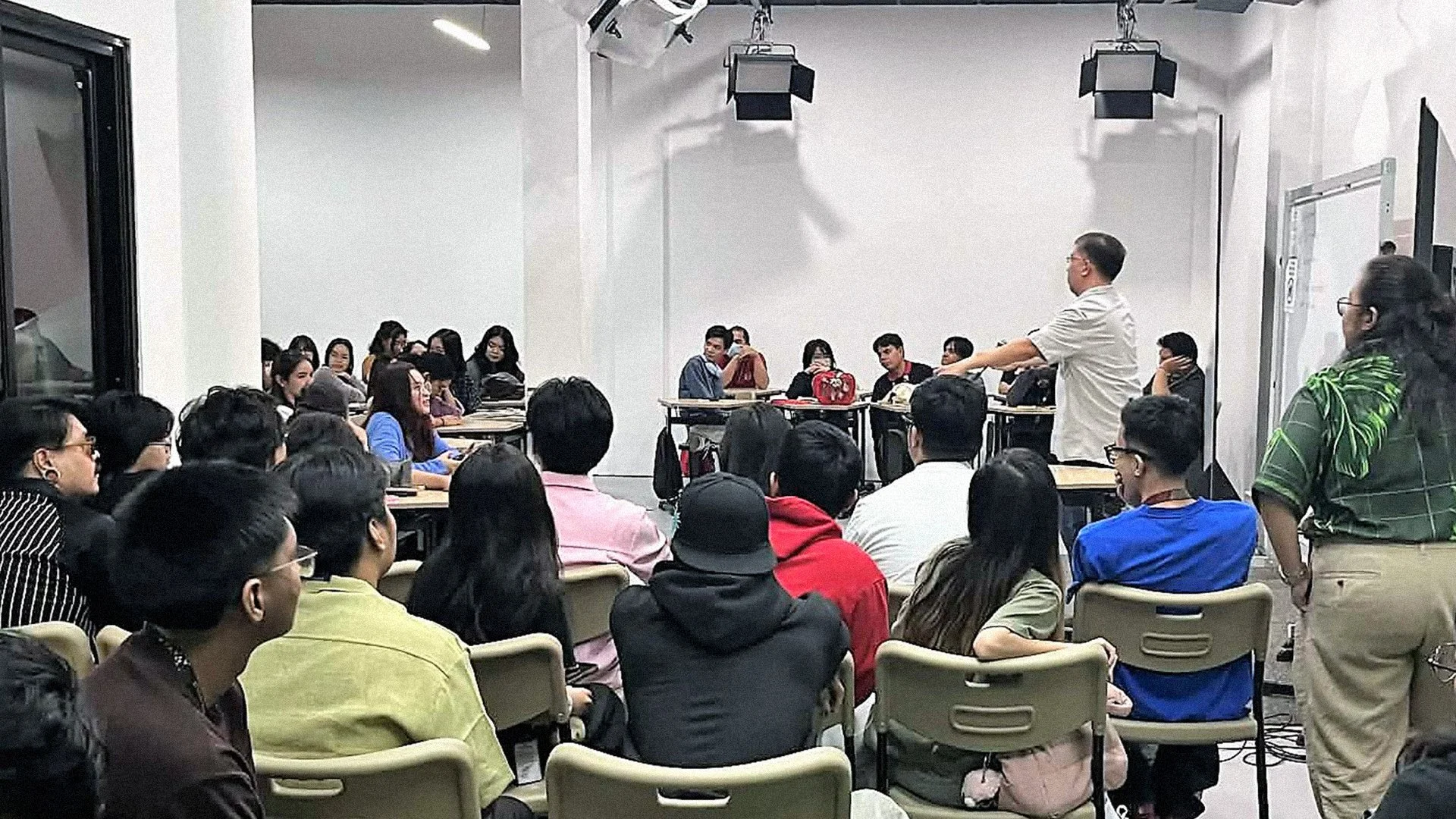
At Lyceum of the Philippines University (LPU) Manila, a recent multimedia seminar set out to demystify that passage, if not smooth it over entirely. Titled “Philippine Film and Video Industry: Career Pathways and Opportunities,” the session brought in Seymour Sanchez, an award-winning filmmaker and longtime educator who teaches film at De La Salle-College of Saint Benilde and Far Eastern University, serves on the Academic Film Society Advisory Committee of the Film Development Council of the Philippines, and previously acted as Bacolod Film Festival director in 2024 and FDCP Technical Consultant for Academic Linkages from 2022 to 2025—credentials that have made him something of a steady hand in an industry that rarely stands still.
Sanchez did not so much deliver a lecture as he did lay down a map—one that acknowledged the detours as much as the destinations. Drawing from years spent moving between the academe and the professional circuit, he stepped in not merely as a speaker but as a kind of navigator, walking students through the terrain with a clarity that felt earned rather than rehearsed.
The much-feted auteur began by widening the frame. Yes, film remains, at its core, an exercise in storytelling, but the ways into that story have multiplied.
Where once the path might have run cleanly through studio systems, it now branches outward into a network of freelance gigs, independent productions, and digital platforms that require as much strategy as they do sensibility.
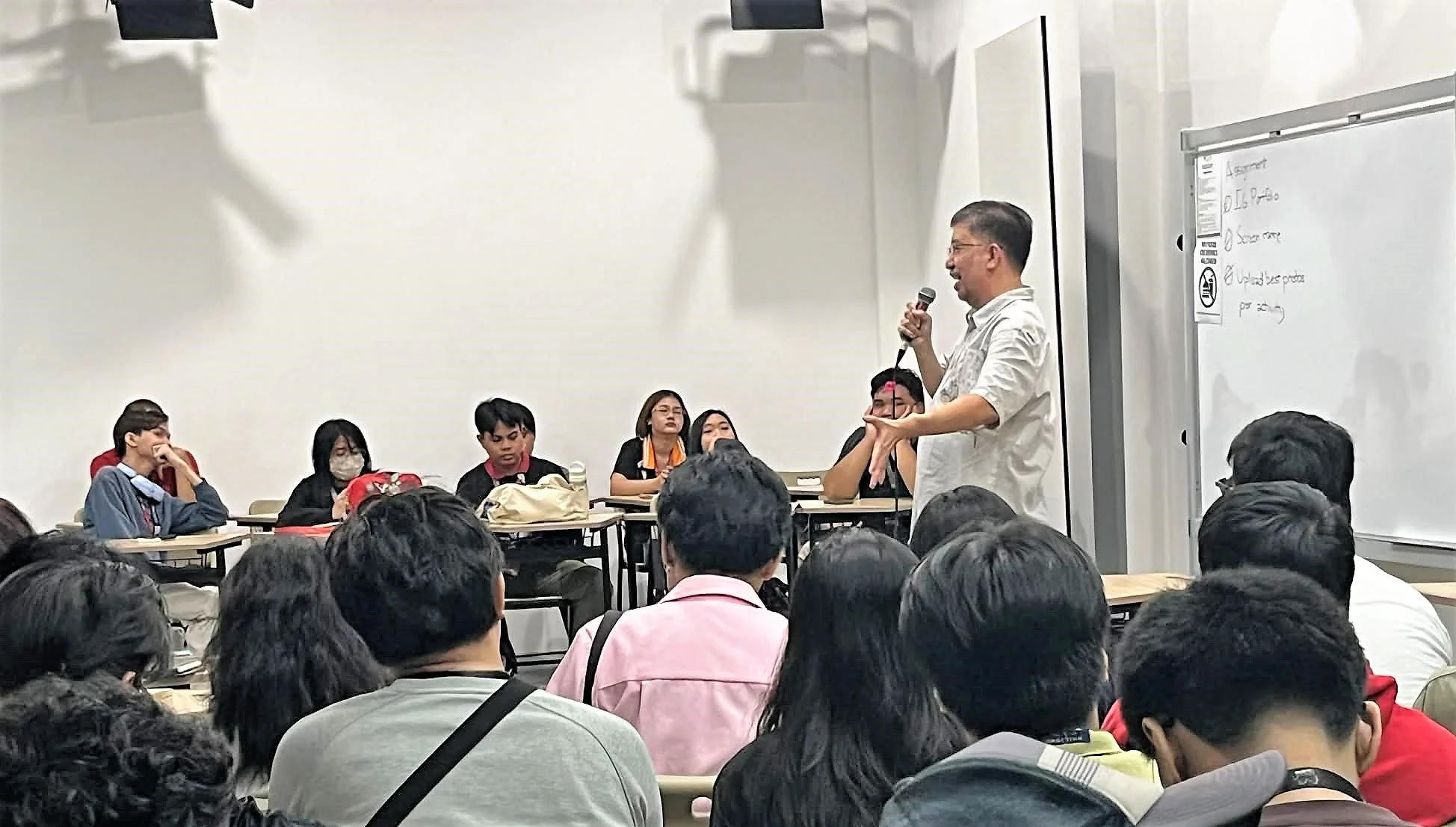
To keep up, Sanchez urged students to pick up more than one instrument: scriptwriting, cinematography, postproduction, even digital marketing. In other words, don’t just play your part; learn the arrangement.
This was not a call to scatter, but to stay nimble. The industry, he suggested, rewards those who can switch tracks without losing the thread—who can cut between roles, adapt to new technologies, and still keep the story intact. “The industry is built on talent,” Sanchez noted, “but it is sustained by discipline and the ability to adapt…” he added.
Equally central was the question of voice. As global streaming platforms widen their nets, the appetite for localized, culturally specific narratives has only grown sharper.
Sanchez was clear on this point: Filipino creators need not sand down their edges to travel. If anything, it is the particularity, the cadence of language, the texture of lived experience, that allows stories to carry. Play it true, and the rest will follow.
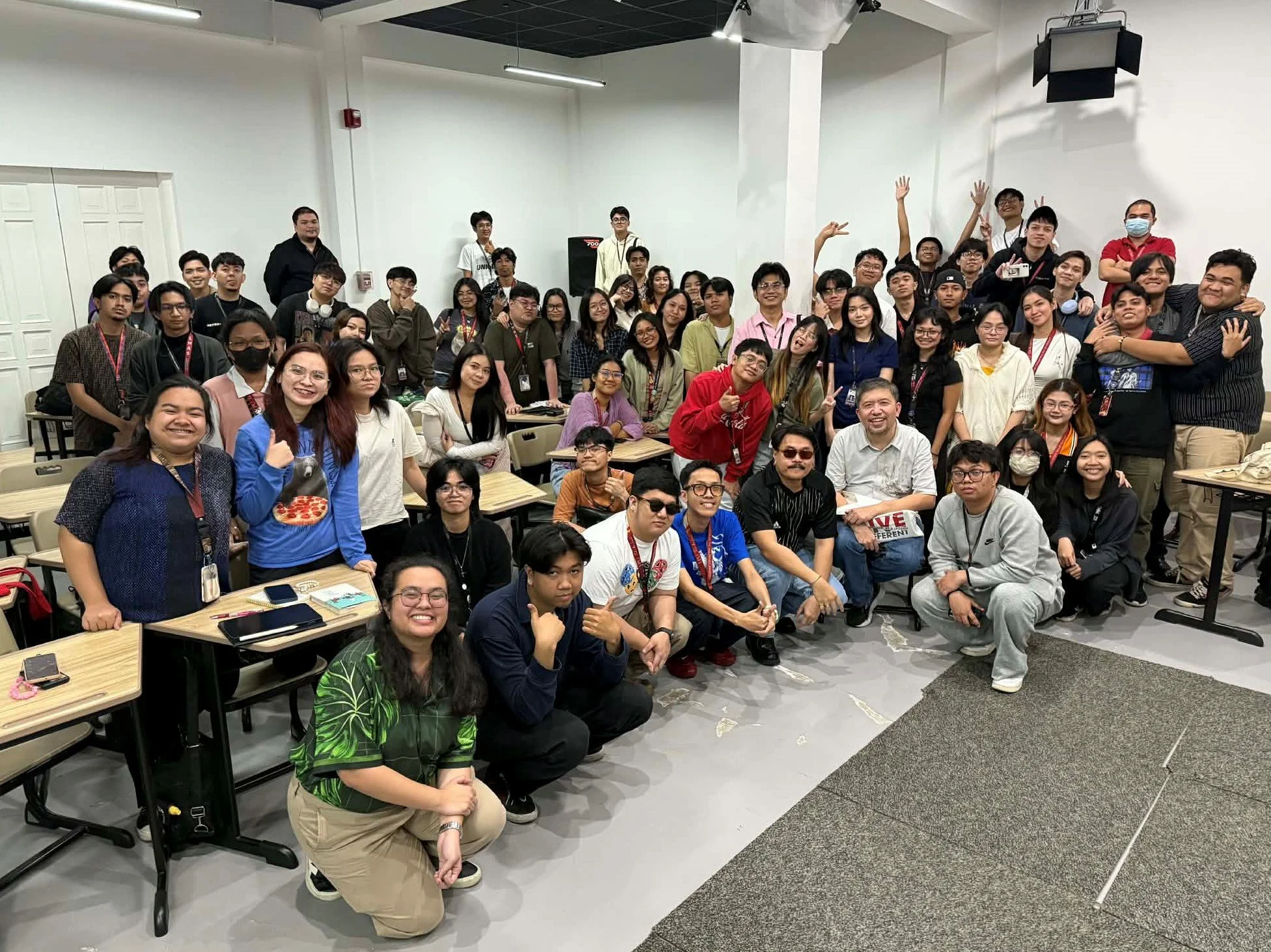
What set the session apart was its refusal to linger in abstraction. Sanchez worked from the ground up, breaking down industry jargon into something usable, something students could take with them once the lights came back on.
Networking was framed not as a buzzword but as a practice where every portfolio-building is not a mere afterthought of a running document of one’s growth.
What began as a conversation about an industry often perceived as distant and opaque had resolved into something more navigable, if still demanding. The maze, it turned out, had its markers after all.
As LPU Manila continues to build out its Multimedia Arts program, initiatives like this do more than fill a room; they tune a generation to the realities of the field they are stepping into. Not just degrees in hand, but a working sense of how to move, when to pivot, and where to look when the path forward seems to blur.
Sanchez leaves them with a note that reads less like encouragement and more like a directive: “The opportunities are there, the pathways are open, and for those willing to hone their craft, the big screen is closer than it seems.”
The work, as ever, is in showing up, putting in the hours, and learning step by step, cut by cut, on how to find one’s way in.