Making Plot Twists with Plots of Perception
Seeing comes with plot twists in Plots of Perception, where vision wanders, memory flickers, and reality slips its frame.
Words Bernadette Soriano
Photos Courtesy of Gajah Gallery
May 06, 2026
At Art Jakarta Gardens 2026, where contemporary art breathes in the open air and ideas pass from one mind to another with an almost tactile immediacy, Gajah Gallery brings Plots of Perception into view—a presentation that reads like a map in motion, its contours sketched through memory, sensation, and the shifting weather of sight itself.
Seventeen artists, drawn from different generations and geographies, come together in a constellation that refuses to sit still—restless, a little unruly, and very much alive. Reality, across the booth and sculptural garden, doesn’t stay in place; it slips through cracks, doubles back, and rewrites itself on the fly.
Perception feels less like a fixed lens and more like ground that keeps giving way—tilting with history, shaped by lived experience, and charged with the low hum of memory, both intimate and inherited. Mythologies brush shoulders, cosmologies drift in and out of focus, and the visible world breaks rank—splintering into rhythm, gesture, and moments that refuse to be pinned down.
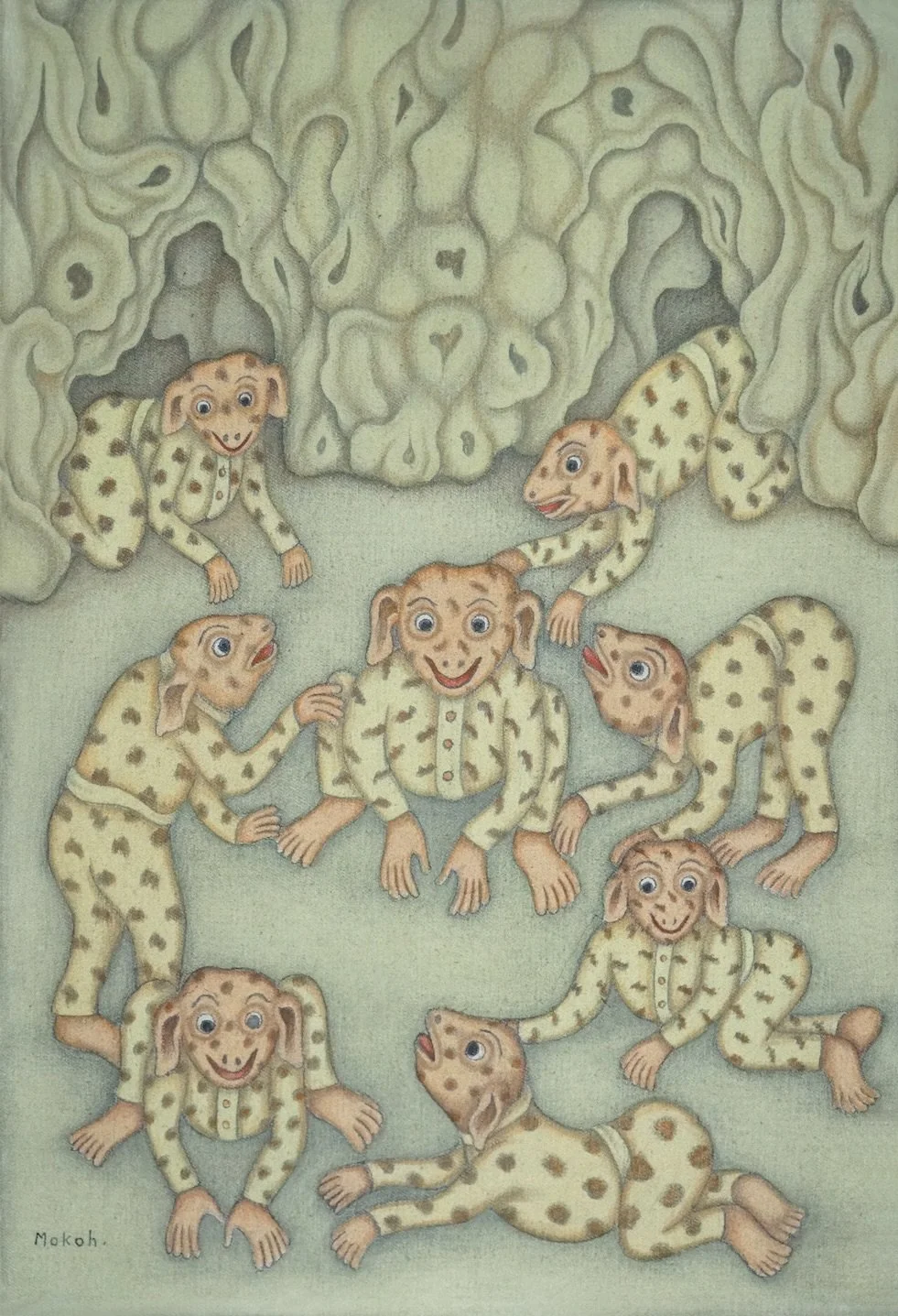
Dewa Putu Mokoh, Untitled, 2000, Chinese Ink & Acrylic On Canvas, 43 x 2 x 63 cm
At the core of the presentation, Balinese pioneers Dewa Putu Mokoh and Made Wianta hold court with quiet authority, their influence stretching like a long afternoon shadow. Mokoh carries folklore lightly, letting it spill across the canvas—his lines weaving village tales into scenes that feel familiar yet slightly stage-lit, as if memory itself were performing. Wianta shifts the tempo; his works pulse with calligraphic energy and geometric bite, drawing on cosmological threads that fan outward, the surface alive with the sense of a painting still thinking its way forward.
Throughout the booth and sculptural garden, Yunizar lets his imagination run a little wild, peopling the space with characters that feel like they’ve wandered in from a half-remembered tale. They carry a playful, knowing air, as if they’re in on a story still unfolding. His works sit in that in-between where the everyday meets the fantastical, without picking sides.

Yunizar, Kura Kura (Turtle), 2023, Bronze, 185 x 95 x 84 cm
Just a few steps away, Rosit Mulyadi sharpens the tone, folding echoes of Old Masters with flashes of pop iconography. Timelines get spliced, history arrives at an angle, and image-making takes on an argumentative edge that doesn’t quite stay quiet.
Colour, too, emerges as a principal actor. In works by Erizal As and Ibrahim, abstraction gathers atmospheric intensity, charting emotional and interior terrains that resist straightforward language. Their canvases inhabit that fertile territory where gesture begins to feel almost elemental.
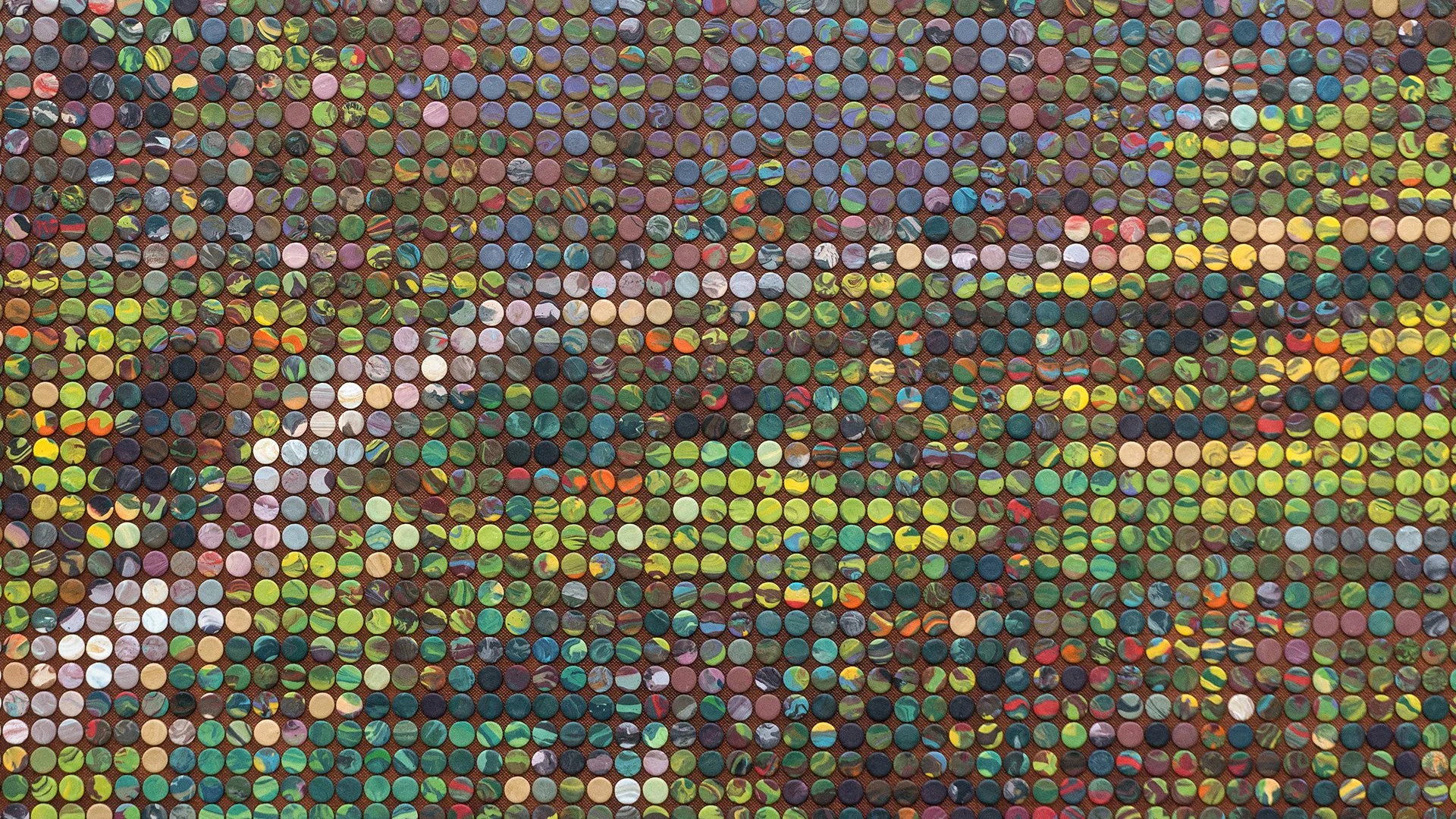
Emerging artists Dini Nur Aghnia and Ridho Rizki take perception in different directions, each with a clear point of view. Aghnia gets her hands dirty with clay, building from the ground up—memory comes through in fragments and layers, forming landscapes that feel dense, tactile, and quietly immersive.

Dini Nur Aghnia, Down the Road, 2021, Clay on Canvas, 63.5 x 120 cm
Rizki, on one hand, keeps things shifting. Drawing from Pointillism and Impressionism, he leans into the flicker of sight—forms break apart, catch the light, and pull back together, keeping the eye on its toes.
The exhibition sharpens its line of inquiry through the layered practices of Filipino artists Mark Justiniani and Kiri Dalena, where vision carries both perceptual weight and political charge. Justiniani’s mirrored constructions throw spatial logic off balance—depth stretches, folds, and opens up into disorienting fields that pull the viewer in and keep the eye moving.
Dalena, on another front, turns to the colonial archive with a steady hand, revisiting photographs of nude Tagalog women and working through them with hands that shield and reframe. In doing so, she shifts the terms of looking, turning historical image-making into a deliberate act of reclamation.
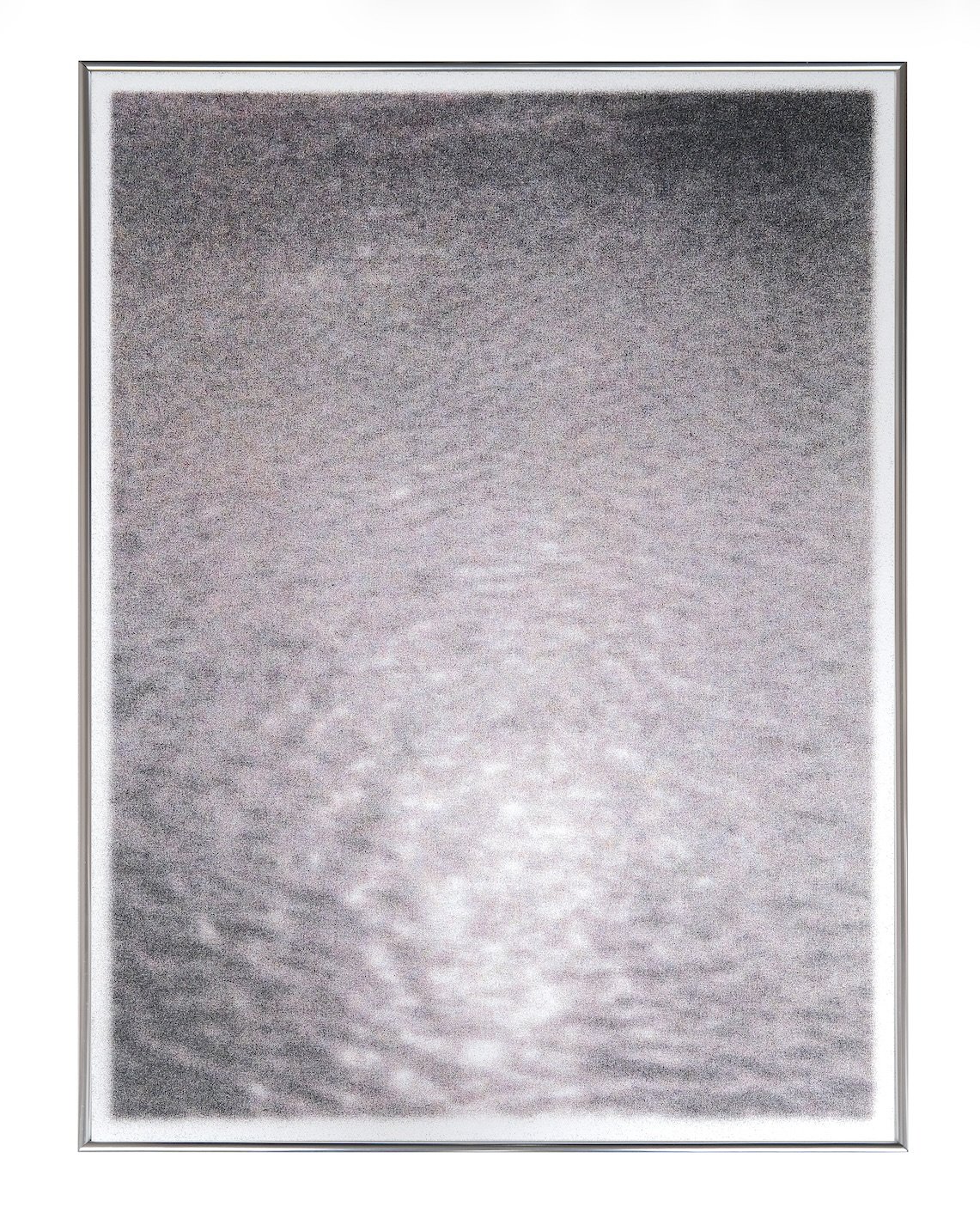
Ridho Rizki, Untitled (F25A), 2025, Acrylic and Ink on 300gsm Cold Press Paper, 75 x 53 cm
Additional currents run through the works of Jemana Murti, Satya Cipta, and Loi Cai Xiang, each carving out a distinct lane.
Murti bridges the sacred and the synthetic, threading ritual symbols into conversations with artificial intelligence—old belief systems meeting new code, with plenty of tension in between.
Cipta keeps things fluid and quietly off-kilter, moving through female subjectivity with surreal touches that unsettle just enough to linger.
Loi, for his part, leans into mood and atmosphere, letting light and shadow do the talking as he captures small, passing moments that might otherwise slip by unnoticed.
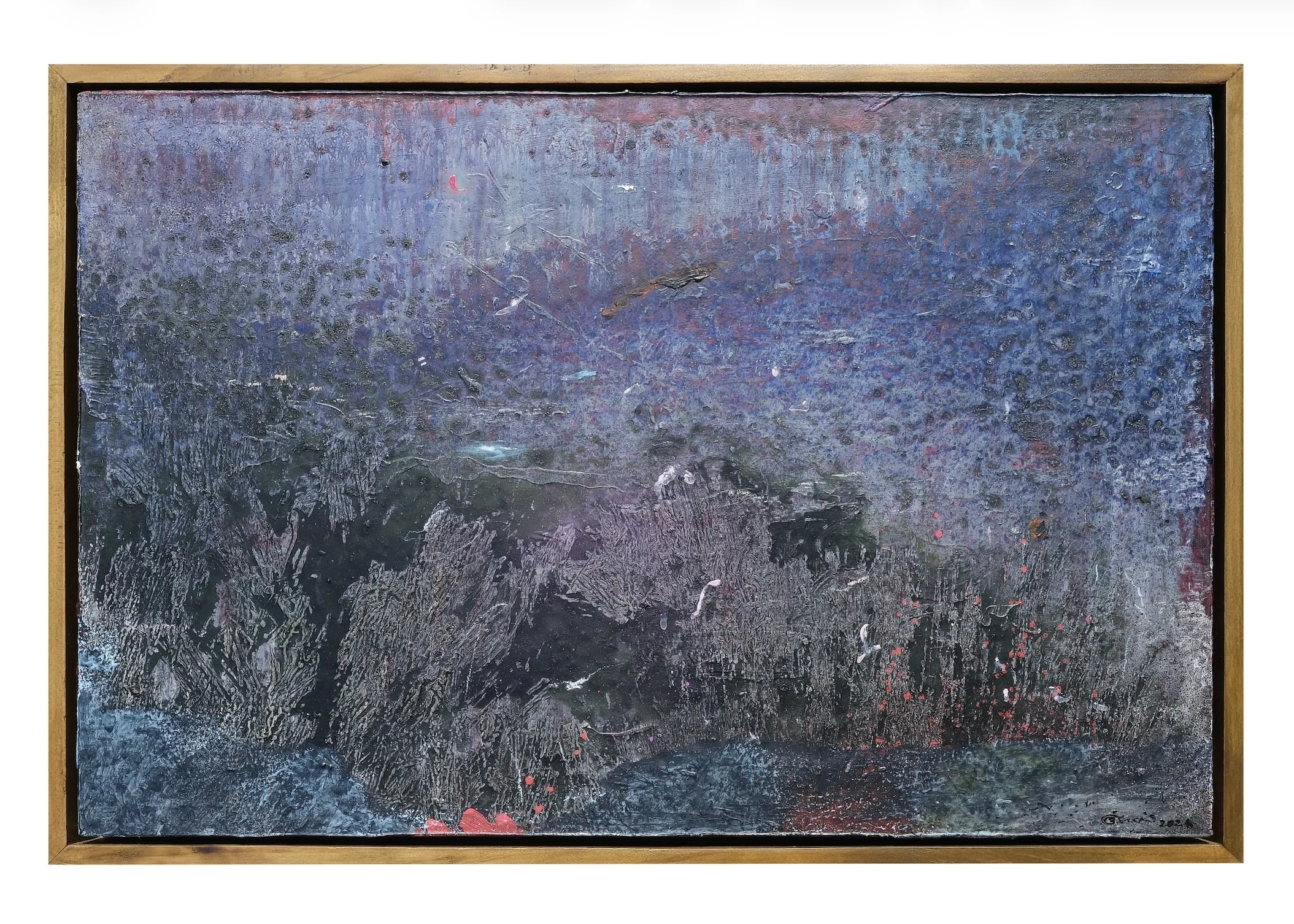
Ibrahim, 2026, Acrylic on Canvas, 40x60cm, 43.5x63.5x6cm
Material experimentation comes through with a subdued force in the works of Kayleigh Goh and Dzikra Afifah. Goh leans into wood, cement, and gesso, shaping spaces that feel measured and inward-looking, tuned to the psychological and poetic pull of place. Afifah, on the other hand, keeps things grounded in the body—her figurative sculptures hold identity and resilience in a kind of steady tension, their weight felt not just in form but in presence.
Taken together, Plots of Perception maps itself like a living cartography of Southeast Asian contemporary art—more a field of intersecting sensibilities than a neatly drawn survey. Across painting, sculpture, abstraction, and material experimentation, ideas don’t sit still or settle into fixed readings; they circulate, overlap, and spark off one another.

Erizal As, Untitled, 2023, 78,5x99cm, framed 91 x 111,5 x 8cm
Perception keeps shifting shape—multiple at once, never quite pinned down, and always finding new ways to generate meaning without running out of breath.
The presentation also folds in the long arc of Gajah Gallery’s commitments since its founding in 1996. Over three decades, the gallery has steadily built a practice grounded in sustained dialogue—working closely with artists, scholars, and art historians to shape a critically engaged approach to Southeast Asian contemporary art.
With spaces across Singapore, Jakarta, Yogyakarta, and Manila, its reach is regional, but its focus stays cumulative and long-viewed. The program extends well beyond exhibitions, moving through research, publishing, and ongoing contributions to the writing and framing of the region’s art history.
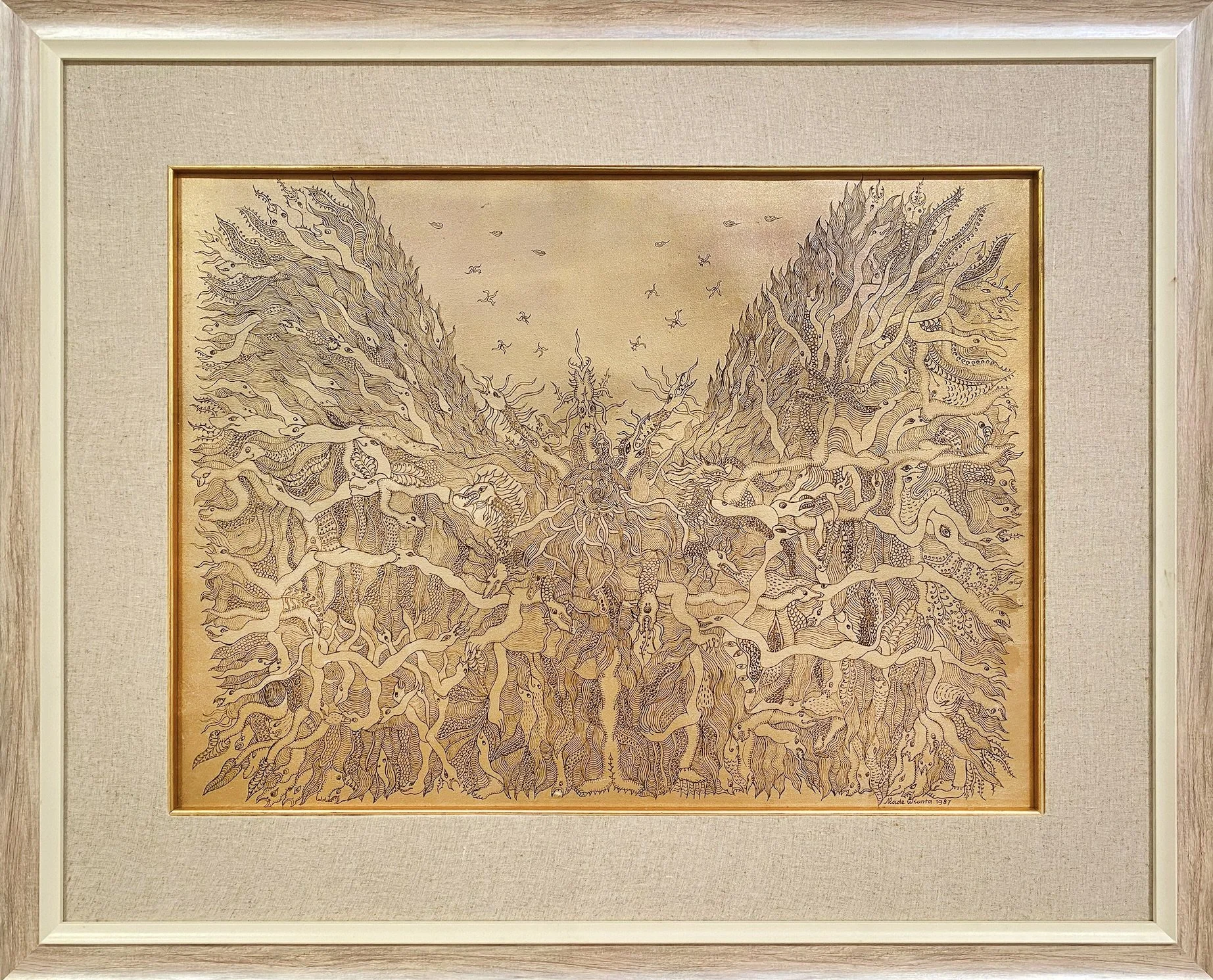
Made Wianta, Nine Dragons, 1987, Chinese Ink on Canvas, 58 x 78 cm Framed 89 x 109 cm
That ethos finds another extension through Yogya Art Lab, co-founded by Jasdeep Sandhu and Yunizar. Conceived as a space where experimentation meets technical rigor, the lab has grown into a fully equipped foundry and production house, built to handle works that push scale, process, and material to their limits.
What starts as an idea is given room to take shape here—tested, refined, and brought to life with precision—allowing artists to stretch their practice further and open up new ground in contemporary art production.
Together, these commitments lend Plots of Perception a larger resonance. The presentation does not merely gather artists under a thematic frame; it eyes toward a wider ecology of collaboration, scholarship, and sustained regional conversation.
Plots of Perception will be on view at Tent B, Booth B2, during 5–10 May 2026 at Art Jakarta Gardens.