
How Jappy Agoncillo Confronts His “Chosen Inferno” in Latest Exhibition
At Space Encounters Gallery in Ortigas, “Inferno” turns a decade of struggle into a charged, color-driven meditation on choosing one’s own hell—and choosing it again.
Words Randolf Maala-Resueño
Photos courtesy of Iolo Braganza and Jeremy Caisip
April 03, 2026
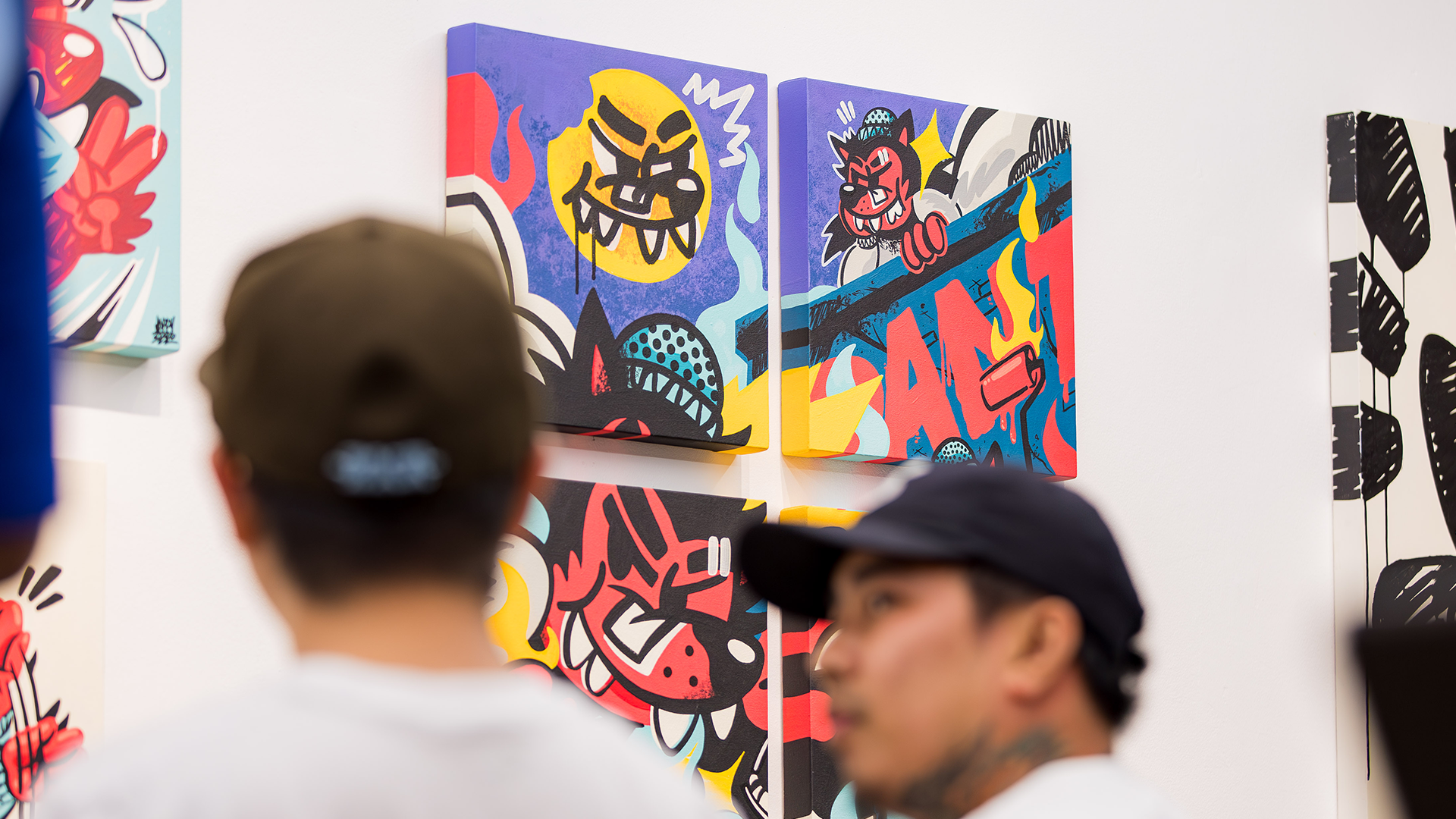
At Space Encounters Gallery, Jappy Agoncillo pivots inwards as he stages his fourth solo exhibition, showcasing something closer to a reckoning. Inferno, now, is about hell as a decision.
“I chose this,” he tells Art+, plainly. “Pinili ko ‘to even if mahirap, I still choose it.”
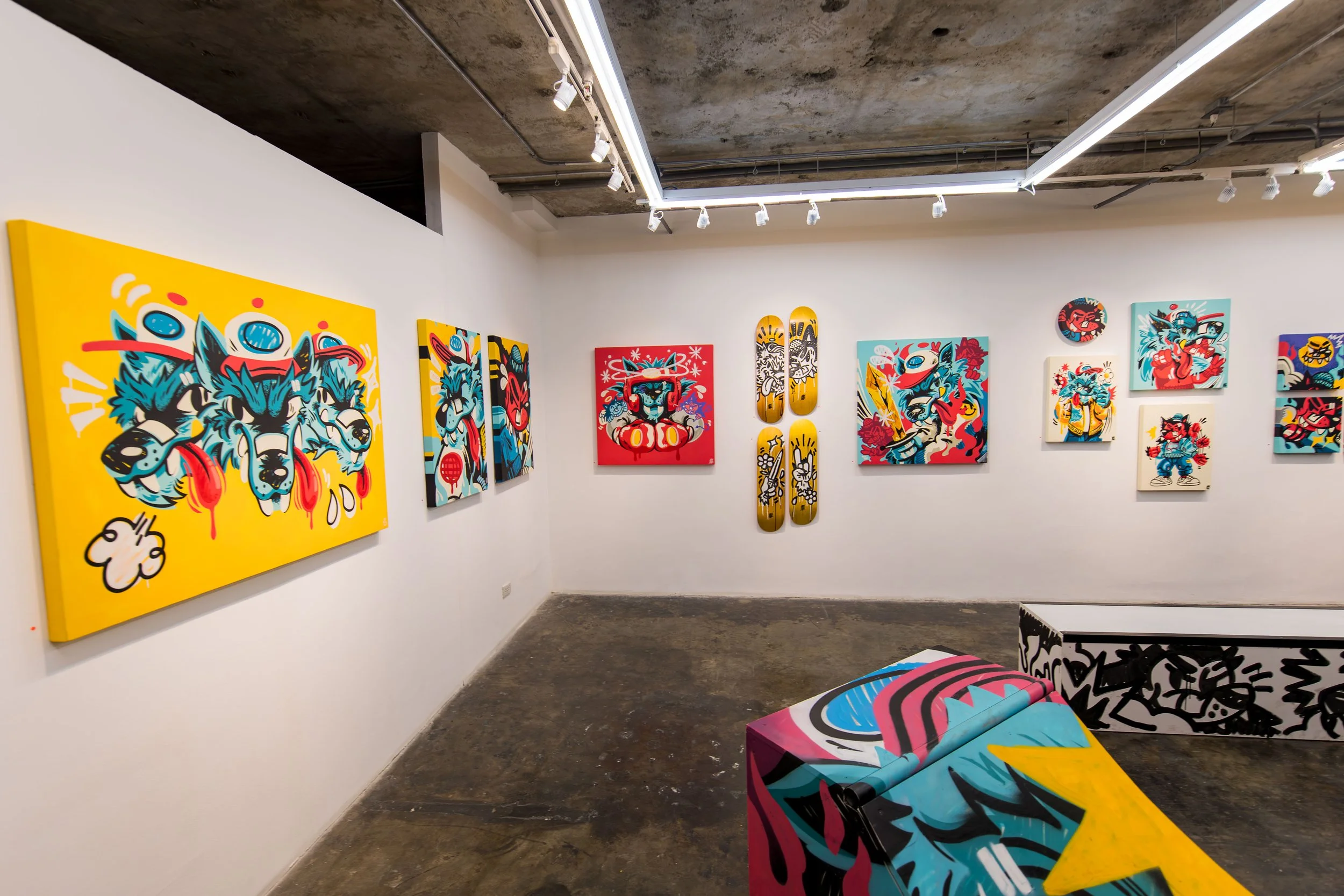
That insistence coalesces across the exhibition’s surfaces—thick, restless, and saturated with color that refuses to settle. Rather than narrate a linear story, the works swell, compress, and rupture.
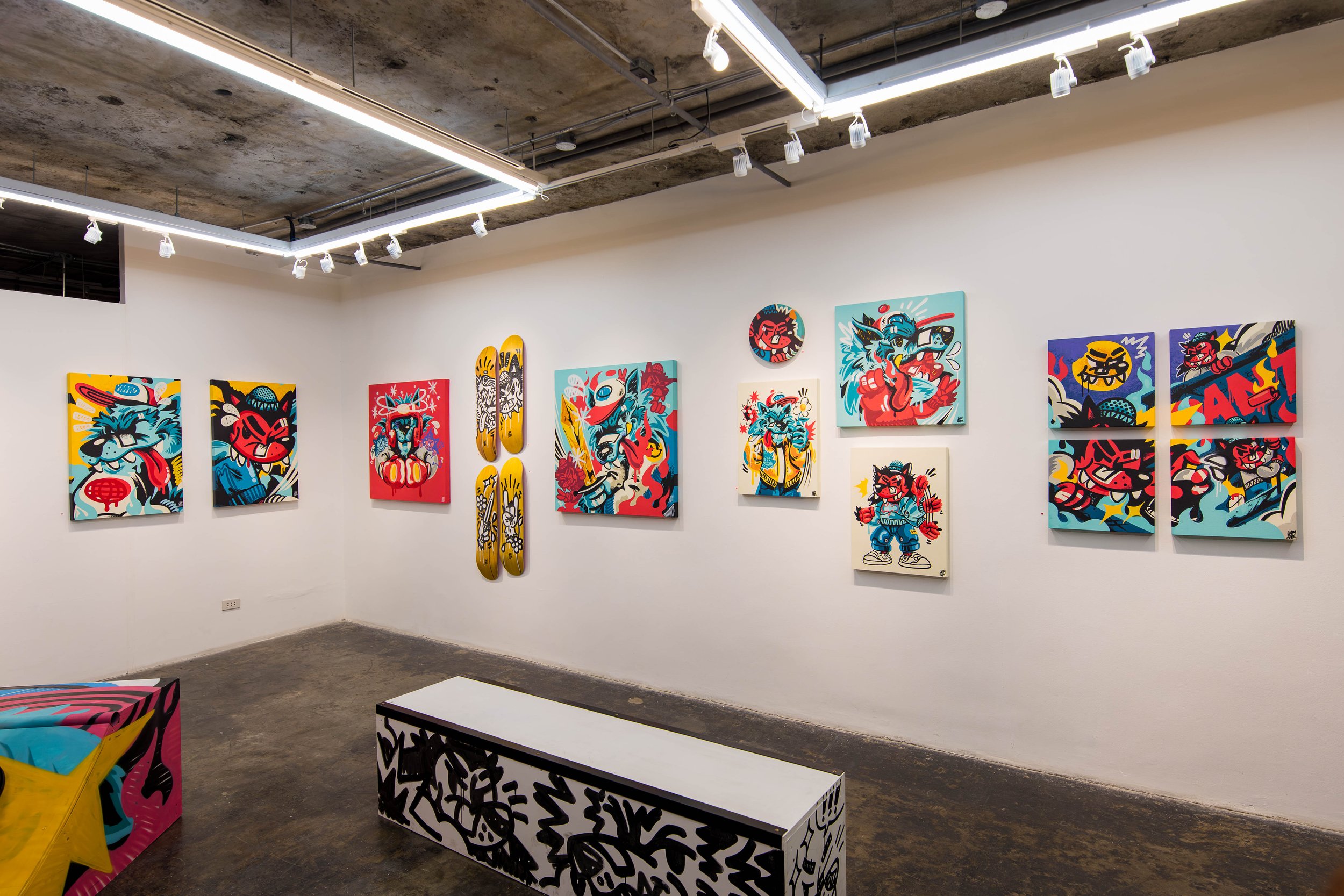
Agoncillo’s Inferno takes its name from Inferno by Dante Alighieri, a text he has returned to since adolescence. What once captivated him were its visuals: “the imaginations of hell… ang galing.” But with time, the meaning deepened. “You can’t get to heaven if you don’t go through hell,” he reflects. That idea—of passage through suffering as a prerequisite—anchors the exhibition.
Here, hell is chosen—not imposed.
The weight of color
Agoncillo’s Inferno doesn’t illustrate hell in the literal sense. Instead, it pivots toward the internal, where emotional states take form through bold, often confrontational palettes.
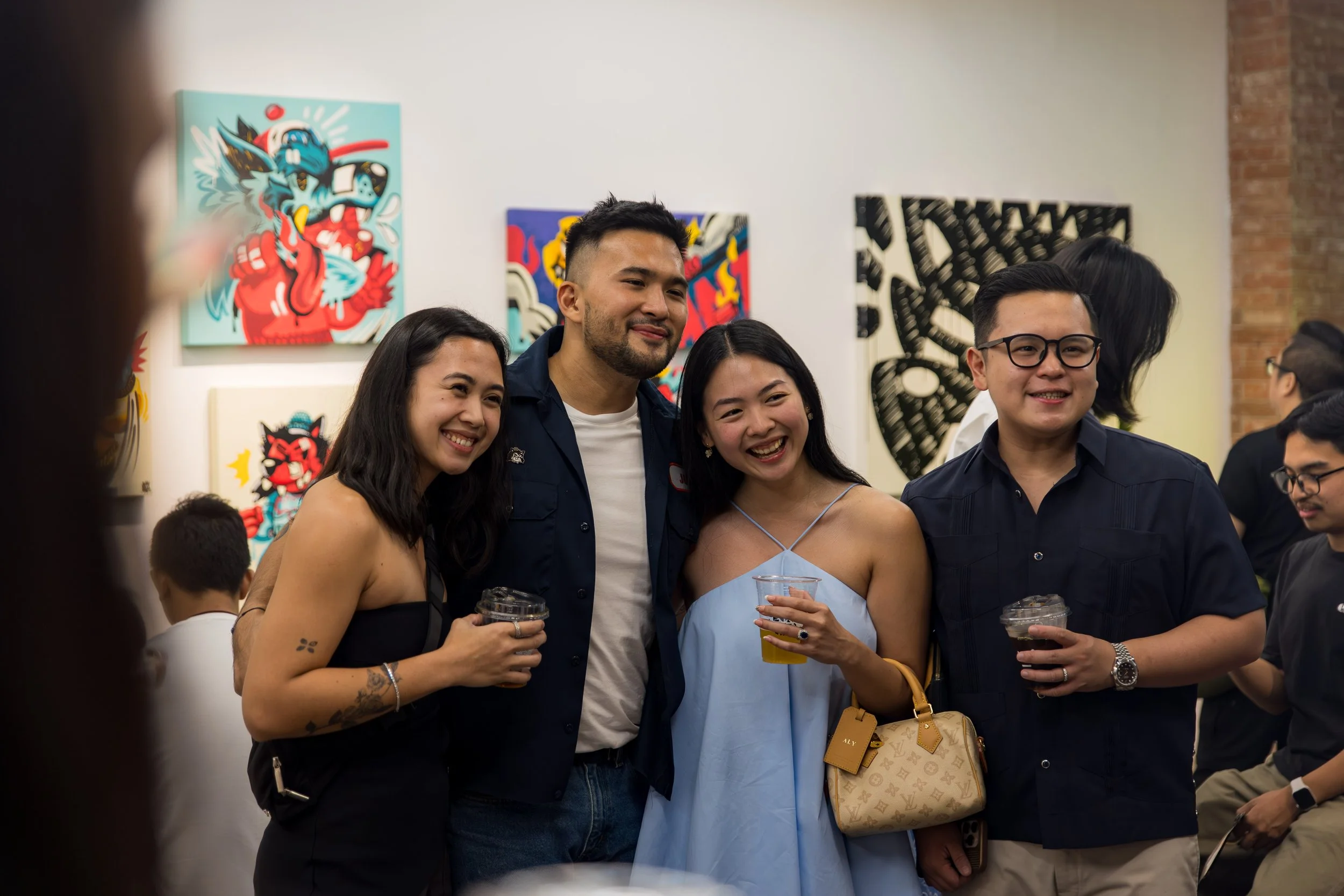
“I think art, at least in my case… I chose this career,” he explains. “Anyone who pursues it full-time always chooses it because it’s such a hard path.”
That weight—the knowledge of choosing difficulty—manifests materially. Pigments thicken. Compositions strain. The canvases seem to hold something back, then release it all at once. It is a practice that oscillates between control and surrender, where instinct interrupts intention.
And yet, despite its intensity, Inferno is not entirely bleak. Agoncillo deliberately resists that.
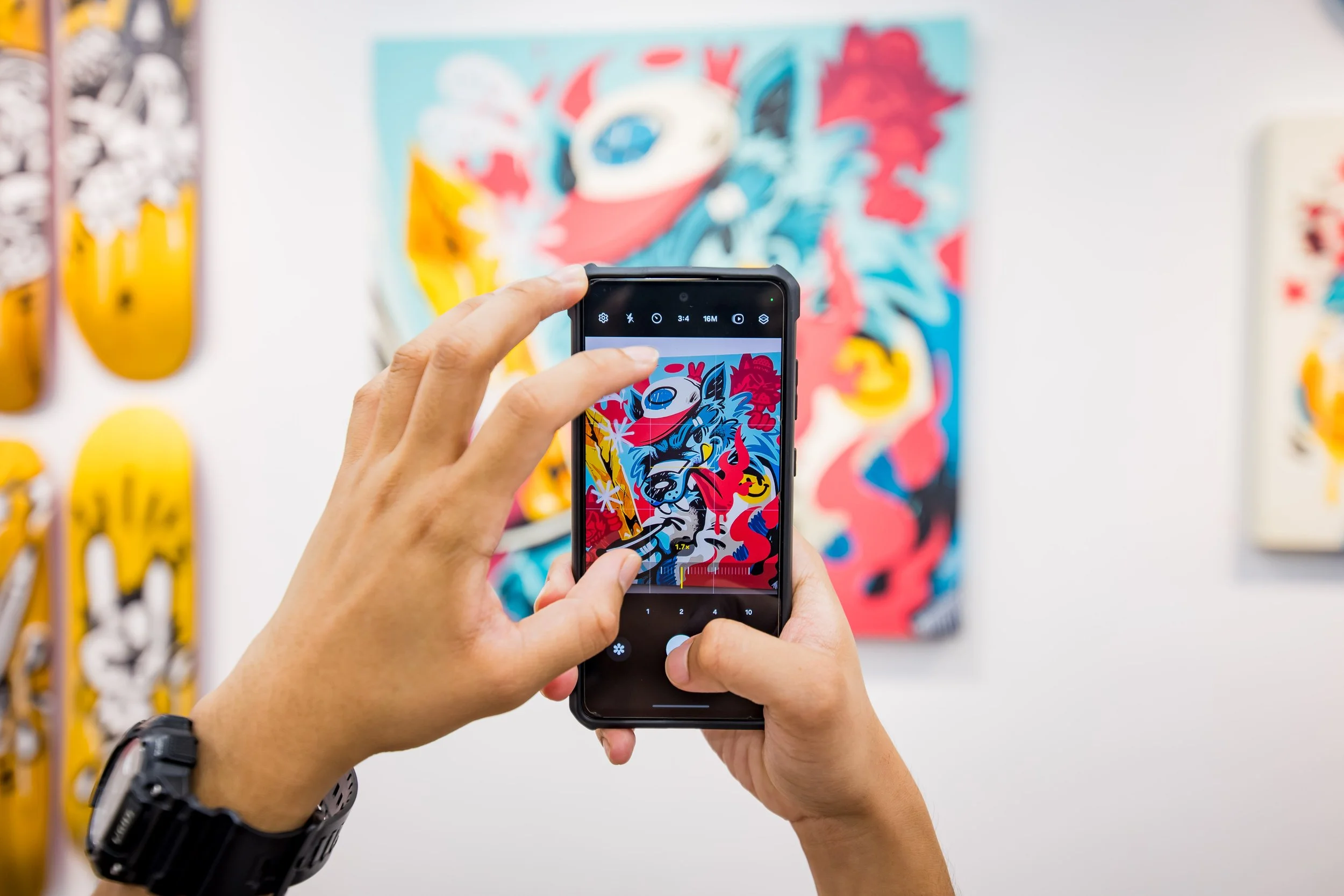
“I wanted to paint it in a more optimistic light,” he says. “If you’re going through something, you have to remember why you’re doing it… just to have fun.”
It is here that the exhibition reveals its most surprising turn. Beneath the turbulence is an optimistically realist outlook—a recognition that suffering is real, but so is the decision to endure it.
Street energy, studio memory
Agoncillo’s roots in street art remain embedded in his process, even within the gallery. His works retain a rawness that resists polish, a refusal to become overly refined or detached.
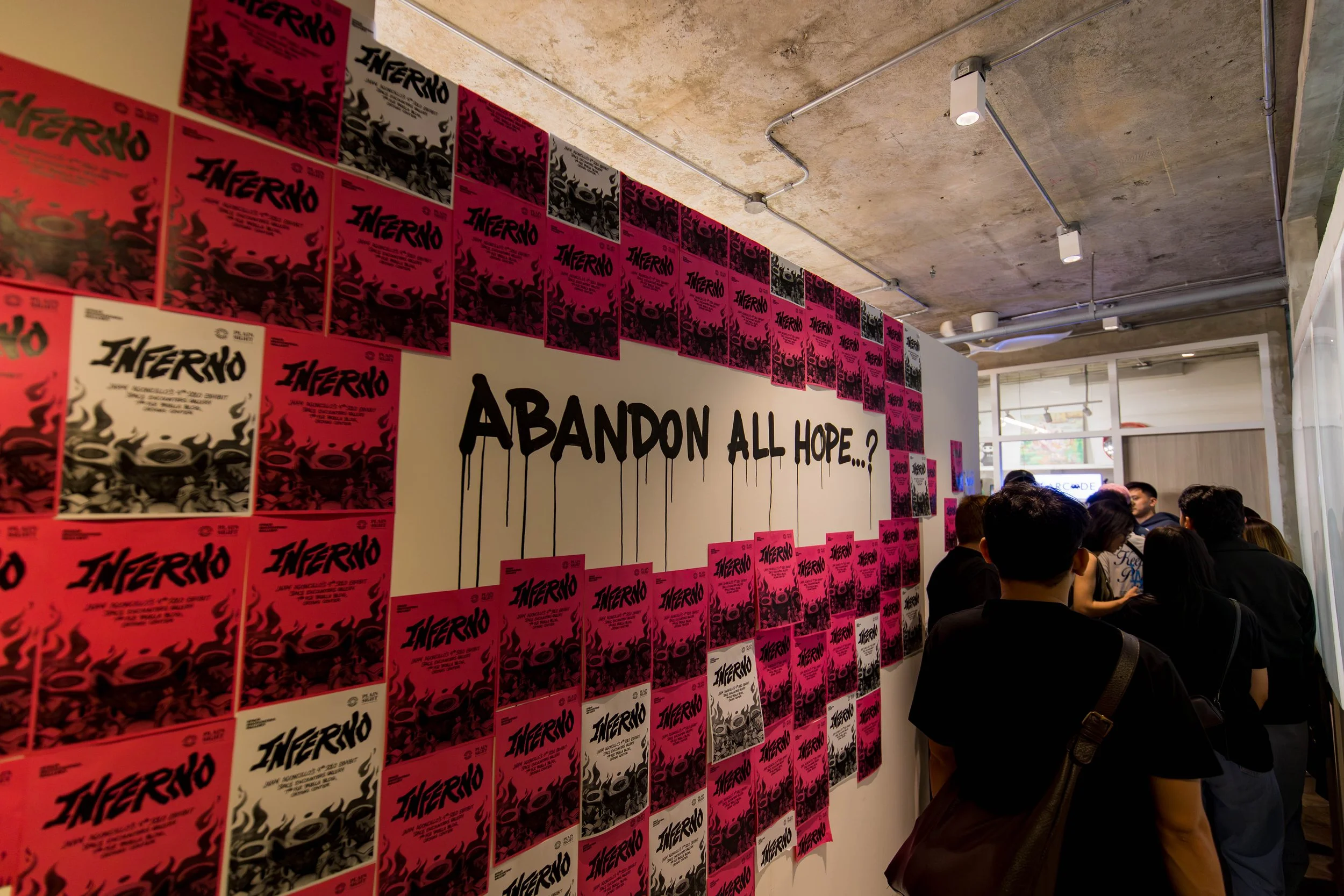
“I have to remember who I am,” he says. “Where I come from… that’s where the street art background comes in.”
This grounding allows his practice to pivot between spaces without losing coherence. The same energy that animates murals informs his canvases. The difference lies in identity and in context.
“I try not to separate my two sides… I’m just an artist as a whole.”
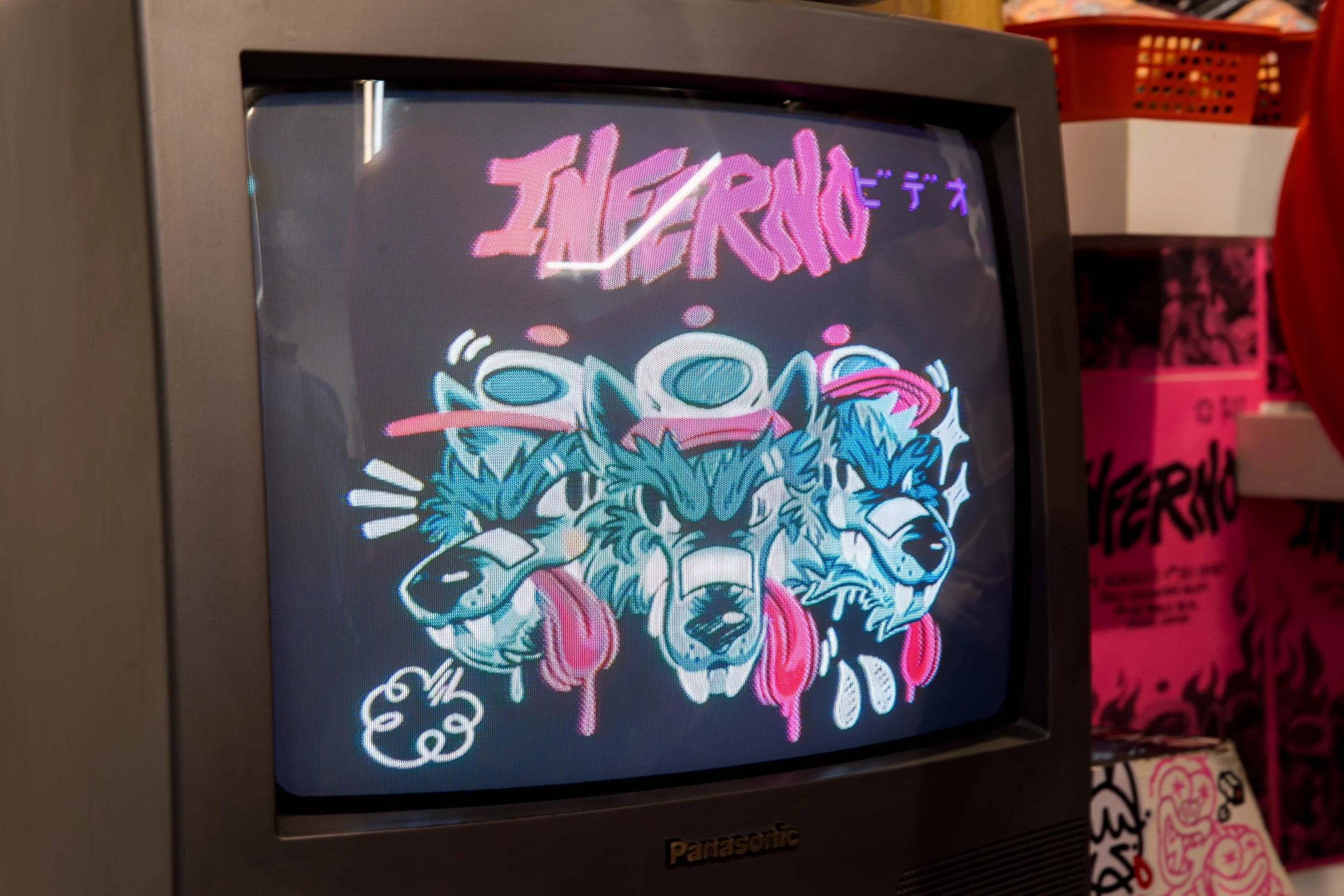
That philosophy extends to accessibility. Inferno is not positioned as a highbrow exercise, per se. Instead, it opens itself outward, echoing the inclusivity of the street. The gallery becomes a boundless continuation.
A decade in the ‘Inferno’
The exhibition marks ten years of practice. But Agoncillo resists framing it as celebration. “I don’t want to think of Inferno as a celebration… more of a marker in time.”
That marker holds everything: early struggles, unstable work, difficult clients, small wins. Over time, these experiences coalesce into something more complex. The struggle evolves.
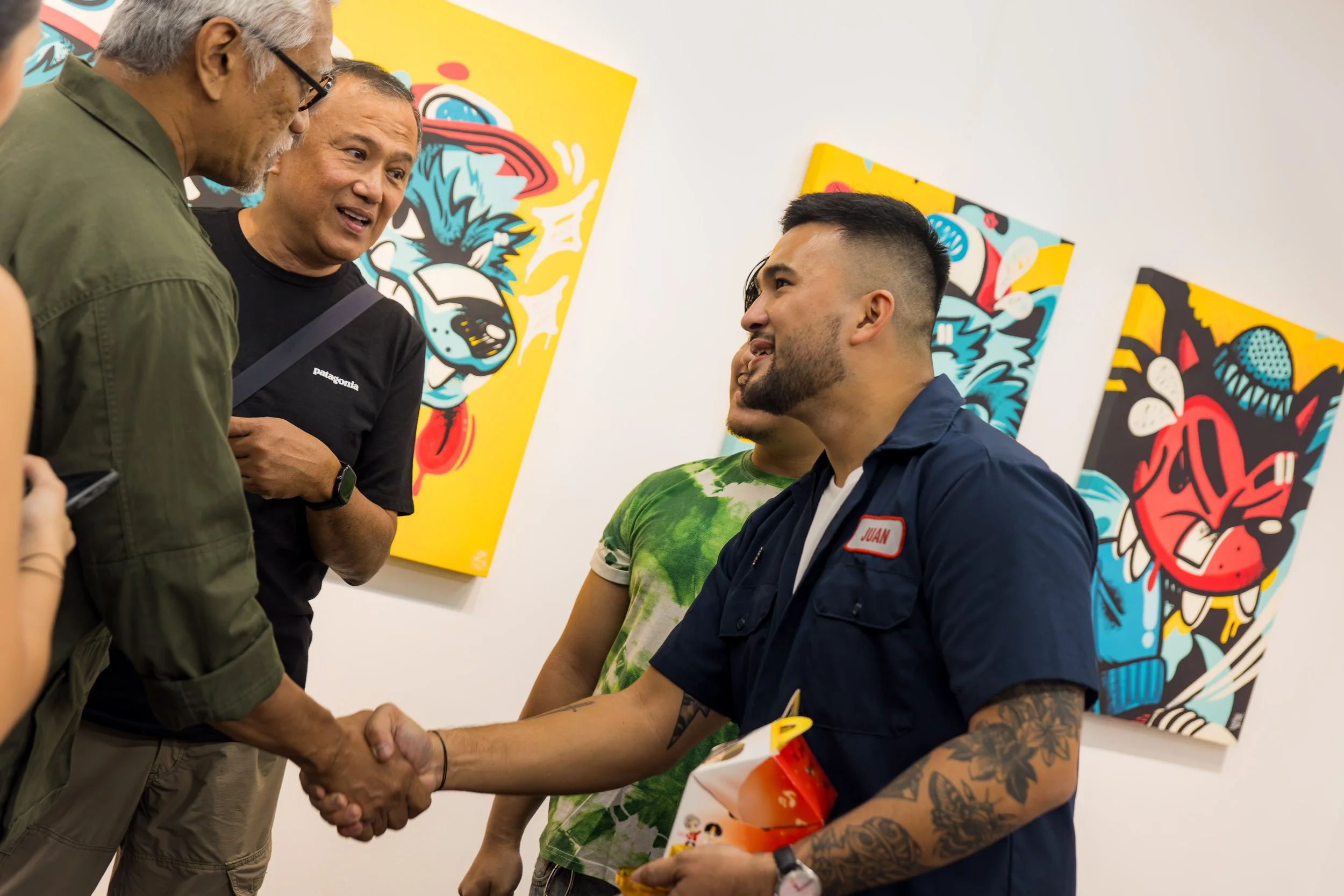
“Before, it was about making it work,” he says. “Now it’s… where does it go next?”
Success, too, becomes elusive. “The goalpost is always moving,” he admits. The more one achieves, the further success seems to recede. In this sense, Inferno is just a midpoint.
Choosing the fire
If there is a central thesis to Inferno, it lies in its insistence on agency. Agoncillo reframes suffering as alignment—not an inevitability.
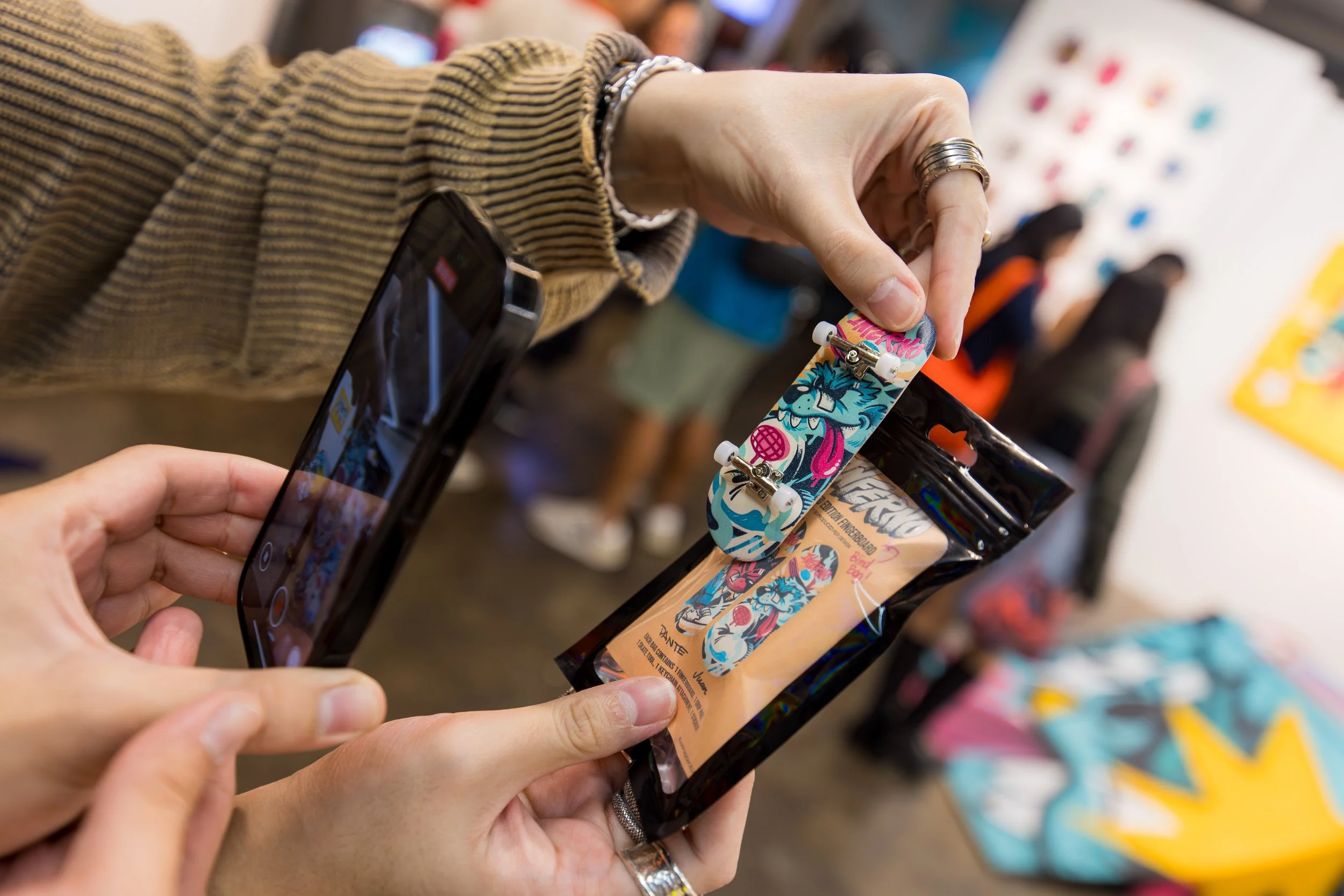
“You don’t have to do it,” he says. “But you choose it because you want to see it through.”
That choice animates the exhibition’s protagonists, Dante and Juan, as they traverse imagined terrains of difficulty. But more importantly, it animates the artist himself.
The works do not resolve, nor do they offer escape. Instead, they hold tension—between ambition and exhaustion, clarity and chaos, despair and belief.
“I want people to come out… hopeful,” Agoncillo says. “Whatever their chosen inferno is… it’s hard, but I’m hopeful.”
In the end, Inferno asks the audience to recognize the ‘infernal’ flames, step into it, and perhaps, like the artist, say it anyway:
‘Bring it on.’
Catch the dynamic solo exhibition at Space Encounters Gallery in Ortigas until April 10, 2026.