
Fragile Legacies: 7 Literary Wonders of Marikina's Book Museum
From microscopic texts to books from nations that no longer exist, explore seven extraordinary literary artifacts preserved right in the heart of Marikina.
Words Rebelyn Beyong
Photos courtesy of Jay Joaquin Balolong
June 17, 2026
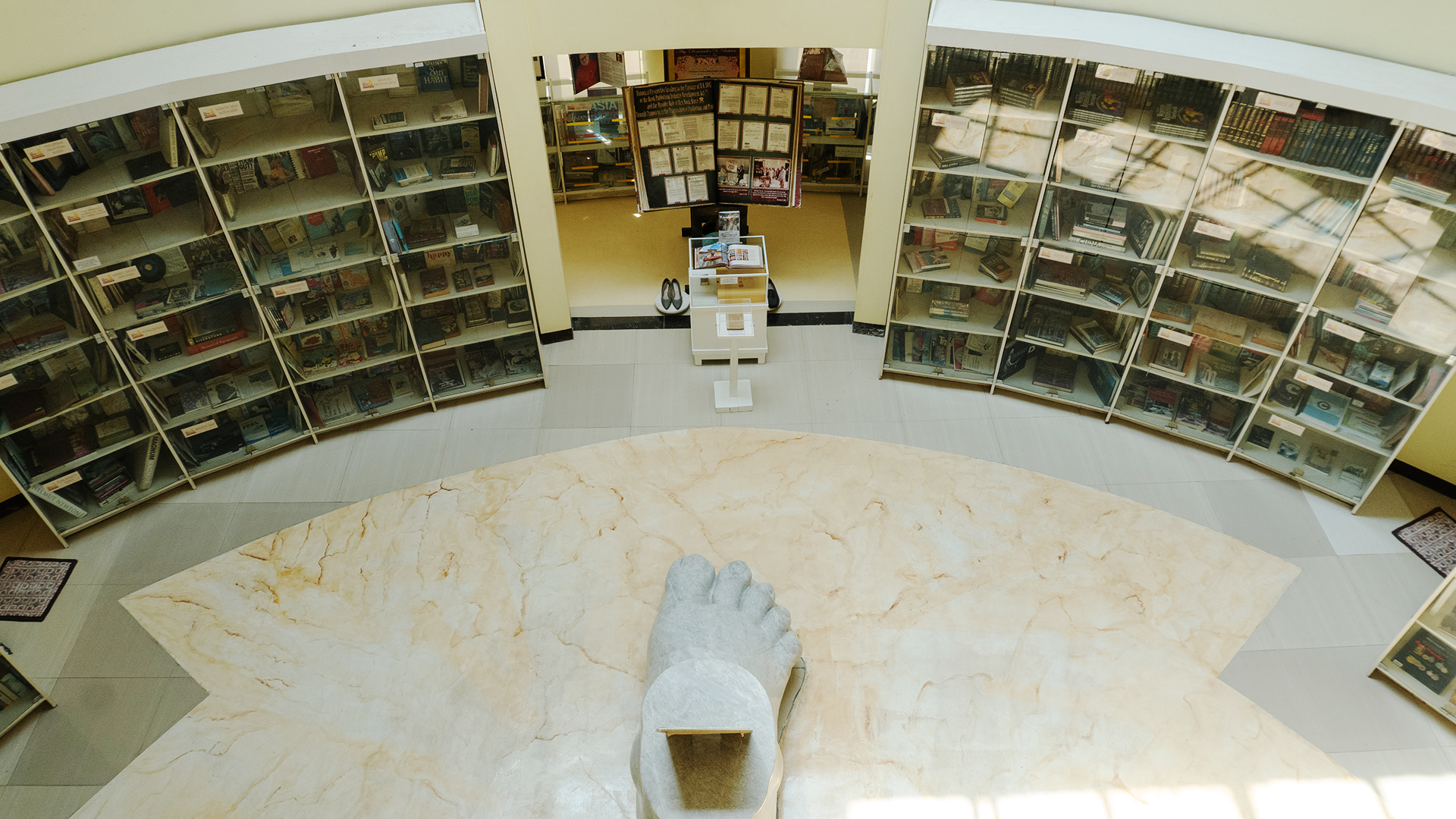
Marikina is world-famous for its shoes—an industry built on craftsmanship, resilience, and pride in one's work. Yet the city’s cultural identity is expanding through a fascinating, unexpected avenue for literature: the Book Museum and Ethnology Center.
Founded in March 2013 by Atty. Dominador Buhain, widely acclaimed as the "Godfather of the Book Publishing Industry" and scion of the family behind Rex Group of Companies—one of the largest book publishers in the country—the museum sits on a Marikina lot his parents acquired for merely P100.00 per square meter in payment of an existing debt.
While shoemaking showcases Filipino physical skill, this museum highlights those exact same values expressed through a massive, globally sourced collection of literary materials.
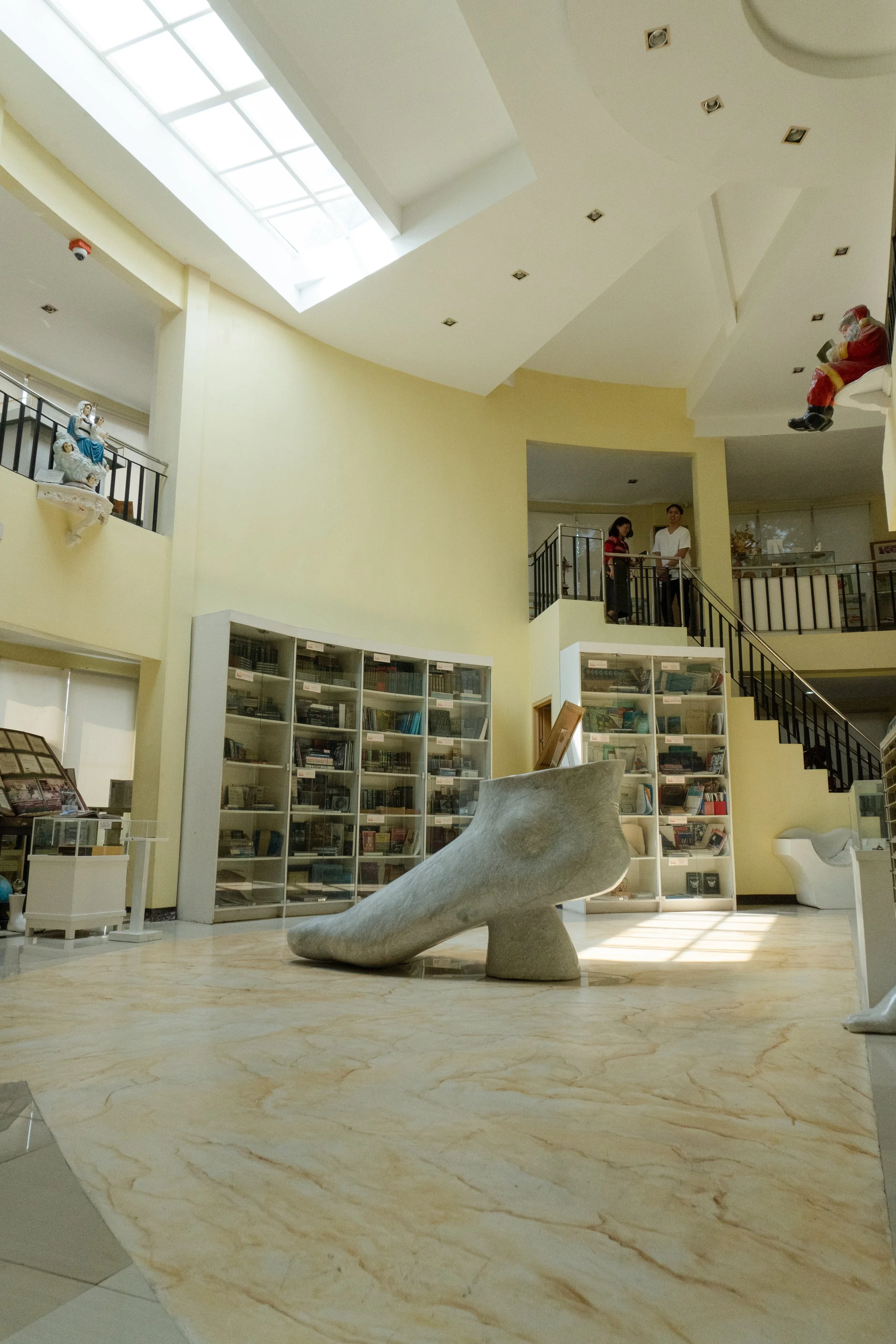
For Atty. Buhain, establishing the museum in the city, weaved a global collection into a uniquely Filipino tapestry of struggle and success. It anchors a world of history in a local story of industry and resilience, proving that books and artifacts have the power to change lives.
Navigating the notoriously tough Philippine humidity, the museum preserves these centuries-old pages using strictly controlled environments, air-conditioning, dehumidifiers, and acid-free archival boxes to prevent mold and deterioration.
Art+ curated a special list presenting seven extraordinary treasures you must see on your next visit:
The Smallest Book: The Lord’s Prayer
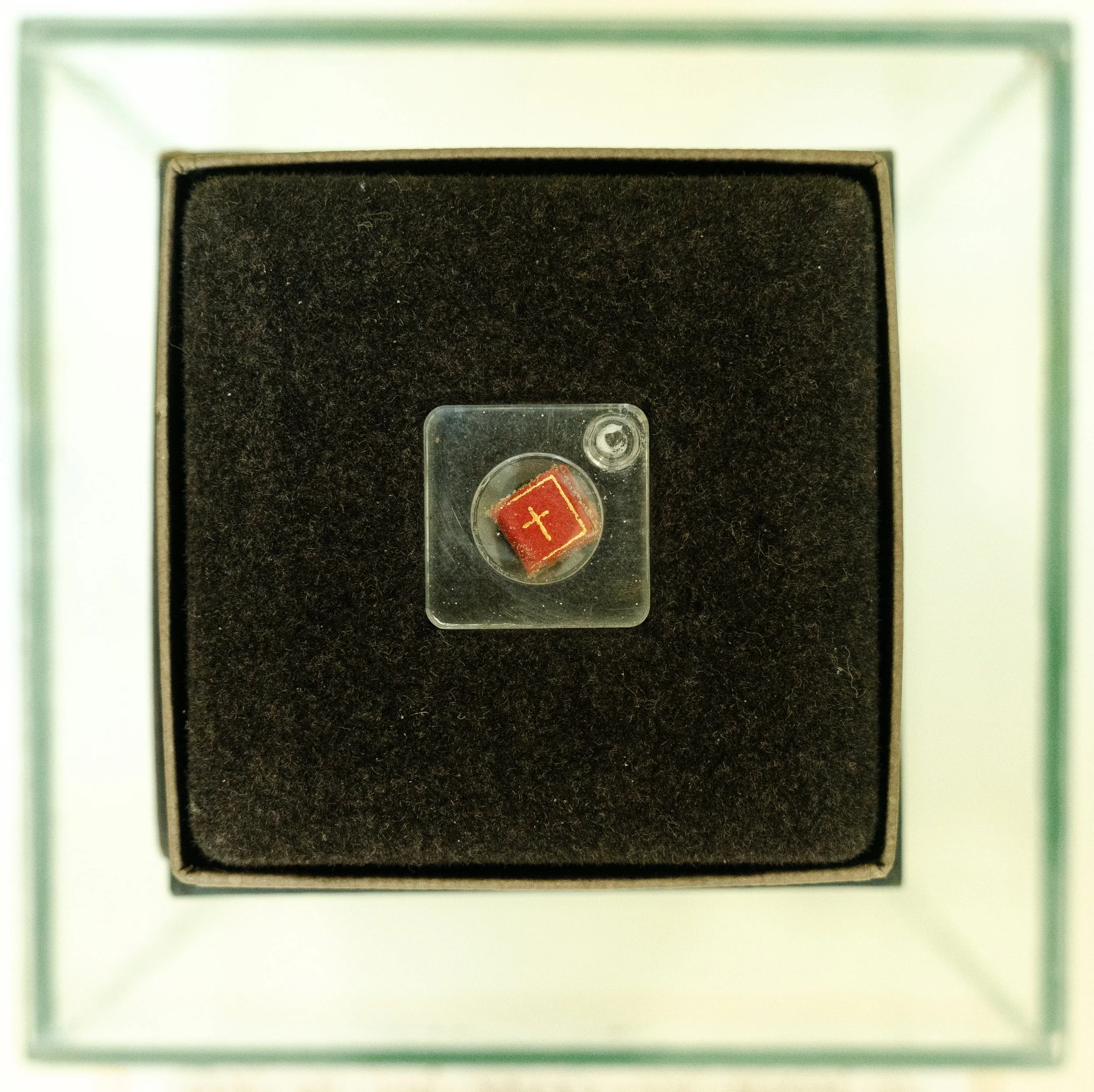
Measuring a mere 3.5 mm by 4 mm per page, this leather-bound, gold-decorated edition of the Lord's Prayer in seven languages is the smallest book in the collection. Produced in the 1950s by Waldmann & Pfitzner, Atty. Buhain purchased it in Mainz, Germany—the birthplace of Gutenberg’s printing press. For many first-time museum-goers and children, spotting this readable, microscopic text is an unforgettable “wow moment.”
The Prophetic Artwork: Haec est Sibylla Cumaea
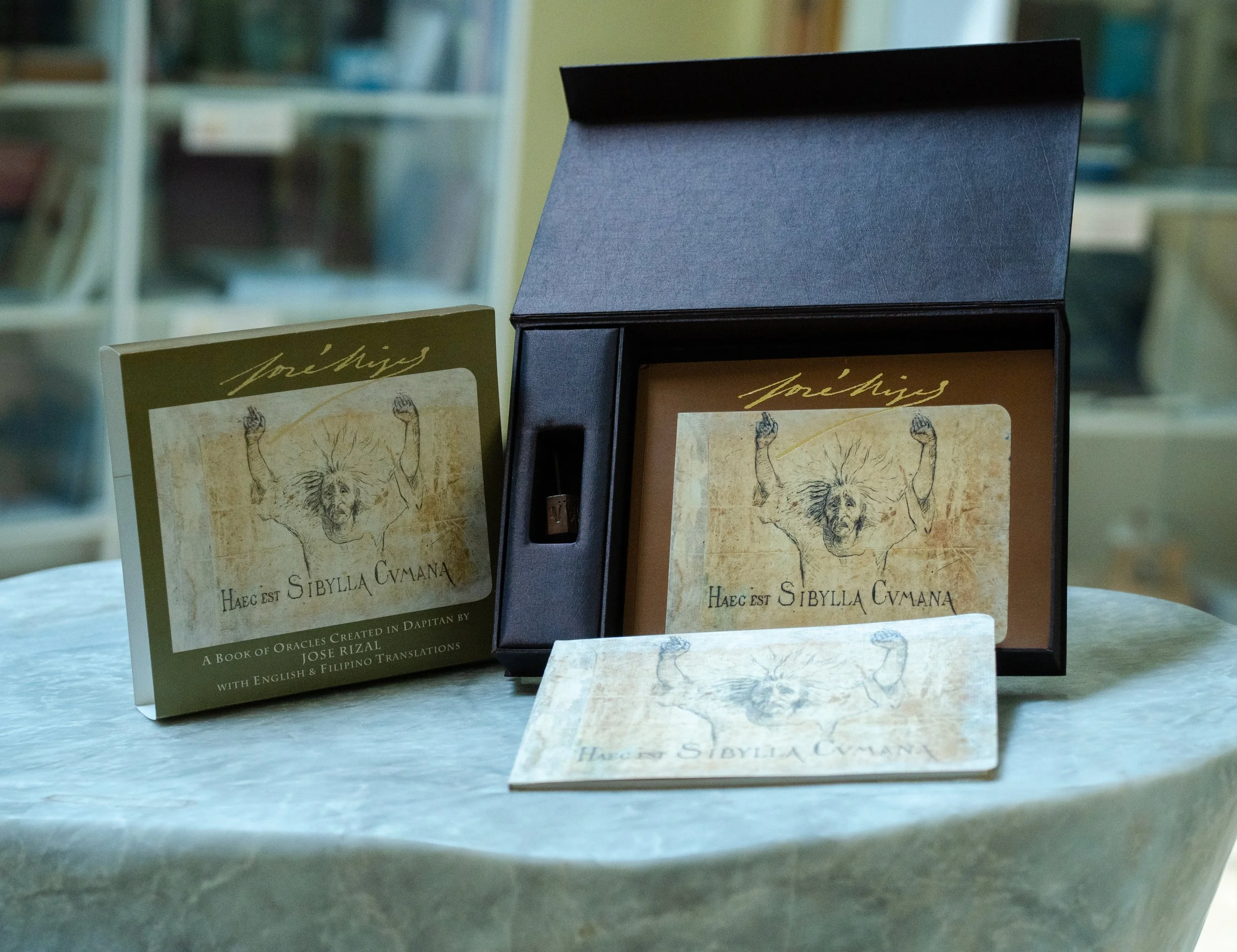
Among the museum's rare Rizaliana collection, the absolute “crown jewel” is a limited-edition oracle-inspired set. Titled Haec est Sibylla Cumaea (This is the Cumaean Sibyl), this elegant collector’s box reinterprets José Rizal’s artistic works through the lens of classical divination.
Accompanied by a carved wooden stylus used for guided or intuitive reading, it bridges Rizal's intellectual engagement with classical antiquity and a deeply personal, interactive experience. It reveals an introspective, philosophical dimension of the National Hero rarely found in conventional political writings.
The Global Nomad: Si Rizal sa Iba-Ibang Bansa
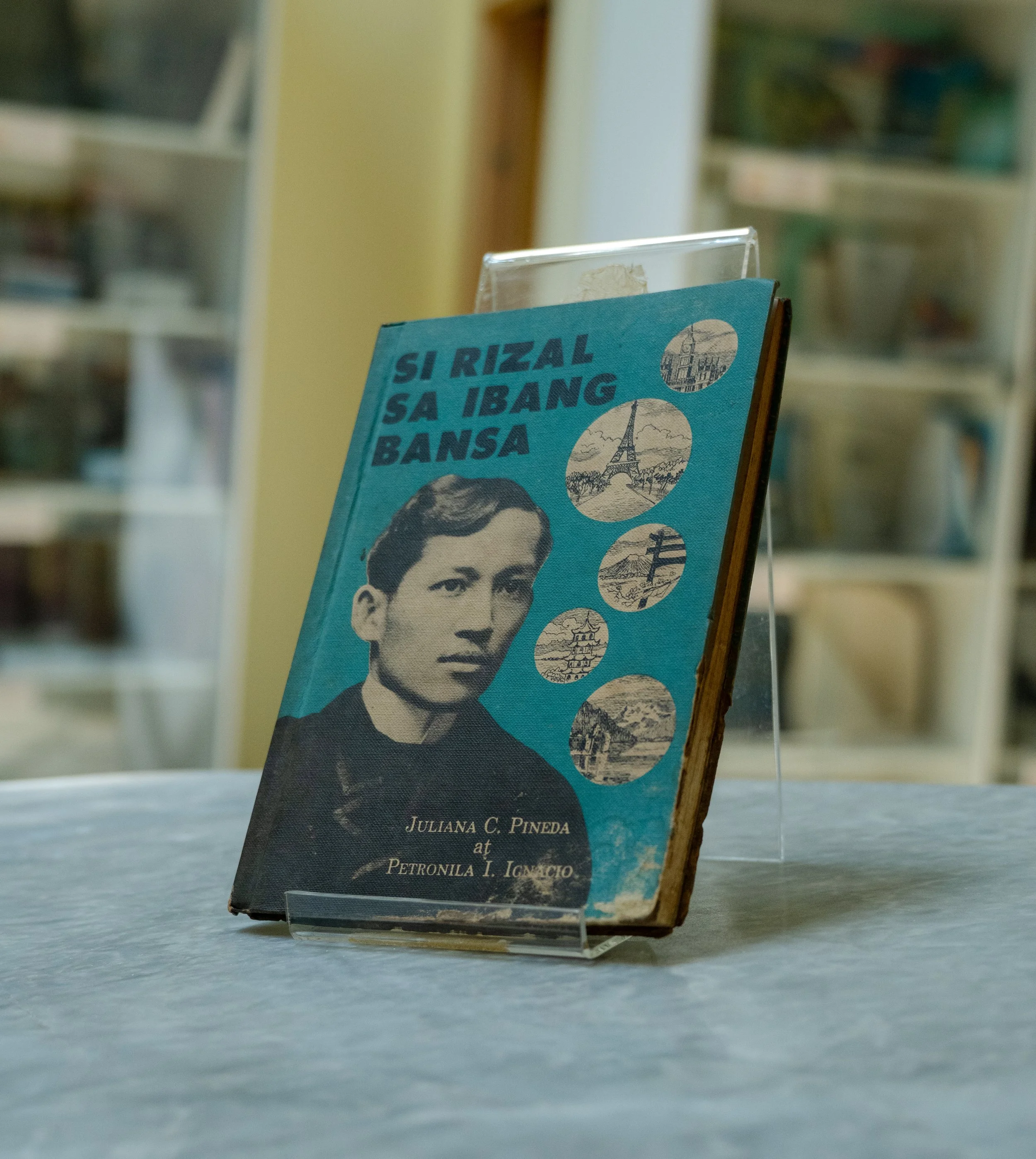
Long before global communication became effortless, Rizal’s message of freedom crossed remote borders. The rare 1961 volume, Si Rizal sa Iba-Ibang Bansa by Juliana C. Pineda and Petronila I. Ignacio, documents how thinkers in Egypt and Japan translated and studied his work.
This book serves as the ultimate evidence that Rizal was a “World Hero,” whose words reached snowy European villages and busy Middle Eastern ports decades before he was officially recognized as a National Hero at home.
The Cultural Time Capsule: Traces of Czechoslovakia
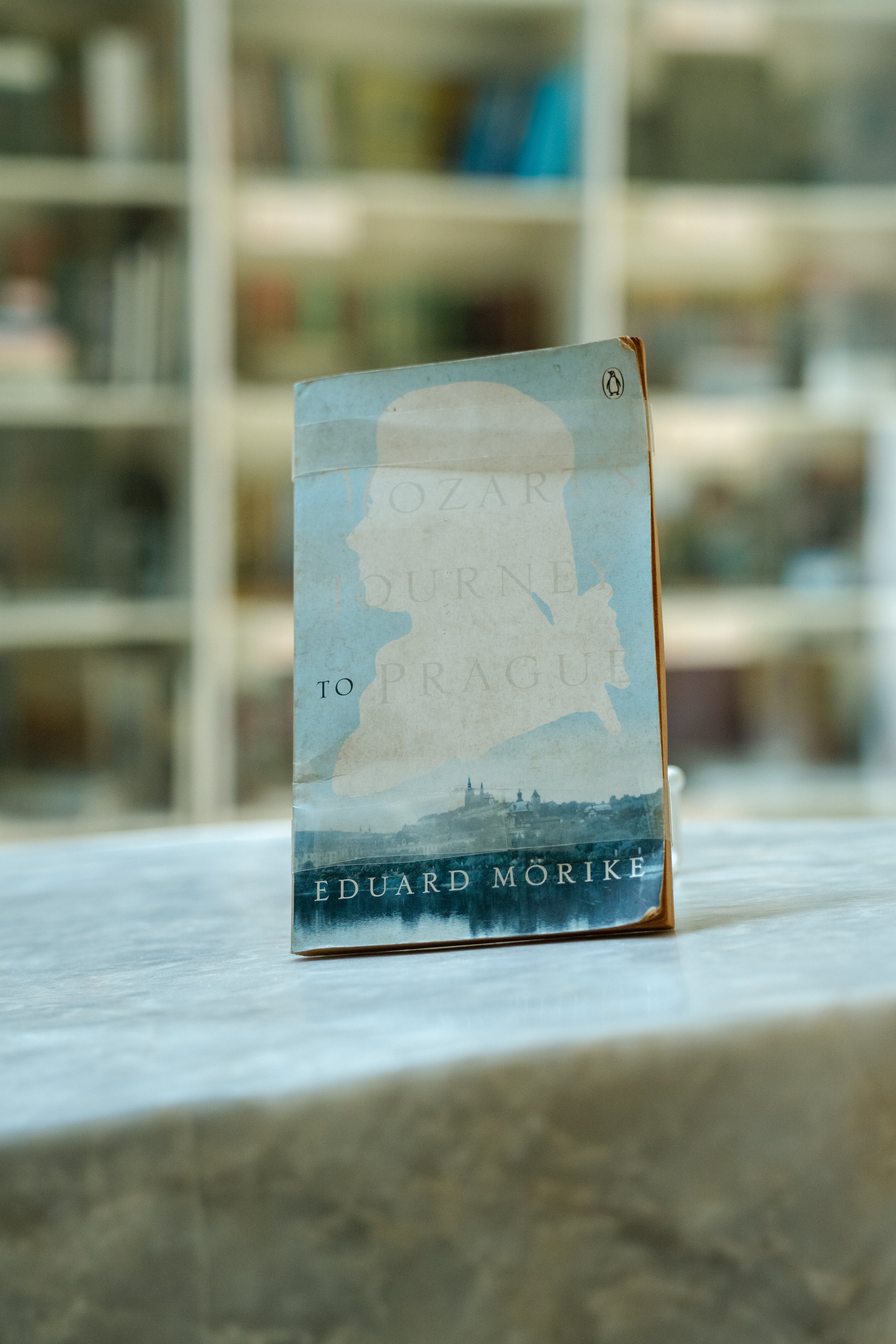
When a country ceases to exist, its literature gains profound historical value. The museum houses materials related to the former Czechoslovakia, including Mozart's Journey to Prague. Acquired during later visits to the now-separate Czech Republic and Slovakia, these books reflect a shared cultural space that once belonged to a single nation, proving that culture continues even when borders do not.
The Fragmented Nation: Memories of Yugoslavia
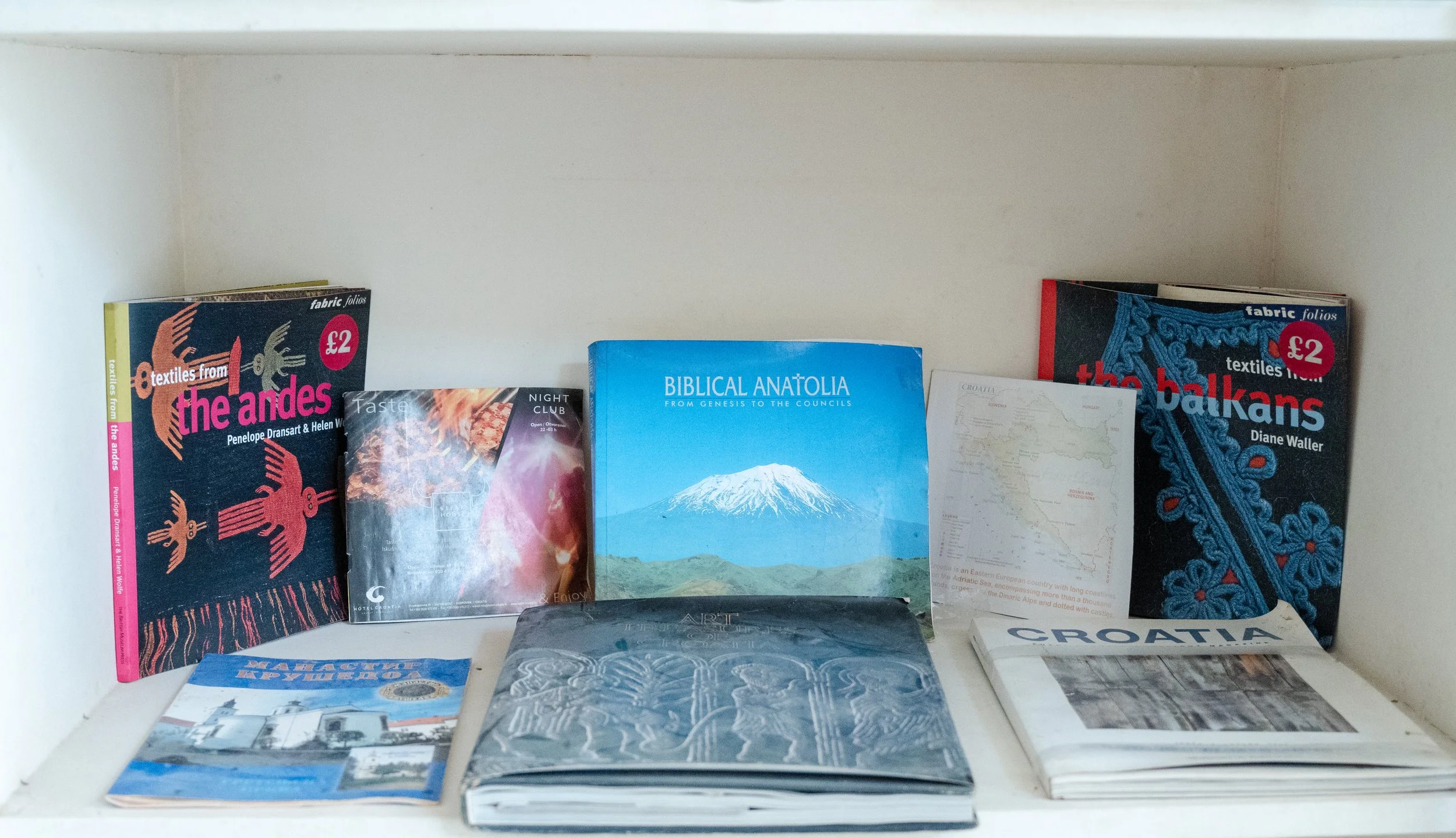
Similarly, the collection features books from the former Yugoslavia, which broke apart into several independent nations in the 1990s and early 2000s. For the museum, these books are no longer just publications; they are pieces of memory that carry the everyday lives, struggles, and identities of a vanished nation. Even if a country is off the map, its story lives on through the pages preserved here.
The 17th-Century Relic: Latin Commentaries
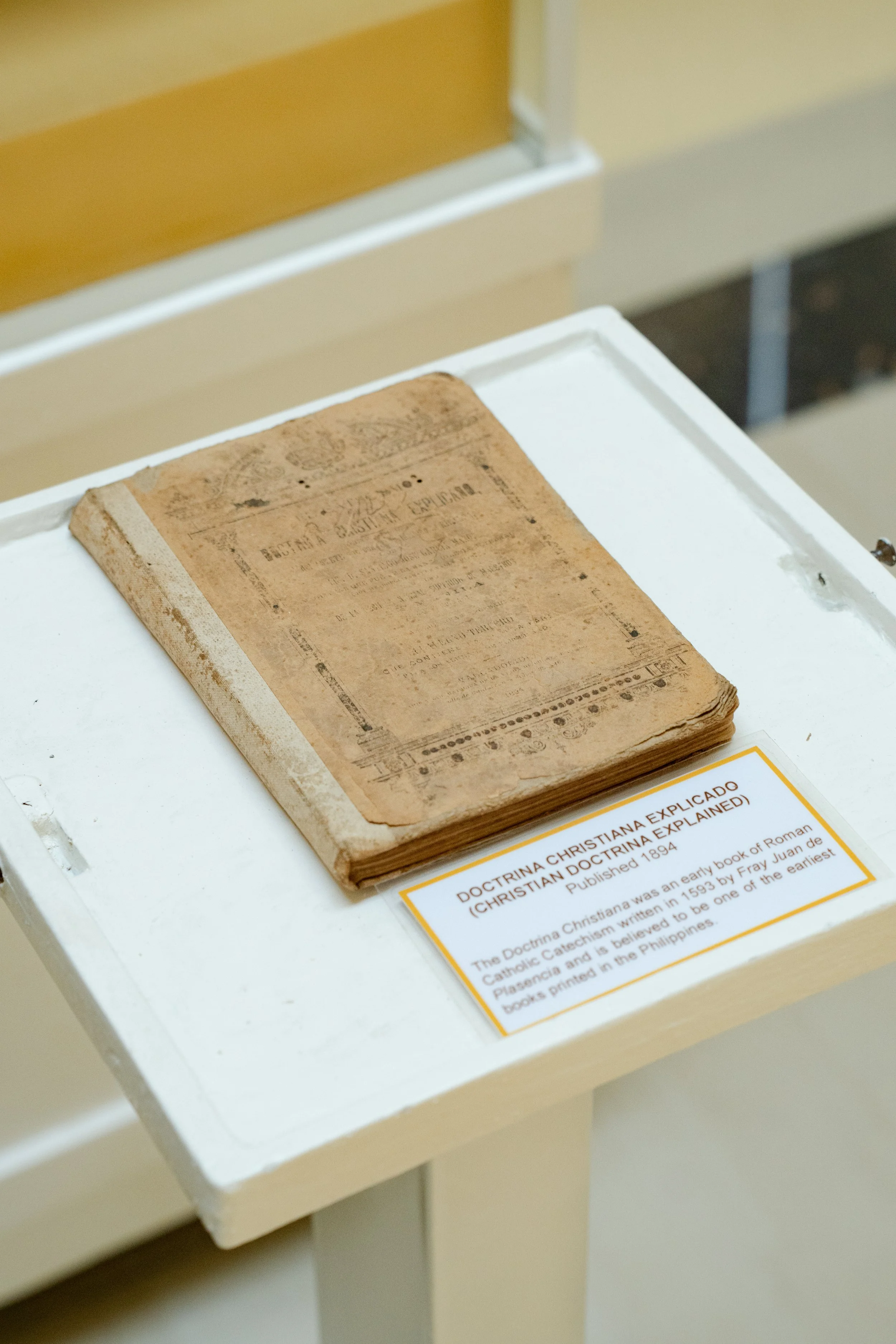
The oldest piece of literature currently on display is Latin Commentaries by Johannes Piscator, a volume dating all the way back to the 1600s. This remarkable, centuries-old book is a comprehensive collection of detailed biblical exegesis, meticulously interpreting Scripture line by line while considering language, historical context, and theological insight.
Acquired in Germany, it shares space with other culturally significant texts, such as an 1894 edition of the Doctrina Christiana Explicada, highlighting the lasting impact of early catechisms and Spanish colonial history on Filipino identity.
The 20-Meter Journey: The Life of Teacher Scroll
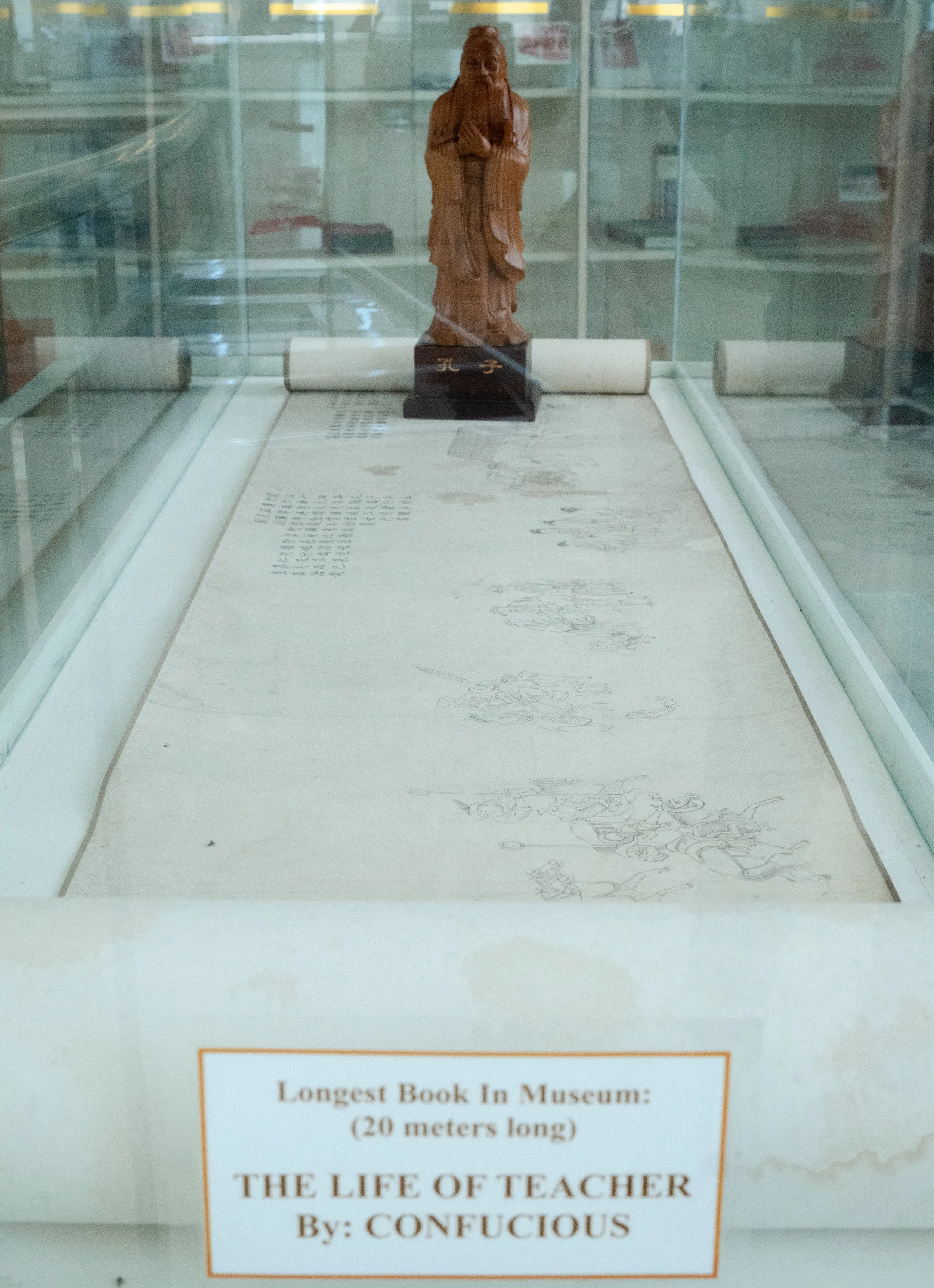
While traditional books are measured by pages, the “Longest Book” in the collection is measured by length. The Life of Teacher (Confucius) Scroll is a single, continuous sheet of silk-backed paper spanning 20 meters—roughly the length of a professional bowling lane.
To read it, visitors must physically travel alongside illustrations depicting Confucius’ 14-year exile. It demands a 20-meter table just to be read in its entirety, transforming ancient storytelling into a kinetic, architectural feat.
The delicate pages housed in this Marikina landmark are not just old books; they are quiet witnesses to our shared global story. Within these pages are voices and ideas that have survived time, conflict, and upheaval, serving as a quiet reminder of how fragile our cultural memory can be.
If there is one feeling that stays with you, let it be a profound reverence for the past—and a quiet commitment to safeguard it for the generations to come.