Devotional Stories From The Streets
After his stirring Art Fair PH Project KAPILYA, Max Balatbat talks how setbacks and high-stakes gambles, a three-year hiatus, and telling stories from Caloocan’s streets helped him carve out his hard-won place in art
Words Khyne Palumar
Photos courtesy of Max Balatbat
June 23, 2026
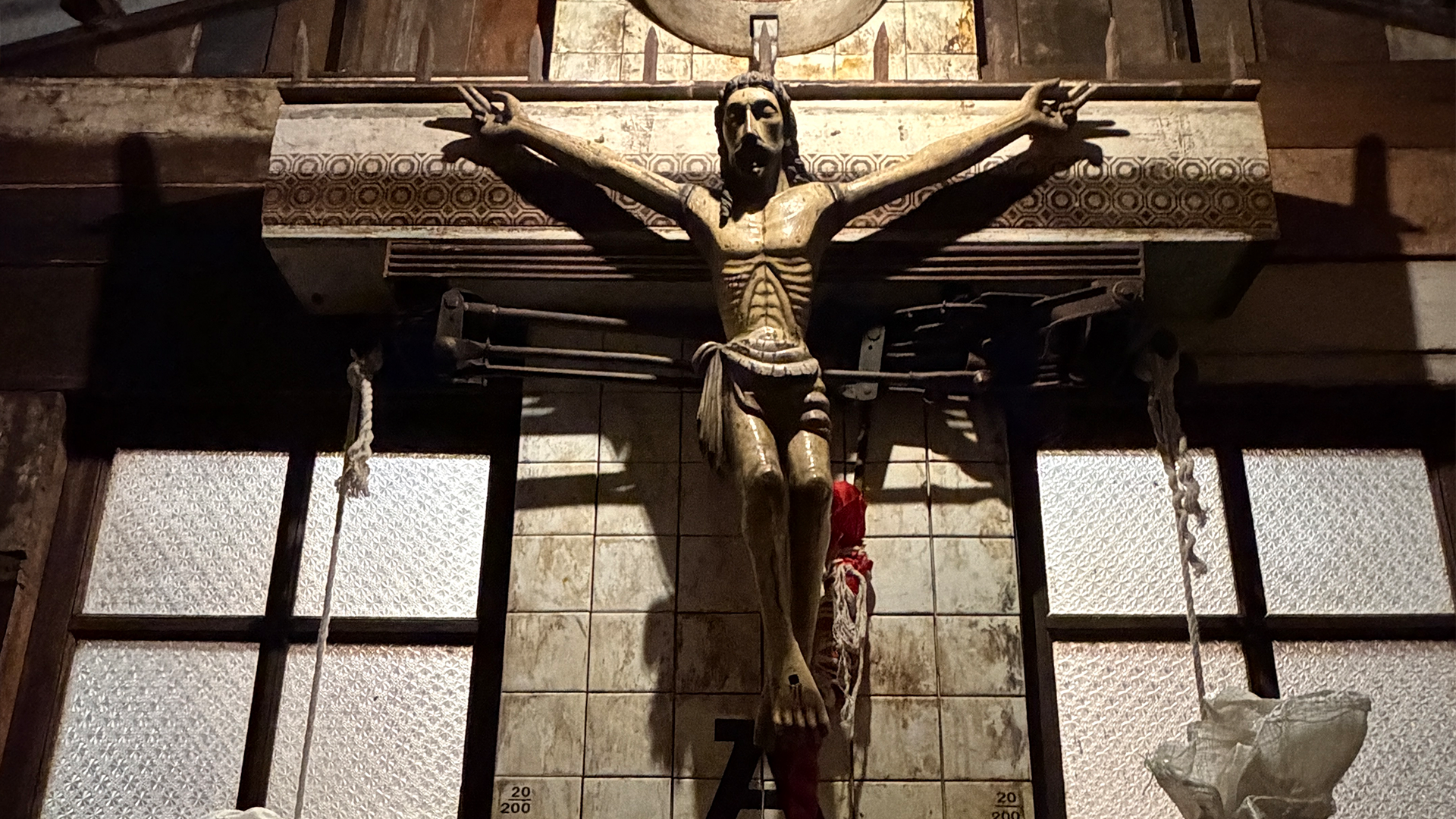
“Positibo man o negatibo, ang importante may naiparamdam ako sa inyo.” (“Whether positive or negative, what matters is I made people feel.”) Max Balatbat says, speaking to Art+ in earnest, weeks after unveiling KAPILYA at the 13th edition of Art Fair Philippines. The head-turning installation reimagines the small Caloocan chapel rebuilt by his late grandmother—a space that shaped both his childhood and worldview.
In the life-sized, diorama-like assemblage, Balatbat cobbled together disquieting elements of Catholic iconography and street life. A mechanical whip swung between sacks labeled money and food, echoing collective human pleas for survival and a nod tothe penitensya flagellations of Holy Week. The Ama Namin prayer appears printed on a wall like an ironic eye chart. A little girl with a face choked in yarn and panties pulled to her knees holds up Sampaguita garlands amid a backdrop of melted prayer candles, rusty nails, and a crucified Christ.
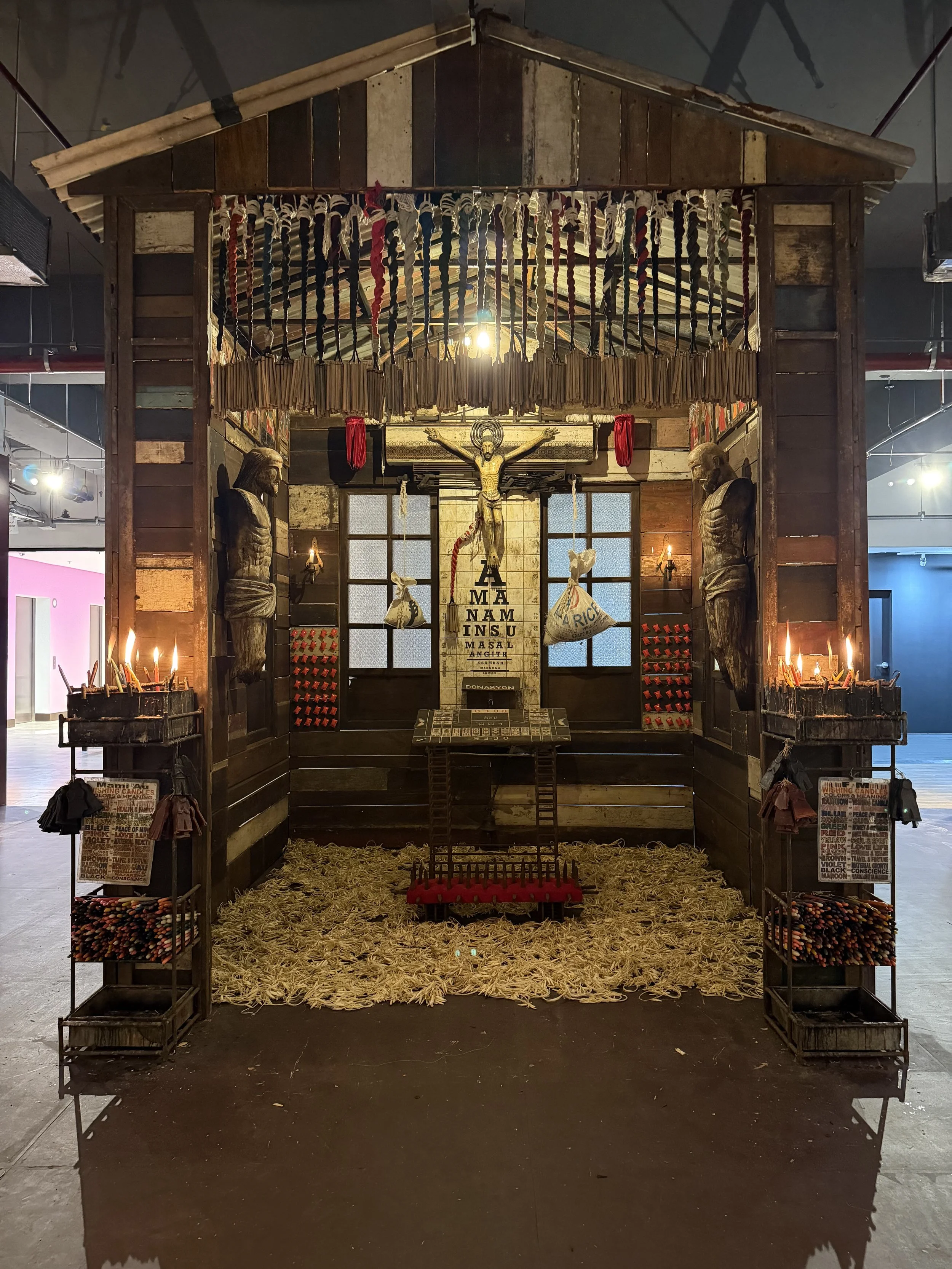
Installation view and details of Max Balatbat’s KAPILYA for ArtFairPH/Projects
The installation drew thick crowds of fairgoers, much like devotees flocking to mass at the chapel Balatbat’s grandmother rebuilt in Caloocan City in 1973. Longtime followers of Balatbat’s work know that KAPILYA continues an ever-expanding body of his multimedia pieces that fuse social reality with personal diary. Early iterations of the faceless Sampaguita seller appeared at Art Fair 2020 in Sampaghija Karnebal, while fragments of KAPILYA, including the mechanized whip, were glimpsed in his 2025 Art Cube show Sampalataya.
Sacred ritual and street-smart survival are a throughline in Balatbat’s story. He grew up across a brothel on Caloocan’s 3rd Avenue, where nightly scuffles and pounding music were part of the background noise of his childhood. “Di ako sanay pag tahimik, mas kaya kong matulog sa tabi ng subwoofer,” he says with a laugh. (“I’m not used to sleeping in the quiet. I can sleep next to a loudspeaker.”) On Sundays, he served as an altar boy at the same neighborhood chapel, earning lunch money from his lola throughout grade school and high school. He recalls how pimps, sex workers, and drug dealers would gather outside its walls, clasping their hands and making signs of the cross during Mass. “Akala mo nakatambay lang pero nagdadasal pala,” he says. (“You think they’re just hanging around, but they’re actually praying.”)
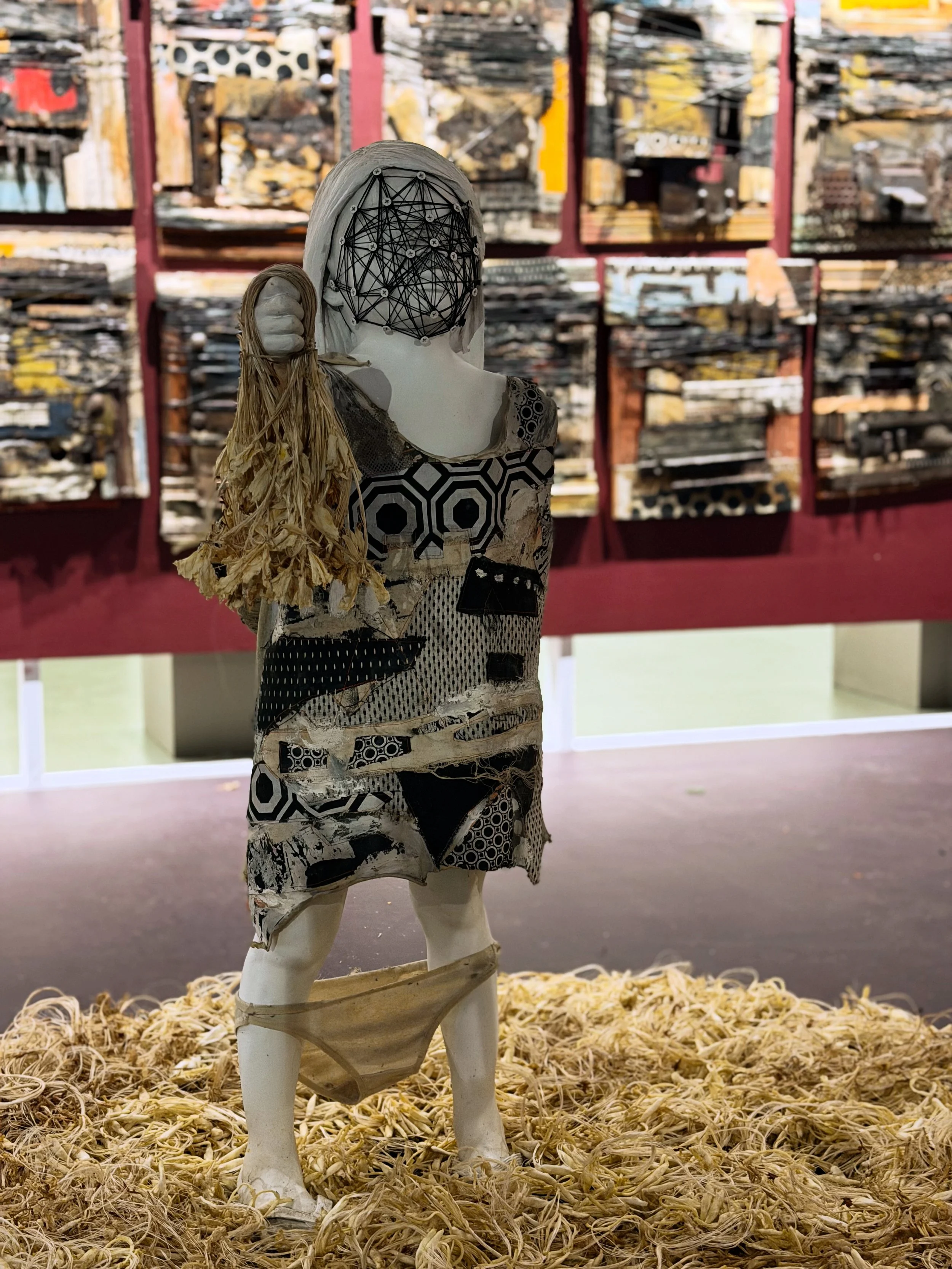
Installation view and details of Max Balatbat’s KAPILYA for ArtFairPH/Projects
In that sense, KAPILYA is as much a tribute to his grandmother as it is to the morally complicated characters of Max’s youth—who, like everyone else, sought a place to convene and whisper their prayers. “Lahat sila may job title, lahat sila may dasal.” (“They all have job titles, and all of them pray.”)
Balatbat prays, too. He’s quick to clarify that he’s neither religious nor atheist, but after nearly two decades of artmaking—a career marked by exhilarating highs, disappointing lows, and high-stakes gambles—he’s come to believe that staying the path requires surrender.
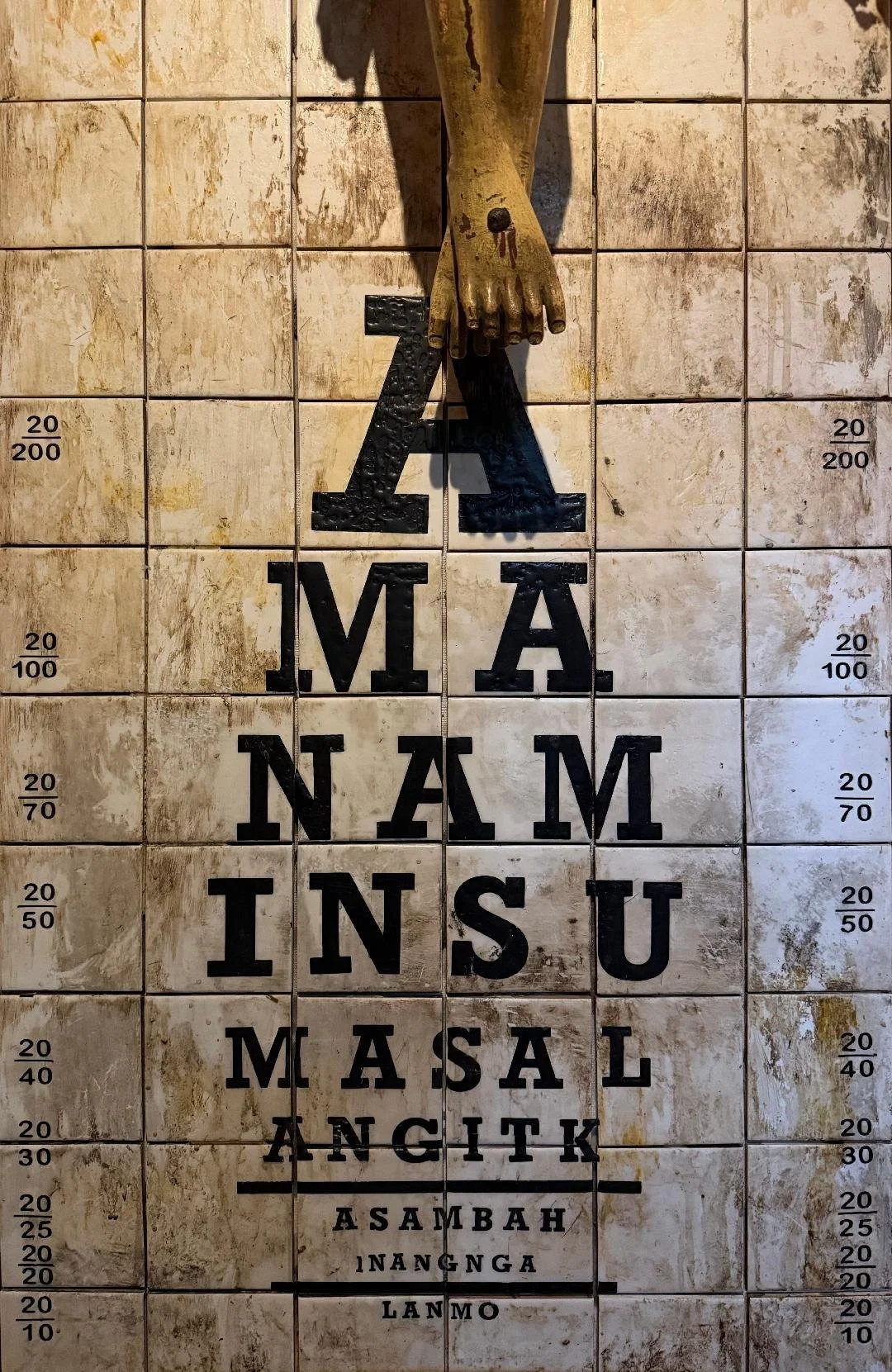
Installation view and details of Max Balatbat’s KAPILYA for ArtFairPH/Projects
Maximino Balatbat II was born the second of three children to an architect father and a civil servant mother in the weather bureau. A self-described “batang kalye,” much of Max’s upbringing was under his grandparents’ watch. His grandmother, who sold suman for a living, saved enough money to erect a 50-unit apartment complex and rebuild their neighborhood chapel, eventually helping send Max and his two sisters to college. Balatbat first took up Architecture at the Far Eastern University before shifting to Fine Arts at the University of the East, where he graduated. Throughout college and while working as a designer at MTV Pilipinas and several now-defunct magazines, Balatbat regularly joined painting competitions—and just as regularly lost.
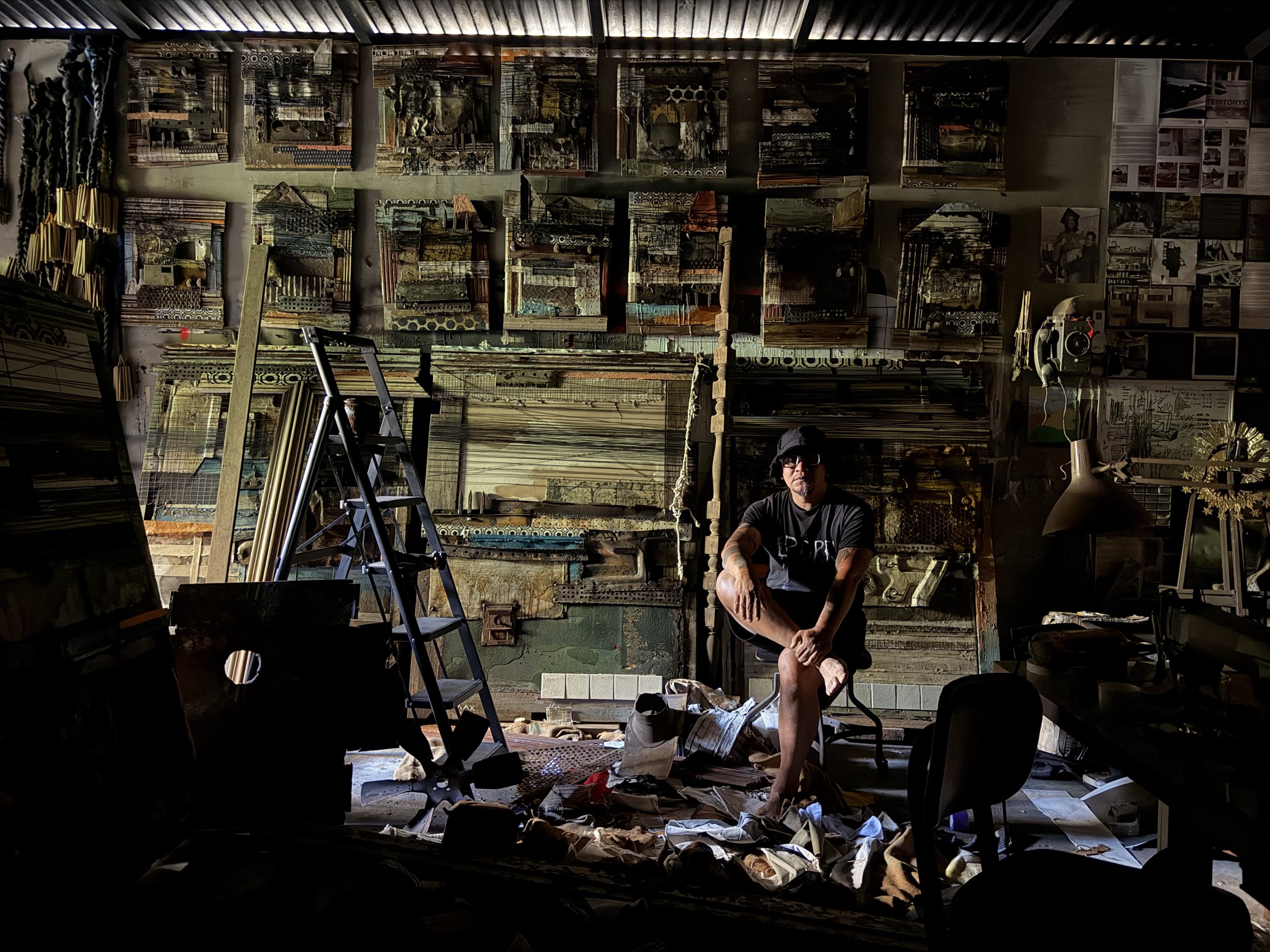
Artist Max Balatbat
“Ang dami kong iniyak nung estudyante ako. Ang daming tanong kung bakit hindi ako nananalo. Noong panahong ’yon, nagpapaka-cool pa ako. Hindi pa ako nagpapaka-totoo sa sarili ko. Ngayon mas matapang na ako, mas hubad at mas totoo na ang art ko.” (“I cried a lot as a student. I kept asking why I wasn’t winning. Back then I was still trying to be cool—I wasn’t being true to myself. Now I’m braver, my art is more bold and honest.”)
Those scrappy early years were defined by stubborn hustle. Balatbat once mounted a pop-up exhibition outside a gallery that rejected him, gave away pen-on-paper artworks to passersby outside Megamall, and traded acrylic paintings for gin and canned goods to mountaineer friends at Mt. Maculot—his very first “sold out” exhibit. “Ang sarap ng feeling pag gumagawa ka ng sarili mong moves,” he says. (“It’s a great feeling when you’re making your own moves.”)
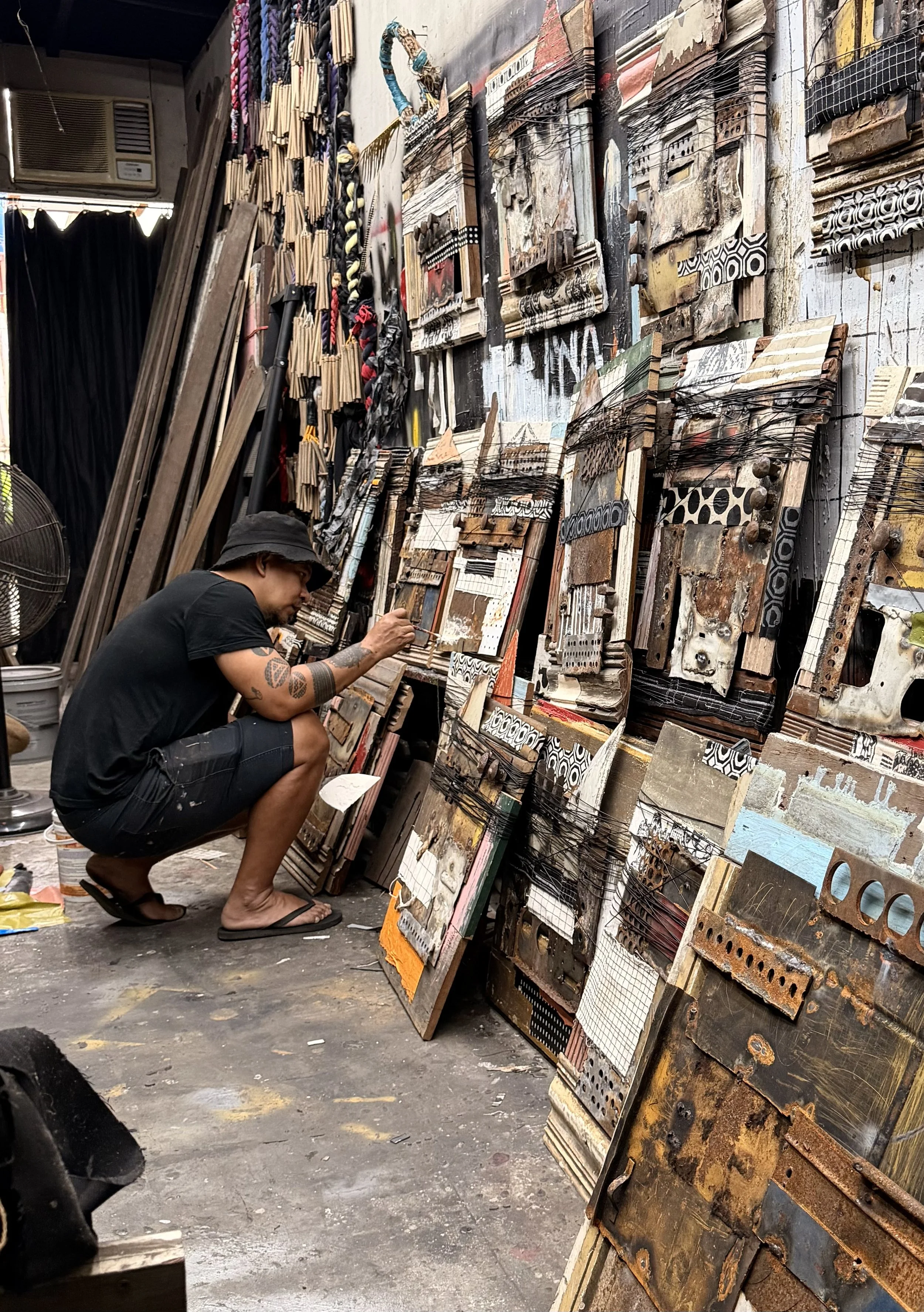
Artist Max Balatbat
Balatbat started out as an abstractionist, filling canvases with clean architectural blocks and lines as outlets for inner chaos. He bristled at the running joke that abstractionists “can’t draw,” so he experimented by layering paint, silkscreen, and collage-like elements on his works. The results often baffled competition judges and nearly got him disqualified once. But the risk paid off. One person who took notice was National Artist Benedicto Cabrera, who praised Balatbat for pushing the medium in unexpected directions, and remains a close friend and supporter.
In his thirties, Balatbat survived a bar brawl that left him stabbed in the stomach, triggering an existential crisis and a three-year hiatus from art. Later, he shut down a lucrative business to pursue painting full-time while raising a three-year-old. The decision depleted his savings. “Maraming beses na akong nag-back to zero kasi sumusugal ako. Dalawa lang ’yan: pera o pangarap. Pinili ko pangarap.” (“I’ve gone back to zero many times because I kept taking risks. It always comes down to two things: money or the dream. I chose the dream.”)
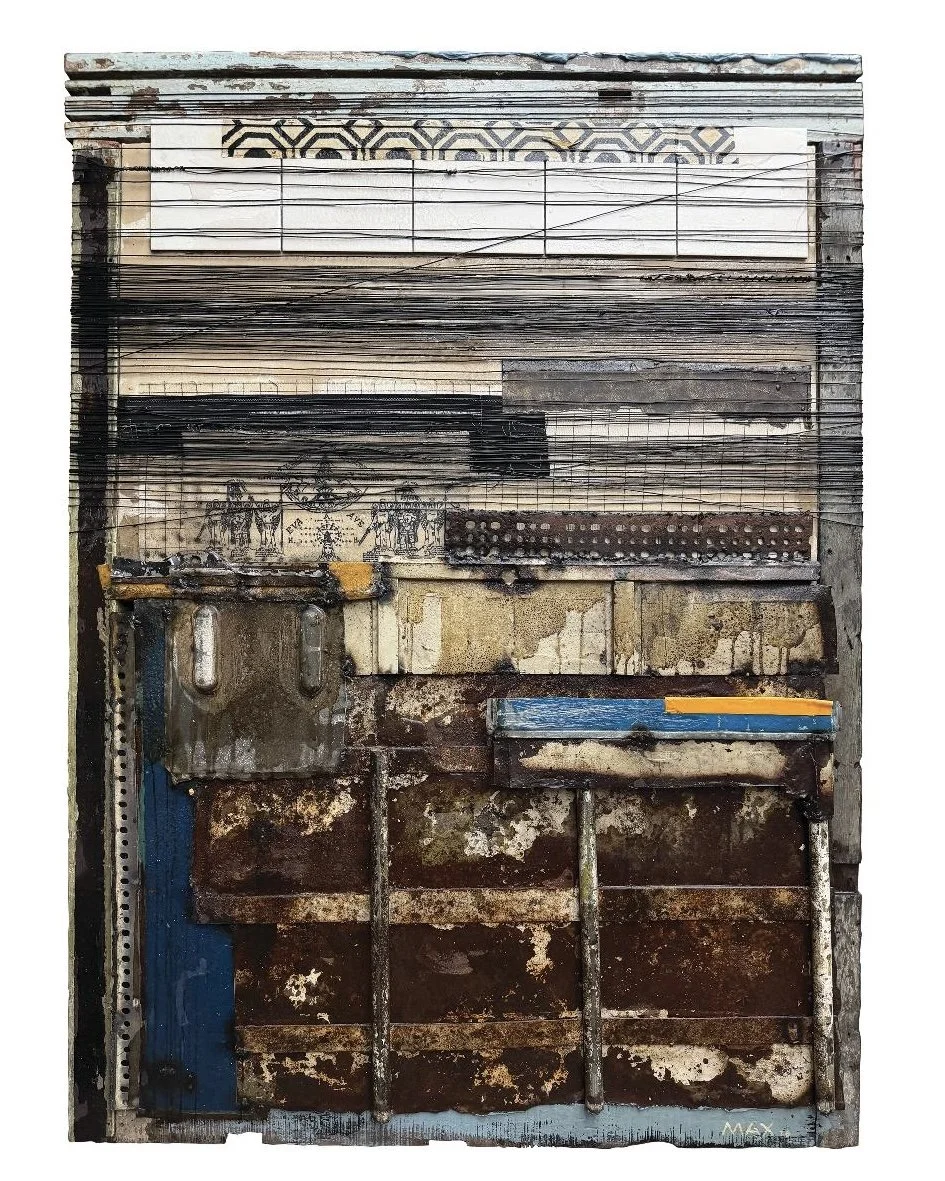
La Medalla 002, electrical wire, salvaged wood, acrylic skin, rail road spikes, welded metal sheet, fabric, thread, resin, tiles, polyurethane enamel, printed canvas, acrylic, coffee, charcoal and pencil.
Balatbat hit a breakthrough in 2009, when he won four major competitions between February to December for works from his Avenida series—a nod to Caloocan’s Avenue Extension. Avenida Eskinita won the grand prize in the abstract category at the Art Association of the Philippines. Gabi sa Avenida, a darker iteration of the work, clinched another grand prize at the GSIS National Art Competition. And by year’s end, he received the Lorenzo il Magnifico Silver Medal for Painting at the Florence Biennale for Avenida Manila; and the Philip Morris’ sponsored Philippine Art Awards for Avenida Karnabal. “Alam mo ’yung magical moment na masasabi mo na lang, wow, ang galing. Dasal lang ito dati,” he says. (“You know that magical moment when you just say, wow. This used to be just a prayer.”)
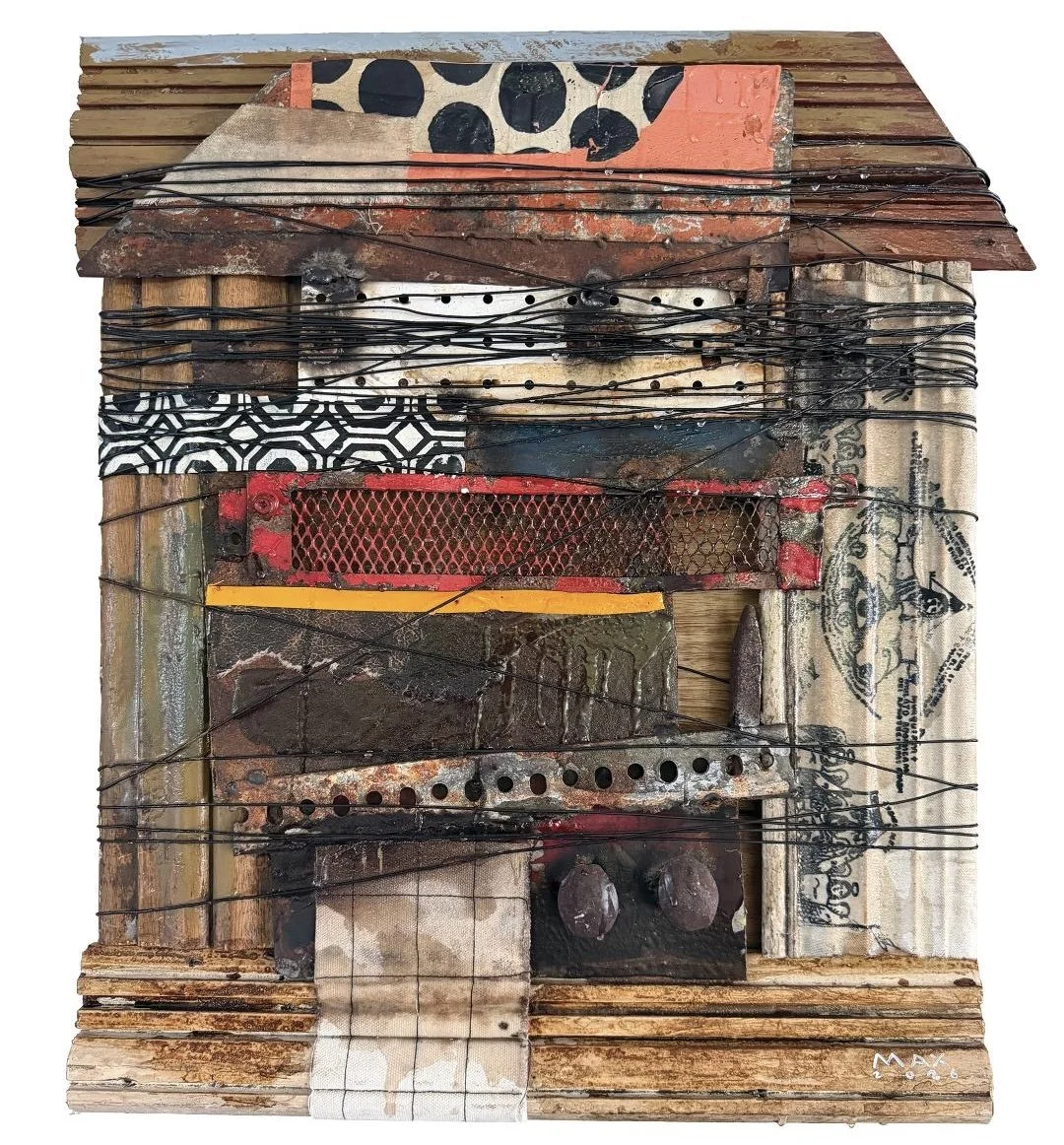
KAPILYA 023, electrical wire, salvaged wood, acrylic skin, rail road spikes, welded metal sheet, fabric, thread, resin, polyurethane, printed canvas, enamel, acrylic, coffee, charcoal and pencil.
What made it all the more remarkable was Balatbat initially didn’t have the funds to accept the Biennale’s invitation to compete. His requests for financial support from government agencies and art institutions were all ignored or declined. A private collector offered to bankroll the trip in exchange for keeping the trophy and the painting, but Balatbat refused. In the end, it was his PHP350,000 GSIS cash-prize win that ended up funding the Florence trip—reinforcing one of Balatbat’s guiding principles: that there’s value in both support and grit. “Walang nakakalayo sa buhay mag-isa,” (“No one goes far alone.”) he says. “Pero minsanmaganda ring pagkakataon na gutom ka—kasi kakayod at gagapang ka.” (“But sometimes it’s good to be hungry—because it forces you to work and crawl your way out.”)
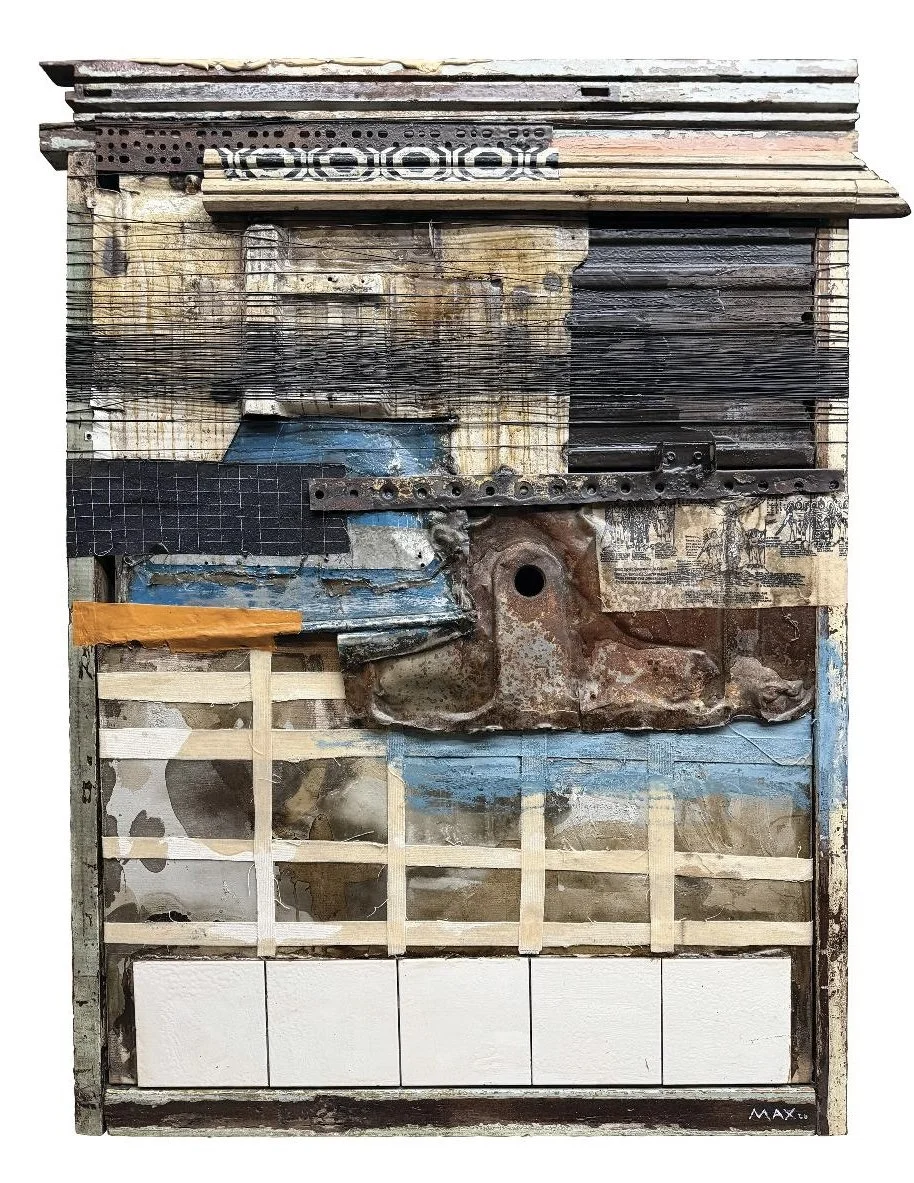
La Medalla 003, electrical wire, salvaged wood, acrylic skin, rail road spikes, welded metal sheet, fabric, thread, resin, tiles, polyurethane enamel, printed canvas, acrylic, coffee, charcoal and pencil.
In his current assemblage works, Balatbat’s medium is also the message. Discarded objects and visibly weathered materials many dismiss as junk remain central to his storytelling. “Yung mga pako na kinakalawang na, wala nang silbi—binibigyan ko ng bagong kahulugan,” he says. (“Those rusted nails people think are useless—I give them new meaning.”) He pauses, then smiles. “Parang ako rin. Galing ako sa lugar na puro negatibo ang tingin sa amin. Pero kapag pinaikot mo kami, makikita mo rin ang magandang side namin.” (“I’m like that too. I come from a place people often see negatively. But if you turn us around, you’ll also see our good side.”)
Whatever the angle, Balatbat is in it for the long haul. He’s currently in talks to show KAPILYA in several cities abroad, where curators have expressed interest in the work. The 48-year-old artist is also putting out a book cataloguing nearly two decades of his practice, while regularly appearing at forums and talks to share what he’s learned along the way. “Gusto ko maramdaman yung naramdaman ni Ben[Cab], na yung next generation magawa yung hindi ko pa nagagawa,” he says. (“I want to feel what BenCab must have felt, for the next generation to accomplish things I haven’t yet done.”)
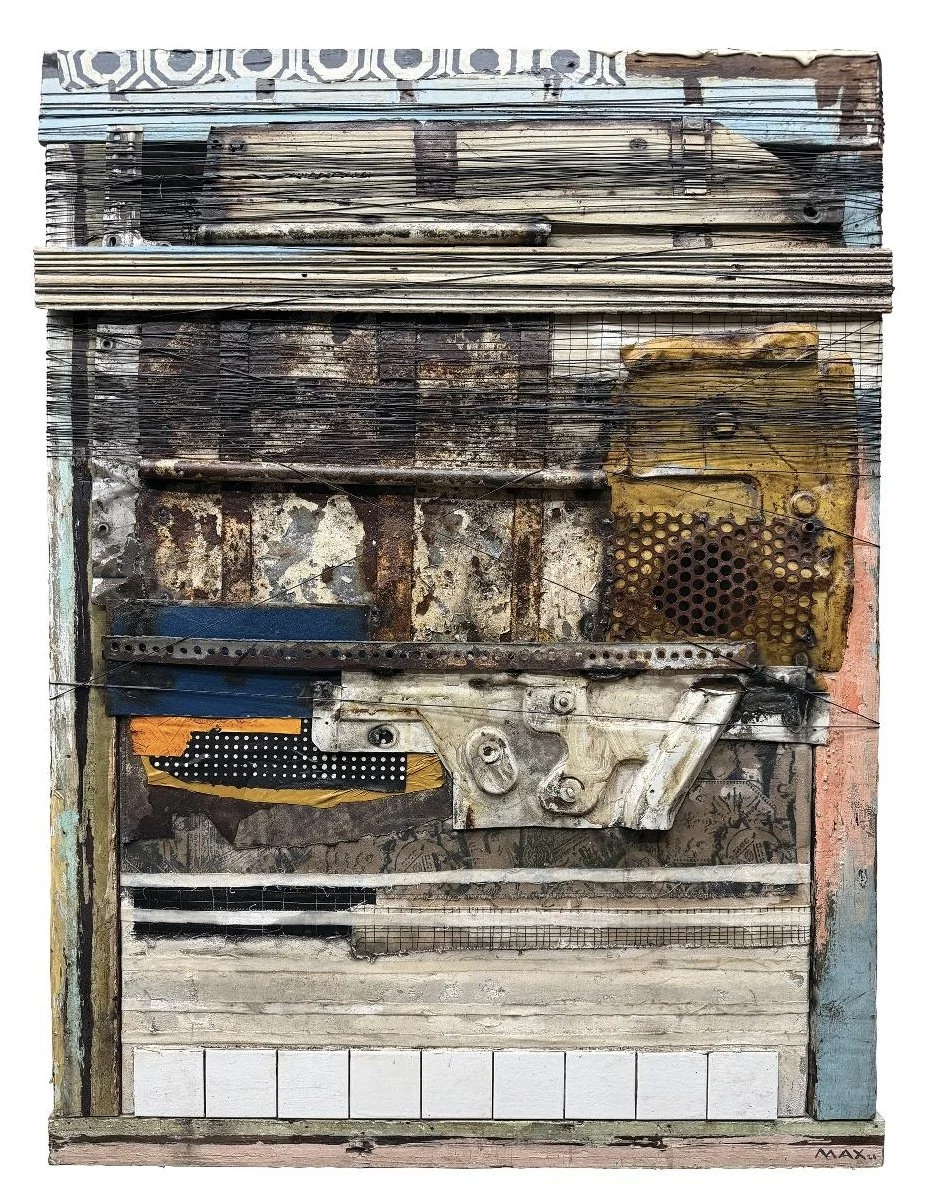
Kalsada La Medalla 001, electrical wire, salvaged wood, acrylic skin, rail road spikes, welded metal sheet, fabric, thread, resin, tiles, polyurethane enamel, printed canvas, acrylic, coffee, charcoal and pencil.
It’s Balatbat’s dream to restore the original kapilya that still stands in Caloocan, which will take significant time and resources. “Matagal-tagal pa, pero malay mo, manalo ako sa lotto,” he smiles. In the meantime, he continues to be inspired by pulsating elements of street life, stories he continues to tell—not for collectors, but himself. “Na-mo-move ako sa dumi ng kalsada at mga kwento nila, kung paano nag-connect yung ugat ng puno sa kable ng kuryente,”he says. (“I’m moved by the grit of the streets and the stories there, how a tree root ends up tangled with an electric cable.”)
“Dumating na ako sa point na wala na akong kailangan patunayan,”he says.“Para sa akin kasi, ang art hindi trabaho. Debosyon siya. Hindi siya hanapbuhay—buhay siya.” (For me, art isn’t a job. It’s devotion. It’s not a means to make a living—it’s life itself.)