
Beyond Censorship
As Dreamboi traces one trans woman’s search for love and self-acceptance, it also mirrors the real battles queer Filipinos face beyond the screen.
Words Gerie Marie Consolacion
Photos courtesy of Roque Magsino
November 24, 2025
Was fantasy ever enough to heal?
For centuries, Philippine cinema has produced hundreds of films that claimed to represent the queer community though perhaps it’s more accurate to say they represented only the gay men and lesbians who fit into familiar, palatable narratives.
For the rest of the gender spectrum, visibility was often deferred. They were tucked away, deemed “too unfamiliar” for audiences or “too complex” to explain within a two-hour film. And so they remained footnotes, background characters, or entirely absent.
This is precisely why the struggle surrounding Dreamboi mattered. When the MTRCB attempted to block its theatrical release, the team behind the film pushed back—not simply to defend a project, but to defend the right of marginalized identities to be seen, understood, and imagined on screen.
With Dreamboi, Philippine cinema arrives at a long-overdue turning point. Here is a film that refuses to flatten queer lives into stereotypes. It reflects, instead, the beauty, contradictions, and expansive possibilities of gender told through a visual language that invites rather than instructs, and through storytelling that insists on nuance rather than novelty.
A story for queer by queer

Photo from Dreamboi’s colorist Roque Magsino’s official Facebook account | Shots by Dreamboi’s Director of Photography Malay Javier
This is far from the usual Filipino romance, where a man and a woman are destined to yearn, burn slowly, and find their way into a predictable happy ending. It also resists the old formula in which women must be soft, submissive, contained, while men must remain stoic, dominant, unbending. Dreamboi rejects those rules. It unsettles them. It asks what happens when desire is not confined to binaries, when fantasy becomes a method of truth-telling, when cinema stops pretending there is only one way to love or be human.
So what if we did break the glass ceiling?
What if the Philippine cinema stopped playing it safe and instead made space—real space—for the stories that have always existed but were never given permission to take center stage?
Dreamboi is not just a film. It is a reclamation. A reminder that fantasy can be a form of resistance—and sometimes, a way of finally beginning to heal.
Yearning in the queer context
We often stumble upon the word yearn—in songs, in poetry, in movies. It’s that deep, aching desire for something or someone just out of reach. But in a queer context, yearning stretches beyond romance or longing. It becomes a way of surviving, imagining, and insisting on a world where one’s identity is seen and affirmed.
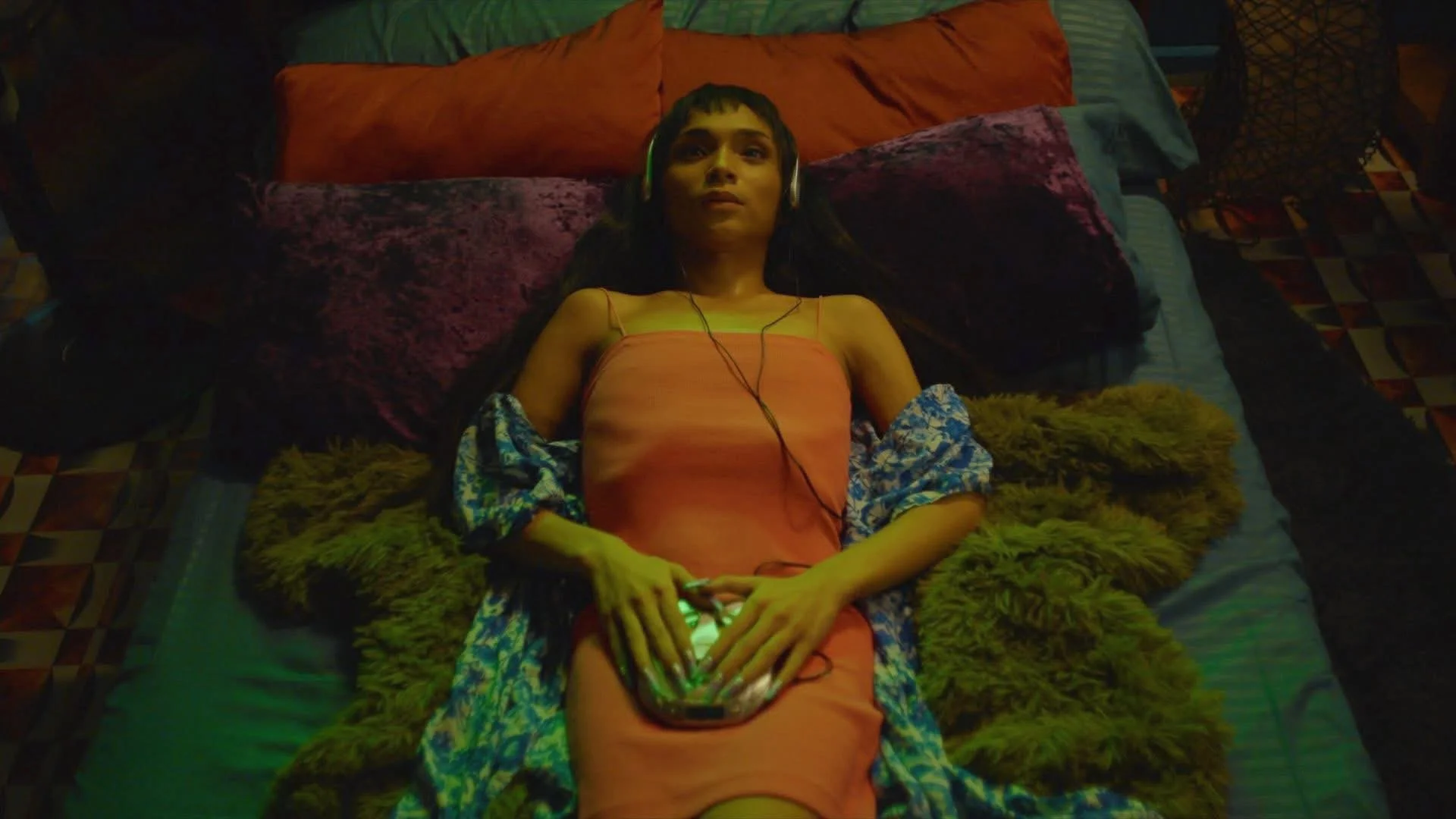
In Dreamboi, yearning takes root in Diwa, the protagonist—a trans woman whose small sanctuary is her bedroom, where she listens to Dreamboi, an underground audio performer. It is through his voice that she momentarily inhabits a world where she is wanted, desired, and allowed to exist without resistance. Her fantasies are not merely sexual; they are emotional, existential. They fill the gaps left by a society that often denies her the simplest forms of care.
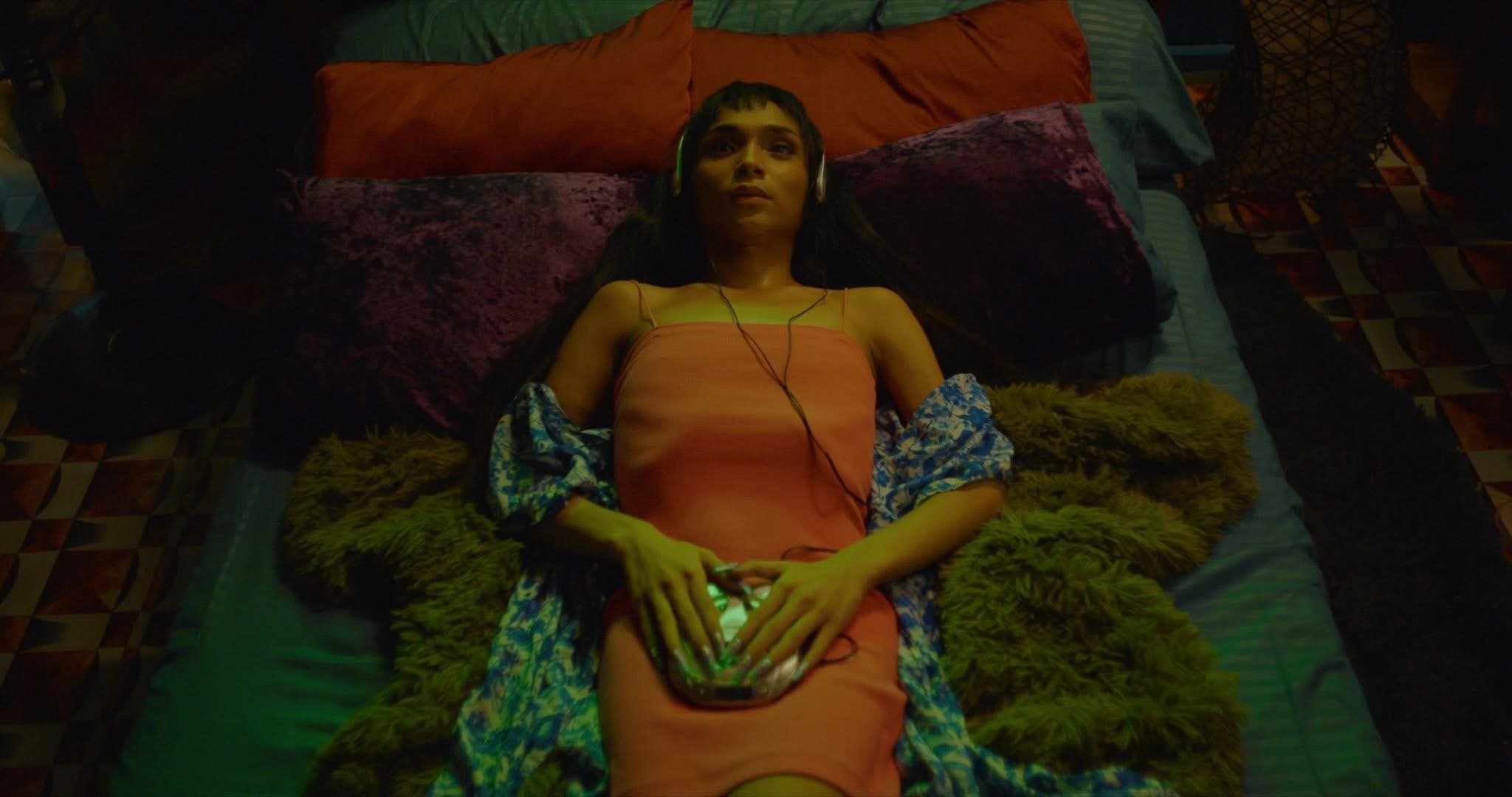
Photo from Dreamboi’s colorist Roque Magsino’s official Facebook account | Shots by Dreamboi’s Director of Photography Malay Javier
As the story unfolds, the film reveals that Diwa’s yearning is not confined to desire—it is intertwined with the everyday struggles of the queer community. Challenges that many dismiss as “small issues” often mark the beginning of much larger battles for visibility and space. What might seem trivial to others becomes, for queer people, a fight to simply live without fear.
One scene captures this tension vividly: Diwa is confronted by a middle-aged woman who insists that trans women should not use the women’s restroom because “they are still men.” Her argument reduces Diwa to biology, refusing to acknowledge her lived reality, her identity, her dignity.
And while this fear is rooted in women’s experiences of harassment—a reality we cannot dismiss—it is misdirected. The threat comes not from trans women, but from the patriarchal violence that endangers all women, including trans women.
The irony is that trans women are often among the first to protect these spaces, not violate them. They are not predators; they are women navigating the same world that has conditioned all of us to fear male violence.
In shared spaces—dressing rooms, hotel suites, backstage halls—trans women have long been allies. They fix hairpins, zip dresses, share makeup, calm nerves. They help other women feel confident, safe, and beautiful. They build community in places where trust matters.
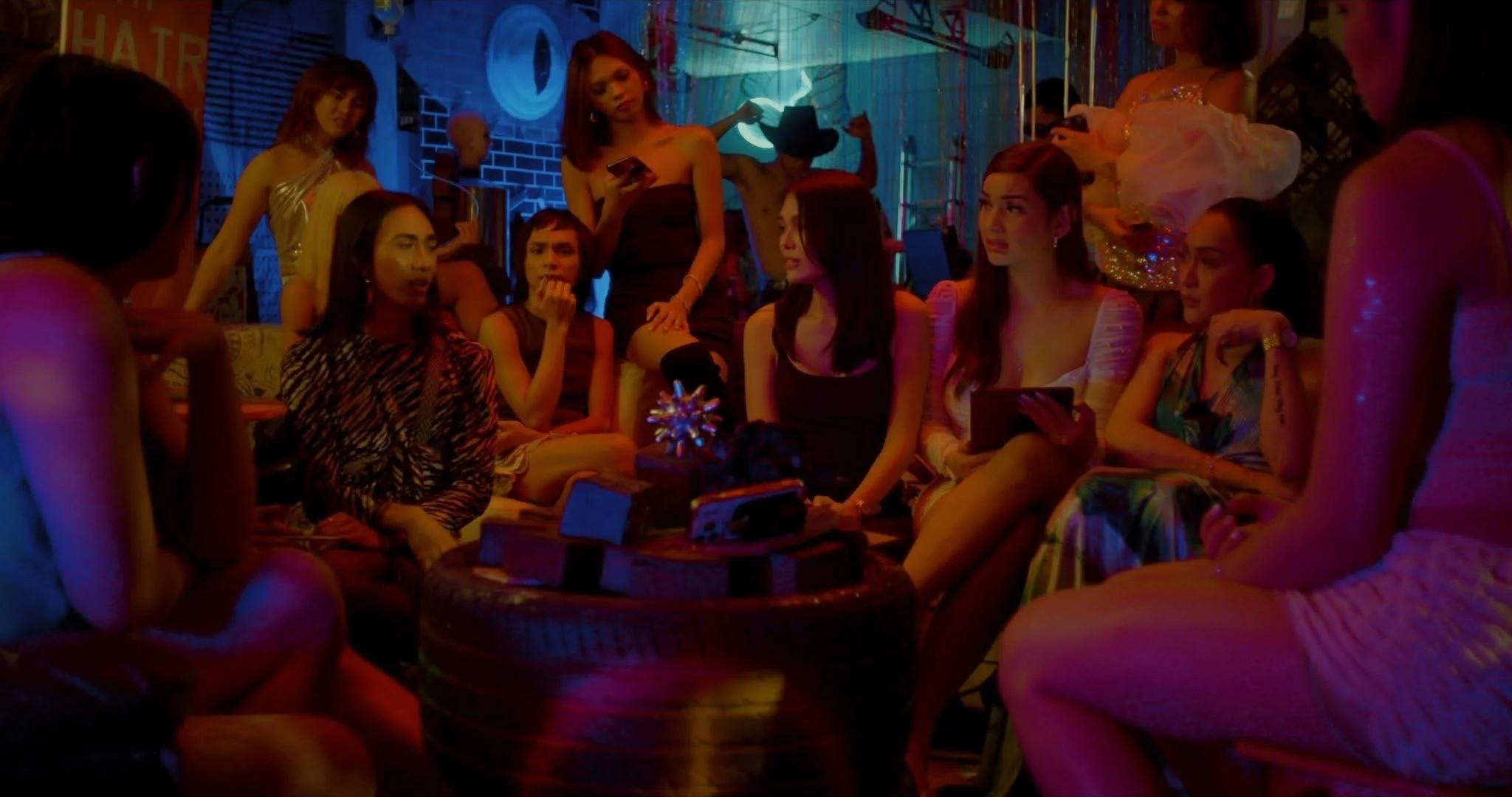
Photo from Dreamboi’s colorist Roque Magsino’s official Facebook account | Shots by Dreamboi’s Director of Photography Malay Javier
Therefore, the issue is not the restroom, nor the space itself. It is the stereotype. It is the assumption. It is the refusal to see trans women as human beings deserving of dignity.
As the HR officer in the film puts it, “Let us be more humane. After all, trans women are also human.”
This simple statement becomes the film’s quiet demand.
It reminds us that queer rights are human rights. It shows us that queer yearning is not simply about seeking validation or sexual release. It is a deep longing for a world without prejudice, without stereotyping, without the constant need to justify one’s existence.
It is a yearning for freedom—the freedom to live, to love, to enter a restroom without fear, to imagine a society where being oneself is not an act of defiance. And maybe, through films like this, we inch closer to that world.
Through trans struggle and self-discovery
What makes Dreamboi both engaging and challenging is its winding, almost maze-like storytelling. The film reflects the confusion many trans women feel as they try to find confidence and self-acceptance in a world that often denies them their basic rights.
For some viewers, this style may feel disorienting, but that disorientation is intentional. It invites us into the characters’ inner worlds, encouraging us to search for answers with the same urgency they feel.
Because of this, the film opens conversations we rarely dare to have. It shows the emotional and everyday struggles within the trans experience, but also hints at the battles happening behind the scenes, like its double X rating, censorship issues, and the broader pressure to silence queer stories before they reach the screen.
It’s painful to realize that queer artists still have to sacrifice so much just to tell the truth. These compromises are heavy, yet they remain a reality. The lesson? always protect the dolls.
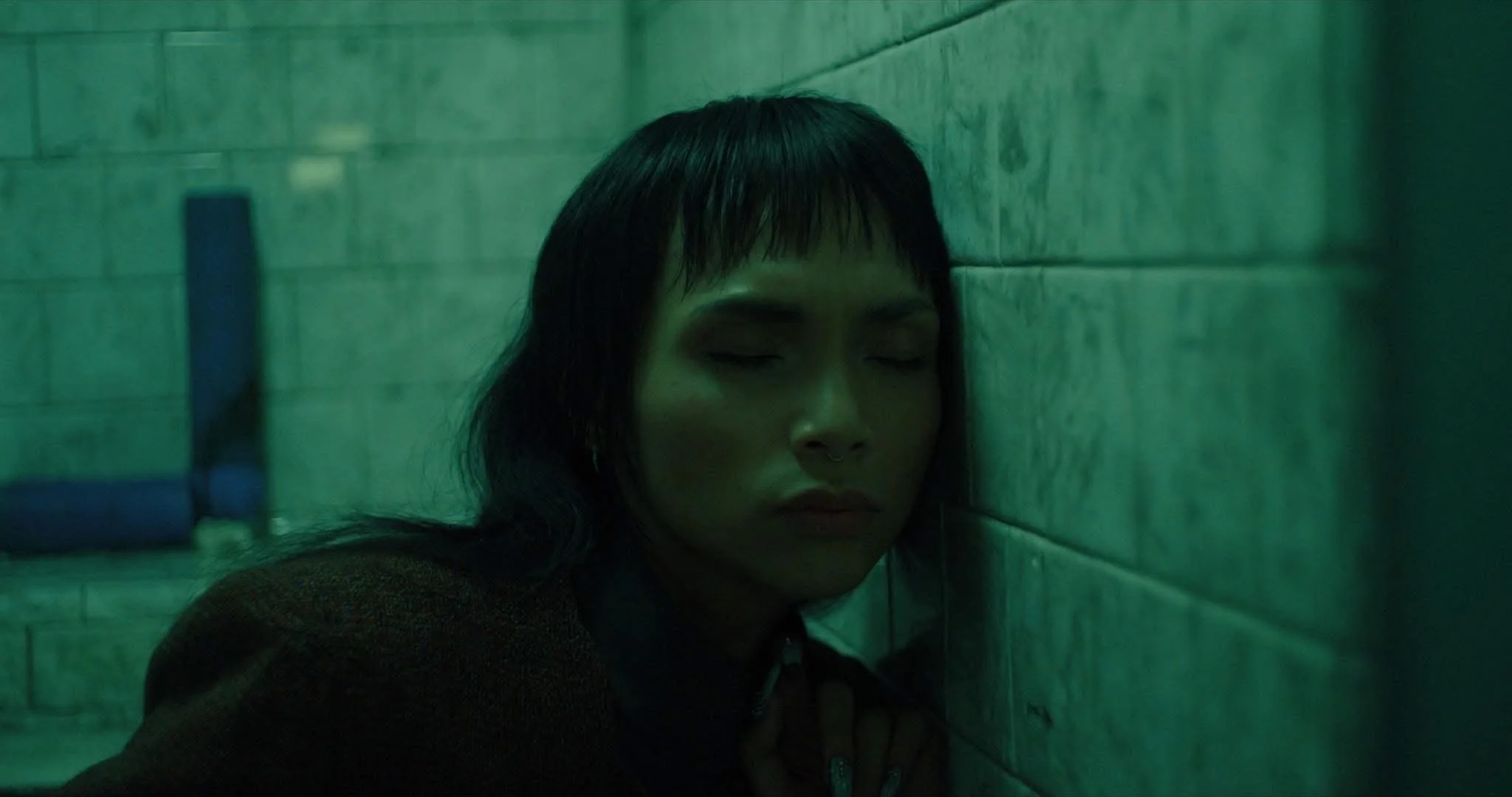
Photo from Dreamboi’s colorist Roque Magsino’s official Facebook account | Shots by Dreamboi’s Director of Photography Malay Javier
A magnifying lens on the trans experience
Dreamboi roots itself in Diwa’s world, surrounded by friends across the queer spectrum—a gay man, another trans woman, a drag queen, an influencer. Their space is loud, intimate, unapologetic. Sexual conversation is normal. Identity is fluid. Safety is collective.
What is striking is that the film presents queer characters without exaggeration. Their queerness is not caricature but detail—gestures, the alter accounts, nails, cultural cues, and familiar spaces like Rampa.
The film also introduces Ashley, a trans woman working at a BPO company who later dies at the hands of her abusive partner—a guard. The parallel to Jennifer Laude is quiet but unmistakable.
Another pivotal moment is when men sexually harassed Diwa. Her friends, instead of mocking her or dismissing her pain—a trope that has long harmed queer portrayals—the characters respond with genuine sympathy. They recognize her experience as assault, not comedy. Not “kasalanan mo.”
Down in the building’s basement is a tucked-away comfort room where Diwa finally meets Dreamboi in the flesh, blurring the line between fantasy and reality.
Dreamboi’s audio porn features a woman named Lilith—seen only through her body, never her face. In a talkback session, when Art+ Magazine asked director Rodina Singh, “Who is Lilith?” she answered, “It’s up to you to interpret it.”
Perhaps Lilith is Diwa’s fantasy self, the imagined body she inhabits when she envisions closeness with Dreamboi. What remains unforgettable are Diwa’s eyes: one brown, one blue—a duality echoed in Lilith. Maybe the film urges us not to fixate on the events, but to question, look deeper, and feel what it means for a queer individual to yearn for more.
A win for the community

Photo from Dreamboi’s colorist Roque Magsino’s official Facebook account | Shots by Dreamboi’s Director of Photography Malay Javier
Every actor in the film was intentionally chosen from the LGBTQ+ community to ensure authenticity and safety on set. That alone is already a victory.
Another triumph lies in how the film challenges the myth that queer identity is a choice, phase, or fleeting feeling. It emphasizes that gender expression is not something that can be picked up overnight. It is lived, embodied, and deeply felt.
The film asserts that trans women are deserving of true love—not fetishized desire, not transactional affection, but love that protects and nurtures. Love that allows them to be the princess.
Diwa and Maki’s relationship reflects this beautifully: a balance between the fantasy of Dreamboi and the grounded tenderness of a man who sees her, cares for her, and honors her.
And in its final scene, the film expands its embrace further—a trans man driving a car, having a warm conversation with Diwa. It’s small but meaningful: a reminder that queer representation must be expansive, not selective.
Toward a safer tomorrow
Dreamboi is not simply a movie. It is the beginning. A challenge. A gesture of hope.
It asks us to imagine a world where queer people no longer have to yearn just to exist, just to be safe, just to be loved. It asks what becomes possible when fantasy becomes a tool for survival—and when cinema finally dares to tell the stories that have always been waiting.
If the film teaches us anything, it’s that fantasy should never be the only safe place where trans women get to live freely. Maybe, through films like this, we inch a little closer to that world.