
An Ode to the Philippines
Through his visionary craft, Filipino jewelry designer Adam Pereyra transforms heritage into jewelry that captivates and inspires.
Words Jaymar Aquino
Photo courtesy of Adam Pereyra, Felix Cari, and Colin Dancel
August 27, 2025
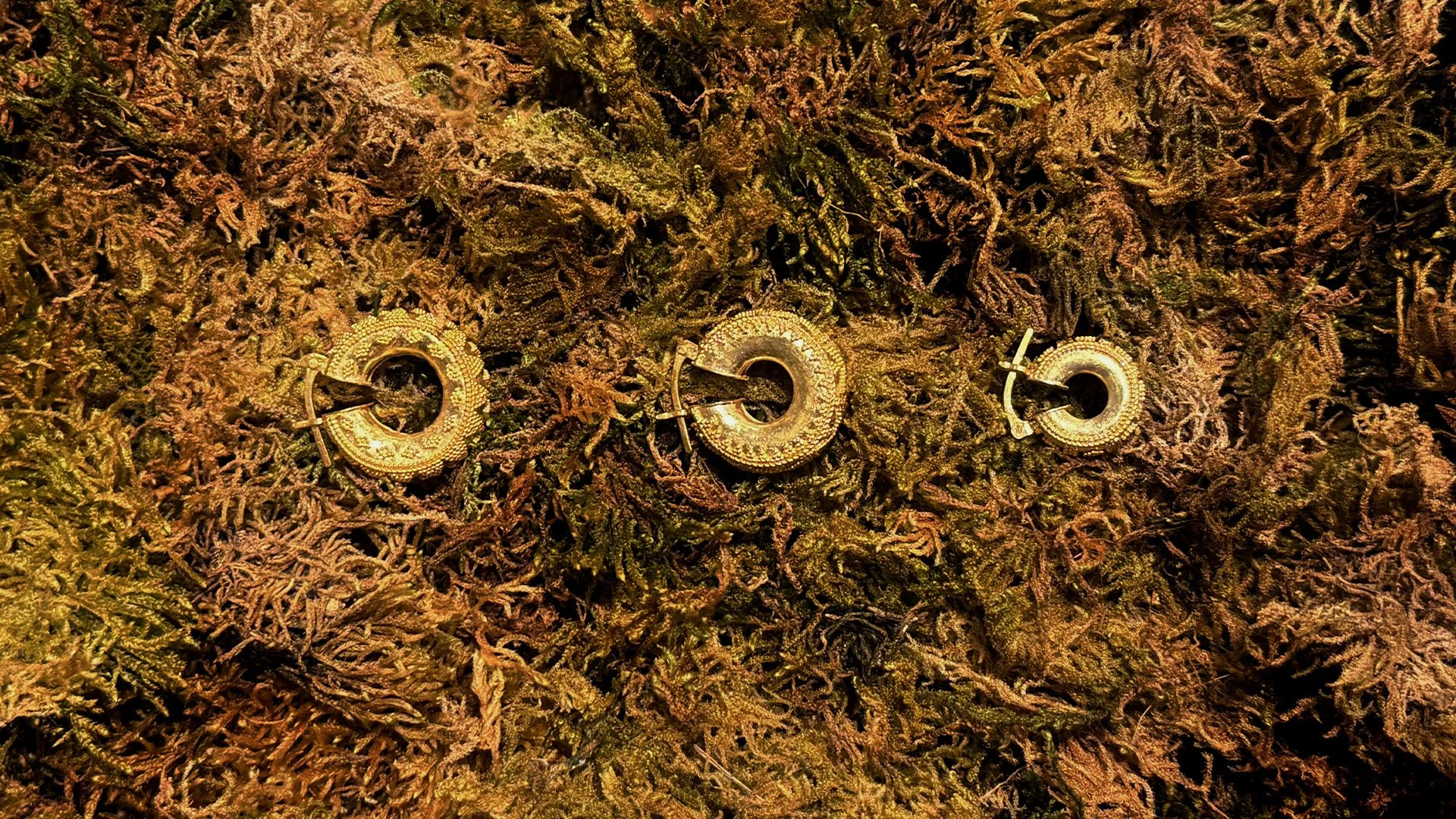
Gold carries a weight far beyond its shine, a language of stories whispered across ages. It gleams not merely as an ornament, but as a silent chronicler of epochs, a witness to the rise and fall of dynasties, to sacred rites, and even to affections once tenderly spoken.
In the Filipino consciousness, this precious metal is more than an element; it is a presence. It surfaces in folklore as offerings to the diwata, adorns the figures of ancient royalty, and emerges in literature as a metaphor for a resilience that, like the metal itself, refuses to tarnish.
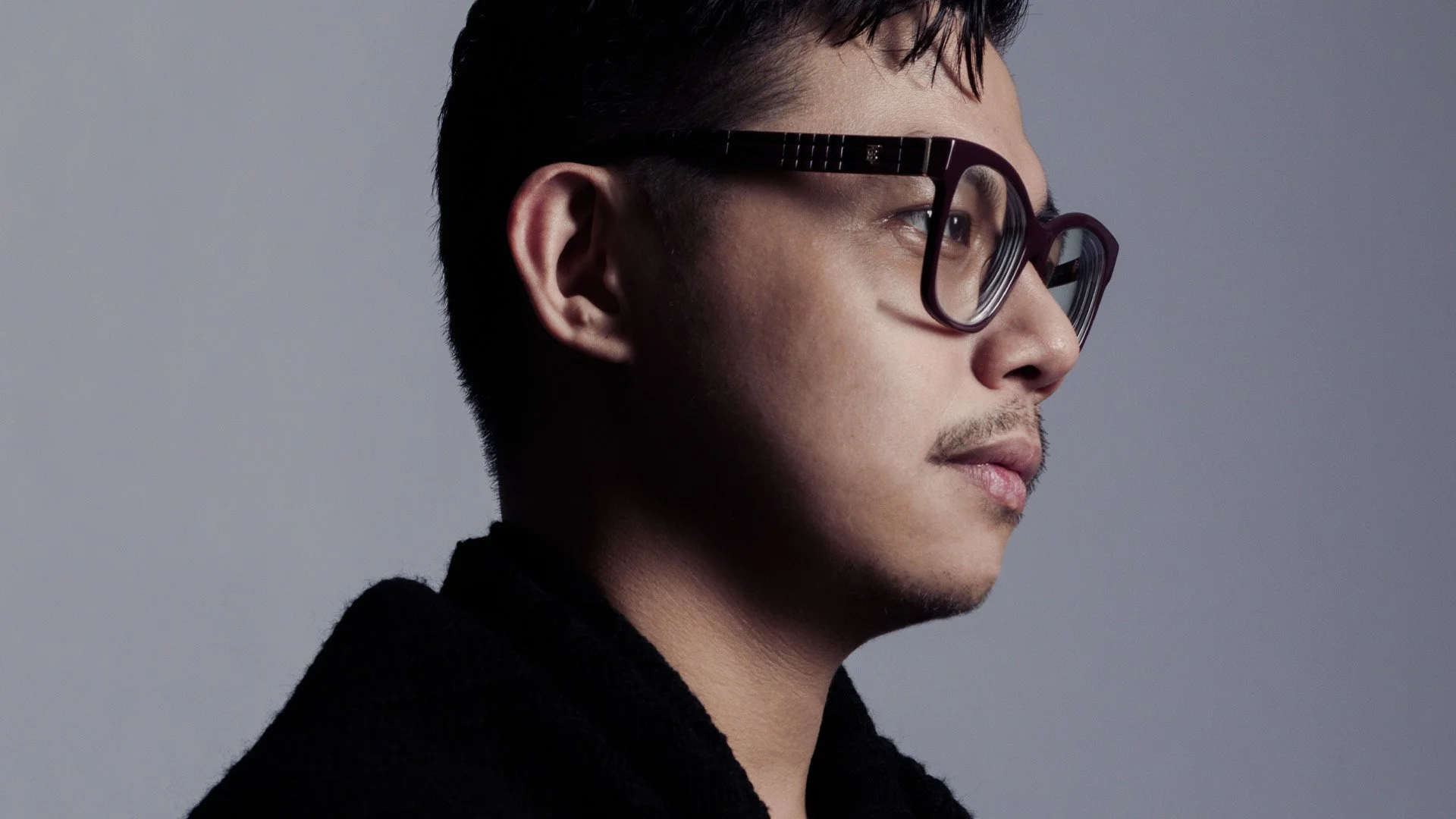
Adam Pereyra Portrait 2025 (Photo by Felix Cari)
This resonance is something Filipino jewelry designer Adam Pereyra understands to his very core. Tracing the genesis of his creative path, he reveals that it was less a choice and more a predestined encounter.
“I stumbled into jewelry almost by instinct,” he recounts. What began, as he recalls, with a “curiosity about objects and their histories,” blossomed into a lifelong practice rooted in permanence. For him, gold, the element most present in his creations, is not a cold, inert substance; he perceives it as a living entity. “It carries warmth, and it has the ability to hold stories.”
Roots and radiance
A memory so profound was woven from the threads of his lineage. Pereyra’s craft was born not in a studio, but in the hands of the women who raised him—his grandmother, mother, and aunts.
“Their stories, heirlooms, and quiet strength became my foundation,” he shares. Over time, as instinct ripened into discipline, he found his way to the workshops of master goldsmiths, where the language of gold became his to learn.
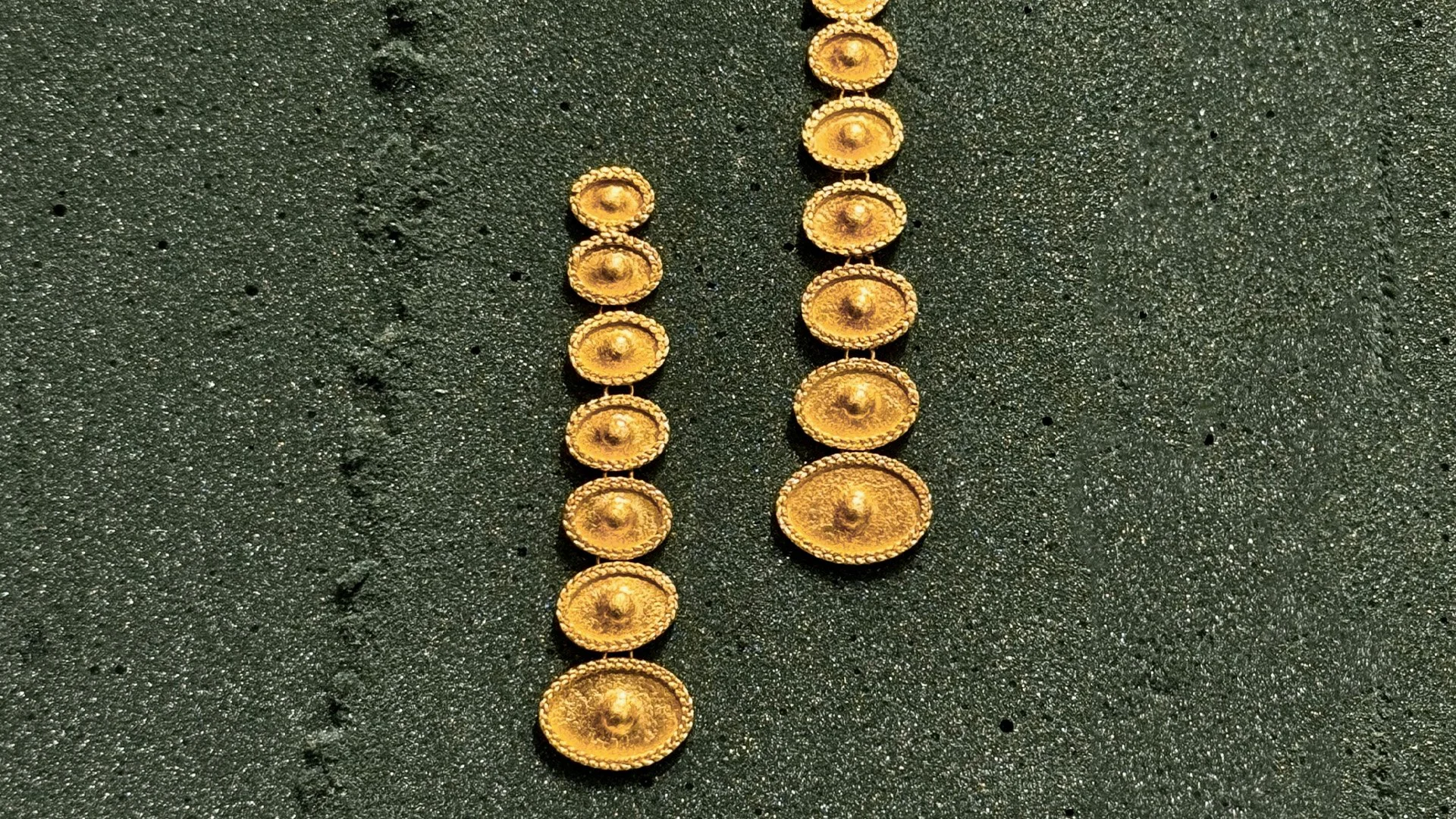
Kulintang Dangle
The rising designer’s process beautifully balances memory and modernity. He begins not with a finished vision, but with a fragment—an artifact, a motif, or sometimes a tool. From there, research guides the work. Sketches find their form. Metal responds to the rhythm of history and hand.
“The process is hands-on from the start,” he states, “so the history and the design grow together until they feel inevitable.” For him, a piece of jewelry is not meant to decorate the body, but to house a soul. It is touched. It is felt. It is lived. Every name, curve, and clasp he forges is a jubilant tribute, carrying the pulse of a culture vibrantly alive.
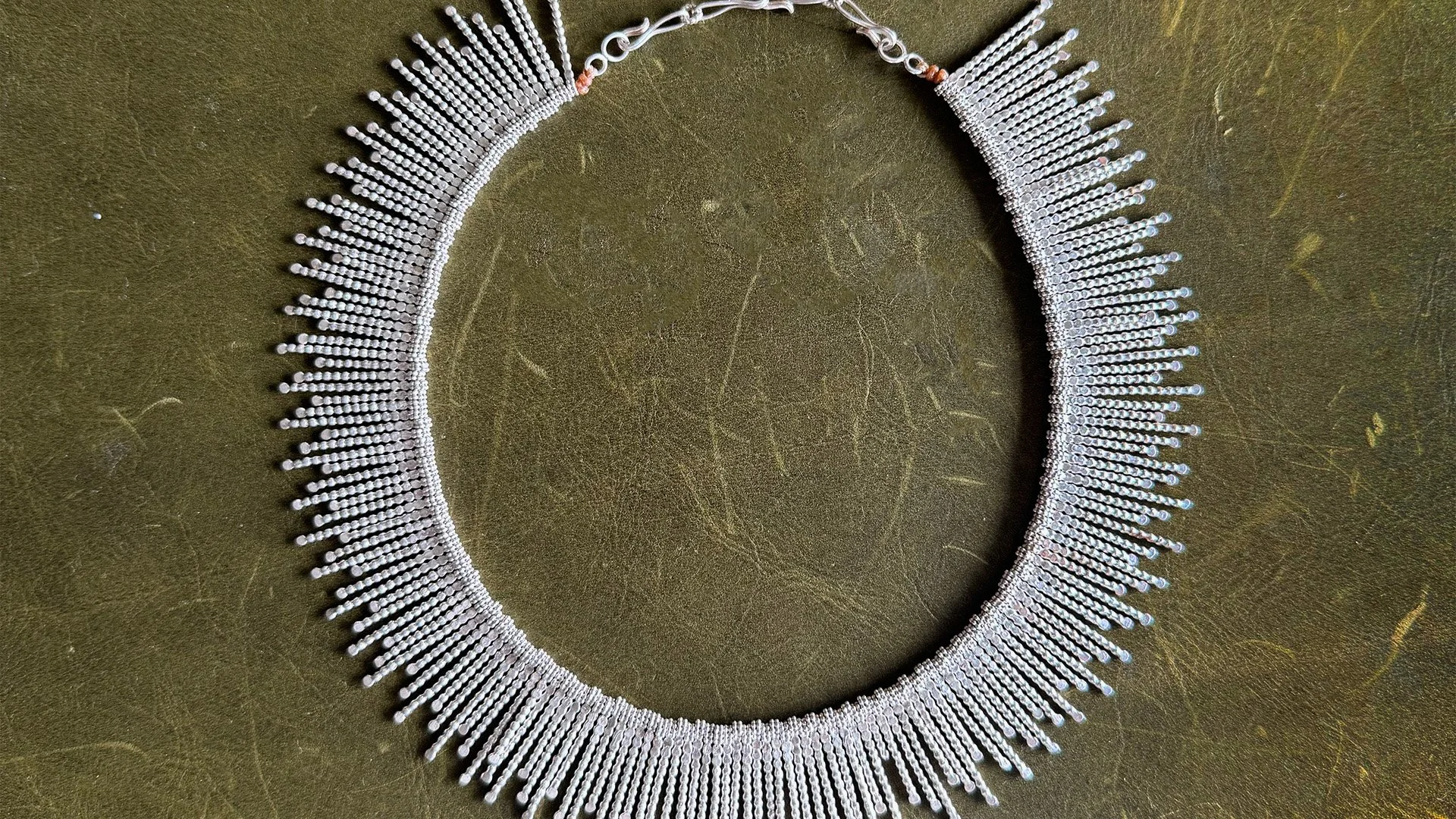
Arawari Choker
Among his creations, the Arawari choker rises like a hymn to both devotion and design. A reimagining of the Tutubi necklace, it is composed of 186 beads, each a constellation of 34 spherules, meticulously arranged into a fan-shaped crown. At first glance, it is a feat of engineering. Yet beneath the precision lies an obsession.
“The Arawari choker is one of the most striking pieces we have made. It is a kinetic work inspired by my unhinged fascination with sun rays. I adore the sun as a symbol and as a life source. Somehow, capturing its radiance is alluring to me.” Perhaps wearing it is like carrying a fragment of light, its edges unfolding with the first quiet breath of dawn, a tribute to the golden flame that has long guided our stories and shaped our histories.
Crafting a legacy
What began as a conversation about celebrating culture revealed itself as a declaration of duty. For the young visionary, honoring Philippine artistry is more than admiration—it is a task to keep it thriving.
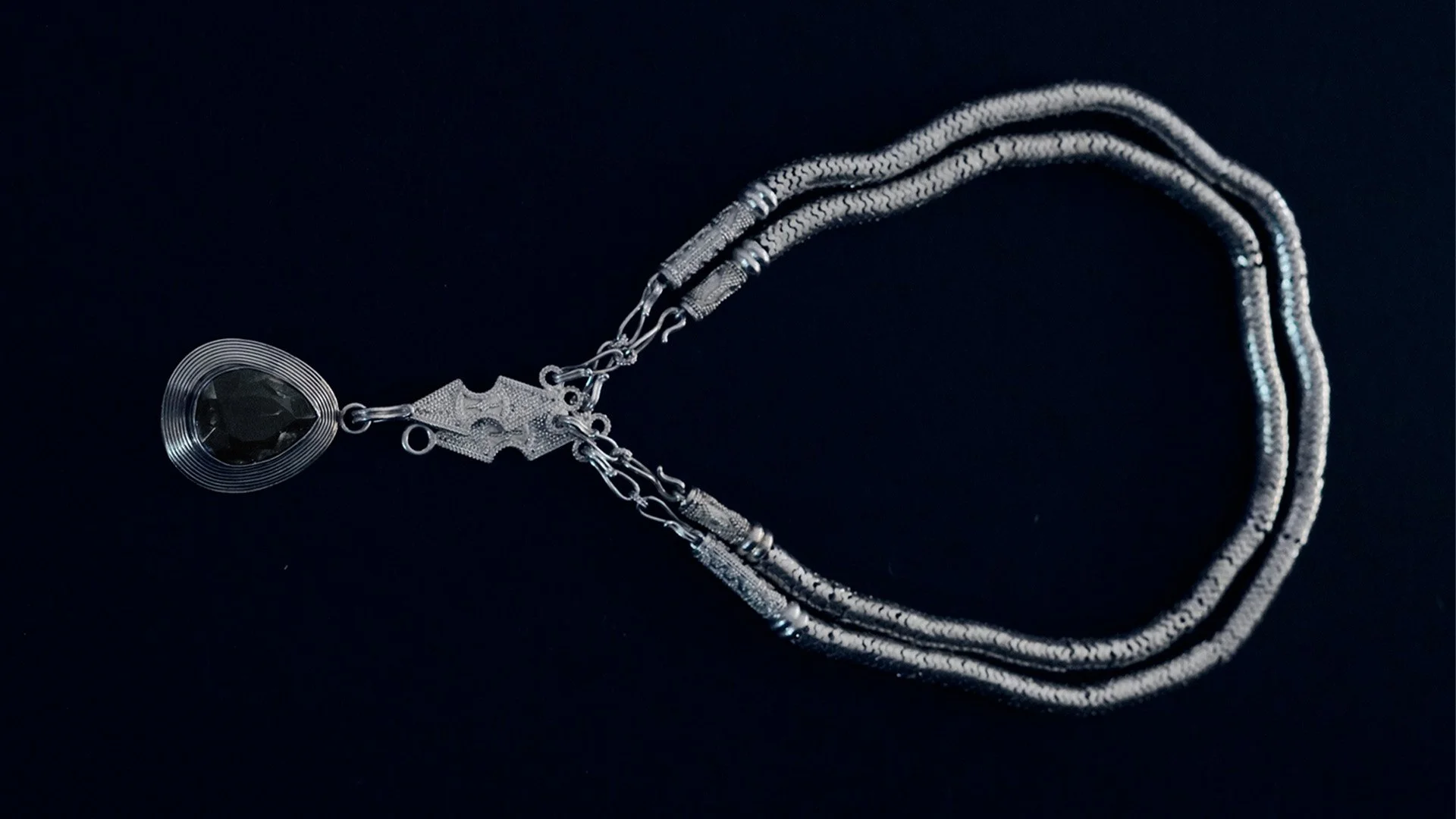
Double Drop Necklace - Photography by Colin Dancel
“Early on, I became aware that many Philippine jewelry techniques were quietly fading from practice,” he reflects. “That realization turned into a responsibility to keep those methods alive, not as nostalgia but as part of contemporary design.”
He also credits his partner artisan, goldsmith Ely Arcilla II, whose mastery of hand-forging, alloying, and coiling transforms every motion into intention. These slow, deliberate techniques do more than shape their exquisite jewelry—they anchor legacy.
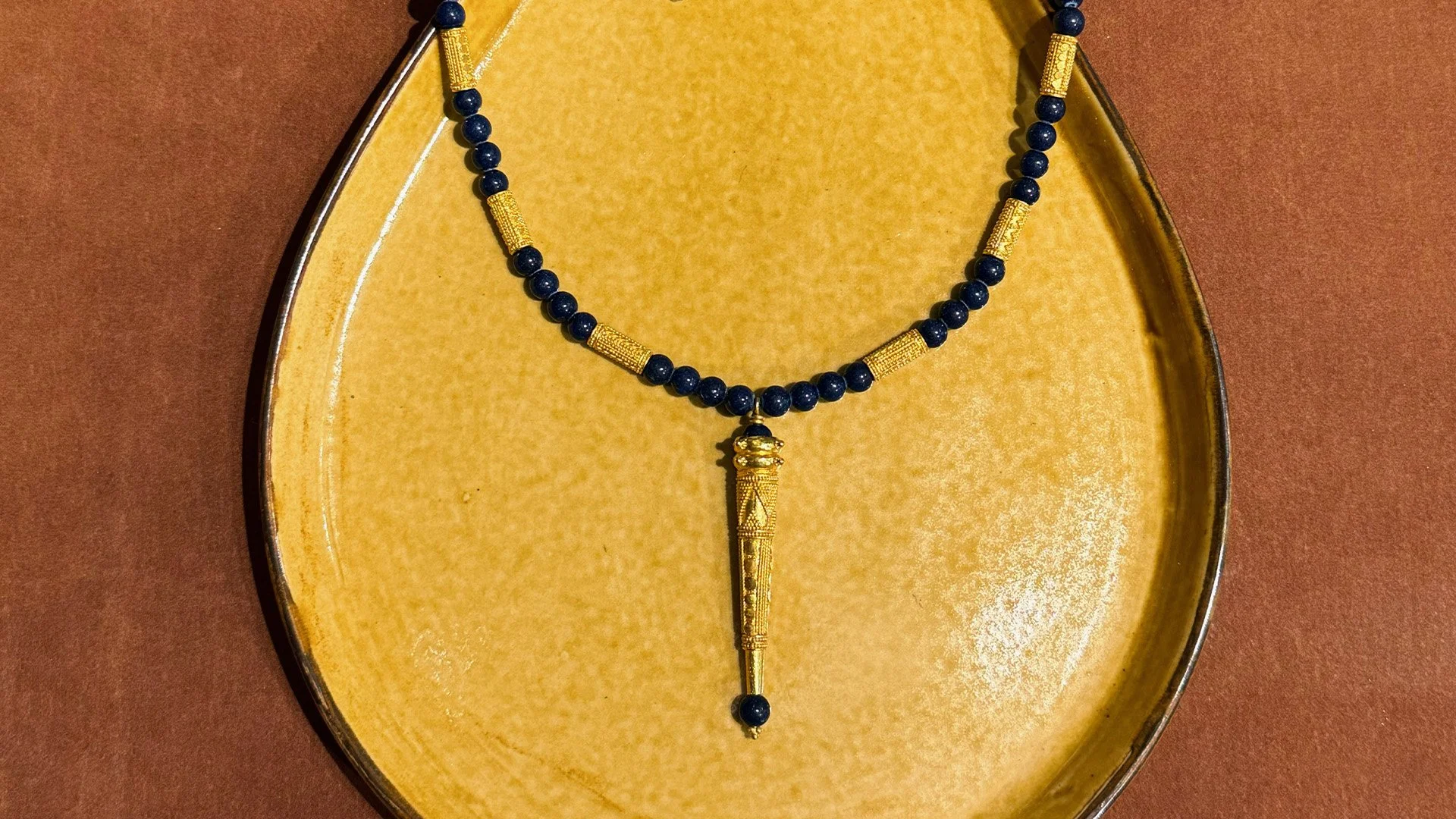
Choker
“I treat tradition as a material. It can be stretched, re-formed, even fractured, while keeping its soul intact,” he shares, a beautiful reminder that heritage endures when honored by attentive hands.
Forging forward
So what’s next for Pereyra? “I see the work evolving in scale and depth, with more architectural forms and engineering feats, more complex movement, and deeper explorations into lesser-seen Philippine histories,” he answers.
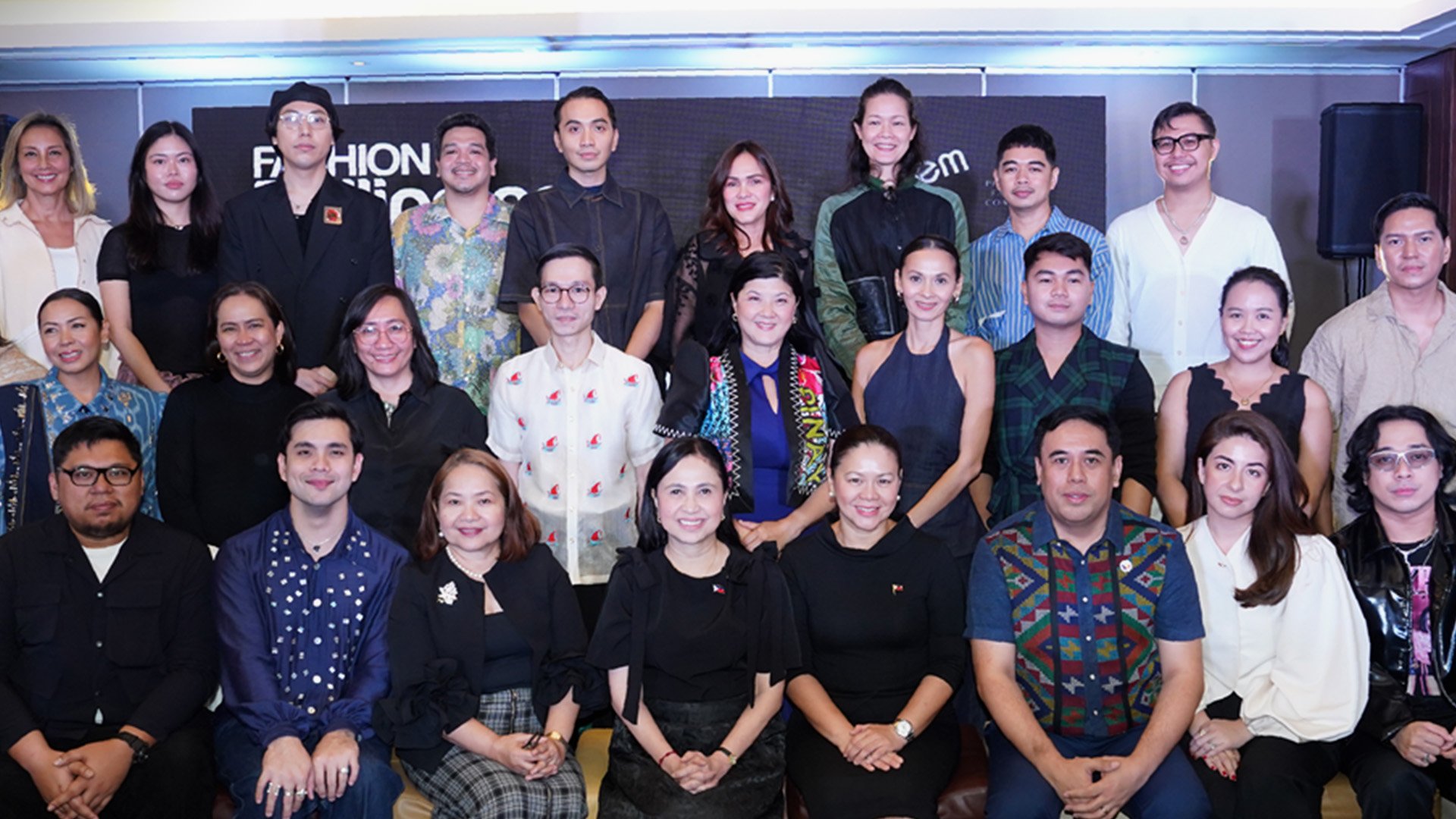
DTI Official Photo for Milan
That vision is now poised to take center stage, as he joins eleven other Filipino creatives to present their work at Milan’s Fondazione Sozzani for Milan Fashion Week SS26, from September 23 to 25, 2025, through the FASHIONPhilippines Milan Mentorship Program 2025.
As our conversation concludes, the emerging jeweler leaves one piece of advice for budding creatives: never, ever, let curiosity slip from your hands. Not the fleeting spark that glimmers briefly, but the molten gold kind. Deep. Enduring. Full of weight and warmth. “That tension is what keeps the work alive.”
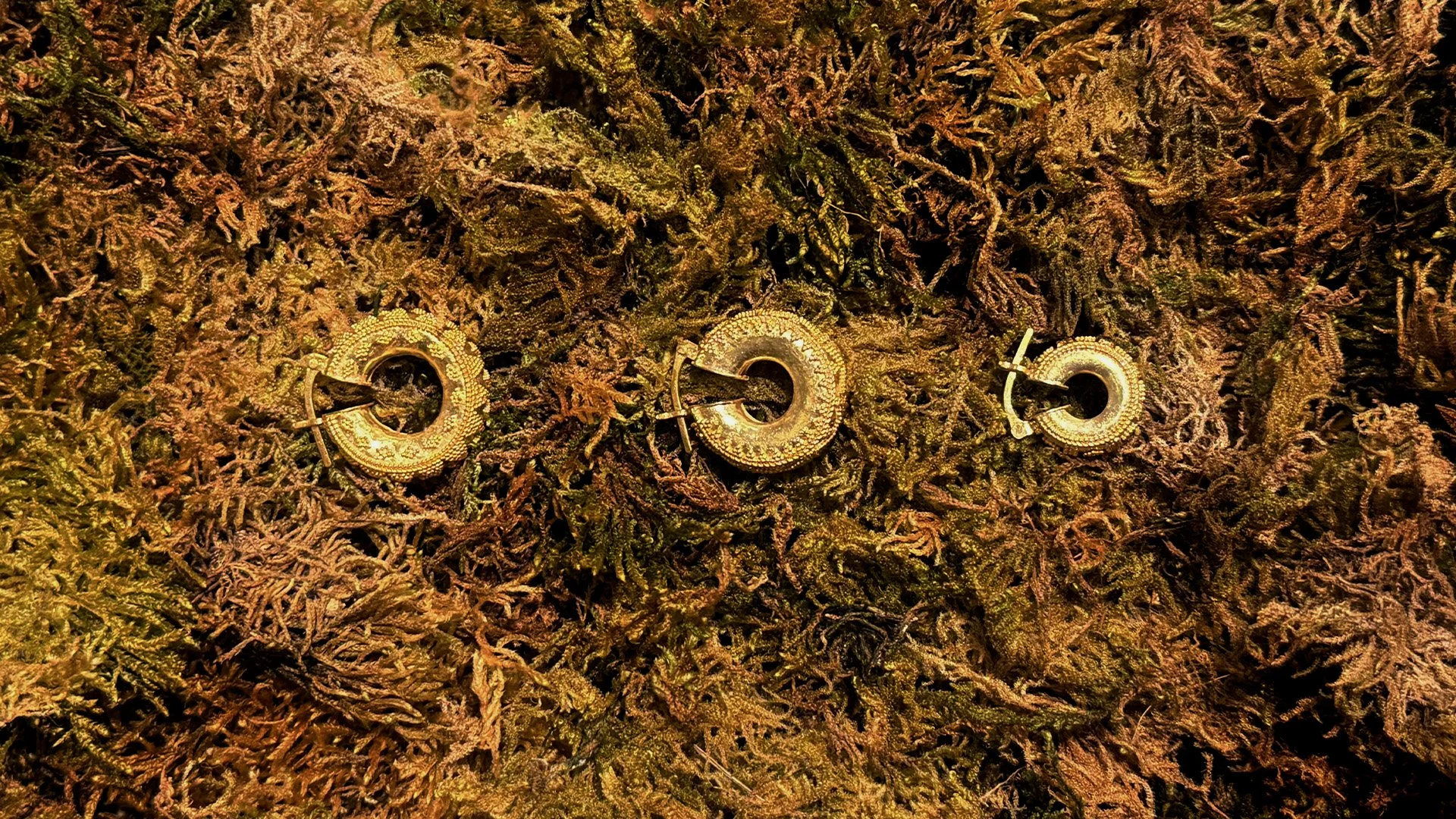
Barter Damo
Perhaps that is the true alchemy of Adam Pereyra’s goldwork. His jewelry is not merely crafted; it is remembered into being. It carries the narratives of the past into the hands of the present. Each piece, each intricate gesture of his artistry, is designed to stir the imagination and to pique your curiosity. To wear his creations is to carry not only beauty, but also the glow of a heritage that, like gold itself, will not rust, will not fade, will not surrender.